
Balancing Your Account Now that you have a
Balancing Your Account
Now that you have a checking account, it is your responsibility to manage it correctly. Part of managing your account involves making sure that your bank is recording your transactions correctly. Every month, the bank will send you a statement about your account.
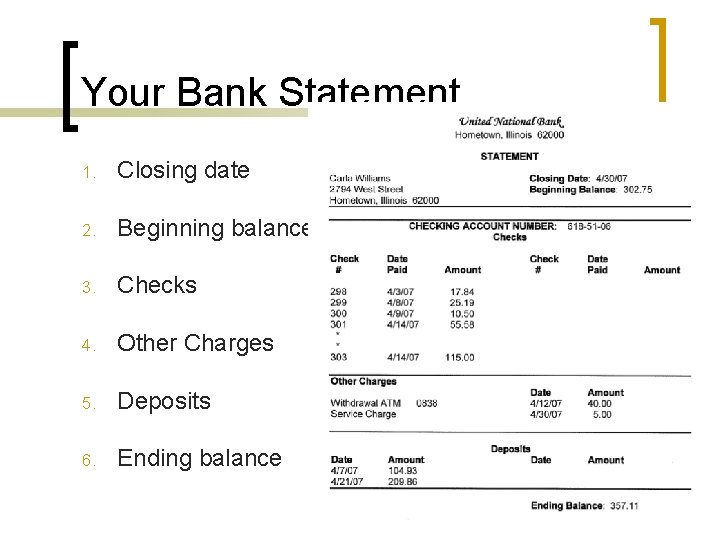
Your Bank Statement 1. Closing date 2. Beginning balance 3. Checks 4. Other Charges 5. Deposits 6. Ending balance
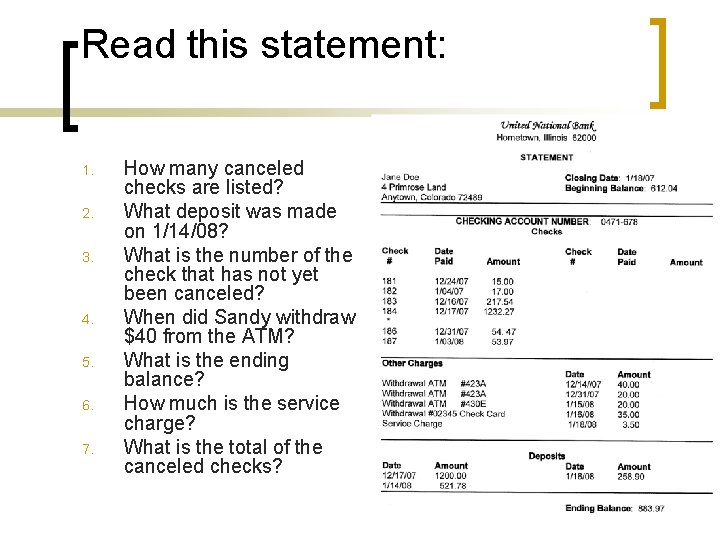
Read this statement: 1. 2. 3. 4. 5. 6. 7. How many canceled checks are listed? What deposit was made on 1/14/08? What is the number of the check that has not yet been canceled? When did Sandy withdraw $40 from the ATM? What is the ending balance? How much is the service charge? What is the total of the canceled checks?
The balance on your checkbook register will not always match the closing balance on your statement because n n not every check that is written will be canceled before the statement closing date and if a check is not canceled, the bank will not subtract it from your balance.
Balancing Using the information on your monthly statement and your checkbook register to make sure that you and the bank agree about your transactions is called balancing (or reconciling) the account.
Follow the steps: 1. 2. 3. Obtain the current balance from your bank statement. Add any deposits that you have recorded in your check register, but that are not on this statement. Subtract any outstanding checks (checks you have written but that have not yet cleared the banking system).
4. Compare the result with the current balance in your check register. Note: The balance in your check register should be adjusted to include: (a) deductions for service fees or other charges; (b) additions for direct deposits and interest earned.
End Day 3 Assignments: Use the steps given above to complete Reconciling Account Worksheets.
- Slides: 9