
Balancing of Rotating Masses Example 1 Four masses

Balancing of Rotating Masses
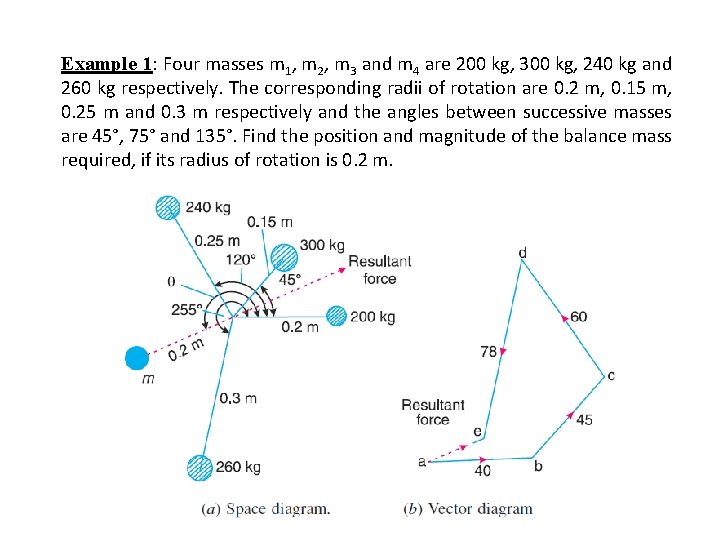
Example 1: Four masses m 1, m 2, m 3 and m 4 are 200 kg, 300 kg, 240 kg and 260 kg respectively. The corresponding radii of rotation are 0. 2 m, 0. 15 m, 0. 25 m and 0. 3 m respectively and the angles between successive masses are 45°, 75° and 135°. Find the position and magnitude of the balance mass required, if its radius of rotation is 0. 2 m.
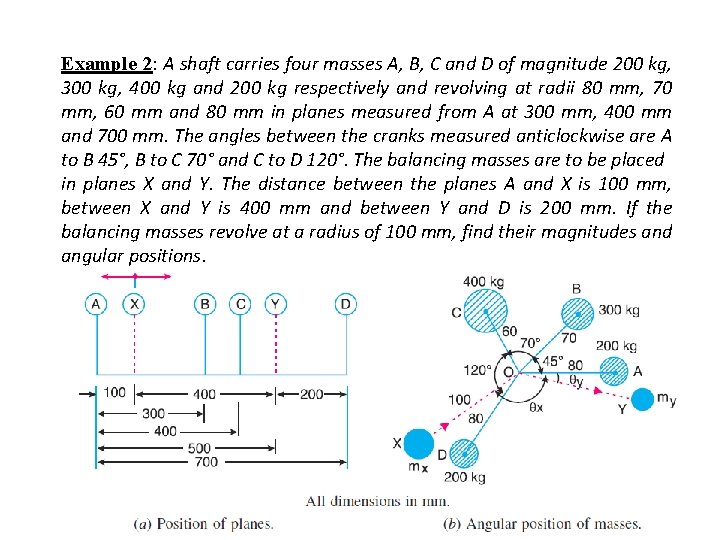
Example 2: A shaft carries four masses A, B, C and D of magnitude 200 kg, 300 kg, 400 kg and 200 kg respectively and revolving at radii 80 mm, 70 mm, 60 mm and 80 mm in planes measured from A at 300 mm, 400 mm and 700 mm. The angles between the cranks measured anticlockwise are A to B 45°, B to C 70° and C to D 120°. The balancing masses are to be placed in planes X and Y. The distance between the planes A and X is 100 mm, between X and Y is 400 mm and between Y and D is 200 mm. If the balancing masses revolve at a radius of 100 mm, find their magnitudes and angular positions.
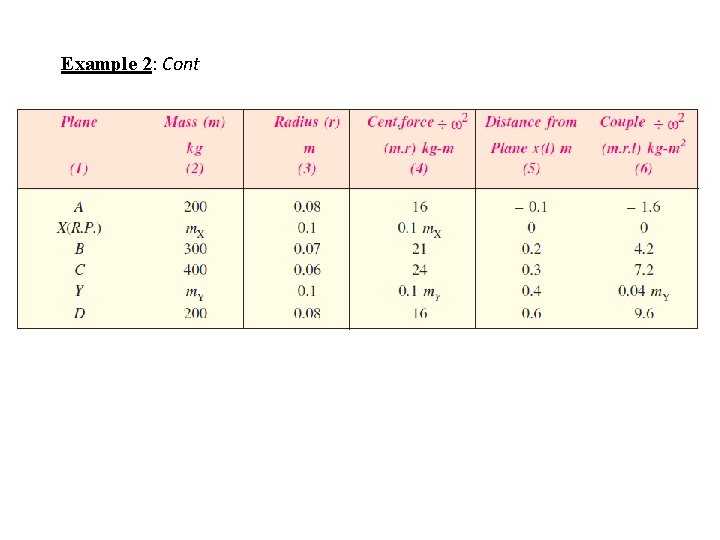
Example 2: Cont
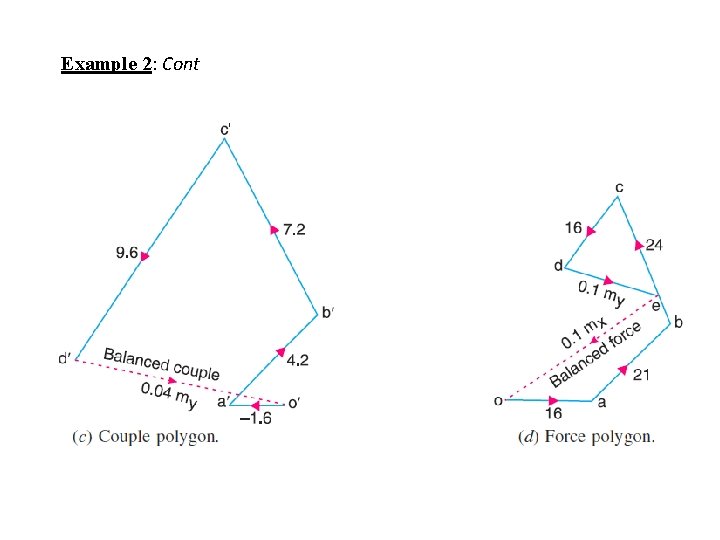
Example 2: Cont
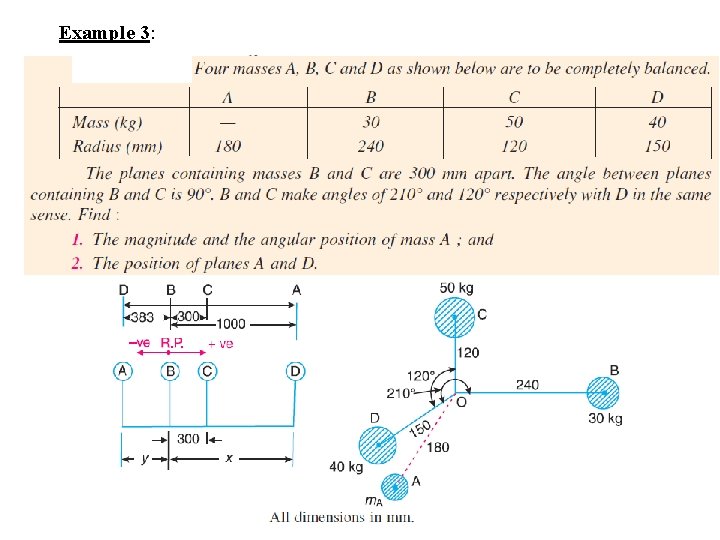
Example 3:
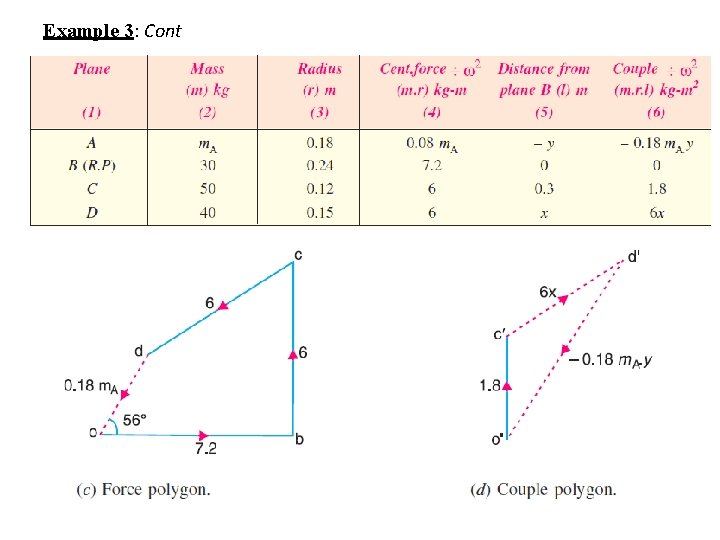
Example 3: Cont

Example 4: A, B, C and D are four masses carried by a rotating shaft at radii 100, 125, 200 and 150 mm respectively. The planes in which the masses revolve are spaced 600 mm apart and the mass of B, C and D are 10 kg, 5 kg, and 4 kg respectively. Find the required mass A and the relative angular settings of the four masses so that the shaft shall be in complete balance.
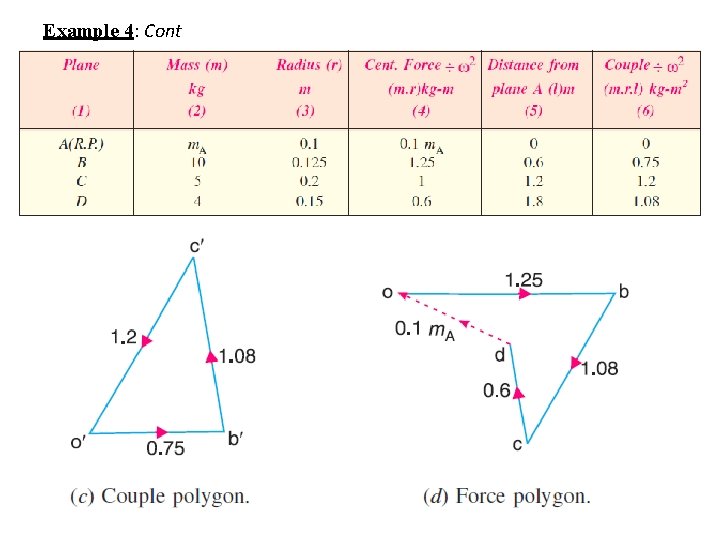
Example 4: Cont
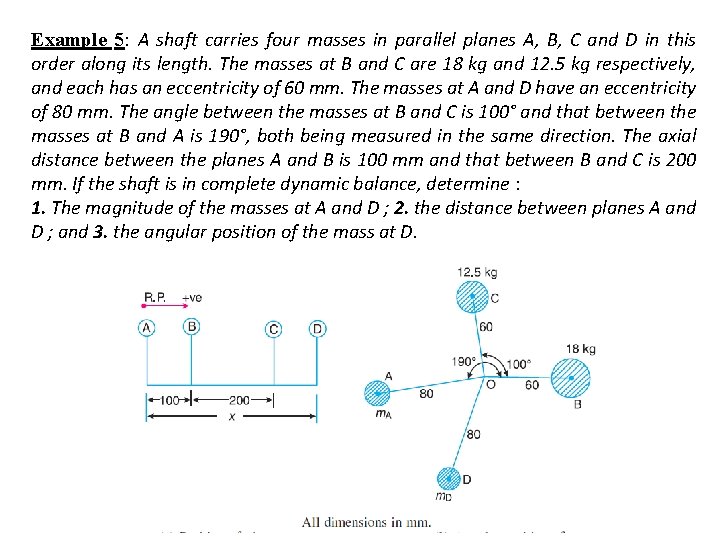
Example 5: A shaft carries four masses in parallel planes A, B, C and D in this order along its length. The masses at B and C are 18 kg and 12. 5 kg respectively, and each has an eccentricity of 60 mm. The masses at A and D have an eccentricity of 80 mm. The angle between the masses at B and C is 100° and that between the masses at B and A is 190°, both being measured in the same direction. The axial distance between the planes A and B is 100 mm and that between B and C is 200 mm. If the shaft is in complete dynamic balance, determine : 1. The magnitude of the masses at A and D ; 2. the distance between planes A and D ; and 3. the angular position of the mass at D.
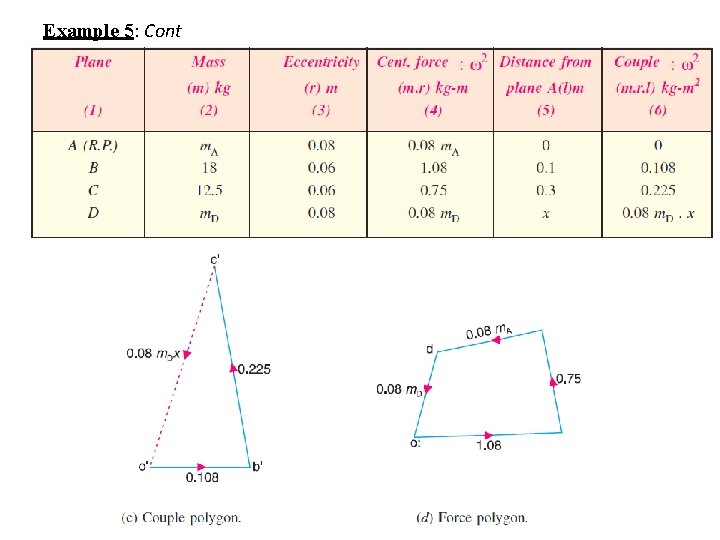
Example 5: Cont
- Slides: 11