
Balance in Mathematics John Mason Maths Mastery Feb

Balance in Mathematics John Mason Maths Mastery Feb 2020
Throat Clearing • Everything said here today is a conjecture • It must be tested in your experience • What matters most is what you notice happening for you as you engage with the tasks • How might you alter the task to use with your learners? • What pedagogic actions might you initiate?
Prelude • Has anyone here used a pair of scissors, or a wheel barrow, or a hammer? • Has anyone here ever picked up a tray with several things on it, and held it up in one hand? • Has anyone here used the image of a ‘balance’ when simplifying or solving equations?
Plan • My plan is to indicate how the notion of balance is fundamental to mathematical thinking, at all levels. • Start with some simple reasoning • See how it can become more complex as learners become more sophisticated • Magic Square Reasoning • Leading to algebraic reasoning about equations • Building on and developing intuitions about the Centre of Mass • Leads to the principle of moments • Single Fulcrum balance beams • Double Fulcra balance beams • Complex Fulcra
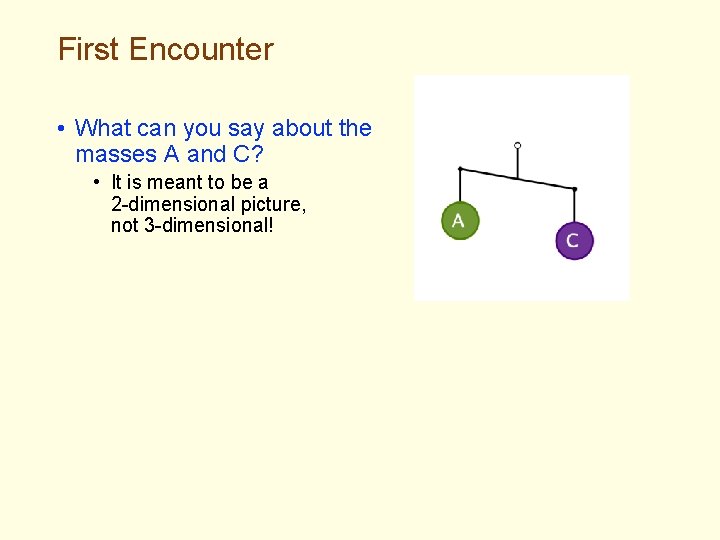
First Encounter • What can you say about the masses A and C? • It is meant to be a 2 -dimensional picture, not 3 -dimensional!
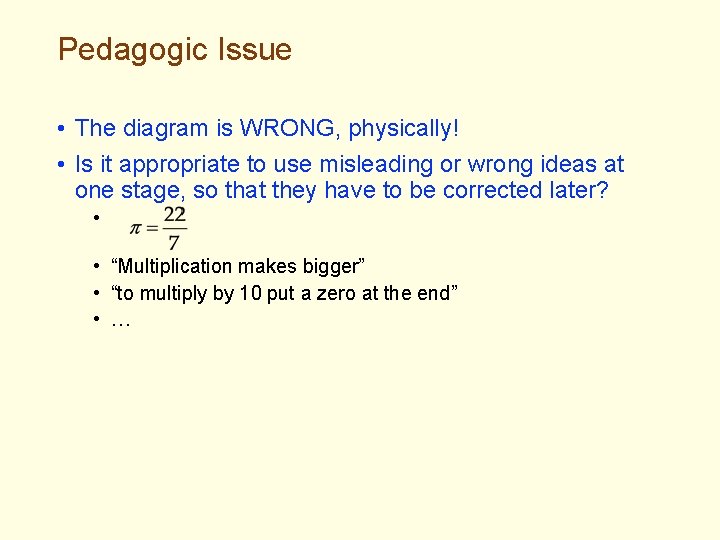
Pedagogic Issue • The diagram is WRONG, physically! • Is it appropriate to use misleading or wrong ideas at one stage, so that they have to be corrected later? • • “Multiplication makes bigger” • “to multiply by 10 put a zero at the end” • …
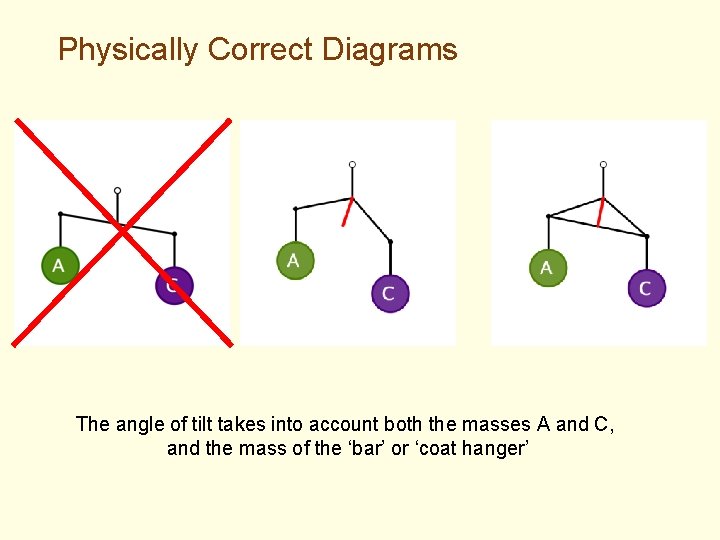
Physically Correct Diagrams The angle of tilt takes into account both the masses A and C, and the mass of the ‘bar’ or ‘coat hanger’
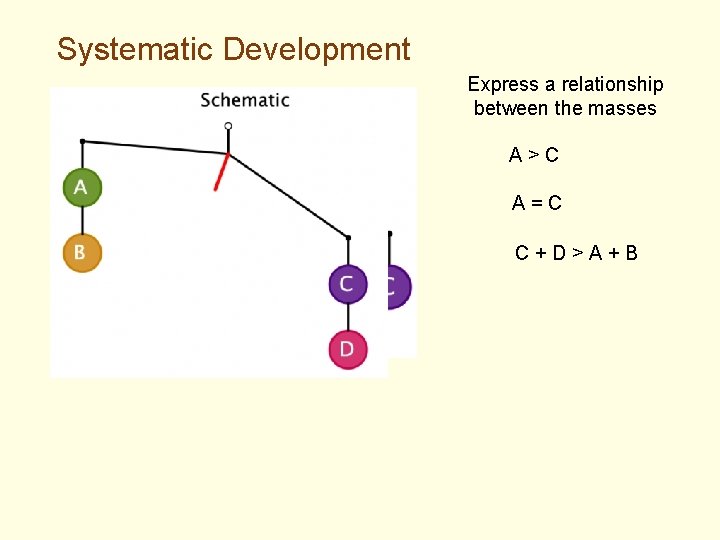
Systematic Development Express a relationship between the masses A>C A=C C+D>A+B
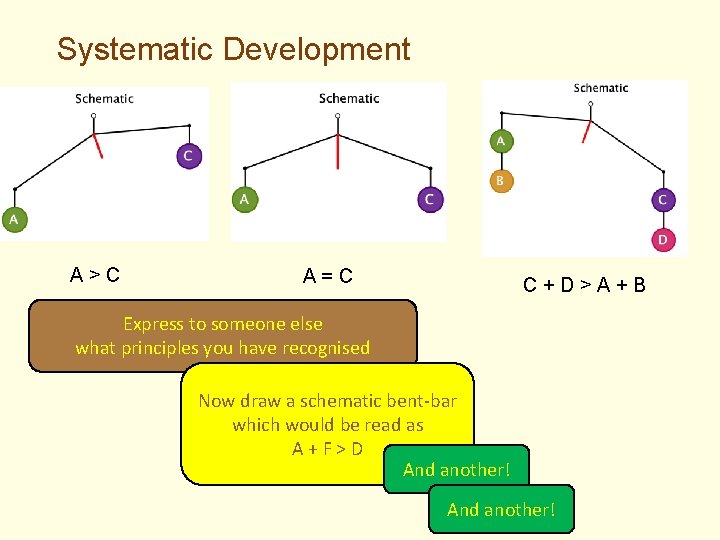
Systematic Development A>C A=C C+D>A+B Express to someone else what principles you have recognised Now draw a schematic bent-bar which would be read as A+F>D And another!
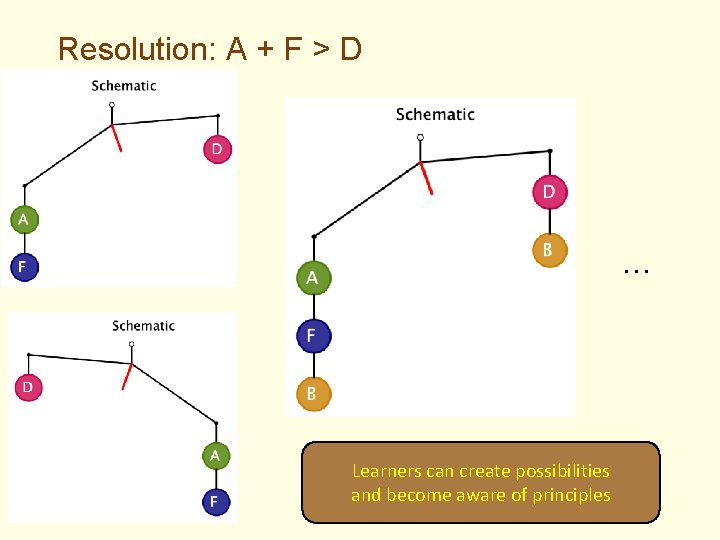
Resolution: A + F > D … Learners can create possibilities and become aware of principles
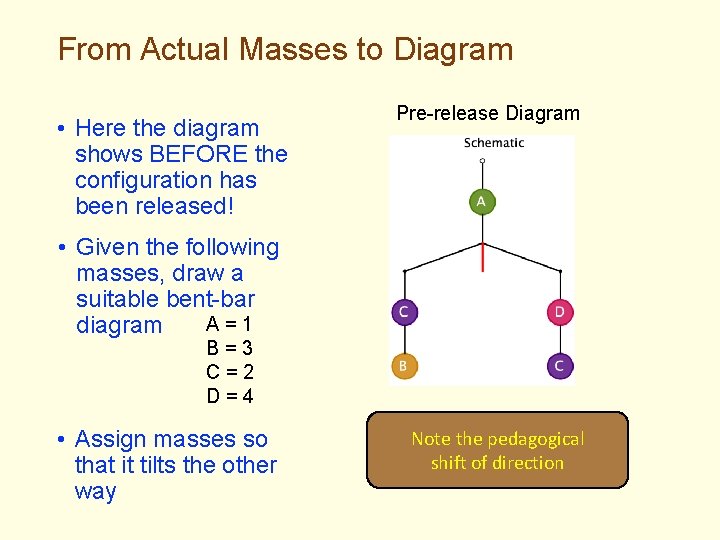
From Actual Masses to Diagram • Here the diagram shows BEFORE the configuration has been released! Pre-release Diagram • Given the following masses, draw a suitable bent-bar A=1 diagram B=3 C=2 D=4 • Assign masses so that it tilts the other way Note the pedagogical shift of direction
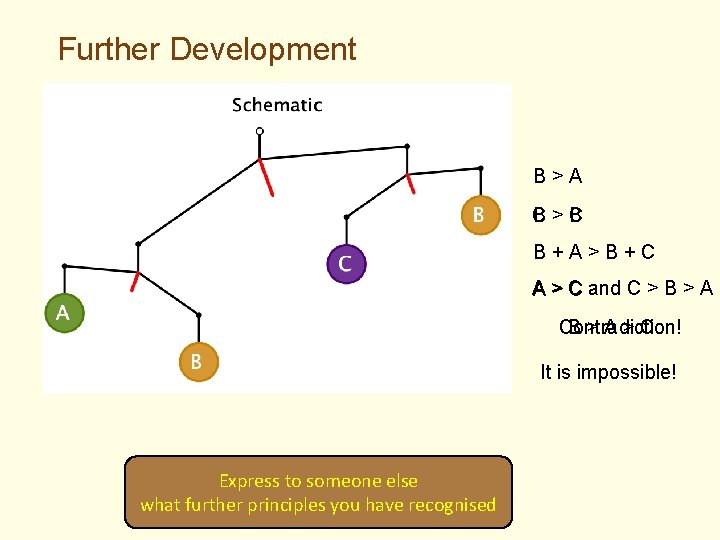
Further Development B>A C B>C B B+A>B+C A > C and C > B > A Contradiction! B>A>C It is impossible! Express to someone else what further principles you have recognised
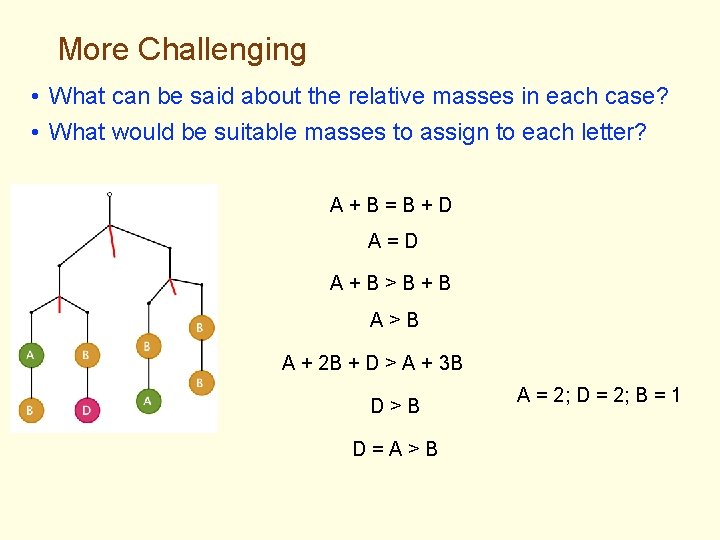
More Challenging • What can be said about the relative masses in each case? • What would be suitable masses to assign to each letter? A+B=B+D A=D A+B>B+B A>B A + 2 B + D > A + 3 B D>B D=A>B A = 2; D = 2; B = 1
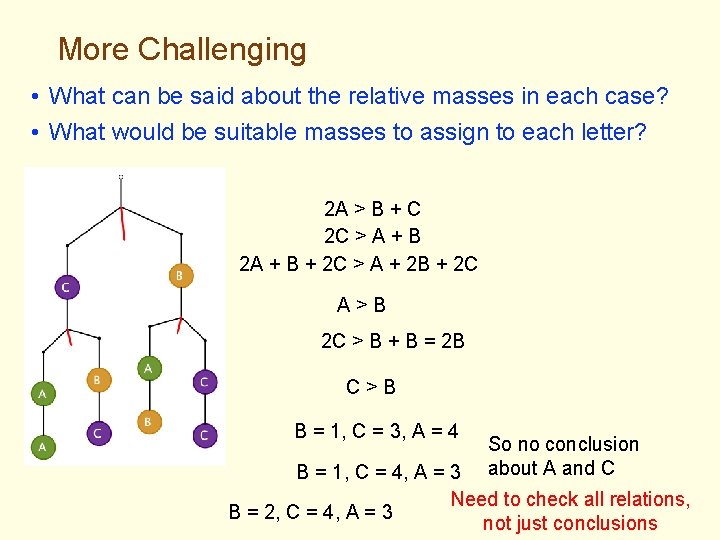
More Challenging • What can be said about the relative masses in each case? • What would be suitable masses to assign to each letter? 2 A > B + C 2 C > A + B 2 A + B + 2 C > A + 2 B + 2 C A>B 2 C > B + B = 2 B C>B B = 1, C = 3, A = 4 So no conclusion about A and C B = 1, C = 4, A = 3 Need to check all relations, B = 2, C = 4, A = 3 not just conclusions
Challenge • How many tasks like this are needed in order to learn from the experience? • Do you feel a need to practice? To rehearse? • By constructing your own, you can explore boundaries and problematic situations
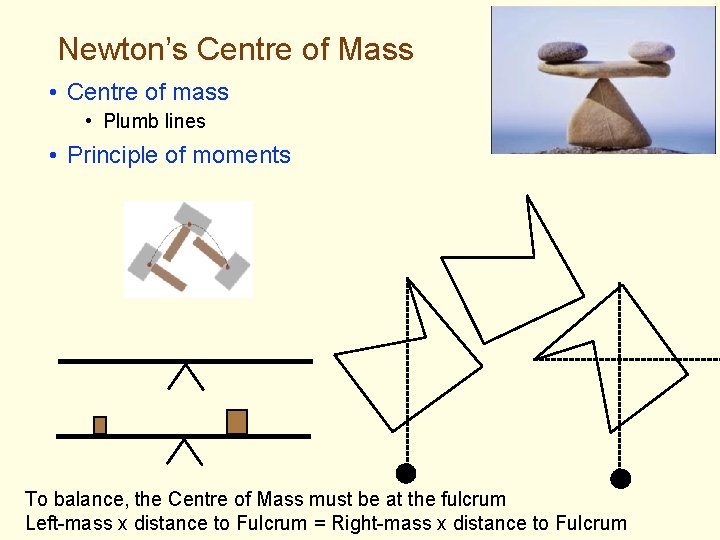
Newton’s Centre of Mass • Centre of mass • Plumb lines • Principle of moments To balance, the Centre of Mass must be at the fulcrum Left-mass x distance to Fulcrum = Right-mass x distance to Fulcrum
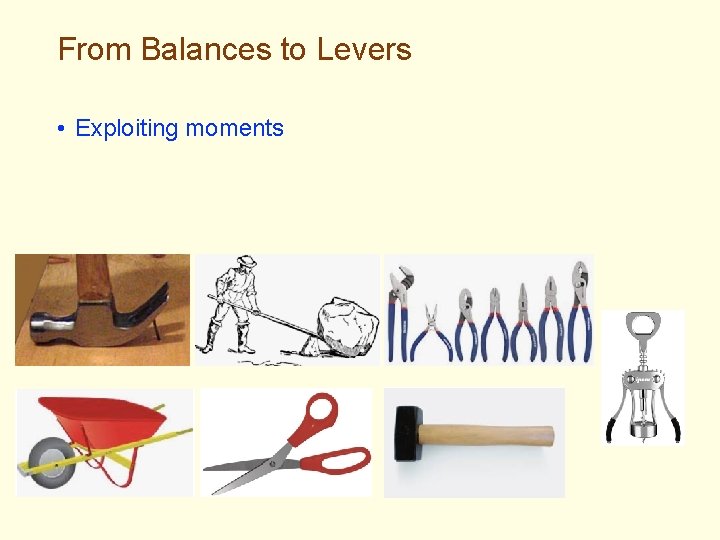
From Balances to Levers • Exploiting moments
Where we could go • I have a circular tray • It sits on a cylindrical post at its centre • How can I be sure that when I put things on the tray, it will not fall off the post?
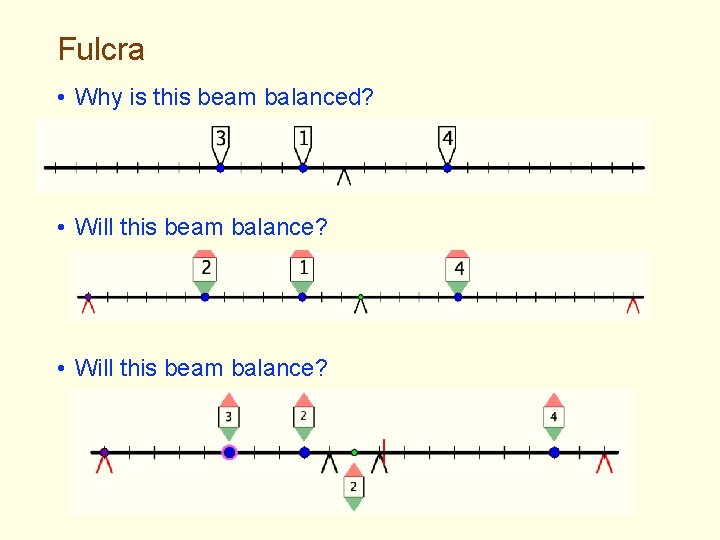
Fulcra • Why is this beam balanced? • Will this beam balance?
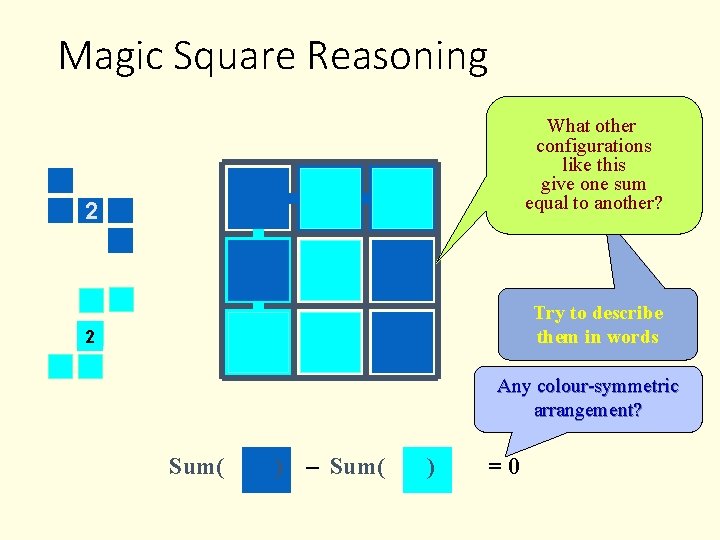
Magic Square Reasoning 2 6 7 2 1 5 9 8 2 3 What other configurations like this give one sum equal to another? Try to describe them in words 4 Any colour-symmetric arrangement? Sum( ) – Sum( ) =0
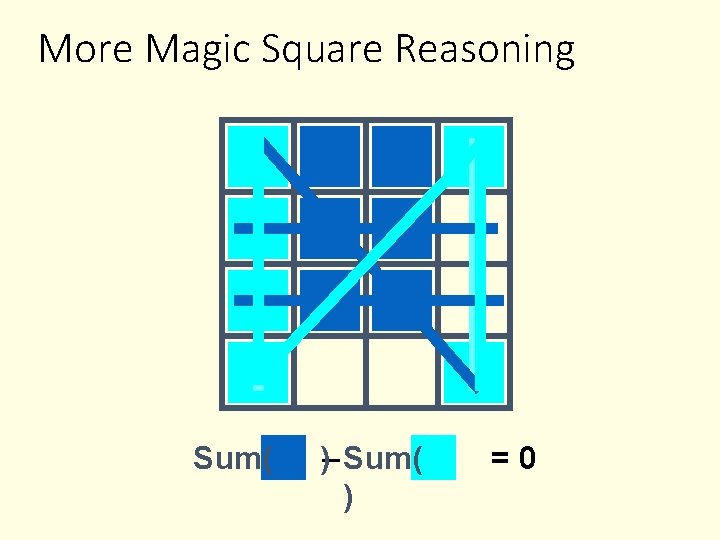
More Magic Square Reasoning Sum( )– Sum( ) =0
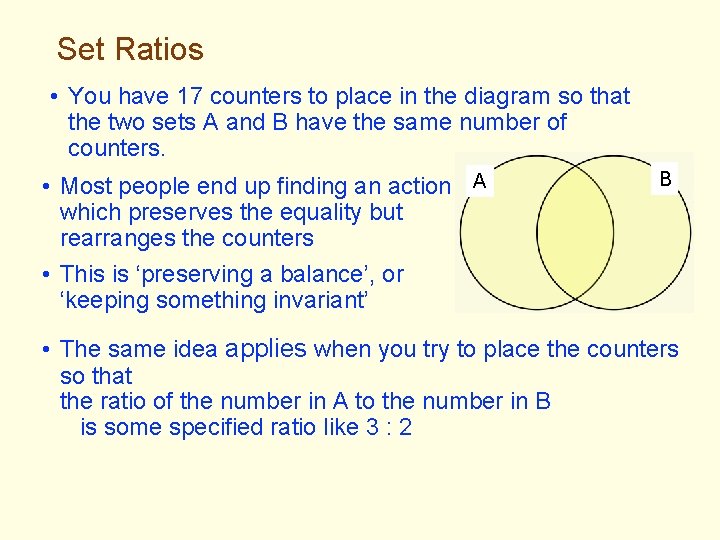
Set Ratios • You have 17 counters to place in the diagram so that the two sets A and B have the same number of counters. • Most people end up finding an action A which preserves the equality but rearranges the counters • This is ‘preserving a balance’, or ‘keeping something invariant’ B • The same idea applies when you try to place the counters so that the ratio of the number in A to the number in B is some specified ratio like 3 : 2
Follow-Up • John. Mason@open. ac. uk • PMTheta. com
- Slides: 23