
Balance Brain Health and Fall Prevention Majid Fotuhi
Balance, Brain Health, and Fall Prevention Majid Fotuhi, MD Ph. D Ingleside at King Farm & Rockville Office on Aging Rockville, MD September 12, 2014
Objectives § The impact of falls § Why do falls occur? § How to prevent falls? § How walking well can protect your brain 2
Falls Are Costly § Every year, 32 -42% of people aged ≥ 70 experience falls worldwide 1 § Fall frequency increases with age and frailty 1 § #1 reason for entry into long-term care facilities § Leading cause of injury-related death in older adults – every 35 minutes 2 1. 2. 3 WHO Global Report on Falls Prevention in Older Age. WHO; 2007: France. Sward D. Legisbrief. 2010; 18(21). National Conference of State Legislatures; Washington, DC.
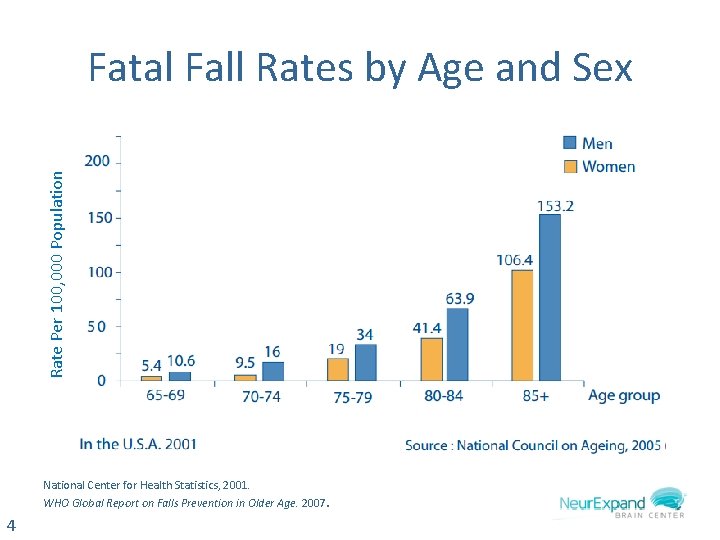
Rate Per 100, 000 Population Fatal Fall Rates by Age and Sex National Center for Health Statistics, 2001. WHO Global Report on Falls Prevention in Older Age. 2007. 4
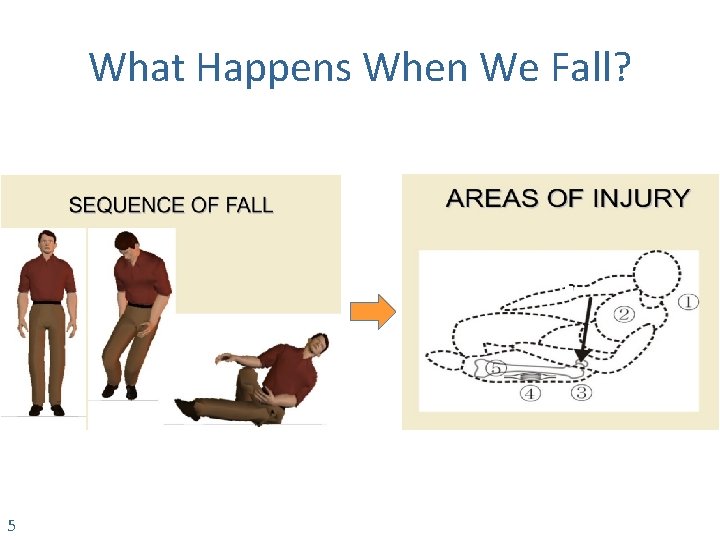
What Happens When We Fall? 5
Hip Fractures § Hospital stays extended to 20 days 1 § Older persons are likely to remain in the hospital for the rest of their lives 2 § 20% die within 1 year subsequent to falls 3 1. 2. 3. 6 The economic cost of hip fracture in the U. K. Health Promotion. The University of York; 2000: England. WHO Global Report on Falls Prevention in Older Age. WHO; 2007: France. Zuckerman JD. N Engl J Med. 1996; 334(23): 1519 -1525.

Post-fall Syndrome § § § Dependence Loss of autonomy Confusion Immobilization Depression WHO Global Report on Falls Prevention in Older Age. WHO; 2007: France. 7 Restriction in daily activities
Objectives § The impact of falls § Why do falls occur? § How to prevent falls? § How walking well can protect your brain 8
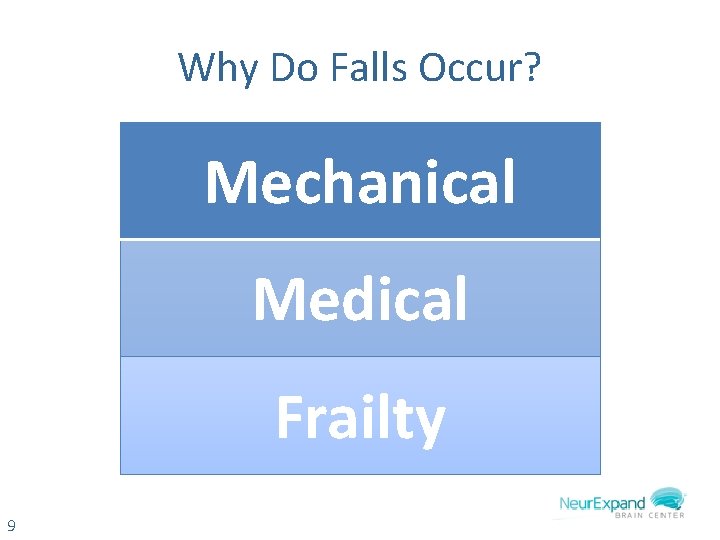
Why Do Falls Occur? Mechanical Medical Frailty 9
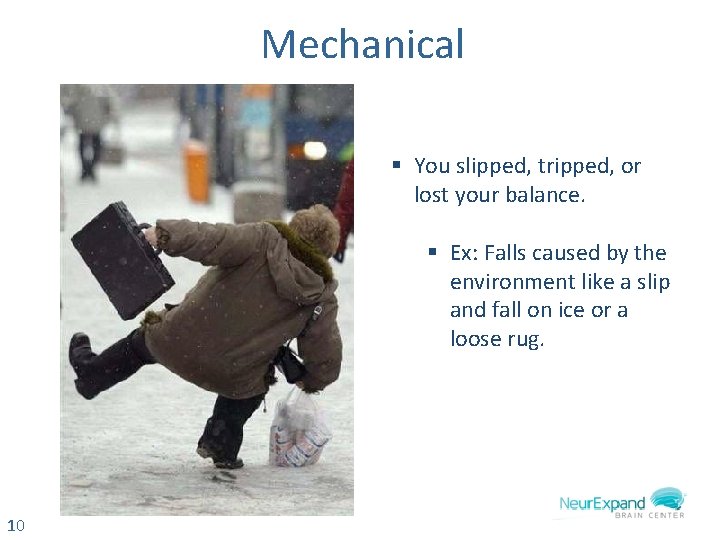
Mechanical § You slipped, tripped, or lost your balance. § Ex: Falls caused by the environment like a slip and fall on ice or a loose rug. 10
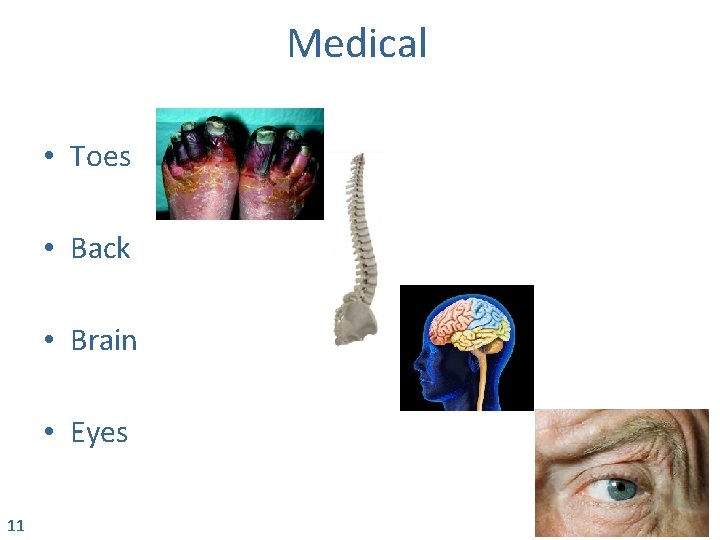
Medical • Toes • Back • Brain • Eyes 11
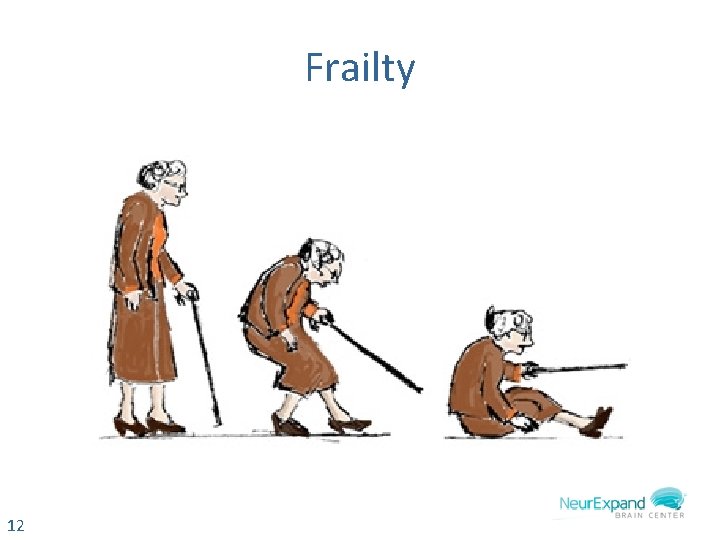
Frailty 12
Objectives § The impact of falls § Why do falls occur? § How to prevent falls? § How walking well can protect your brain 13
How You Can Reduce Your Fall Risk • Neurological Assessment (Ready) • Check Your Balance (Set) • Action (Go!) 14
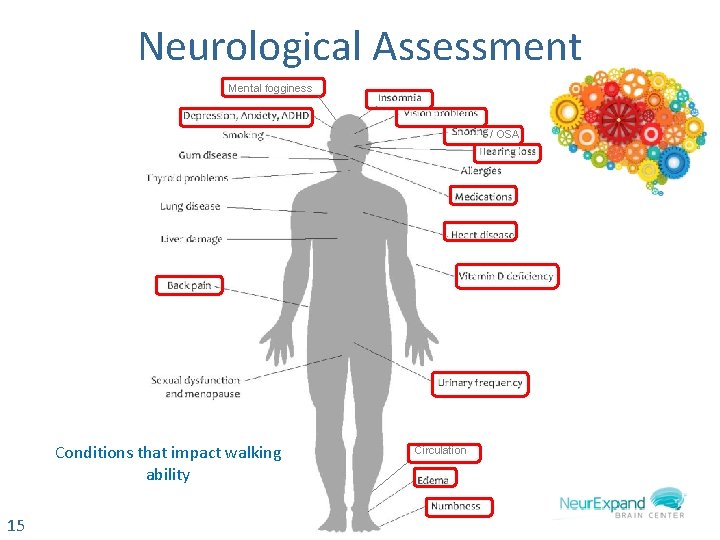
Neurological Assessment Mental fogginess / OSA Conditions that impact walking ability 15 Circulation
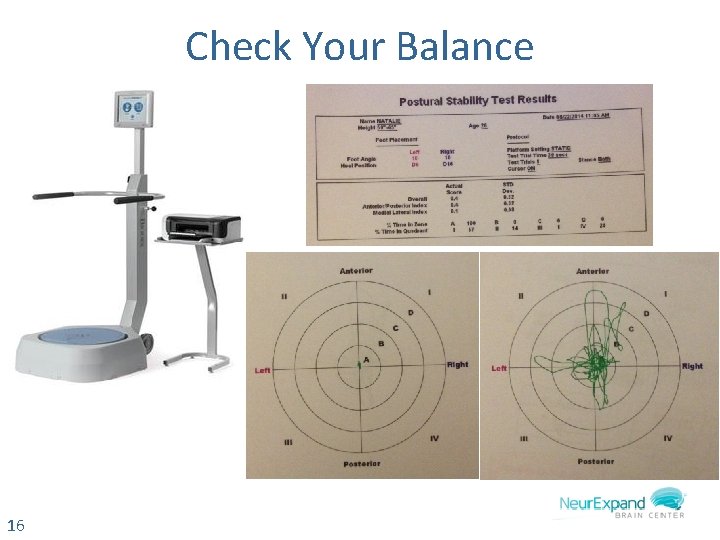
Check Your Balance 16

Action: 6 Steps to a Stable Stride 1. Get Sharper 2. Eat Well 3. Get Fit 4. See Well 5. Check Your Home 6. Sleep Well 17
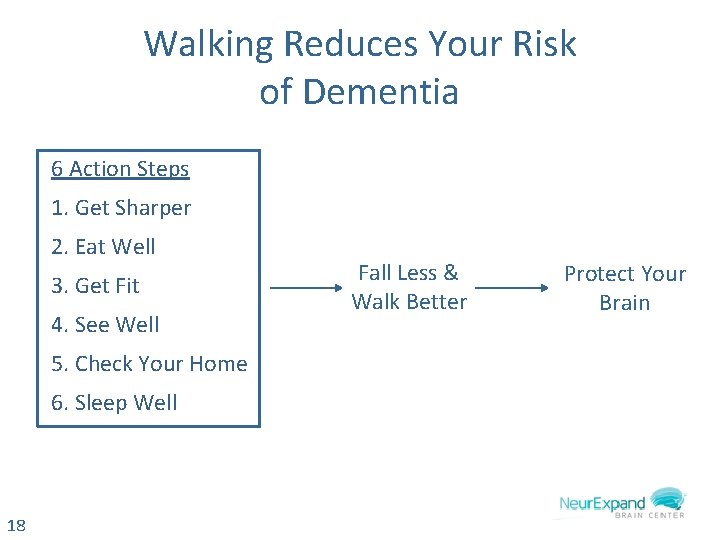
Walking Reduces Your Risk of Dementia 6 Action Steps 1. Get Sharper 2. Eat Well 3. Get Fit 4. See Well 5. Check Your Home 6. Sleep Well 18 Fall Less & Walk Better Protect Your Brain
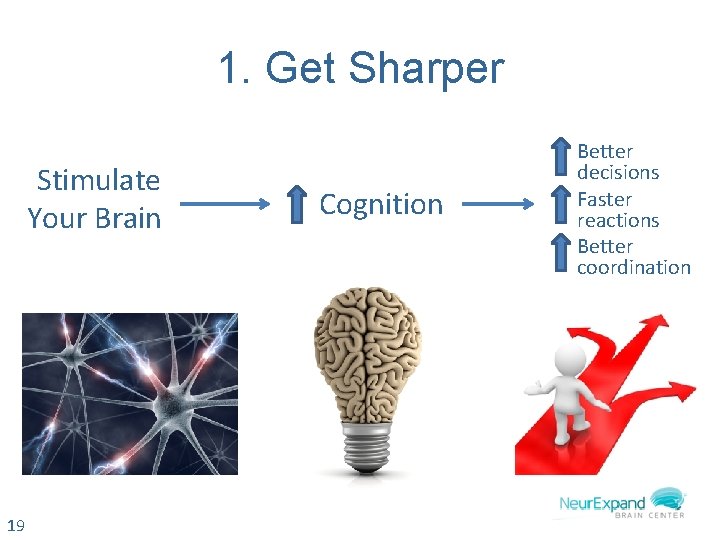
1. Get Sharper Stimulate Your Brain 19 Cognition Better decisions Faster reactions Better coordination
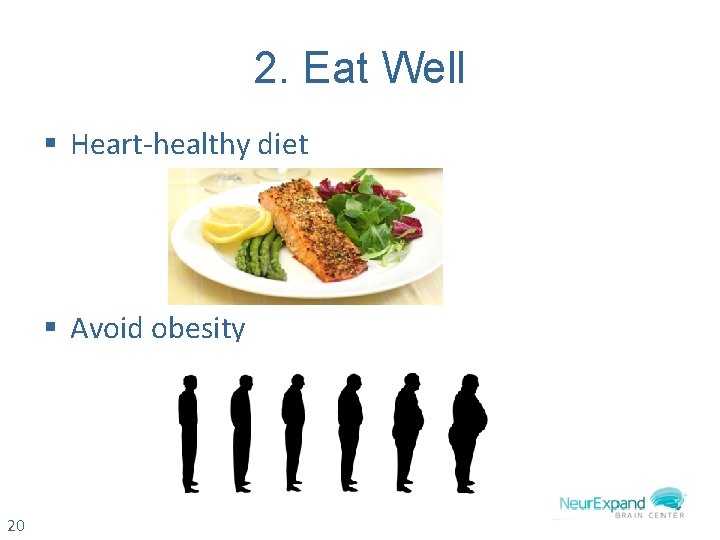
2. Eat Well § Heart-healthy diet § Avoid obesity 20
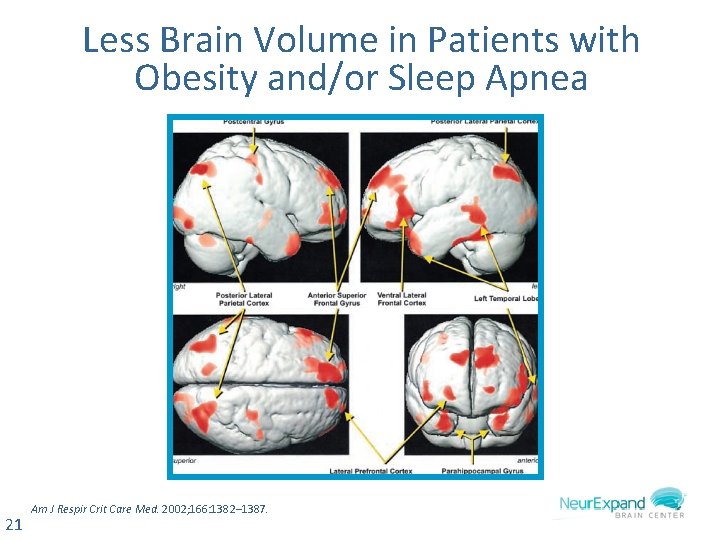
Less Brain Volume in Patients with Obesity and/or Sleep Apnea 21 Am J Respir Crit Care Med. 2002; 166: 1382– 1387.
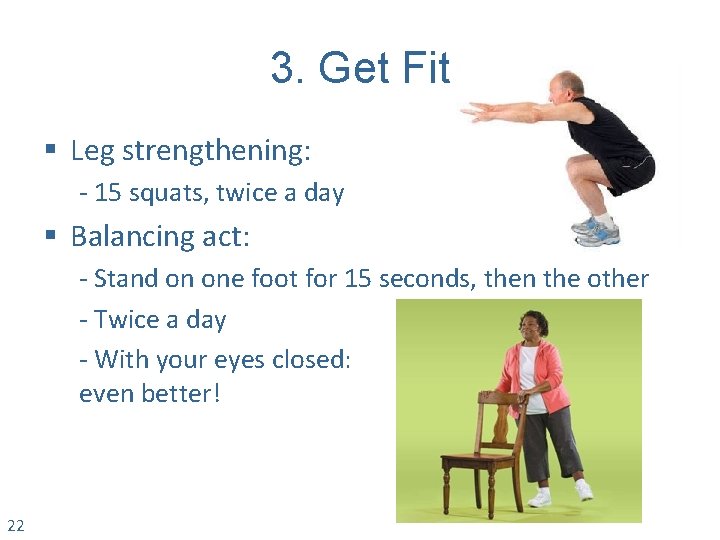
3. Get Fit § Leg strengthening: - 15 squats, twice a day § Balancing act: - Stand on one foot for 15 seconds, then the other - Twice a day - With your eyes closed: even better! 22
Physical Therapy § If your balance is poor, see a physical therapist soon. They consider – functional limitations – environmental hazards – Provide you with guided and progressive therapy – Multi-component exercise, which are: • beneficial for bone health and maintaining functional ability • the most effective physical therapy approach for prevention of falls and fractures Karinkanta S, et al. Nat Rev. 2010; 6: 396 -407. 23
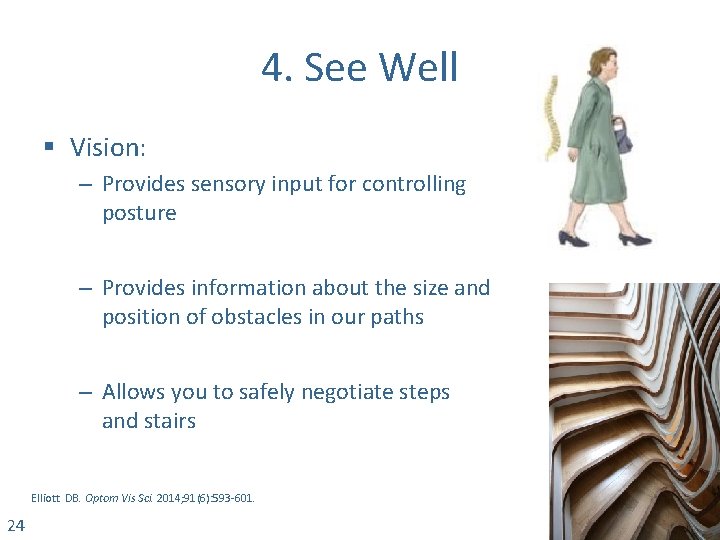
4. See Well § Vision: – Provides sensory input for controlling posture – Provides information about the size and position of obstacles in our paths – Allows you to safely negotiate steps and stairs Elliott DB. Optom Vis Sci. 2014; 91(6): 593 -601. 24
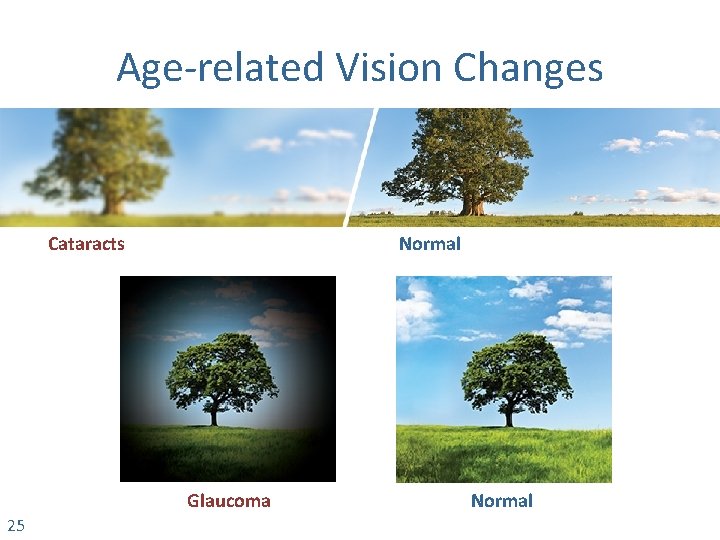
Age-related Vision Changes Cataracts Normal Glaucoma 25 Normal
5. Check Your Home https: //www. youtube. com/watch? v=n. FX 3 qa. YXDUg 26
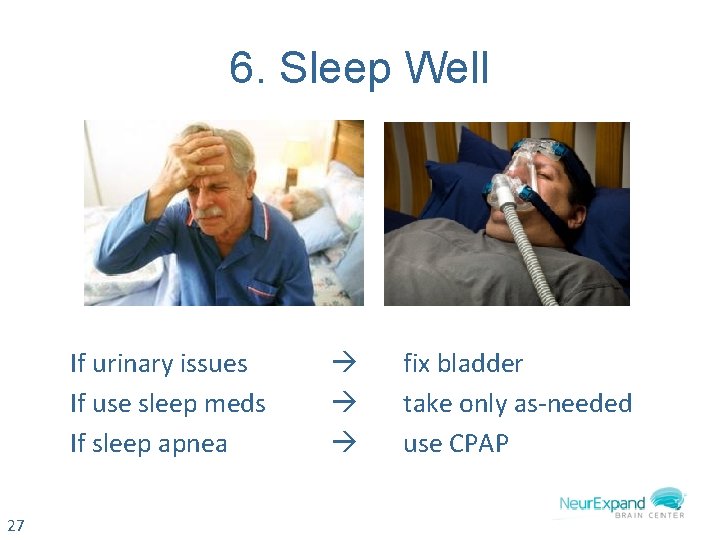
6. Sleep Well If urinary issues If use sleep meds If sleep apnea 27 fix bladder take only as-needed use CPAP
Action: 6 Steps to a Stable Stride 1. Get Sharper 2. Eat Well 3. Get Fit 4. See Well 5. Check Your Home 6. Sleep Well 28
Objectives § The impact of falls § Why do falls occur? § How to prevent falls? § How walking well can protect your brain 29
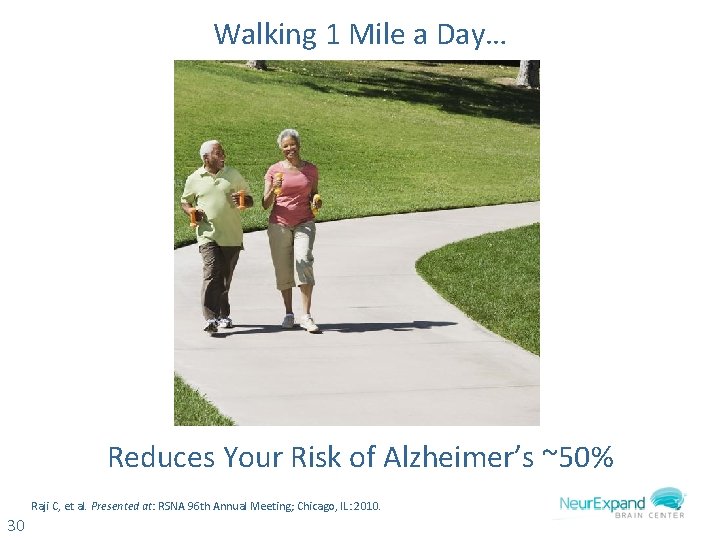
Walking 1 Mile a Day… Reduces Your Risk of Alzheimer’s ~50% Raji C, et al. Presented at: RSNA 96 th Annual Meeting; Chicago, IL: 2010. 30
Brain Fitness Program § A multidisciplinary program devoted to: • Reducing risk for Alzheimer’s disease and stroke • Making your brain feel 3 -5 years younger § Each patient receives a § comprehensive brain assessment § personalized treatment plan 31

Neur. Expand’s Unique Integrative Approach Comprehensive Diagnostics to Evaluate Brain Health 32 Customized Treatment Program to Maximize Brain Performance
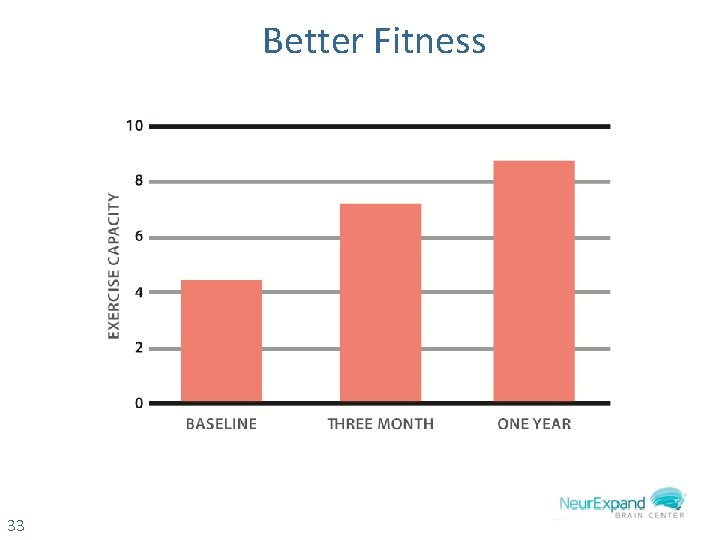
Better Fitness 33
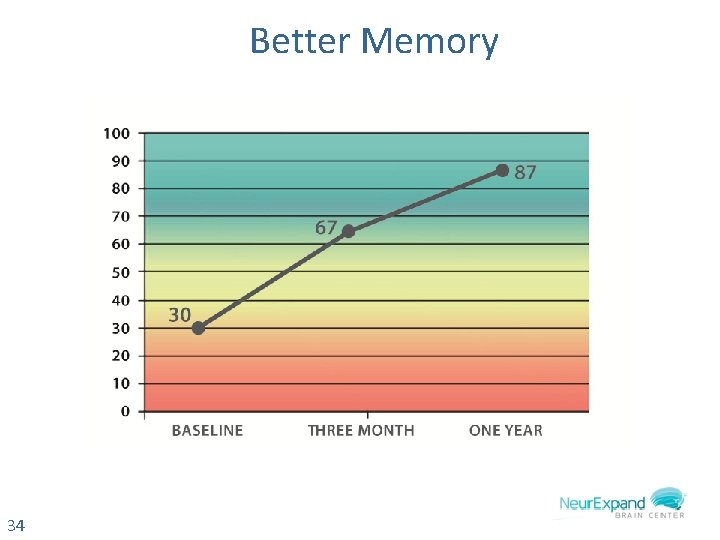
Better Memory 34
THANK YOU! INFO@NEUREXPAND. COM 1 -855 -638 -7397 35 5550 Friendship Blvd. Chevy Chase, MD 20815
- Slides: 35