
BALANCE AND CONNECTION IN THE NORTHERN INTERIOR THE
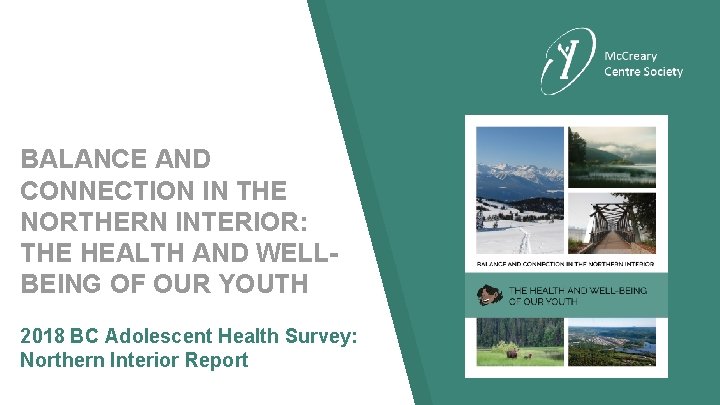
BALANCE AND CONNECTION IN THE NORTHERN INTERIOR: THE HEALTH AND WELLBEING OF OUR YOUTH 2018 BC Adolescent Health Survey: Northern Interior Report
Thank you to Northern Interior BC AHS administrators ▸ Chelan Zirul ▸ Sabrina De. Antoni ▸ Taylar Endean ▸ Laura Ewart ▸ Nikki Bennett ▸ Kim Garrison ▸ Wendy Bergman ▸ Jade Ginter ▸ Sarah Brown ▸ Kami Griffin ▸ Petrina Bryant ▸ Jamie Hill ▸ Stephanie Cardinal ▸ Megan Holland ▸ Shelly Carswell ▸ Traci Kaleta ▸ Christein Chase ▸ Shelley Kilburn ▸ Diana Cutting ▸ Dina Lafontaine
Thank you Northern Interior administrators ▸ Lesley Lown ▸ Susan Umstot ▸ Melanie Martin ▸ Brandi Varey ▸ Willow Mc. Intyre ▸ Tasheena William ▸ Mary Anne Munk ▸ Karen Wonders ▸ Michelle Naka ▸ Danelle Zwick ▸ Bernita Nesjan ▸ Shellie O'Brien ▸ Crystal Patenaude ▸ Patsy Perkull ▸ Christina Reid ▸ Anna Marie Schmidt
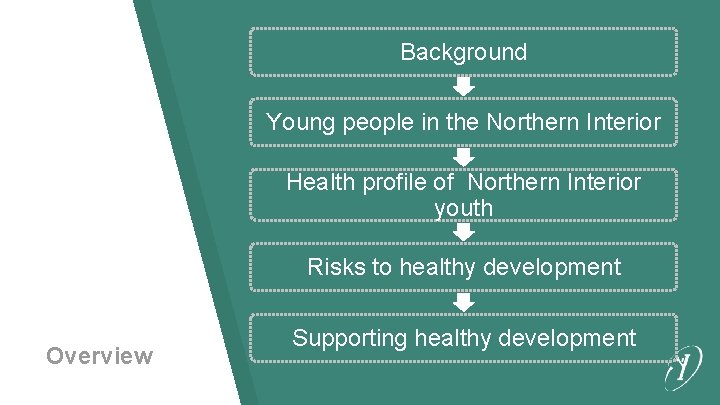
Background Young people in the Northern Interior Health profile of Northern Interior youth Risks to healthy development Overview Supporting healthy development

SCOPE OF THE 2018 BC AHS
Assigned sex & gender identity Mainstream public schools Statistically significant findings About the results
Young people in the Northern Interior
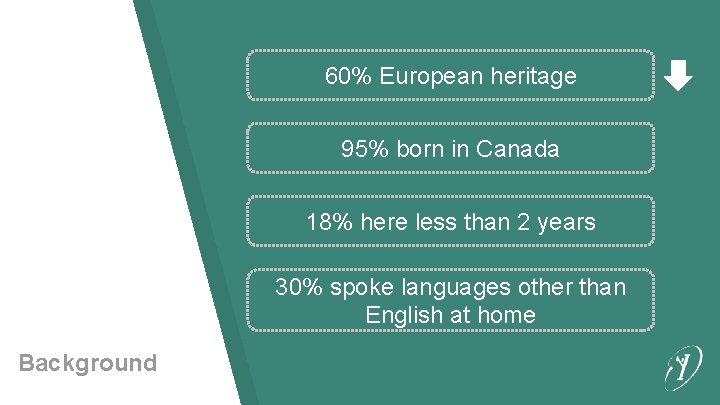
60% European heritage 95% born in Canada 18% here less than 2 years 30% spoke languages other than English at home Background
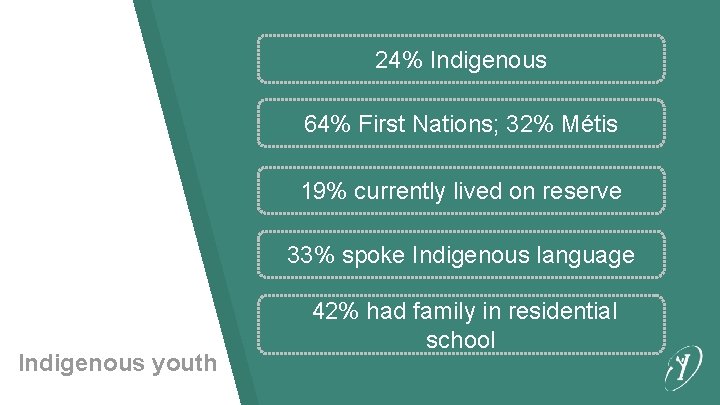
24% Indigenous 64% First Nations; 32% Métis 19% currently lived on reserve 33% spoke Indigenous language Indigenous youth 42% had family in residential school
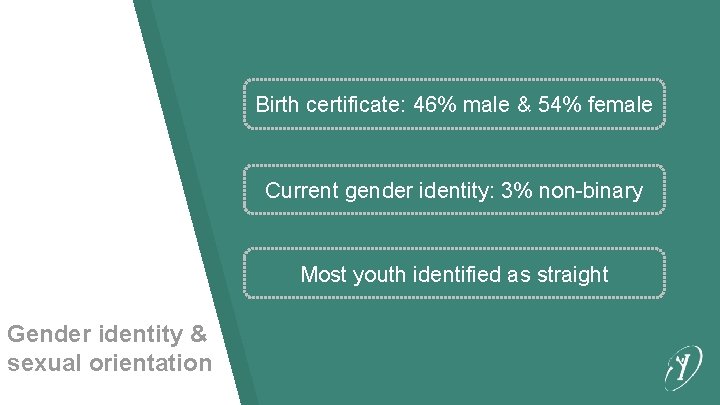
Birth certificate: 46% male & 54% female Current gender identity: 3% non-binary Most youth identified as straight Gender identity & sexual orientation
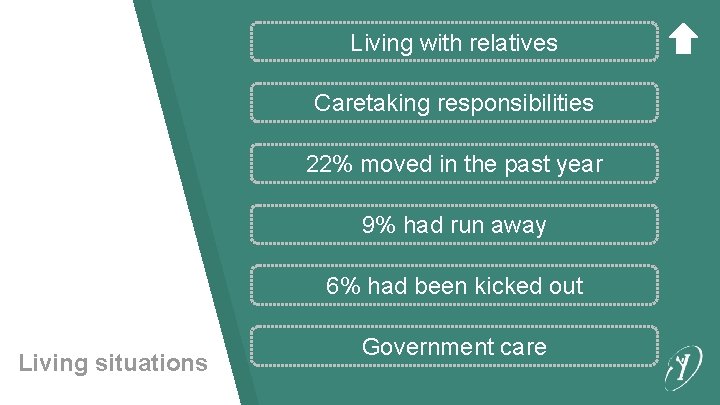
Living with relatives Caretaking responsibilities 22% moved in the past year 9% had run away 6% had been kicked out Living situations Government care
Health profile
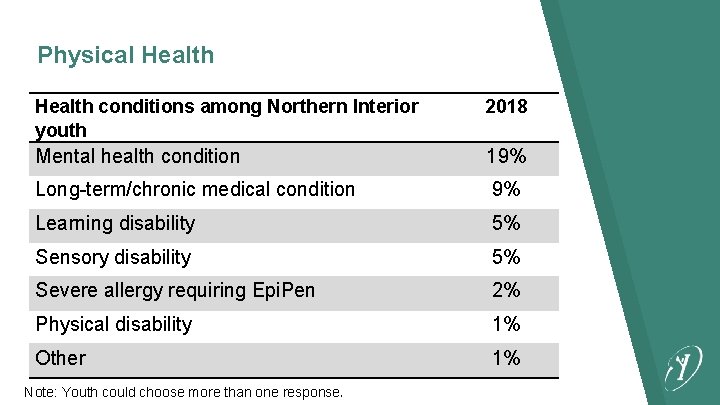
Physical Health conditions among Northern Interior youth 2018 Mental health condition 19% Long-term/chronic medical condition 9% Learning disability 5% Sensory disability 5% Severe allergy requiring Epi. Pen 2% Physical disability 1% Other 1% Note: Youth could choose more than one response.
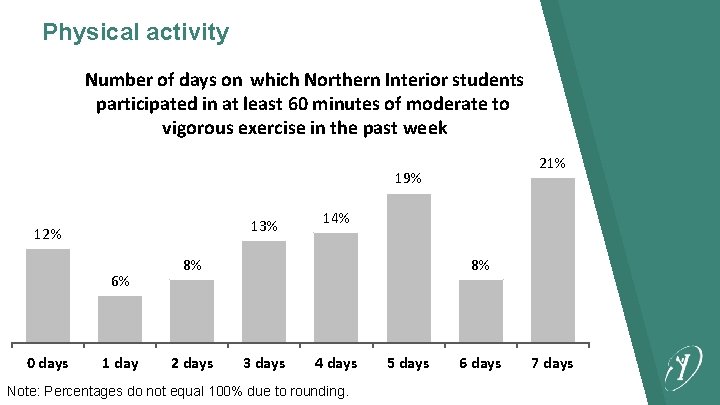
Physical activity Number of days on which Northern Interior students participated in at least 60 minutes of moderate to vigorous exercise in the past week 21% 19% 13% 12% 6% 0 days 1 day 14% 8% 2 days 8% 3 days 4 days Note: Percentages do not equal 100% due to rounding. 5 days 6 days 7 days
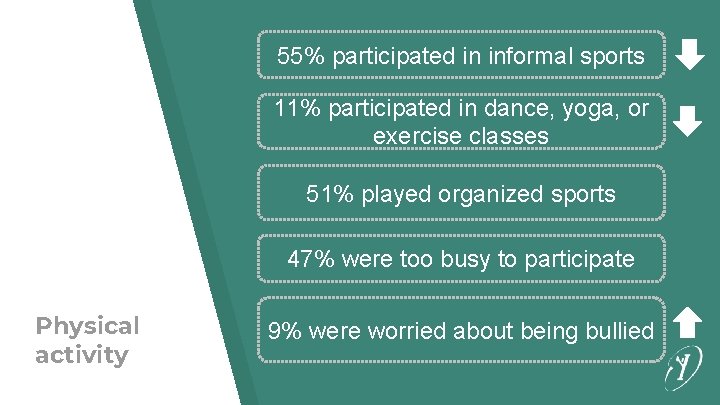
55% participated in informal sports 11% participated in dance, yoga, or exercise classes 51% played organized sports 47% were too busy to participate Physical activity 9% were worried about being bullied
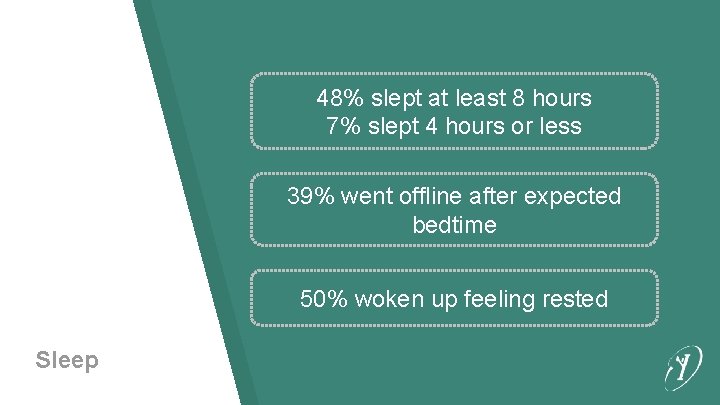
48% slept at least 8 hours 7% slept 4 hours or less 39% went offline after expected bedtime 50% woken up feeling rested Sleep
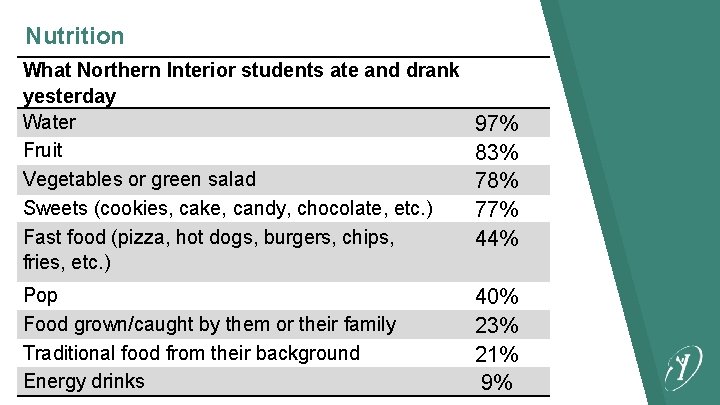
Nutrition What Northern Interior students ate and drank yesterday Water Fruit Vegetables or green salad Sweets (cookies, cake, candy, chocolate, etc. ) Fast food (pizza, hot dogs, burgers, chips, fries, etc. ) Pop Food grown/caught by them or their family Traditional food from their background Energy drinks 97% 83% 78% 77% 44% 40% 23% 21% 9%
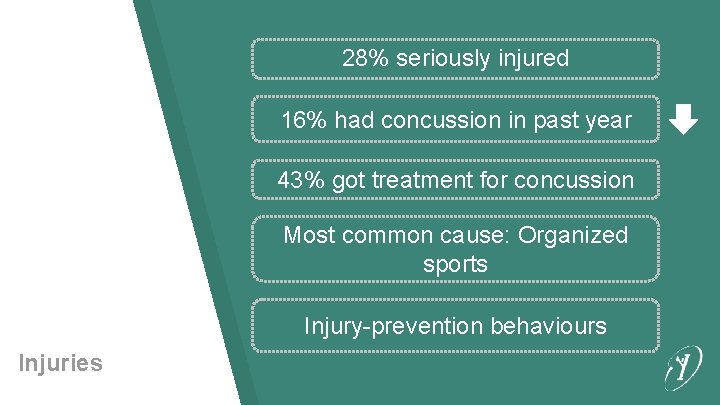
28% seriously injured 16% had concussion in past year 43% got treatment for concussion Most common cause: Organized sports Injury-prevention behaviours Injuries
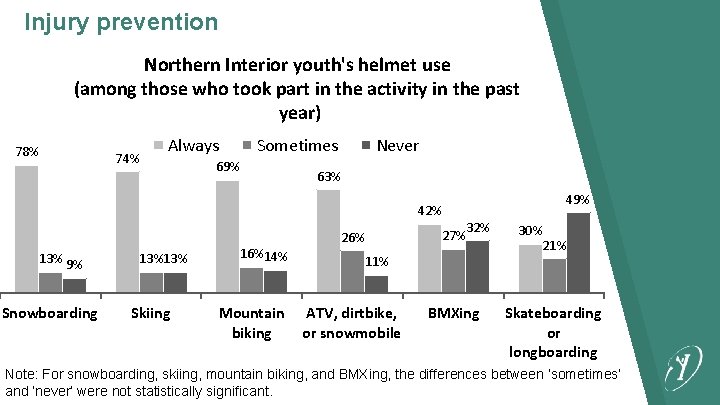
Injury prevention Northern Interior youth's helmet use (among those who took part in the activity in the past year) 78% 74% Always Sometimes 69% Never 63% 42% 13% 9% Snowboarding 13%13% Skiing 16%14% Mountain biking 26% 32% 27% 11% ATV, dirtbike, or snowmobile BMXing 49% 30% 21% Skateboarding or longboarding Note: For snowboarding, skiing, mountain biking, and BMXing, the differences between ‘sometimes’ and ‘never’ were not statistically significant.
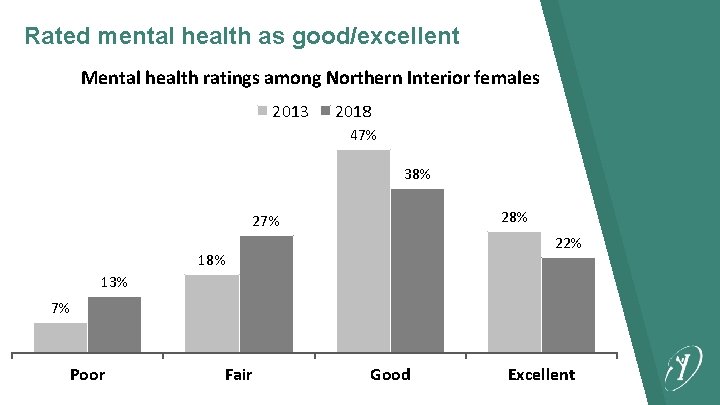
Rated mental health as good/excellent Mental health ratings among Northern Interior females 2013 2018 47% 38% 27% 22% 18% 13% 7% Poor Fair Good Excellent
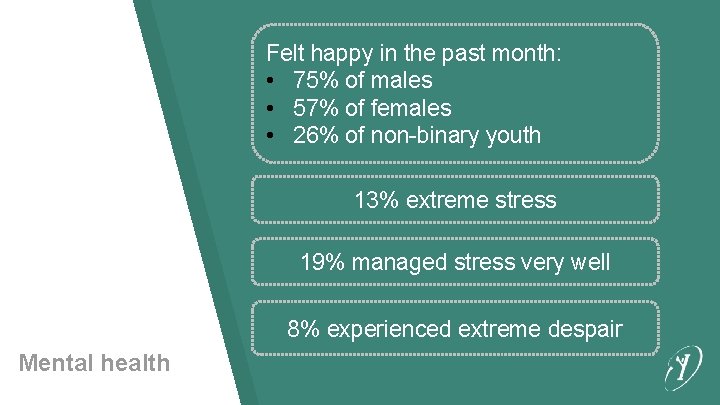
Felt happy in the past month: • 75% of males • 57% of females • 26% of non-binary youth 13% extreme stress 19% managed stress very well 8% experienced extreme despair Mental health
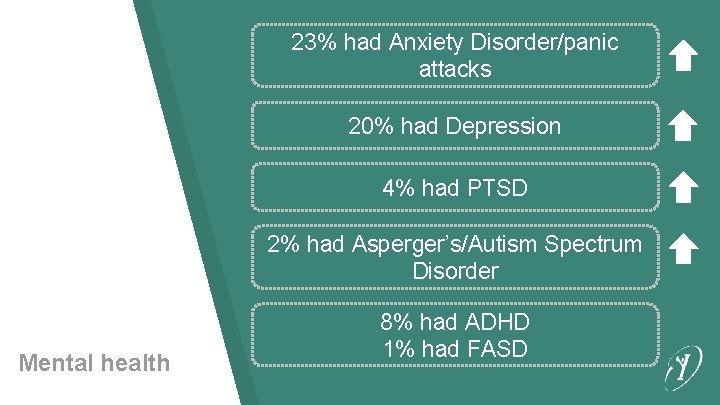
23% had Anxiety Disorder/panic attacks 20% had Depression 4% had PTSD 2% had Asperger’s/Autism Spectrum Disorder Mental health 8% had ADHD 1% had FASD
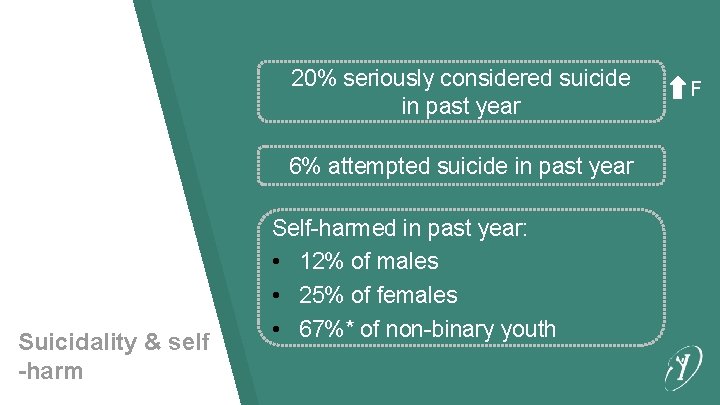
20% seriously considered suicide in past year 6% attempted suicide in past year Suicidality & self -harm Self-harmed in past year: • 12% of males • 25% of females • 67%* of non-binary youth F
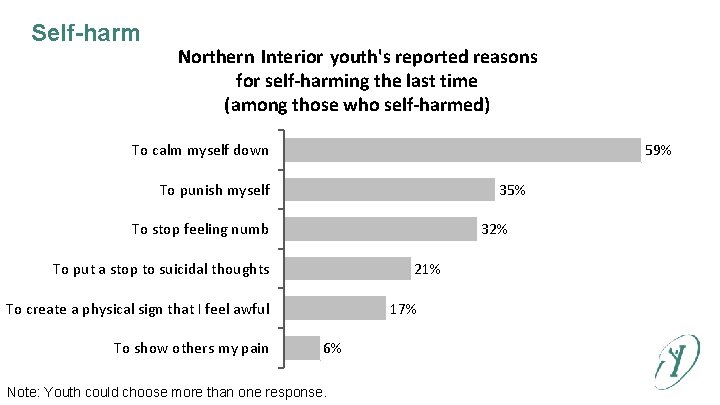
Self-harm Northern Interior youth's reported reasons for self-harming the last time (among those who self-harmed) To calm myself down 59% To punish myself 35% To stop feeling numb 32% To put a stop to suicidal thoughts 21% To create a physical sign that I feel awful To show others my pain 17% 6% Note: Youth could choose more than one response.
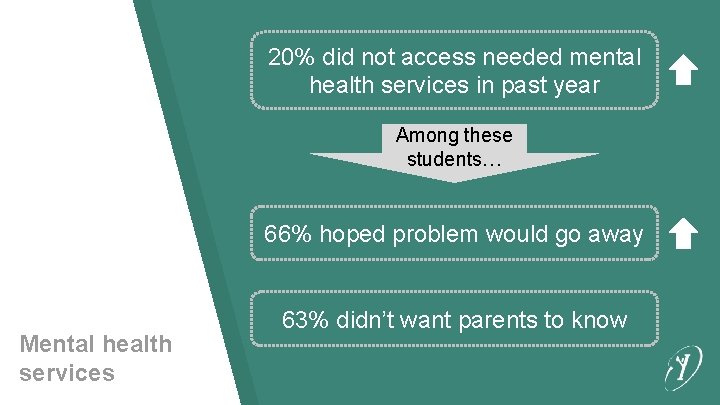
20% did not access needed mental health services in past year Among these students… 66% hoped problem would go away Mental health services 63% didn’t want parents to know
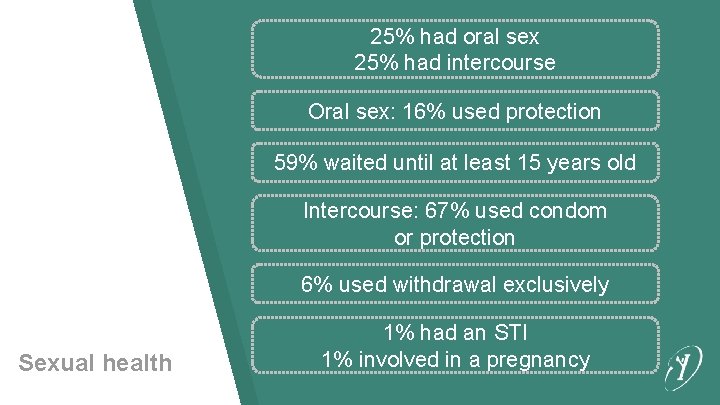
25% had oral sex 25% had intercourse Oral sex: 16% used protection 59% waited until at least 15 years old Intercourse: 67% used condom or protection 6% used withdrawal exclusively Sexual health 1% had an STI 1% involved in a pregnancy
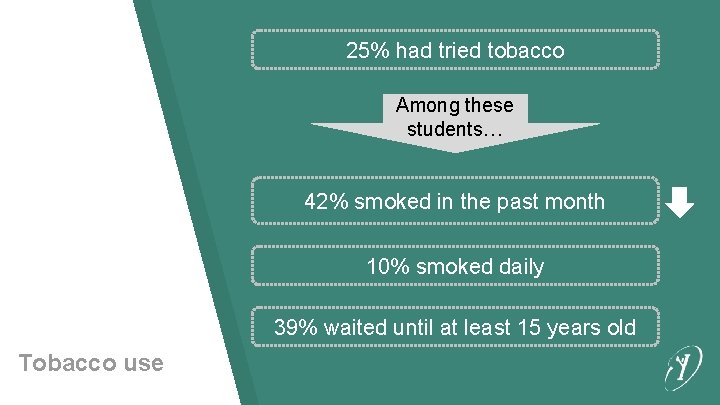
25% had tried tobacco Among these students… 42% smoked in the past month 10% smoked daily 39% waited until at least 15 years old Tobacco use
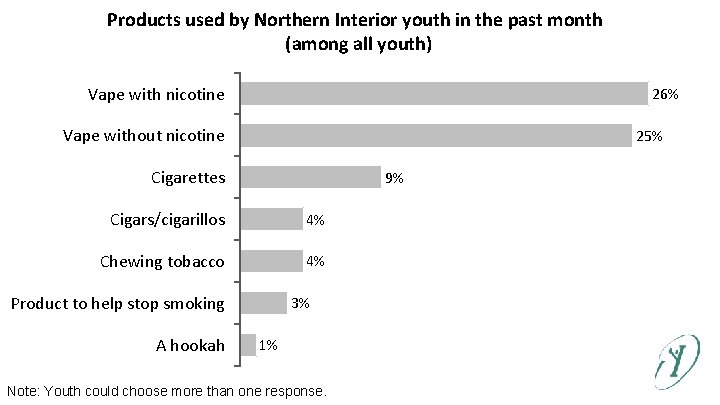
Products used by Northern Interior youth in the past month (among all youth) Vape with nicotine 26% Vape without nicotine 25% Cigarettes 9% Cigars/cigarillos 4% Chewing tobacco 4% Product to help stop smoking A hookah 3% 1% Note: Youth could choose more than one response.
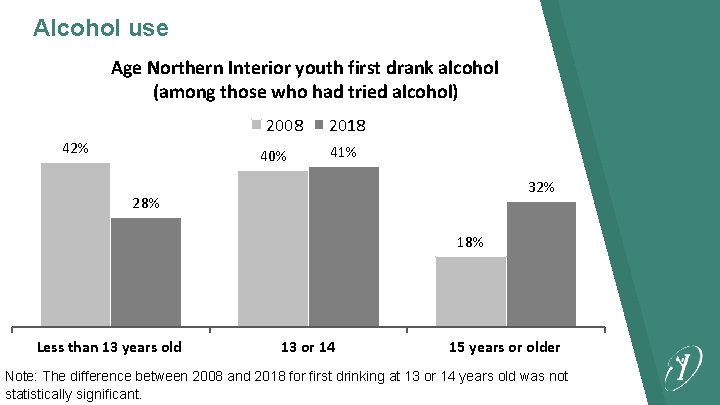
Alcohol use Age Northern Interior youth first drank alcohol (among those who had tried alcohol) 2008 42% 40% 2018 41% 32% 28% 18% Less than 13 years old 13 or 14 15 years or older Note: The difference between 2008 and 2018 for first drinking at 13 or 14 years old was not statistically significant.
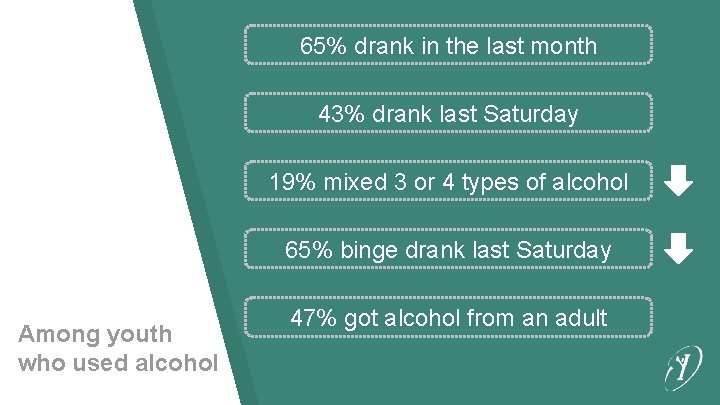
65% drank in the last month 43% drank last Saturday 19% mixed 3 or 4 types of alcohol 65% binge drank last Saturday Among youth who used alcohol 47% got alcohol from an adult
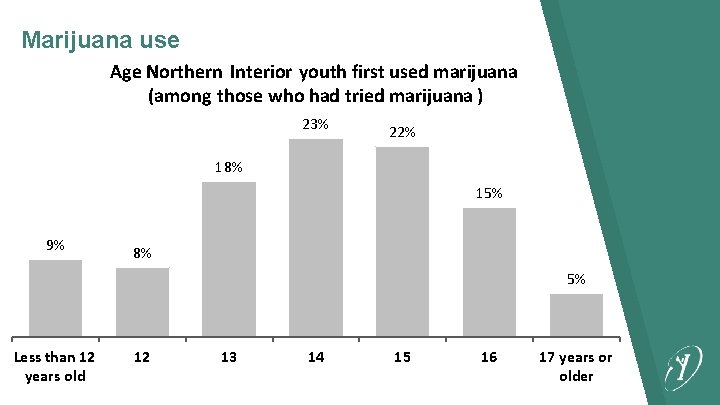
Marijuana use Age Northern Interior youth first used marijuana (among those who had tried marijuana ) 23% 22% 18% 15% 9% 8% 5% Less than 12 years old 12 13 14 15 16 17 years or older
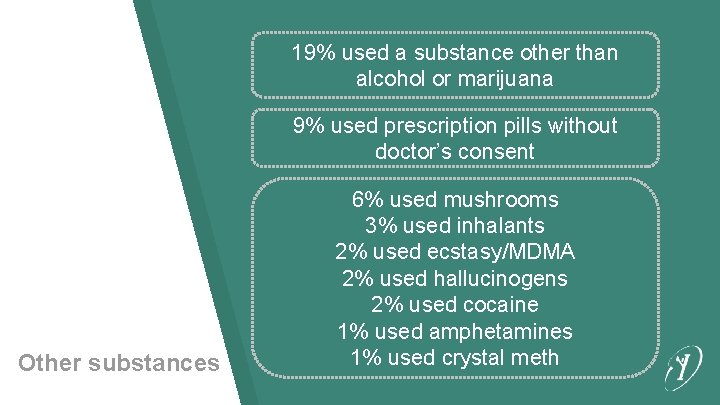
19% used a substance other than alcohol or marijuana 9% used prescription pills without doctor’s consent Other substances 6% used mushrooms 3% used inhalants 2% used ecstasy/MDMA 2% used hallucinogens 2% used cocaine 1% used amphetamines 1% used crystal meth
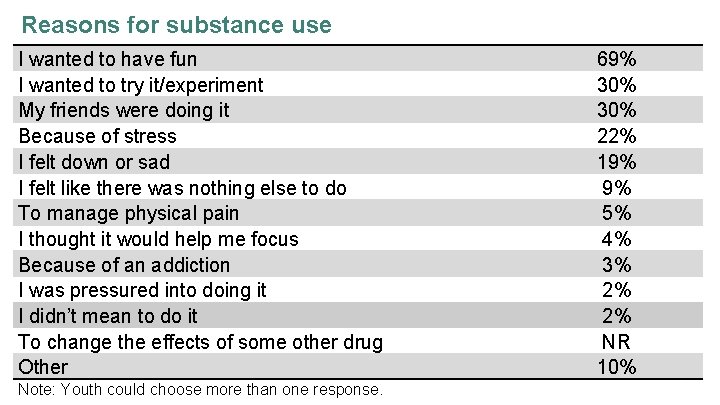
Reasons for substance use I wanted to have fun I wanted to try it/experiment My friends were doing it Because of stress I felt down or sad I felt like there was nothing else to do To manage physical pain I thought it would help me focus Because of an addiction I was pressured into doing it I didn’t mean to do it To change the effects of some other drug Other Note: Youth could choose more than one response. 69% 30% 22% 19% 9% 5% 4% 3% 2% 2% NR 10%
Risks to healthy development
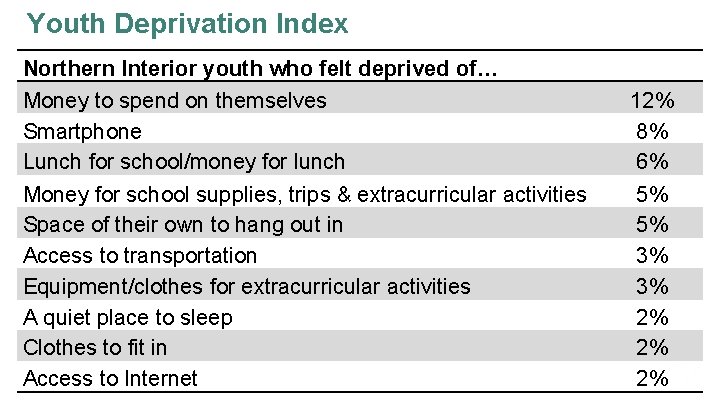
Youth Deprivation Index Northern Interior youth who felt deprived of… Money to spend on themselves Smartphone Lunch for school/money for lunch Money for school supplies, trips & extracurricular activities Space of their own to hang out in Access to transportation Equipment/clothes for extracurricular activities A quiet place to sleep Clothes to fit in Access to Internet 12% 8% 6% 5% 5% 3% 3% 2% 2% 2%
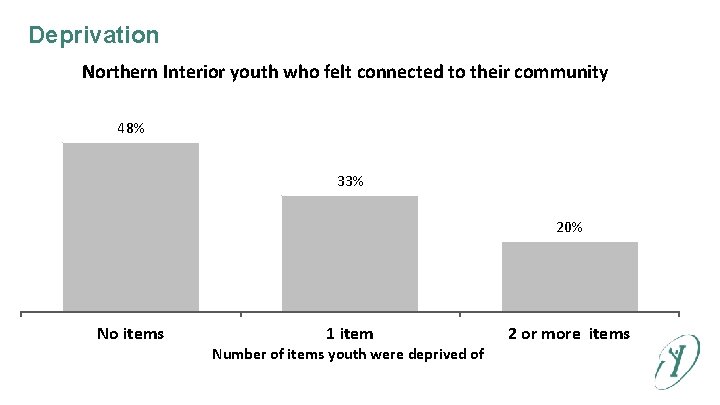
Deprivation Northern Interior youth who felt connected to their community 48% 33% 20% No items 1 item Number of items youth were deprived of 2 or more items
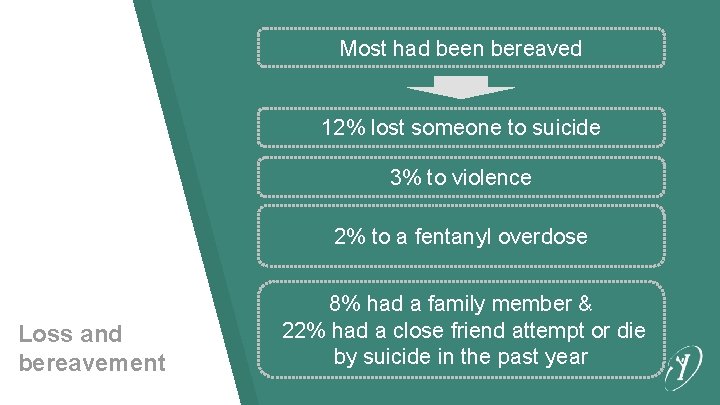
Most had been bereaved 12% lost someone to suicide 3% to violence 2% to a fentanyl overdose Loss and bereavement 8% had a family member & 22% had a close friend attempt or die by suicide in the past year
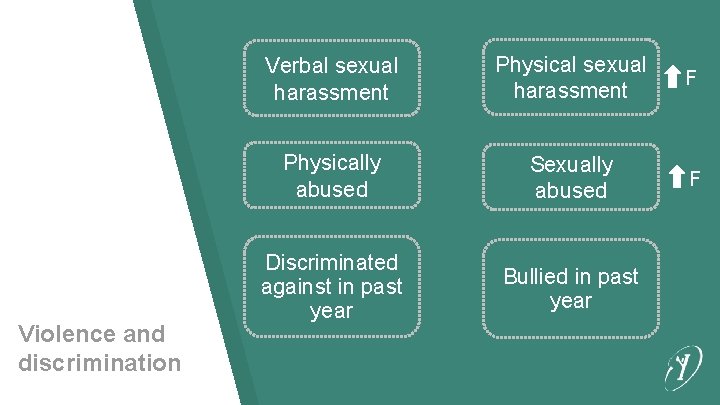
Violence and discrimination Verbal sexual harassment Physical sexual harassment F Physically abused Sexually abused F Discriminated against in past year Bullied in past year
Supporting healthy development
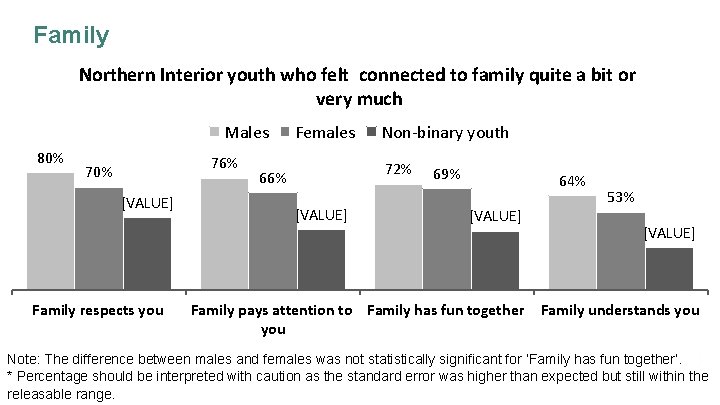
Family Northern Interior youth who felt connected to family quite a bit or very much Males 80% 76% 70% [VALUE] Family respects you Females Non-binary youth 72% 66% [VALUE] 69% 64% [VALUE] Family pays attention to Family has fun together you 53% [VALUE] Family understands you Note: The difference between males and females was not statistically significant for ‘Family has fun together’. * Percentage should be interpreted with caution as the standard error was higher than expected but still within the releasable range.
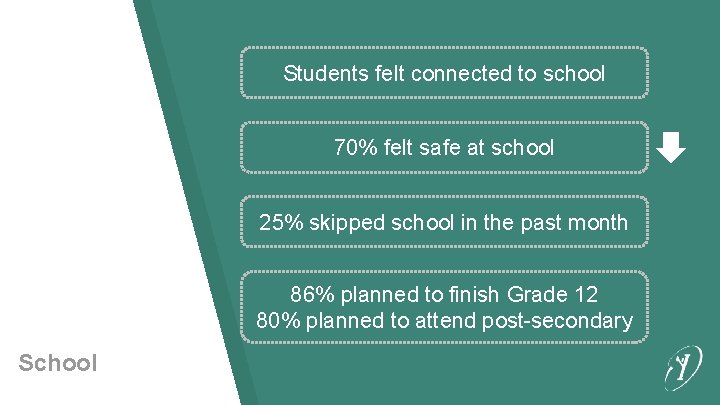
Students felt connected to school 70% felt safe at school 25% skipped school in the past month 86% planned to finish Grade 12 80% planned to attend post-secondary School
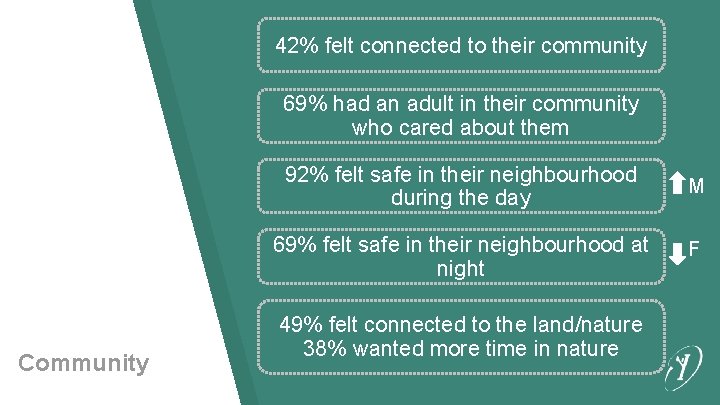
42% felt connected to their community 69% had an adult in their community who cared about them Community 92% felt safe in their neighbourhood during the day M 69% felt safe in their neighbourhood at night F 49% felt connected to the land/nature 38% wanted more time in nature
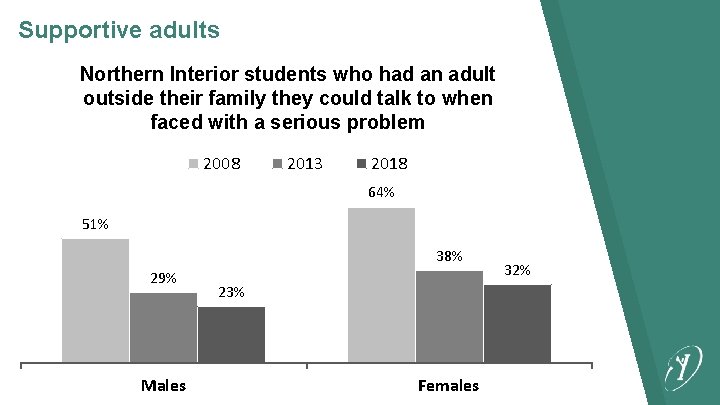
Supportive adults Northern Interior students who had an adult outside their family they could talk to when faced with a serious problem 2008 2013 2018 64% 51% 38% 29% Males 23% Females 32%
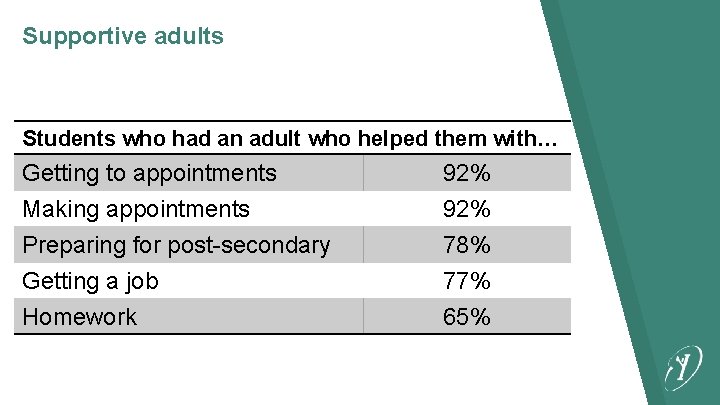
Supportive adults Students who had an adult who helped them with… Getting to appointments Making appointments Preparing for post-secondary Getting a job Homework 92% 78% 77% 65%
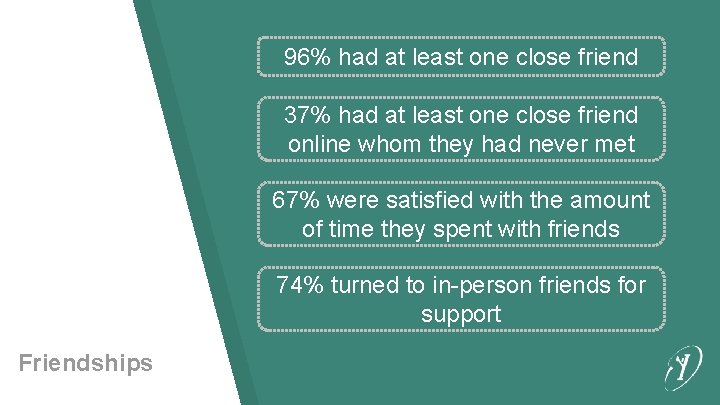
96% had at least one close friend 37% had at least one close friend online whom they had never met 67% were satisfied with the amount of time they spent with friends 74% turned to in-person friends for support Friendships
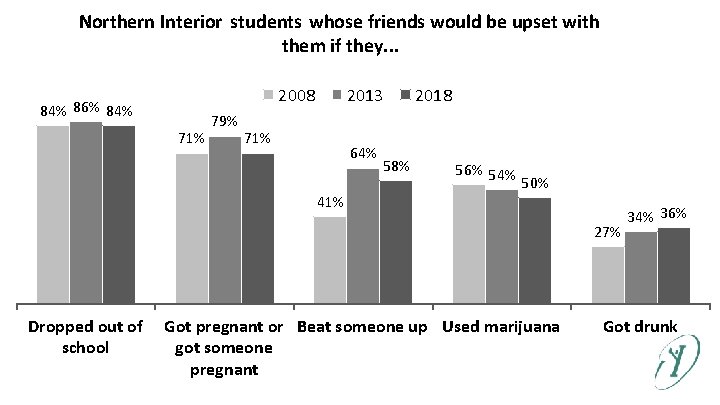
Northern Interior students whose friends would be upset with them if they. . . 2008 84% 86% 84% 71% 79% 2013 71% 64% 41% 58% 2018 56% 54% 50% 27% Dropped out of school Got pregnant or Beat someone up Used marijuana got someone pregnant 34% 36% Got drunk
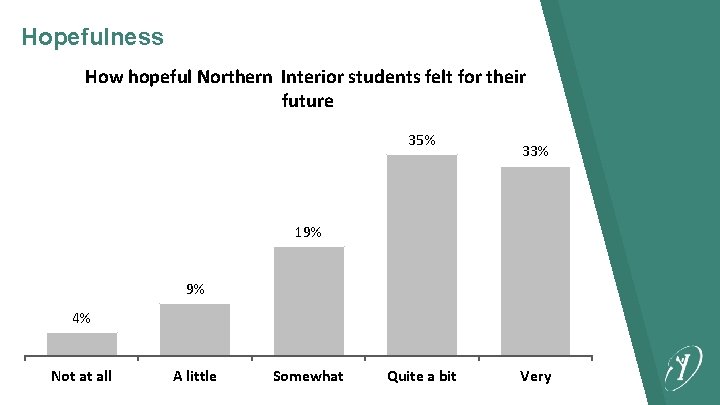
Hopefulness How hopeful Northern Interior students felt for their future 35% 33% 19% 9% 4% Not at all A little Somewhat Quite a bit Very
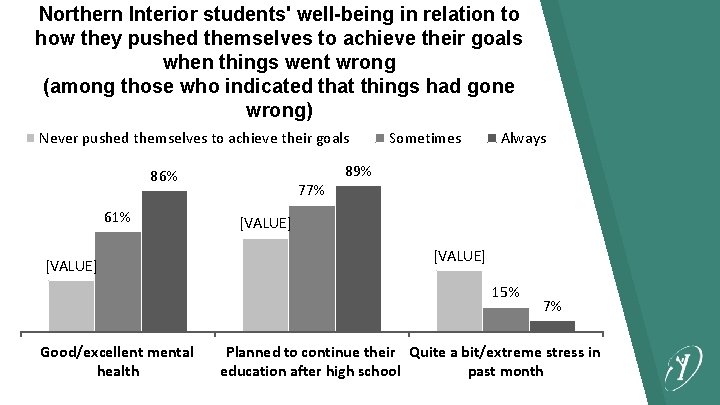
Northern Interior students' well-being in relation to how they pushed themselves to achieve their goals when things went wrong (among those who indicated that things had gone wrong) Never pushed themselves to achieve their goals [VALUE] Always 89% 86% 61% Sometimes 77% [VALUE] 15% Good/excellent mental health 7% Planned to continue their Quite a bit/extreme stress in education after high school past month
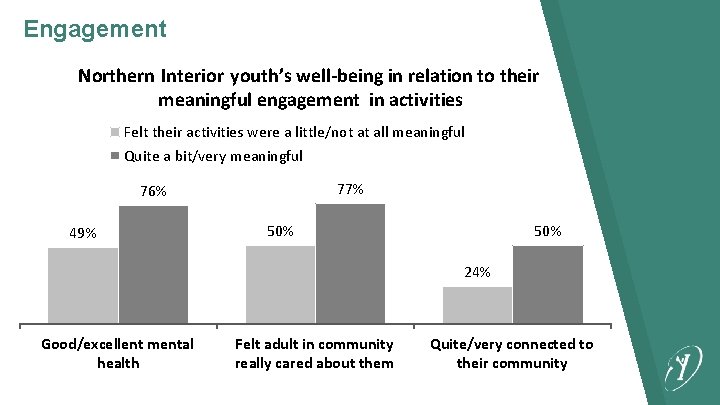
Engagement Northern Interior youth’s well-being in relation to their meaningful engagement in activities Felt their activities were a little/not at all meaningful Quite a bit/very meaningful 77% 76% 49% 50% 24% Good/excellent mental health Felt adult in community really cared about them Quite/very connected to their community
Balance and connection Sleep, exercise nutrition, time on own & offline Feeling connected to family, school and community Adult to turn to with problems Adult in community who cared Supportive friends Feeling safe in neighbourhood and at school
Would like to learn more about…. Mental health Sexual health Physical health “[I want information on] depression, anxiety disorders and of self-harm. ” “We need better sex ed classes!! I learned everything I know online. ” “[I want to learn about] how our family's (parent/guardian) health affects our own. ” Relationships SOGI Technology “I would like to learn about mental/emotional abuse. ” “Teach kids about sexuality and gender at a young age!” “More teachings about technology and its effects on us. ”
Youth Action Grants: ▸ ▸ Email yag@mcs. bc. ca Or visit www. mcs. bc. ca
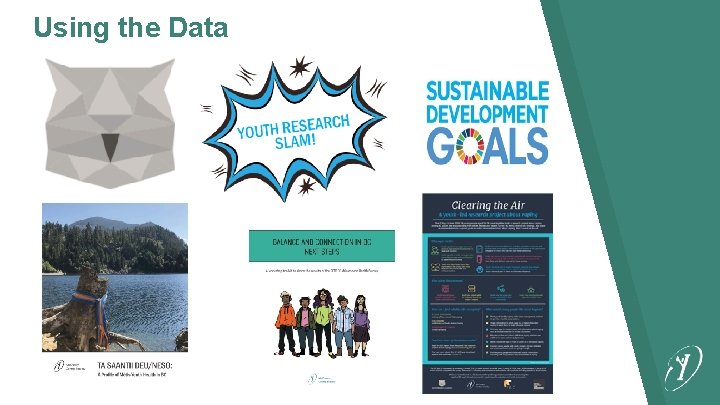
Using the Data
Thank you www. mcs. bc. ca
- Slides: 54