
BAKING Ingredients and Techniques for Baking Ingredient Basics
BAKING Ingredients and Techniques for Baking
Ingredient Basics n n n n Flour Liquid Leavening Agents Fat Sweeteners Eggs Flavoring
Flour n n n Proteins and starch you find in nearly every baked product The protein in flour is called gluten What is Gluten: Protein that affects the texture of baked products. This gives a baked product it’s structure
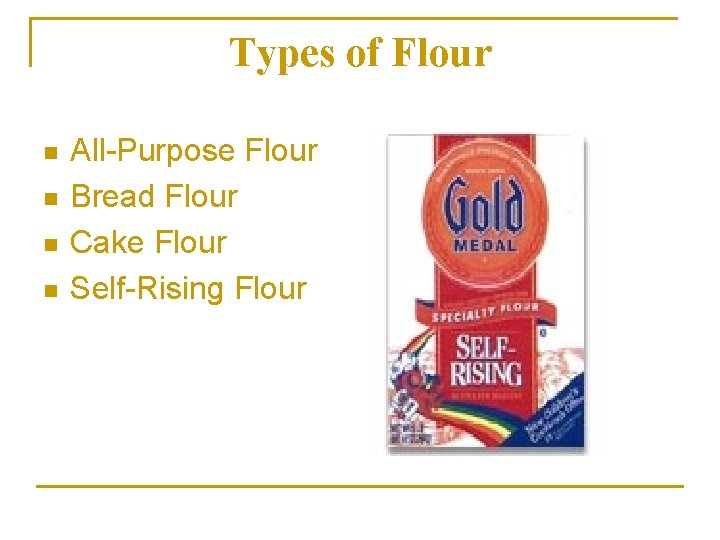
Types of Flour n n All-Purpose Flour Bread Flour Cake Flour Self-Rising Flour
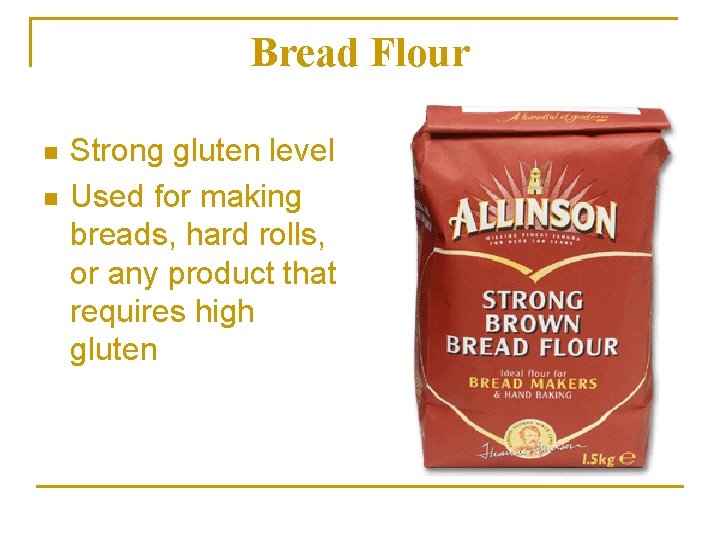
Bread Flour n n Strong gluten level Used for making breads, hard rolls, or any product that requires high gluten
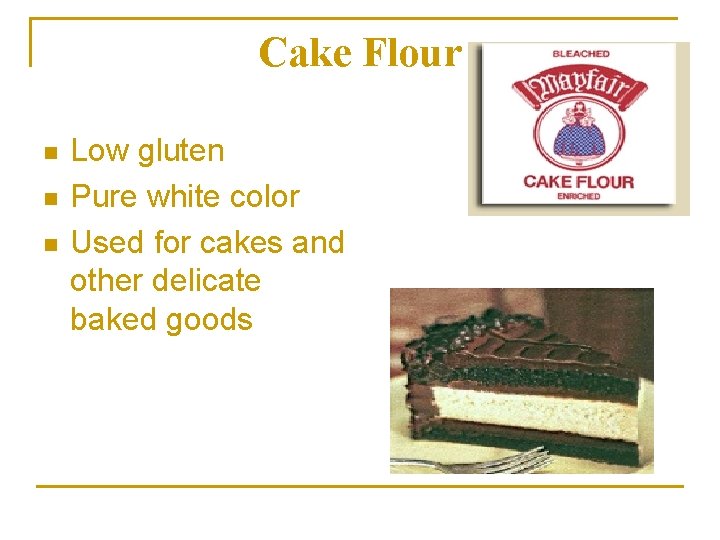
Cake Flour n n n Low gluten Pure white color Used for cakes and other delicate baked goods
All Purpose Flour n n n Seen mostly in retail stores Most popular in American Kitchen Formulated to be weaker than bread flour so it can be used for pastries
Liquid n n n Plays role of physical & chemical changes Gluten can not be formed without liquid Milk and Water are most commonly used
Leavening Agents n n This triggers a chemical reaction causing a baked product to rise Common Leavening Agents q Air q Steam q Yeast q Baking Soda q Baking Powder
Yeast n n Microorganism that produces carbon dioxide gas as it grows It needs food in order to grow (flour, sugar, liquid, and a warm temperature)
Baking Soda n n Produces carbon dioxide gas when liquid is added Note: recipe must include an acidic product (buttermilk, honey, chocolate) Keep out of a moist atmosphere, loses leavening power after it gets wet Remember Volcanoes?
Baking Powder n n Making powder + powdered acid (Example: cream of tarter) Require mixing and heating to become active and create carbon dioxide
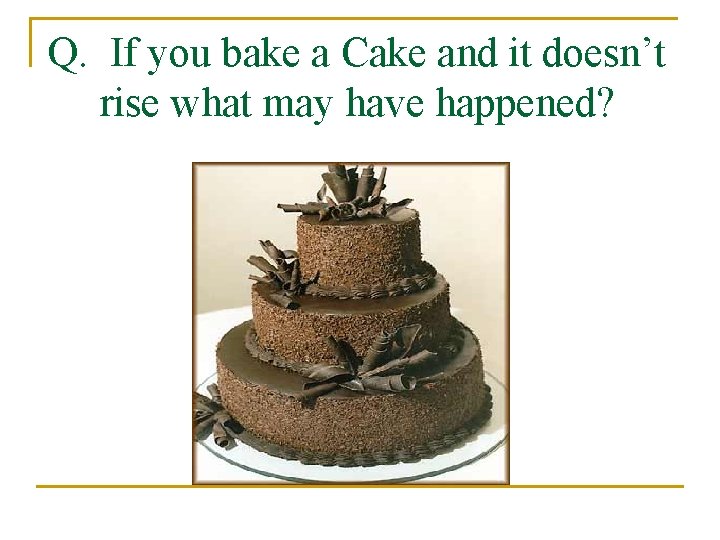
Q. If you bake a Cake and it doesn’t rise what may have happened?
Fat n n Adds richness, flavor, and tenderness to baked products. They can be solid or liquid Types of fat q Shortening q Butter or Margarine q Oils q Lard
n n Sweeteners Helps make products tender, adds sweetness and flavor, and helps crust brown. (Sugar is most commonly used) Types q Granulated white sugar q Brown sugar q Honey q Corn syrup q Powder Sugar q Molasses
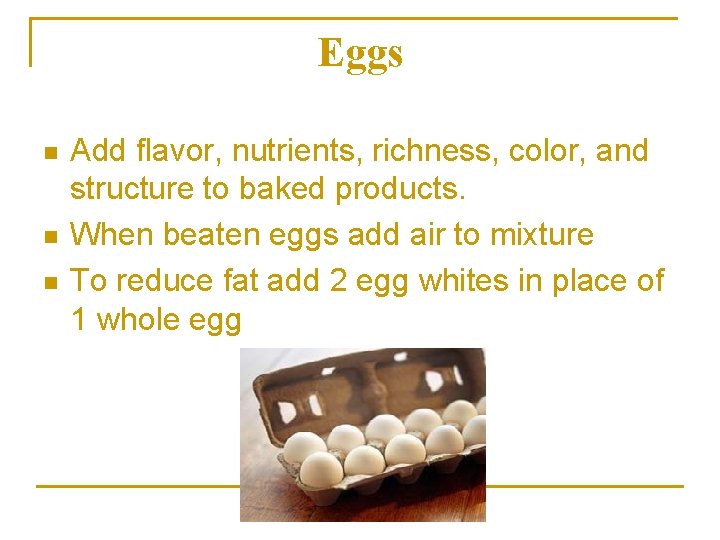
Eggs n n n Add flavor, nutrients, richness, color, and structure to baked products. When beaten eggs add air to mixture To reduce fat add 2 egg whites in place of 1 whole egg
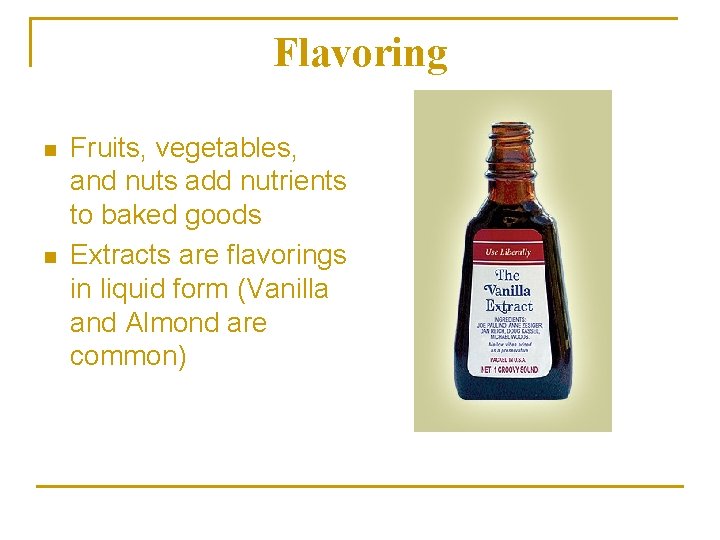
Flavoring n n Fruits, vegetables, and nuts add nutrients to baked goods Extracts are flavorings in liquid form (Vanilla and Almond are common)
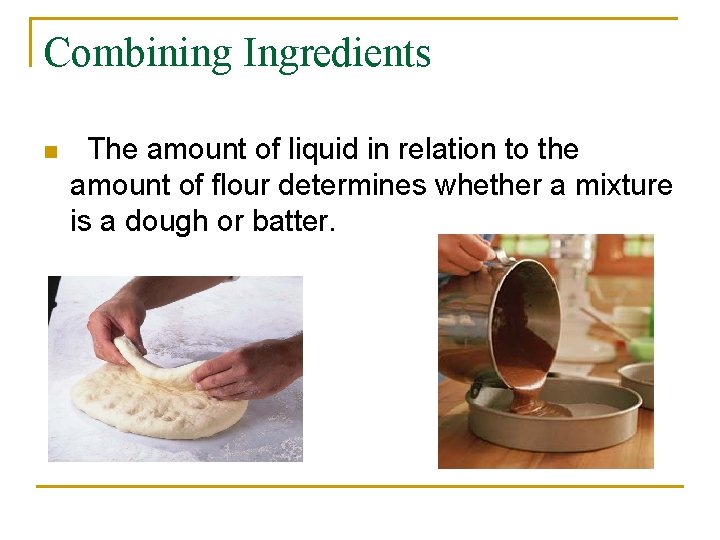
Combining Ingredients n The amount of liquid in relation to the amount of flour determines whether a mixture is a dough or batter.
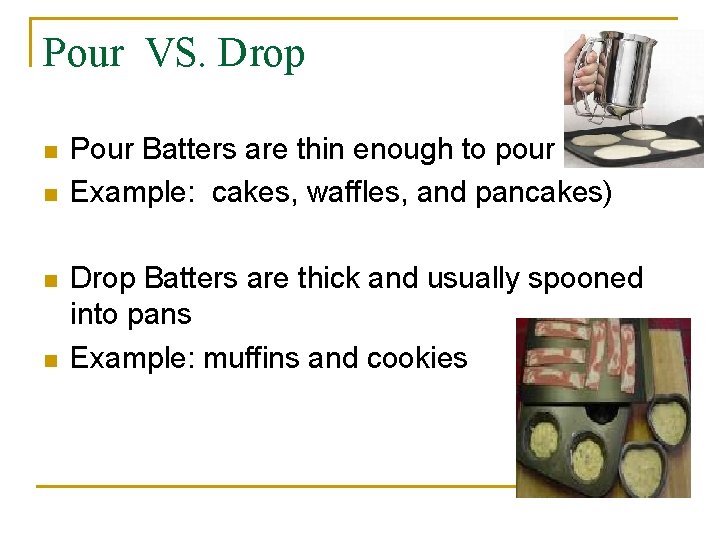
Pour VS. Drop n n Pour Batters are thin enough to pour Example: cakes, waffles, and pancakes) Drop Batters are thick and usually spooned into pans Example: muffins and cookies
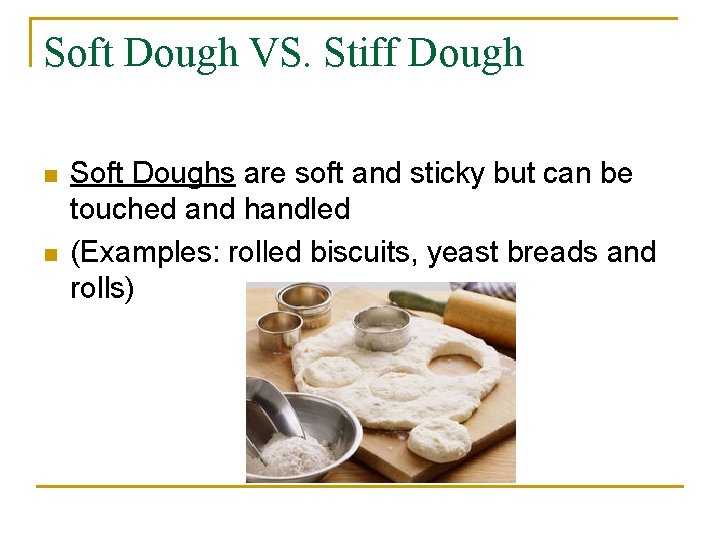
Soft Dough VS. Stiff Dough n n Soft Doughs are soft and sticky but can be touched and handled (Examples: rolled biscuits, yeast breads and rolls)
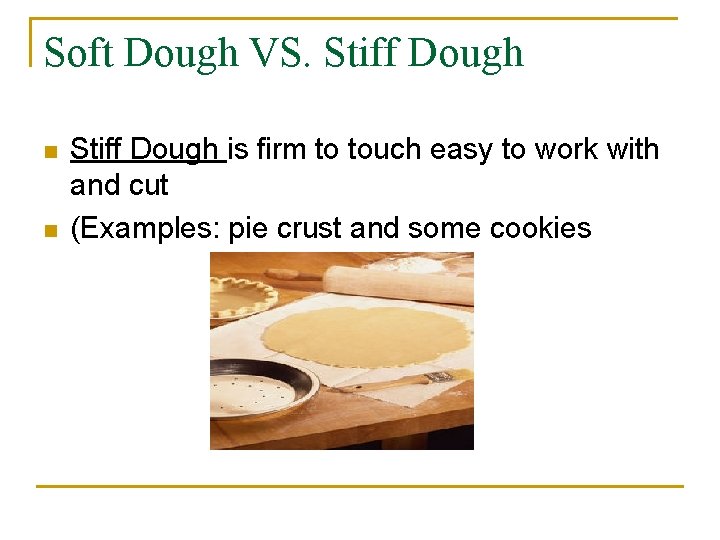
Soft Dough VS. Stiff Dough n n Stiff Dough is firm to touch easy to work with and cut (Examples: pie crust and some cookies
- Slides: 21