
Baker Dynamic Motor Analysis Case Study Presented to
Baker Dynamic Motor Analysis Case Study Presented to the AEMT Southern Area Meeting, 26 th September 2018
Defining Dynamic Motor Analysis • WHAT IS IT: The ability to find Power Condition, Motor and Load Related issues while the motor is running under normal conditions. • HOW: We measure, analyze and trend the voltages and currents of the motor driven system (typically at the MCC). © SKF Group
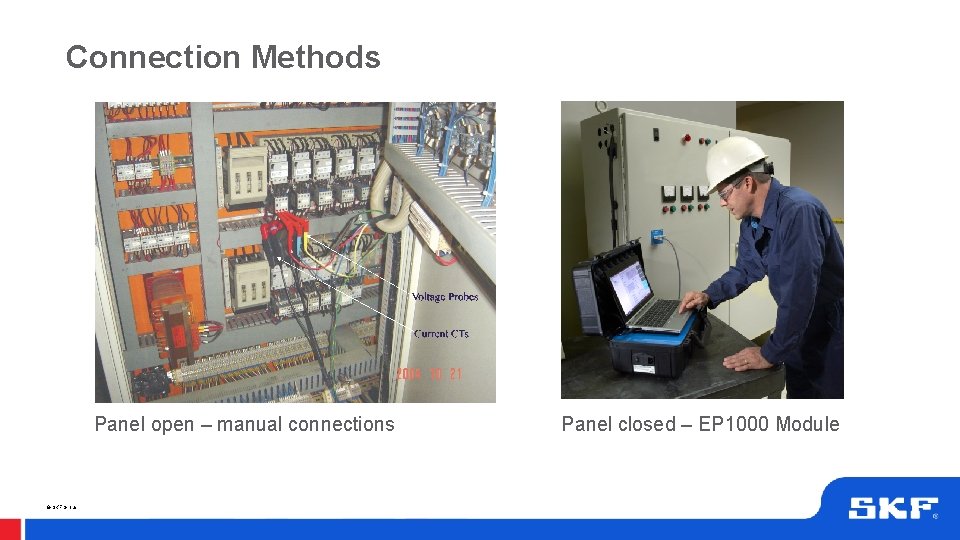
Connection Methods Panel open – manual connections © SKF Group Panel closed – EP 1000 Module
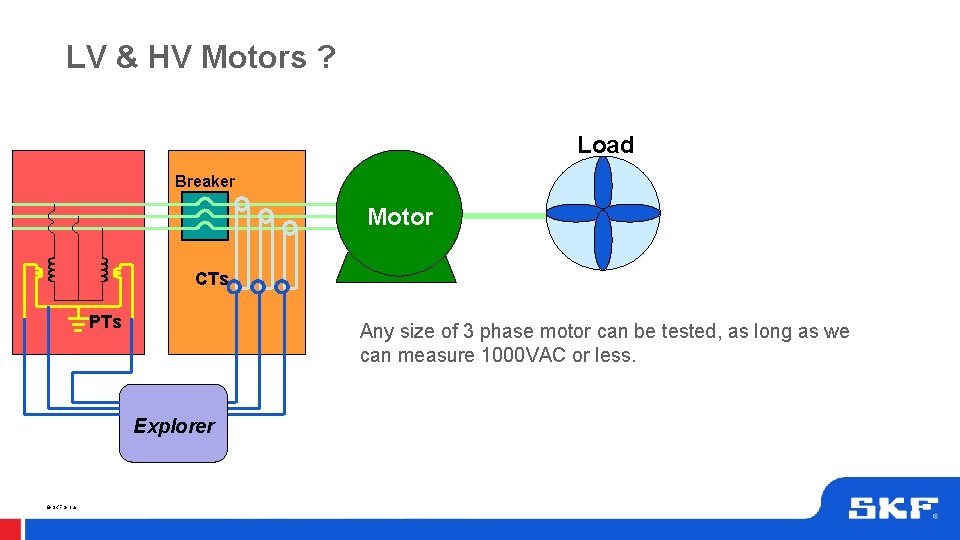
LV & HV Motors ? Load Breaker Motor CTs PTs Any size of 3 phase motor can be tested, as long as we can measure 1000 VAC or less. Explorer © SKF Group

Typical Results Page © SKF Group
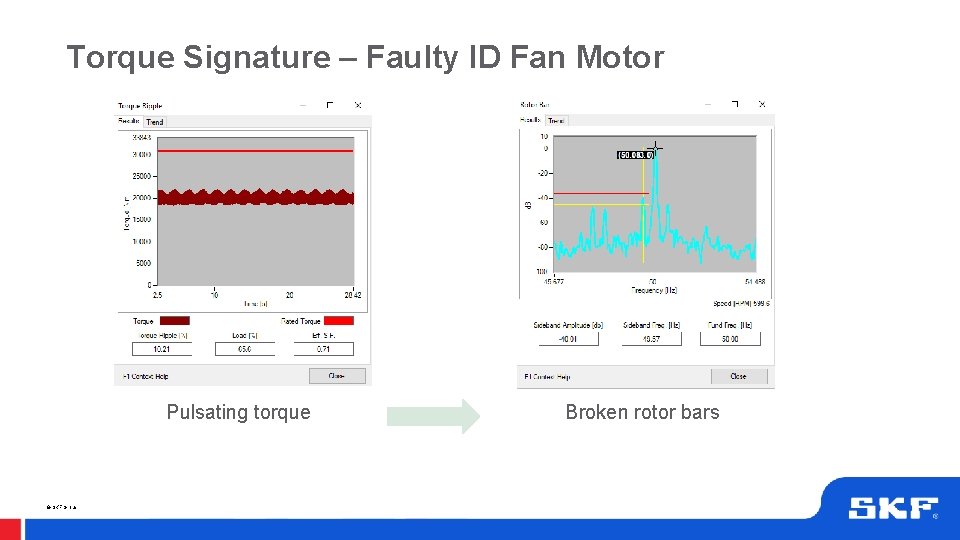
Torque Signature – Faulty ID Fan Motor Pulsating torque © SKF Group Broken rotor bars
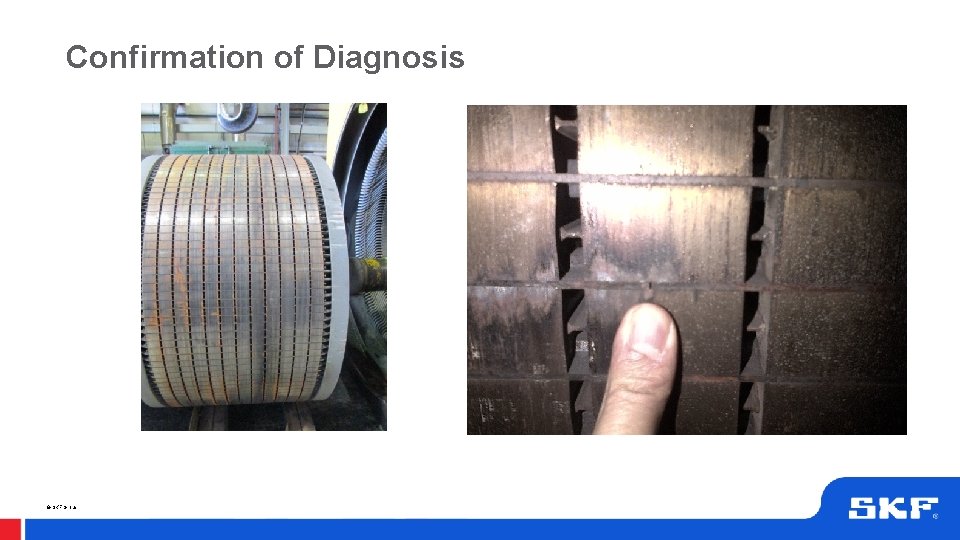
Confirmation of Diagnosis © SKF Group
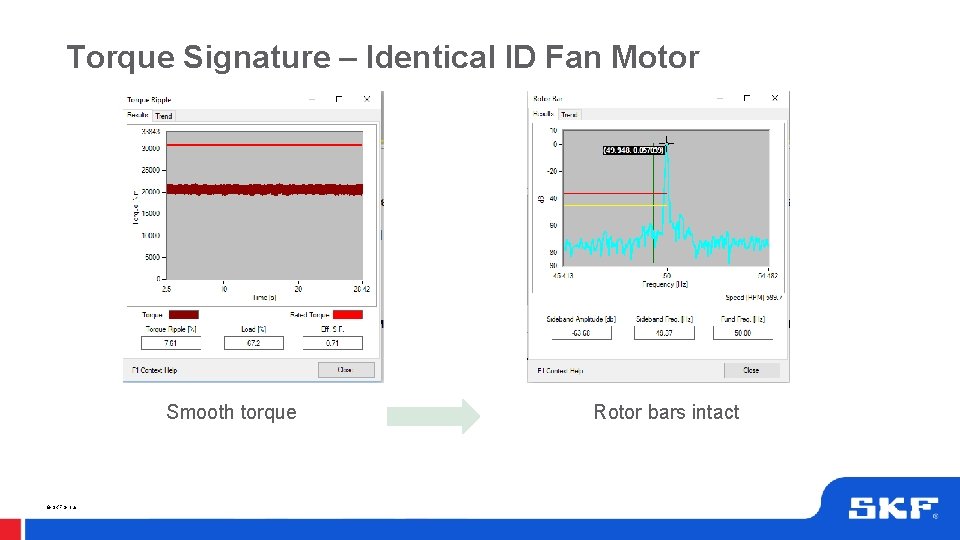
Torque Signature – Identical ID Fan Motor Smooth torque © SKF Group Rotor bars intact
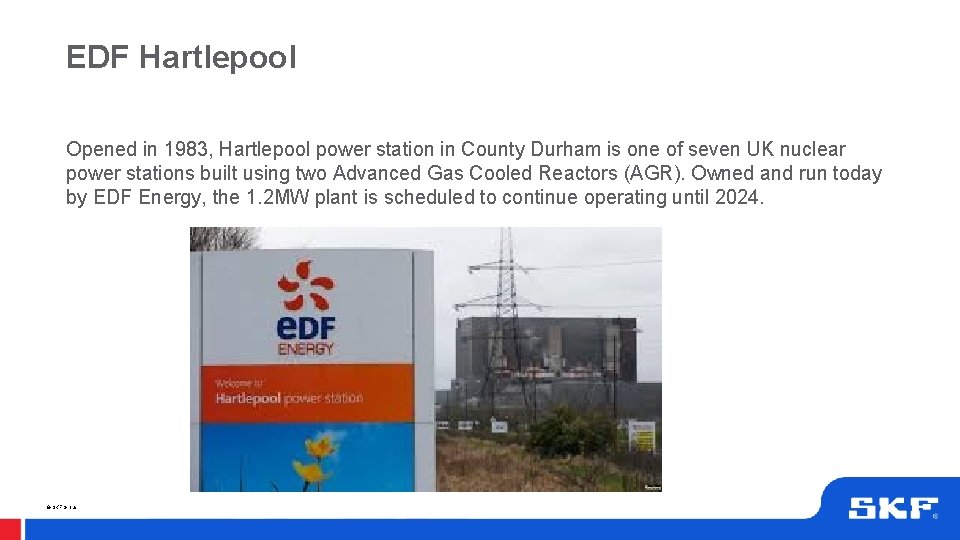
EDF Hartlepool Opened in 1983, Hartlepool power station in County Durham is one of seven UK nuclear power stations built using two Advanced Gas Cooled Reactors (AGR). Owned and run today by EDF Energy, the 1. 2 MW plant is scheduled to continue operating until 2024. © SKF Group
Inaccessible Motor–Driven Equipment The plant’s staff are always looking for ways to improve its operations, with a focus on three key performance indicators around safety, output and maintaining availability until the end of its planned operating life. One recent innovation in that continuous improvement effort has been the introduction of a new approach that allows EDF to assess the operating condition of essential, but inaccessible equipment. That approach relies on dynamic motor analysis technology from SKF. © SKF Group
Reactor Refuelling System The company initially developed its new condition monitoring technique to improve the reliability of a specific piece of equipment in the plant’s refuelling system. A single fuelling machine is used to refuel and exchange control rods on both reactors as well as transfer the items between various maintenance facilities. In the AGR, fuel assemblies, comprising fuel and a carrier plug unit, are transported by the fuelling machine and raised/lowered at the reactor. Spent fuel assemblies are removed from the reactor by the same machine and transported through a series of cooling and disassembly operations. © SKF Group
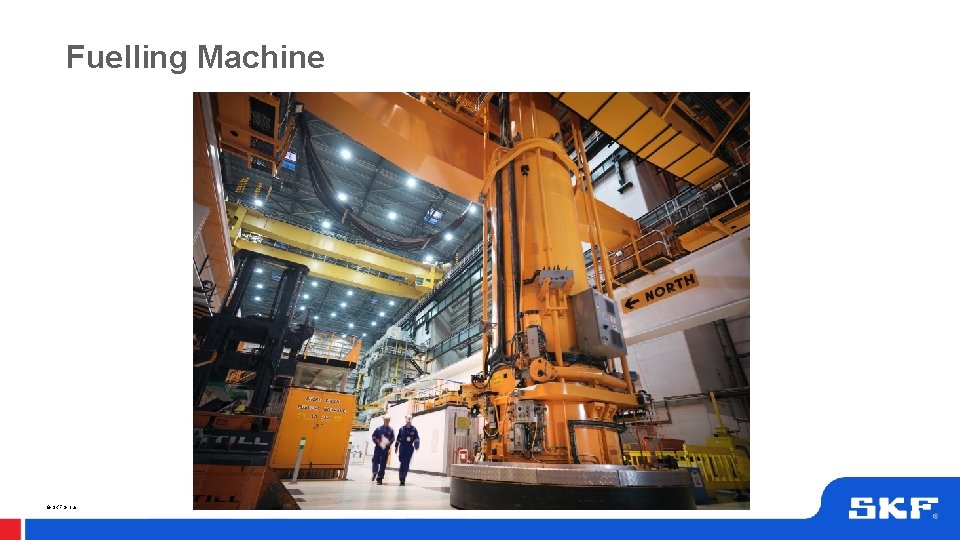
Fuelling Machine © SKF Group
Plug Drive A key part of the fuelling machine operation is a special plug that seals the reactor when the spent fuel is removed, protecting operators and the environment from radiation, that plug is moved by a 4 m long lead screw assembly. When the lead screw eventually wears out, replacement is a costly and time consuming operation, requiring two six-person maintenance teams working on a 24 -hour rotation for 14 days. Regular maintenance and lubrication extends the life of the lead screw, but since even that requires eight hours of effort with the machine shut down, the power station’s engineers wanted a way to optimise maintenance intervals, balancing overall availability with service life. Conventional condition monitoring equipment could not be installed on the lead screw, due to its inaccessible position behind the plant’s radiation shielding. © SKF Group
Applying the EXP 4000 Dynamic Analyser For their application, the Hartlepool team permanently installed an SKF Dynamic Motor Link - EP 1000 within the motor control cabinet. This module allows for the quick and safe connection of the Baker EXP 4000 to measure the voltage and current signals via a low voltage plug mounted on the control panel door. The team established a baseline torque profile by measuring the performance of a recently overhauled lead screw while the machine was in operation. Those measurements are repeated periodically and compared with the baseline figures to identify any significant increase in torque that might indicate a need to lubricate the screw. With that early warning, the plant’s operations team can schedule the appropriate maintenance at a time that fits in with the overall fuelling programme. © SKF Group
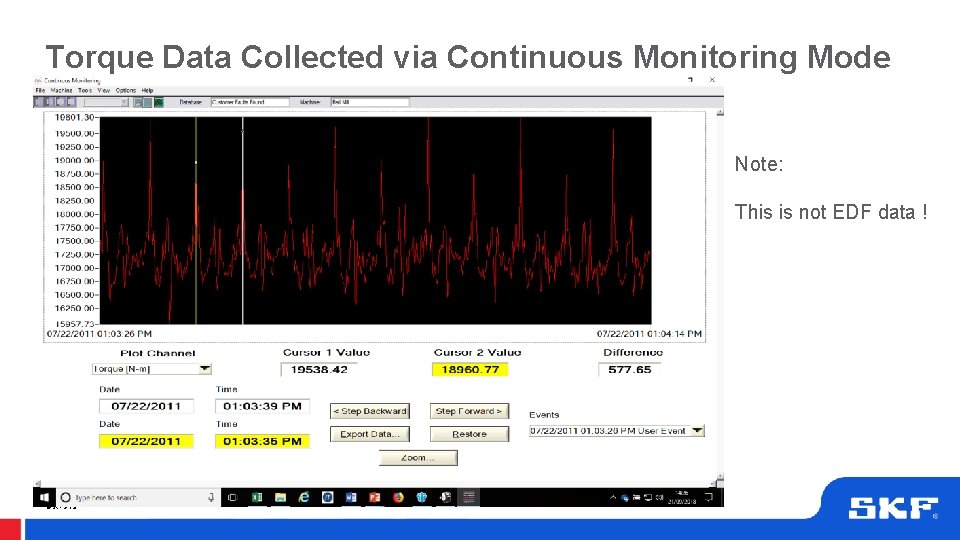
Torque Data Collected via Continuous Monitoring Mode Note: This is not EDF data ! © SKF Group
Improved Reliability Success ! Since the installation of the SKF equipment, the condition based maintenance approach has helped us operate the fuelling machine with considerably improved reliability, ” says Grant Milwain, Fuel Route System Engineer at EDF Hartlepool. “That means less downtime and unplanned maintenance and ensures we achieve our planned refuelling schedules. ” The success of the project has encouraged Hartlepool’s sister station, Heysham 1 in Lancashire, to adopt the same approach on its own fuelling machine. At Hartlepool, meanwhile, engineers are extending dynamic motor condition monitoring using the Baker EXP 4000 to a variety of other equipment, including boiler feed and cooling water pumps. © SKF Group
Typical Applications • Any 3 phase motor application • Extremely useful for motors in restricted and/or hazardous areas • Submersible pumps • Fault finding and Condition Monitoring • Helpful to separate electrical and mechanical issues © SKF Group
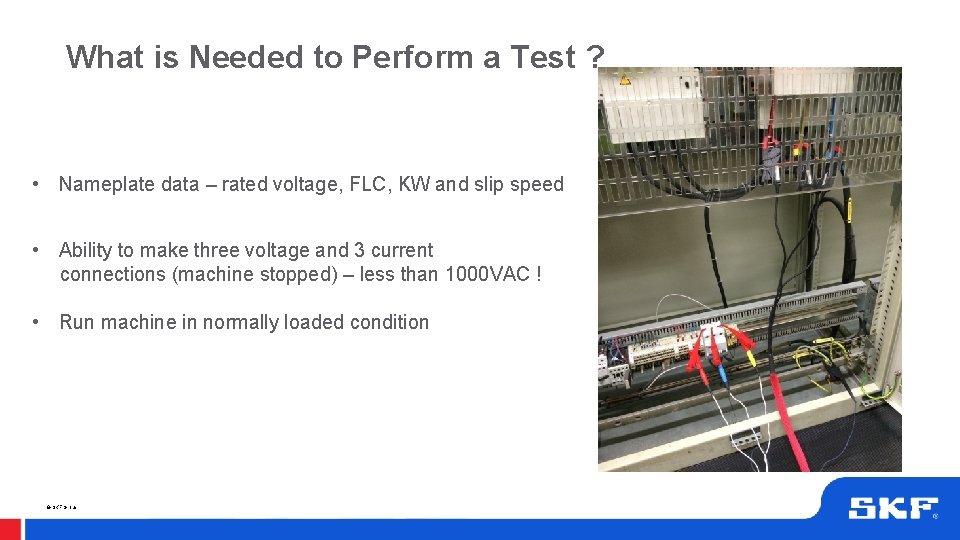
What is Needed to Perform a Test ? • Nameplate data – rated voltage, FLC, KW and slip speed • Ability to make three voltage and 3 current connections (machine stopped) – less than 1000 VAC ! • Run machine in normally loaded condition © SKF Group
What Do We Offer ? – Product and Services • Portable route-based test unit – Baker EXP 4000 • Permanently-installed online system – Baker Net. EP • Consultancy services © SKF Group
Thank You for the presentation slot ! Any questions or comments ? © SKF Group
- Slides: 20