
BAHIMA TRADITIONAL HOUSE ANKOLE MUSIIMENTA IAN 11U3937PSA TRIBE
BAHIMA TRADITIONAL HOUSE - ANKOLE MUSIIMENTA IAN 11/U/3937/PSA TRIBE: MUNYANKOLE CASTE: MUHIMA THEORY OF ARCHITECTURE TUTOR: DR. NAGGENDA ASSUMPTA MUSANA

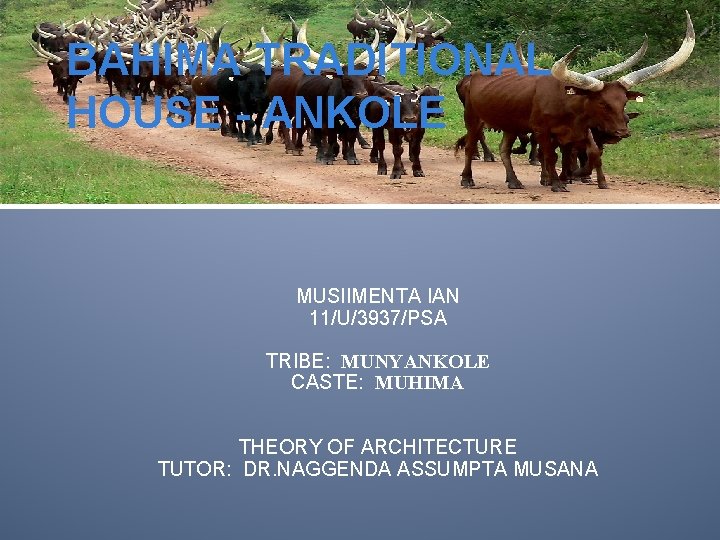
BAHIMA Bahima are the Pastoralists of the Ankole Kingdom v Located in Western Uganda in current Districts of Kiruhuura, Isingiro, Ntungamo. v The Bahima were the Ruling people of ANKOLE, they ruled over the BAIRU (carried out crop husbandry). v

BAHIMA HOMESTEAD v. Each settlement is a finely balanced solution to a problem of habitation and needs to be seen as a physical reflection as a way of life of its inhabitants. Susan Denyer(1978) v. Bahima settled on the hillsides, to ensure security of their cattle which would be grazing downslope. v. The Homesteads have changed with time. v. The Homestead consisted of sevaral houses ; ~Milk house ~ Family House ~ Cooking space. ~Kraal v. The family house arranged the homestead that it had to be the central house and faced the homestead entrance for defence/security is from the head. Cooking area Milk house Family House yar d Sons’ house Calf kraal

BAHIMA HOMESTEAD toilet v. Houses Changed from Thatch houses to Mud & thatch houses. v. Kitchens & toilet were built. v. Bathing was done at their water bodies during cow watering. kitchen Milk house Family House yard Sons’ house Calf kraal
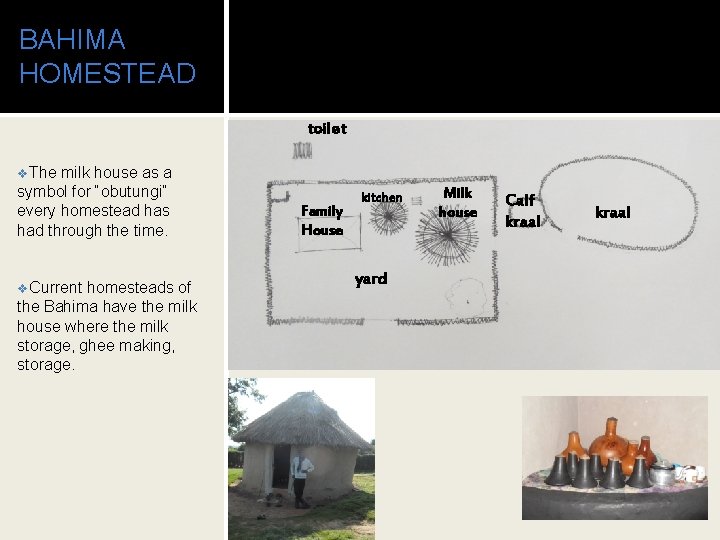
BAHIMA HOMESTEAD toilet v. The milk house as a symbol for “obutungi” every homestead has had through the time. v. Current homesteads of the Bahima have the milk house where the milk storage, ghee making, storage. Family House kitchen yard Milk house Calf kraal
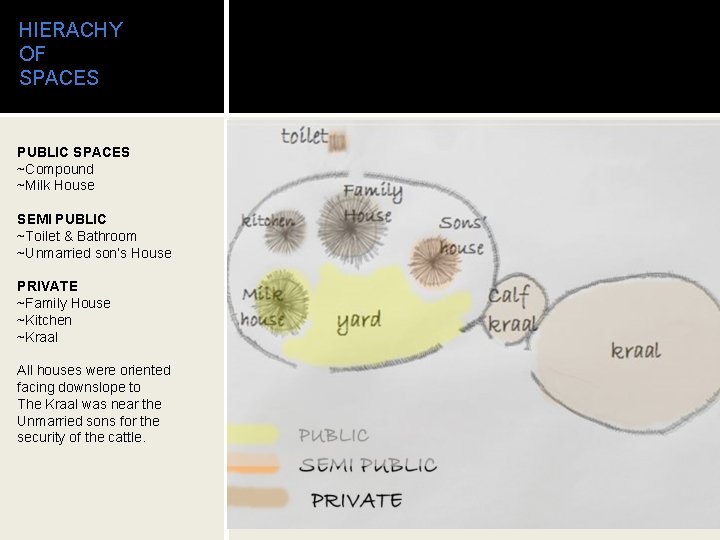
HIERACHY OF SPACES PUBLIC SPACES ~Compound ~Milk House SEMI PUBLIC ~Toilet & Bathroom ~Unmarried son’s House PRIVATE ~Family House ~Kitchen ~Kraal All houses were oriented facing downslope to The Kraal was near the Unmarried sons for the security of the cattle.
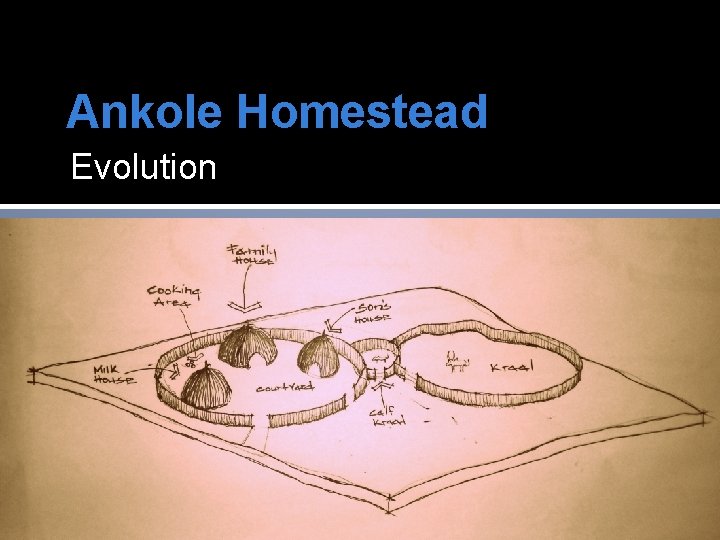
Ankole Homestead Evolution
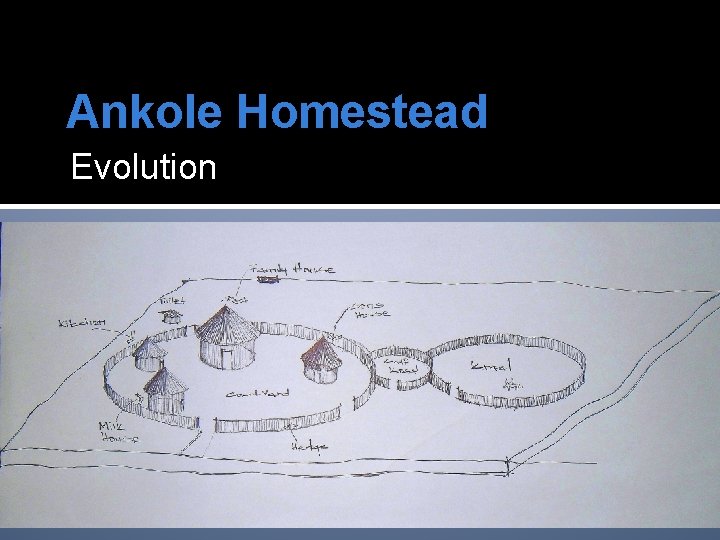
Ankole Homestead Evolution
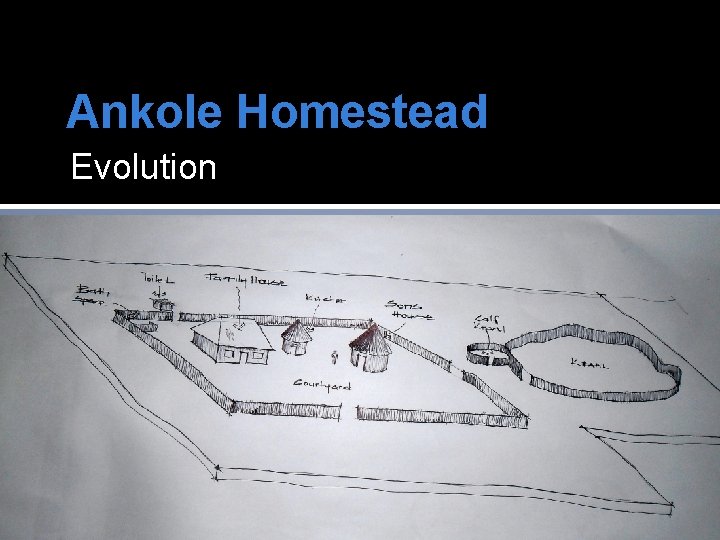
Ankole Homestead Evolution

BAHIMA v. Just like Homesteads evolved so did the Milk House. v. It evolved from the Thatch house to Mud & Thatch house. v. From an open plan to division of the space in the Mud & Thatch house. MILK HOUSE
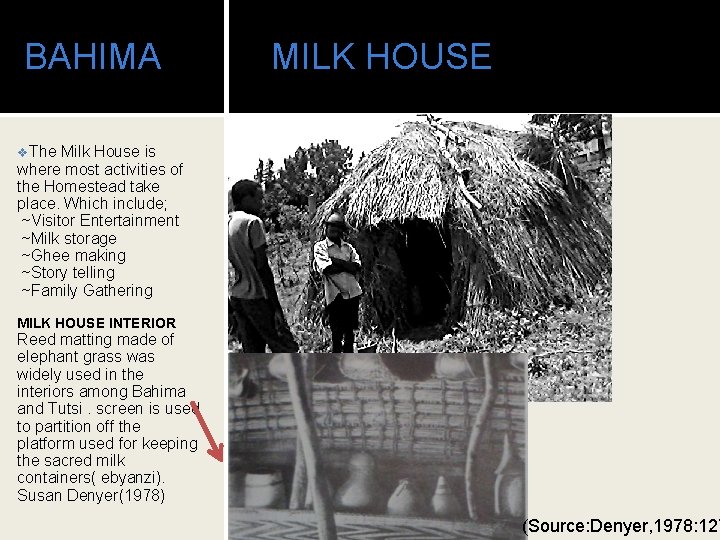
BAHIMA MILK HOUSE v. The Milk House is where most activities of the Homestead take place. Which include; ~Visitor Entertainment ~Milk storage ~Ghee making ~Story telling ~Family Gathering MILK HOUSE INTERIOR Reed matting made of elephant grass was widely used in the interiors among Bahima and Tutsi. screen is used to partition off the platform used for keeping the sacred milk containers( ebyanzi). Susan Denyer(1978) (Source: Denyer, 1978: 127
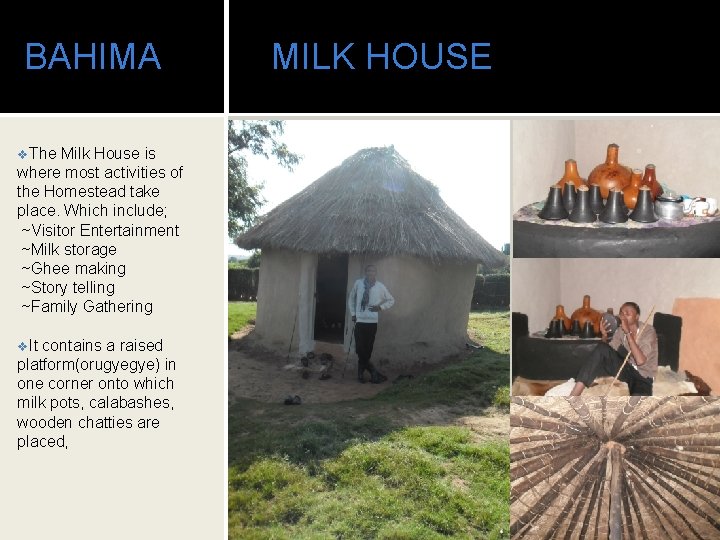
BAHIMA v. The Milk House is where most activities of the Homestead take place. Which include; ~Visitor Entertainment ~Milk storage ~Ghee making ~Story telling ~Family Gathering v. It contains a raised platform(orugyegye) in one corner onto which milk pots, calabashes, wooden chatties are placed, MILK HOUSE
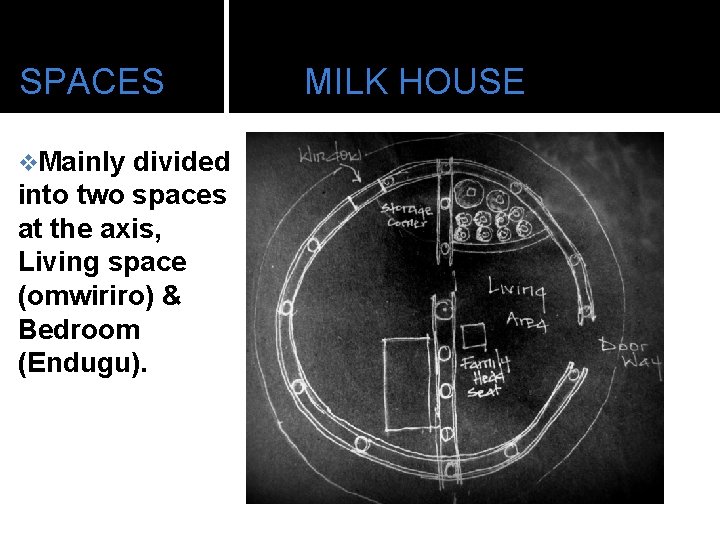
SPACES v. Mainly divided into two spaces at the axis, Living space (omwiriro) & Bedroom (Endugu). MILK HOUSE
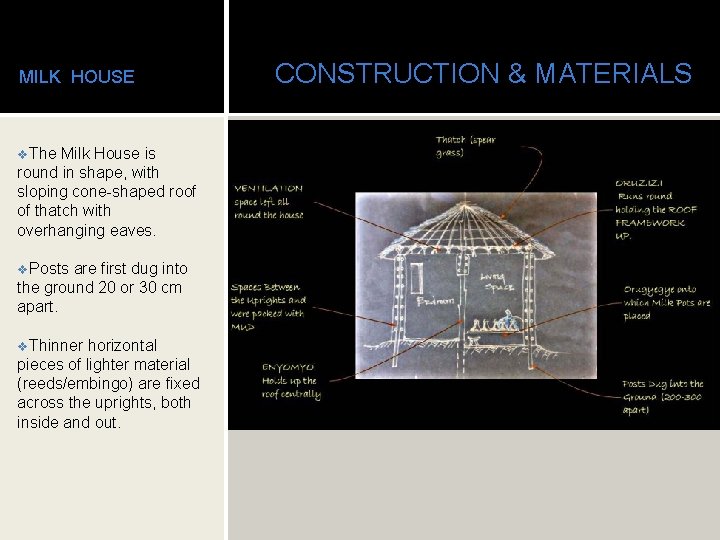
MILK HOUSE v. The Milk House is round in shape, with sloping cone-shaped roof of thatch with overhanging eaves. v. Posts are first dug into the ground 20 or 30 cm apart. v. Thinner horizontal pieces of lighter material (reeds/embingo) are fixed across the uprights, both inside and out. CONSTRUCTION & MATERIALS
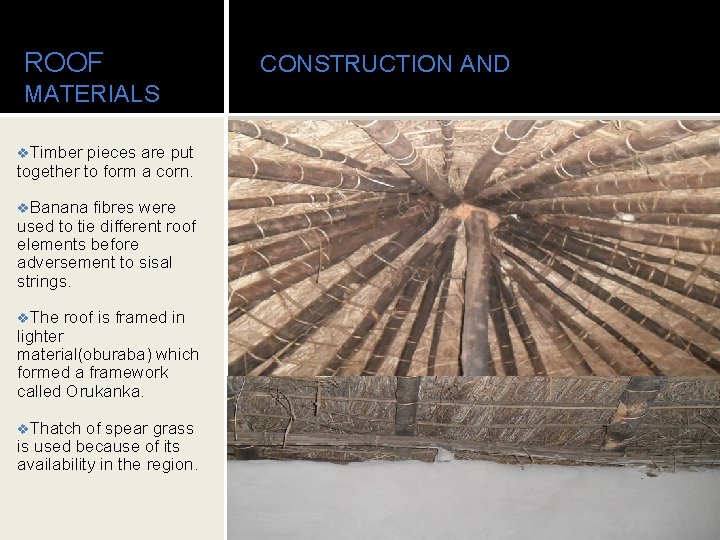
ROOF MATERIALS v. Timber pieces are put together to form a corn. v. Banana fibres were used to tie different roof elements before adversement to sisal strings. v. The roof is framed in lighter material(oburaba) which formed a framework called Orukanka. v. Thatch of spear grass is used because of its availability in the region. CONSTRUCTION AND
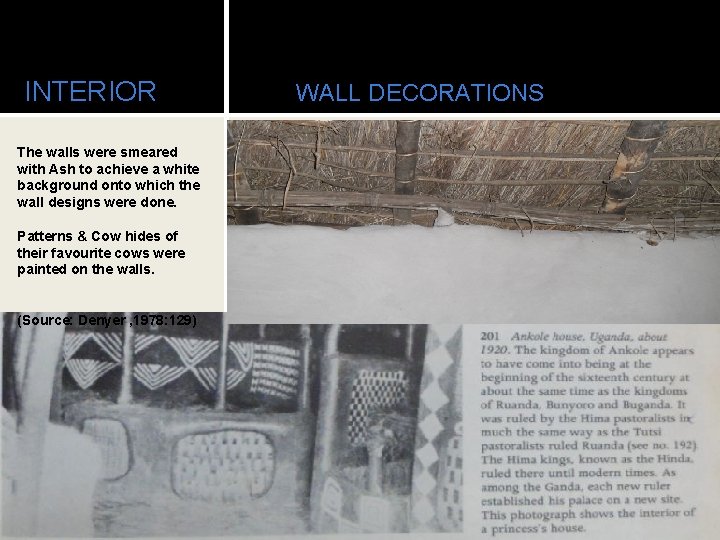
INTERIOR The walls were smeared with Ash to achieve a white background onto which the wall designs were done. Patterns & Cow hides of their favourite cows were painted on the walls. (Source: Denyer , 1978: 129) WALL DECORATIONS
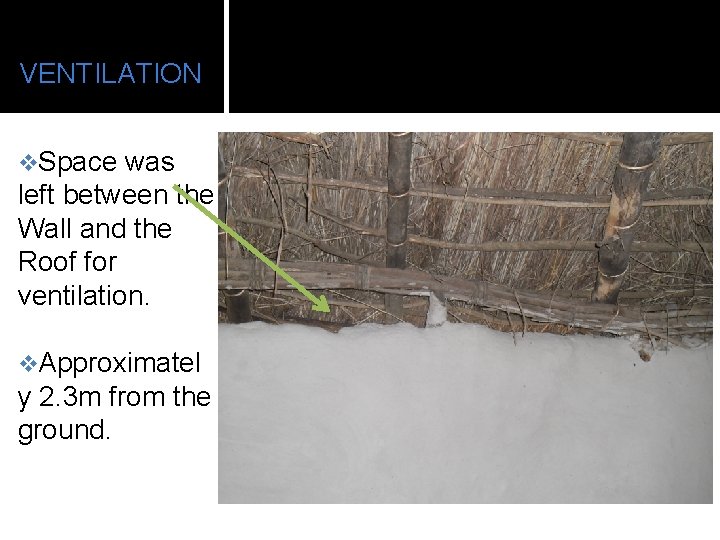
VENTILATION v. Space was left between the Wall and the Roof for ventilation. v. Approximatel y 2. 3 m from the ground.
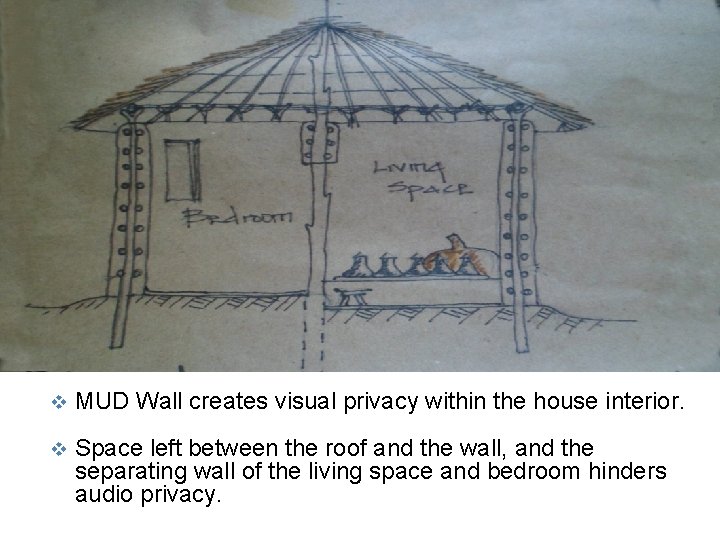
v MUD Wall creates visual privacy within the house interior. v Space left between the roof and the wall, and the separating wall of the living space and bedroom hinders audio privacy.
SUSTAINABILITY �Walls of the house are re-surfaced every year (usually xmas time) �Floors are periodically touched up by smearing cow dung to cut down on dust. �Thatch is periodically replaced for every 4 to 5 years.
References. � Susan Denyer. (1978), African Traditional Architecture: an historical and geographical perspective, New York: Africana � John Tyman, (2010), John Tyman's Cultures in Context Series, http: //www. johntyman. com/africa/11. html, (4/9/2013).
- Slides: 20