
Bacterias BS Zoology Semester I Introduction n Microorganisms
Bacterias BS (Zoology) Semester I
Introduction: n Microorganisms – several classes of living beings n Based on the organization of their cellular structures, all living cells can be divided into two groups: eukaryotic and prokaryotic q q 3/7/2021 Eukaryotic cell types - Animals, plants, fungi, protozoans, and algae Prokaryotic cell types - bacteria & blue green algae
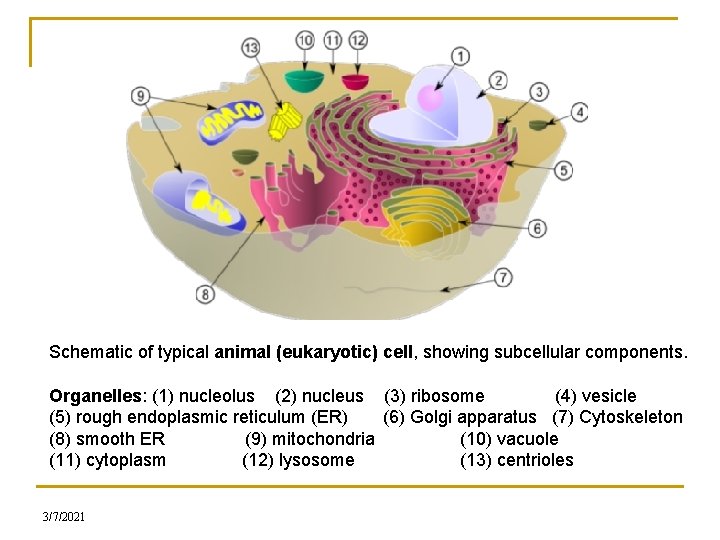
Schematic of typical animal (eukaryotic) cell, showing subcellular components. Organelles: (1) nucleolus (2) nucleus (3) ribosome (4) vesicle (5) rough endoplasmic reticulum (ER) (6) Golgi apparatus (7) Cytoskeleton (8) smooth ER (9) mitochondria (10) vacuole (11) cytoplasm (12) lysosome (13) centrioles 3/7/2021
Prokaryotic Cells n much smaller (microns) and more simple than eukaryotes n prokaryotes are molecules surrounded by a membrane and cell wall. n they lack a true nucleus and don’t have membrane bound organelles like mitochondria, etc. n large surface-to-volume ratio : nutrients can easily and rapidly reach any part of the cells interior 3/7/2021
Size of Bacteria n Unit of measurement in bacteriology is the micron (micrometre, µm) n Bacteria of medical importance q q 3/7/2021 0. 2 – 1. 5 µm in diameter 3 – 5 µm in length
Shape of Bacteria n n n n Cocci – spherical/ oval shaped Bacilli – rod shaped Vibrios – comma shaped Spirilla – rigid spiral forms Spirochetes – flexible spiral forms Actinomycetes – branching filamentous bacteria Mycoplasmas – lack cell wall 3/7/2021
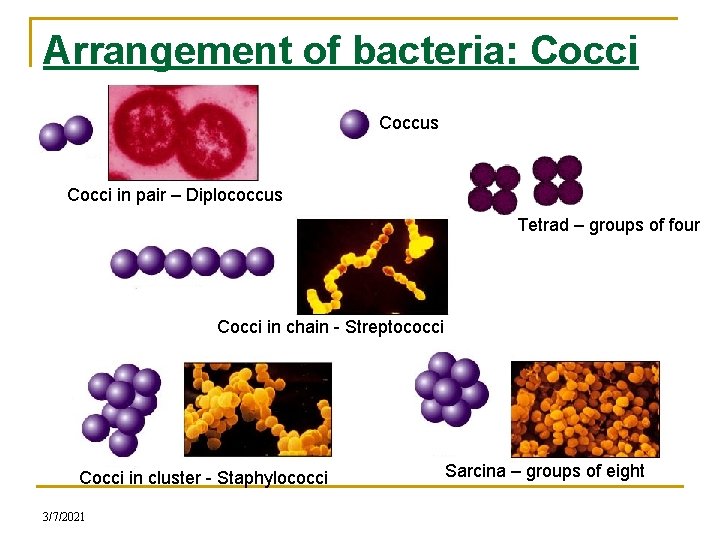
Arrangement of bacteria: Cocci Coccus Cocci in pair – Diplococcus Tetrad – groups of four Cocci in chain - Streptococci Cocci in cluster - Staphylococci 3/7/2021 Sarcina – groups of eight
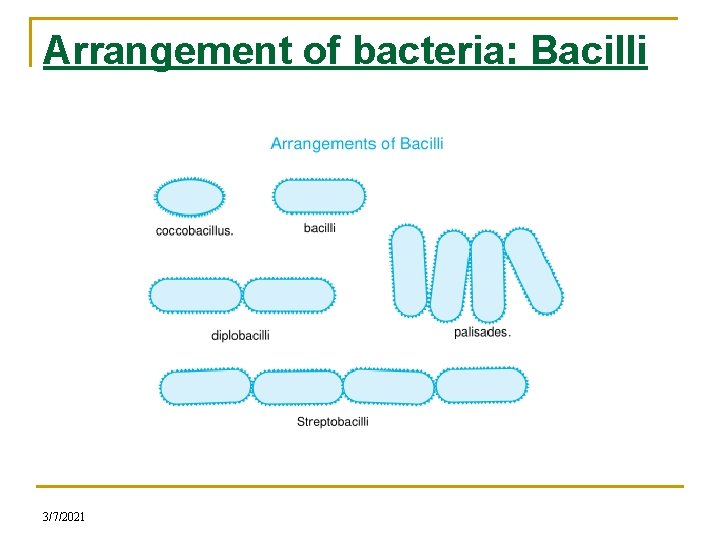
Arrangement of bacteria: Bacilli 3/7/2021
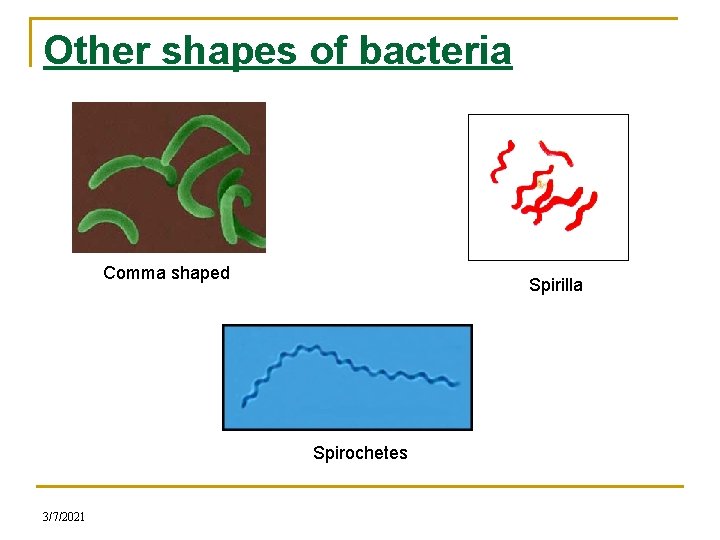
Other shapes of bacteria Comma shaped Spirilla Spirochetes 3/7/2021
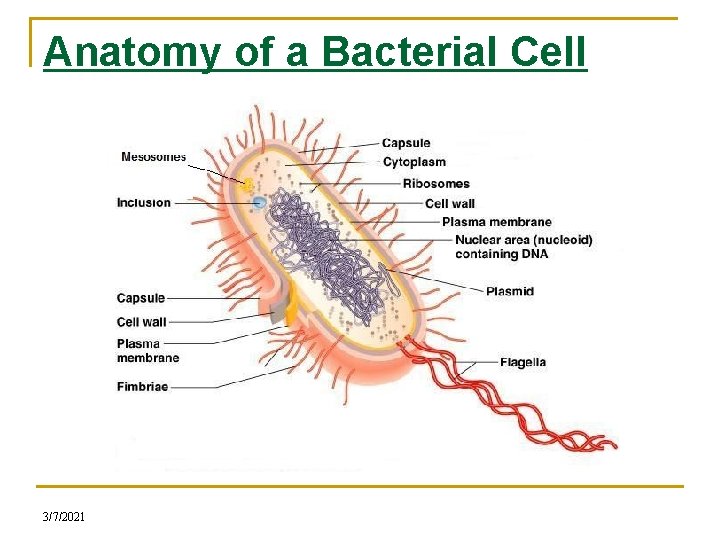
Anatomy of a Bacterial Cell 3/7/2021
Anatomy of A Bacterial Cell n Outer layer – two components: 1. 2. Rigid cell wall Cytoplasmic (Cell/ Plasma) membrane – present beneath cell wall n Cytoplasm – cytoplasmic inclusions, ribosomes, mesosomes and nucleus n Additional structures – plasmid, slime layer, capsule, flagella, fimbriae (pili), spores 3/7/2021
Structure & Function of Cell Components
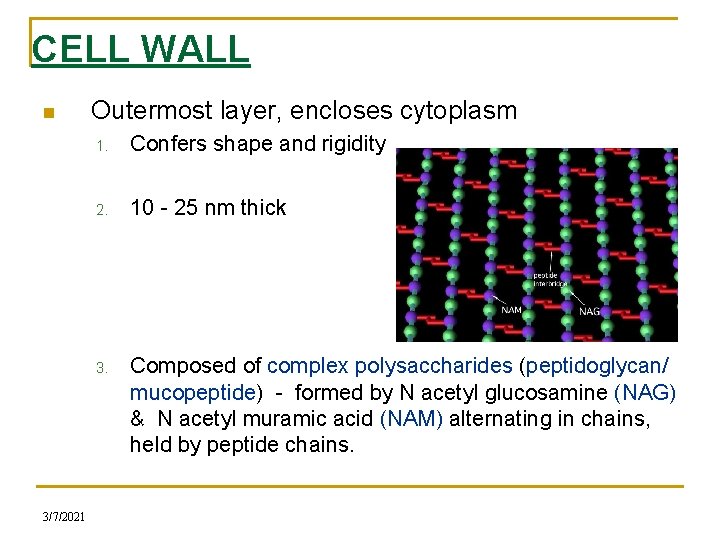
CELL WALL n 3/7/2021 Outermost layer, encloses cytoplasm 1. Confers shape and rigidity 2. 10 - 25 nm thick 3. Composed of complex polysaccharides (peptidoglycan/ mucopeptide) - formed by N acetyl glucosamine (NAG) & N acetyl muramic acid (NAM) alternating in chains, held by peptide chains.
Cell Wall n 3/7/2021 Cell wall – 4. Carries bacterial antigens – important in virulence & immunity 5. Chemical nature of the cell wall helps to divide bacteria into two broad groups – Gram positive & Gram negative 6. Gram +ve bacteria have simpler chemical nature than Gram –ve bacteria. 7. Several antibiotics may interfere with cell wall synthesis e. g. Penicillin, Cephalosporins
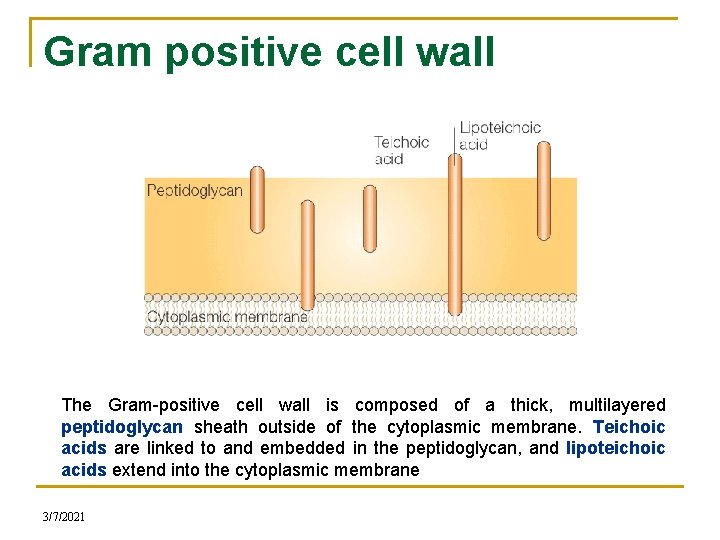
Gram positive cell wall The Gram-positive cell wall is composed of a thick, multilayered peptidoglycan sheath outside of the cytoplasmic membrane. Teichoic acids are linked to and embedded in the peptidoglycan, and lipoteichoic acids extend into the cytoplasmic membrane 3/7/2021
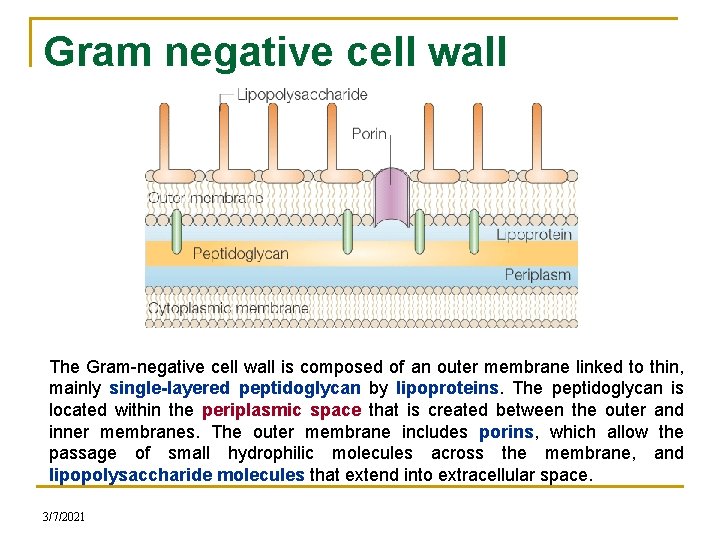
Gram negative cell wall The Gram-negative cell wall is composed of an outer membrane linked to thin, mainly single-layered peptidoglycan by lipoproteins. The peptidoglycan is located within the periplasmic space that is created between the outer and inner membranes. The outer membrane includes porins, which allow the passage of small hydrophilic molecules across the membrane, and lipopolysaccharide molecules that extend into extracellular space. 3/7/2021
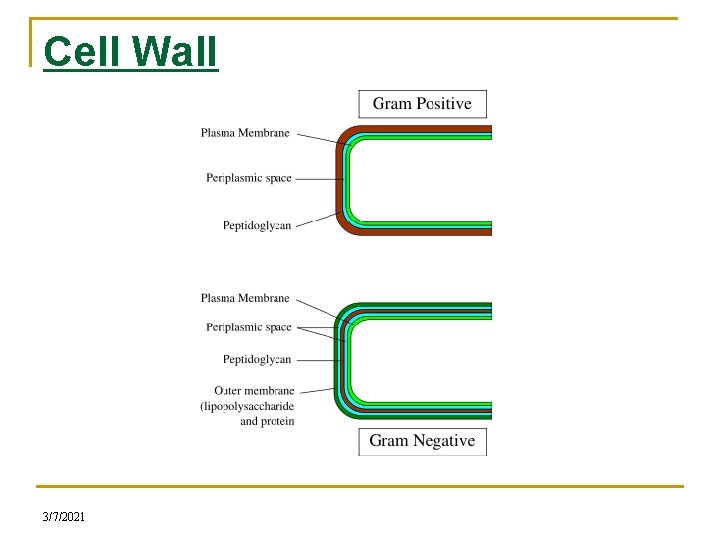
Cell Wall 3/7/2021
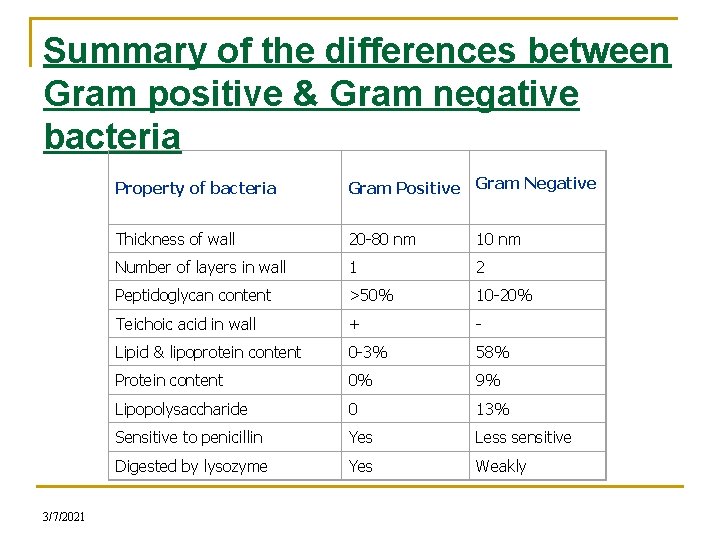
Summary of the differences between Gram positive & Gram negative bacteria 3/7/2021 Property of bacteria Gram Positive Gram Negative Thickness of wall 20 -80 nm 10 nm Number of layers in wall 1 2 Peptidoglycan content >50% 10 -20% Teichoic acid in wall + - Lipid & lipoprotein content 0 -3% 58% Protein content 0% 9% Lipopolysaccharide 0 13% Sensitive to penicillin Yes Less sensitive Digested by lysozyme Yes Weakly
Cytoplasmic (Plasma) membrane n Thin layer 5 -10 nm, separates cell wall from cytoplasm n Acts as a semipermeable membrane: controls the inflow and outflow of metabolites n Composed of lipoproteins with small amounts of carbohydrates 3/7/2021
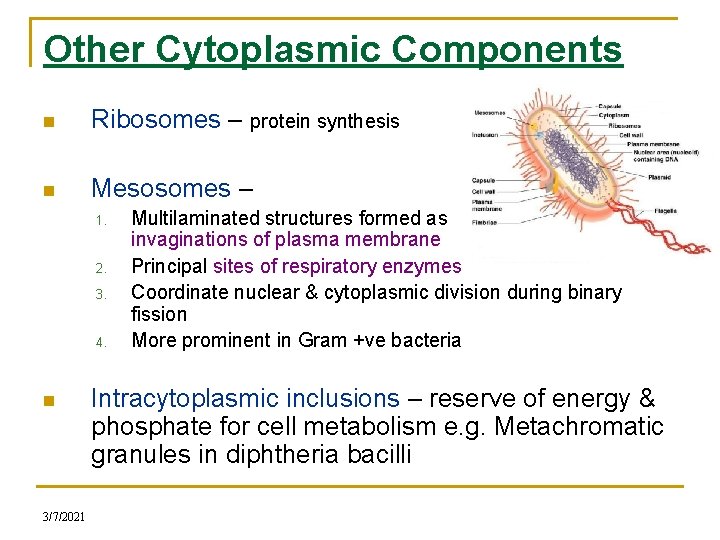
Other Cytoplasmic Components n Ribosomes – protein synthesis n Mesosomes – 1. 2. 3. 4. n 3/7/2021 Multilaminated structures formed as invaginations of plasma membrane Principal sites of respiratory enzymes Coordinate nuclear & cytoplasmic division during binary fission More prominent in Gram +ve bacteria Intracytoplasmic inclusions – reserve of energy & phosphate for cell metabolism e. g. Metachromatic granules in diphtheria bacilli
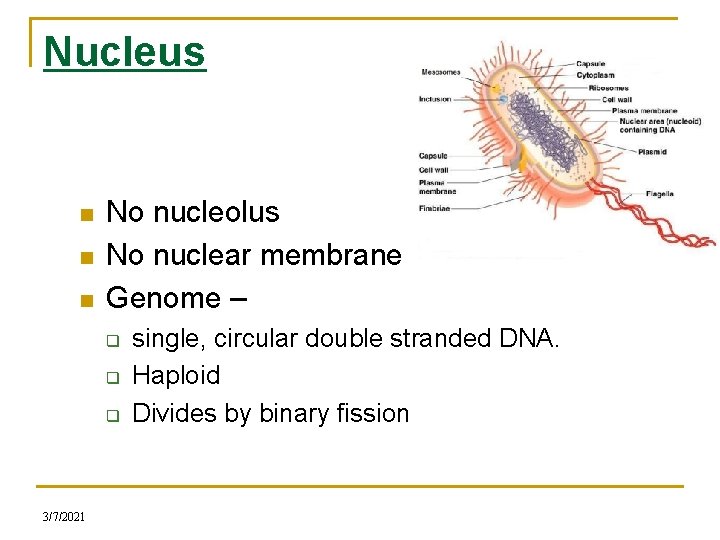
Nucleus n n n No nucleolus No nuclear membrane Genome – q q q 3/7/2021 single, circular double stranded DNA. Haploid Divides by binary fission
Additional Organelles Plasmid – 1. q Extranuclear genetic elements consisting of DNA q Transmitted to daughter cells during binary fission q May be transferred from one bacterium to another q Not essential for life of the cell q Confer certain properties e. g. drug resistance, toxicity 3/7/2021
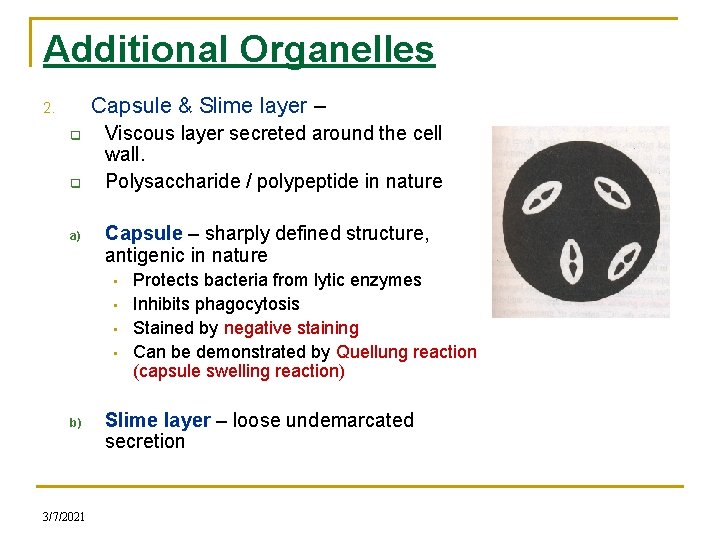
Additional Organelles Capsule & Slime layer – 2. q q a) Viscous layer secreted around the cell wall. Polysaccharide / polypeptide in nature Capsule – sharply defined structure, antigenic in nature • • b) 3/7/2021 Protects bacteria from lytic enzymes Inhibits phagocytosis Stained by negative staining Can be demonstrated by Quellung reaction (capsule swelling reaction) Slime layer – loose undemarcated secretion
Additional Organelles 3. q Flagella – Long (3 to 12 µm), filamentous surface appendages q Organs of locomotion q Chemically, composed of proteins called flagellins q q q 3/7/2021 The number and distribution of flagella on the bacterial surface are characteristic for a given species - hence are useful in identifying and classifying bacteria Flagella may serve as antigenic determinants (e. g. the H antigens of Gram-negative enteric bacteria) Presence shown by motility e. g. hanging drop preparation
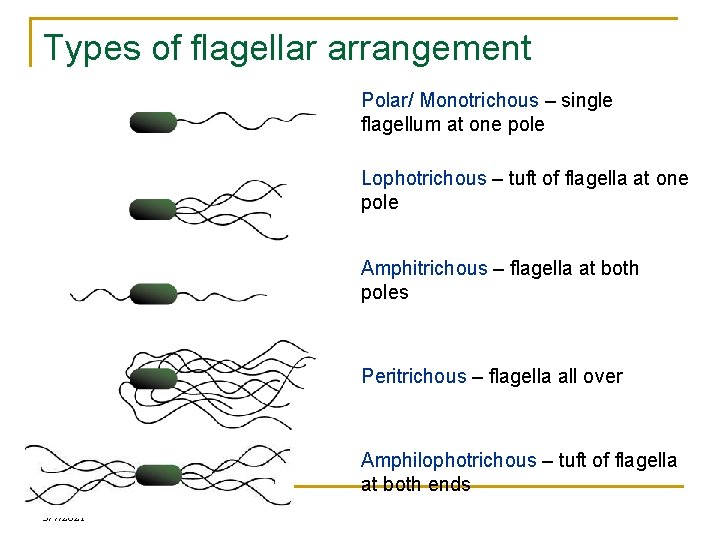
Types of flagellar arrangement Polar/ Monotrichous – single flagellum at one pole Lophotrichous – tuft of flagella at one pole Amphitrichous – flagella at both poles Peritrichous – flagella all over Amphilophotrichous – tuft of flagella at both ends 3/7/2021
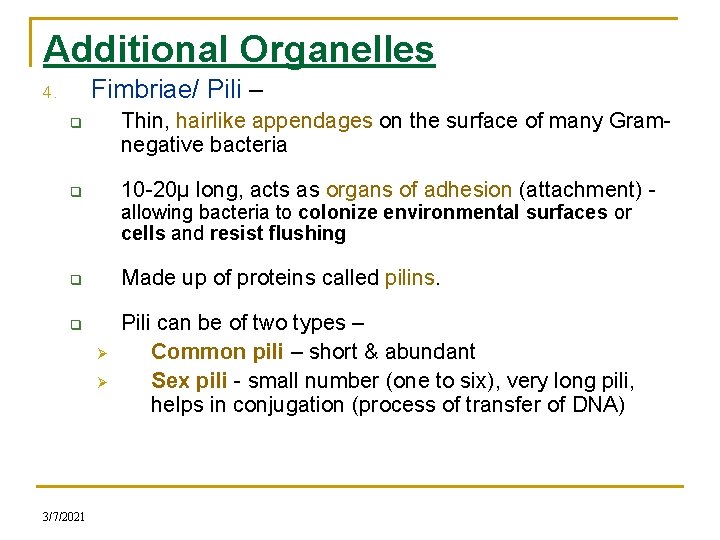
Additional Organelles Fimbriae/ Pili – 4. Thin, hairlike appendages on the surface of many Gramnegative bacteria q 10 -20µ long, acts as organs of adhesion (attachment) - q allowing bacteria to colonize environmental surfaces or cells and resist flushing Made up of proteins called pilins. q q Ø Ø 3/7/2021 Pili can be of two types – Common pili – short & abundant Sex pili - small number (one to six), very long pili, helps in conjugation (process of transfer of DNA)
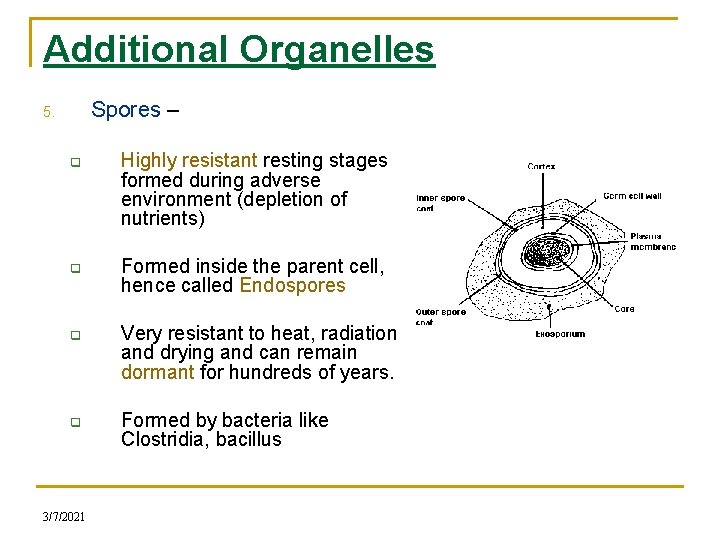
Additional Organelles Spores – 5. q q 3/7/2021 Highly resistant resting stages formed during adverse environment (depletion of nutrients) Formed inside the parent cell, hence called Endospores Very resistant to heat, radiation and drying and can remain dormant for hundreds of years. Formed by bacteria like Clostridia, bacillus
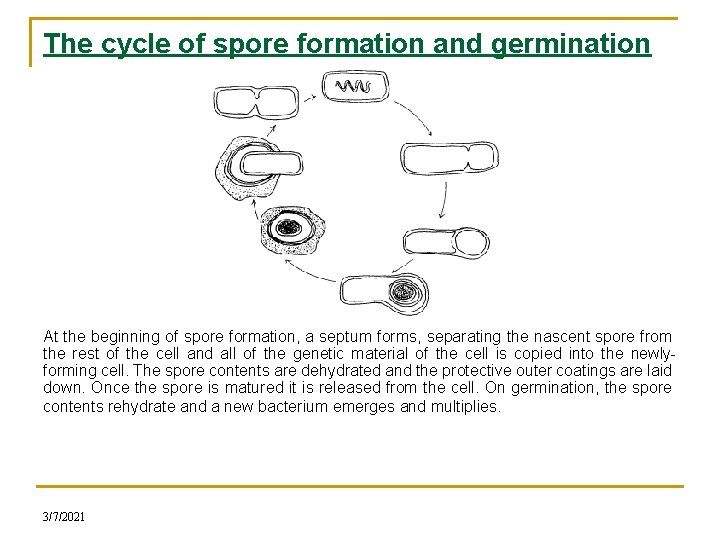
The cycle of spore formation and germination At the beginning of spore formation, a septum forms, separating the nascent spore from the rest of the cell and all of the genetic material of the cell is copied into the newlyforming cell. The spore contents are dehydrated and the protective outer coatings are laid down. Once the spore is matured it is released from the cell. On germination, the spore contents rehydrate and a new bacterium emerges and multiplies. 3/7/2021
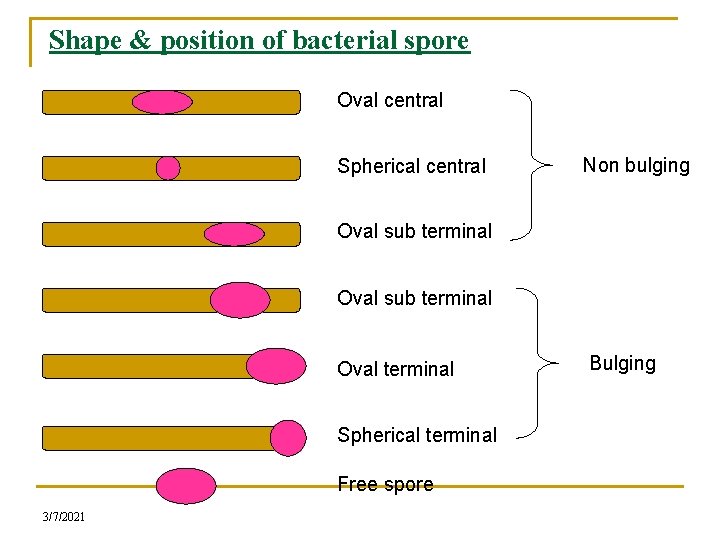
Shape & position of bacterial spore Oval central Spherical central Non bulging Oval sub terminal Oval terminal Spherical terminal Free spore 3/7/2021 Bulging
Pleomorphism & Involution forms n Pleomorphism – great variation in shape & size of individual cells e. g. Proteus species n Involution forms – swollen & aberrant forms in ageing cultures, especially in the presence of high salt concentration e. g. plague bacillus n Cause – defective cell wall synthesis 3/7/2021
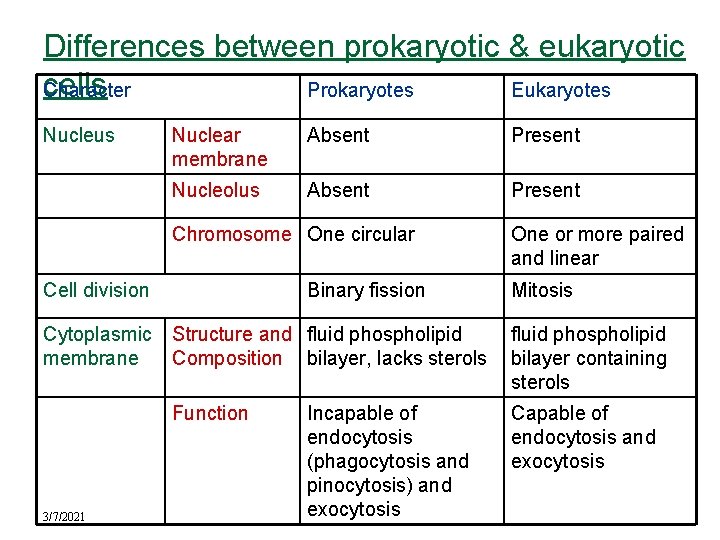
Differences between prokaryotic & eukaryotic cells Character Prokaryotes Eukaryotes Nucleus Nuclear membrane Absent Present Nucleolus Absent Present Chromosome One circular Cell division Cytoplasmic membrane 3/7/2021 Binary fission One or more paired and linear Mitosis Structure and fluid phospholipid Composition bilayer, lacks sterols fluid phospholipid bilayer containing sterols Function Capable of endocytosis and exocytosis Incapable of endocytosis (phagocytosis and pinocytosis) and exocytosis
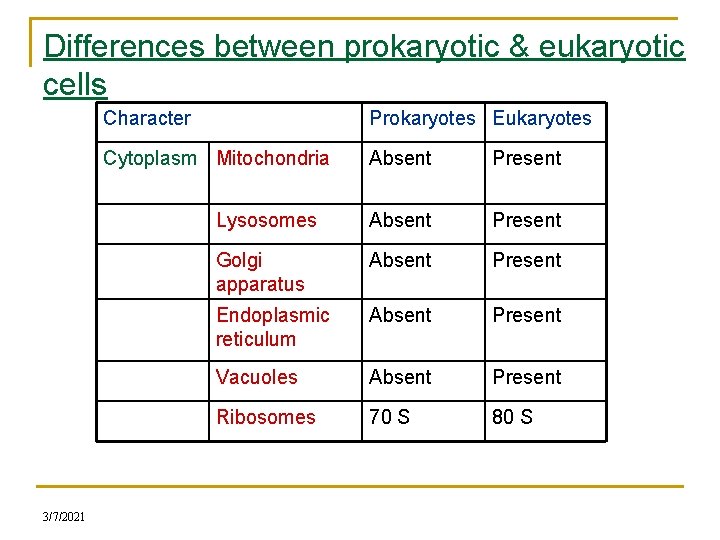
Differences between prokaryotic & eukaryotic cells 3/7/2021 Character Prokaryotes Eukaryotes Cytoplasm Mitochondria Absent Present Lysosomes Absent Present Golgi apparatus Absent Present Endoplasmic reticulum Absent Present Vacuoles Absent Present Ribosomes 70 S 80 S
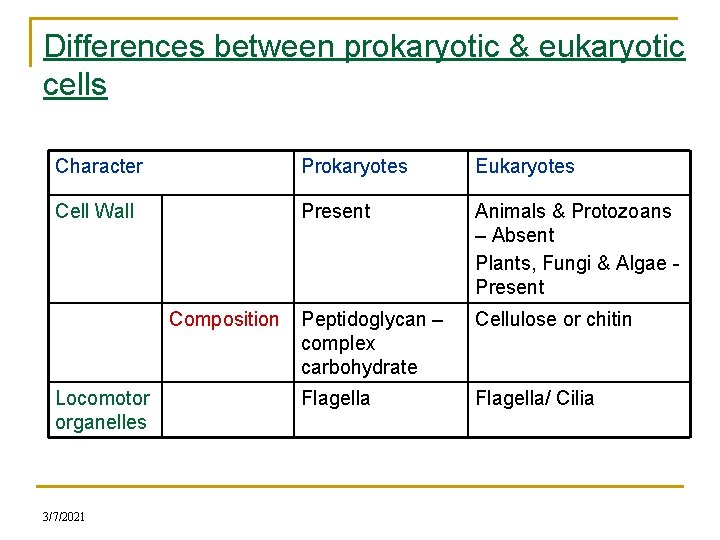
Differences between prokaryotic & eukaryotic cells Character Prokaryotes Eukaryotes Cell Wall Present Animals & Protozoans – Absent Plants, Fungi & Algae Present Peptidoglycan – complex carbohydrate Cellulose or chitin Flagella/ Cilia Composition Locomotor organelles 3/7/2021
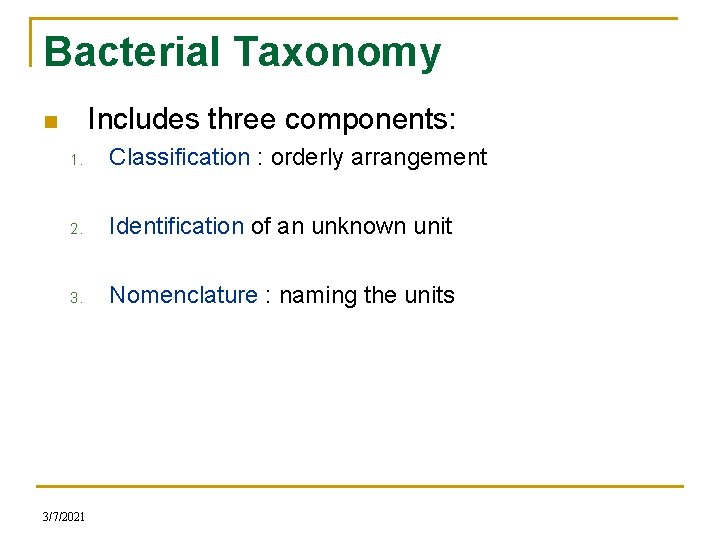
Bacterial Taxonomy Includes three components: n 1. Classification : orderly arrangement 2. Identification of an unknown unit 3. Nomenclature : naming the units 3/7/2021
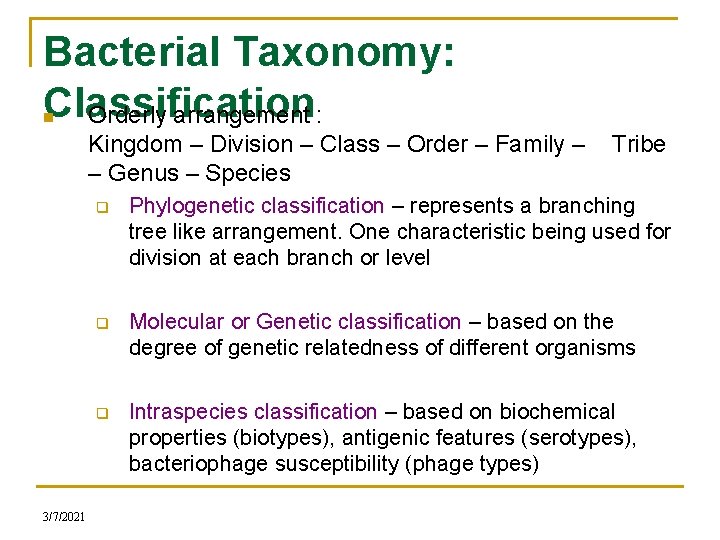
Bacterial Taxonomy: Classification Orderly arrangement : n Kingdom – Division – Class – Order – Family – – Genus – Species 3/7/2021 Tribe q Phylogenetic classification – represents a branching tree like arrangement. One characteristic being used for division at each branch or level q Molecular or Genetic classification – based on the degree of genetic relatedness of different organisms q Intraspecies classification – based on biochemical properties (biotypes), antigenic features (serotypes), bacteriophage susceptibility (phage types)

3/7/2021
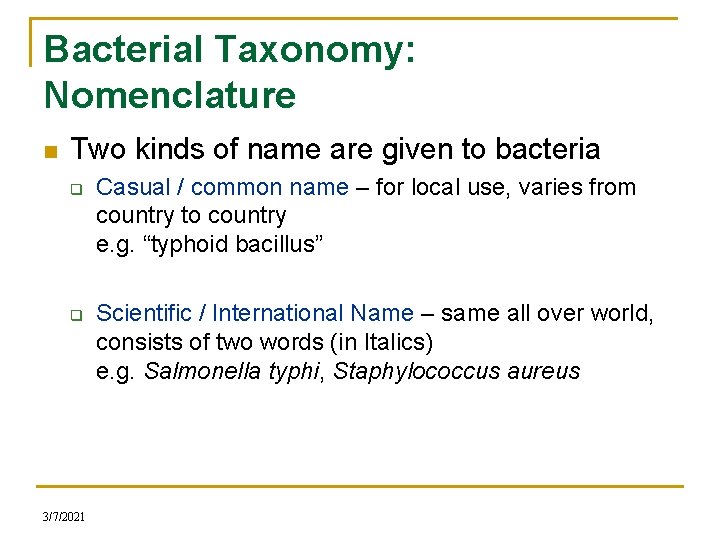
Bacterial Taxonomy: Nomenclature n Two kinds of name are given to bacteria q q 3/7/2021 Casual / common name – for local use, varies from country to country e. g. “typhoid bacillus” Scientific / International Name – same all over world, consists of two words (in Italics) e. g. Salmonella typhi, Staphylococcus aureus
- Slides: 37