
Bacterial transformation the genetic code is universal All
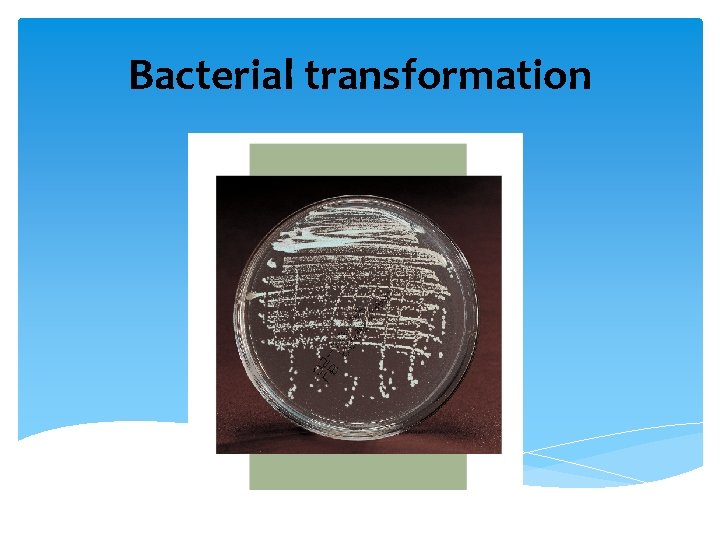
Bacterial transformation
the genetic code is universal All living things use the same genetic code Each codon corresponds to a specific amino acid, regardless of the species We can take a gene from one species and insert it into a different one and still get the same protein (same amino acid sequence)
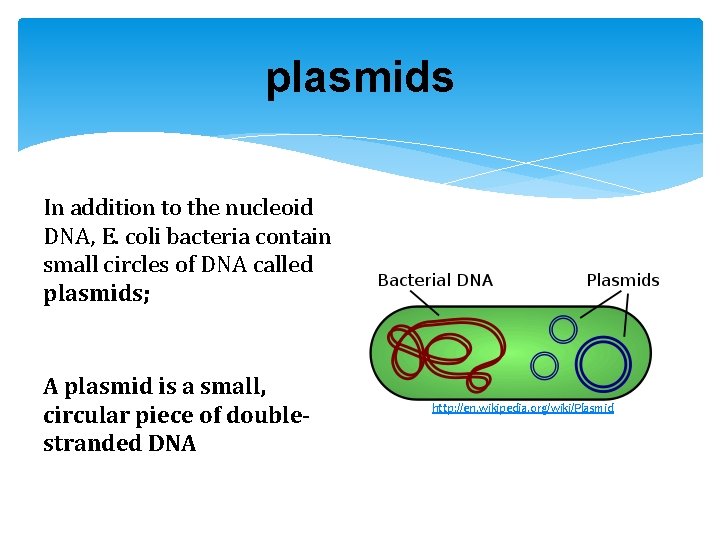
plasmids In addition to the nucleoid DNA, E. coli bacteria contain small circles of DNA called plasmids; A plasmid is a small, circular piece of doublestranded DNA http: //en. wikipedia. org/wiki/Plasmid
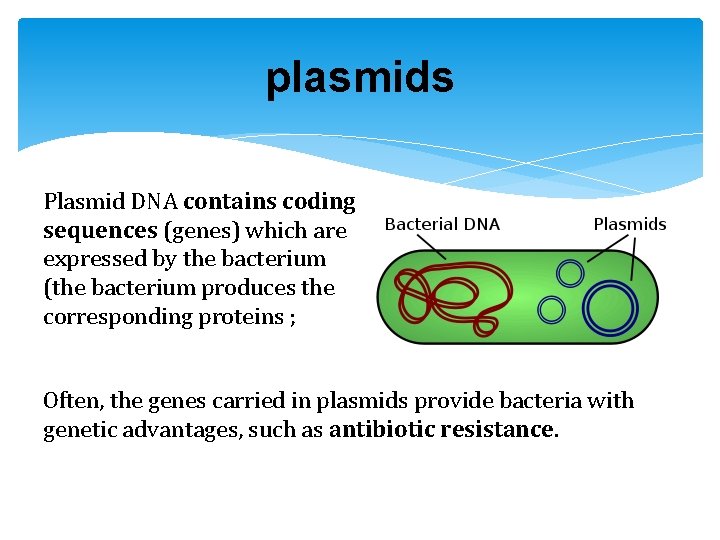
plasmids Plasmid DNA contains coding sequences (genes) which are expressed by the bacterium (the bacterium produces the corresponding proteins ; Often, the genes carried in plasmids provide bacteria with genetic advantages, such as antibiotic resistance.
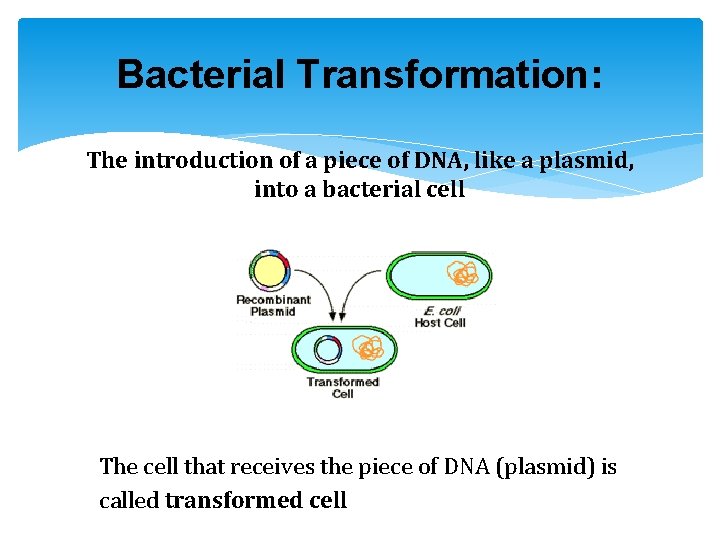
Bacterial Transformation: The introduction of a piece of DNA, like a plasmid, into a bacterial cell The cell that receives the piece of DNA (plasmid) is called transformed cell
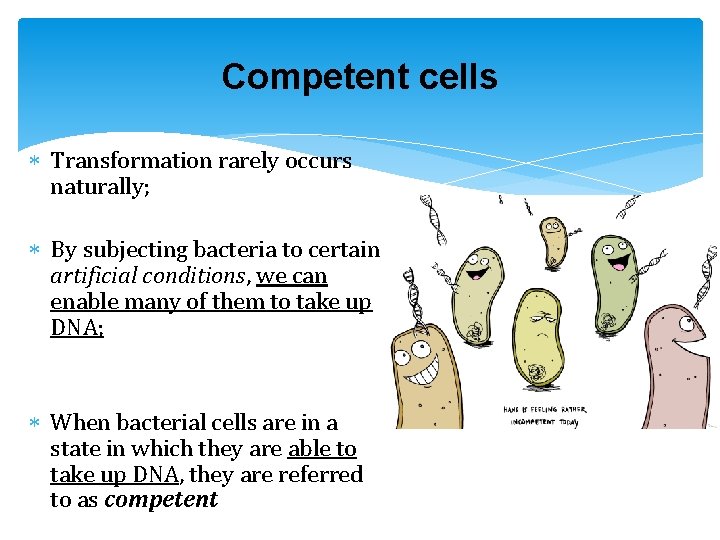
Competent cells Transformation rarely occurs naturally; By subjecting bacteria to certain artificial conditions, we can enable many of them to take up DNA; When bacterial cells are in a state in which they are able to take up DNA, they are referred to as competent
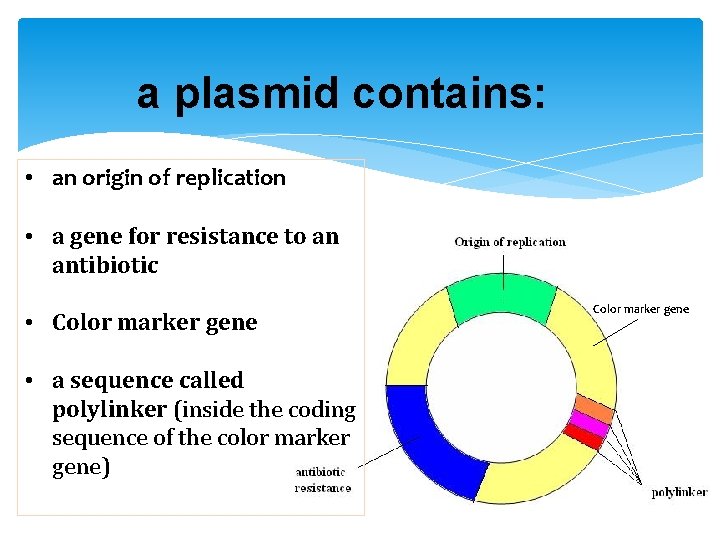
a plasmid contains: • an origin of replication • a gene for resistance to an antibiotic • Color marker gene • a sequence called polylinker (inside the coding sequence of the color marker gene) Color marker gene
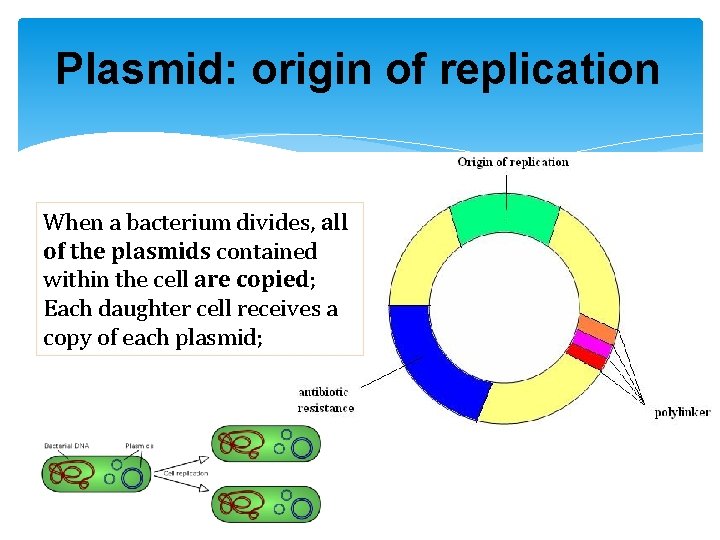
Plasmid: origin of replication When a bacterium divides, all of the plasmids contained within the cell are copied; Each daughter cell receives a copy of each plasmid;
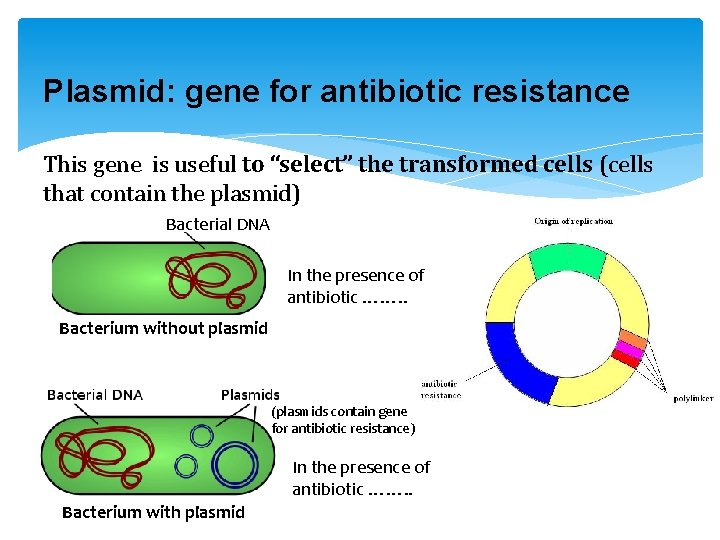
Plasmid: gene for antibiotic resistance This gene is useful to “select” the transformed cells (cells that contain the plasmid) Bacterial DNA In the presence of antibiotic ……. . Bacterium without plasmid (plasmids contain gene for antibiotic resistance) In the presence of antibiotic ……. . Bacterium with plasmid
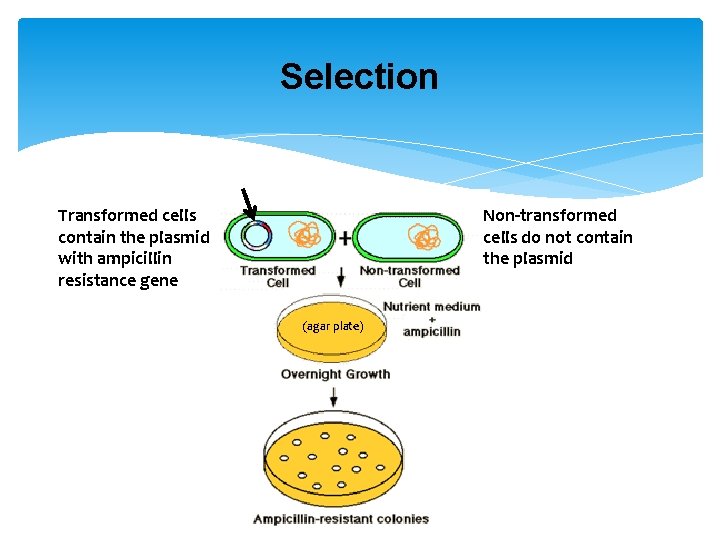
Selection Transformed cells contain the plasmid with ampicillin resistance gene Non-transformed cells do not contain the plasmid (agar plate)
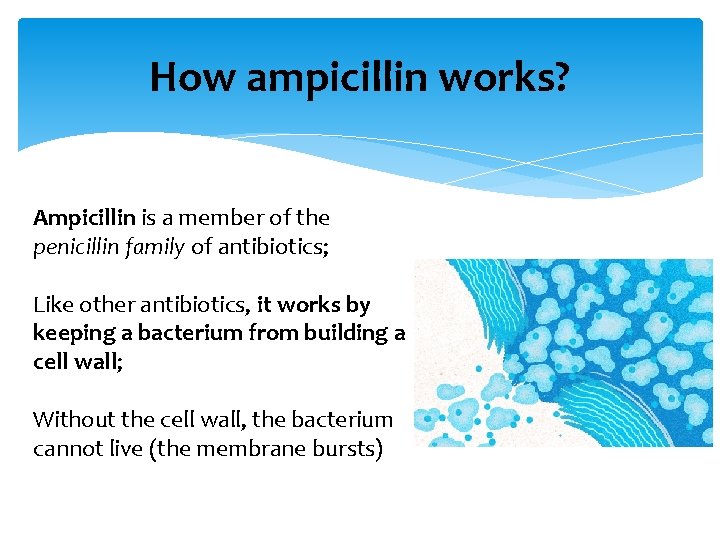
How ampicillin works? Ampicillin is a member of the penicillin family of antibiotics; Like other antibiotics, it works by keeping a bacterium from building a cell wall; Without the cell wall, the bacterium cannot live (the membrane bursts)
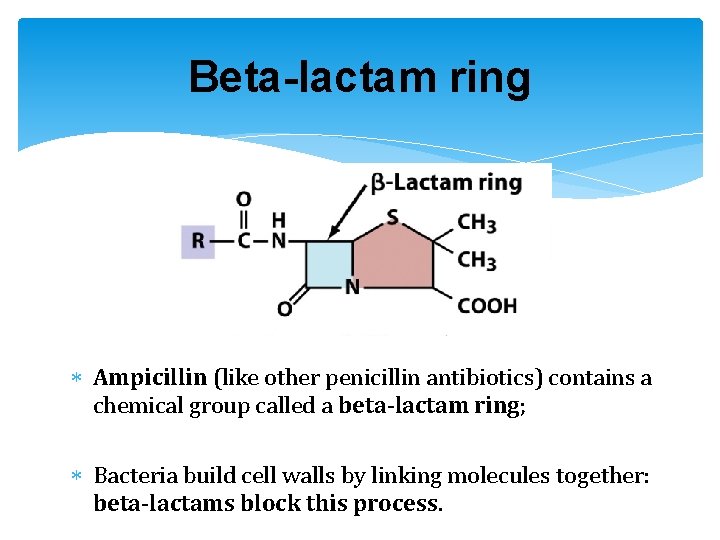
Beta-lactam ring Ampicillin (like other penicillin antibiotics) contains a chemical group called a beta-lactam ring; Bacteria build cell walls by linking molecules together: beta-lactams block this process.
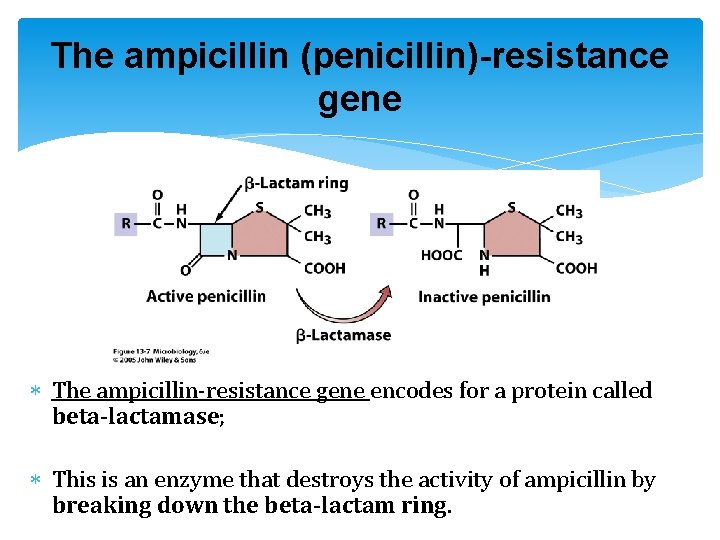
The ampicillin (penicillin)-resistance gene The ampicillin-resistance gene encodes for a protein called beta-lactamase; This is an enzyme that destroys the activity of ampicillin by breaking down the beta-lactam ring.
Penicillin resistance Thus, bacteria expressing beta lactamase gene can resist the effects of ampicillin and other beta-lactam antibiotics (penicillin); These bacteria can grow in the presence of ampicillin
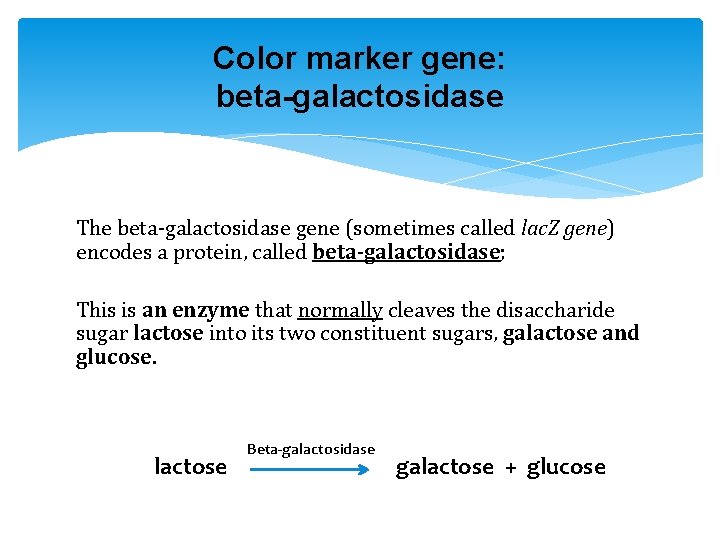
Color marker gene: beta-galactosidase The beta-galactosidase gene (sometimes called lac. Z gene) encodes a protein, called beta-galactosidase; This is an enzyme that normally cleaves the disaccharide sugar lactose into its two constituent sugars, galactose and glucose. lactose Beta-galactosidase galactose + glucose
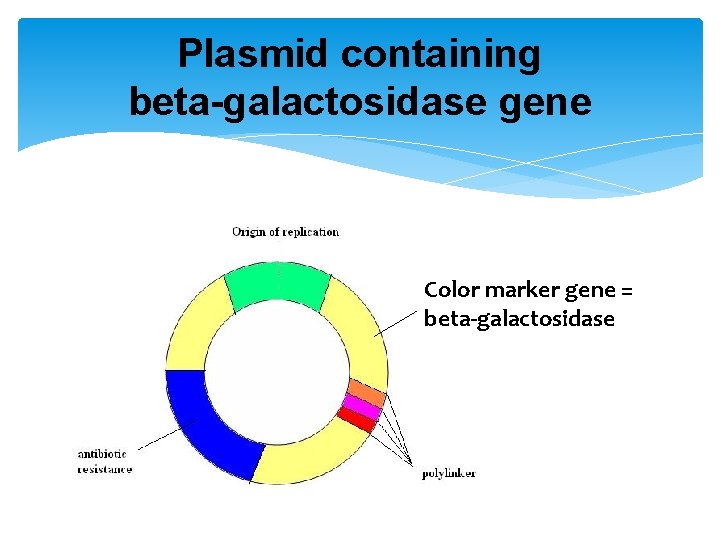
Plasmid containing beta-galactosidase gene Color marker gene = beta-galactosidase
Color marker gene: beta-galactosidase However, beta-galactosidase can also cleave a synthetic analog of lactose called X-gal; X-gal is colorless, but when it is cleaved by betagalactosidase, one of the products is dark blue;
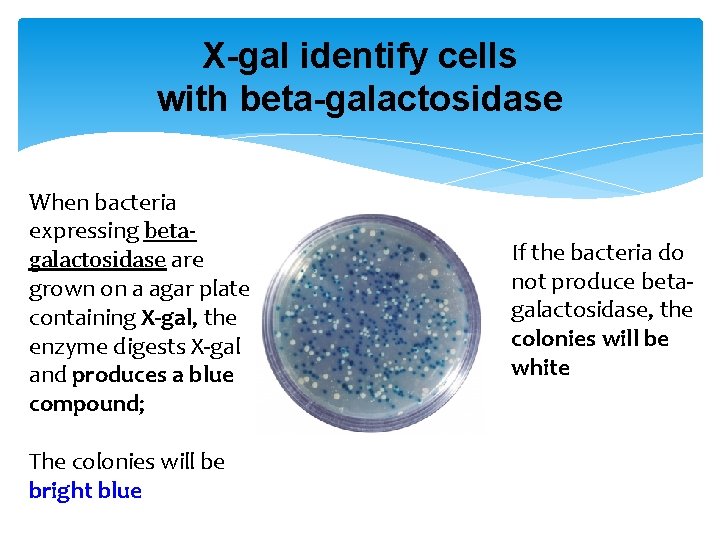
X-gal identify cells with beta-galactosidase When bacteria expressing betagalactosidase are grown on a agar plate containing X-gal, the enzyme digests X-gal and produces a blue compound; The colonies will be bright blue If the bacteria do not produce betagalactosidase, the colonies will be white

p. BLU ü Origin of replication ü a gene for resistance to an antibiotic (ampr) ü Color marker gene (beta-galactosidase) ü a sequence called polylinker
- Slides: 19