
Bacterial signal transduction networks as targets for antivirulence
Bacterial signal transduction networks as targets for antivirulence drugs Steven Porter Biosciences
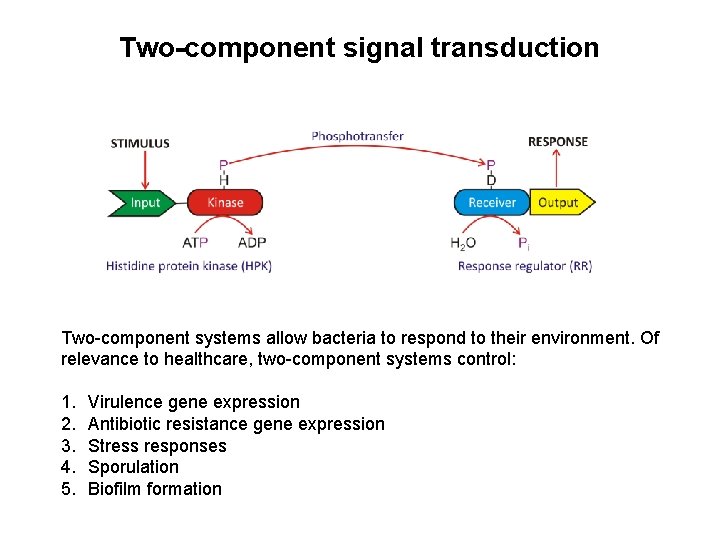
Two-component signal transduction Two-component systems allow bacteria to respond to their environment. Of relevance to healthcare, two-component systems control: 1. 2. 3. 4. 5. Virulence gene expression Antibiotic resistance gene expression Stress responses Sporulation Biofilm formation
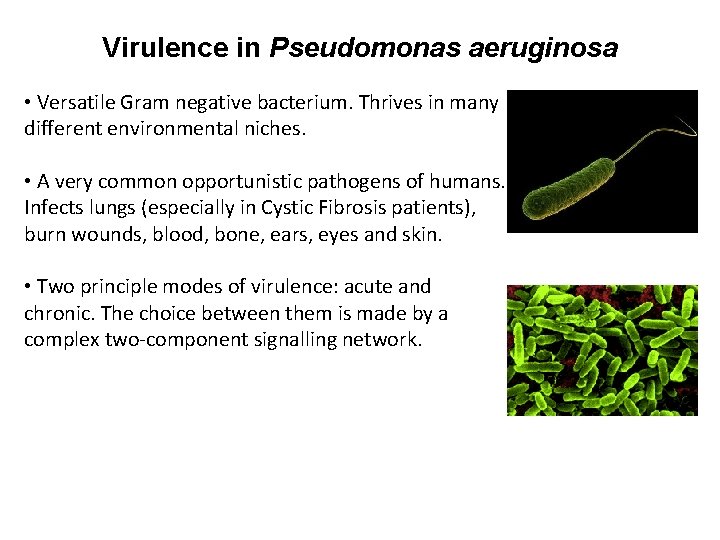
Virulence in Pseudomonas aeruginosa • Versatile Gram negative bacterium. Thrives in many different environmental niches. • A very common opportunistic pathogens of humans. Infects lungs (especially in Cystic Fibrosis patients), burn wounds, blood, bone, ears, eyes and skin. • Two principle modes of virulence: acute and chronic. The choice between them is made by a complex two-component signalling network.
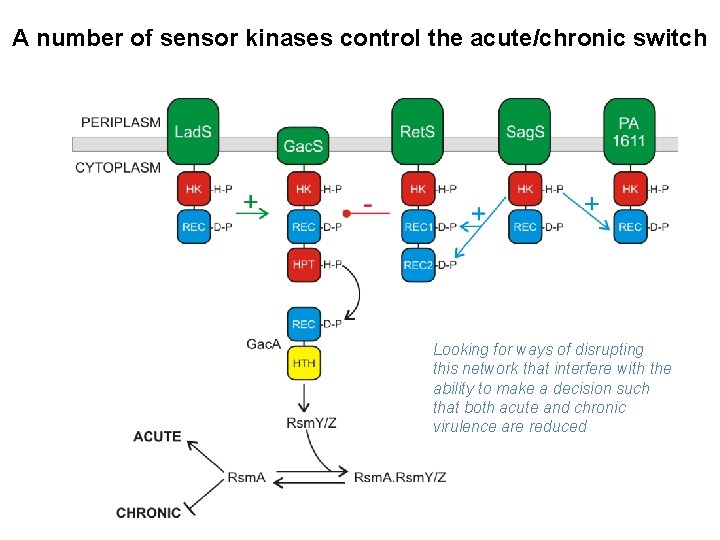
A number of sensor kinases control the acute/chronic switch Looking for ways of disrupting this network that interfere with the ability to make a decision such that both acute and chronic virulence are reduced
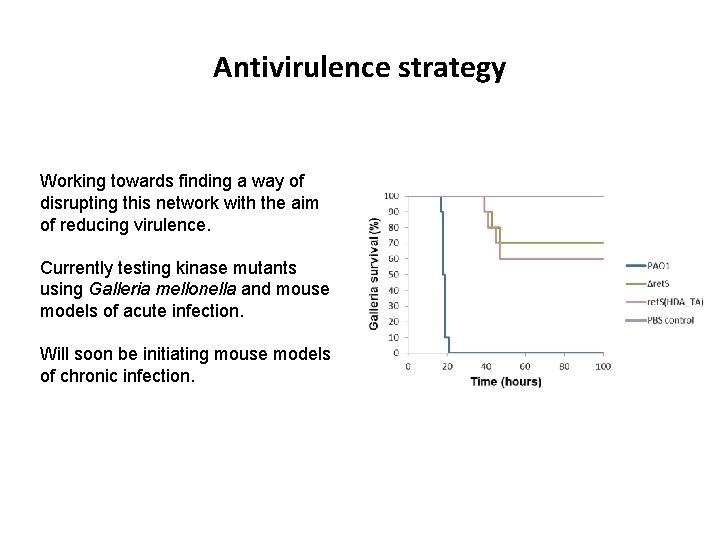
Antivirulence strategy Working towards finding a way of disrupting this network with the aim of reducing virulence. Currently testing kinase mutants using Galleria mellonella and mouse models of acute infection. Will soon be initiating mouse models of chronic infection.
Acknowledgements Vanessa Francis Alan Brown Alain Filloux (Imperial) Aras Kadioglu (Liverpool)
- Slides: 6