
Bacterial Pathogenesis of Staphylococcus aureus Case 4 Summary
Bacterial Pathogenesis of Staphylococcus aureus Case 4 Summary Chris Cheng (#32929144)
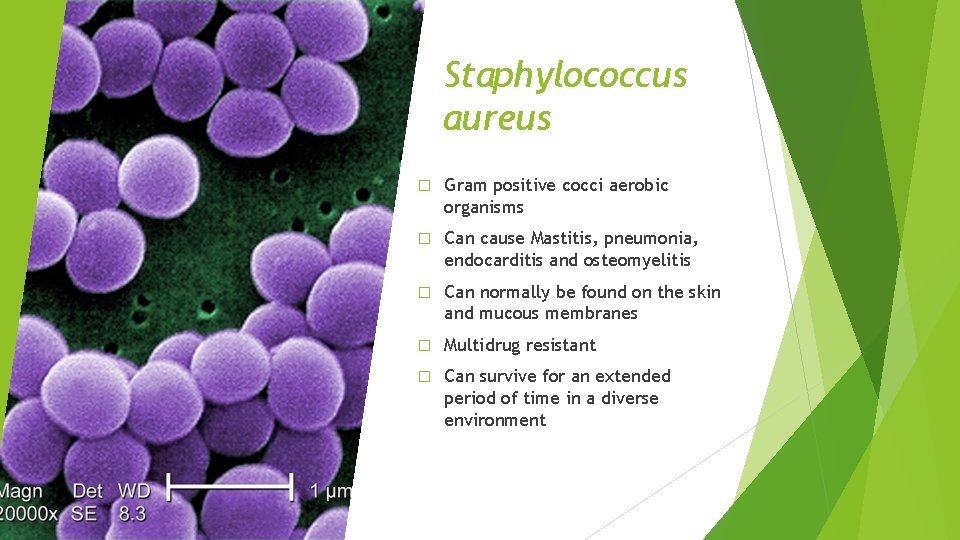
Staphylococcus aureus � Gram positive cocci aerobic organisms � Can cause Mastitis, pneumonia, endocarditis and osteomyelitis � Can normally be found on the skin and mucous membranes � Multidrug resistant � Can survive for an extended period of time in a diverse environment
Where can you find Staphylococcus aureus? � Nasal: able to resist the attacks from nasal secretionbased defensins and cathelicidins � Other Skin/body surfaces: Can colonize the nipples � Inanimate surfaces: Can form biofilms on a variety of surfaces at the hospital or in the home � Other animals: staphylococcus aureus can colonize the fur of canines � Respiratory tract: nasal passages and the pharynx by binding to cilia and mucin � Human Milk � Digestive tract: bind to intestinal mucus and formation of biofilms � vagina
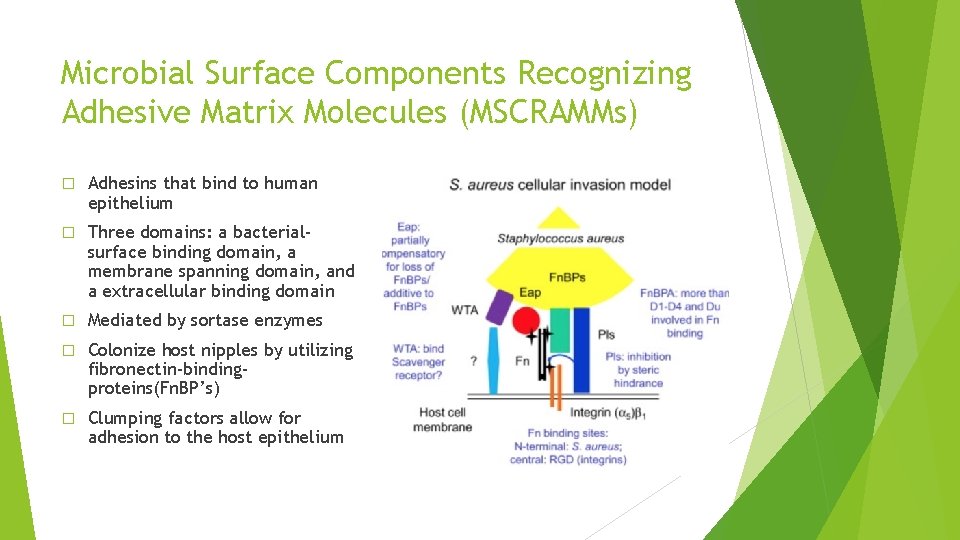
Microbial Surface Components Recognizing Adhesive Matrix Molecules (MSCRAMMs) � Adhesins that bind to human epithelium � Three domains: a bacterialsurface binding domain, a membrane spanning domain, and a extracellular binding domain � Mediated by sortase enzymes � Colonize host nipples by utilizing fibronectin-bindingproteins(Fn. BP’s) � Clumping factors allow for adhesion to the host epithelium
Accessory Gene Regulator � Promotes adhesin production during infection � Regulates fibronectin binding protein production � Fn. BP knockout causes 40% decrease in ability to bind to cultured epithelial cells � Encodes for 2 operons � P 2 Operon: encodes for Arg. C(receptor) and Arg. A (response regulator) � RNAIII: Downregulate adhesins and upregulate toxin production � encodes for ∂-hemolysin (∂-toxin), a 26 -amino acid protein able to lyse erythrocytes
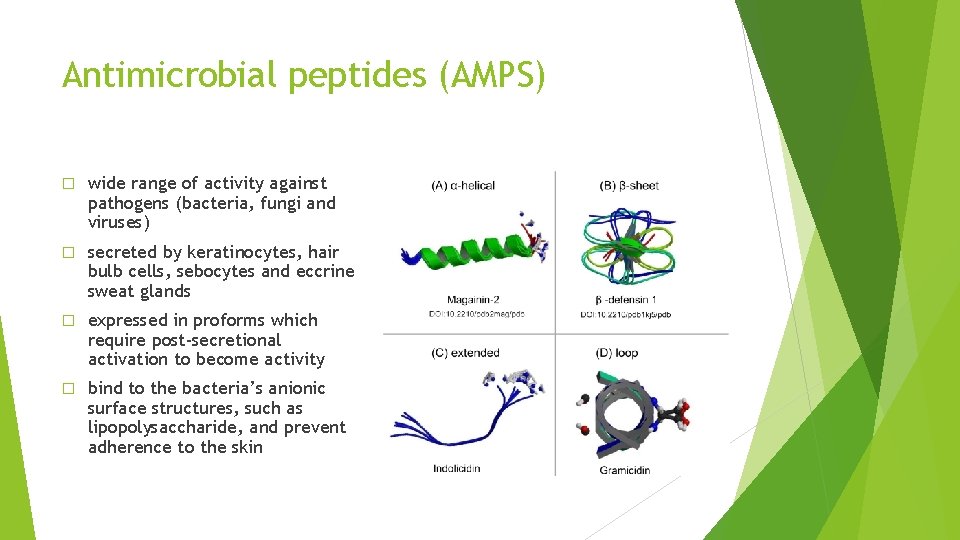
Antimicrobial peptides (AMPS) � wide range of activity against pathogens (bacteria, fungi and viruses) � secreted by keratinocytes, hair bulb cells, sebocytes and eccrine sweat glands � expressed in proforms which require post-secretional activation to become activity � bind to the bacteria’s anionic surface structures, such as lipopolysaccharide, and prevent adherence to the skin
Evasion of Host Immune Responses � Leukocidin: Pore forming toxin that acts specifically on the membranes of polymorphonuclear (PMN) leukocytes, resulting in their destruction � Microcapsule: surface polysaccharides of either serotype 5 or 7 and prevents phagocytosis � Protein A: binds to Fc receptor of Ig. G, preventing it from opsonizing the bacteria � Staphyloxanthin: antioxidant which prevents death by reactive oxygen species � Biofilm: phagocytosis resistance � PIA/PNAG and poly-γ-glutamic acid: inhibit phagocytosis � Sep. A: degrades bactericidal AMPs
Factors affecting Bacterial Replication, Invasion, and Spread � Coagulase: binds to prothrombin to form an active protease complex called staphylothrombin and converts soluble fibrinogen into insoluble fibrin � � Staphylokinase: causes the dissolution of fibrin clots � � Causes osmotic lysis of nearby cells by forming heptameric rings with a central pore through which cellular contents leak out PIA/PNAG and the ica Gene Cluster � � Works with coagulase to enhance replication and spread Alpha Hemolysin (Membrane Damaging toxin) � � Fibrin production is used to form clots which acts as a physical barrier Required formation of the extracellular biofilm matrix Phenol Soluble Modulins: � antimicrobial activity against other organisms and contribute to biofilm maturation
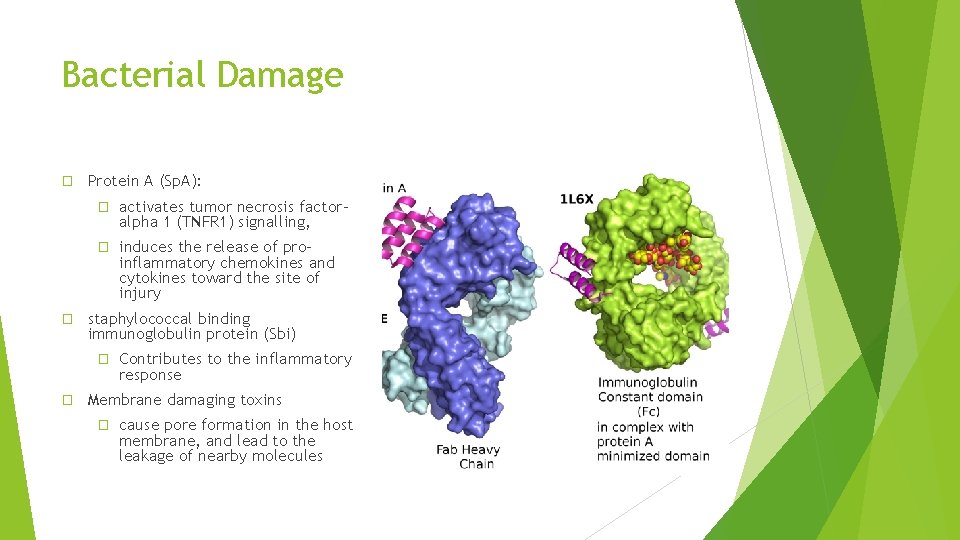
Bacterial Damage � � Protein A (Sp. A): � activates tumor necrosis factoralpha 1 (TNFR 1) signalling, � induces the release of proinflammatory chemokines and cytokines toward the site of injury staphylococcal binding immunoglobulin protein (Sbi) � � Contributes to the inflammatory response Membrane damaging toxins � cause pore formation in the host membrane, and lead to the leakage of nearby molecules
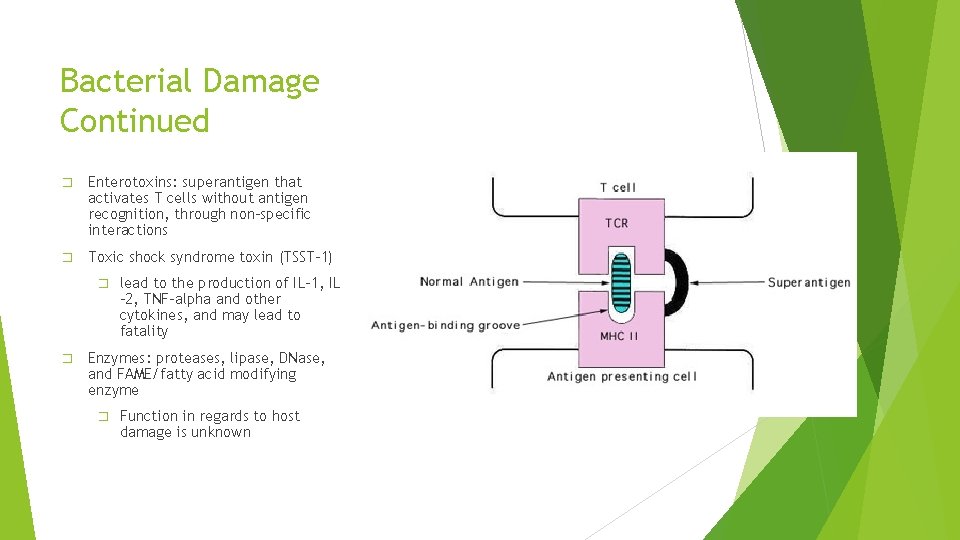
Bacterial Damage Continued � Enterotoxins: superantigen that activates T cells without antigen recognition, through non-specific interactions � Toxic shock syndrome toxin (TSST-1) � � lead to the production of IL-1, IL -2, TNF-alpha and other cytokines, and may lead to fatality Enzymes: proteases, lipase, DNase, and FAME/fatty acid modifying enzyme � Function in regards to host damage is unknown
- Slides: 10