
Bacterial Infections of the Skin Lecture 1 Objectives
Bacterial Infections of the Skin Lecture 1
Objectives 1. Studying the types and classification of skin infections 2. To be familiar with most common causative agents of skin infections 3. To study the bacterial virulence factors 4. Understanding the pathogenesis of skin diseases associated with bacterial infections 5. The diagnosis, treatment, and prevention of skin infections
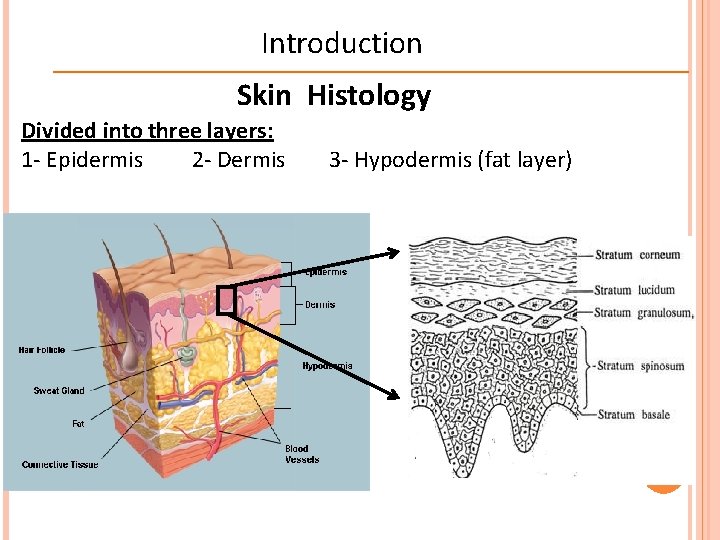
Introduction Skin Histology Divided into three layers: 1 - Epidermis 2 - Dermis 3 - Hypodermis (fat layer)
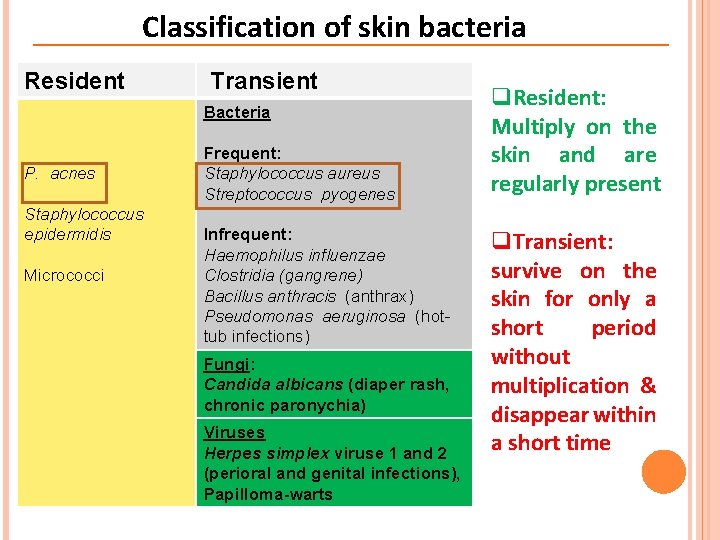
Classification of skin bacteria Resident Transient Bacteria P. acnes Staphylococcus epidermidis Micrococci Frequent: Staphylococcus aureus Streptococcus pyogenes Infrequent: Haemophilus influenzae Clostridia (gangrene) Bacillus anthracis (anthrax) Pseudomonas aeruginosa (hottub infections) Fungi: Candida albicans (diaper rash, chronic paronychia) Viruses Herpes simplex viruse 1 and 2 (perioral and genital infections), Papilloma-warts q. Resident: Multiply on the skin and are regularly present q. Transient: survive on the skin for only a short period without multiplication & disappear within a short time
Staphylococci General Characteristics General characteristics Ø Common inhabitant of the skin and mucous membranes (why? ) Because they can withstand high salt, extremes in p. H and temperatures Ø The most common cause of the pyodermal infections (pus producing lesions) Ø Facultative anaerobe Ø 31 species
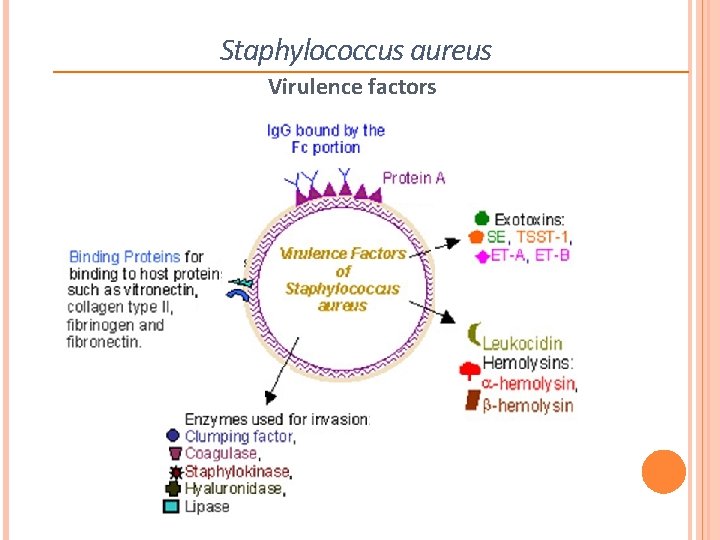
Staphylococcus aureus Virulence factors
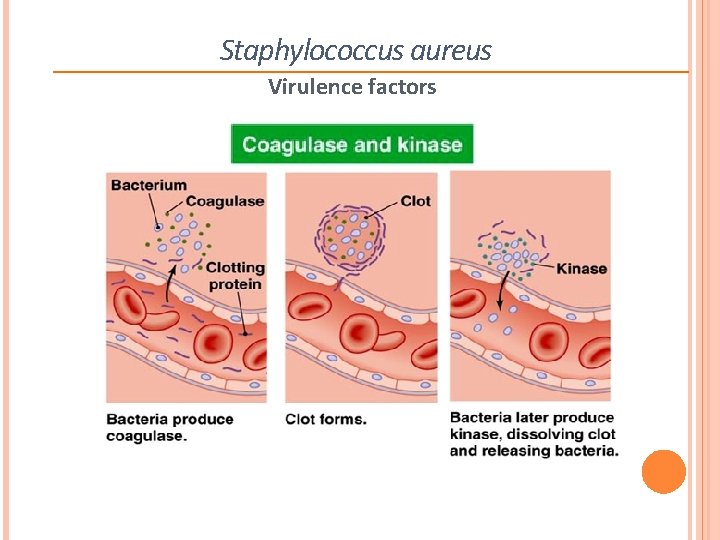
Staphylococcus aureus Virulence factors
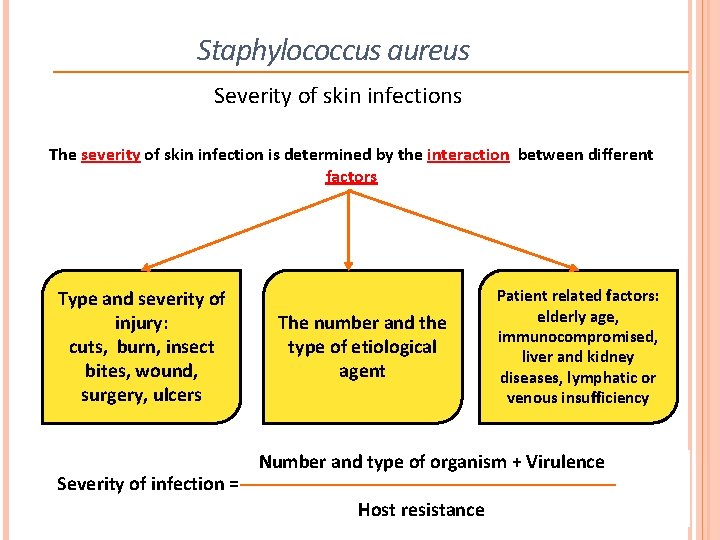
Staphylococcus aureus Severity of skin infections The severity of skin infection is determined by the interaction between different factors Type and severity of injury: cuts, burn, insect bites, wound, surgery, ulcers Severity of infection = The number and the type of etiological agent Patient related factors: elderly age, immunocompromised, liver and kidney diseases, lymphatic or venous insufficiency Number and type of organism + Virulence Host resistance
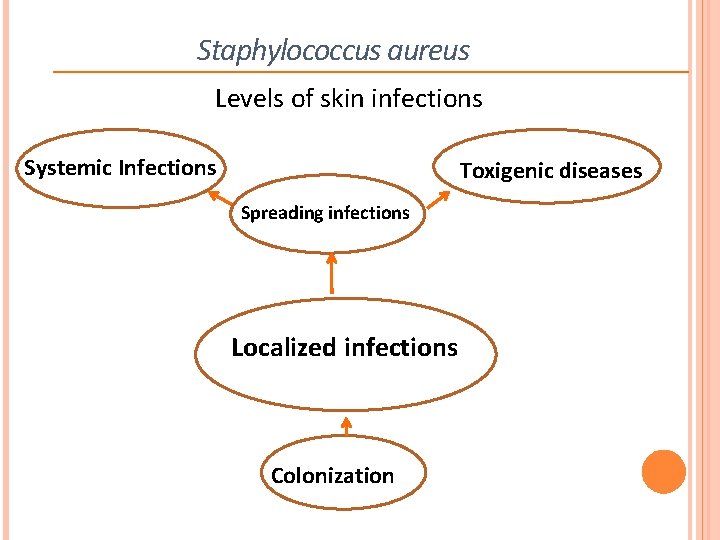
Staphylococcus aureus Levels of skin infections Systemic Infections Toxigenic diseases Spreading infections Localized infections Colonization
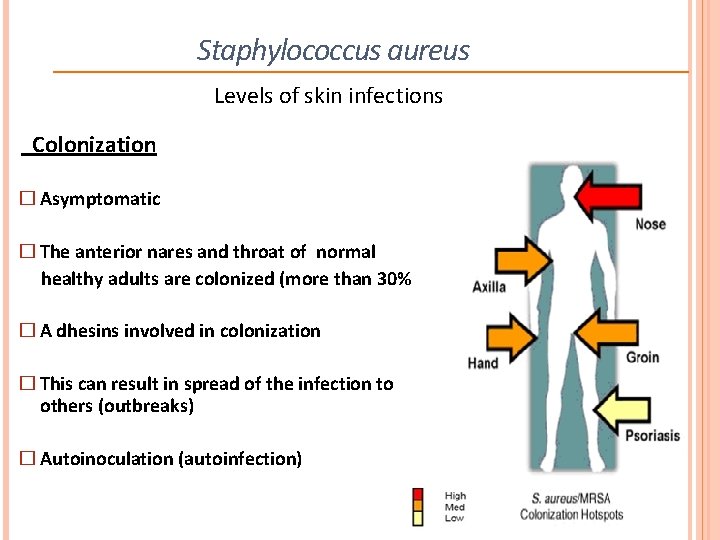
Staphylococcus aureus Levels of skin infections Colonization � Asymptomatic � The anterior nares and throat of normal healthy adults are colonized (more than 30%) � A dhesins involved in colonization � This can result in spread of the infection to others (outbreaks) � Autoinoculation (autoinfection)
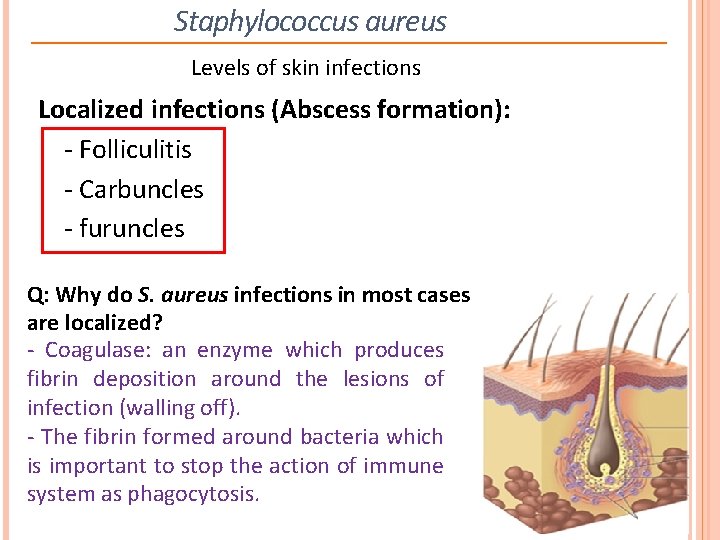
Staphylococcus aureus Levels of skin infections Localized infections (Abscess formation): - Folliculitis - Carbuncles - furuncles Q: Why do S. aureus infections in most cases are localized? - Coagulase: an enzyme which produces fibrin deposition around the lesions of infection (walling off). - The fibrin formed around bacteria which is important to stop the action of immune system as phagocytosis.
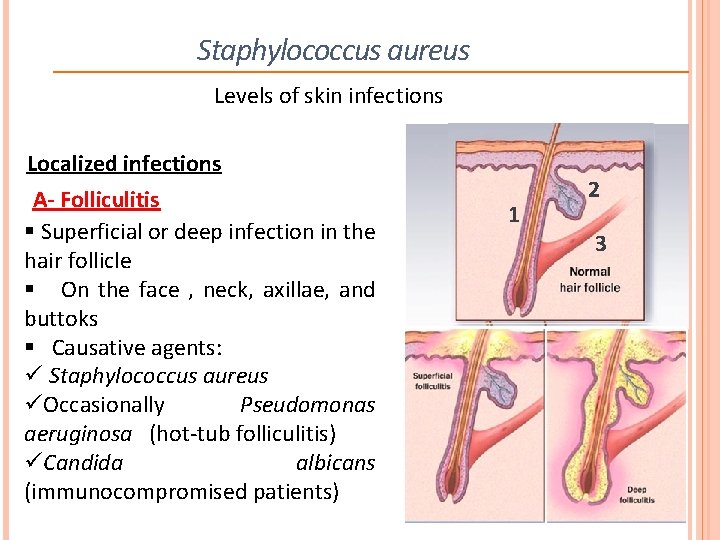
Staphylococcus aureus Levels of skin infections Localized infections A- Folliculitis § Superficial or deep infection in the hair follicle § On the face , neck, axillae, and buttoks § Causative agents: ü Staphylococcus aureus üOccasionally Pseudomonas aeruginosa (hot-tub folliculitis) üCandida albicans (immunocompromised patients) 1 2 3
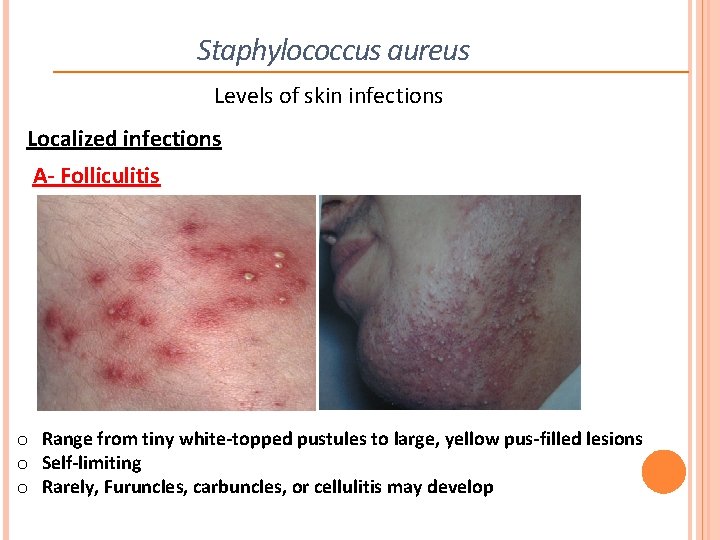
Staphylococcus aureus Levels of skin infections Localized infections A- Folliculitis o Range from tiny white-topped pustules to large, yellow pus-filled lesions o Self-limiting o Rarely, Furuncles, carbuncles, or cellulitis may develop
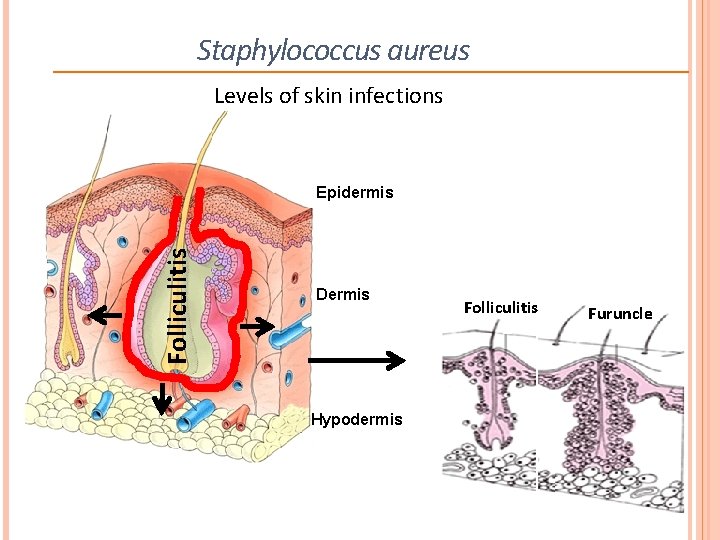
Staphylococcus aureus Levels of skin infections Folliculitis Epidermis Dermis Hypodermis Folliculitis Furuncle
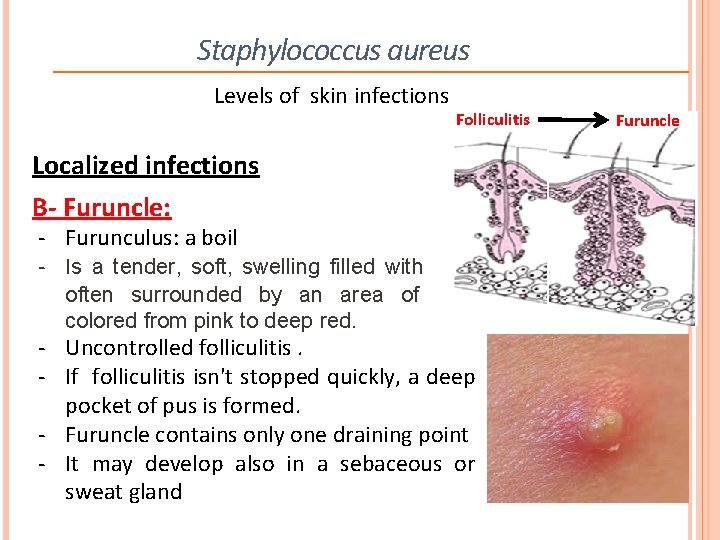
Staphylococcus aureus Levels of skin infections Folliculitis Localized infections B- Furuncle: - Furunculus: a boil - Is a tender, soft, swelling filled with pus, often surrounded by an area of skin colored from pink to deep red. - Uncontrolled folliculitis. - If folliculitis isn't stopped quickly, a deep pocket of pus is formed. - Furuncle contains only one draining point - It may develop also in a sebaceous or sweat gland Furuncle
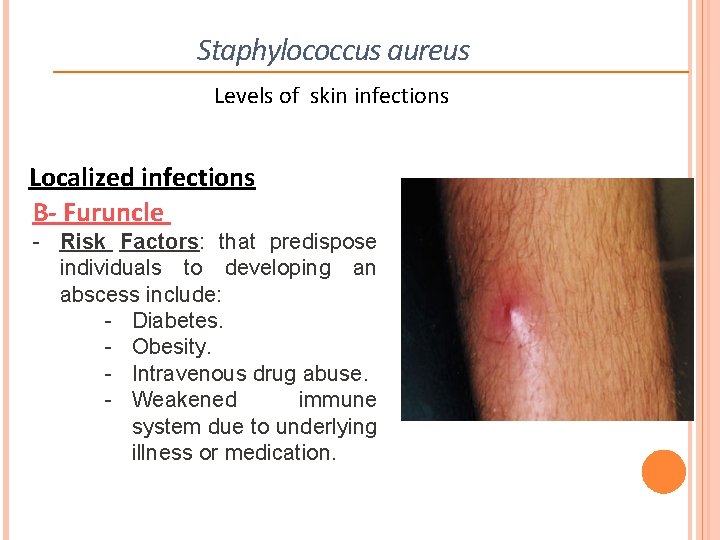
Staphylococcus aureus Levels of skin infections Localized infections B- Furuncle - Risk Factors: that predispose individuals to developing an abscess include: - Diabetes. - Obesity. - Intravenous drug abuse. - Weakened immune system due to underlying illness or medication.
Staphylococcus aureus Levels of skin infections Localized infections B- Furuncle Treatment • boils can rupture and go away on their own in generally healthy people • Large, multiple or frequent boils need antibiotic treatment • Applying a warm compress or soaking the area in warm water every few hours • Incision and drainage (I & D) Complications • Causing spreading skin infection. • Releasing of toxins. • Bacteremia.
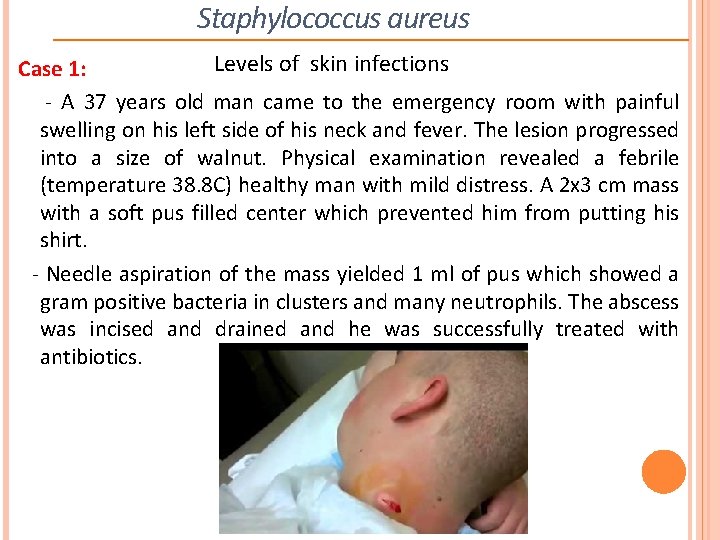
Staphylococcus aureus Levels of skin infections Case 1: - A 37 years old man came to the emergency room with painful swelling on his left side of his neck and fever. The lesion progressed into a size of walnut. Physical examination revealed a febrile (temperature 38. 8 C) healthy man with mild distress. A 2 x 3 cm mass with a soft pus filled center which prevented him from putting his shirt. - Needle aspiration of the mass yielded 1 ml of pus which showed a gram positive bacteria in clusters and many neutrophils. The abscess was incised and drained and he was successfully treated with antibiotics.
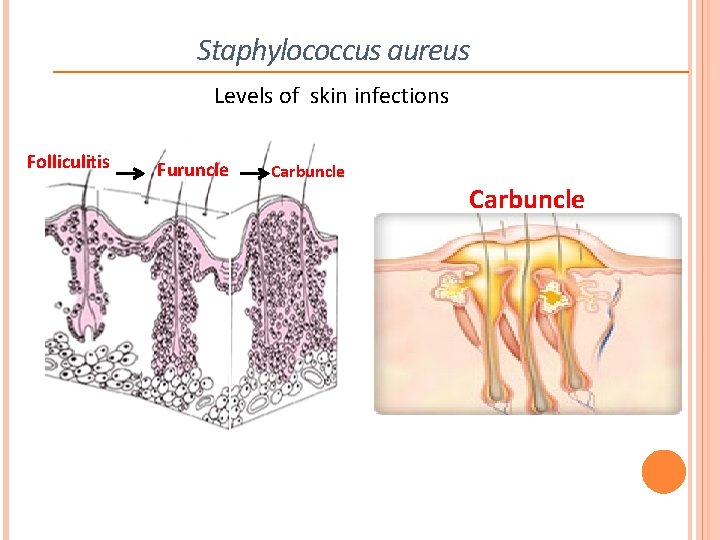
Staphylococcus aureus Levels of skin infections Folliculitis Furuncle Carbuncle
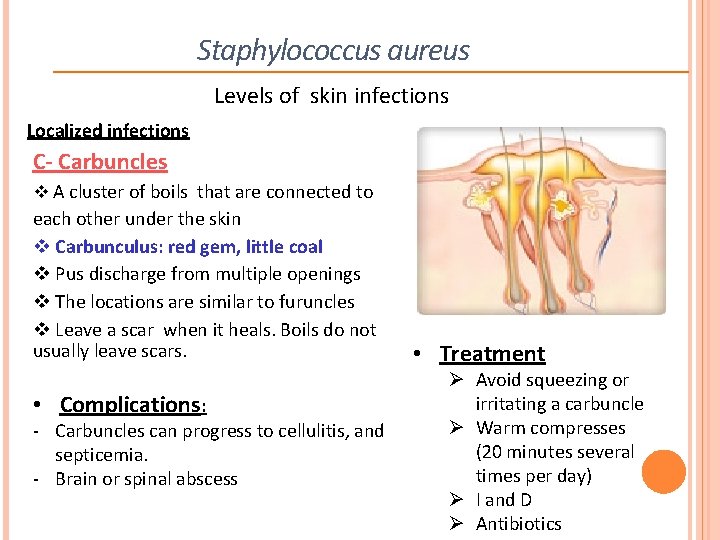
Staphylococcus aureus Levels of skin infections Localized infections C- Carbuncles v A cluster of boils that are connected to each other under the skin v Carbunculus: red gem, little coal v Pus discharge from multiple openings v The locations are similar to furuncles v Leave a scar when it heals. Boils do not usually leave scars. • Complications: - Carbuncles can progress to cellulitis, and septicemia. - Brain or spinal abscess • Treatment Ø Avoid squeezing or irritating a carbuncle Ø Warm compresses (20 minutes several times per day) Ø I and D Ø Antibiotics
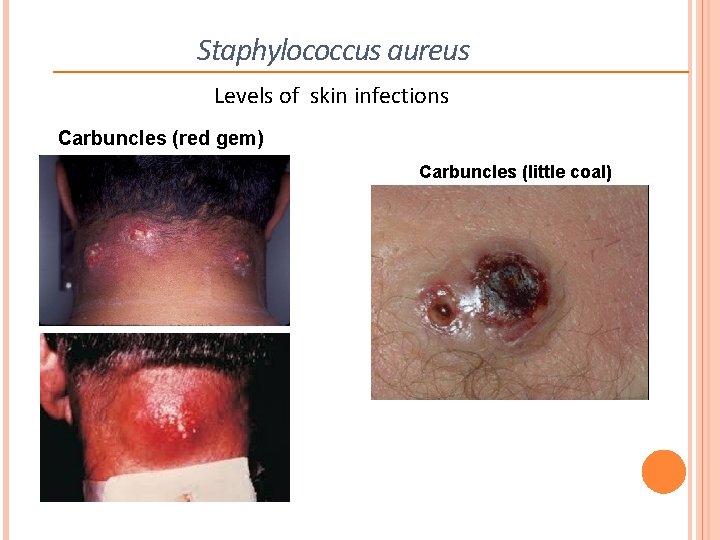
Staphylococcus aureus Levels of skin infections Carbuncles (red gem) Carbuncles (little coal)
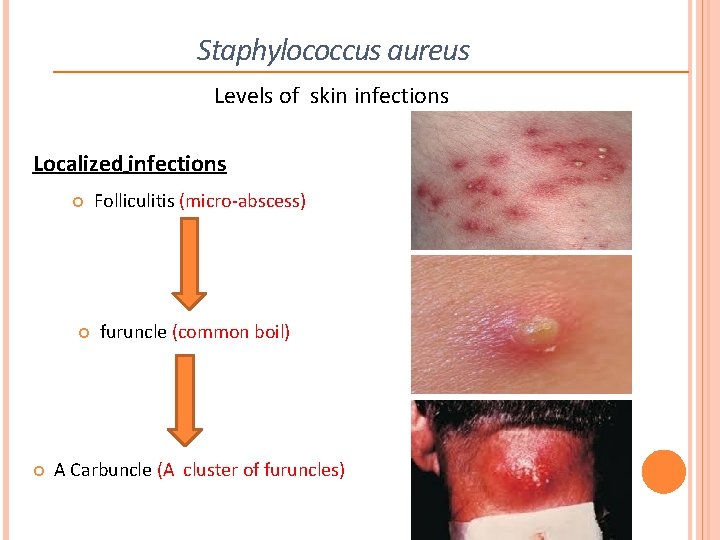
Staphylococcus aureus Levels of skin infections Localized infections Folliculitis (micro-abscess) furuncle (common boil) A Carbuncle (A cluster of furuncles)
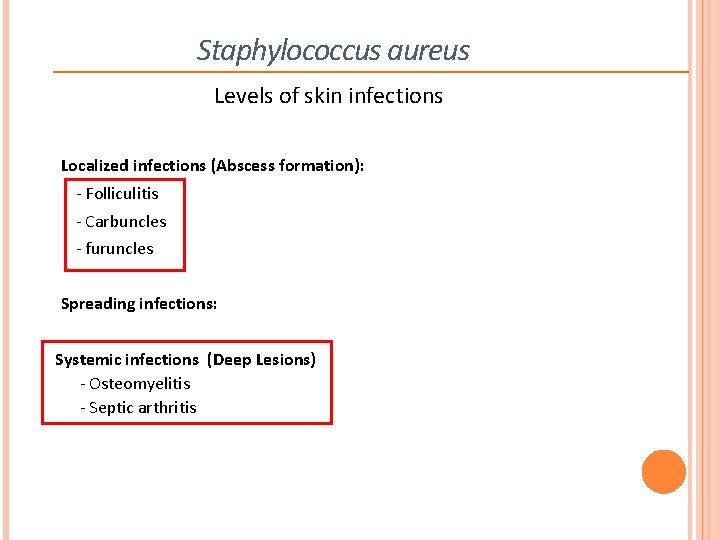
Staphylococcus aureus Levels of skin infections Localized infections (Abscess formation): - Folliculitis - Carbuncles - furuncles Spreading infections: Systemic infections (Deep Lesions) - Osteomyelitis - Septic arthritis
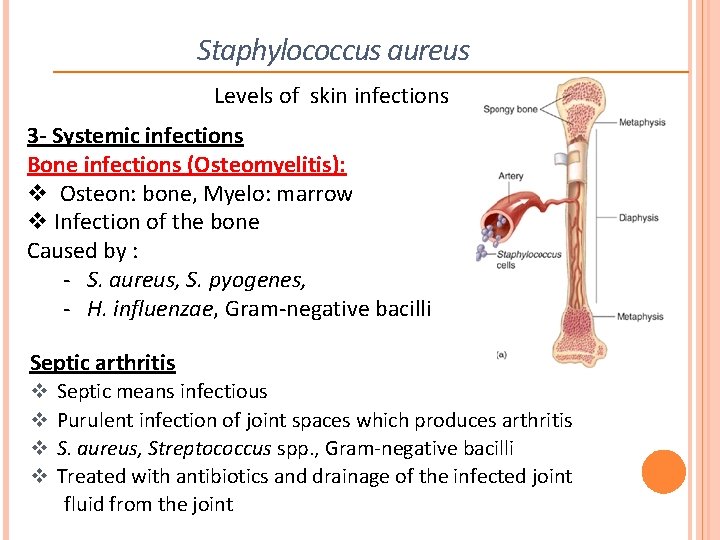
Staphylococcus aureus Levels of skin infections 3 - Systemic infections Bone infections (Osteomyelitis): v Osteon: bone, Myelo: marrow v Infection of the bone Caused by : - S. aureus, S. pyogenes, - H. influenzae, Gram-negative bacilli Septic arthritis v v Septic means infectious Purulent infection of joint spaces which produces arthritis S. aureus, Streptococcus spp. , Gram-negative bacilli Treated with antibiotics and drainage of the infected joint fluid from the joint
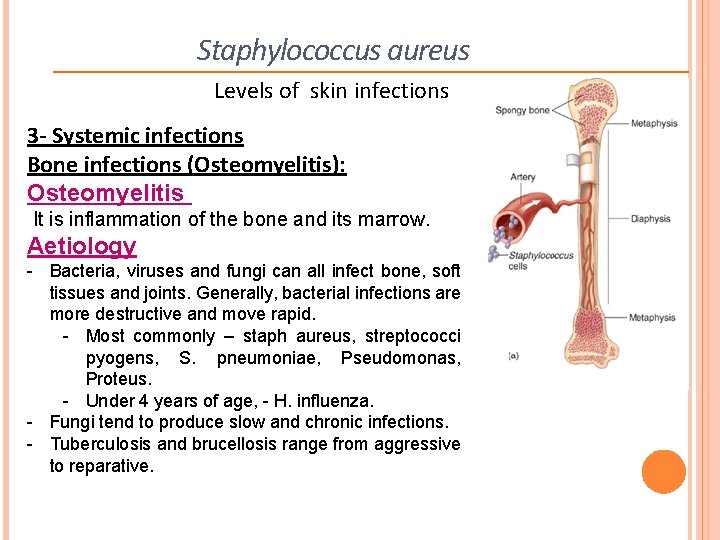
Staphylococcus aureus Levels of skin infections 3 - Systemic infections Bone infections (Osteomyelitis): Osteomyelitis It is inflammation of the bone and its marrow. Aetiology - Bacteria, viruses and fungi can all infect bone, soft tissues and joints. Generally, bacterial infections are more destructive and move rapid. - Most commonly – staph aureus, streptococci pyogens, S. pneumoniae, Pseudomonas, Proteus. - Under 4 years of age, - H. influenza. - Fungi tend to produce slow and chronic infections. - Tuberculosis and brucellosis range from aggressive to reparative.
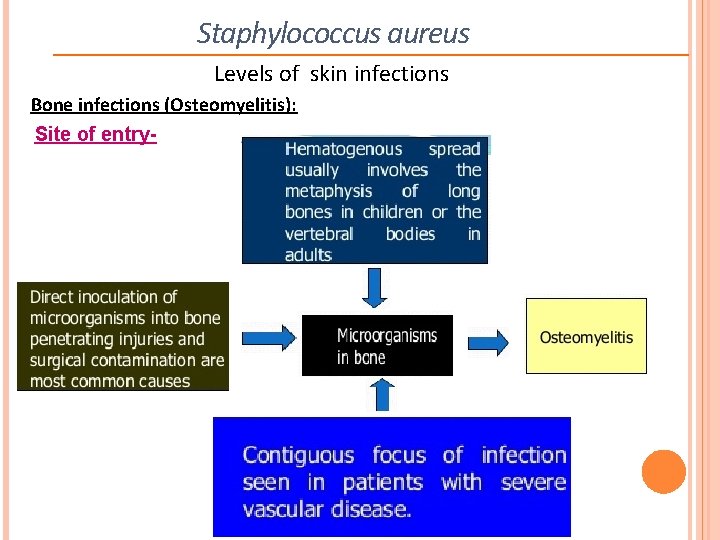
Staphylococcus aureus Levels of skin infections Bone infections (Osteomyelitis): Site of entry-
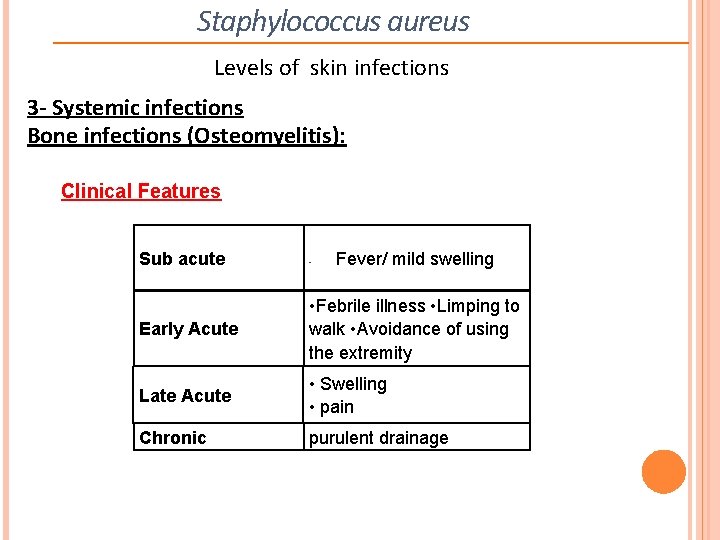
Staphylococcus aureus Levels of skin infections 3 - Systemic infections Bone infections (Osteomyelitis): Clinical Features Sub acute - Fever/ mild swelling Early Acute • Febrile illness • Limping to walk • Avoidance of using the extremity Late Acute • Swelling • pain Chronic purulent drainage
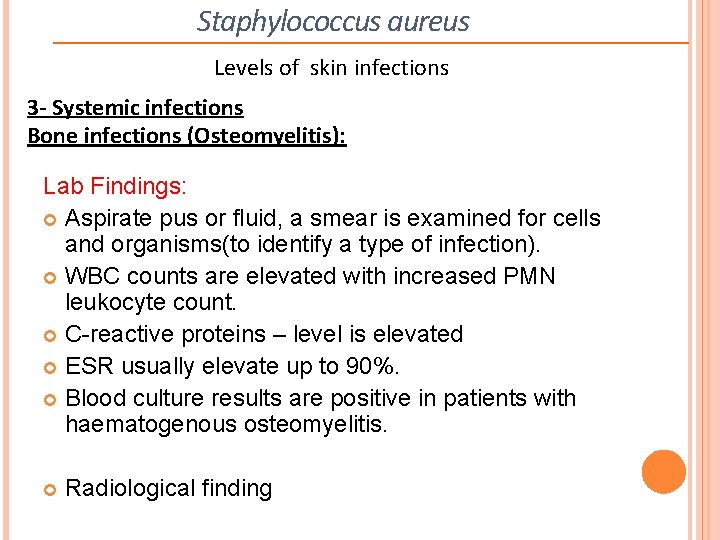
Staphylococcus aureus Levels of skin infections 3 - Systemic infections Bone infections (Osteomyelitis): Lab Findings: Aspirate pus or fluid, a smear is examined for cells and organisms(to identify a type of infection). WBC counts are elevated with increased PMN leukocyte count. C-reactive proteins – level is elevated ESR usually elevate up to 90%. Blood culture results are positive in patients with haematogenous osteomyelitis. Radiological finding
Staphylococcus aureus Levels of skin infections 3 - Systemic infections Bone infections (Osteomyelitis): Treatment 1. 2. 3. 4. 5. 6. General treatment: nutritional therapy or general supportive treatment by intaking enough caloric, protein, vitamin etc. Antibiotic therapy (flucloxacillin + fusidic acid) for 6 weeks). Surgical treatment. I&D Immobilization Splintage of affected part
Staphylococcus aureus Levels of skin infections 3 - Systemic infections Septic arthritis v Septic means infectious v Purulent infection of joint spaces which produces arthritis v S. aureus, Streptococcus spp. , Gram-negative bacilli v Treated with antibiotics and drainage of the infected joint.
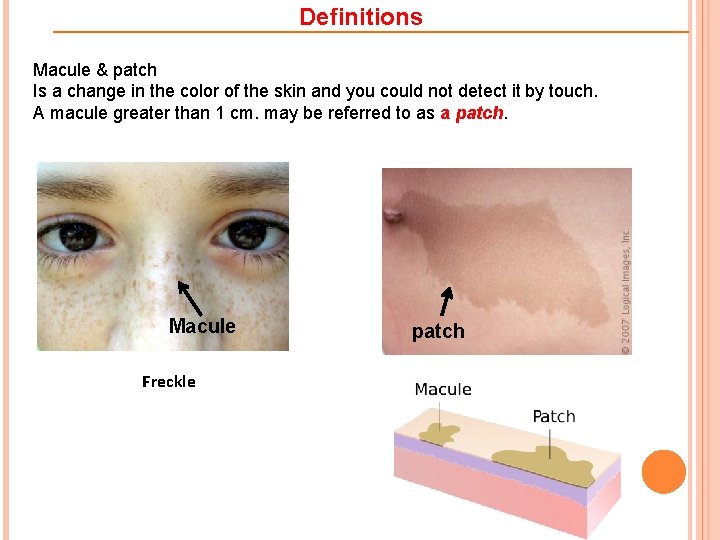
Definitions Macule & patch Is a change in the color of the skin and you could not detect it by touch. A macule greater than 1 cm. may be referred to as a patch. Macule Freckle patch
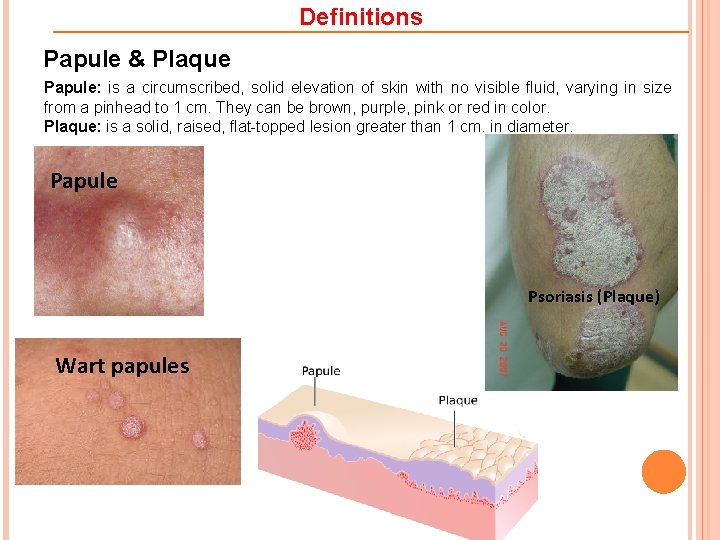
Definitions Papule & Plaque Papule: is a circumscribed, solid elevation of skin with no visible fluid, varying in size from a pinhead to 1 cm. They can be brown, purple, pink or red in color. Plaque: is a solid, raised, flat-topped lesion greater than 1 cm. in diameter. Papule Psoriasis (Plaque) Wart papules
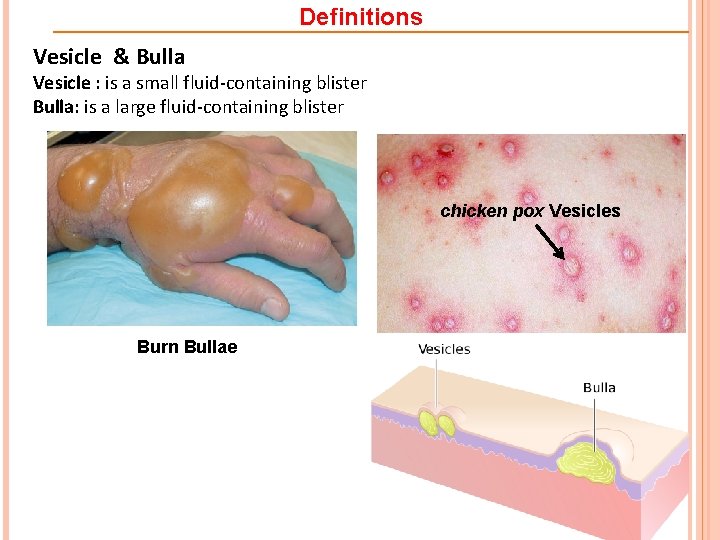
Definitions Vesicle & Bulla Vesicle : is a small fluid-containing blister Bulla: is a large fluid-containing blister chicken pox Vesicles Burn Bullae
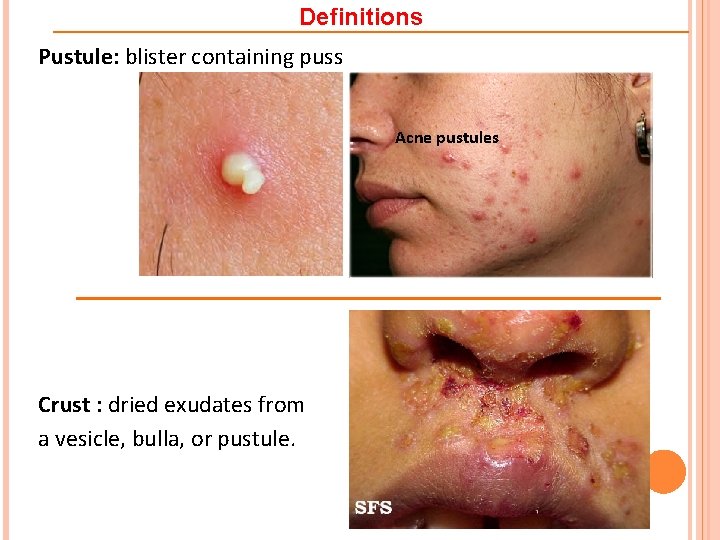
Definitions Pustule: blister containing puss Acne pustules Crust : dried exudates from a vesicle, bulla, or pustule.

THANK YOU
- Slides: 35