
Bacterial Infections Do now activity 1 What are
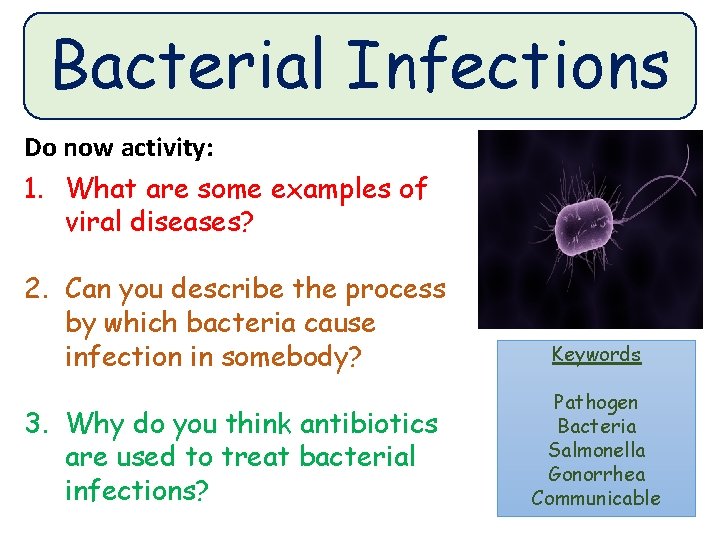
Bacterial Infections Do now activity: 1. What are some examples of viral diseases? 2. Can you describe the process by which bacteria cause infection in somebody? Keywords 3. Why do you think antibiotics are used to treat bacterial infections? Pathogen Bacteria Salmonella Gonorrhea Communicable
Progress indicators GOOD PROGRESS: State three different bacterial infections Describe the symptoms of salmonella and gonorrhoea OUTSTANDING PROGRESS: Explain how bacterial infections can be spread from person to person
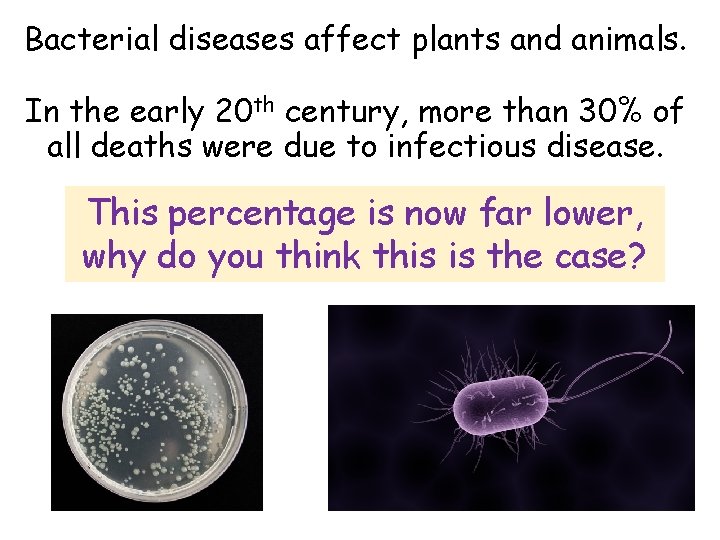
Bacterial diseases affect plants and animals. In the early 20 th century, more than 30% of all deaths were due to infectious disease. This percentage is now far lower, why do you think this is the case?
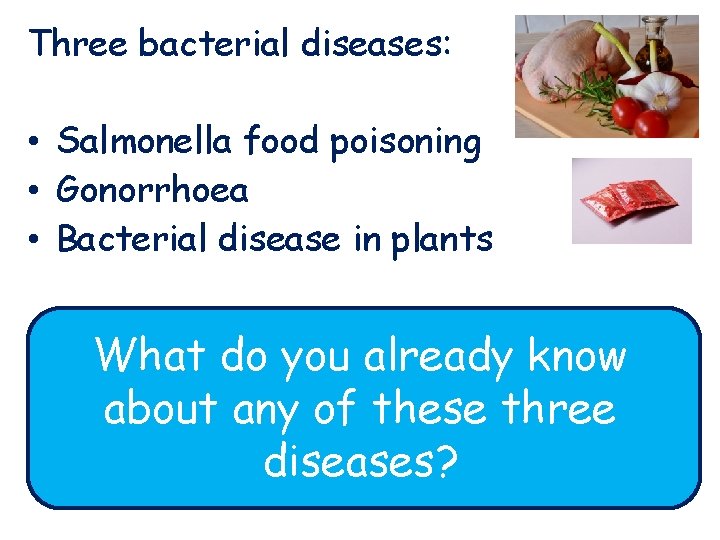
Three bacterial diseases: • Salmonella food poisoning • Gonorrhoea • Bacterial disease in plants What do you already know about any of these three diseases?
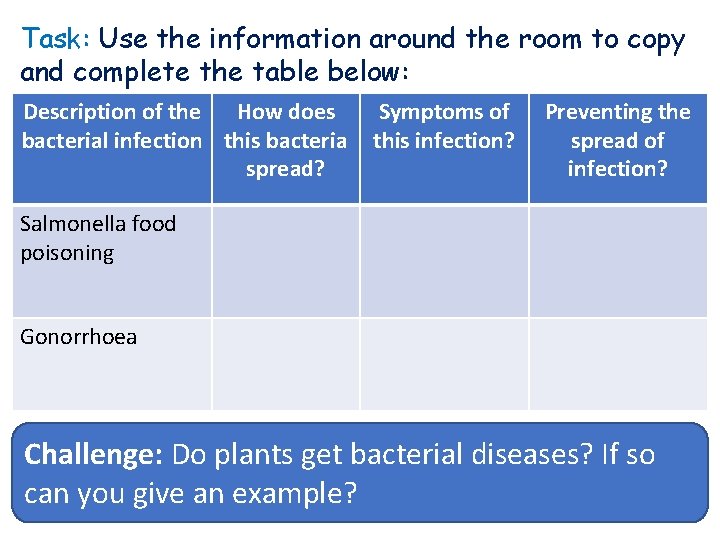
Task: Use the information around the room to copy and complete the table below: Description of the How does bacterial infection this bacteria spread? Symptoms of this infection? Preventing the spread of infection? Salmonella food poisoning Gonorrhoea Challenge: Do plants get bacterial diseases? If so can you give an example?
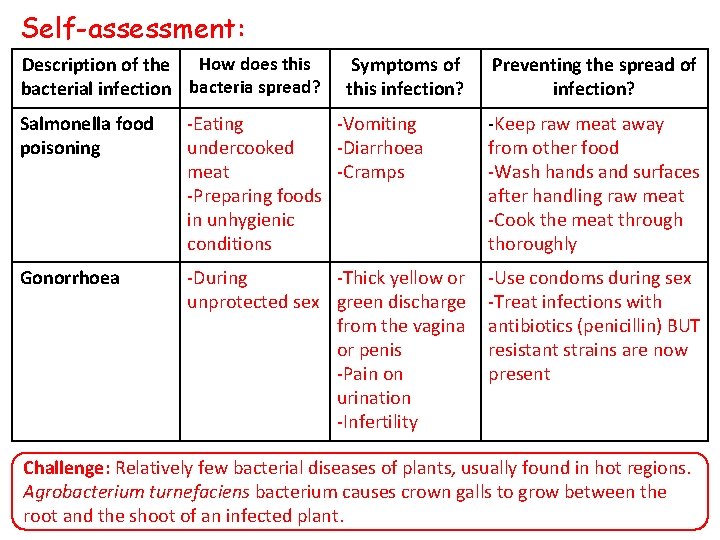
Self-assessment: Description of the How does this bacterial infection bacteria spread? Symptoms of this infection? Preventing the spread of infection? Salmonella food poisoning -Eating -Vomiting undercooked -Diarrhoea meat -Cramps -Preparing foods in unhygienic conditions -Keep raw meat away from other food -Wash hands and surfaces after handling raw meat -Cook the meat through thoroughly Gonorrhoea -During -Thick yellow or unprotected sex green discharge from the vagina or penis -Pain on urination -Infertility -Use condoms during sex -Treat infections with antibiotics (penicillin) BUT resistant strains are now present Challenge: Relatively few bacterial diseases of plants, usually found in hot regions. Agrobacterium turnefaciens bacterium causes crown galls to grow between the root and the shoot of an infected plant.
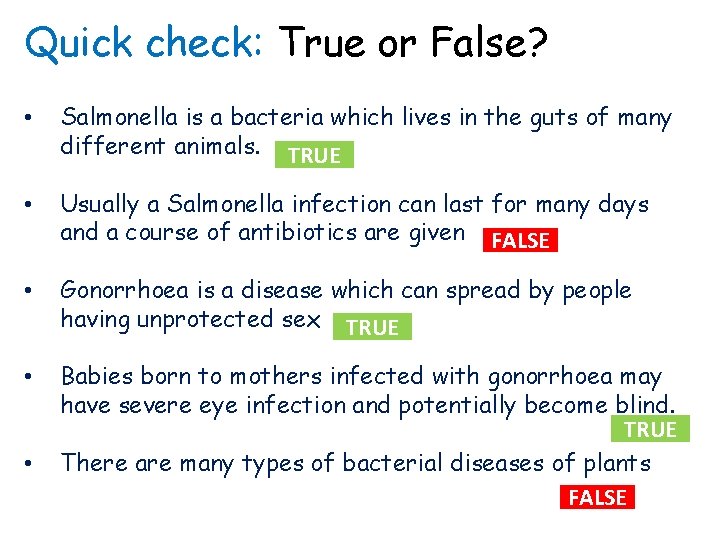
Quick check: True or False? • Salmonella is a bacteria which lives in the guts of many different animals. TRUE • Usually a Salmonella infection can last for many days and a course of antibiotics are given FALSE • Gonorrhoea is a disease which can spread by people having unprotected sex TRUE • Babies born to mothers infected with gonorrhoea may have severe eye infection and potentially become blind. TRUE There are many types of bacterial diseases of plants FALSE •

Plenary – Exit Card What went well? Even Better If?

Resources
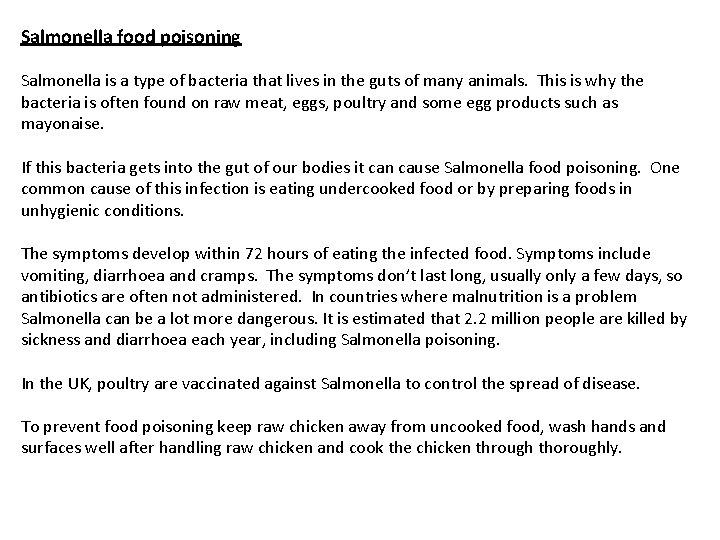
Salmonella food poisoning Salmonella is a type of bacteria that lives in the guts of many animals. This is why the bacteria is often found on raw meat, eggs, poultry and some egg products such as mayonaise. If this bacteria gets into the gut of our bodies it can cause Salmonella food poisoning. One common cause of this infection is eating undercooked food or by preparing foods in unhygienic conditions. The symptoms develop within 72 hours of eating the infected food. Symptoms include vomiting, diarrhoea and cramps. The symptoms don’t last long, usually only a few days, so antibiotics are often not administered. In countries where malnutrition is a problem Salmonella can be a lot more dangerous. It is estimated that 2. 2 million people are killed by sickness and diarrhoea each year, including Salmonella poisoning. In the UK, poultry are vaccinated against Salmonella to control the spread of disease. To prevent food poisoning keep raw chicken away from uncooked food, wash hands and surfaces well after handling raw chicken and cook the chicken through thoroughly.
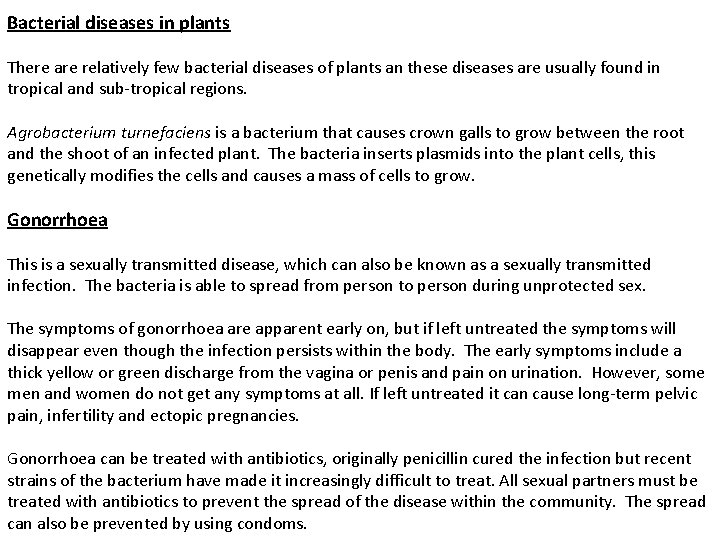
Bacterial diseases in plants There are relatively few bacterial diseases of plants an these diseases are usually found in tropical and sub-tropical regions. Agrobacterium turnefaciens is a bacterium that causes crown galls to grow between the root and the shoot of an infected plant. The bacteria inserts plasmids into the plant cells, this genetically modifies the cells and causes a mass of cells to grow. Gonorrhoea This is a sexually transmitted disease, which can also be known as a sexually transmitted infection. The bacteria is able to spread from person to person during unprotected sex. The symptoms of gonorrhoea are apparent early on, but if left untreated the symptoms will disappear even though the infection persists within the body. The early symptoms include a thick yellow or green discharge from the vagina or penis and pain on urination. However, some men and women do not get any symptoms at all. If left untreated it can cause long-term pelvic pain, infertility and ectopic pregnancies. Gonorrhoea can be treated with antibiotics, originally penicillin cured the infection but recent strains of the bacterium have made it increasingly difficult to treat. All sexual partners must be treated with antibiotics to prevent the spread of the disease within the community. The spread can also be prevented by using condoms.
- Slides: 11