
Bacterial Genetics GENETICSStudy of genes their structure function
Bacterial Genetics
GENETICS-Study of genes their structure & function, heredity & variation Genomics-Study & analysis of nucleotides of DNA Nucleic acid-DNA and RNA

Bacterial DNA Single Haploid Chromosome Super coiled circular ds. DNA=1 mm Exception: 2 chromosomes : Vibro cholerae
Nucleotides-Structural units of Nucleic acids Nitrogenous bases-Purines(A, G) and Pyrimidines(T, U, C) Nucleoside Pentose sugar-Deoxyribose Phosphate group
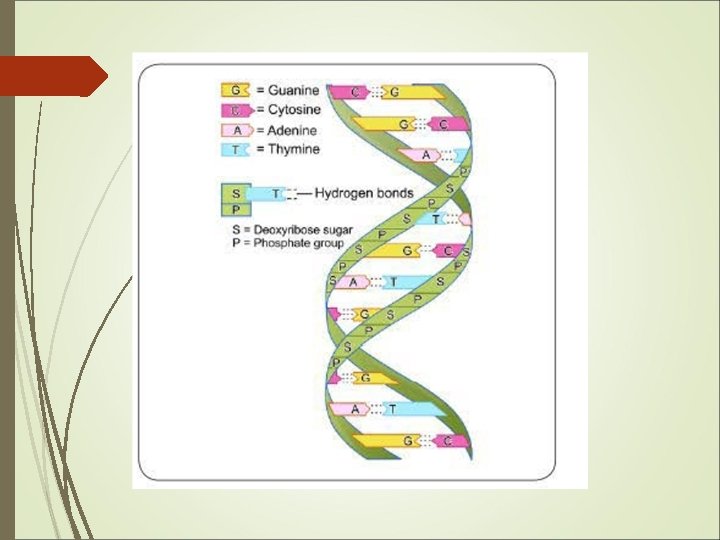
Bacterial DNA Ratio of A+T to G+C constant for each species Genetic information is stored as a code Codon-unit, triplet(3 bases) 64 codon 61 sense codon code for 20 AA AGA/AGG/CGA-arginine— code is degenerate 3 codon UAA/UAG/UGA- nonsense codons
Gene or cistron Segment of DNA carrying codons for a particular polypeptide synthesis Locus a large no of genes Genome large no of loci Letter-----word-----sentence—paragraph-- Nucleotide—Codon-----Gene----Locus--- 1000 -3000 Gene 580 -5200 kbp length 1 -1. 3 mm
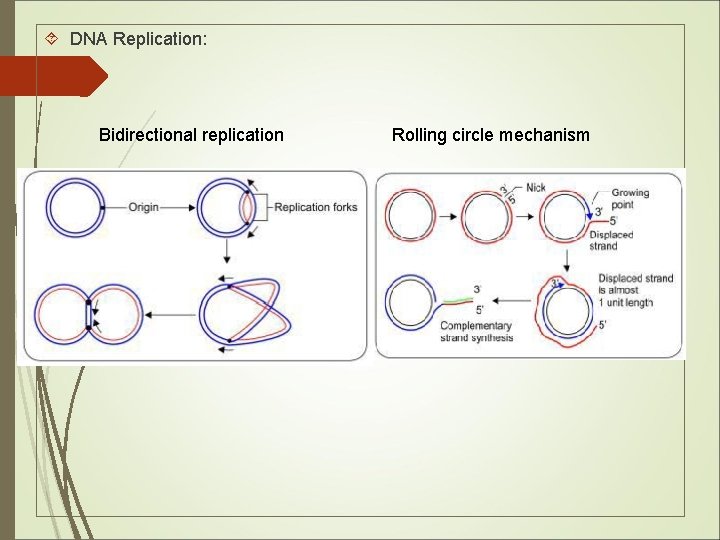
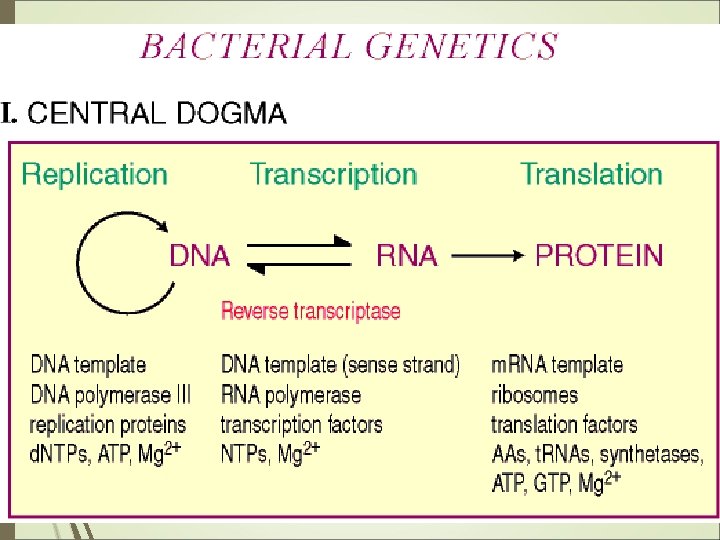
DNA Replication: Bidirectional replication Rolling circle mechanism
RNA m. RNA r. RNA t. RNA
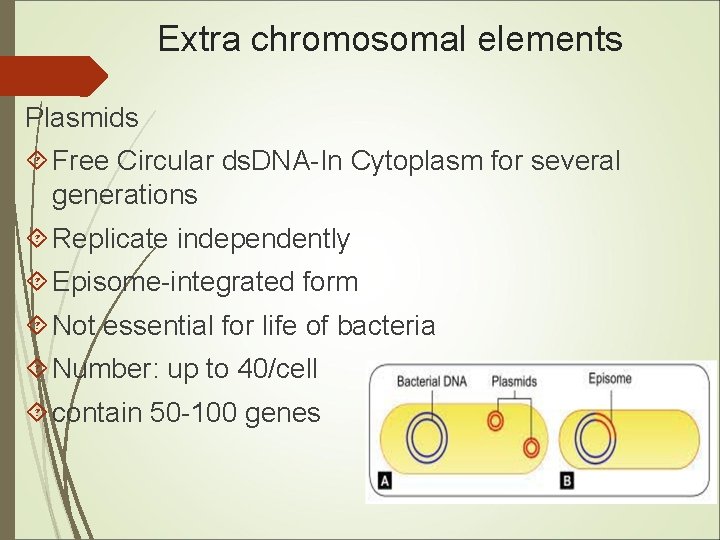
Extra chromosomal elements Plasmids Free Circular ds. DNA-In Cytoplasm for several generations Replicate independently Episome-integrated form Not essential for life of bacteria Number: up to 40/cell contain 50 -100 genes
Extra chromosomal elements Plasmids Curing: process of eliminating plasmid from bacteria Spontaneous induced Acridine Radiation Thymine starvation High temp
Classification On the basis of ability to perform conjugation: Conjugative/self transmissible plasmid Non conjugative plasmid Based on compatibility b/w plasmid: Compatible Incompatible
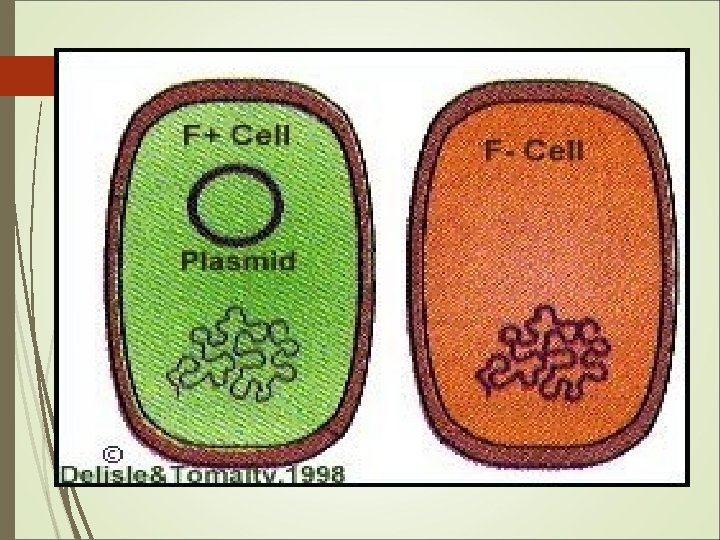
Classification Based on function: Fertility/F plasmid: contain tra gene: sex pili expression Resistance/R plasmid Col plasmid Virulence plasmid Metabolic plasmid
Variation Phenotypic Genotypic
MUTATION Random, heritable variation caused by alteration in nucleotide sequence of DNA Frequency 10 -2 -10 -10/bacterium/division CAUSES Spontaneous Induced (mutagen) – Physical: UV Chemical: alkylating agent, 5 -FU, acridine dye
Functionally affect: Not able to produce Capsule/flagella Antigenic structure alteration Altered sensitivity to Bacteriophage Drug resistance Altered pigment production Altered Biochemical reactions Altered colony morphology
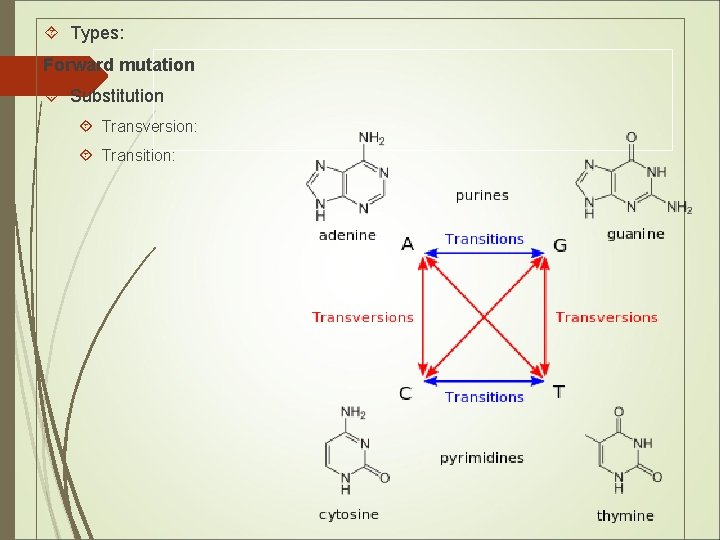
Types: Forward mutation Substitution Transversion: Transition:
Types: Forward mutation Substitution Silent: New codon code for same AA Neutral: New codon code for functional Missense: Different AA Non-sense: Stop equivalent AA
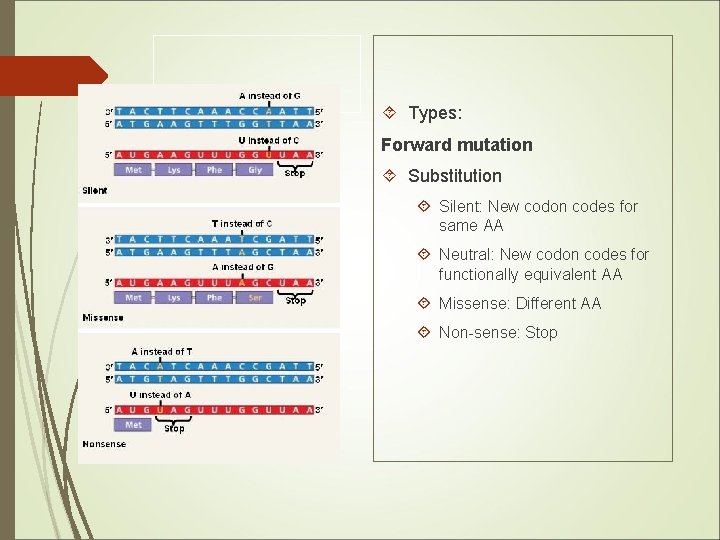
Types: Forward mutation Substitution Silent: New codon codes for same AA Neutral: New codon codes for functionally equivalent AA Missense: Different AA Non-sense: Stop
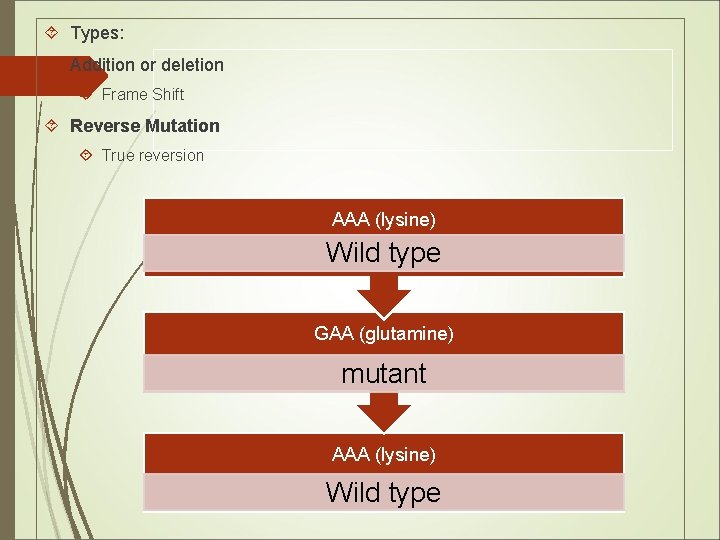
Types: Addition or deletion Frame Shift Reverse Mutation True reversion AAA (lysine) Wild type GAA (glutamine) mutant AAA (lysine) Wild type
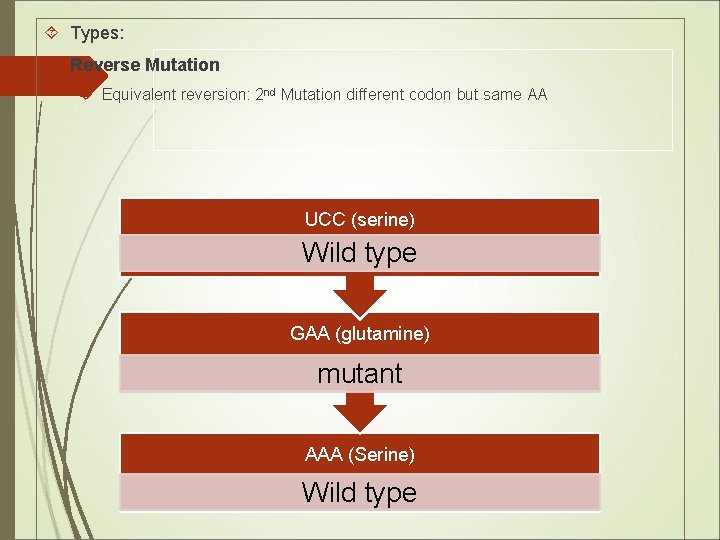
Types: Reverse Mutation Equivalent reversion: 2 nd Mutation different codon but same AA UCC (serine) Wild type GAA (glutamine) mutant AAA (Serine) Wild type
Types: Reverse Mutation Suppressor mutation: 2 nd mutation in a different gene that revert the phenotypic effects of already existing mutation
Demonstration of Mutation Gene sequencing Phenotypic changes ü Fluctuation test ü Replica plating
Fluctuation test Luria and Delbruck-Mutation is SPONTANEOUS and RANDOM Growth in presence of selective inhibitory pressure Bacteriophage and E. coli
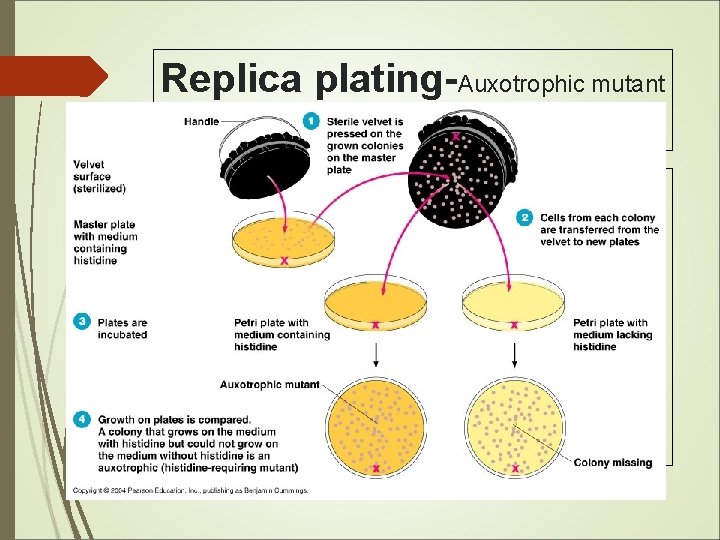
Replica plating-Auxotrophic mutant
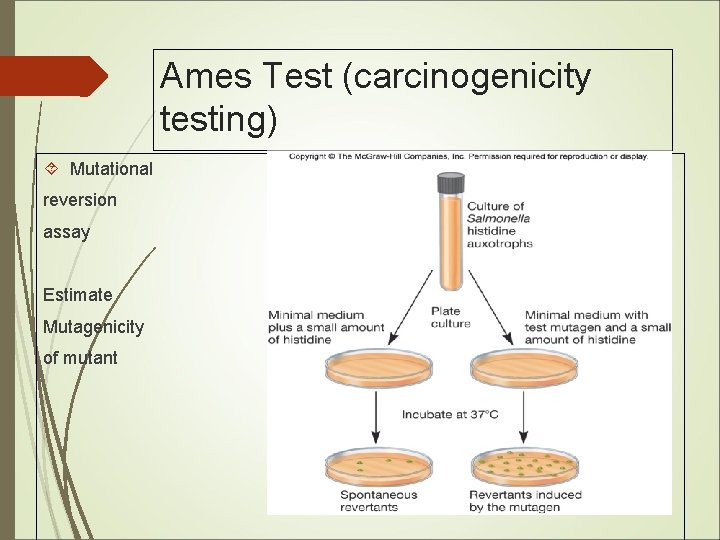
Ames Test (carcinogenicity testing) Mutational reversion assay Estimate Mutagenicity of mutant
GENETIC TRANSFER Vertical Horizontal Transformation Transduction Lysogenic conversion Conjugation
Transformation - Random uptake of free / naked DNA incorporation into chromosome Natural – S. pneumoniae express DNA-binding proteins on cell surface natural competent state allows uptake of "naked DNA"
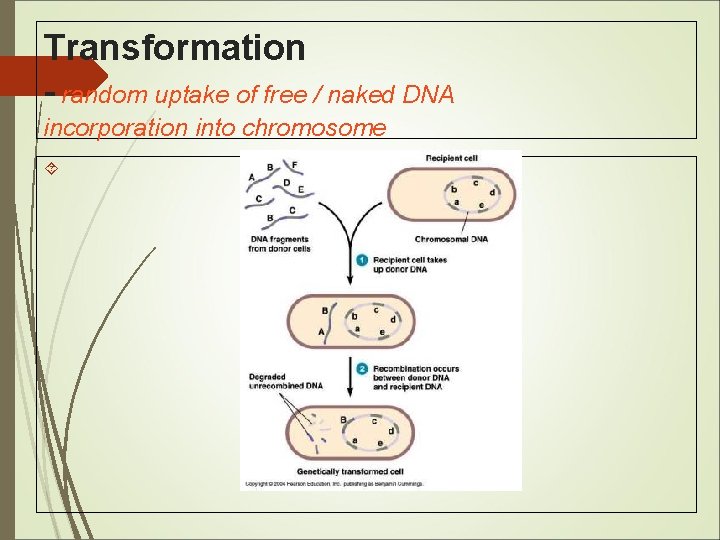
Transformation - random uptake of free / naked DNA incorporation into chromosome
1928: Frederick Griffith (London): First demonstrated bacterial transformation
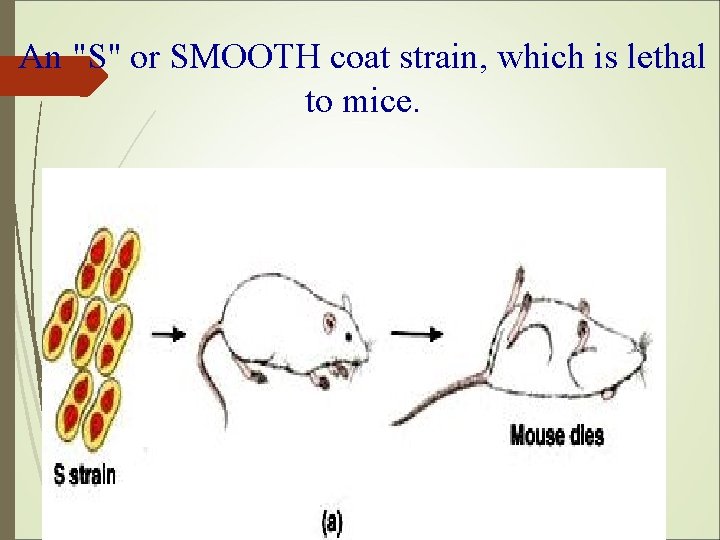
An "S" or SMOOTH coat strain, which is lethal to mice.
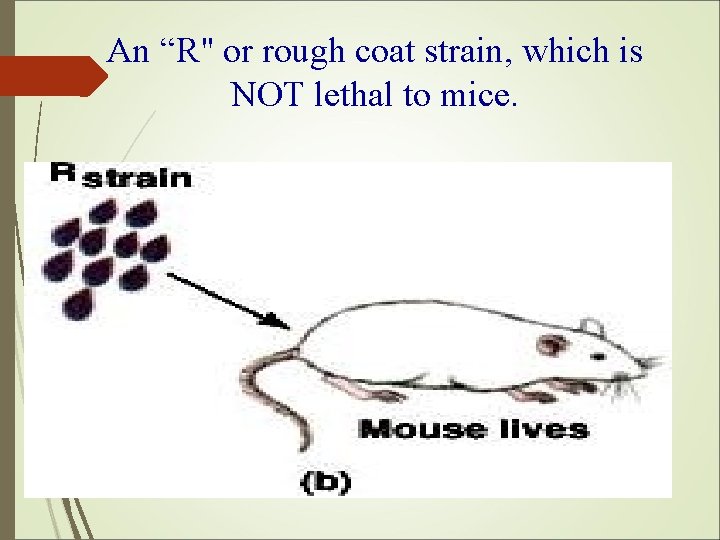
An “R" or rough coat strain, which is NOT lethal to mice.
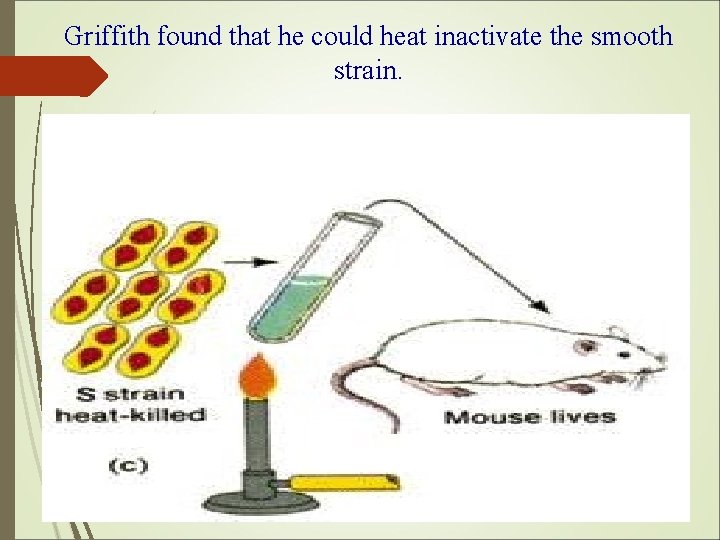
Griffith found that he could heat inactivate the smooth strain.
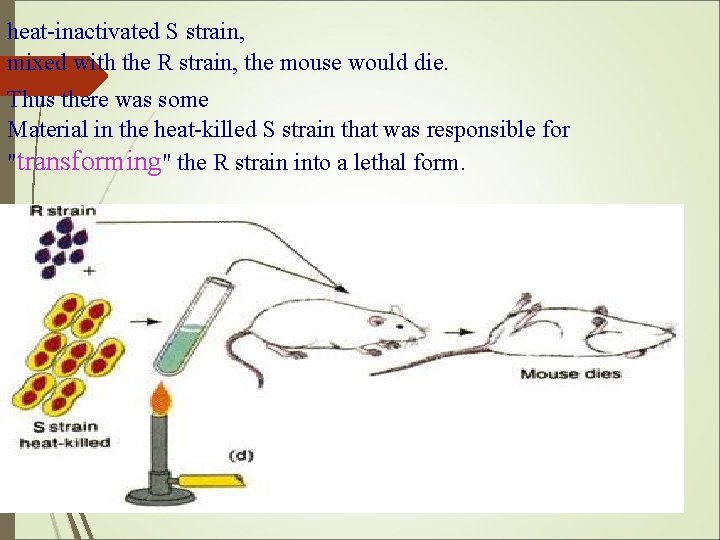
heat-inactivated S strain, mixed with the R strain, the mouse would die. Thus there was some Material in the heat-killed S strain that was responsible for "transforming" the R strain into a lethal form.
GENETIC TRANSFER Vertical Horizontal Transformation Transduction Lysogenic conversion Conjugation
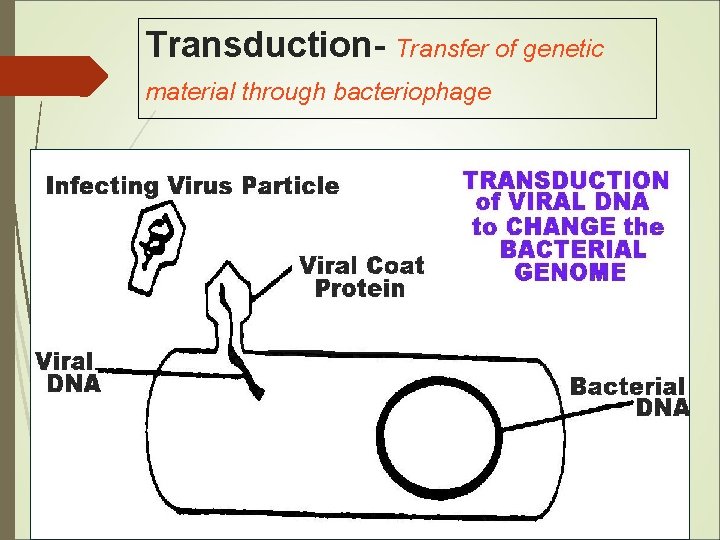
Transduction- Transfer of genetic material through bacteriophage
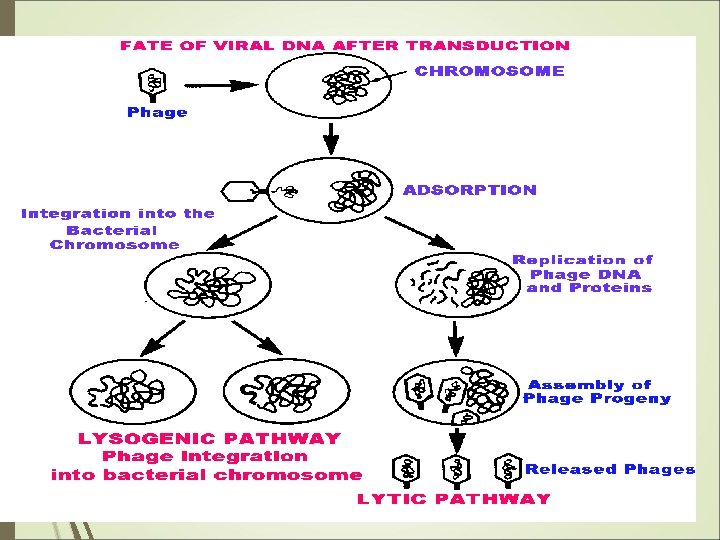
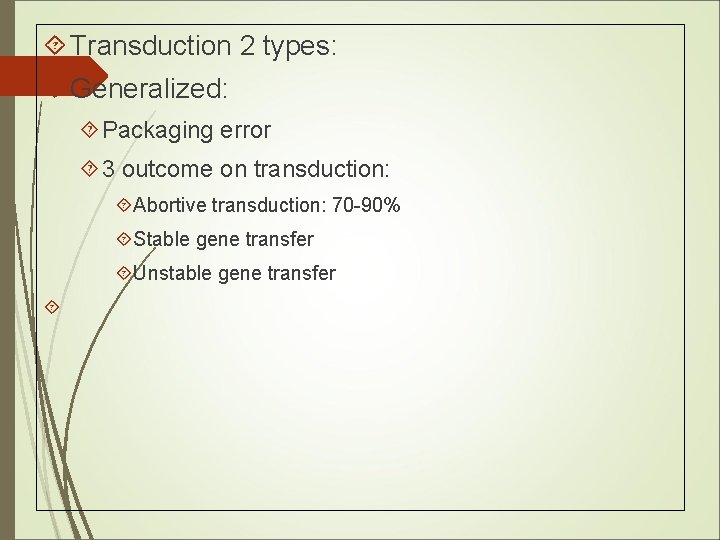
Transduction 2 types: Generalized: Packaging error 3 outcome on transduction: Abortive transduction: 70 -90% Stable gene transfer Unstable gene transfer
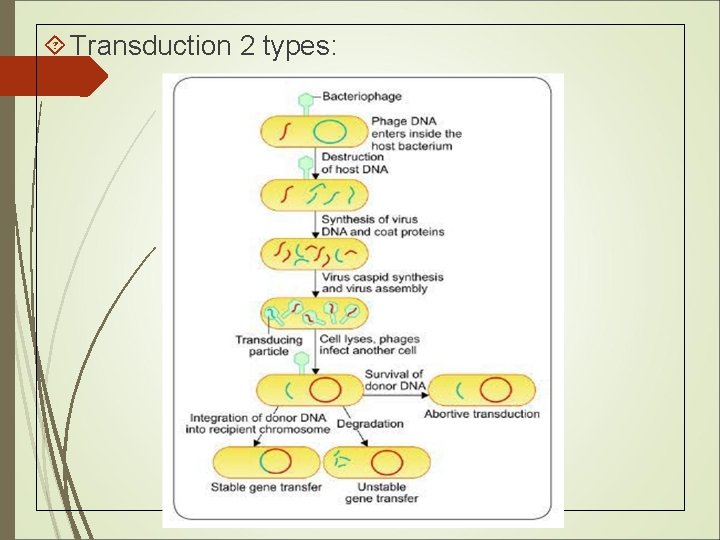
Transduction 2 types:
Transduction 2 types: Restricted/specialized Defect in disintegration of lysogenic phage 2 outcome when transduced to new bacteria Cross over Integrated as prophage
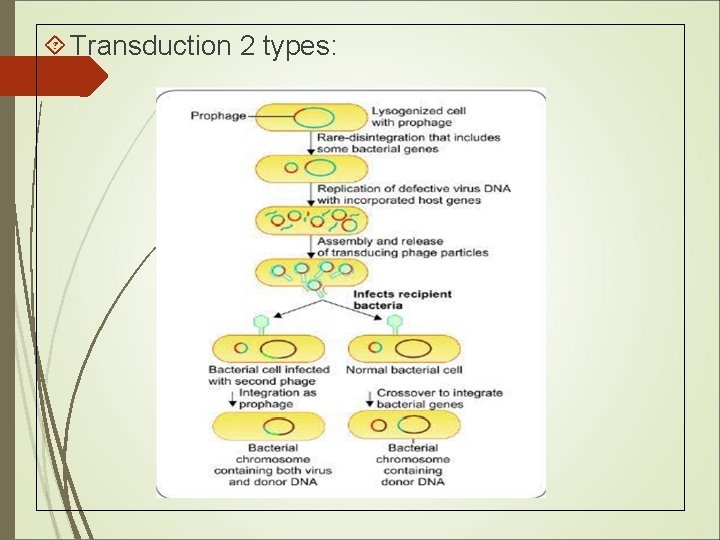
Transduction 2 types:
Importance of transduction Drug resistance: Pn resistance in Staphylococci Treatment: Genetic mapping, inborn error of metabolism Phage vectors used in molecular transformation of bacteria
Lysogenic Conversion In Lysogenic bact prophage acts as additional segment of bact chromosome -new characters-lysogenic conversion eg. C. diphtheriae and its bacteriophage Phage coded Toxins: Diphtheria toxin cholera toxin Verocytotoxin of E. coli Streptococcus pyrogenic exotoxin A & C Botulism toxin C & D
Lysogenic conversion: Phage DNA itself behave as new genetic element Transduction: Phage act as vehicle carrying bacterial gene
GENETIC TRANSFER Vertical Horizontal Transformation Transduction Lysogenic conversion Conjugation
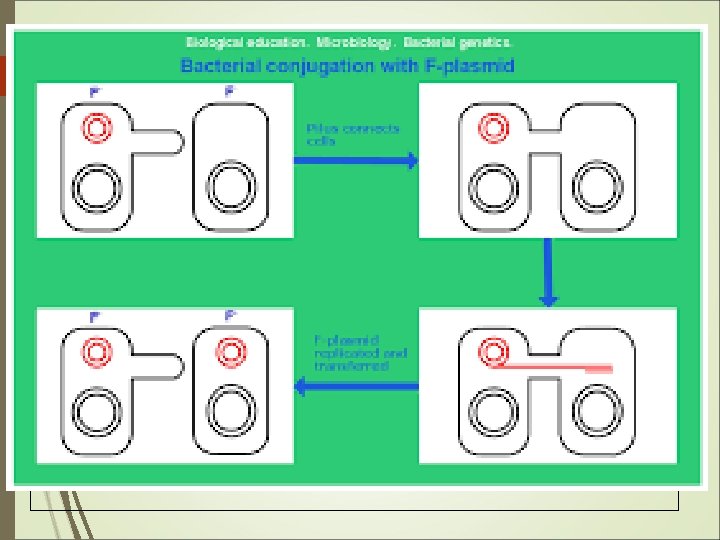
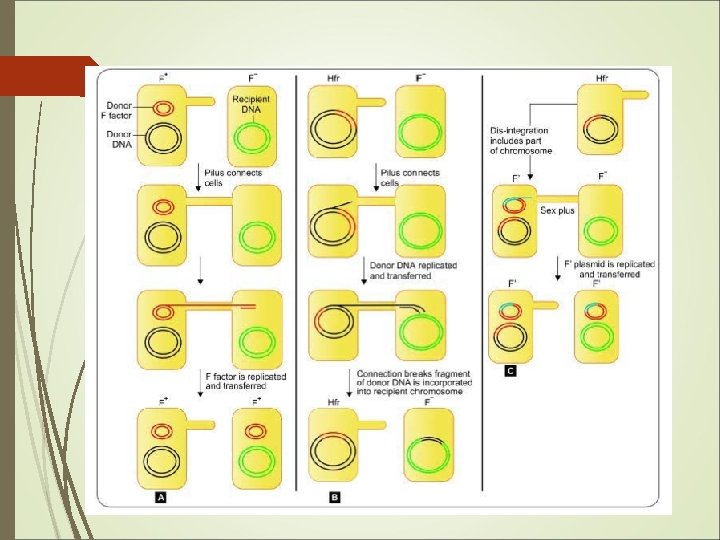
Bacterial Conjugation Transfer of genetic information from one bacterium (donor or male) to another bacterium (recipient or female) bacterium by mating or contact with each other & forming conjunction tube
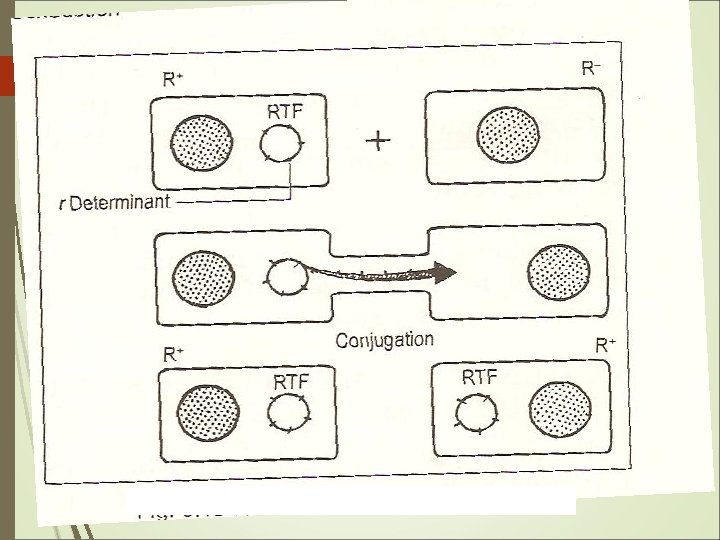
F+ F- Mating HFR conjugation F’ Conjugation Col factor R factor-RTF + r determinants
Colicinogenic (col) factor Bacteriocins are the antibiotic like substances produced by one bacterium that inhibit other bacteria Bacteriocins produced by coliform bacteria are called as colicin Bacteria other than coliforms also produce similar kind of substances e. g. pyocin, diphthericin
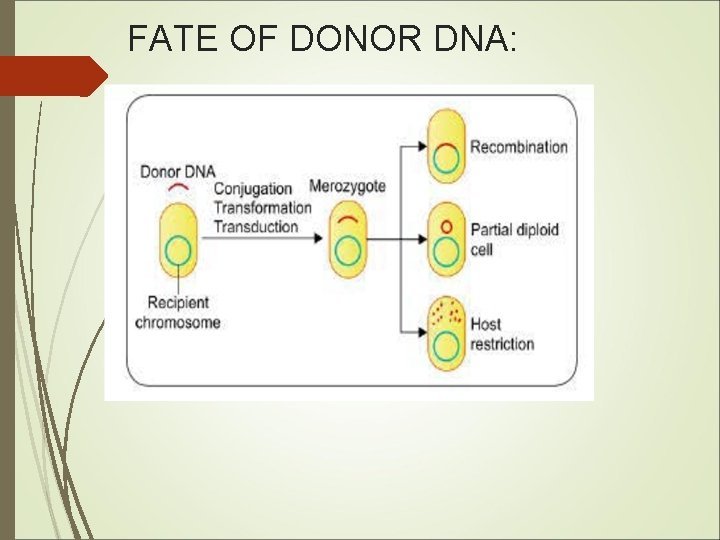
FATE OF DONOR DNA:
Bacterial Recombination Integration of Donor DNA to recipient chromosome General or Homologous Site specific
General or Homologous Recombination b/w similar DNA sequences Reciprocal: Exchange of pair of Homologous DNA sequence b/w donor & recipient Non Reciprocal: Bacterial transformation Donor ss. DNA is inserted into host chromosome & replace piece of host DNA
Site specific Integration of bacteriophage DNA into Bacterial DNA is site specific Donor DNA not homologous with chromosome it joins
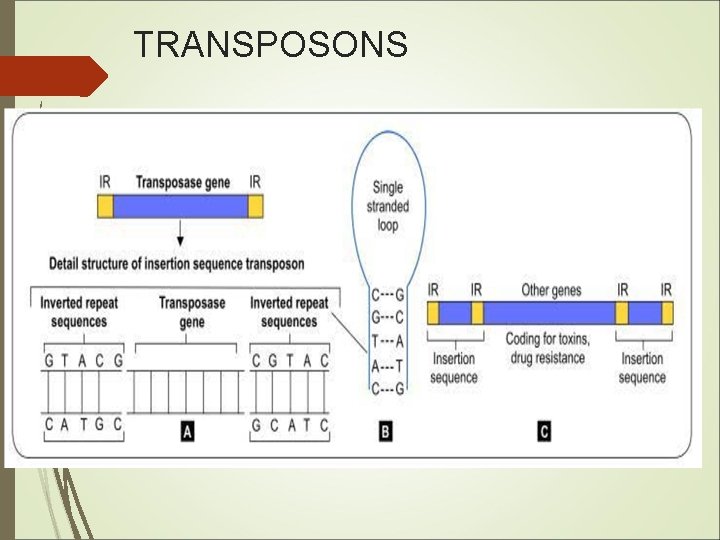
TRANSPOSONS
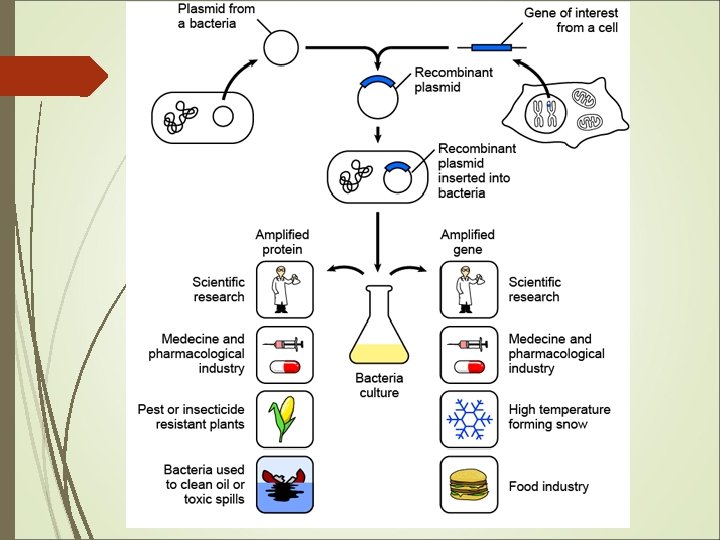
Genetic engineering Deliberate modification of organism genetic information by directly altering its genome Done using recombinant DNA technology Gene coding for desired property (protein) ---isolated from organism-----inserted to vector---cloned---desired property express
POLYMERASE CHAIN REACTION Kary Mullis-1983 PCR is a DNA amplification system that produces a large amount of DNA in vitro from small amounts of starting material. It amplifies a specific DNA sequence (or gene) or interest. Primer mediated , temp dependant enzymatic amplification of specific target sequence to detectable levels
Target DNA Primers Polymerase Enzyme- Thermus aquaticus Nucleotide Thermocycler
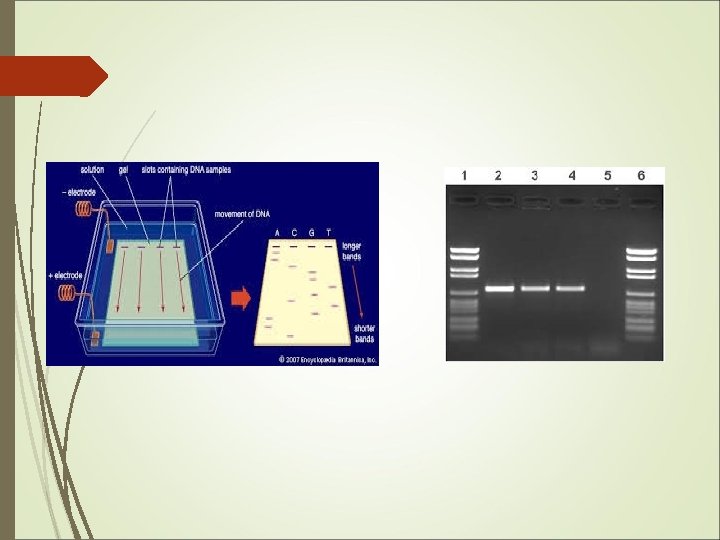
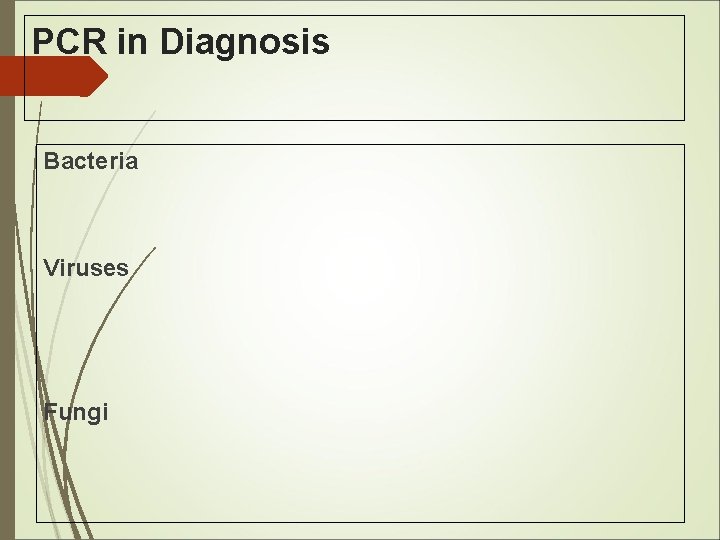
Denaturation-940 C Annealing of primers-50 -600 C Extension of primers 30 -40 cycles for 3 hrs- 106 copies Detection-gel electrophoresis and ethidium bromide staining.
PCR in Diagnosis Bacteria Viruses Fungi
DNA PROBES Radiolabelled or chromogenically labelled pieces of ss DNA which can be used for the detection of homologous DNA by hybridization. Hybridisation is the technique in which two single-strands of nucleic acid come together to form a stable doublestranded molecule.
Applications of DNA Probes In clinical microbiology : Direct detection of microbes in specimens To detect microbes which are difficult or impossible to culture Identification of culture isolates Strain identification To identify toxins, virulence factors Identification of resistant markers
BLOTTING TECHNIQUES SOUTHERN BLOT WESTERN BLOT NORTHERN BLOT EASTERN BLOT

Thank you
Operons An operon is a group of genes that are transcribed at the same time. Jacob, Monod & Lwoff They usually control an important biochemical process. They are only found in prokaryotes.
Lac Operon The lac operon consists of three genes each involved in processing the sugar lactose One of them is the gene for the enzyme β-galactosidase (galactoside permease, transacetylase) This enzyme hydrolyses lactose into glucose and galactose
E. coli can use either glucose, which is a monosaccharide, or lactose, which is a disaccharide However, lactose needs to be hydrolysed (digested) first So the bacterium prefers to use glucose when it can
1. When glucose is present and lactose is absent the E. coli does not produce β-galactosidase. 2. When glucose is present and lactose is present the E. coli does not produce βgalactosidase. 3. When glucose is absent and lactose is absent the E. coli does not produce β-galactosidase. 4. When glucose is absent and lactose is present the E. coli does produce β-galactosidase
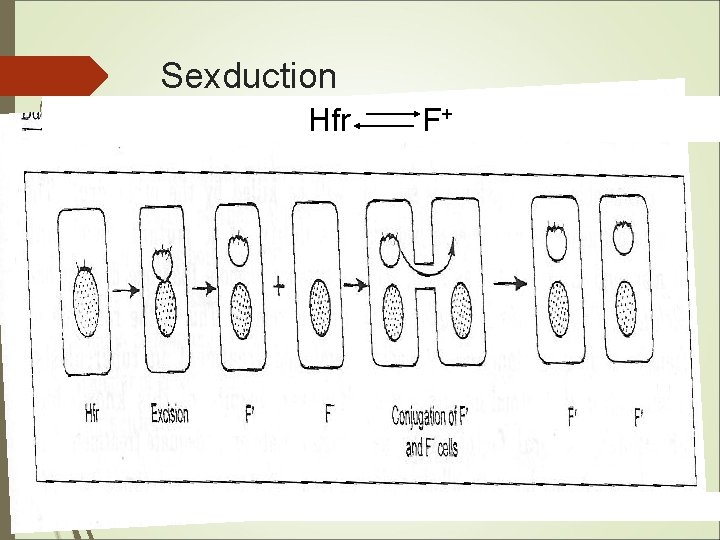
Sexduction Hfr F+
Antibiotic: A drug used to treat infections caused by bacteria and other microorganisms. Originally, an antibiotic was a substance produced by one microorganism that selectively inhibits the growth of another. Synthetic antibiotics, usually chemically related to natural antibiotics, have since been produced that accomplish comparable tasks.
In 1926, Alexander Fleming discovered penicillin produced by fungi that inhibited bacterial growth. In 1939, Edward Chain and Howard Florey further studied penicillin and later carried out trials of penicillin on humans (with what were deemed fatal bacterial infections). Fleming, Florey and Chain shared the Nobel Prize in 1945 for their work which ushered in the era of antibiotic
An antimicrobial is a substance that kills or inhibits the growth of microbes such as bacteria, fungi, or viruses. microbicidal or microbistatic.
Chemotherapy Refers to treatment of disease by chemicals that kill cells, specifically those of micro-organisms or cancer
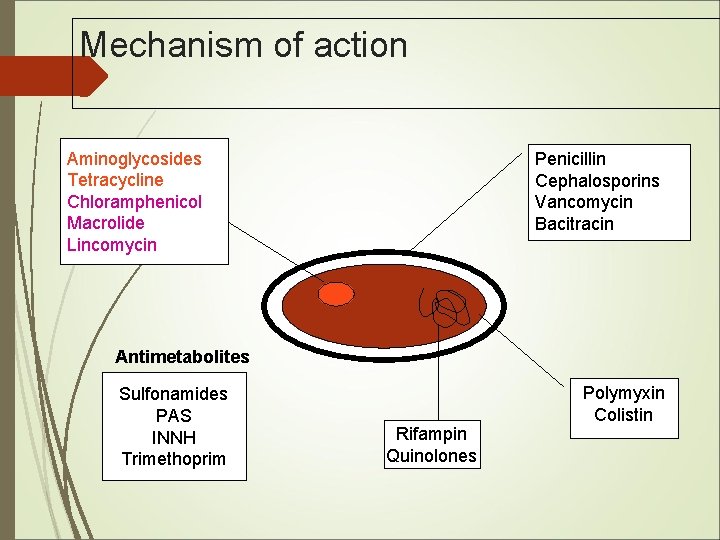
Mechanism of action Aminoglycosides Tetracycline Chloramphenicol Macrolide Lincomycin Penicillin Cephalosporins Vancomycin Bacitracin Antimetabolites Sulfonamides PAS INNH Trimethoprim Rifampin Quinolones Polymyxin Colistin
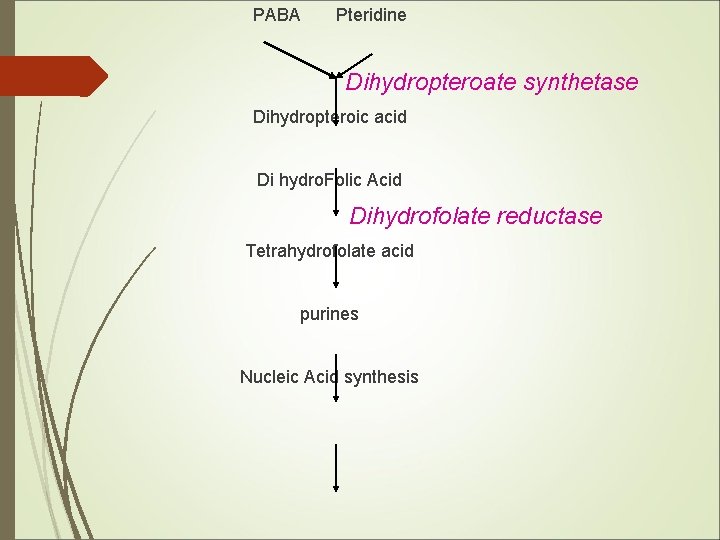
PABA Pteridine Dihydropteroate synthetase Dihydropteroic acid Di hydro. Folic Acid Dihydrofolate reductase Tetrahydrofolate acid purines Nucleic Acid synthesis
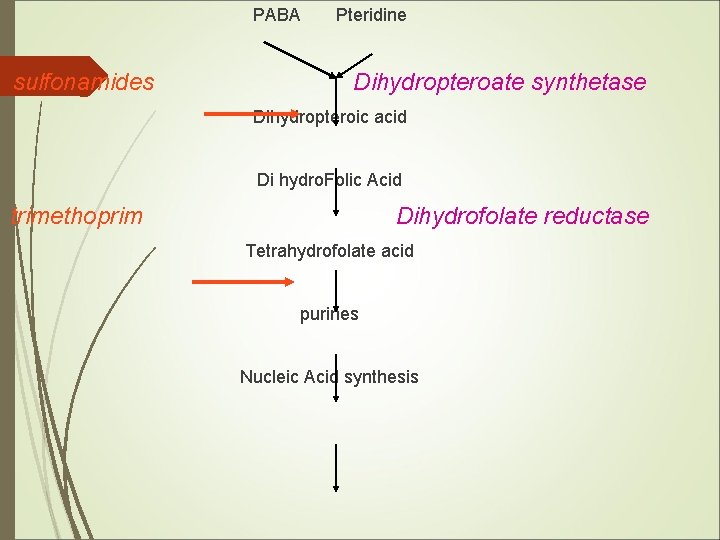
PABA Pteridine sulfonamides Dihydropteroate synthetase Dihydropteroic acid Di hydro. Folic Acid trimethoprim Dihydrofolate reductase Tetrahydrofolate acid purines Nucleic Acid synthesis
Selective toxicity An ideal antimicrobial agent should exhibit ST Drug is harmful to parasite without being harmful to host at the particular dose 1. Receptor specific 2. Biochemical event
Mechanism of Drug Resistance NON GENETIC AND GENETIC NON GENETIC- Metabolically inactive/non multiplying M. orgs lose specific target site Drug unable to penetrate the site of infection
Antimicrobial Chemotherapy Modern Chemotherapy-Paul Ehrlich(18450 -1915)- arsenicals for syphilis and m. blue for malaria Domagk-1935 -Prontosil Alexander Fleming-Penicillium notatum. Penicillin Antibiotic Antimicrobial Chemotherapeutic
GENETIC Ø Mutation Ø Transfer of genes Conjugation Transduction Transposition Transformation
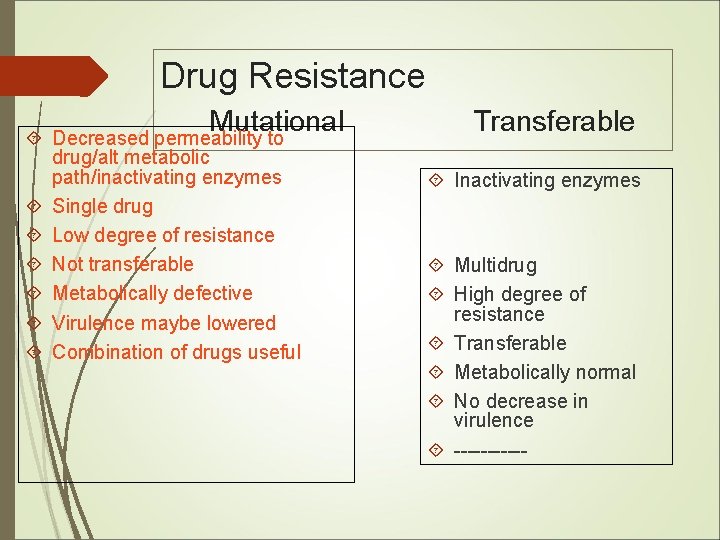
Drug Resistance Mutational Transferable Decreased permeability to drug/alt metabolic path/inactivating enzymes Single drug Low degree of resistance Not transferable Metabolically defective Virulence maybe lowered Combination of drugs useful Inactivating enzymes Multidrug High degree of resistance Transferable Metabolically normal No decrease in virulence ------
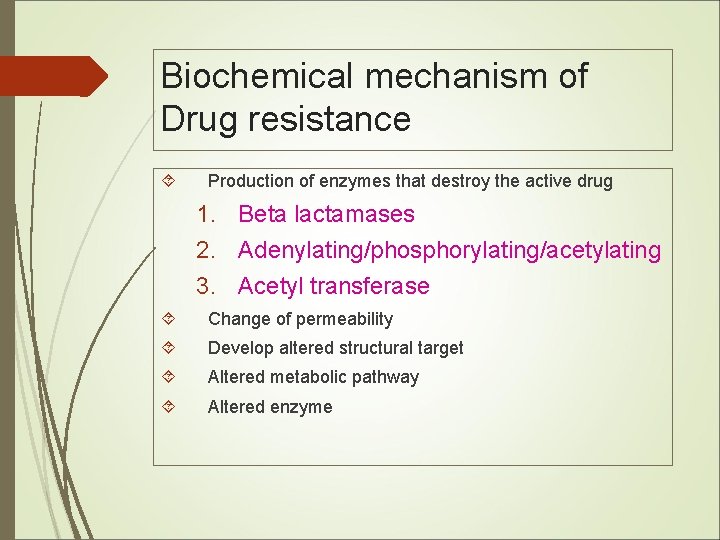
Biochemical mechanism of Drug resistance Production of enzymes that destroy the active drug 1. Beta lactamases 2. Adenylating/phosphorylating/acetylating 3. Acetyl transferase Change of permeability Develop altered structural target Altered metabolic pathway Altered enzyme
- Slides: 88