
Bacterial Gastrointestinal Infection 2 Year Medical Students Prof
Bacterial Gastrointestinal Infection 2 -Year Medical Students Prof. Dr. Asem Shehabi Faculty of Medicine University of Jordan
Introduction § Worldwide, At least one billion of children & adults are affected by diarrhea each year. § In developing countries, where general sanitation is low, epidemics of bacterial gastroenteritis cause high morbidity & mortality among infants & children. § The commonest clinical manifestations of bacterial gastrointestinal infections are : Diarrhea, vomiting , abdominal pain, fever. . rarely causing blood sepsis.
2/ § Bacterial intestinal infection. . followed water/Food contamination. . incubation period 8 -24 hrs. . rarely involve other organs and systems. . Recovery often within 2 days § Watery diarrhea. . involved small and large intestines. . Mild fever § Bloody-diarrhea (Dysentery ) mostly Large intestine. . high fever § Enterocolitis inflammation of both small & large intestines, . . bacteria & toxin. . watery bloody diarrhea. . Mild - high fever

Bacteria Food poisoning § Bacterial food poisoning. . Food borne intoxication is another common cause GI illness associated with the presence of a pre-formed toxin in food released by Toxigenic bacteria. . Mostly first associated with vomiting & later watery diarhea. . No fever. . Short incubation period. . 2 -8 hours § In many cases the toxin may be produced in the food by bacterial growth during storage or preparation. . Due to hand or environmental contamination. § Common Gram-ve: Salmonella spp. , Various types diarrheagenic E. coli strains, Campylobacter spp. , Listeria & Aeromonas spp. § Gram-positive : Staphylococcus aureus, Bacillus cereus, Cl. perfingens

Salmonella Group § Salmonellae group: Gram-negative bacilli, Facultative anaerobes. . By current classification there is only one major species of Salmonella: S. enterica. . but there are numerous serotypes. . about 2000 types § A serotype is classified by presence of a specific set of O (cell wall) , H (flagellar), Vi (virulence) antigens. § Human Salmonellosis is divided into: 1 - Enteric Fever Salmonellas /Typhoid fever. . infect only humans caused by enterica subtype. Typhi & Paratyhi A, B, C. Cause severe human systemic diseases. . following invading GI with few salmonella cells. . often through contaminated water. . Less fresh Food, rarely direct contact. . Incubation period 1 -3 weeks.

Typhoid fever-2 § Typhoid fever is a severe multisystemic illness. . Salmonella invade & multiply within intestinal mucosa. . Peyer patches. Enter intestinal lymphoid follicles. . Macrophages carry cells to Reticuloendothelial system. . Causing Lymphoid hyperplasia & hypertrophy later spread to Blood, liver and other internal organs. . § Typhoid Fever is characterized by the prolonged & high fever, headache, malaise, liver & spleen enlargement. . Skin rash (Rose spots). . Mostly waterybloody diarrhea /constipation at the beginning. Pathogenicity: Virulence factors. . Proteinous capsule (S. typhi Vi antigen), Cell wall Lipopolysaccharides, release specific cytotoxins.
Salmonella-Typhoid Fever -2 § Following blood sepsis. . necrosis of liver & spleen, gallbladder. lymph tissues, peyer patches. . Salmonella re-enter intestinal tract. . causing severe intestinal inflammation, bloody diarrhea, enterocolitis, intestinal perforation & toxic shook. 10 -30% of patients might died without antibiotic treatment. § Tyhoid fever may be associated with meningitis, mostly in children & immune deficiency. § Complications presented as pneumonia, endocarditis, osteomyelitis, septic arthritis, hepatic abscesses, soft tissue abscesses in any body part.
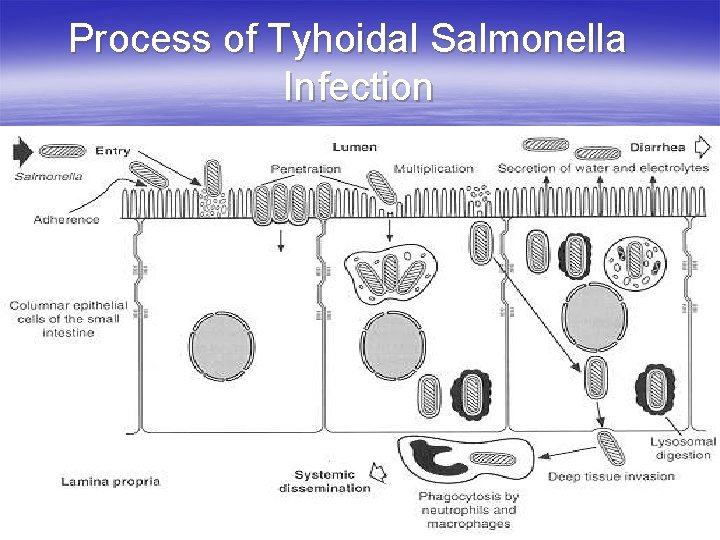
Process of Tyhoidal Salmonella Infection
Typhoid fever-3 § Up to 5% of infected persons become later healthy carriers. . Females more than Males. . Infection becomes chronic. . They Carry the bacteria in their Gallbladder. . Less in Peyer patches. . execrate bacteria in their feces for live-long. § Healthy carriers maintain the cycle of Typhoid disease in the community. § Host responded to infection by production of specific antibodies (Anti-O & anti-H) which can be detected after 2 weeks. § Typhoidal antibodies might prevent developing of severe complications and death.
Lab Diagnosis § Definitive diagnosis Typhoid Fever: Requires culture & isolation of the organism from blood, Feces, CSF, Urine according acute/sub-acute/chromic cases. § Chronic cases. . bone marrow, Gallbladder. . Healthy Carriers. . execrate occasionally bacteria in stool. § Presence S. typhi only in stool without clinical disease indicates often indicates carriage state. § Selective culture media: S-S agar, Heckton-enteric agar… Lactose non-fermenter bacteria growth § Serological test: Widal test is used for the diagnosis of Typhoid fever. . measures levels of antibodies against (O, H ) antigens. . Titer > 160 or rising titers positive (Vi ) antigen indicate S. typhi. . acute infection.
Treatment & Prevention § Antibiotic therapy is essential and should begin empirically if clinical evidence of infection is strong. . Ciprofloxacin 4 weeks. . Ceftriaxone for pregnant women & Children. . Chloramphenicol & Amoxacillin/ Augmentin is currently less used due to resistance. § Fatality is high without antibiotic treatment § Tyhoidal Salmonella. . Endemic in most developing countries. § Public health measures: Control safe drinking water, proper sewage disposal, Detection human carries, Food hygiene. § Oral live attenuated Tyhoid vaccine / injectable vicapsular polysaccharide vaccine can be used for short protection in endemic region.
Gastroenteritis/ Food-Poisoning Salmonellas-2 § S. enterica var typhimurium and S. enterica var enteritidis. . are most common serotypes of GI Salmonellosis in humans, Birds/chicken, animals, Rats. Each year Million food-borne cases worldwide, single & outbreaks. . Contaminate commonly human fresh prepared food. . Grounded meat & Eggs. § After Salmonella ingestion. . Incubation 8 -24 hrs, watery-bloody diarrhea, Less vomiting, abdominal pain, fever. . 1 -2 days.
3/ § Complications: septicemia, meningitis observed mostly in neonates, infant, immunosuppressed patients. § Pathogensis: Salmonella following invade epithelial cells small intestine, release cytotoxin causes inflammatory response. . activation mucosal Adenylate cyclase which stimulates c. AMP. . results in intense & prolonged hypersecretion chlorides ions & water, inhibiting reabsorption of sodium.
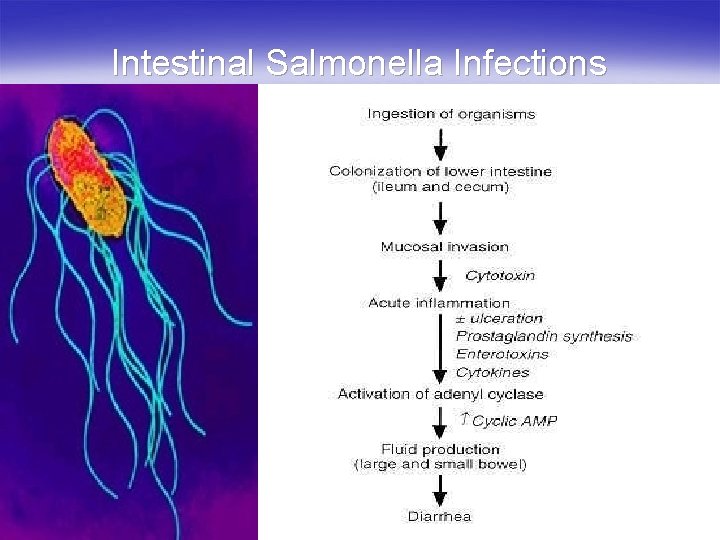
Intestinal Salmonella Infections
Gastroenteritis. Salmonellas-2 § No antimicrobial drugs treatment. . For normal healthy persons. . Only Rehydration. . Antimicrobial drugs should be given for infants & immunosuppressed patients. § Rare & Short human healthy carriers in intestine. . Clinical cases execrate salmonella for few days-weeks in feces-short-period healthy carrier. § Stool culture in S-S agar, Heckton-enteric agar § Prevention hand-food contamination. . often Chicken eggs & meat & Dairy products, mayonnaise § Widal test is not significant in diagnosis of infection. No human vaccine is available. . chicken vaccine
Shigellosis-1 § Shigella spp continue to be a major health problem worldwide, causing an estimated 1 million deaths and about 150 million cases of diarrhea annually. Shigella are Gram-negative, Lactose-ve bacilli. . Facultative Anaerobes. . Highly susceptible to dryness. . Acidity. . killed within 1 hour in stool. § Main 4 species of Shigella: S. dysenteriae, S. sonnei , S. boydii, S. flexneri. . Infect only humans. § Shigellae cells invade, multiply in mucosa of large intestine, cause swelling & necrosis intestinal wall due to cytotoxin & endotoxin. . Watery-bloody diarrhea, severe abdominal cramps, high fever & nausea. . less vomiting, feces contains numerous WBCs & mucus, Incub period within 24 hrs. . Rarely blood sepsis
Shigellosis-2 § Clinical disease ranges from mild diarrhea to dysentery. . few days, Most deaths occur in young children / elderly persons due to dehydration & blood loss. Only Human infection. highly infectious & communicable. . Person to person contact, water, fresh green leaf vegetables. § Dysenteriae is the classic cause of bacillary dysentery. . Sh. Dysenteriae: severe necrosis, muco-purulent bloody diarrhea, severe abdominal pain, high fever. . more bloody diarrhea & dehydration § Release heat-labile Shiga enterotoxin (neurotoxin). . affects small intestine. . carried to blood, CNS. . causes mild-severe meningism & comma. . Few cases hemolytic-uremic syndrome. Death rate is high in patients not treated. . Septicemia is rare.
Diagnosis & treatment § Acute Shigella case: Direct stool examination for presence of numerous WBCs and blood cells § Directal swab. . or rapid stool culture of feces on SS agar, Heckton-enteric agar. . Shigella Isolation & conformation by biochemical tests and serotyping. § Antibiotics is recommended. . ciprofloxacin, doxycycline, cotrimoxazole. . Shorten the diarrhea duration. . Rehydration is important but not enough. . § Most person develop non-protective specific antibodies. . No healthy carrier stage. § Prevention: hygiene. . control of water, milk, fresh food.
Diarrheagenic E. coli-1 § There are 6 groups of diarrheagenic E. coli strains 5 -30%. . causing human diarrhea. . Widely distributed in water, animals & Birds. . Most important 4 types 1 -Enterotoxigenic E. coli (ETEC). Common in domestic animals, Poultry, Humans. . Produces Heat stable/ Heat -labile enterotoxins (ST+ LT) or both (plasmid borne). . fimbrial adhesins attached to enterocytes of the small intestine epithelium. § LT is similar to cholera toxin, attached to GM 1 Ganglioside. . releases & activates adenylyl cyclase & increases cellular c. AMP release. § ST activates c. GMP. . Both cause prolonged hyper secretion of water & sodium + chloride ions. . Inhibit reabsorption of sodium. . Mild/severe watery diarrhea, vomiting, abdominal pain. . No fever. . 24 hours
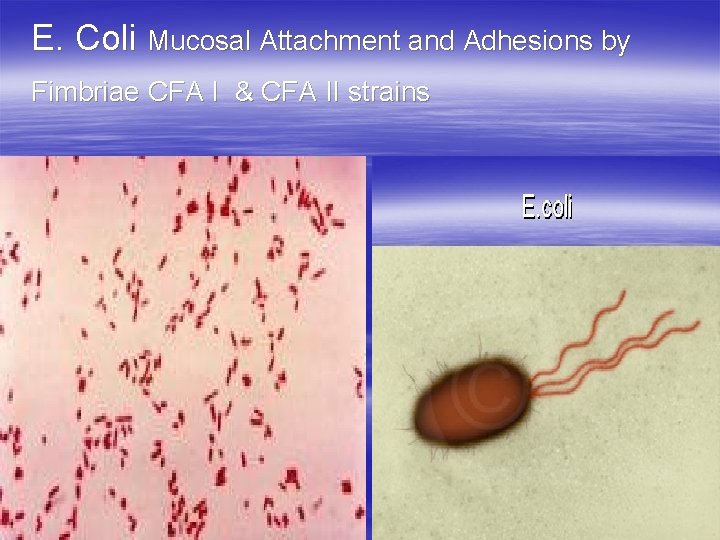
E. Coli Mucosal Attachment and Adhesions by Fimbriae CFA I & CFA II strains
Diarrheagenic E. coli-2 § ETEC are common & important cause of diarrhea in infants/very young children. . common cause of Traveler’s diarrhea in developed countries. . Contaminated water, Dairy products, fresh vegetable food. § Self- limited with oral rehydration. . Infection develop intestinal immunity. . Antibiotics are rarely needed, § 2 - Entero-haemorrhagic E. coli (EHEC). . Release Shiga-like toxin. . Many serotypes/strains, commonly O 157: H 7 , common in intestines of animals/ cows. . contamination milk & ground beef meat. . causes outbreaks of gastroenteritis. Complications: Severe inflammation & ulceration in colon. . bloody diarrhea.
Diarrheagenic E. coli-3 § Haemorrhagic colitis. . If toxin reached blood & Kidneys results Haemolytic Uraemic Syndrome (HUS). . More severe in children/old patients. . Release Blood+ Protein in urine. . Kidney failure. . highly fatal. § Prevention is better than treatment with antimicrobials. § 3 -Entero-pathogenic E. coli (EPEC). . K, LPS Antigens adherence to GI epithelium & distortion. . numerous serotypes. . Common infection in neonates. . Outbreaks watery diarrhea & vomiting in infant nurseries aged less 6 months. . Associated Chronic diarrhea. § 4 -Entero-invasive E. coli (EIEC). . Similar to Shigella causes bloody diarrhea , Vomiting, Abdominal pain, Fever. . by invasion of damaging intestinal epithelial cells. . necrosis. . Affect all ages. . more common and severe in children.
Lab Diagnosis § Detection of Diarrheagenic E. coli strains in the laboratory is difficult. . complicated by the fact that nonvirulent and virulent E. coli strains are present in the same time in feces. § Stool culture on Ma. Conkey agar. . Identification by PCR more accurate than biochemical and serotyping. § Antibiotic treatment is recommended in severe & chronic cases. . Ciprofloxacin, Co-trimoxazole is used for drug-sensitive strains. . second-generation or thirdgeneration cephalosporin for systemic complications. § No vaccines are available for all diarrheagenic E. coli
Campylobacter § Campylobacter spp. are Microaerophlic, Gram§ § negative, Spiral shape. . Bipolar flagella. . Motile. . Isolation on selective special agar including antibiotics. . at 42 C. Commonly present in the GIT of domestic animals. . poultry & pets. . Contaminate easily Meat, Dairy products, fresh Food & Direct contact with animals. . Common cause of diarrhea in Western countries. . Less in Middle East Arab countries. Campylobacter jejuni: Release various enterotoxin & cytotoxins. . Foodborne poisoning. . Acute enteritis, Bloody diarrhea, few days, Infants, children. . less adults. . Rarely septicemia in immunodeficiency, Reactive arthritis may follow chronic diarrhea. . Infection mostly self-limited without treatment. C. fetus: Less common cause human diarrhea. . Commonly causes sepsis & abortion in animals. Treatment: Macrolides/Azithromycin, Ciprofloxacin, Ampicillin
Helicobacter pylori § H. pylori discovered 1983 as cause chronic gastritis § Gram-ve spiral shape, motile, polar flagella, Microaerophlic growth. . Produces urease, neutralize stomach acidity by production ammonium+ co 2. . Allow colonizing mucus overlaying gastric mucosa mainly pyloric antrum. Colonize stomach 30%-90% of world’s population according their increased age. . Mostly asymptomatic without cause any disease. § Pathogenicity: Protease, outermembrane antigens & vacuolating toxin/ Cag A virulence factor causing chronic inflammation & disruption of the inner lining the stomach mucosa. . About 2 -10 % infected persons develop Gastritis, Peptic /dudenal ulcers. Chronic cases Gastric lymphoma & Gastric adenocarcinoma over a long period.
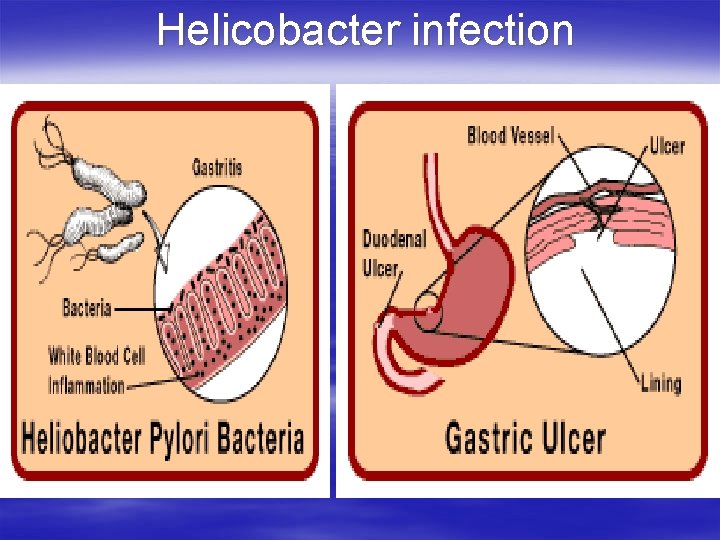
Helicobacter infection
Diagnosis & Treatment § Infection is most likely acquired by ingesting food, water, personal/family contact. Re-infection is common. . Complete eradication is difficult. § Diagnoses: Selective culture medium with 90% Co 2 , 42 C, 3 -5 days. . Clinically Urea breath test , using urea capsule labeled with active carbon detects urease activity in stomach by splitting urea into Co 2 & Ammonia. . Also a rapid urease test for identification H. pylori in gastric biopsy or by culture /Giemsa /silver stain by histological examination. Serological antibodies test is less significant § Treatment: Metronidazole + Clarithromycin / Bismuth sulfate or Metronidazole + Amoxicillin + H 2 Blockers. .
Vibrios-1 § Vibrio group is Gram-negative straight or curved rods, oxidase-positive, motile, single polar flagellum. . Common in sea water/fresh water. § Classical V. cholerae (serotypes 01), 0139 El-tor type. . Infect only human. . Cause Epidemic/Pandemic Outbreaks. . Endemic India subcontinent. § Noninvasive. . affecting small intestine through Heatlabile Cholera Toxin (A and B subunits) B-unit binds to Gangliosies release A-unit. . Increasing c. AMP causing outpouring large amount water, Na+, K+ Cl- , HCO-. Incub. 8 -24 h. . Severe watery diarrhea (1 -3 Liters) , vomiting & cramps, rapid dehydration, blood acidosis, shock, cardic & renal failure. . death within 24 hs if patient not received replacement of fluid loss. § Partial intestinal immunity. . antitoxin antibodies last for 1 -year, Oral vaccine is effective for short period.
Vibrios-2 § Non-01 V. cholerae. . found in water along with 0 -1 V. cholerae. . Less virulent. . watery diarrhea similar to classical cholera due to release cytotoxins. . Less fatal § V. parahaemolyticus. . Halophilic Vibrio. . Cytotoxins Contaminate raw fish. . cause Gastroenteritis, blood sepsis / Wound infection. * Lab Diagnosis: Stool culture. . All vibrios grow on TCBS. . Identification biochemical & serotyping with specific V. cholera antisera. * Treatment: Oral rehydration is the main treatment. . Replacement of fluid loss. . doxycycline, cotrimoxazole (children), ciprofloxacin reduce the Vibrios excretion * Prevention: Safe water & Food. . Early detection of positive infected cases prevent outbreak of cholera in community. . No Healthy carriers.
Foodborne Toxigenic Bacteria-1 § Staphylococcus aureus strains found in Nose & Skin humans (10 -25%) produce several Heat-stable exotoxins (20 minutes 100 C) in food at room temperature. . Fast absorbed from small Intestine to Blood stream. Staphylococcal food poisoning/ Intoxication is due to accumulation toxins in all prepared meat foods, cream cakes, dairy products/ White chesses. Incub. Period, 30 minutes-6 hours following consumption contaminated food § Main Symptoms: Affects rapidly CNS. . Vomiting, nausea, stomach cramps. . rarely watery diarrhea. . No fever & recovery within 1 -2 days. . Self-limited. § Lab. Diagnoses: Detection toxins in food/blood
Foodborne Toxigenic Bacteria-2 Bacillus cereus. . G+ve Aerobic Spore-Forming Bacilli, Common in Nature. . Spores in Food survive boiling and cooling/refrigeration. . Various exotoxins/ enterotoxins produced during bacilli growth either in Food or Intestine. . Associated with two main gastrointestinal symptoms. § 1 -Intoxication. . Heat-acid stable Emetic Enterotoxins. . Typically developed within 1 -24 hours of eating contaminated fried rice, meat. . Vomiting, nausea, stomach cramps last for few hours, No diarrhea or fever. 2 - Diarrheal Toxins/ Intestine. . mild watery diarrhea. . No Fever or Vomiting. . self-limiting within 1 -2 days. . Both Types of toxins may produce from the same B. cereus strain. . Mostly outbreaks due to contamination rice, meat. . No Antibiotic treatment
Foodborne Toxigenic Bacteria-3 § Clostridium perfringens: G+ve Anaerobic sporeforming. . Widely distributed in the environment. . Common Intestines of humans and animals. . Produce Various Enterotoxins, Cytotoxins § C. perfringens toxin-type A. . released in Food at room temperature. . intoxication after 8 -24 Hrs. . Diarrhea. . Nausea. . Abdominal Pain. . Rarely vomiting. . No Fever. . Mostly Self-limited. . 1 -2 Days. . No Antibiotic § C. perfringens toxin-Type C. . multiplication in intestine. . severe watery-bloody diarrhea. . Necrotizing Enteritis. . No vomiting. . Rarely blood sepsis. . can be fatal. Antibiotic treatment is recommended. . Detection toxin in blood or Food specimens.
Foodborne Toxigenic Bacteria-4 § Clostridium botulinum G+ve Anaerobic Spore. Forming. . Causing Botulism/ Food-Intoxication. . Incubation 1 -24 hrs. § Consumption improperly or inadequately processed canned food. . meat & fish. Spores develop vegetative growing cells & release highly potent heat-stable neurotoxin ( A-G types) in food. . Highly heat resistance. . 30 min boiling to be inactivated. § Botulinum extotoxin binds to nerve ending of peripheral & cranial nerves. . Interfere with neural transmission by blocking the release of acetylcholine. . Flaccid paralysis, Respiratory- Cardiac failure & Death. . Early specific antitoxin may help. Diagnosis: clinical features. . Detection toxin in food/blood.
Other Bacteria species § Yersinia enterocolitica. . Gram-ve bacilli, common in contaminated water with fecal materials of pigs, dogs, cats, other animals. Contaminate often dairy products Cause infection mostly children & compromised host. § Enterocolitis due to cytotoxins. . watery-bloody diarrhea & fever, abdominal pain, complications. . skin rash, joint pains or blood sepsis found in compromised patients. Treatment: Trimethoprimsulfamethoxasole, fluoroquinolones § Aeromonas /Pseudomonas species. . Gram-ve bacilli, common in natural water sources. . May cause gastroenteritis /watery diarrhea. . Less Fever & vomiting. . Self-limited. . Cytotoxins. Infection often due to eating not well cooked fish food.
Clostridium difficile § Anaerobic, spore-forming Gram+ve, Part of normal intestinal flora of neonates-infants & adults (5 -20%). . Rapidly increased colonization in hospitalized patients & become actively danger after antibiotic treatment for more than 1 week with all widespectrum peniciilins, clindamycin cephalosporins. . Often causes nosocomial infection ( 5 -15%) among elderly, surgery & compromised patients. § Antibiotic-associated enterocolitis developed by release 2 toxins types (Enterotoxin A, Cytotoxin B) acting directly on intestinal epithelial cells causing necrosis. . Bloody diarrhea. . Increased rapidly within days to severe fatal bloody Pseudomembranous colitis. . Cause Severe colon damage. § Treatment: Stop use potential causative antibiotics, treatment metronidazole / vancomycin will prevent disease complication.
- Slides: 35