
Bacterial Gastrointestinal Infection 2 Year Medical Students Prof
Bacterial Gastrointestinal Infection 2 -Year Medical Students Prof. Dr. Asem Shehabi Faculty of Medicine University of Jordan
Diarrheagenic E. coli-1 § There are 6 groups of E. coli strains which have virulence factors causing human diarrhea. . Widely distributed in water, animals & Birds. . 4 most important 1 -Enterotoxigenic E. coli (ETEC). Common in domestic animals, Poultry, Humans. . Produces Heat stable /Heat –labile enterotoxins (plasmid borne) or both (LT+ ST). . fimbrial adhesins attached to enterocytes of the proximal small intestine epithelium. . § LT Subunit B. . attached to GM 1 Ganglioside. . release Subunit A. . Activate adenylyl cyclase. . increase cellular c. AMP release. . Heat-stable toxin (ST) activates c. GMP. . Both cause prolonged hyper secretion of water. . Sodium + chloride. . Inhibit reabsorption of sodium. . Mild/severe watery diarrhea, vomiting, abdominal pain. . No fever.
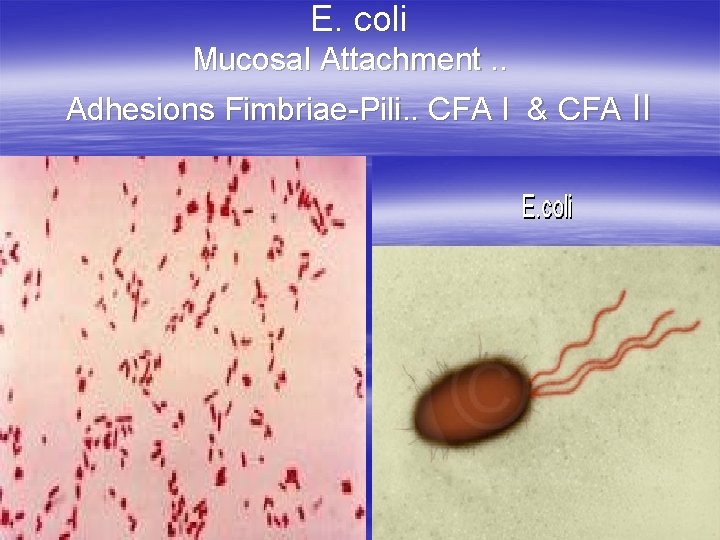
E. coli Mucosal Attachment. . Adhesions Fimbriae-Pili. . CFA I & CFA II
Diarrheagenic E. coli-2 § ETEC strains are an important cause of diarrhea in infants – very young children in developing countries § Common cause of Traveler’s diarrhea in developed countries. . Contaminated water. . Dairy products. . fresh vegetable food. § Self- limited with Rehydration. . Antibiotics are rarely needed. § 2 - Entero-haemorrhagic E. coli (EHEC) or Verotoxigenic E. coli (VTEC). . mostly serotype O 157: H 7. . Produces Shiga-like toxin. . common in intestines of animals. . cows. . contamination milk & ground beef meat. . causes outbreaks of gastroenteritis. . 4000 cases, 600 HUS, 55 deaths. . 2012, Germany

Diarrheagenic E. coli-3 § Complications. . severe inflammation & ulceration colon. . bleeding. . Haemorrhagic colitis. . If toxin reached blood. . Haemolytic Uraemic Syndrome (HUS). . More severe in children. . Blood+ Protein in urine. . Kidney failure. . fatal § Prevention is better than treatment with antimicrobials. § 3 -Entero-pathogenic E. coli (EPEC). . adherence to GI epithelium. . distortion. . Numerous serotypes. . K, LPS Antigens. . Common infection in neonates. . Outbreaks in babies nurseries aged less 6 months. . watery diarrhea & vomiting. . Chronic diarrhea. § 4 -Entero-invasive E. coli (EIEC). . like Shigella. . cause bloody diarrhoea. . Vomiting. . Abdominal pain. . Fever. . by invasion of damaging intestinal epithelial cells. . necrosis. . Affect all ages. . more pathogenic in children.
Lab Diagnosis § Detection of Diarrheagenic E. coli strains in the laboratory is difficult. . complicated by the fact that nonvirulent E. coli strains are normally present in the feces. . Lactose+ve § Stool culture. . Mac. Conkey agar. . Identification by PCR more accurate than biochemical and serotyping. . § Antibiotic treatment is recommended in severe & chronic cases. . Ciprofloxacin, Co-trimoxazole is recommended for drug-sensitive strains. . parenteral second-generation or third-generation cephalosporin for systemic complications. § No vaccines are available

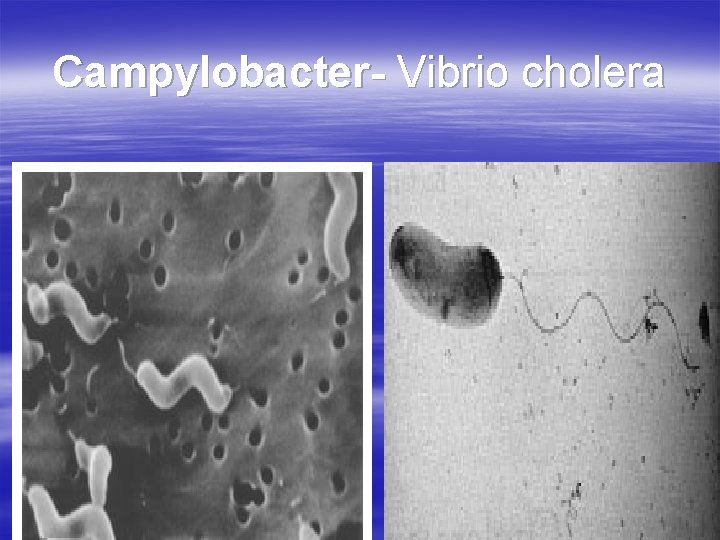
Campylobacter § Campylobacter spp. are Microaerophlic. . Gram-negative. . Spiral shape. . Bipolar flagella. . Motile. . Isolation on selective special medium at 42 C. § Commonly present in the GIT of domestic animals. . poultry & pets. . Contaminate easily Meat. . Dairy products. . Food contamination & direct contact with animals. . Common cause of diarrhea in Western countries. . Less in Arab countries. § Campylobacter jejuni. . common cause acute enteritis. . Bloody diarrhea. . Infants, children > adults, Elderly, Immunecompromised. . Rare septicemia. . Reactive arthritis. . Infection mostly self-limited without treatment. . few days. . Pathogenesis. . Endotoxin & various enterotoxin, cytotoxins. . Prolong carriage associated with imunodeficincey. § C. fetus. . Less common in human. . Causes sepsis & abortion in animals. § Serological test is not significant in diagnosis clinical cases. § Treatment: Macrolides/Azithromycin, Ciprofloxacin, Ampicillin
Campylobacter- Vibrio cholera
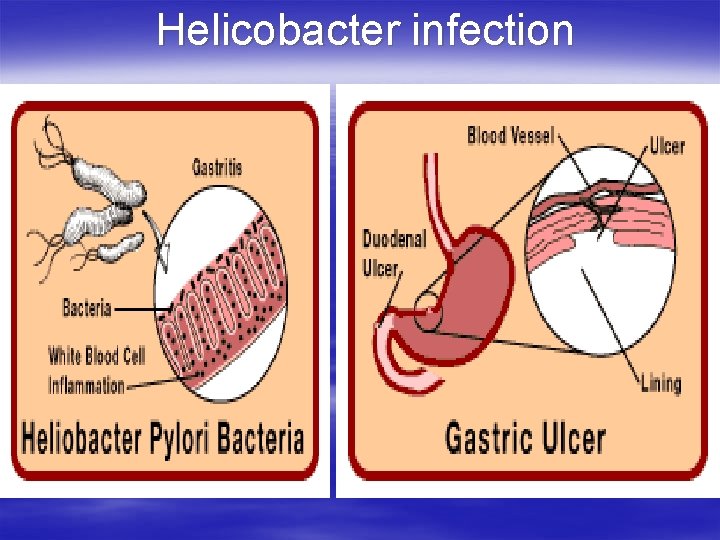
Helicobacter pylori § H. pylori infection is expected to be present in stomach of 30%-90% of world’s population. . causes no signs or symptoms and doesn't lead to any complications in the majority of persons. . H. pylori infection discovered 1983 as cause of chronic gastritis. . Serious complications. . Peptic /dudenal ulcers. . Lymphoma, stomach cancer in 2% of colonized persons worldwide over a long period § H. pylori. . Microaerophlic to Anaerobes. . Gram-ve bacteria, spiral shape, motile, polar 4 -6 flagella. . produces potent urease, support its survive in gastric mucous layer near the epithelial surface. . neutralize stomach acidity. Protease & outermembrane antigens (Cytotoxins) Causing chronic inflammation of the inner lining of the stomach mucosa
Helicobacter infection
Diagnosis & Treatment § Infection is most likely acquired by ingesting contaminated food, water , personal contact Causes Re-infection is common. . No vaccine § Optimal growth. . Special culture medium, 90%, Co 2 37 C. § Urease breath test by drink a harmless liquid and in less than 1 hour, a sample of breath is tested. . Rapid urease test for identification H. pylori in gastric biopsy taken by endoscope or culture § Giemsa /silver stain. . histological biopsy specimens. § Treatment: Metronidazole + Clarithromycin or Bismuth sulfate + Metronidazole + Amoxicillin + H 2 Blockers. .
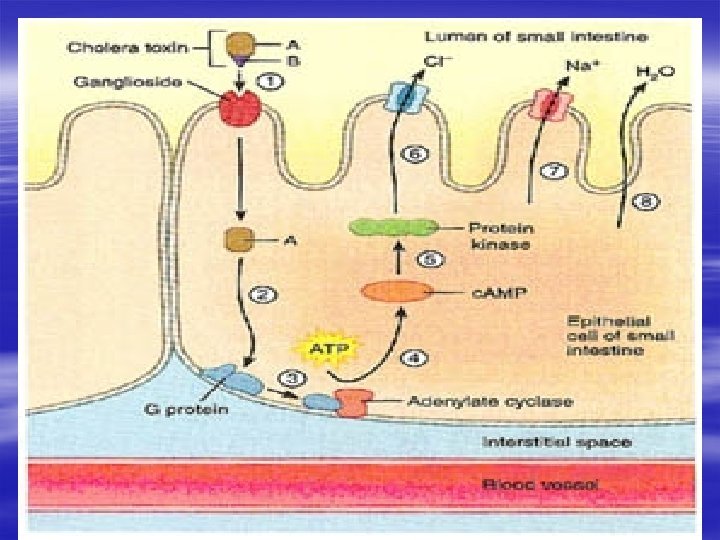
Vibrios-1 § Vibrios are Gram-negative straight or curved rods, oxidase-positive, motile. . single polar flagellum. . widely distribute in sea water. . 2 -3% Na. Cl. . § Classical V. cholerae (serotypes 01, 0139). . Cause Epidemic- Pandemic Cholera. . Noninvasive. . Affecting small intestine through secretion of an Enterotoxin. Heat-labile /Cholera Toxin. . Increasing c. AMP. . § Incub. 8 -24 h. . Severe watery diarrhea, dehydration, shock, acidosis, death within 24 h. . Cause Only Human Infection. § Partial immunity developed following infection. . Specific developed antitoxin antibodies in intestine last for 1 -year. . Oral Vaccine used in endemic areas. . prevent re-infection up to 50%
Vibrios-2 § Non-01 V. cholerae. . Less virulent. . watery diarrhea due to Cytotoxins. . found in water with o-1 V. cholerae § V. parahaemolyticus. . Halophilic Vibrio. . Cytotoxins Raw fish. . Swimming. . Gastroenteritis. . Rare Sepsis, Wound infection. . Contaminated fish * Lab Diagnosis: Stool culture. . TCBS, Biochemical & serotyping confirmation. * Treatment: Oral re-hydration is the main treatment. . Replacement of fluid loss. . Water & Electrolytes. . doxycycline, cotrimoxazole (children), ciprofloxacin Prevention: Safe water & Food. . Early detection of positive infected cases prevent outbreak of cholera in community. . No Healthy carriers.
Foodborne Toxigenic Bacteria-1 § Staphylococcus aureus strains associated with particular bacteriophage types can produce a Heatstable enterotoxin in food ( 20 minutes 100 C), Absorbed from small Intestine. . Blood, CNS § Staphylococcal food poisoning is commonly associated with salty foods, cream cakes, grounded meat. . Fresh dairy products. . White chesses § Main Symptoms. . Mostly Vomiting. . starts between 30 minutes and 6 hours following the consumption of the contaminated food. . No Fever and rarely Diarrhea. . One day. . Self-Limited.
Foodborne Toxigenic Bacteria-2 § Bacillus cereus. . G+ve Aerobic Spore-Forming Bacilli. . Common in Nature. . Spores survive boiling and cooling in Food. . Various Enterotoxins produced during bacilli sporulation either in Food or Intestine. . Associated with two main gastrointestinal symptoms. § 1 -Intoxication. . Heat-stable Emetic Enterotoxins. . Typically developed within 24 hours of eating contaminated fried rice. . Meat. . last for few hours without diarrhea and fever. § 2 - Diarrheal Toxins. . watery mild diarrhea. . No Fever or Vomiting. § 3 - Both Types of toxins may produce by certain B. cereus strains. . Mostly outbreaks in family, schools. . Commonly associated with Chinese food. . fried Rice
Foodborne Toxigenic Bacteria-3 § Clostridium perfringens. . G+ve Anaerobic Spore. Forming. . Widely distributed in the environment. . Common Intestines of humans and animals. . Produce Various Enterotoxins, Cytotoxins, Enzymes § C. perfringens toxin-type A. . Food-poisoning. . Incubation Period. . 8 -24 Hrs. . Diarrhea. . Nausea. . Abdominal Pain. . Vomiting. . No Fever. . Mostly Selflimited. . 1 -2 Days. . No Antibiotic treatment § C. perfringens toxin-Type C. . Released following multiplication in intestine. . Sever Diarrhea. . No vomiting. . Necrotizing Enteritis. . Rare Sepsis. . Can be fatal in certain Conditions. . Antibiotic treatment § Detection toxin in blood. . Food specimens.
Clostridium difficile § Anaerobic, spore-forming Gram+ve; Part of normal intestinal flora (5 -20%). . Rapidly increased and become danger following antibiotic treatment for more than 1 week. . with all wide-spectrum peniciilins. . clindamycin cephalosporins. . Often among hospitalized patients. . Compromised. . Antibioticassociated enterocolitis. . nosocomial infection. § Produce two exotoxins types A, B. . Bloody diarrhea. . Pseudomembranous colitis. . Discontinue potential causative antibiotics. . use oral metronidazole or vancomycin. . to stop disease complication.
Foodborne Toxigenic Bacteria-4 § Clostridium botulinum G+ve Anaerobic Spore. Forming. . Botulism. . Food-Intoxication. . Incubation 1 -24 h § Consumption improperly or inadequately processed canned food. . Spores. . Vegetative cells. . Release highly potent heat-stable neurotoxin ( A-G types). . inactivation 30 min boiling. § Botulinum toxin binds to presynaptic nerve ending of peripheral nervous system & cranial nerves. . Inhibits acetylcholine release. . Flaccid paralysis, Respiratory or Cardiac failure. . Death. . Early Specific Antitoxin Treatment may help. . No Antibiotics
Other Bacteria species § Yersinia enterocolitica. . Gram-ve bacilli, common in cold water, pigs. . Less in dogs, cats, other animals. . the bacteria are most likely to be found on the tonsils and intestines. . Contaminate often dairy products infect mostly children younger< 1 year & compromised host. § Common symptoms in children are fever, abdominal pain, bloody diarrhea. . complications such as skin rash, joint pains, or blood sepsis can occur in compromised patients. § Aeromonas species. . Gram-ve bacilli, common in natural water sources. . a significant cause of bacterial gastroenteritis. . cytotoxins. . young children. . Diarrhea, dehydration. . Less Fever, vomiting.
- Slides: 20