
Bacterial Fungal skin Soft Tissue Muscle infections For
Bacterial & Fungal skin, Soft Tissue & Muscle infections For Second Year Medical Students Prof. Dr Asem Shehabi

Bacterial Infections of Skin & Soft Tissues § Skin infections may involve one or several layers of Skin & Soft Tissues ( epidermis, subcutis, muscle). . Mild skin infections may cause rarely chronic lesions and sepsis. § Acute Skin Infections are associated with: swelling , tenderness, warm skin, blisters, ulceration, fever headache. . Systemic disease involving blood, bones. . Any other body organ. § Few types Bacteria & Yeast live normally in hair follicles- Skin pores. . may cause inflammation of Hair follicles /folliculitis or Abscess formation/ Boils. .
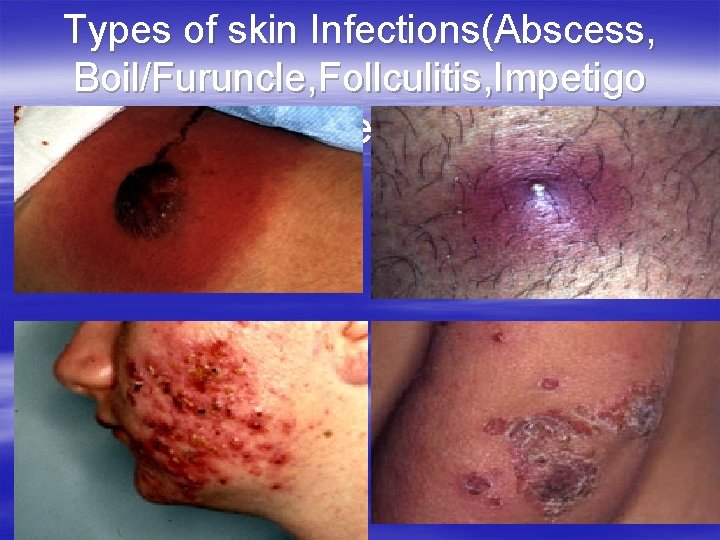
Types of skin Infections(Abscess, Boil/Furuncle, Follculitis, Impetigo

Common Normal Skin Flora & Pathogens § Skin infection increased by presence of minor skin injuries, abrasions. . Increase production Androgenic Hormones after Puberty. . Increase activities Sebaceous ducts. . secretion Sebum oil (Fatty Acid Peptides). . Increases keratin & skin desquamation. § Anaerobic Propionibacteria acnes ( gram+ve small bacilli) & Staph spp. excrete enzymes. . Split sebum. . cause inflammation. . developing Acne. § Staphylococci, hemolytic Streptococci ( Group A), Micrococci, Propionibacteria, Acinetobacter , Pityrosporum and other Yeasts/Candida species.
Localized & Systemic Skin Infections § Certain Systemic Infection may be associated with skin inflammation reaction like N. meningitidis (Haemorrhagic Lesions) S. typhi ( skin Rash, Rose spots), Treponema pallidum. . Syphilis lesions P. aeruginosa. . Many fungi + Viruses cause skin Rash § § S. aureus : coagulase+ve. . Produce various toxins & enzymes. . Associated with the most common & important cause of human Skin diseases & sepsis in community & hospital (up 50%). § About 15 -40 % healthy humans are healthy carriers of S. aureus in their nose or skin, feces. . § Common Staphylococcal skin infections: § Folliculitis / Boils/ Furuncles. . Hair follicular-infections papules / pustules. . Erythematous lesions. . affect All ages. . Can be mixed infection with lipophilic yeast
Impetigo: superficial layers skin. . Epidermis, Blisters, skin sores, crusted lesions. . Face, hands & legs. . Mostly young children, minor injury § Toxic Schlock Syndrome: Caused by localized infection, release TSST-1/2(enterotoxin-1) act as Super-antigens. . activate T-lymphocytes. . Cytokines, Rash & Skin Desquamation may be associated with sepsis, high fever, multi-organ failure & death. § Scalded Skin Syndrome: Epidermolytic/ Exfoliative Toxins (A, B) Followed minor skin lesion. . causing destruction skin intercellular connection. . Large blisters containing fluid & Skin scaling, Painful common in infants/small children. . due to lack specific antitoxins. . general massive inflammatory response. . rarely causes kidney failure.
Methicillin Resistant S. aureus § S. epidermidis. . Coagulase-ve, common normal inhabitants of the skin, nose. . Less pathogenic. Most its infections occur in normal individuals as mild wound infection. . injury, underlying illness increase the risk of systemic infection in infants & immune-compromised patients § Most staphylococci strains are becoming increasingly resistant to many commonly used antibiotics including: All B-lactamase-resistant penicillins, Methicillin & flucloxacillin, Augmentin (amoxycillin + clavulonic acid). . Other antibiotics like new carbapenems (imipenem/cilastatin) Worldwide Spread Methicillin-resistance (MRSA). . 2090%. . Jordan about 70 % of clinical isolates (2012)
Diagnosis &Treatment of staphylococcal infections § Lab Diagnosis of staphylococcal infections should be confirmed by: culture, gram-stain positive cocci, +ve catalase , coagulase test. § Effective treatment For MRSA. . Vancomycin, Teicoplanin, Imipenem, Fusidic acid § Drainage of pus before treatment /Surgical removal (debridement) of dead tissue /necrosis. § Removal of foreign bodies (stitches) that may contribute to persisting infection § Treating the underlying skin disease. . Prevent nosocomial infection. . No Vaccine available
Streptococcal Skin Infections-1 § Streptococcus pyogenes / B-H-Group A). . Major virulence factors: M-Protein, Hemolysin O & S, Streptokinase (Fibrinolysin-digest Fibrin & Proteins in Plasma), Streptodornase (DNA) Erythrogenic (pyrogenic exotoxins A, B, C). . Similar to Toxic Shock Syndrome toxin. § Cellulites/ Erysipelas : Acute rapidly spreading infection of skin & subcutaneous tissues. . Following. . Wounds, Burns. . Diffuse skin redness, massive edema, fever, Lymphatic's inflammation/sepsis. . mostly children. § Impetigo/Pyoderma: localized & superficial skin face, arms , legs, children followed Strept. sore throat.

B-H-Streptococci & Staphylococcus
2/ – Scarlet fever: Followed Group A Strept. Sore throat infection. . Erythematous tong-skin rash due to release Erythrogenic Toxin. . small children. . Result in development specific immunity. – Necrotizing fasciitis(NF) : Few strains group A , Minor skin trauma. . Invasive infection. . pyrogenic exotoxins A & B. . affect subcutaneous tissues & fascia. . Rapid spread necrosis. . Sever tissue damage. . Pain, Fever, Sever systemic illness. . Fatal without Rapid Antibiotic Treatment and surgery. Complication: Patients wit NF May develop Streptococcal Toxic Shock Syndrome in associated with bacteremia, vomiting, diarrhea, Confusion, Shock, Respiratory & General organ failure, high fatal (30%) Death.
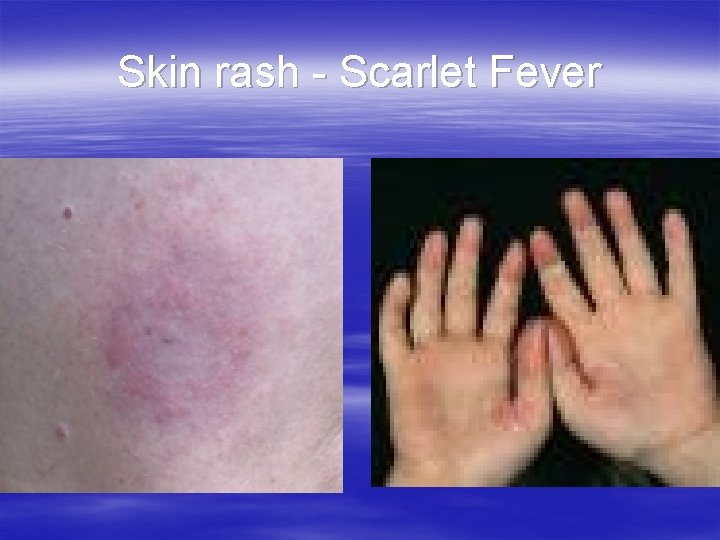
Skin rash - Scarlet Fever
Diagnosis & Treatment § Culture on blood, B-Hemolytic reaction, Gram-+ve cocci in chain, catalase-ve, Bacitracin-Susceptible § Serotyping should used to confirm group of streptococcal infection. . A, B, C etc. using Antisera against group-specific cell wall carbohydrate – Antigens (Lancefield classification) § Penicillin is the drug of choice. . All Group A streptococci are very susceptible to penicillin. § Patients with penicillin allergy may be given Macrolide (Erythromycin/ Azithromycin)
Less Common Bacterial Skin Infections § § § Gonorrhea : N. gonorrhoea. . Rare Skin rash Soft chancre /chancroid : Haemophilus ducreyi. . Gram-ve bacilli, STD. . Painful Skin Ulcer. . Extra Genitalia. . Common in Tropical Region. Syphilis: Treponema pallidum. . Genital ulcers & Rash Meningococemia: N. meningitidis. . Sepsis, Skin rash & hemorrhagic lesions. . Thrombosis Rickettsial diseases: Small obligate intracellular Gram-ve bacteria. . human: R. prowazeki (Typhus), R. rickettsii (Spotted fever). . Transmitted by body lice, ticks. Multiply first in endothelial cells of small blood vessels. . vasculitis, rash, systemic diseases, fever, fatal
/2 § Bacillus anthracis. . Cutaneous Black Lesions. . § Clostridium perfingens and other sp. : Necrotizing Fasciitis. . Myonecrosis. . Cellulitis. . Gas gangrene. . Surgical/Traumatic wound. . Skin- Subcutaneous (Mixed Infection). . Specific Enzymes. . Exotoxins § Borrelia Burgdorferi : Lyme disease. . Transmitted by Tick/ Insect bites. . Incub. up 3 weeks. . Annular Rash. . Chronic Skin Lesion. . Cardiac & Neurological Abnormality. . Arthritis. . Endemic USA, China, Japan § Bartonella species: G-ve bacilli Bartonellosis Cat Scratch Fever. . Cat Scratch or bite. . Skin lesions. . Subacute regional lymphadenitis. . Septicemia.
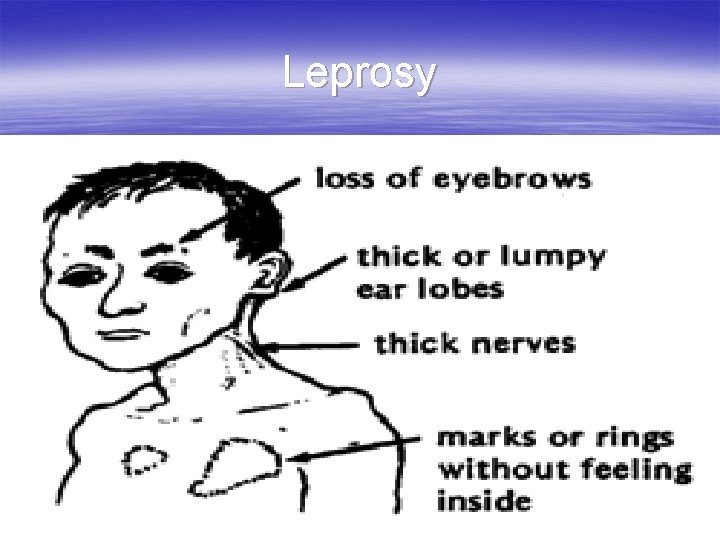
Tuberculosis-Leprosy-1 § Cutaneous Tuberculosis (TB), Cutaneous TB is a relatively uncommon form of extra-pulmonary TB. § M. marinum-ulcerans. . Found in water with Low Temperature, Skin Lesions. . Chronic cutaneous ulcer. . Granuloma. . Followed skin injury. § Leprosy: M. leprae. . primarily infection affects cold body sites skin, mucous membranes. . peripheral nerves. . nose, ears, eye brows and testes. § characterized by chronic multiple lesions accompanied by first by sensation loss/ anesthesia. . sensory loss in the affected areas, toes, finger tips. . intensive tissue destructions & liquefaction.
Leprosy
Tuberculosis-Leprosy-2 § Infection incubation period range from 6 months - 40 years or longer. § Leprosy forms depend on the person's immune response to the infection. § There are several forms of leprosy: § Mild Form: Tuberculoid form. . Few AF Bacilli, Lepromin test +ve, Presence of nerve sensation § Severe form: lepromatous type. . Numerous AF Bacilli, Loss of nerve sensation. . Lepromin test -ve
Leprosy-3 3/ § Lebrosy can affect people of all races around the world. it is most common among people with low standard of hygiene in warm, wet areas in the tropics and subtropics. § In most cases, it is spread through long-term contact with an infected person who has not been treated. § Most people will never develop the disease even if they are exposed to the bacteria. . due to a natural immunity. § Worldwide prevalence is reported to be around 5. 5 million, with 80% of these cases found in 5 countries: India, Indonesia, Myanmar, Brazil and Nigeria.
Diagnosis & Treatment § Lab Diagnosis: A skin biopsy may show characteristic granulomas. . mixed inflammatory cell infiltrate in the deeper layers of the skin, the dermis and involvement of the nerves. § Presence few AFB. . number of bacilli visible depending on the type of leprosy. . No routine culture or protected vaccine is available. . BCG may help & reduce the severity of disease § Treatment: Dapsone, Rifampin, Clofazimine. Life-long Treatment. . No cure but Less tissue Damage and spread of infection.
Common Fungal Skin Infection § Superficial & Cutaneous Mycosis: Invade only dead tissues of the skin or its appendages. . keratinized tissues. . Skin, Hair, Nails. § Dermatophytes: Trichopyhton, Microsporum, Epidermatophyton spp. , Normal skin flora (Yeast Piytrosporum, Trichosporons) § Transmission: Directly from person to person or animal to person. . Skin scales & dust particles § Tinea corporis: Skin Annular Lesion, Erythematic lesions, Vesicles, Scaling. . Itching. . Rash. . All Ages § Tinea Versicolor/Pityriasis: Malassezia furfur / Piytrosporum folliculitis. . Lipophilic Yeast.
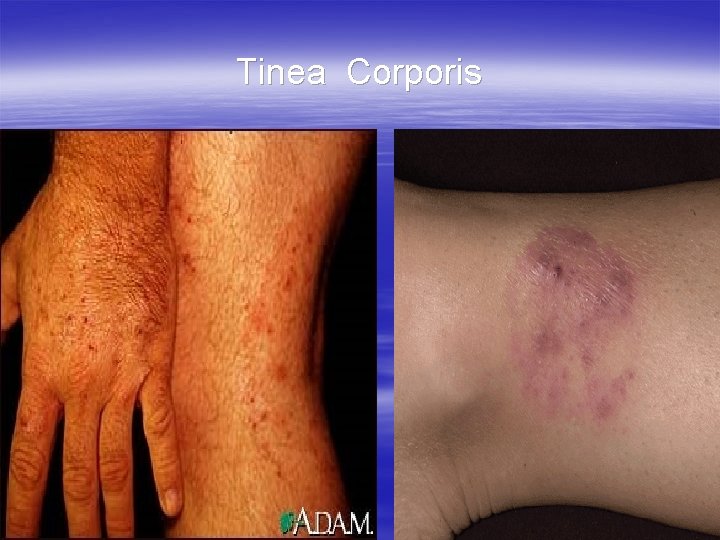
Tinea Corporis
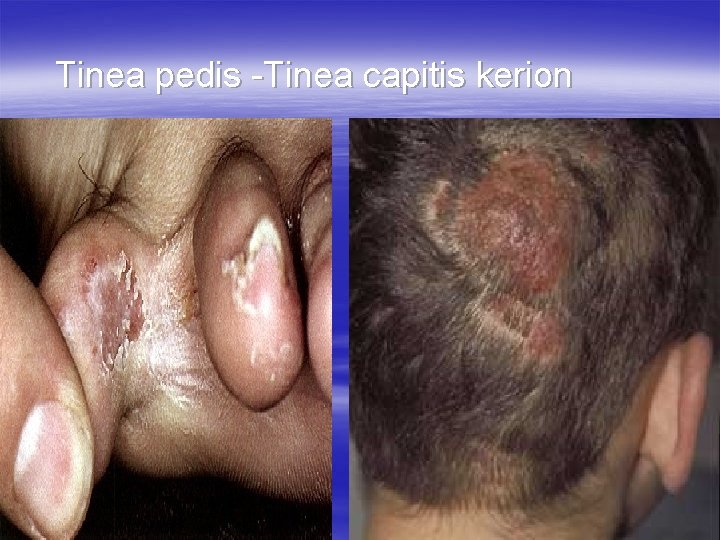
Tinea pedis -Tinea capitis kerion
Skin Fungal Infection-2 § Tinea pedis : Red itching vesicles. . chronic mild- § § § sever erythematic lesions. . Interdigital toe spaces, Plantar skin surface. . Feet skin peeling. . All types. Tinea cruris: Pelvic area. . Groin. . Erythematic lesions, Itching, Chronic forms. . more common in male young adults. . Epidermophyton spp Tina unguium /Onychomycosis: Often caused by Trichophyton , Microsporum, Candida. . fingernails & toenails. Nails become colorless/colored, thicken, disfigure and brittle. . Diabetes, Suppressed immunity. Psoriasis is a chronic not infectious skin condition. . can affect the nails, scalp, skin and joints. . Causing erythematic lesions. . Inherited in some families.
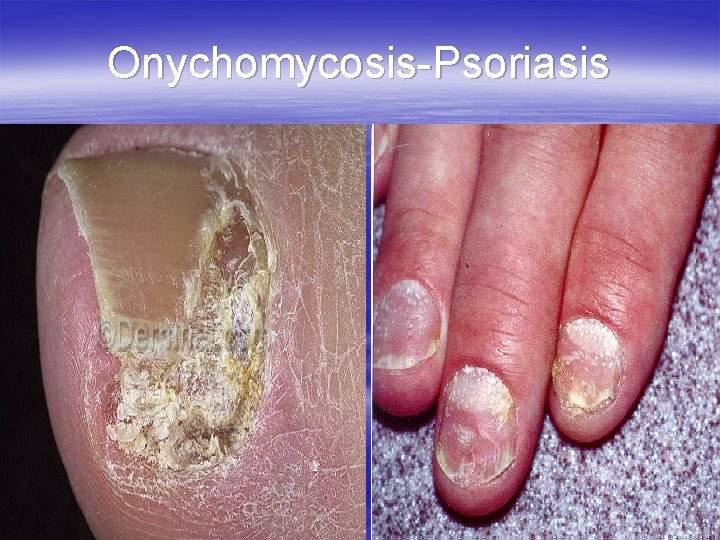
Onychomycosis-Psoriasis
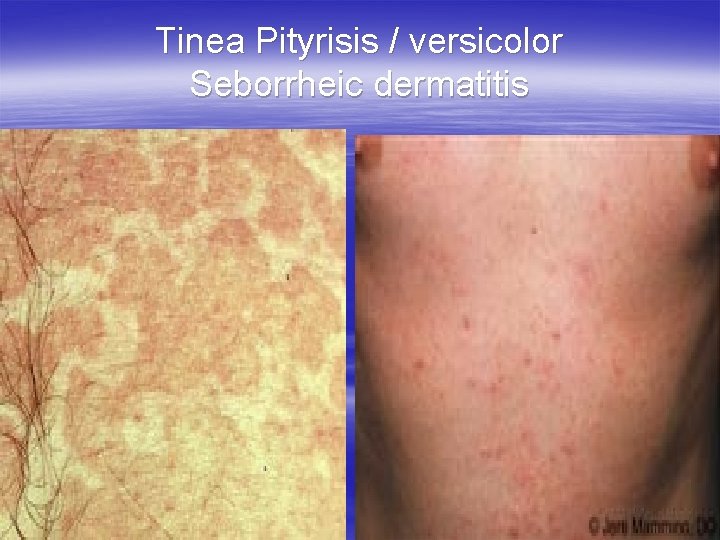
Tinea Pityrisis / versicolor Seborrheic dermatitis
Skin Fungal Infection-3 § Tinea capitis: Hair shaft/follicles. . Scalp. Children § Head dundruff, Seborrheic dermatitis. § White & Black Piedra. . Trichosporon spp. , Soft to hard nodules. scalp hair & hair shaft , skin face § Candidasis: C. albicans & other species. Moist skin Lesions, Nails, Finger webs, Diabetes, immunocompromessed § Blasmycosis: Blastomyces dermatitidis & Histoplasmosis : Histoplasma capsulatum. . Dimorphic sol Fungi, Spore Inhalation. . Asymptomatic Respiratory infection. . Rare systemic Infection. . Skin Ulcerations. . Granulomas. .
Lab diagnosis-4 § Direct microscopic examination of skin scales dissolved in a 10 % solution potassium hydroxide (KOH). . demonstrating the fungus as small Filaments / Yeast like structures. § Culture: Sabouraud Dextrose agar, Incubation at room temperature & 37 C for 2 -6 Weeks. . Slow growth § Chrom. Candida agar. . used for rapid identification of common Candida species. § Treatment : Most skin infections respond very well to topical antifungal drugs. . interact with Ergosterol. . causing Fungal cell membrane disruption. . Imidazole drugs. . miconazole, clotrimazole, econazole, ketoconazole, fluconazole
- Slides: 28