
Bacterial Conjugation Dr Gulve R M Bacterial Conjugation
Bacterial Conjugation Dr. Gulve R. M.
Bacterial Conjugation is genetic recombination in which there is a transfer of DNA from a living donor bacterium to a recipient bacterium. Often involves a sex pilus. The 3 conjugative processes + I. F conjugation II. Hfr conjugation III. Resistance plasmid conjugation
I. F+ Conjugation Process F+ Conjugation- Genetic recombination in which there is a transfer of an F+ plasmid (coding only for a sex pilus) but not chromosomal DNA from a male donor bacterium to a female recipient bacterium. Involves a sex (conjugation) pilus. Other plasmids present in the cytoplasm of the bacterium, such as those coding for antibiotic resistance, may also be transferred during this process.
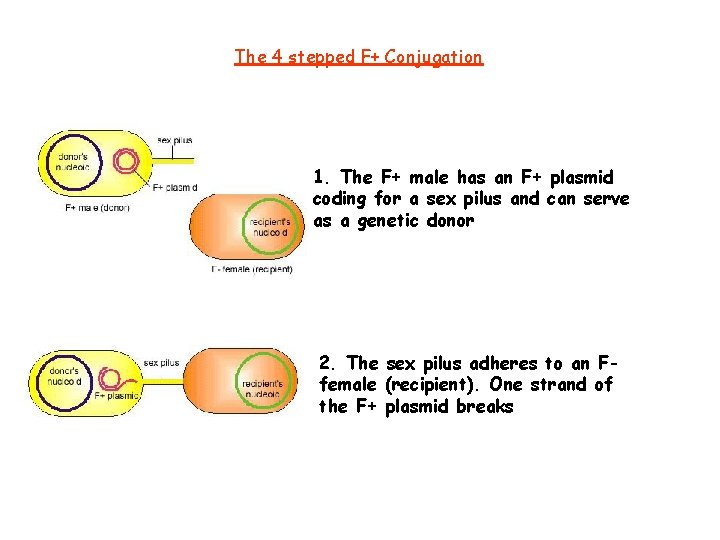
The 4 stepped F+ Conjugation 1. The F+ male has an F+ plasmid coding for a sex pilus and can serve as a genetic donor 2. The sex pilus adheres to an Ffemale (recipient). One strand of the F+ plasmid breaks
II. Hfr Conjugation Genetic recombination in which fragments of chromosomal DNA from a male donor bacterium are transferred to a female recipient bacterium following insertion of an F+ plasmid into the nucleoid of the donor bacterium. Involves a sex (conjugation)pilus
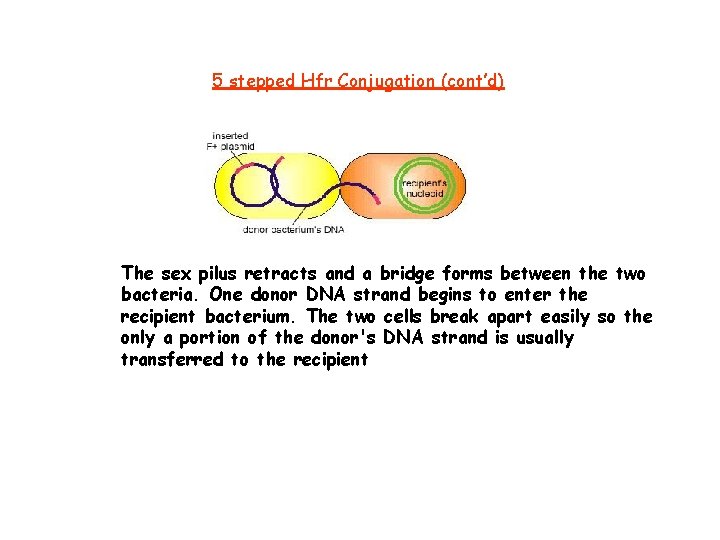
5 stepped Hfr Conjugation (cont’d) The sex pilus retracts and a bridge forms between the two bacteria. One donor DNA strand begins to enter the recipient bacterium. The two cells break apart easily so the only a portion of the donor's DNA strand is usually transferred to the recipient
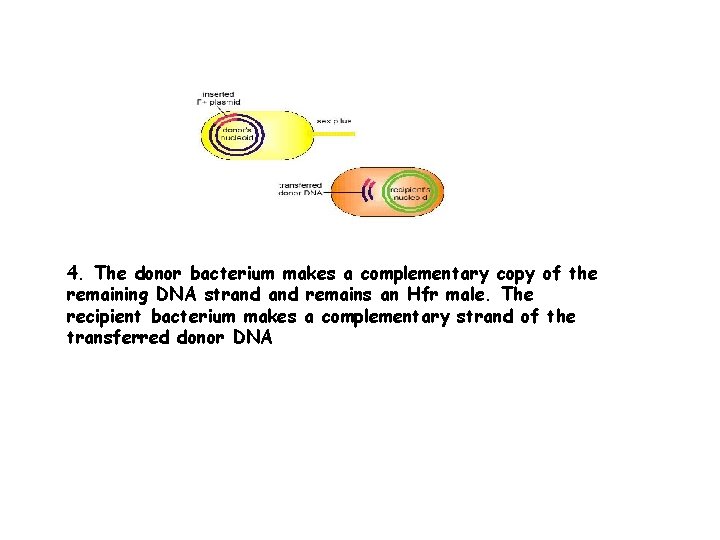
4. The donor bacterium makes a complementary copy of the remaining DNA strand remains an Hfr male. The recipient bacterium makes a complementary strand of the transferred donor DNA
III. Resistant Plasmid Conjugation Genetic recombination in which there is a transfer of an R plasmid (a plasmid coding for multiple antibiotic resistance and often a sex pilus) from a male donor bacterium to a female recipient bacterium. Involves a sex (conjugation) pilus
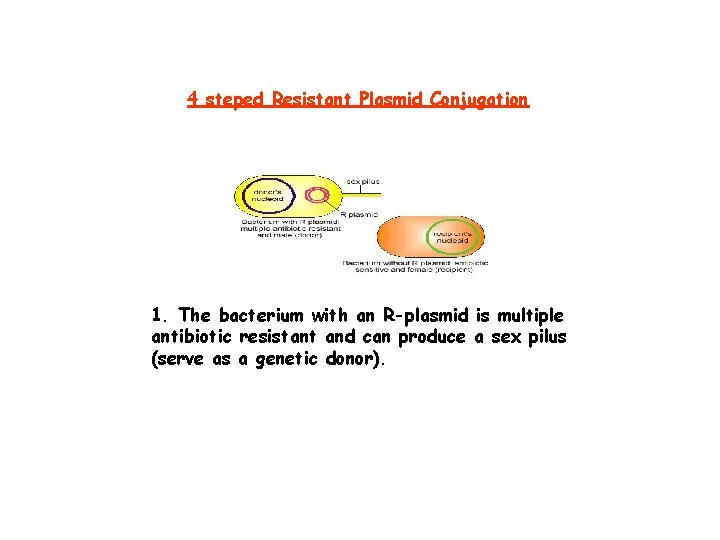
4 steped Resistant Plasmid Conjugation 1. The bacterium with an R-plasmid is multiple antibiotic resistant and can produce a sex pilus (serve as a genetic donor).
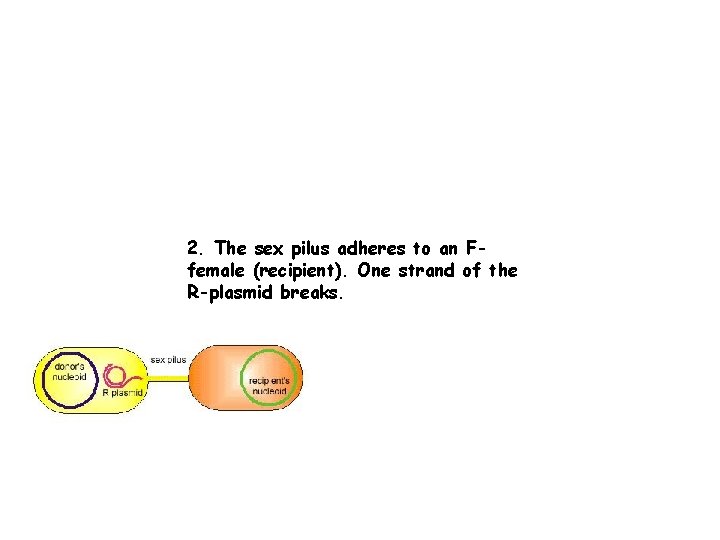
2. The sex pilus adheres to an Ffemale (recipient). One strand of the R-plasmid breaks.
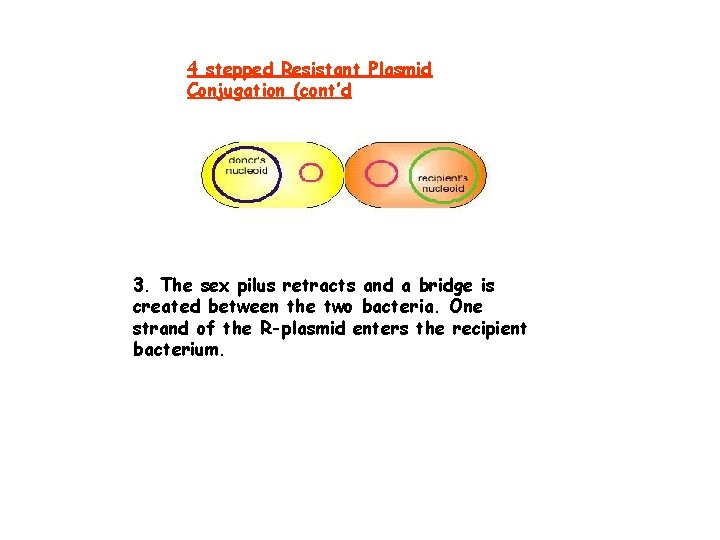
4 stepped Resistant Plasmid Conjugation (cont’d 3. The sex pilus retracts and a bridge is created between the two bacteria. One strand of the R-plasmid enters the recipient bacterium.
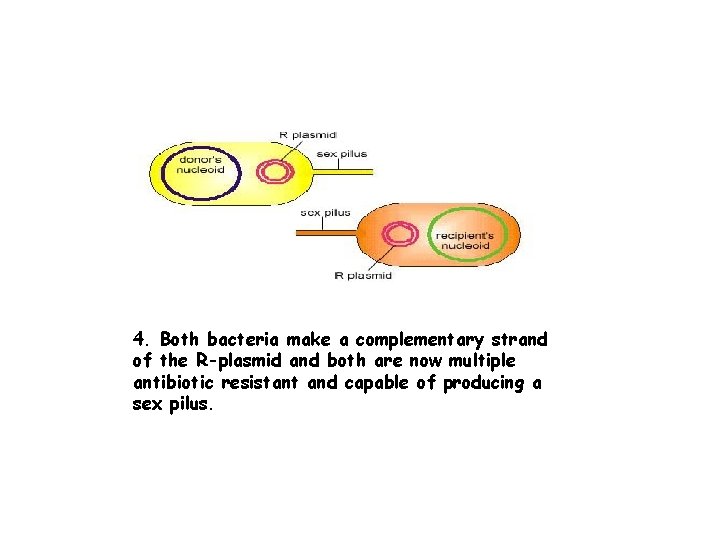
4. Both bacteria make a complementary strand of the R-plasmid and both are now multiple antibiotic resistant and capable of producing a sex pilus.
- Slides: 12