
Bacterial Biofilms Building Slimy Cities Gillian Ryan St
Bacterial Biofilms: Building Slimy Cities Gillian Ryan St. Francis Xavier University
Outline: Background The Model Preliminary Results Future plans
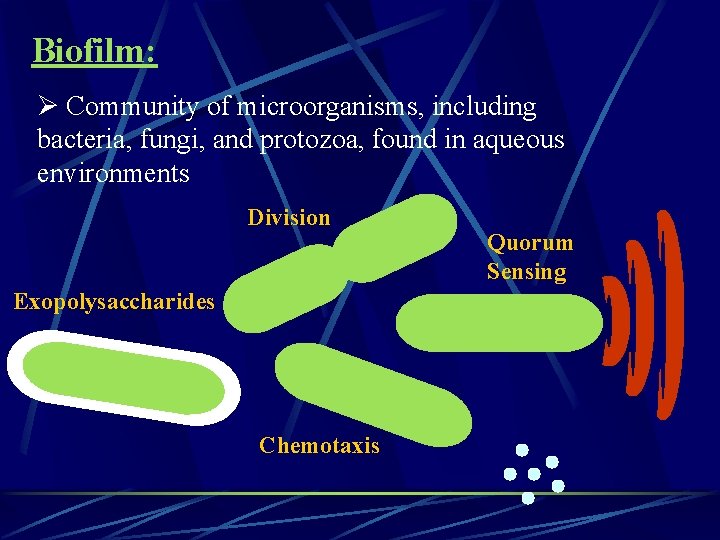
Biofilm: Community of microorganisms, including bacteria, fungi, and protozoa, found in aqueous environments Division Exopolysaccharides Chemotaxis Quorum Sensing
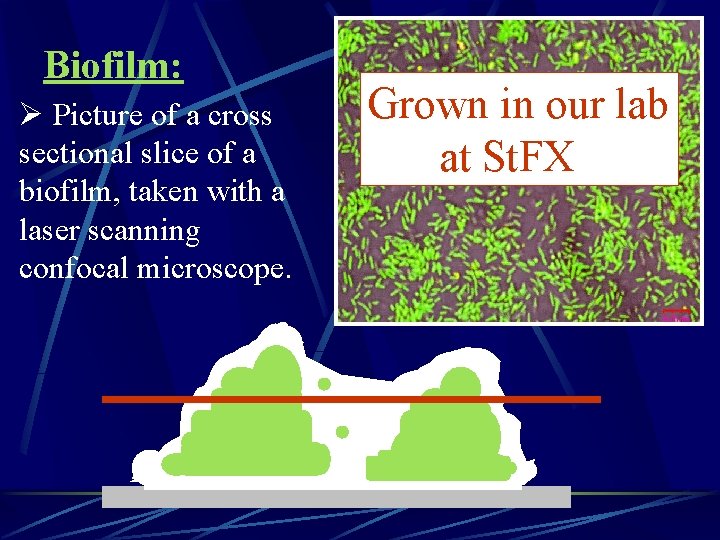
Biofilm: Picture of a cross sectional slice of a biofilm, taken with a laser scanning confocal microscope. Grown in our lab at St. FX
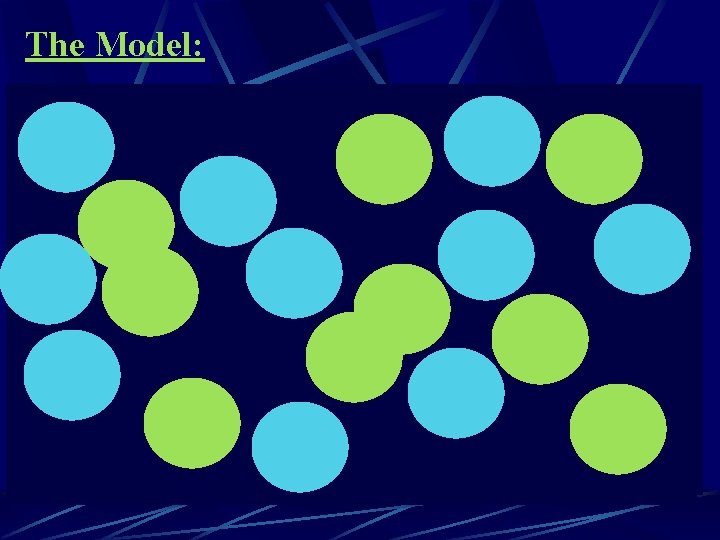
The Model:
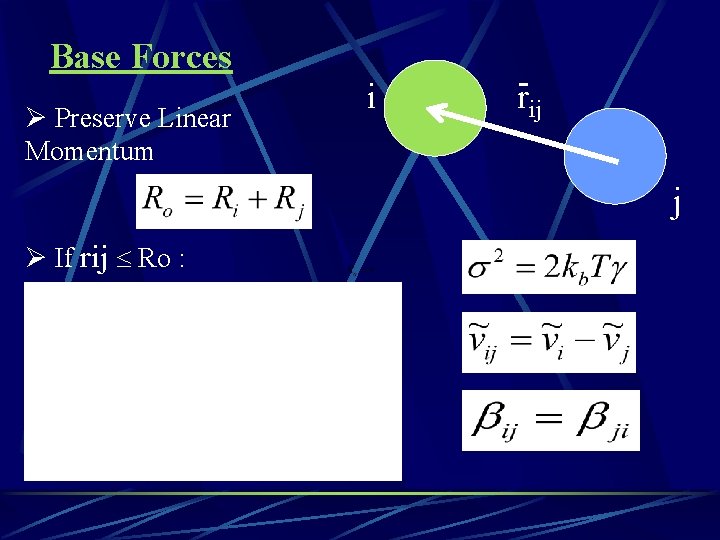
Base Forces Preserve Linear Momentum i r-ij j If rij Ro :
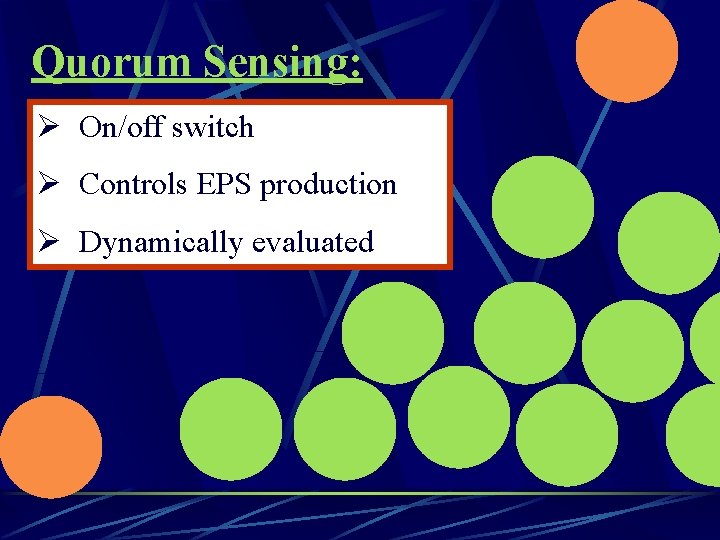
Quorum Sensing: On/off switch Controls EPS production Dynamically evaluated
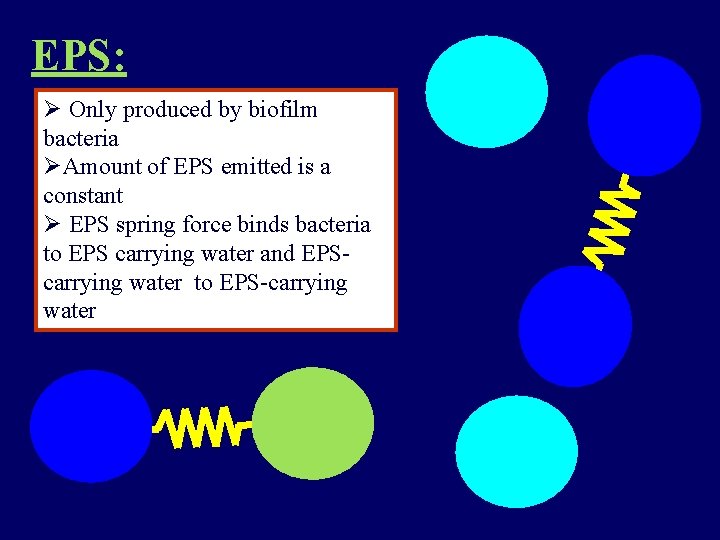
EPS: Only produced by biofilm bacteria Amount of EPS emitted is a constant EPS spring force binds bacteria to EPS carrying water and EPScarrying water to EPS-carrying water
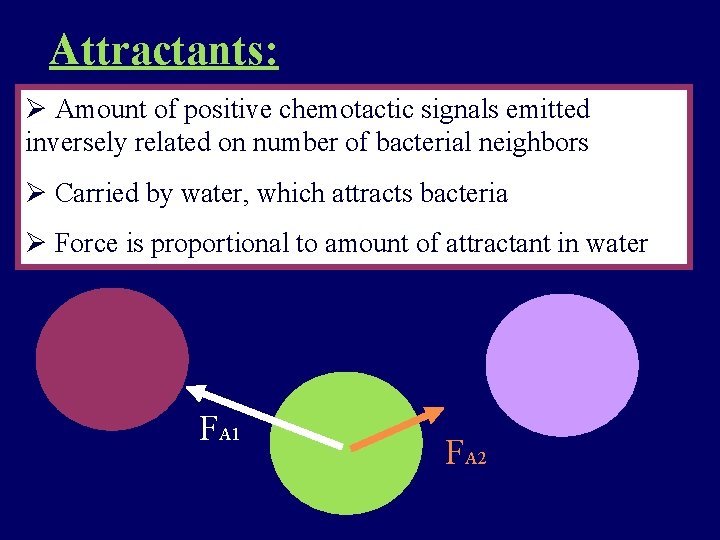
Attractants: Amount of positive chemotactic signals emitted inversely related on number of bacterial neighbors Carried by water, which attracts bacteria Force is proportional to amount of attractant in water FA 1 FA 2
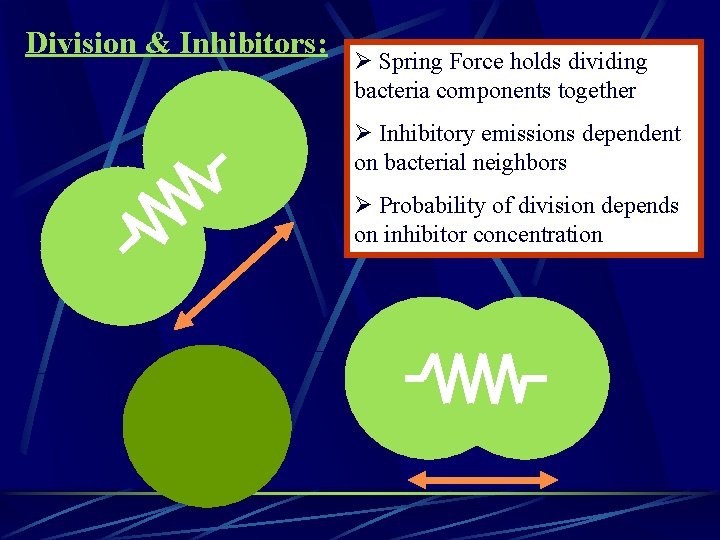
Division & Inhibitors: Spring Force holds dividing bacteria components together Inhibitory emissions dependent on bacterial neighbors Probability of division depends on inhibitor concentration
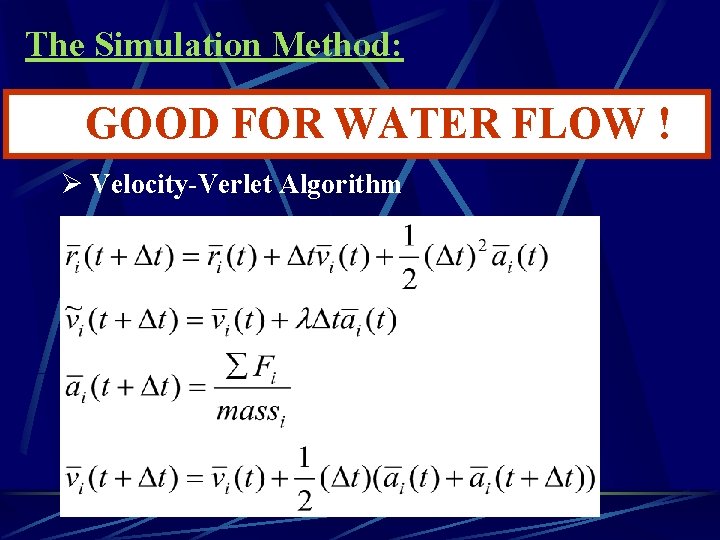
The Simulation Method: Molecular Dynamics, specifically Dissipative Particle GOOD Dynamics (DPD) FOR WATER FLOW ! Velocity-Verlet Algorithm
The Simulation: 1000 water spheres and 1 free bacterium World is initially a 10 x 10 micron box with periodic boundary conditions System is initialized with zero linear momentum
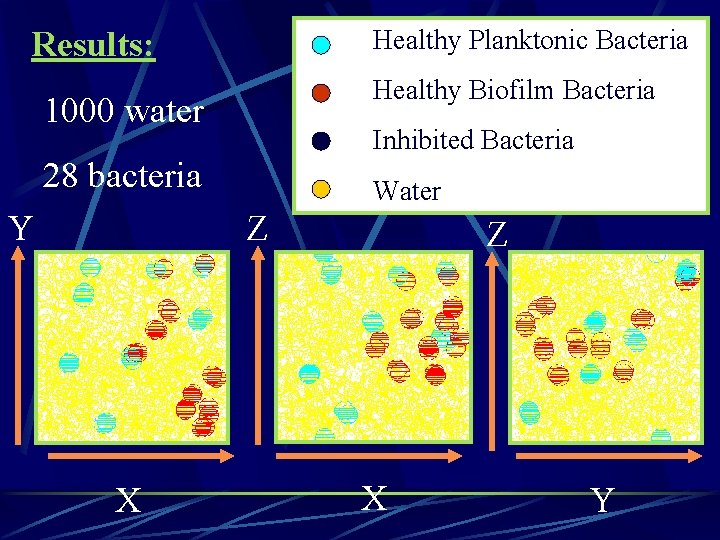
Healthy Planktonic Bacteria Results: Healthy Biofilm Bacteria 1000 water Inhibited Bacteria 28 bacteria Y Water Z X Y
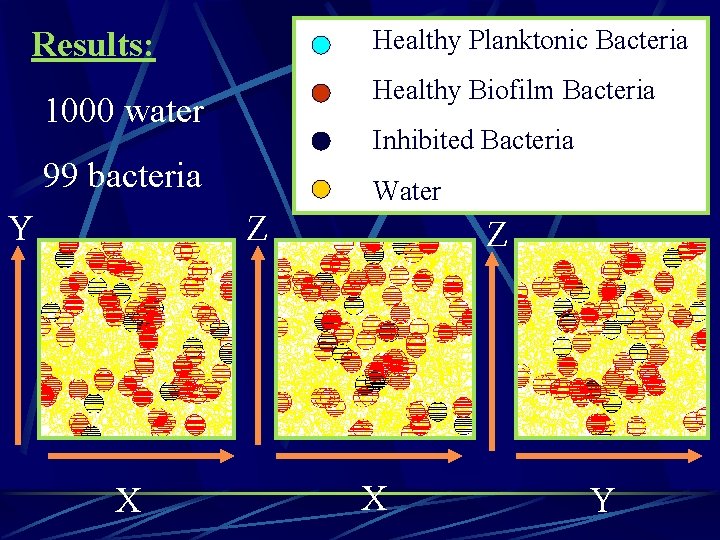
Healthy Planktonic Bacteria Results: Healthy Biofilm Bacteria 1000 water Inhibited Bacteria 99 bacteria Y Water Z X Y

COMING SOON: SURFACES!
Acknowledgements: David Pink Bonnie Quinn Laura Filion Ryan Mac. Dougall NSERC
- Slides: 16