
BACTERIAL ADAPTATIONS AND THEIR APPLICATION IN GENETIC ENGINEERING

BACTERIAL ADAPTATIONS AND THEIR APPLICATION IN GENETIC ENGINEERING
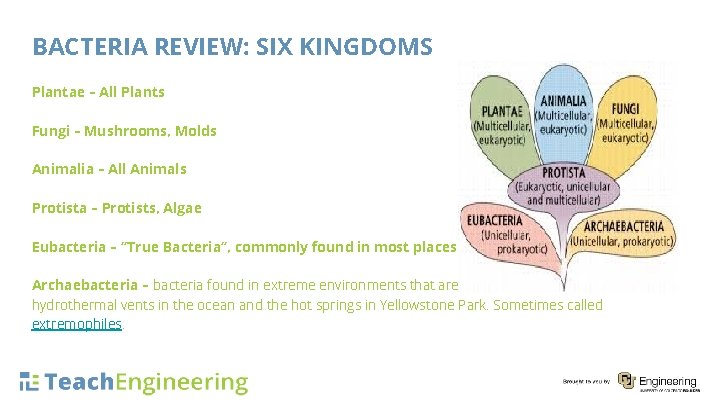
BACTERIA REVIEW: SIX KINGDOMS Plantae – All Plants Fungi – Mushrooms, Molds Photos should be a square like this. Animalia – All Animals Protista – Protists, Algae Eubacteria – “True Bacteria”, commonly found in most places Archaebacteria – bacteria found in extreme environments that are deadly to most others, like the hydrothermal vents in the ocean and the hot springs in Yellowstone Park. Sometimes called extremophiles.
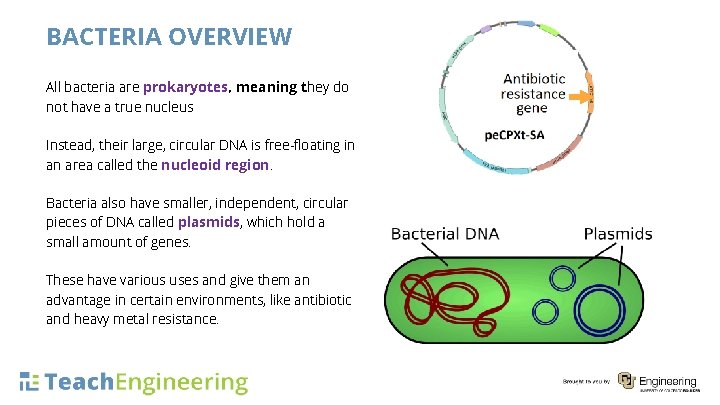
BACTERIA OVERVIEW All bacteria are prokaryotes, meaning they do not have a true nucleus Instead, their large, circular DNA is free-floating in an area called the nucleoid region. Bacteria also have smaller, independent, circular pieces of DNA called plasmids, which hold a small amount of genes. These have various uses and give them an advantage in certain environments, like antibiotic and heavy metal resistance. Photos should be a square like this.

RESPIRATION REVIEW: CELLULAR RESPIRATION Most organisms require oxygen to survive, and go through a process known as cellular respiration Occurs in all organisms Also known as aerobic respiration Organisms use oxygen to breaks down glucose and create energy molecules (ATP -adenosine triphosphate) then creates carbon dioxide and water as a waste
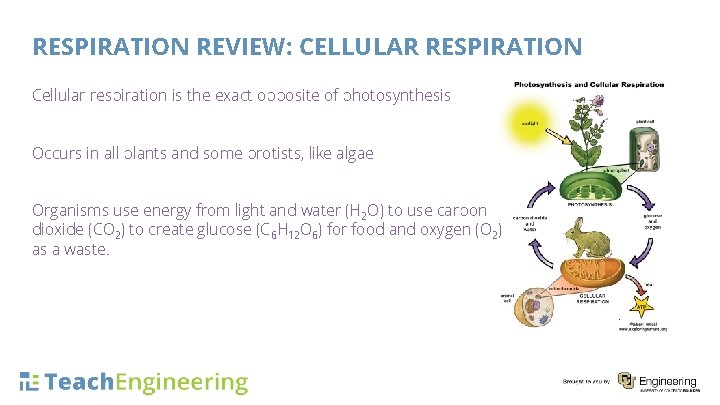
RESPIRATION REVIEW: CELLULAR RESPIRATION Cellular respiration is the exact opposite of photosynthesis Occurs in all plants and some protists, like algae Organisms use energy from light and water (H 2 O) to use carbon dioxide (CO 2) to create glucose (C 6 H 12 O 6) for food and oxygen (O 2) as a waste.
AEROBIC VS. ANAEROBIC Aerobic Anaerobic Aero - means Occurs when an organism uses oxygen to respirate (breathe). Photos should be“air” a square like this. Organisms can respirate even when there is no oxygen present in their environment. Produces much less energy than aerobic respiration and is much more limiting. To review, watch this video discussing aerobic vs anaerobic respiration. An - means “without”
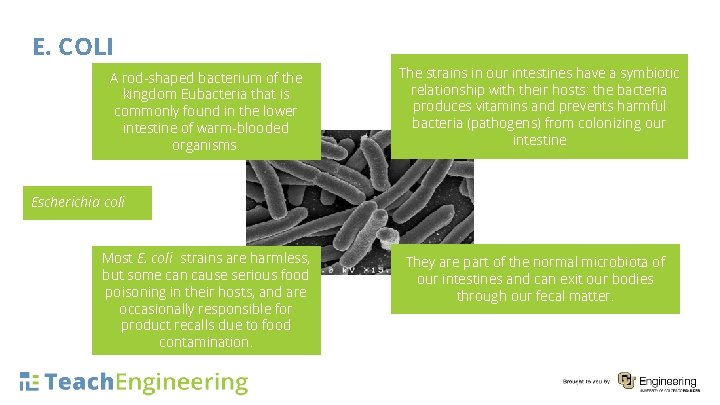
E. COLI A rod-shaped bacterium of the kingdom Eubacteria that is commonly found in the lower intestine of warm-blooded organisms. The strains in our intestines have a symbiotic relationship with their hosts: the bacteria produces vitamins and prevents harmful bacteria (pathogens) fromshould colonizing Photos be aour intestine square like this. Escherichia coli Most E. coli strains are harmless, but some can cause serious food poisoning in their hosts, and are occasionally responsible for product recalls due to food contamination. They are part of the normal microbiota of our intestines and can exit our bodies through our fecal matter.

E. COLI E. coli can survive in both oxygen and in environments lacking oxygen. It is an important species in the fields of biotechnology and microbiology It is the most widely studied prokaryotic model organism Under favorable conditions, it takes up to 20 minutes to reproduce. It can be grown and cultured easily and inexpensively It has been intensively researched and used in lab settings for over 60 years. E. coli has been used as the host organism for the majority of work with recombinant DNA.
- Slides: 8