
Bacteria What is Bacteria Prokaryotes no nucleus Eubacteria
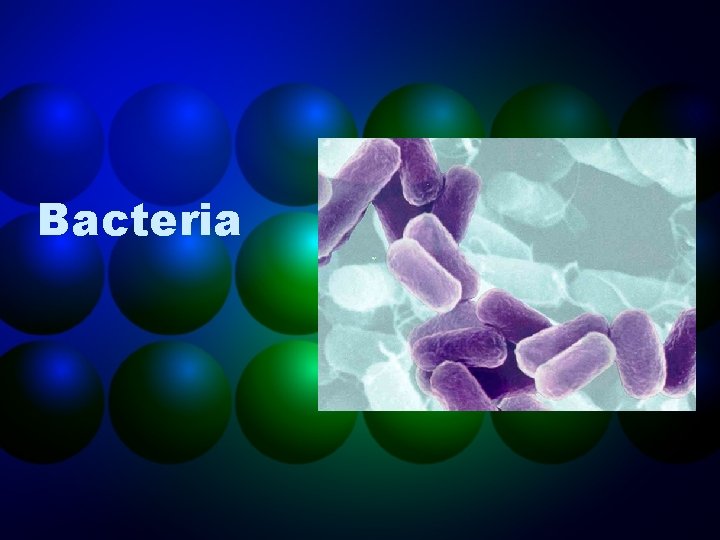
Bacteria
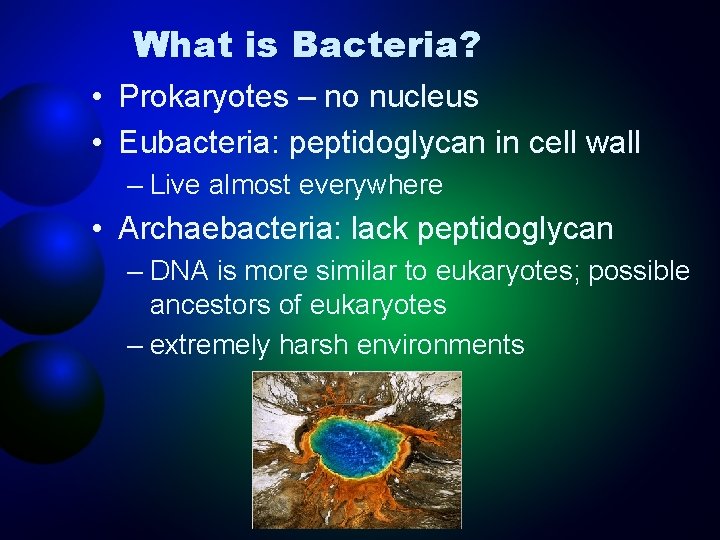
What is Bacteria? • Prokaryotes – no nucleus • Eubacteria: peptidoglycan in cell wall – Live almost everywhere • Archaebacteria: lack peptidoglycan – DNA is more similar to eukaryotes; possible ancestors of eukaryotes – extremely harsh environments
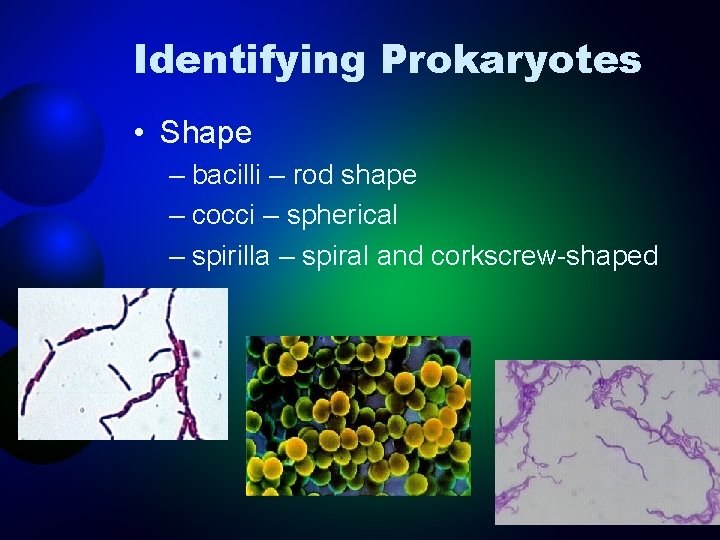
Identifying Prokaryotes • Shape – bacilli – rod shape – cocci – spherical – spirilla – spiral and corkscrew-shaped
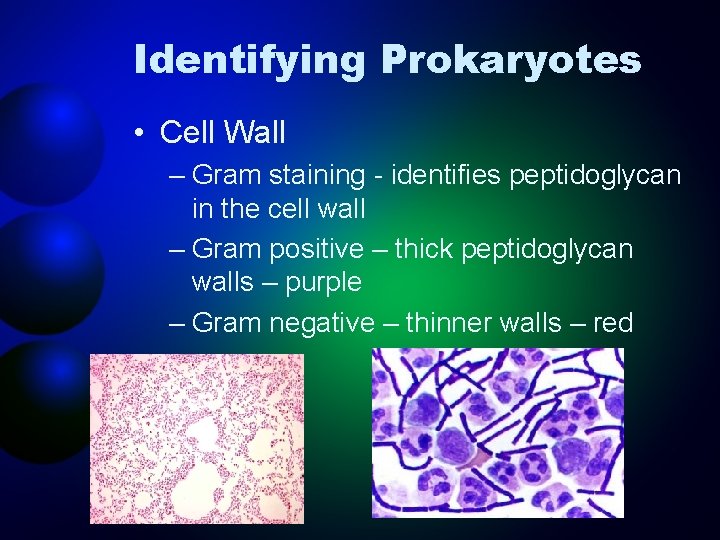
Identifying Prokaryotes • Cell Wall – Gram staining - identifies peptidoglycan in the cell wall – Gram positive – thick peptidoglycan walls – purple – Gram negative – thinner walls – red
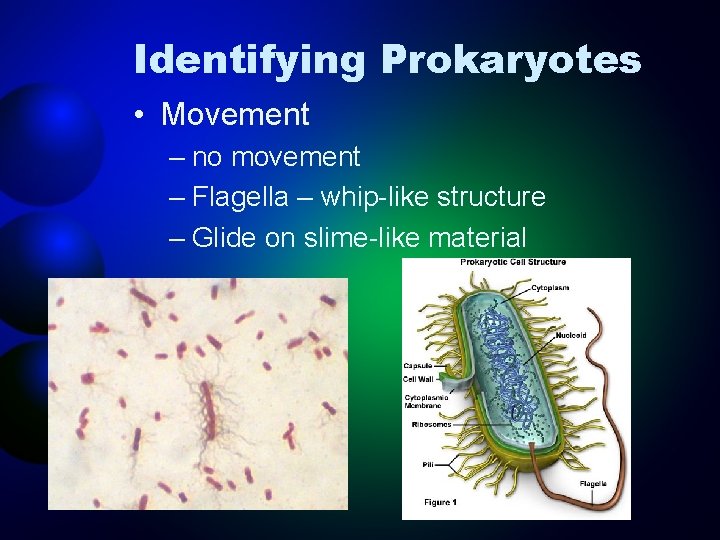
Identifying Prokaryotes • Movement – no movement – Flagella – whip-like structure – Glide on slime-like material
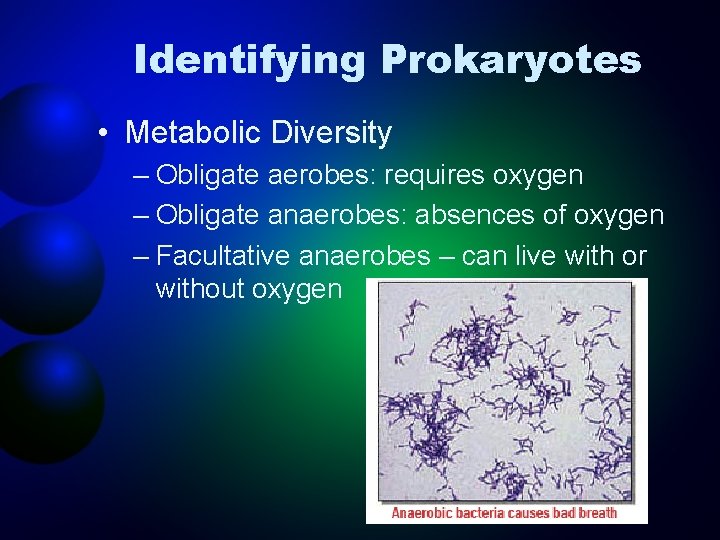
Identifying Prokaryotes • Metabolic Diversity – Obligate aerobes: requires oxygen – Obligate anaerobes: absences of oxygen – Facultative anaerobes – can live with or without oxygen
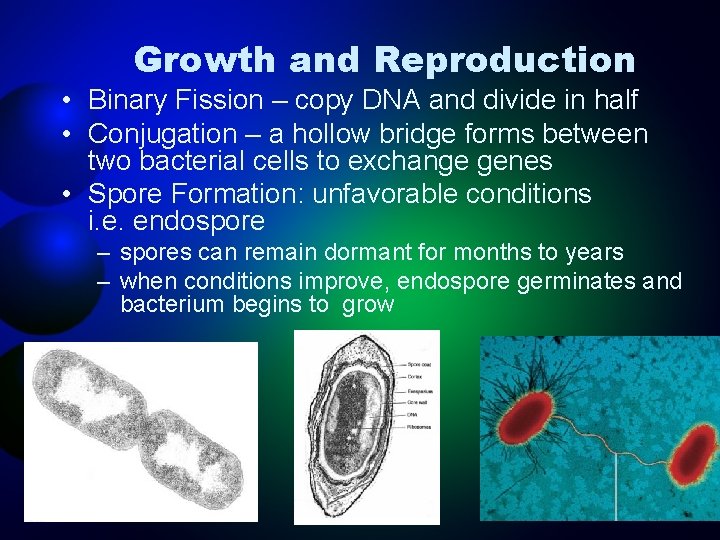
Growth and Reproduction • Binary Fission – copy DNA and divide in half • Conjugation – a hollow bridge forms between two bacterial cells to exchange genes • Spore Formation: unfavorable conditions i. e. endospore – spores can remain dormant for months to years – when conditions improve, endospore germinates and bacterium begins to grow
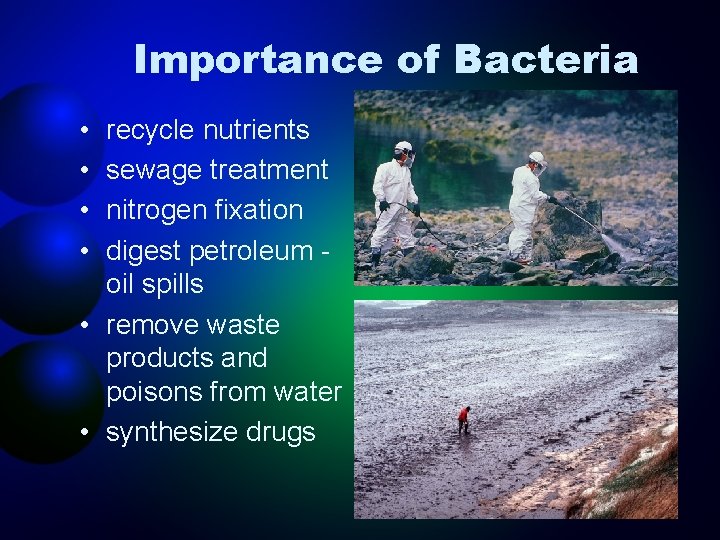
Importance of Bacteria • • recycle nutrients sewage treatment nitrogen fixation digest petroleum oil spills • remove waste products and poisons from water • synthesize drugs
- Slides: 8