
Bacteria Viruses Fungi and Protists Biology Chapters 19
Bacteria, Viruses, Fungi, and Protists Biology Chapters 19 -21
Crash Course: Bacteria and Protists (12 min. ) • http: //www. youtube. com/watch? v=v. AR 47 -g 6 tl. A
Bacteria • Single celled prokaryotic organisms • Prokaryote = no nucleus • Most widespread and numerous organisms on Earth • Split into Archaebacteria and Eubacteria • Formerly these were combined in one kingdom called Monera
Reproduction in Bacteria • Can grow and divide at astonishing rates. • Some can divide every 20 minutes • Fortunately not all conditions are favorable and this does not happen • Reproduce by binary fission, conjugation, and endospores
Bacteria in Nature • Bacteria help to break down the nutrients in dead trees and other dead material • Bacteria are recyclers • Bacteria can fix nitrogen – turn it into ammonia – a form used by plants • Cyanobacteria – photosynthetic bacteria that live in water and help form base of food chain and produce oxygen
Other “Good” Bacteria • Used to make certain antibiotics that fight other bacteria • Probiotics – live in intestines and help produce vitamins, absorb nutrients, and strengthen immune system • Odors and flavors to form pickles, sauerkraut, yogurt, and swiss cheese.
Bacteria and Disease • Only a few bacteria can cause disease • They damage tissue of the infected organisms while others release toxins (poisons) that harm the body. • Can cause Lyme disease, botulism, tetanus, strep throat, cavities, etc. • Antibiotics – used to kill the bacteria – stops growth and reproduction • Sterilization – destroys bacteria by heat or chemical action
Cont. • Pathogen – a disease causing agent • Disinfectants – chemical solutions which kill bacteria • Bacteria can cause food to spoil
Archaebacteria • Some do not even consider bacteria so they call them Archae • Live in harsh environments (ex. Hot sulfur springs, volcanic deep sea vents, the Great Salt Lake, intestines of mammals, etc. )
Archaebacteria and Energy • Variety of techniques for getting energy: – Chemosynthetic – Photosynthetic – Heterotrophic • Most are anaerobic since they often live in low oxygen conditions
Eubacteria • Group that fits the guidelines of “typical bacteria. ” • Classified based on shape and reaction to Gram staining. • Many have one or more flagella
Feeding Styles • Photosynthetic • A few are chemosynthetic • Heterotrophic (including some saprophytic)
Bacteria Shapes • Coccus – round • Bacillus – rod • Spirillum – spiral
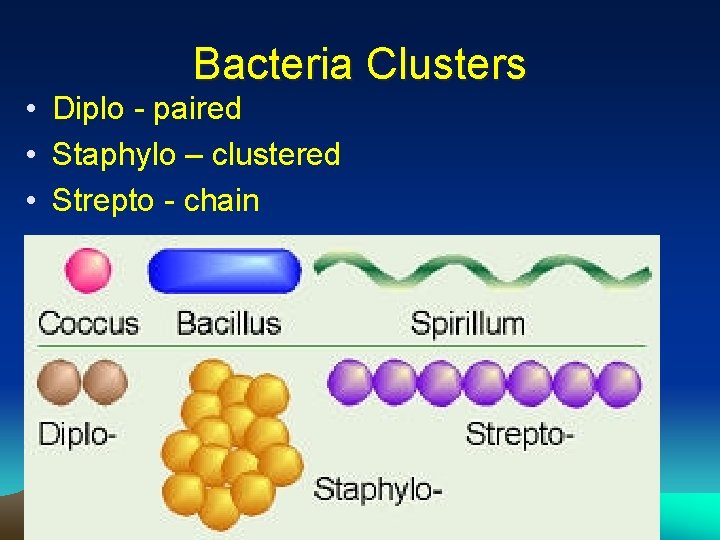
Bacteria Clusters • Diplo - paired • Staphylo – clustered • Strepto - chain

Streptococcus mutans

Staphylococcus
Mr. Anderson Viruses (8 min) • https: //www. youtube. com/results? search_ query=viruses
Viruses • Virus – tiny, nonliving particle. • They do not carry on respiration or grow or move • They reproduce inside a living cell • Consist of inner core of DNA surrounded by one or two protein coats. • Viruses have different shapes
Viral Infection • Host Cell – the cell in which a virus reproduces • Bacteriophage – a virus infects bacteria • Lytic infection – when a virus embeds its DNA into the DNA of the host cell and it is replicated along with the host cell’s DNA • Lysogenic infection – virus does not lyse the cell right away (rupture)
Viruses and Disease • Cause human diseases, such as polio, mumps, influenza, yellow fever, rabies, and common cold • Oncogenic virus – cancer in animals • Retrovirus – contain RNA and genetic information – HIV • Prions – protein infectious particles – contain only protein – mad cow disease
Are Viruses Alive? • Considered nonliving – no independent reproduction • Not composed of cells
Protists • A protist is any organisms that is not a plant, an animal, a fungus, or a prokaryote. • Protists are eukaryotes that are not members of the kingdoms Plantae, Animalia, or Fungi. • A diverse group of mainly single celled eukaryotes
Classification of Protists • One way to classify protists is according to the way they obtain nutrition • Some protists get food by photosynthesis • Some protists get food by external digestion
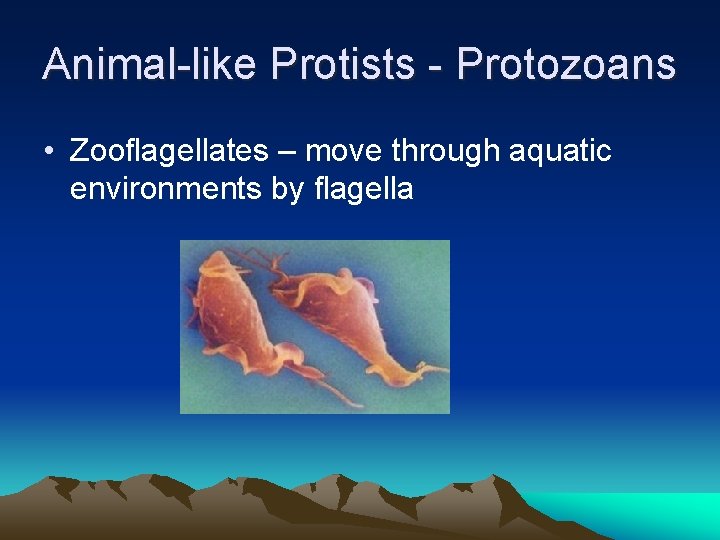
Animal-like Protists - Protozoans • Zooflagellates – move through aquatic environments by flagella
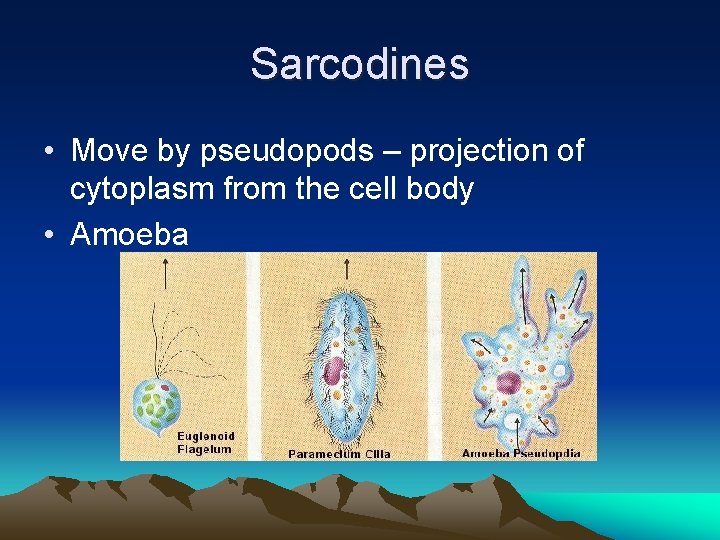
Sarcodines • Move by pseudopods – projection of cytoplasm from the cell body • Amoeba
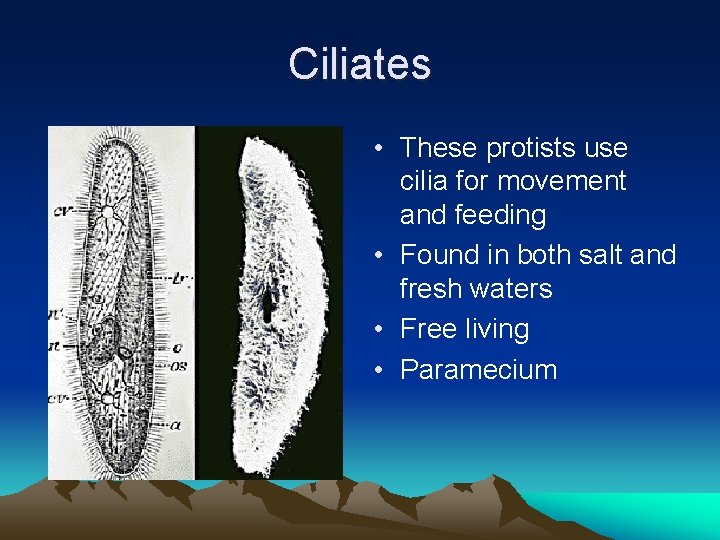
Ciliates • These protists use cilia for movement and feeding • Found in both salt and fresh waters • Free living • Paramecium
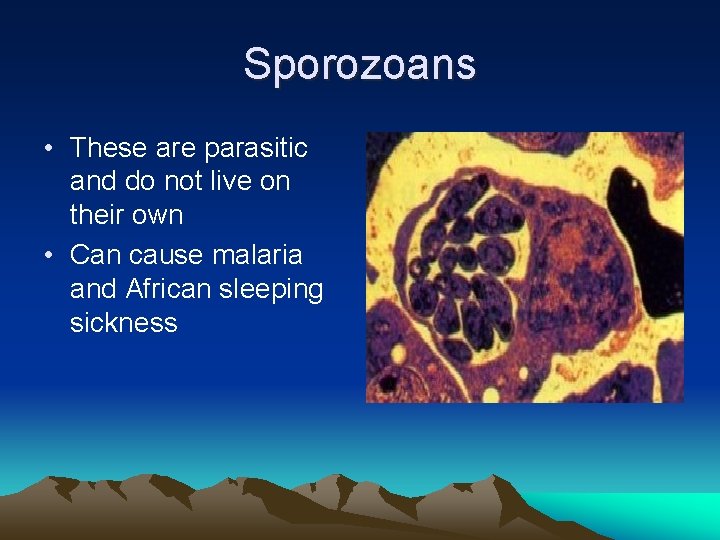
Sporozoans • These are parasitic and do not live on their own • Can cause malaria and African sleeping sickness
Plant-like Protists • Many protists contain the green pigment chlorophyll and carry out photosynthesis • Motile • These are called algae
Types of Algae • Euglenophytes – 2 flagella • Dinoflagellates – are luminescent • Chrysophytes – contain bright yellow pigments • Diatoms – most abundant – contain silicon – found in glass • Red Algae • Brown Algae • Green Algae
Human Uses of Algae • • Produce oxygen Food source for sea life Rich in vit C and iron Used to treat stomach ulcers, high blood pressure, and arthritis • Used in sushi • Deodorants, paints, waxes, plastics, ice cream
Fungus-like Protists • Slime molds • Water molds • Caused The Great Potato Famine
Crash Course Fungi: (12 min. ) • https: //www. youtube. com/watch? v=m 4 DU Zhn. No 4 s
Chapter 21 The Kingdom Fungi • Fungi are eukaryotic heterotrophs that have a cell wall • Cell walls are made of chitin • Reproduce asexually and sexually
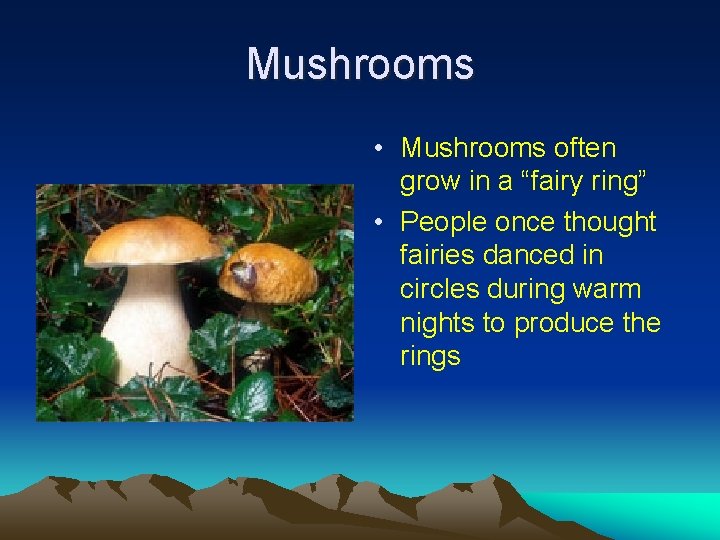
Mushrooms • Mushrooms often grow in a “fairy ring” • People once thought fairies danced in circles during warm nights to produce the rings
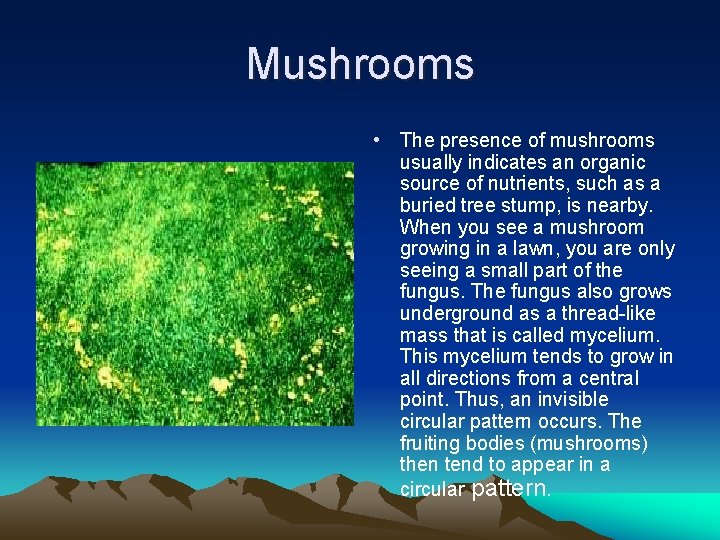
Mushrooms • The presence of mushrooms usually indicates an organic source of nutrients, such as a buried tree stump, is nearby. When you see a mushroom growing in a lawn, you are only seeing a small part of the fungus. The fungus also grows underground as a thread-like mass that is called mycelium. This mycelium tends to grow in all directions from a central point. Thus, an invisible circular pattern occurs. The fruiting bodies (mushrooms) then tend to appear in a circular pattern.
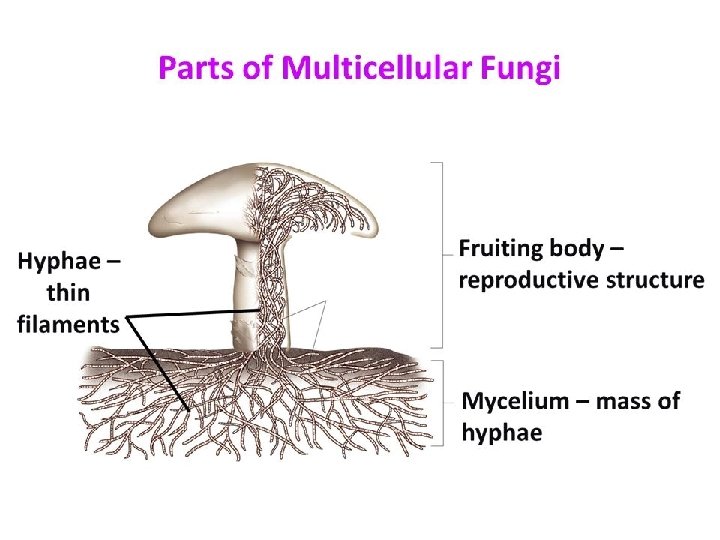
Fungal Structures
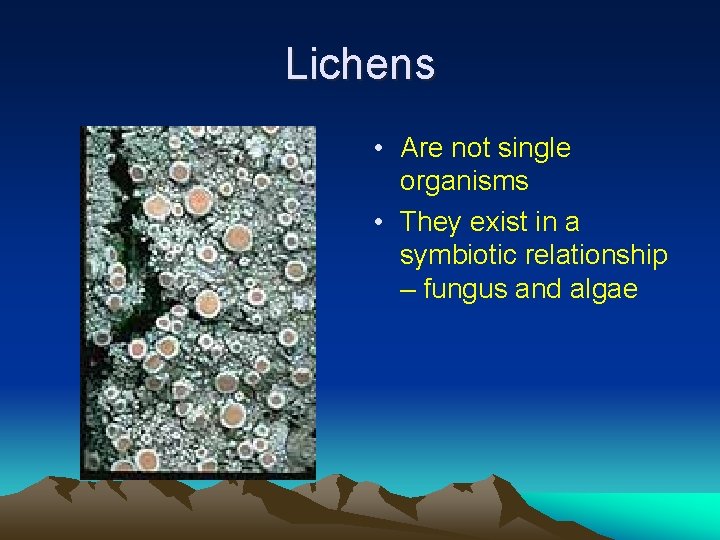
Lichens • Are not single organisms • They exist in a symbiotic relationship – fungus and algae
Lichens cont. • Lichens are sensitive to pollution in the air and can tell us if the air is clear and clean. • Drug companies make antibiotics from lichen substances. • Some lichens make nitrogen in the air usable to plants. • Lichens are homes for spiders, mites, lice and other insects. • Lichens can be used as a natural dye to color wool.
Fungus Videos Spores 2: 35 https: //www. youtube. com/watch? v=v. Z 5 Me 4 N_XXE High Speed Fungus Growth 1: 33 https: //www. youtube. com/watch? v=pu. Dk. LFc. CZy. I Cordyceps 3: 03 https: //www. youtube. com/watch? NR=1&v=Xu. Kj. BIBBAL 8&f eature=endscreen
- Slides: 39