
Bacteria Structure and Function 1 Prokaryote Eukaryote Evolution
Bacteria Structure and Function 1

Prokaryote & Eukaryote Evolution 2

Cellular Evolution • Current evidence indicates that eukaryotes evolved from prokaryotes between 1 and 1. 5 billion years ago • Two theories: 1. Infolding theory 2. Endosymbiotic theory 3
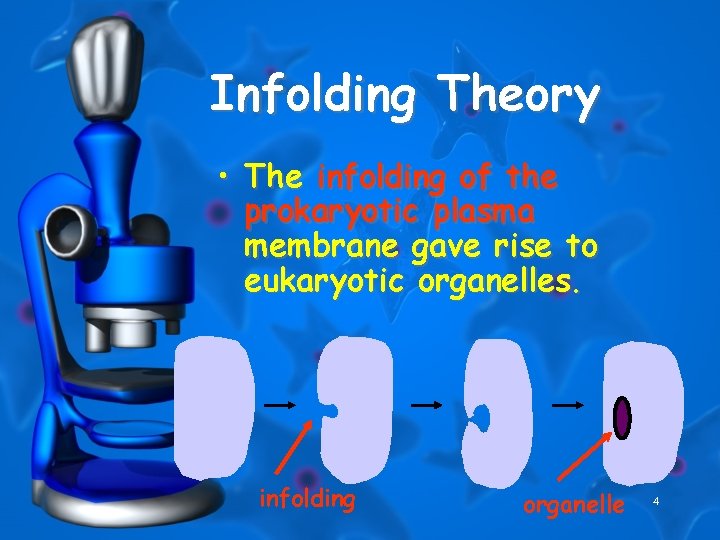
Infolding Theory • The infolding of the prokaryotic plasma membrane gave rise to eukaryotic organelles. infolding organelle 4

Endosymbiotic Theory • Endosymbiosis refers to one species living within another(the host) • Movement of smaller photosynthetic & heterotrophic prokaryotes into larger prokaryotic host cells chloroplast • Formed cell organelles mitochondria 5
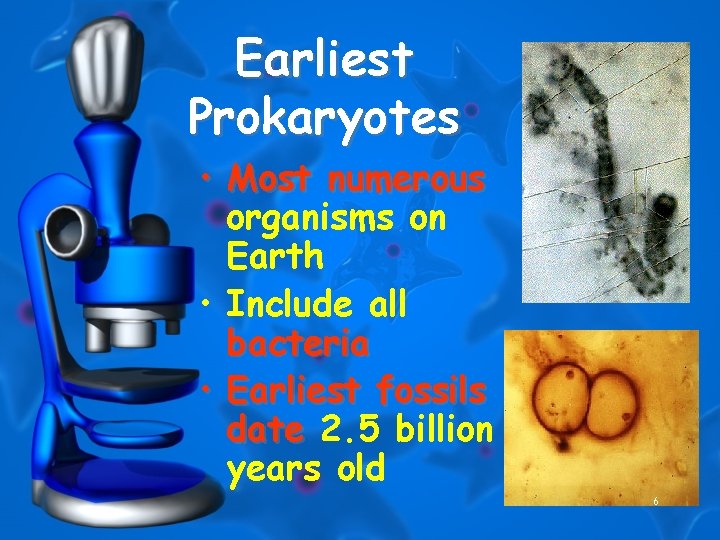
Earliest Prokaryotes • Most numerous organisms on Earth • Include all bacteria • Earliest fossils date 2. 5 billion years old 6
Classification of Life 7
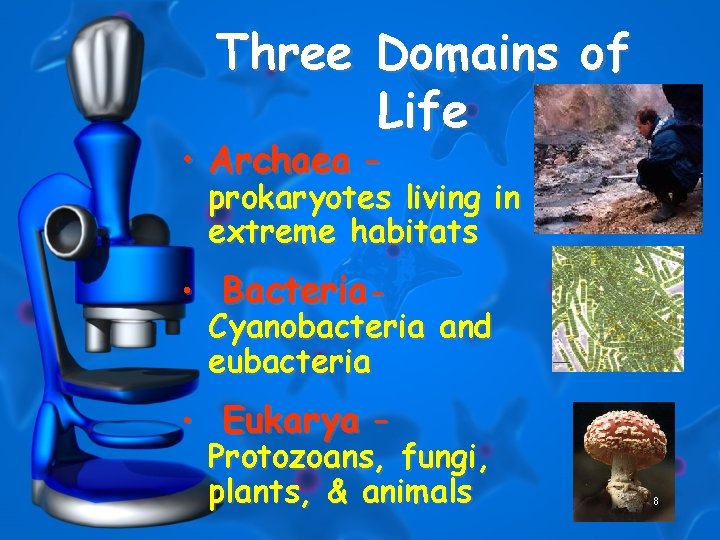
Three Domains of Life • Archaea – prokaryotes living in extreme habitats • Bacteria. Cyanobacteria and eubacteria • Eukarya – Protozoans, fungi, plants, & animals 8
Kingdoms of Bacteria Archaebacteria: ü Found in harsh environments ü Undersea volcanic vents, acidic hot springs, salty water 9
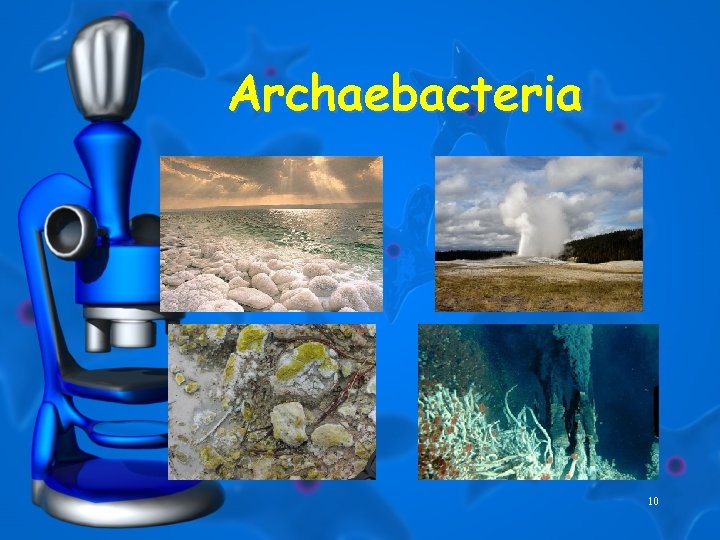
Archaebacteria 10
Kingdoms of Bacteria Eubacteria: ü Called the true bacteria ü Most bacteria are in this group ü Include photosynthetic Cyanobacteria 11
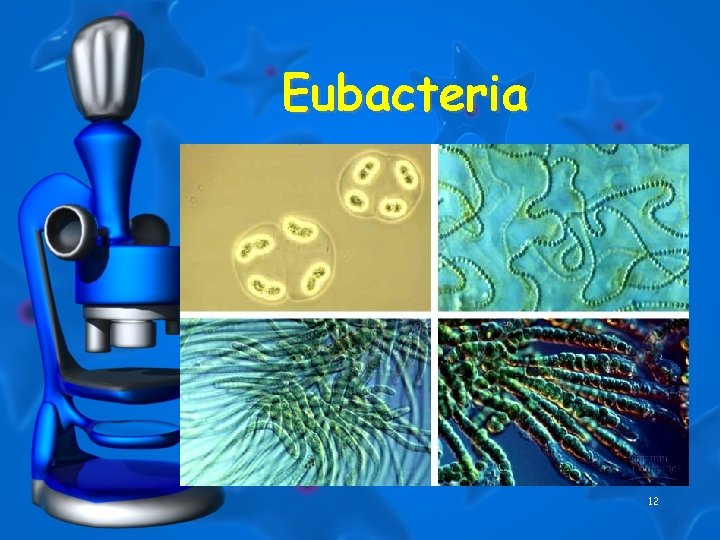
Eubacteria 12
Characteristics of Bacteria 13
Bacterial Structure • • Microscopic prokaryotes No nucleus or membranebound organelles Contain ribosomes Single, circular chromosome in nucleoid region 14
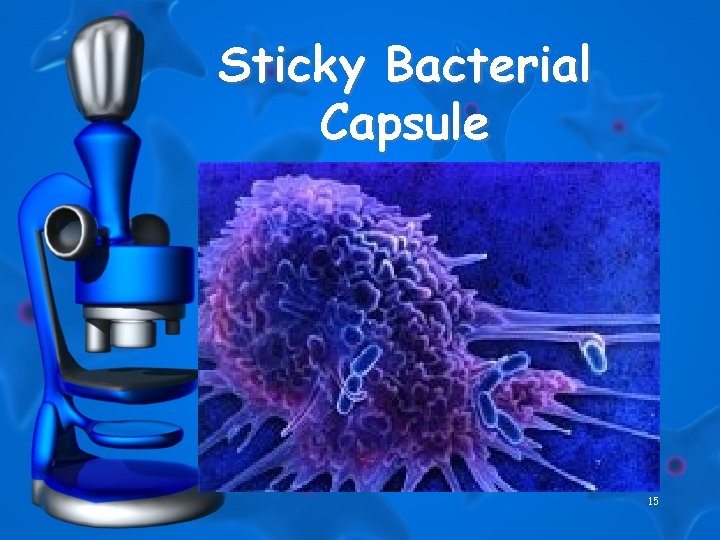
Sticky Bacterial Capsule 15
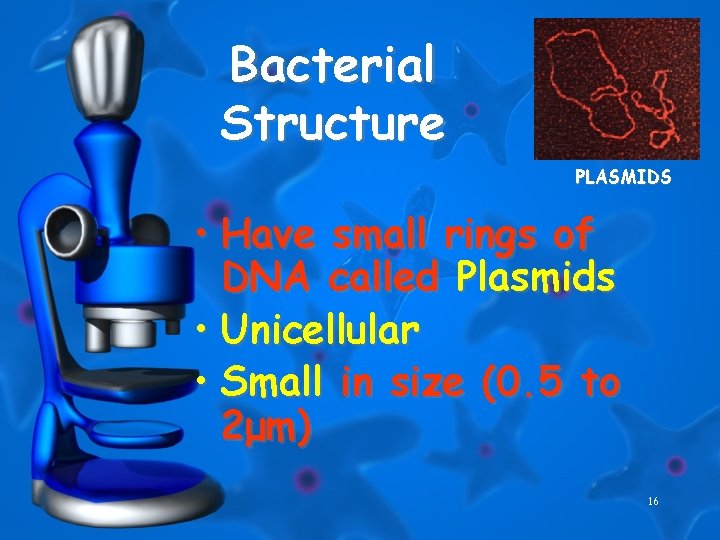
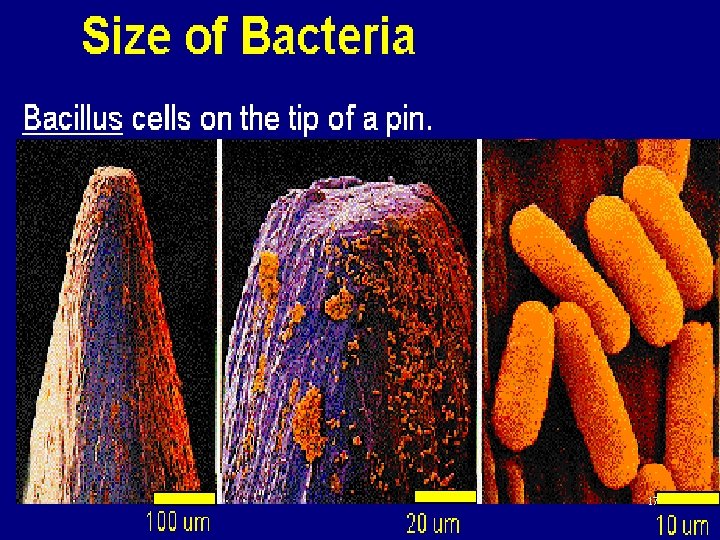
Bacterial Structure PLASMIDS • Have small rings of DNA called Plasmids • Unicellular • Small in size (0. 5 to 2μm) 16
17
Bacterial Structure • Most grow best at p. H of 6. 5 to 7. 0 • Many act as decomposers recycling nutrients • Some cause disease 18
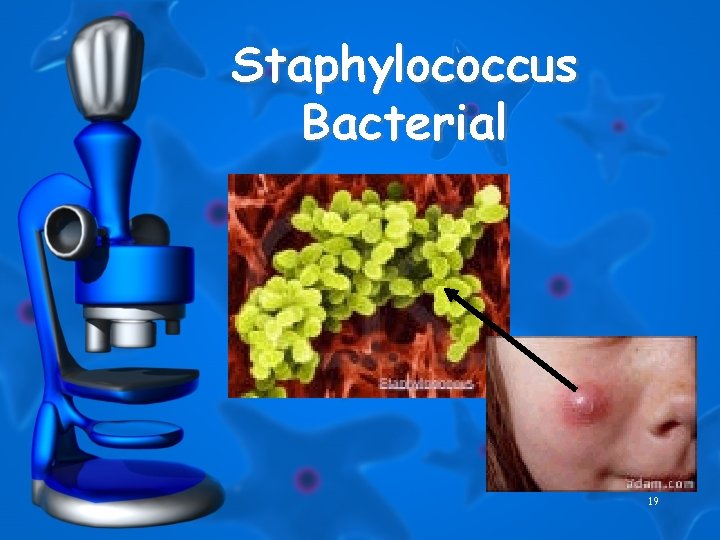
Staphylococcus Bacterial 19
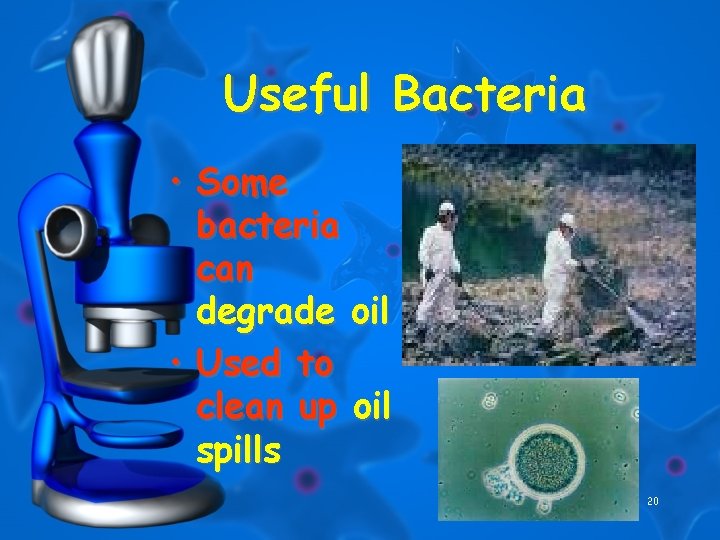
Useful Bacteria • Some bacteria can degrade oil • Used to clean up oil spills 20
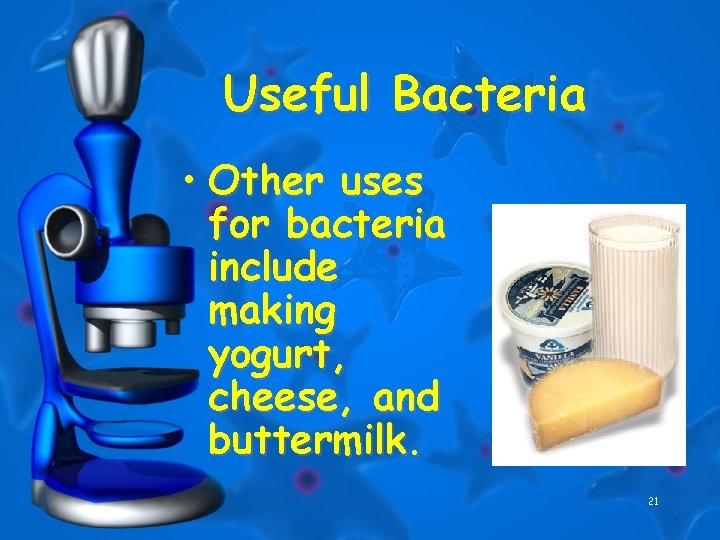
Useful Bacteria • Other uses for bacteria include making yogurt, cheese, and buttermilk. 21
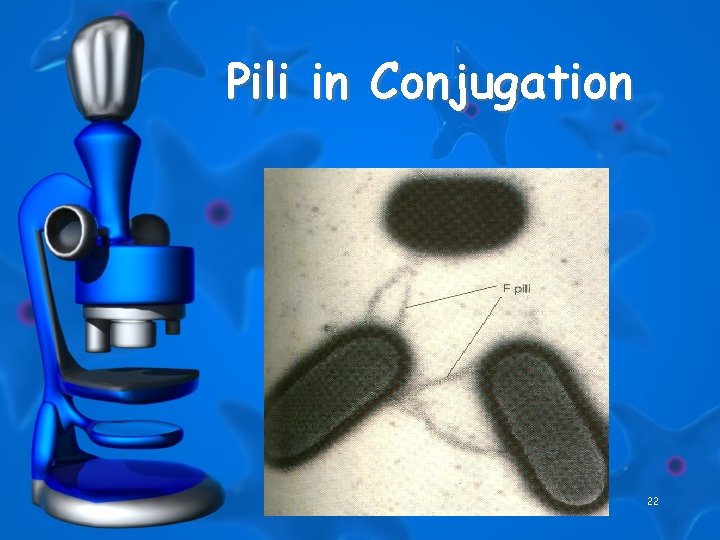
Pili in Conjugation 22
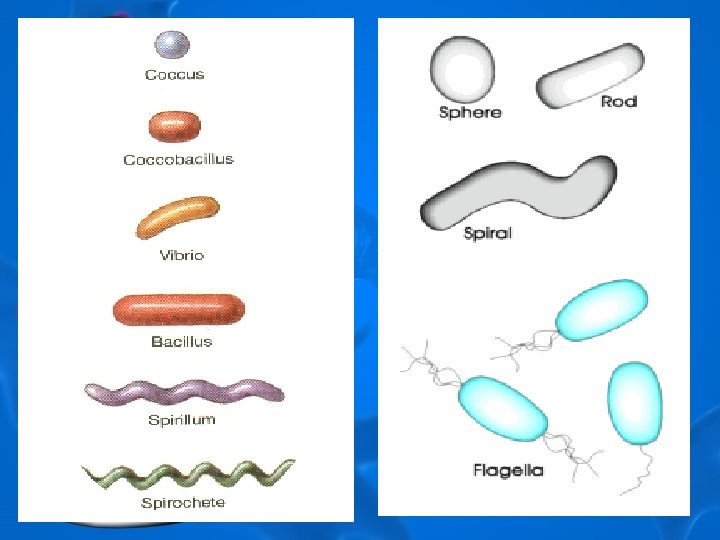
Bacterial Shapes 23
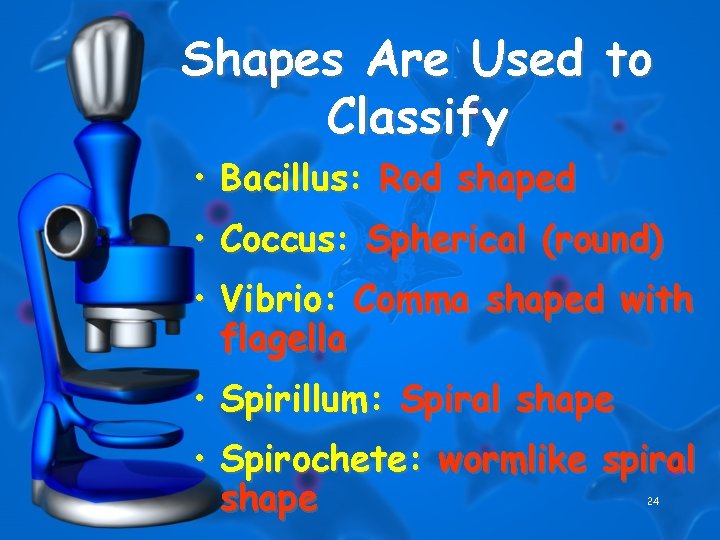
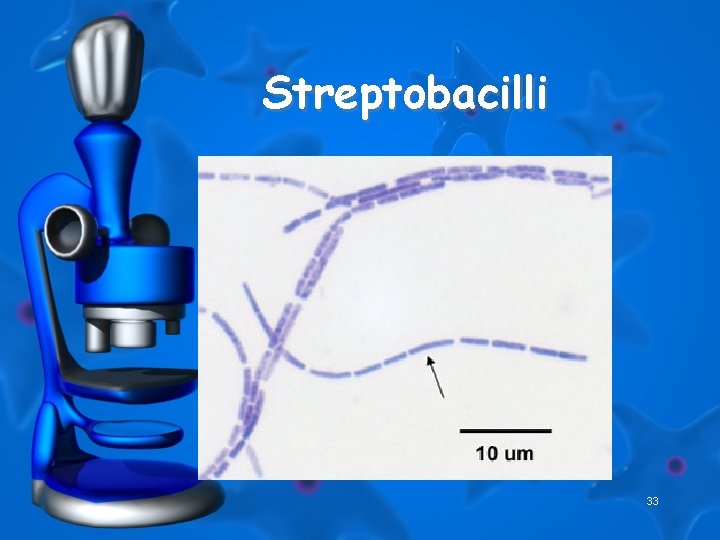
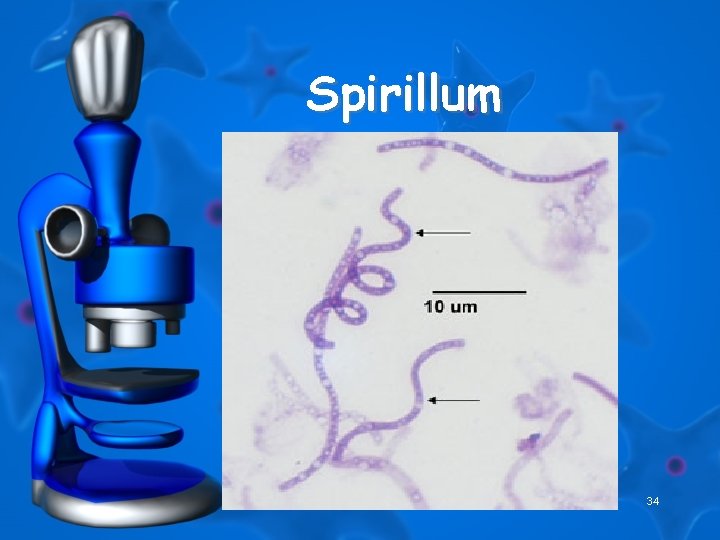
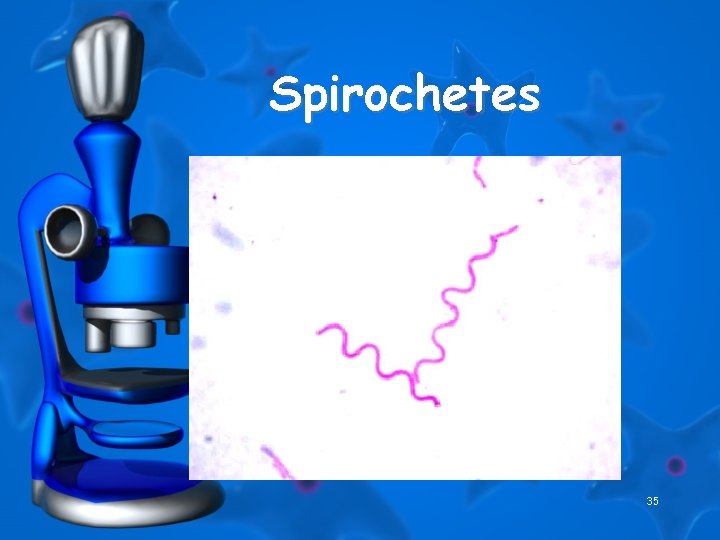
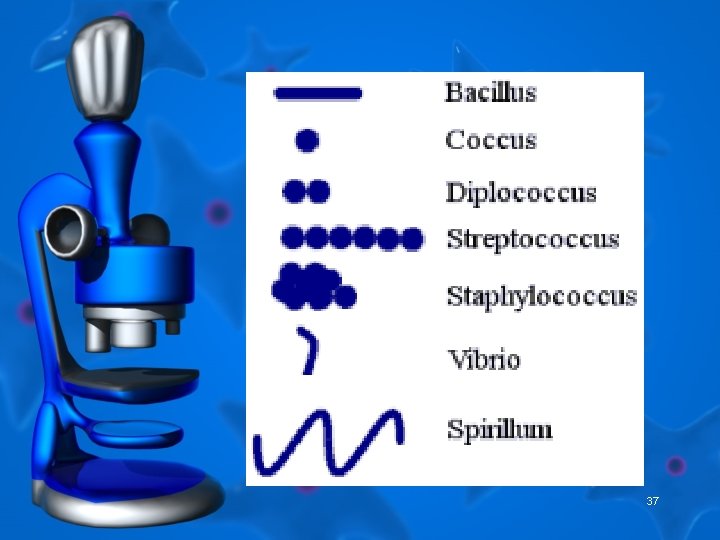
Shapes Are Used to Classify • Bacillus: Rod shaped • Coccus: Spherical (round) • Vibrio: Comma shaped with flagella • Spirillum: Spiral shape • Spirochete: wormlike spiral shape 24
25
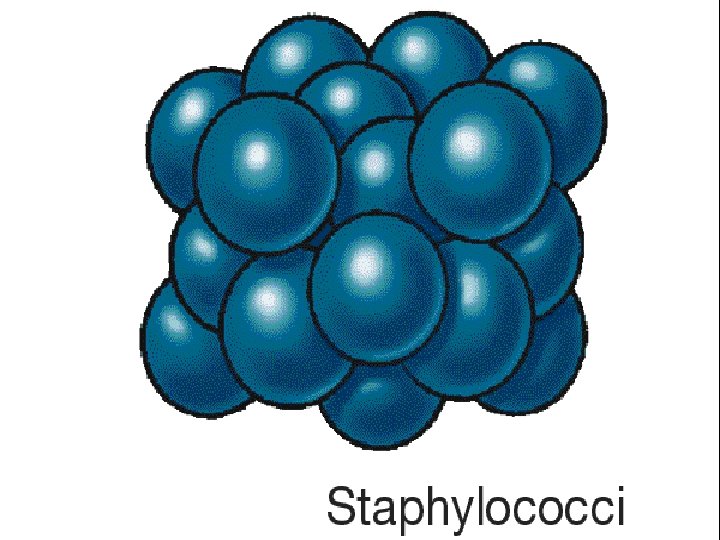
Grouping of Bacteria • Diplo- Groups of two • Strepto- chains • Staphylo- Grapelike clusters 26

27
28
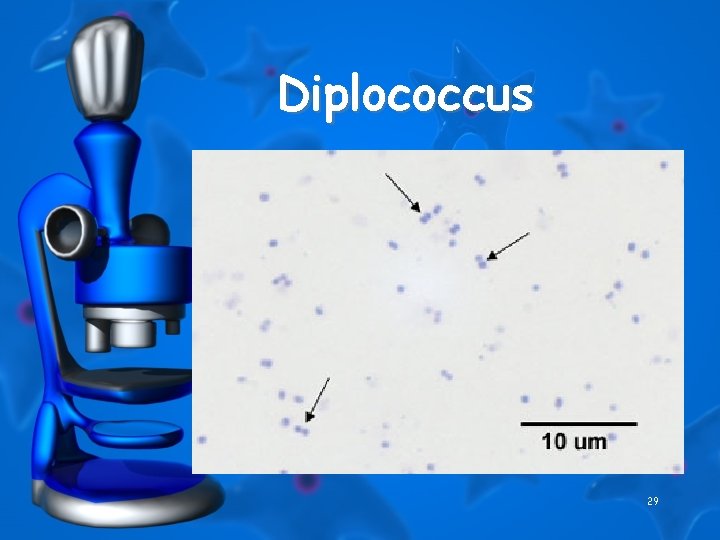
Diplococcus 29
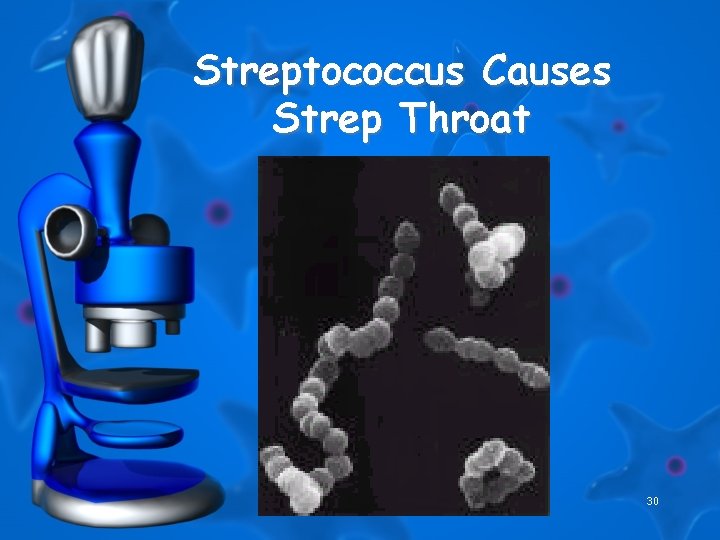
Streptococcus Causes Strep Throat 30
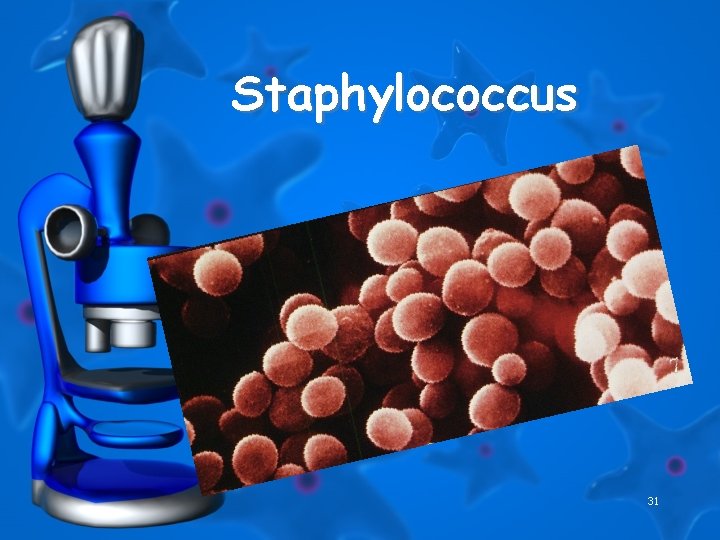
Staphylococcus 31
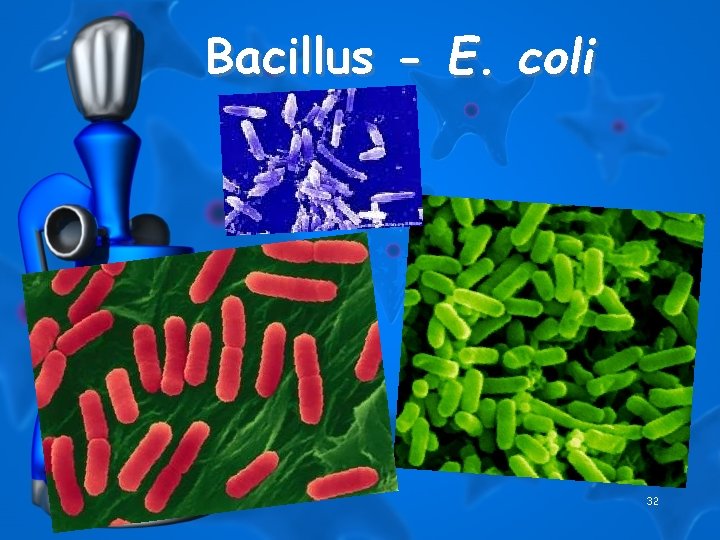
Bacillus - E. coli 32
Streptobacilli 33
Spirillum 34
Spirochetes 35
Leptospira 36
37
Bacterial Kingdoms 38
Archaebacteria • Lack peptidoglycan in cell walls • Have different lipids in their cell membrane • Different types of ribosomes • Very different gene sequences 39
Archaebacteria • Archaebacteria can live in extremely harsh environments • They do not require oxygen and can live in extremely salty environments as well as extremely hot environments • Called the Ancient bacteria 40
Archaebacteria • Subdivided into 3 groups: üMethanogens üThermoacidophiles üExtreme Halophiles 41
Methanogens • Live in anaerobic environments (no oxygen) • Get energy by changing H 2 & CO 2 into methane gas • Found in swamps, sewage treatment plants, digestive tracts of animals 42
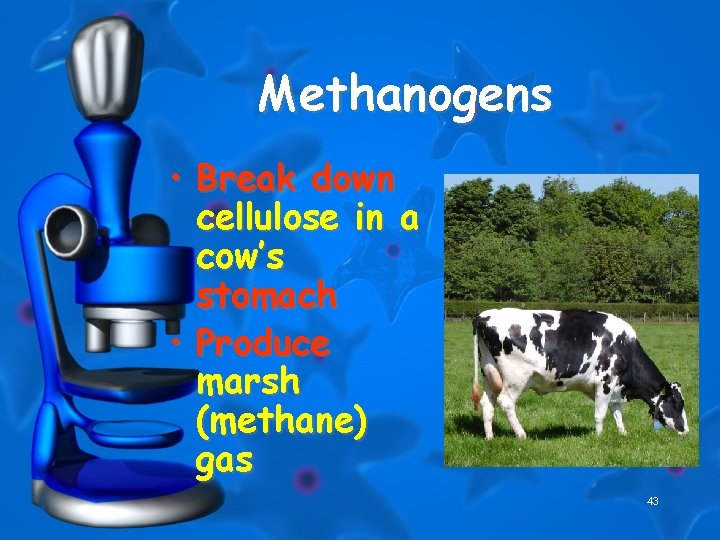
Methanogens • Break down cellulose in a cow’s stomach • Produce marsh (methane) gas 43
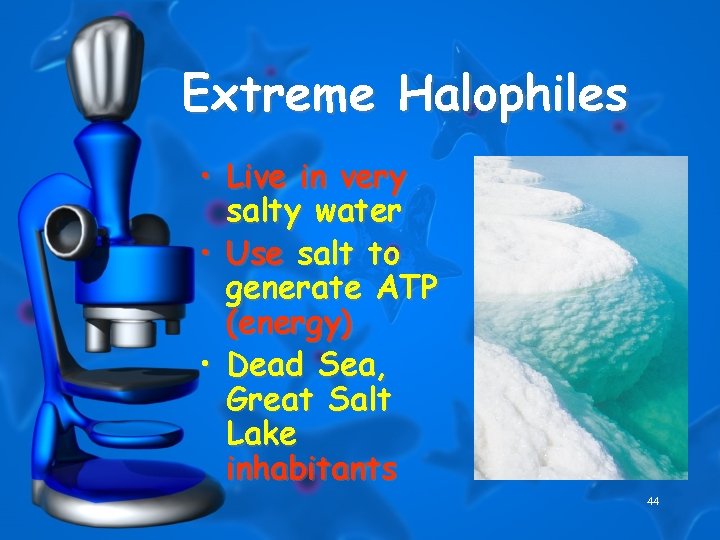
Extreme Halophiles • Live in very salty water • Use salt to generate ATP (energy) • Dead Sea, Great Salt Lake inhabitants 44
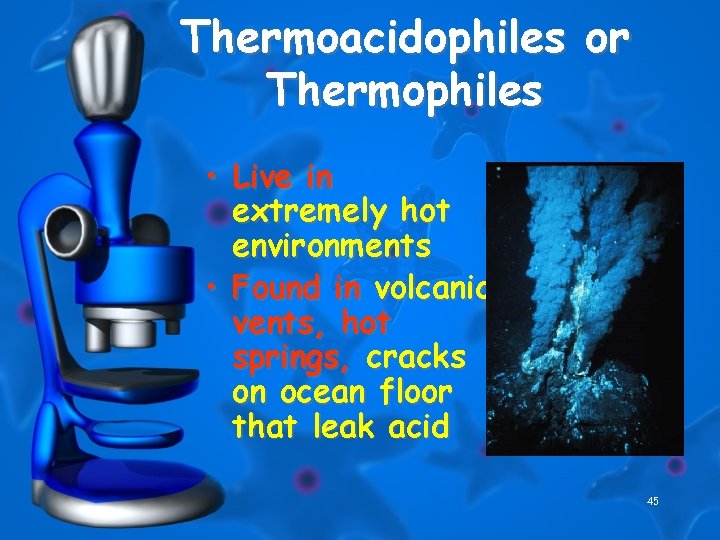
Thermoacidophiles or Thermophiles • Live in extremely hot environments • Found in volcanic vents, hot springs, cracks on ocean floor that leak acid 45
Kingdom Eubacteria True Bacteria 46
Characteristics • 3 basic shapes (coccus, bacillus, spirilla) • Most are heterotrophic (can’t make their own food) • May be aerobic or anaerobic • Identified by Gram staining 47
Gram Staining • Developed in 1884 by Hans Gram • Bacteria treated with purple Crystal Violet & red Safranin stains • Cell walls either stain purple or reddish pink 48
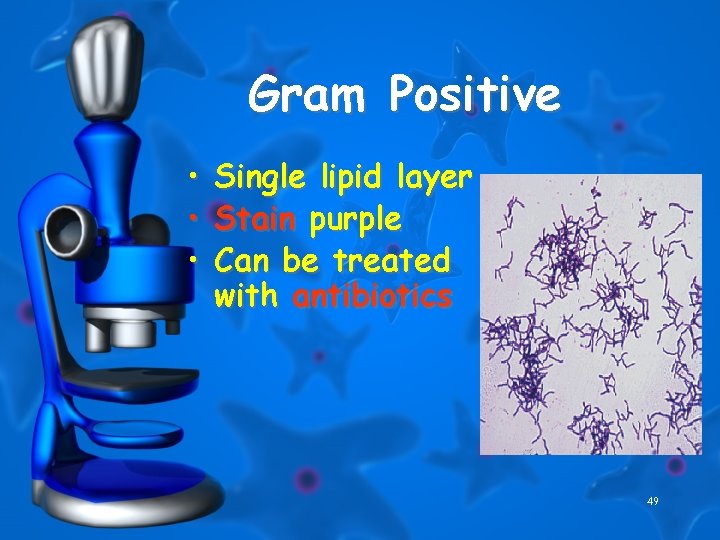
Gram Positive • • • Single lipid layer Stain purple Can be treated with antibiotics 49
Gram Positive Bacteria ü Lactobacilli (makes yogurt & buttermilk) ü Actinomycetes (make antibiotics) ü Clostridium (lockjaw bacteria) ü Streptococcus (strep throat) ü Staphylococcus (staph infections) 50
Gram Negative Bacteria • • Extra thick layer of lipids Stain pink or reddish Hard to treat with antibiotics Some photosynthetic but make sulfur not oxygen • Some fix nitrogen for plants 51
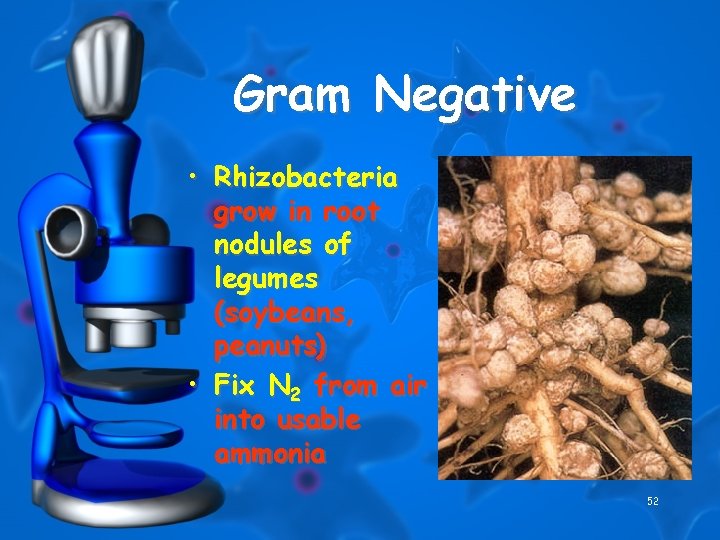
Gram Negative • Rhizobacteria grow in root nodules of legumes (soybeans, peanuts) • Fix N 2 from air into usable ammonia 52
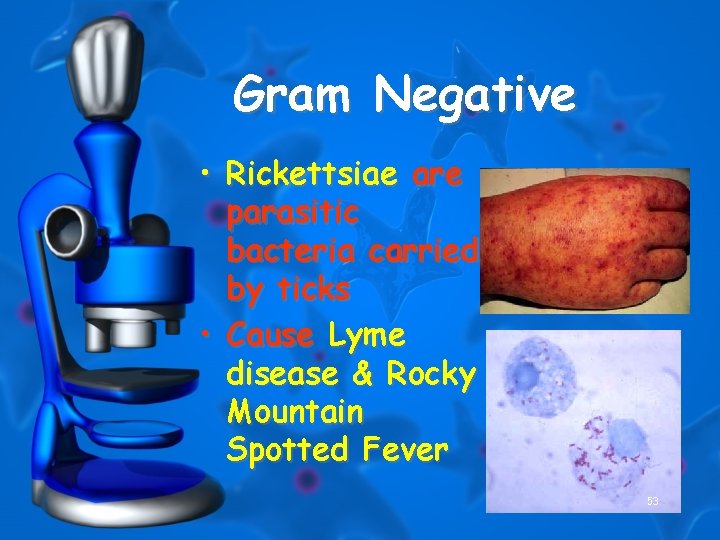
Gram Negative • Rickettsiae are parasitic bacteria carried by ticks • Cause Lyme disease & Rocky Mountain Spotted Fever 53
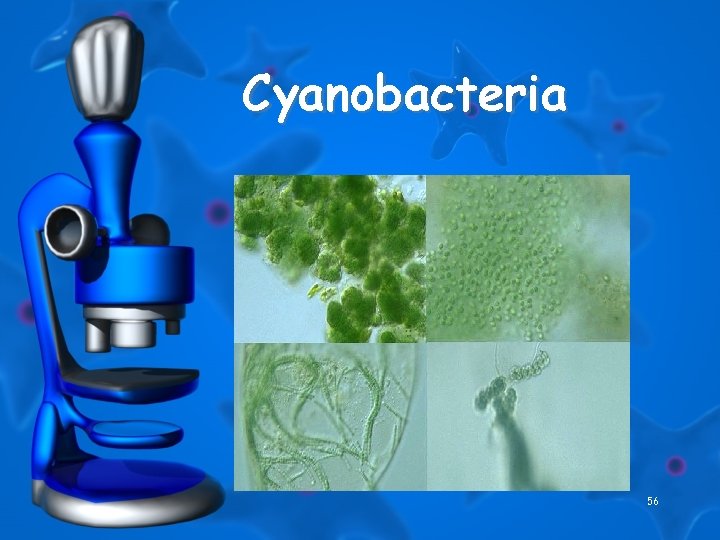
Cyanobacteria • • Gram negative Photosynthetic Called blue-green bacteria Contain phycocyanin (redblue) pigments & chlorophyll 54
Cyanobacteria • May be red, yellow, brown, black, or blue-green • May grow in chains (Oscillatoria) • Have Heterocysts to help fix N 2 • First to re-enter devastated areas • Some cause Eutrophication (use up O 2 when die & decompose in water) 55
Cyanobacteria 56
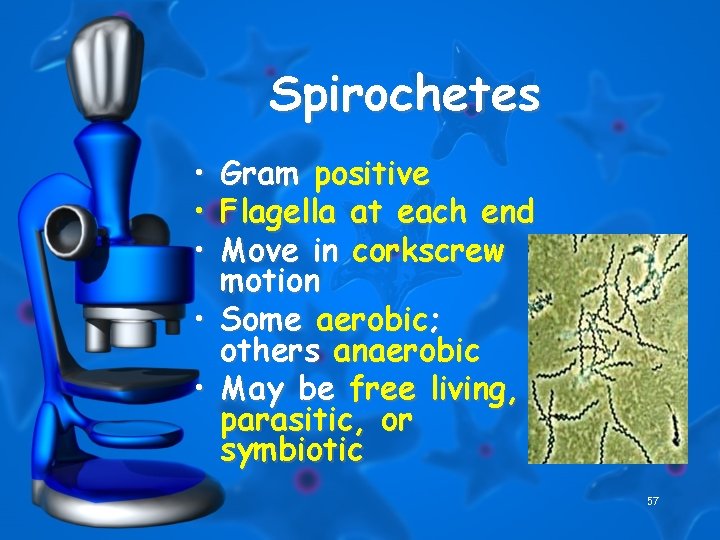
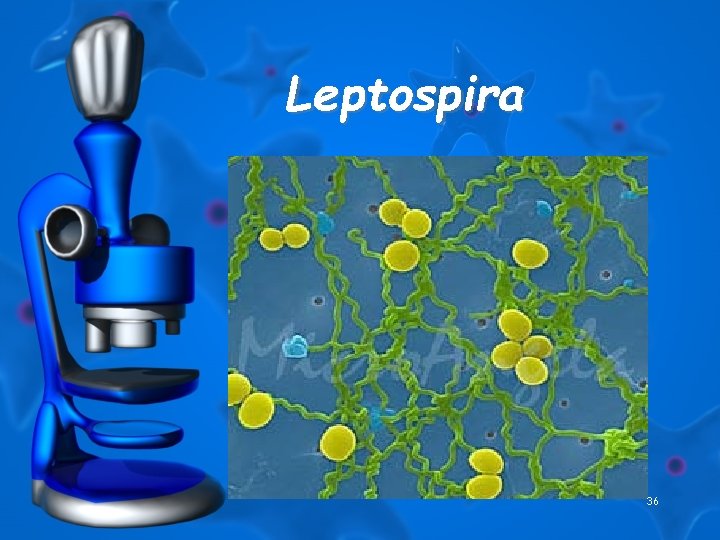
Spirochetes • • • Gram positive Flagella at each end Move in corkscrew motion • Some aerobic; others anaerobic • May be free living, parasitic, or symbiotic 57
Enteric Bacteria • Gram negative • Can live in aerobic & anaerobic habitats • Includes E. coli in intestines • Salmonella – causes food poisoning 58
Chemoautotrophs • • Gram negative Obtain energy from minerals like iron • Found in freshwater ponds 59
Nutrition, Respiration, and Reproduction 60
Modes of Nutrition • Saprobes – feed on dead organic matter • Parasites – feed on a host cell • Photoautotroph – use sunlight to make food • Chemoautotroph – oxidize inorganic matter such as iron or sulfur to make food 61
Methods of Respiration • Obligate Aerobes – require O 2 (tuberculosis bacteria) • Obligate Anaerobes – die if O 2 is present (tetanus) • Facultative Anaerobes – don’t need O 2, but aren’t killed by it (E. coli) 62
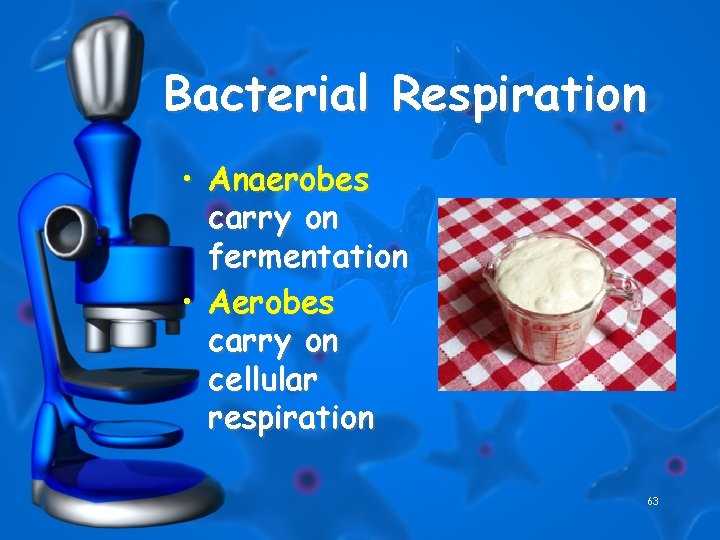
Bacterial Respiration • Anaerobes carry on fermentation • Aerobes carry on cellular respiration 63
Reproduction • Bacteria reproduce asexually by binary fission • Single chromosome replicates & then cell divides • Rapid • All new cells identical (clones) 64
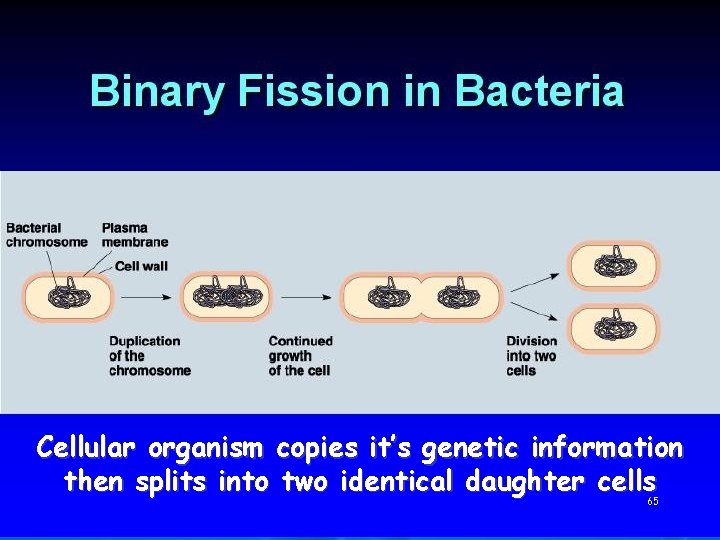
Cellular organism copies it’s genetic information then splits into two identical daughter cells 65
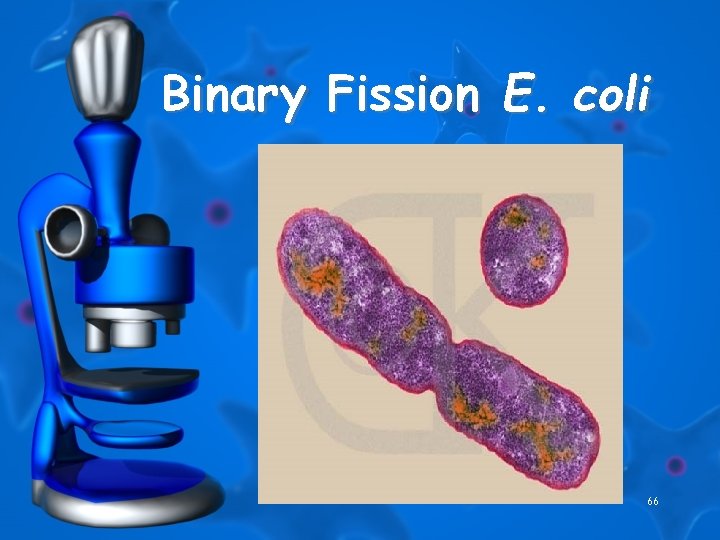
Binary Fission E. coli 66
Reproduction • Bacteria reproduce sexually by Conjugation • Form a tube between 2 bacteria to exchange genetic material • Held together by pili • New cells NOT identical 67
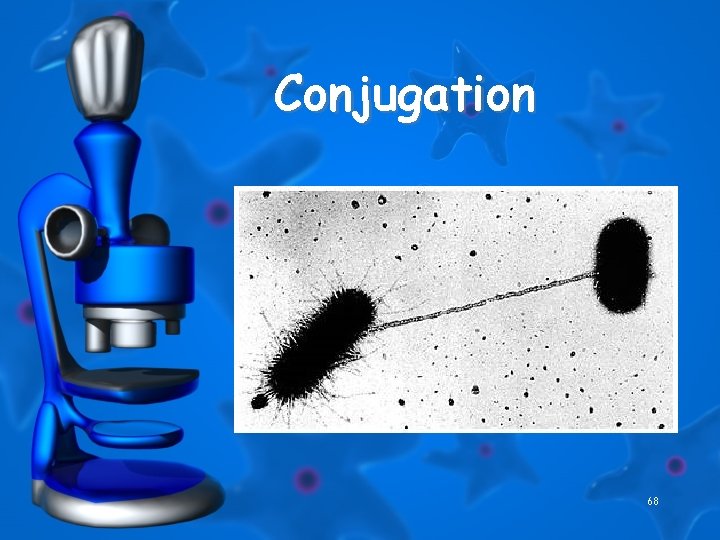
Conjugation 68
Transduction & Transformation • • • Genetically change bacteria May become antibiotic resistant Transformed bacteria pick up pieces of DNA from dead bacterial cells • Transduction – viruses carry foreign DNA to bacteria; used to make insulin 69
Pathenogenic Bacteria 70
Pathogens • • Called germs or microbes Cause disease May produce poisons or toxins Endotoxins released after bacteria die (E. coli) • Exotoxins released by Gram + bacteria (C. tetani) 71
- Slides: 71