
Bacteria Reproduction Antibiotics and Evolution Partner 1 Logan
Bacteria: Reproduction, Antibiotics, and Evolution Partner #1: Logan Snyder Partner #2: Tommy Waters Partner #3: Nick Migliore Partner #4: Nick Furey
Overview • How Prokaryotic Asexual Cells reproduce? • How Eukaryotic Cells reproduce? • Importance of Conjugation for Bacteria • Process of Making Cells in Eukaryotic Cells • How virus infects living cells • How antibiotics fight bacterial infections • How bacteria can develop resistance to dugs • What is (MRSA) caused by?
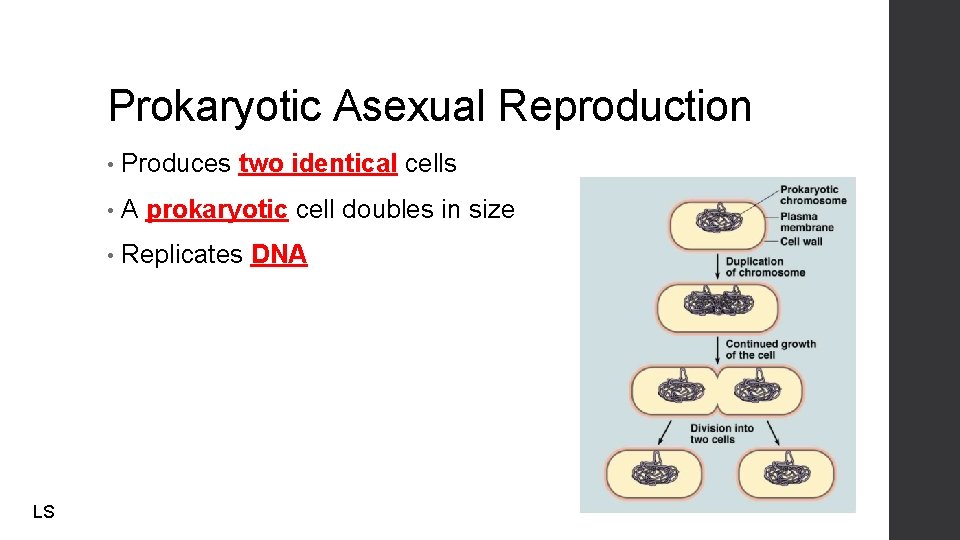
Prokaryotic Asexual Reproduction LS • Produces two identical cells • A prokaryotic cell doubles in size • Replicates DNA
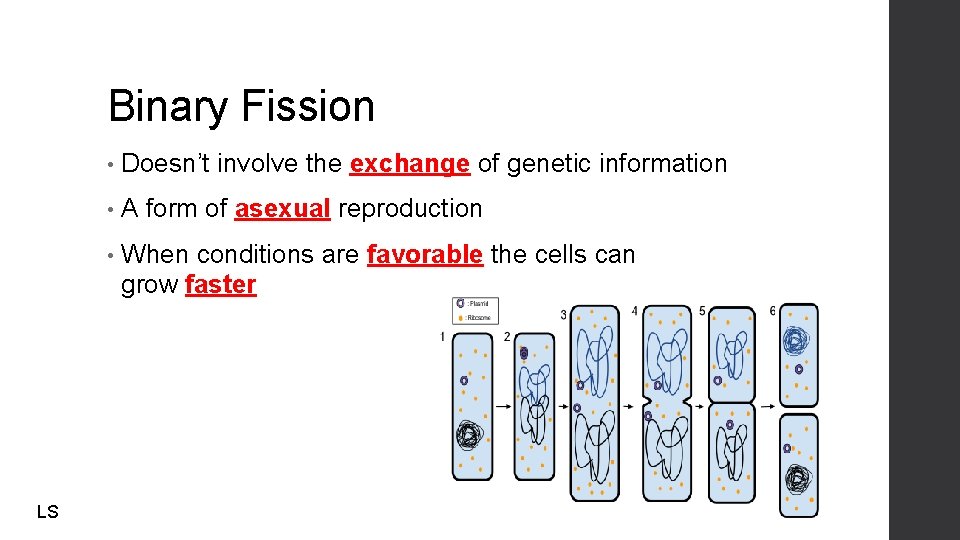
Binary Fission LS • Doesn’t involve the exchange of genetic information • A form of asexual reproduction • When conditions are favorable the cells can grow faster
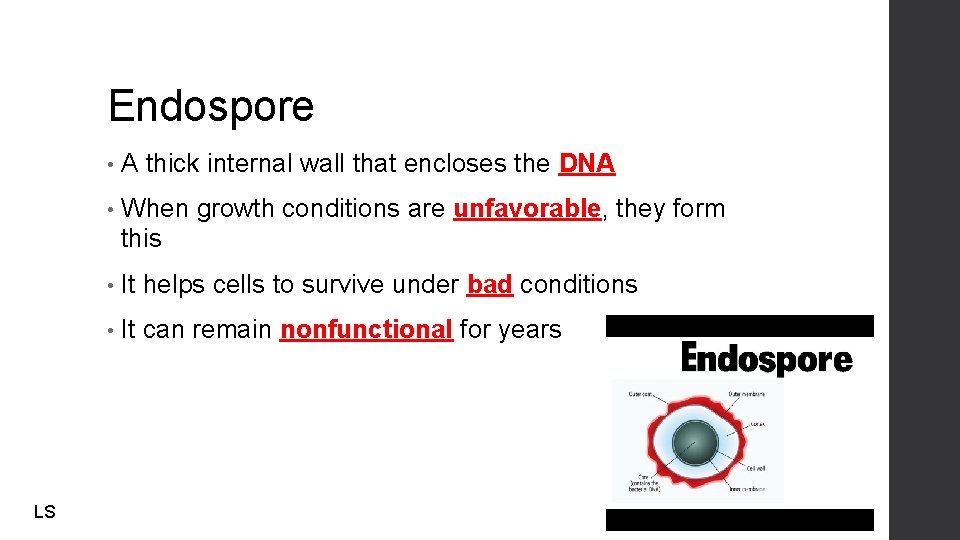
Endospore LS • A thick internal wall that encloses the DNA • When growth conditions are unfavorable, they form this • It helps cells to survive under bad conditions • It can remain nonfunctional for years
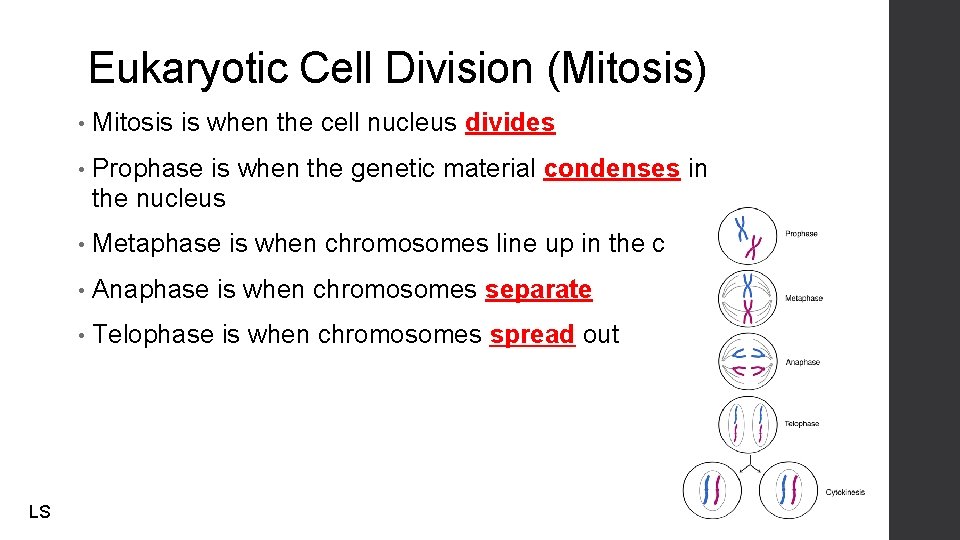
Eukaryotic Cell Division (Mitosis) LS • Mitosis is when the cell nucleus divides • Prophase is when the genetic material condenses in the nucleus • Metaphase is when chromosomes line up in the center • Anaphase is when chromosomes separate • Telophase is when chromosomes spread out
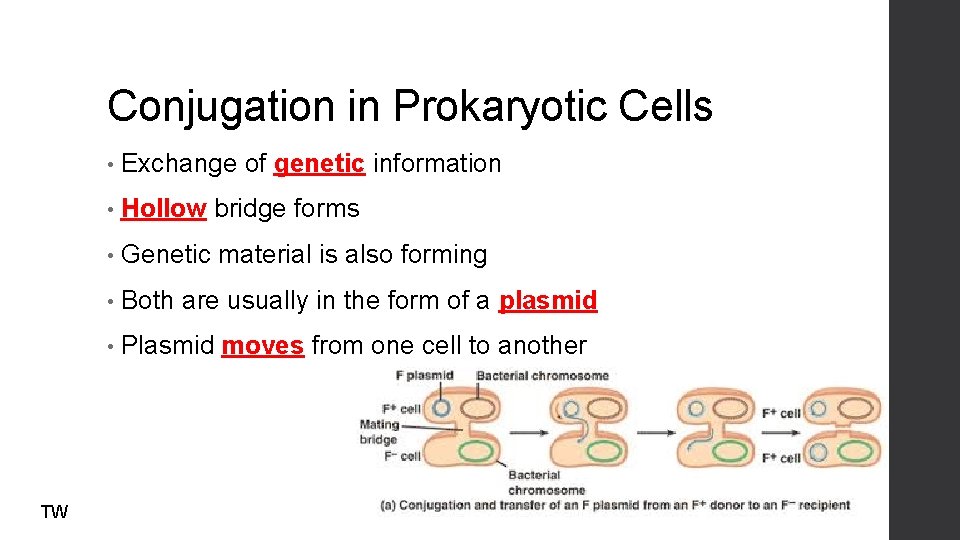
Conjugation in Prokaryotic Cells TW • Exchange of genetic information • Hollow bridge forms • Genetic material is also forming • Both are usually in the form of a plasmid • Plasmid moves from one cell to another
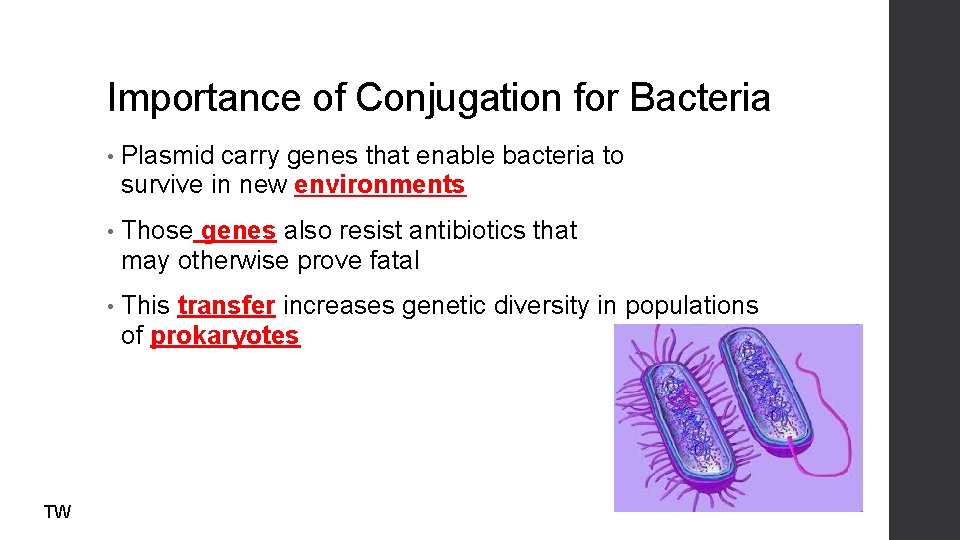
Importance of Conjugation for Bacteria TW • Plasmid carry genes that enable bacteria to survive in new environments • Those genes also resist antibiotics that may otherwise prove fatal • This transfer increases genetic diversity in populations of prokaryotes
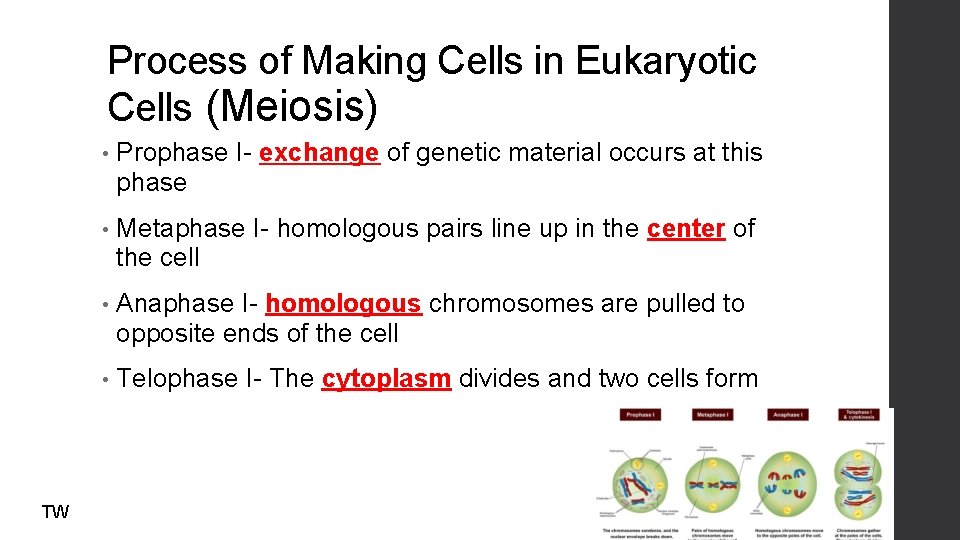
Process of Making Cells in Eukaryotic Cells (Meiosis) TW • Prophase I- exchange of genetic material occurs at this phase • Metaphase I- homologous pairs line up in the center of the cell • Anaphase I- homologous chromosomes are pulled to opposite ends of the cell • Telophase I- The cytoplasm divides and two cells form
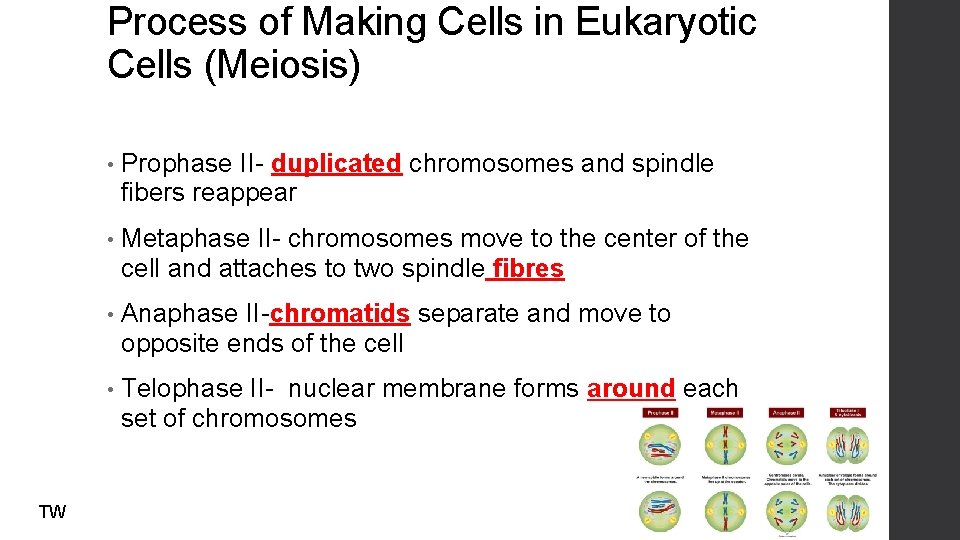
Process of Making Cells in Eukaryotic Cells (Meiosis) TW • Prophase II- duplicated chromosomes and spindle fibers reappear • Metaphase II- chromosomes move to the center of the cell and attaches to two spindle fibres • Anaphase II-chromatids separate and move to opposite ends of the cell • Telophase II- nuclear membrane forms around each set of chromosomes
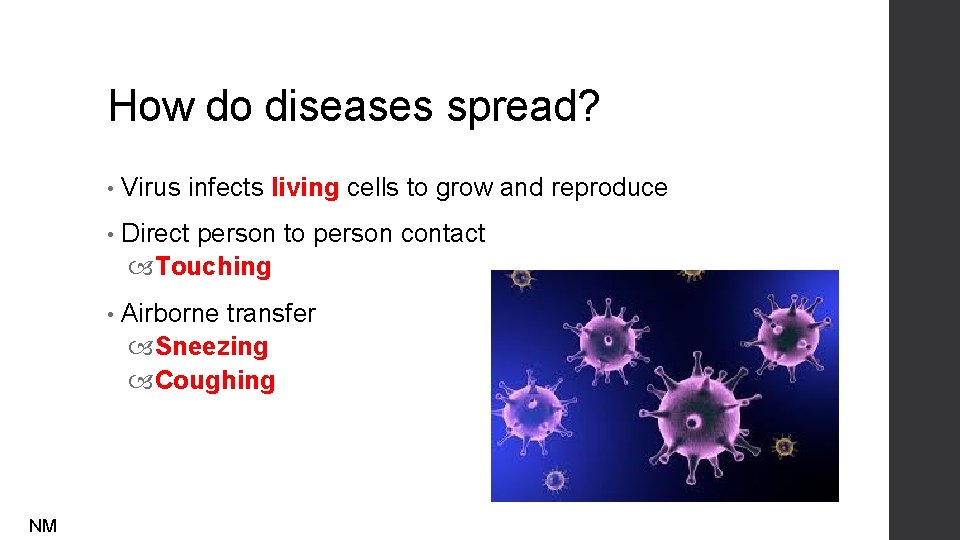
How do diseases spread? NM • Virus infects living cells to grow and reproduce • Direct person to person contact Touching • Airborne transfer Sneezing Coughing
What do antibiotics treat? NM • Fight bacterial infections • Kills growth of bacteria • Examples: Strep Thought or Mono
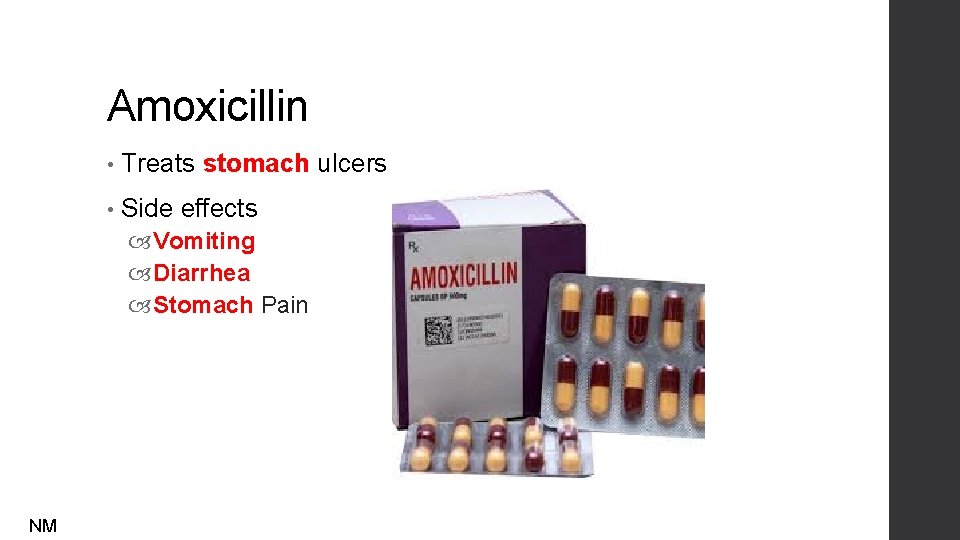
Amoxicillin • Treats stomach ulcers • Side effects Vomiting Diarrhea Stomach Pain NM
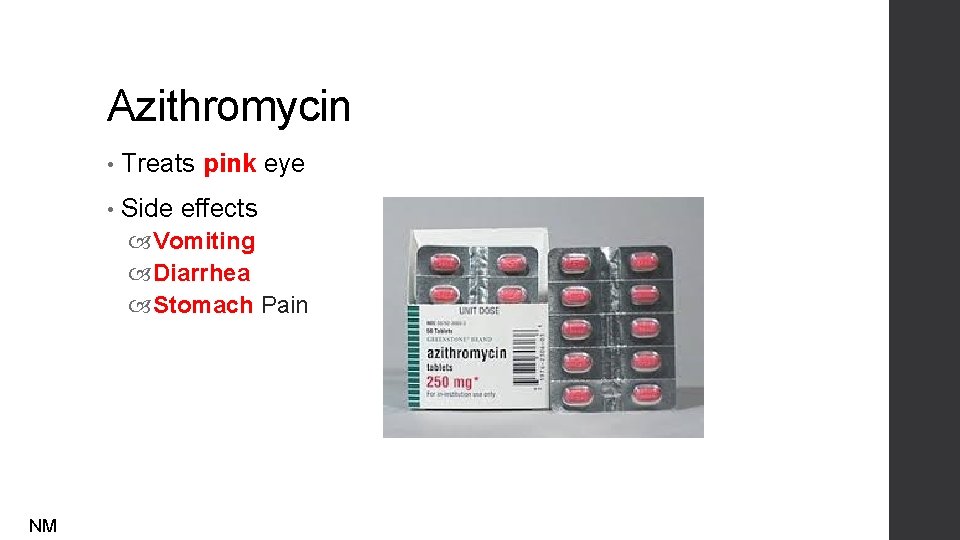
Azithromycin • Treats pink eye • Side effects Vomiting Diarrhea Stomach Pain NM
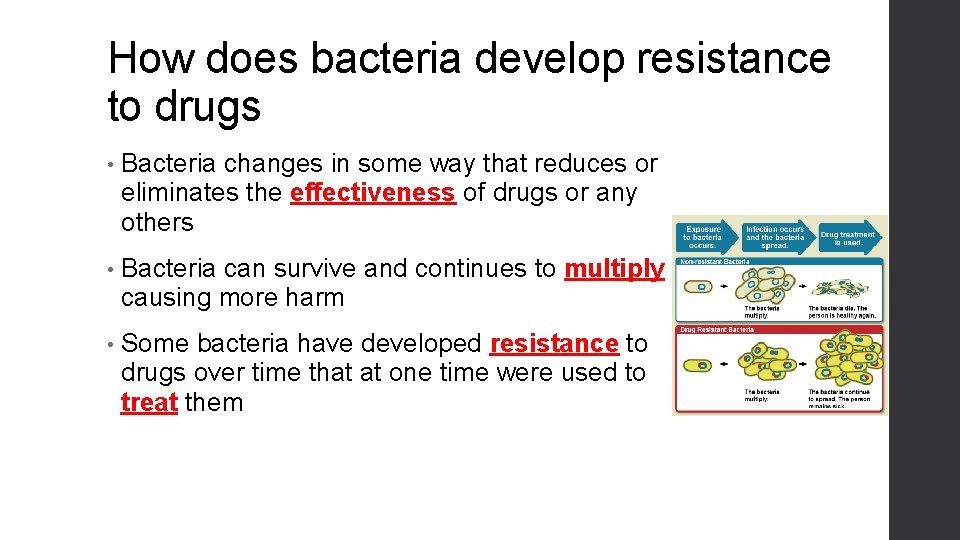
How does bacteria develop resistance to drugs • Bacteria changes in some way that reduces or eliminates the effectiveness of drugs or any others • Bacteria can survive and continues to multiply causing more harm • Some bacteria have developed resistance to drugs over time that at one time were used to treat them
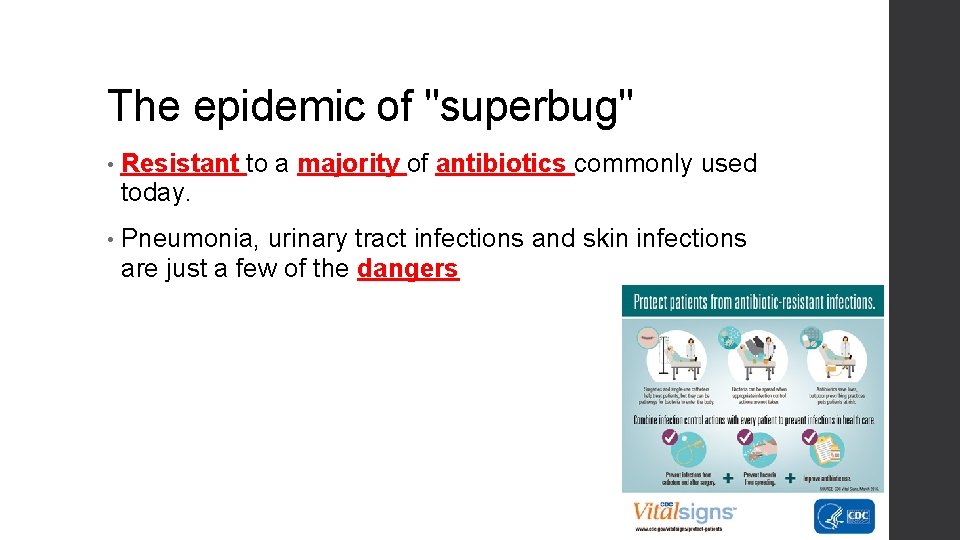
The epidemic of "superbug" • Resistant to a majority of antibiotics commonly used today. • Pneumonia, urinary tract infections and skin infections are just a few of the dangers
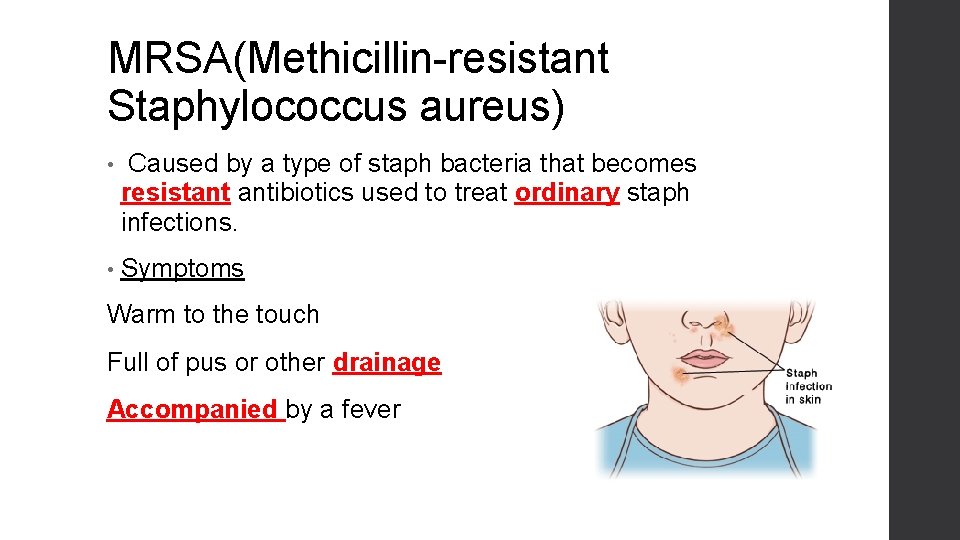
MRSA(Methicillin-resistant Staphylococcus aureus) • Caused by a type of staph bacteria that becomes resistant antibiotics used to treat ordinary staph infections. • Symptoms Warm to the touch Full of pus or other drainage Accompanied by a fever
Connection • You should contact your doctor if ineftion does not improvment or gets worse. • If untreated skin infection can go deeper into the body infecting the blood & organs
ABC's How much bigger does a Prokaryotic Cell get after Binary Fission? A. Triples B. Doubles C. Quadruples D. Stays the Same LS B
ABC's What does Anaphase do in Mitosis? A. Chromosomes line up in the middle B. Genetic Material Condenses C. Chromosomes Spread Out D. Chromosomes Separate LS D
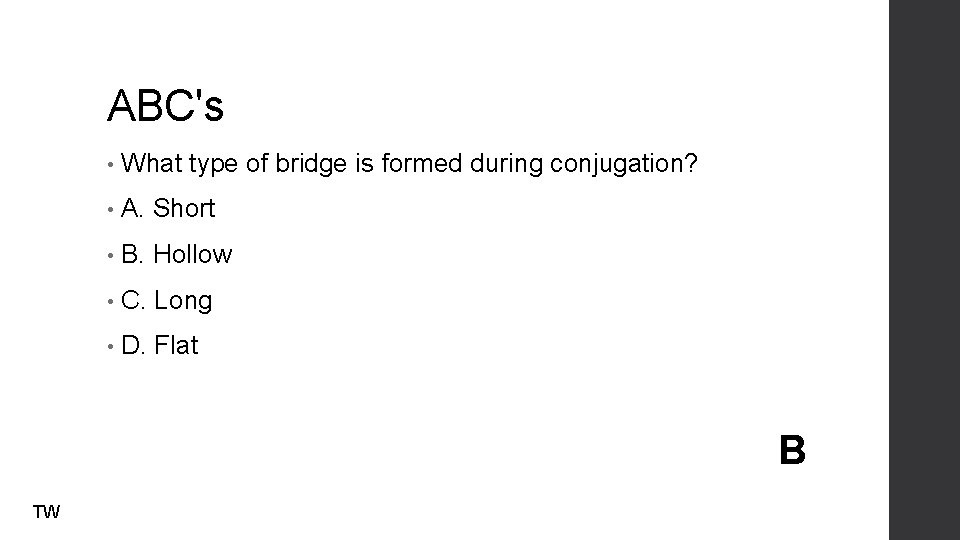
ABC's • What type of bridge is formed during conjugation? • A. Short • B. Hollow • C. Long • D. Flat B TW
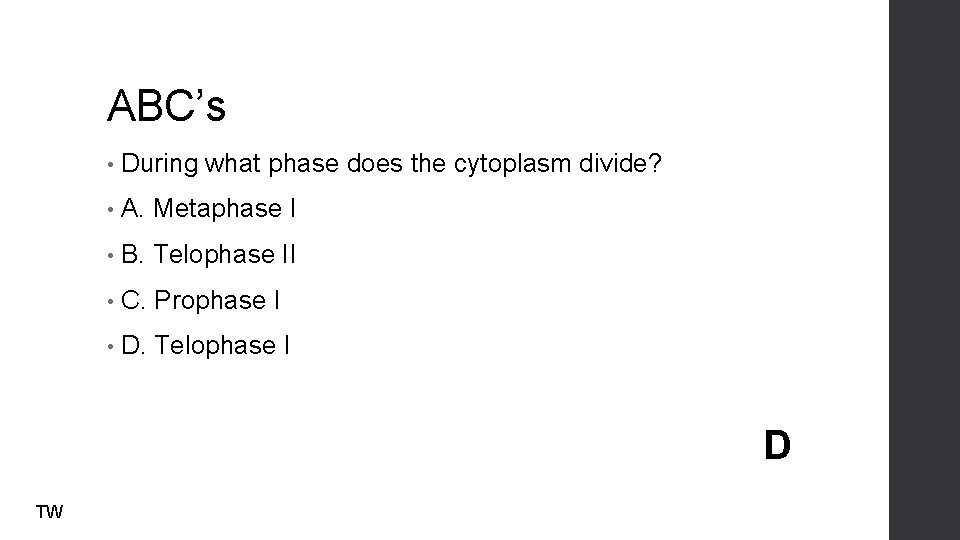
ABC’s • During what phase does the cytoplasm divide? • A. Metaphase I • B. Telophase II • C. Prophase I • D. Telophase I D TW
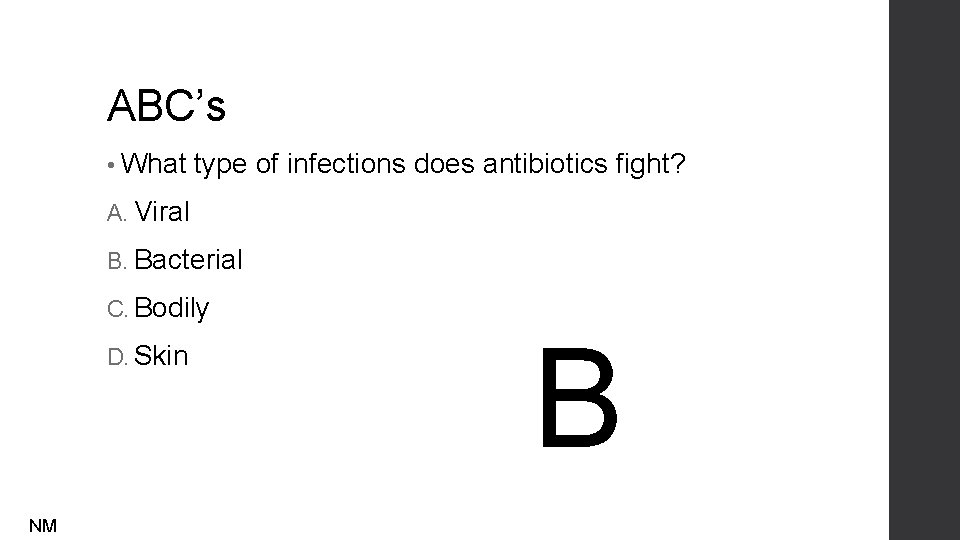
ABC’s • What type of infections does antibiotics fight? A. Viral B. Bacterial C. Bodily D. Skin NM B
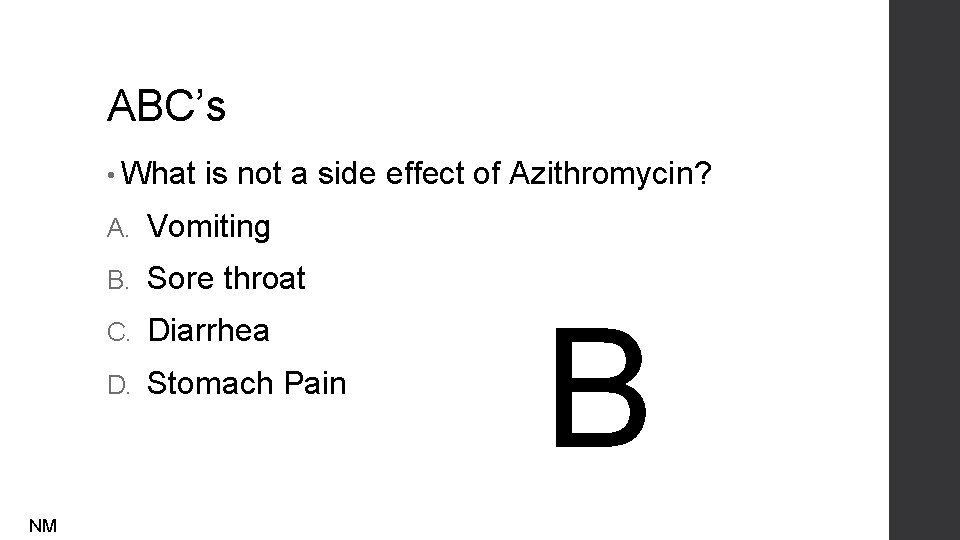
ABC’s • What NM is not a side effect of Azithromycin? A. Vomiting B. Sore throat C. Diarrhea D. Stomach Pain B
ABC's • What are super bugs A. Bacteria that has grown a resistance for drugs B. Bacteria that is immune to a drug C. Bacteria that can be killed by a drug D. Bacteria that can heal itself A
ABC's • What can happen if MRSA is left untreated A. Will heal on its own B. Will can develops a resistance to drugs C. Can go deeper into the body infecting the blood & organs D. will remain the same C
Overview • How Prokaryotic Asexual Cells reproduce? • How Eukaryotic Cells reproduce? • Importance of Conjugation for Bacteria • Process of Making Cells in Eukaryotic Cells • How virus infects living cells • How antibiotics fight bacterial infections • How bacteria can develop resistance to dugs • What is (MRSA) caused by?
- Slides: 27