
BACTERIA Remember from the tree of life taxonomy
BACTERIA

Remember from the tree of life (taxonomy) that there are 3 Domains. Domain Archaea Domain Bacteria Domain Eukarya Domain Archaea and Domain Bacteria are both prokaryotic, and used to both be part of the same Kingdom: Monera.
Domain Archaea (aka Archaebacteria) Prokaryotic Found in extreme environments –hot thermal vents –no oxygen –acidic environments –extreme saline environments
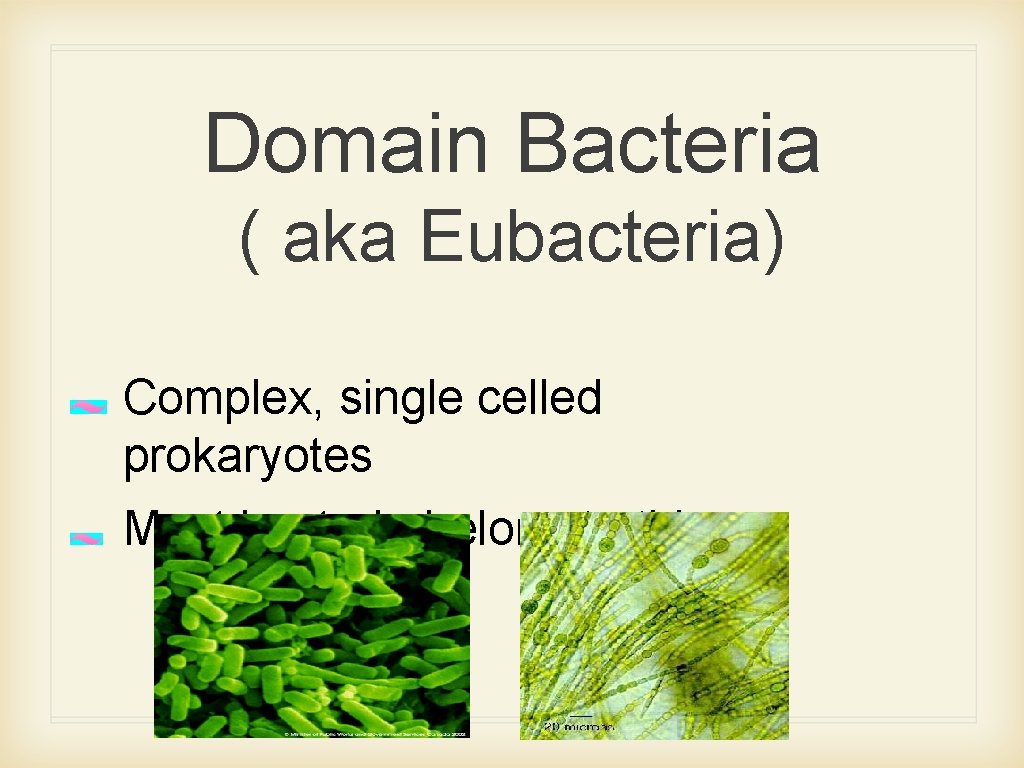
Domain Bacteria ( aka Eubacteria) Complex, single celled prokaryotes Most bacteria belong to this
Bacteria Are PROKARYOTIC Have no nucleus Single-celled organisms Are found all over the earth. . . including all over you!
Identifying Prokaryotes Bacteria have many diverse characteristics These characteristics are used to classify different types of bacteria. (1) (2) (3) (4) (5) (6) Cell Shape (today) Cell Wall Movement How they Obtain Energy Reproduction Respiration
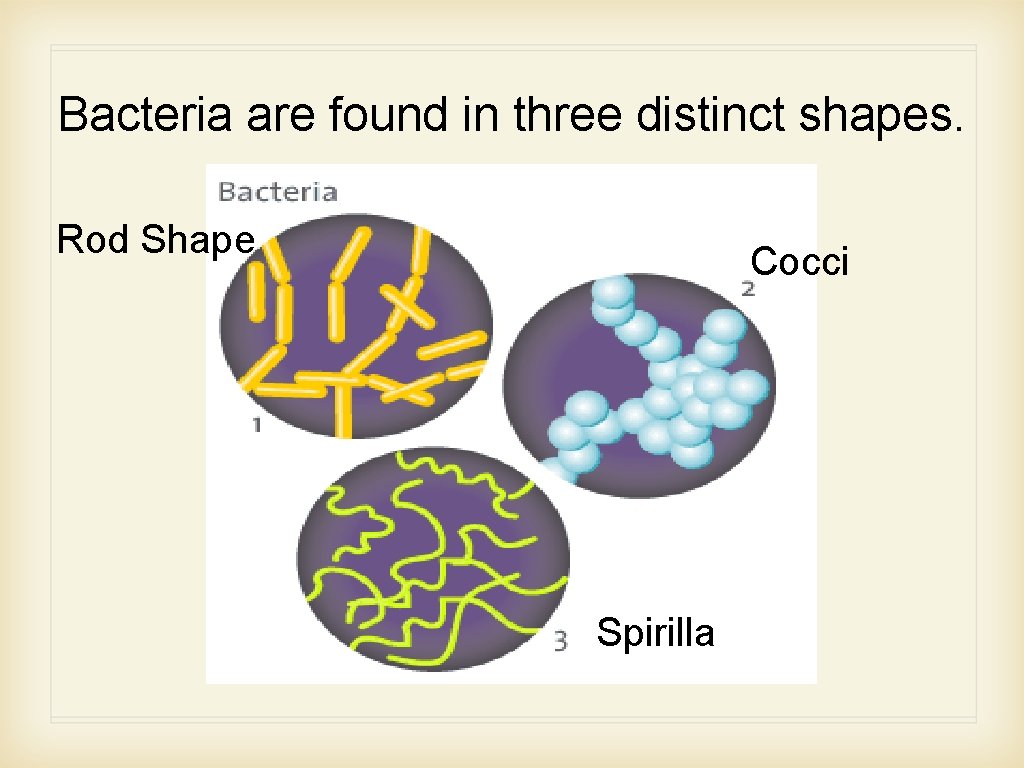
Bacteria are found in three distinct shapes. Rod Shape Cocci Spirilla
Cell Shape 1. Rod shaped termed: Bacilli Some bacilli have adapted to survival during unfavorable conditions by forming dormant or resting cells called endospores which are resistant to severe physical and chemical stresses. Endospores are a core of DNA that is surrounded by an impenetrable layer. They can last for millions of years and are capable of causing some serious diseases: ex. Anthrax (Bacillus anthraxis) & Tetanus (Clostridium tetani)
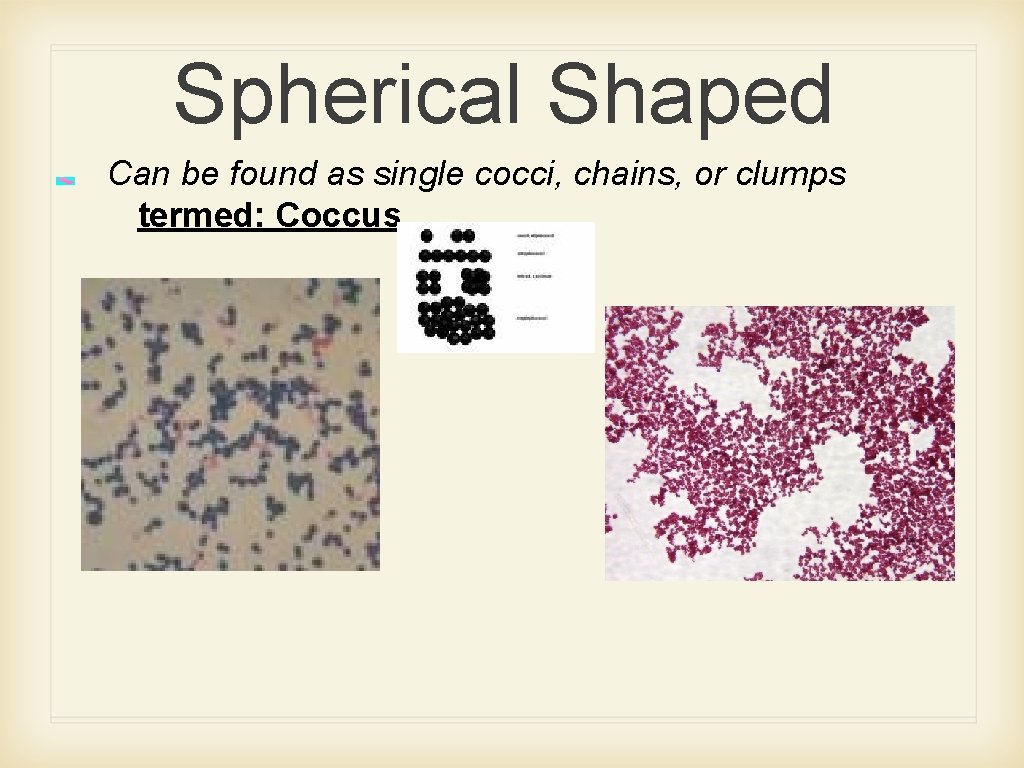
Spherical Shaped Can be found as single cocci, chains, or clumps termed: Coccus
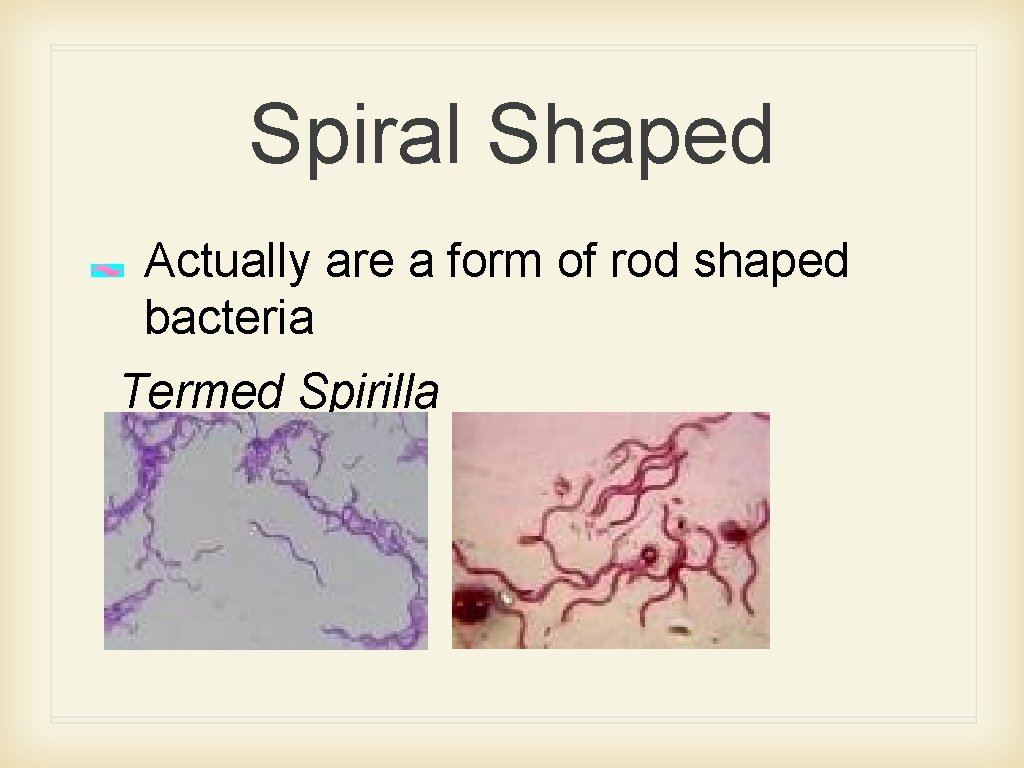
Spiral Shaped Actually are a form of rod shaped bacteria Termed Spirilla
Cell wall Movement How bacteria obtain energy Reproduction Respiration Why we need Bacteria
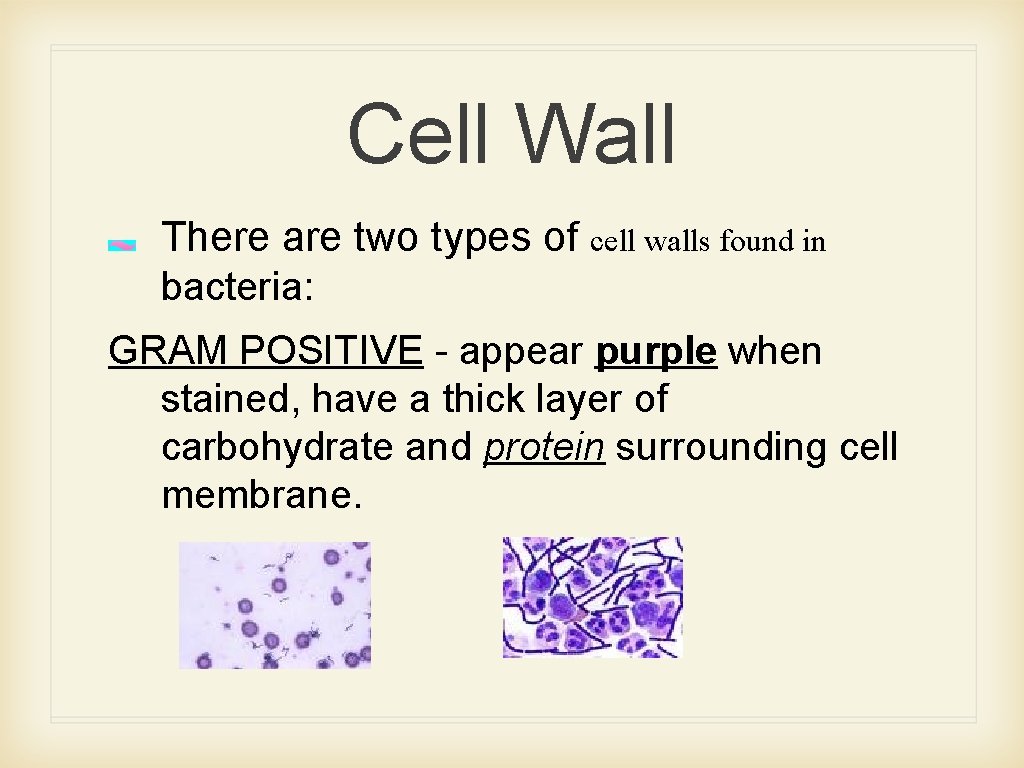
Cell Wall There are two types of cell walls found in bacteria: GRAM POSITIVE - appear purple when stained, have a thick layer of carbohydrate and protein surrounding cell membrane.
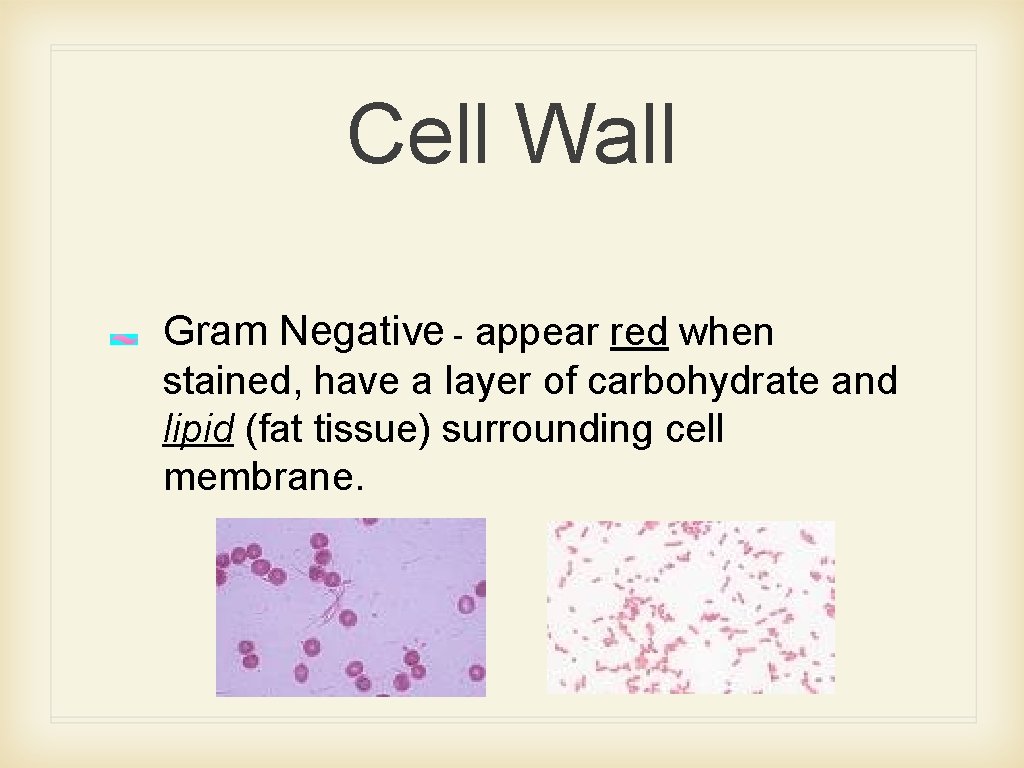
Cell Wall Gram Negative - appear red when stained, have a layer of carbohydrate and lipid (fat tissue) surrounding cell membrane.
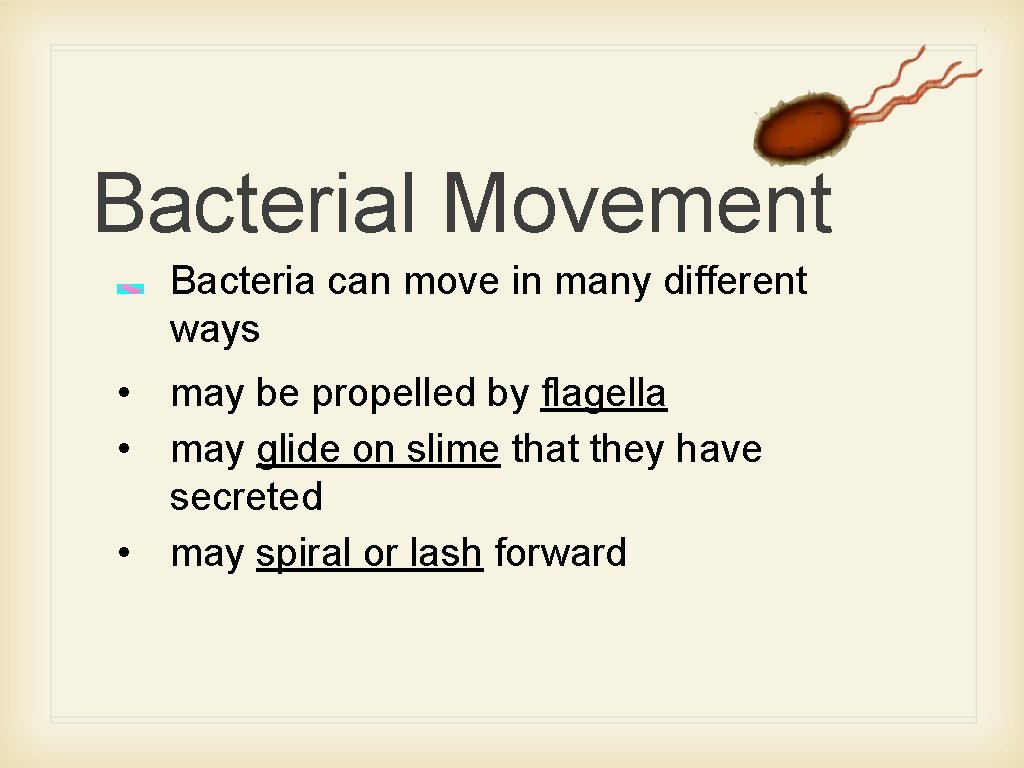
Bacterial Movement Bacteria can move in many different ways • may be propelled by flagella • may glide on slime that they have secreted • may spiral or lash forward
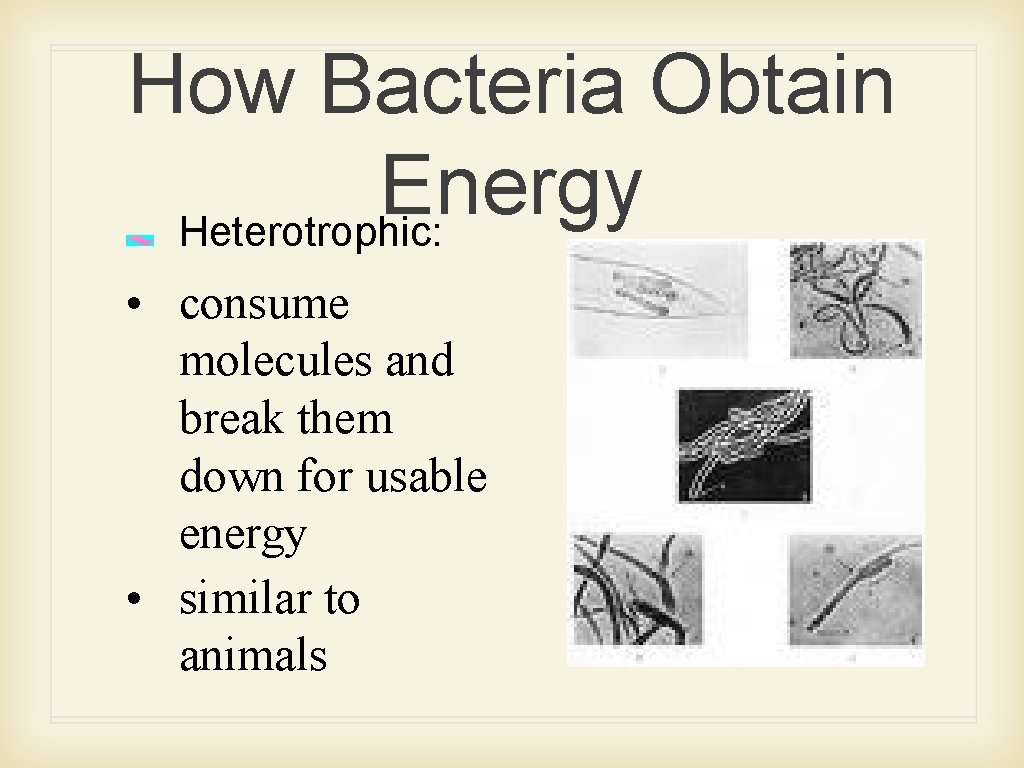
How Bacteria Obtain Energy Heterotrophic: • consume molecules and break them down for usable energy • similar to animals
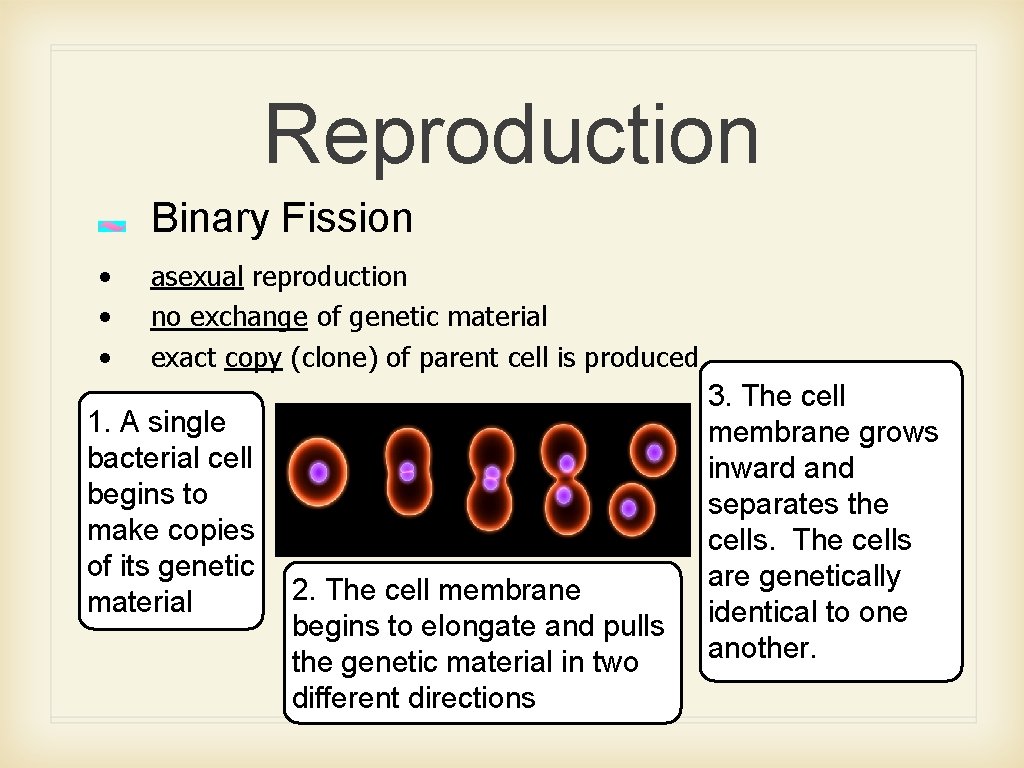
Reproduction Binary Fission • • • asexual reproduction no exchange of genetic material exact copy (clone) of parent cell is produced 1. A single bacterial cell begins to make copies of its genetic material 2. The cell membrane begins to elongate and pulls the genetic material in two different directions 3. The cell membrane grows inward and separates the cells. The cells are genetically identical to one another.
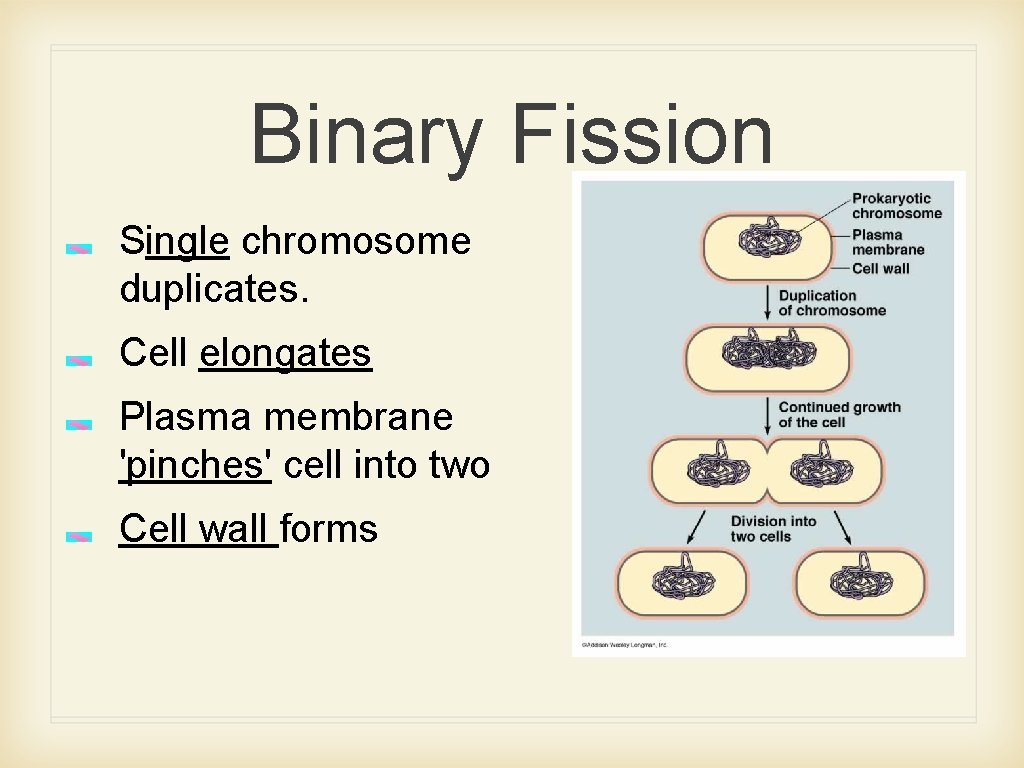
Binary Fission Single chromosome duplicates. Cell elongates Plasma membrane 'pinches' cell into two Cell wall forms
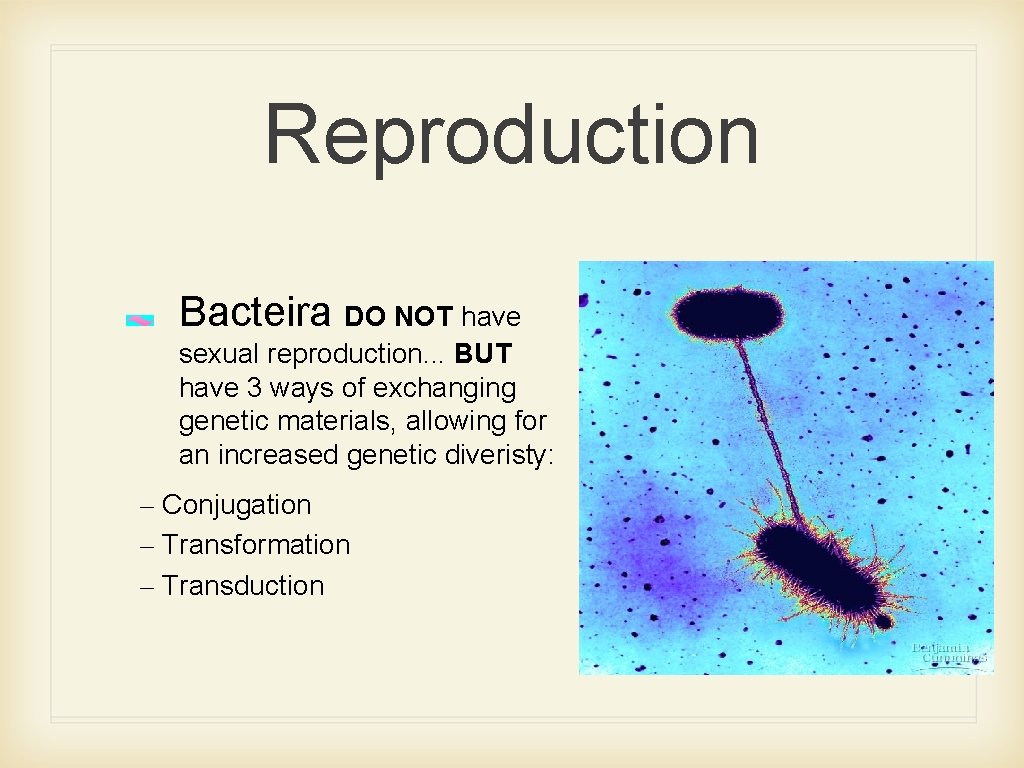
Reproduction Bacteira DO NOT have sexual reproduction. . . BUT have 3 ways of exchanging genetic materials, allowing for an increased genetic diveristy: – Conjugation – Transformation – Transduction
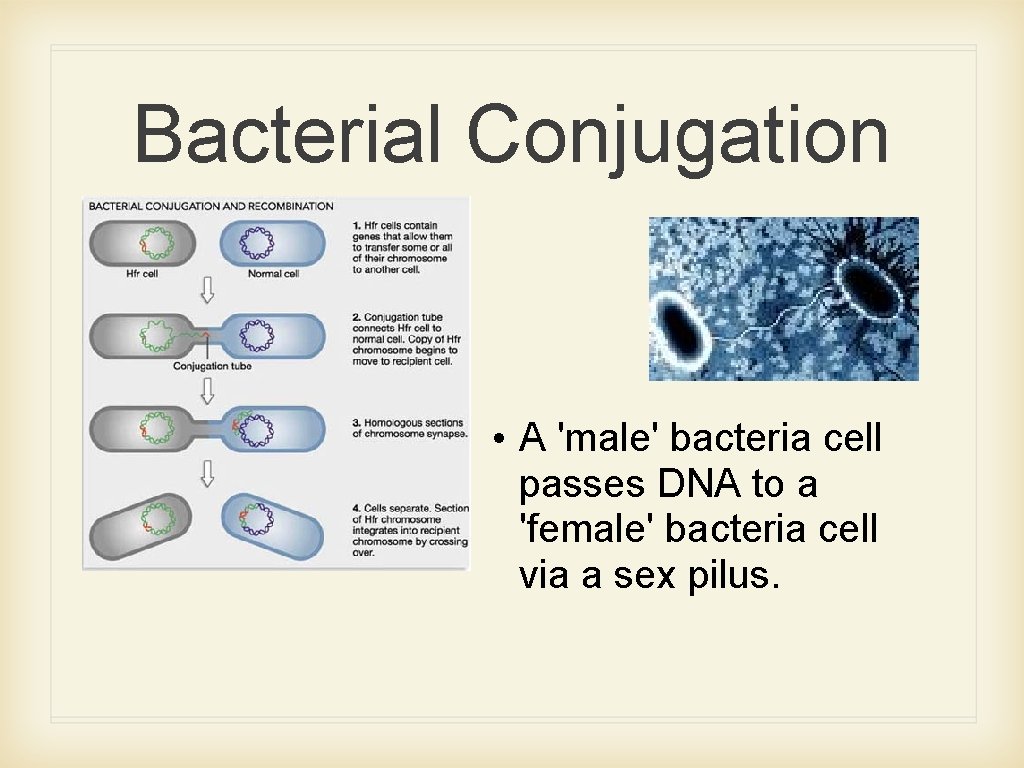
Bacterial Conjugation • A 'male' bacteria cell passes DNA to a 'female' bacteria cell via a sex pilus.
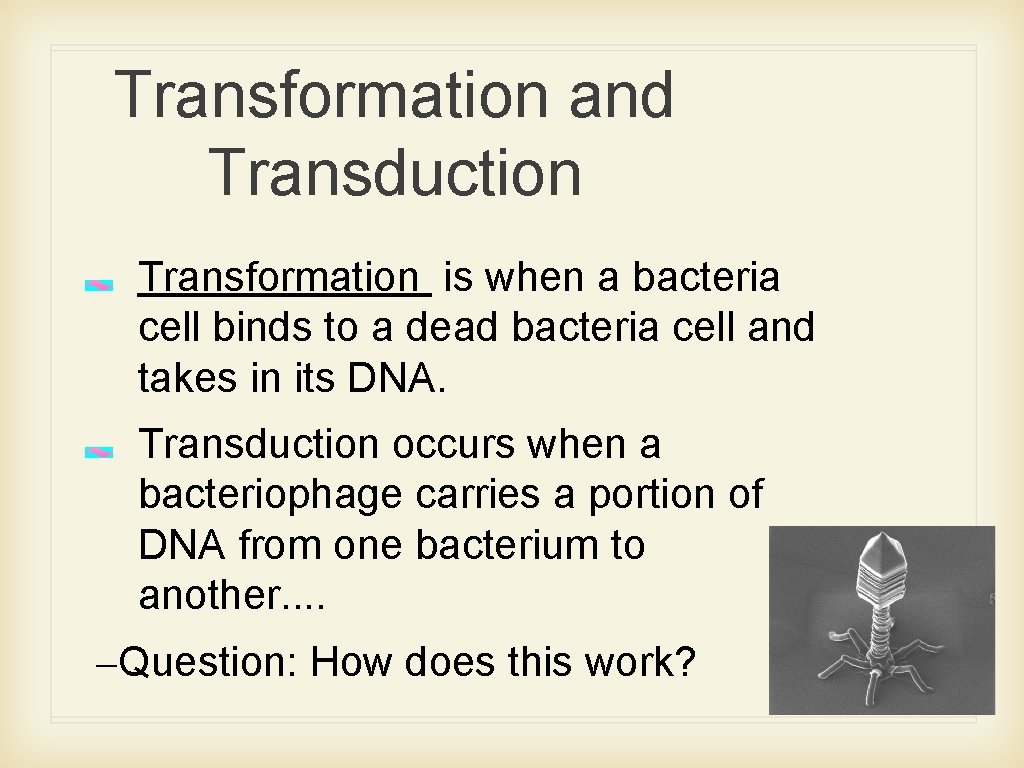
Transformation and Transduction Transformation is when a bacteria cell binds to a dead bacteria cell and takes in its DNA. Transduction occurs when a bacteriophage carries a portion of DNA from one bacterium to another. . –Question: How does this work?
Endospores In unfavorable conditions some bacteria will form endospores –Cytoplasm and chromosome dehydrate. . rest of bacteria deteriorates – 3 layer spore coat forms. . . highly resistant to extreme conditions –When conditions favourable, endospore rehydrates and becomes a typical reproducing bacterial cell
Respiration Bacteria, like all organisms, need a constant supply of energy to perform all their life activities. • This energy is supplied by the processes of: –Respiration – uses oxygen and breaks down food molecules to produce energy. –Fermentation – produces energy without the use of oxygen
Three Strategies for Bacterial Respiration 1) Obligate aerobes – requires a constant supply of oxygen to live. 2) Obligate anaerobes – do not require a constant supply of oxygen. . . and can actually be poisoned by it! MUST live in an oxygen free environment. è Real-life connection – turf aeration 3) Faculative anaerobes – can survive with or without oxygen As you can see. . . there isn’t an environment on this planet that is not suitable for bacteria!
Ecological Roles of Bacteria • Certain mutualistic bacteria carry out **nitrogen fixation** in the soil next the roots of some plants. This allows plants to obtain an easily absorbable form of nitrogen needed for growth. • Bacteria can be used to degrade some organic compounds therefore can be used to aid in cleaning up oil spills • Can be used in the place of harmful pesticides and leave little to no effect on the environment
Beneficial Roles of Bacteria • Bacteria are found as symbionts in humans and other organisms. There are over 1000 types of bacteria in the average human stomach and intestines that contribute to immunity, vitamin absorption and synthesis, nutrient conversion and fermentation. (probiotic supplements contain many of these bacteria. . ) • Used in preparation of fermented foods ex. Yogurt, cheese, soy sauce…
Beneficial Roles of Bacteria • Used in the study of genetics, molecular biology and biochemistry because of their ability to reproduce so quickly • Used for making medicines (Insulin)
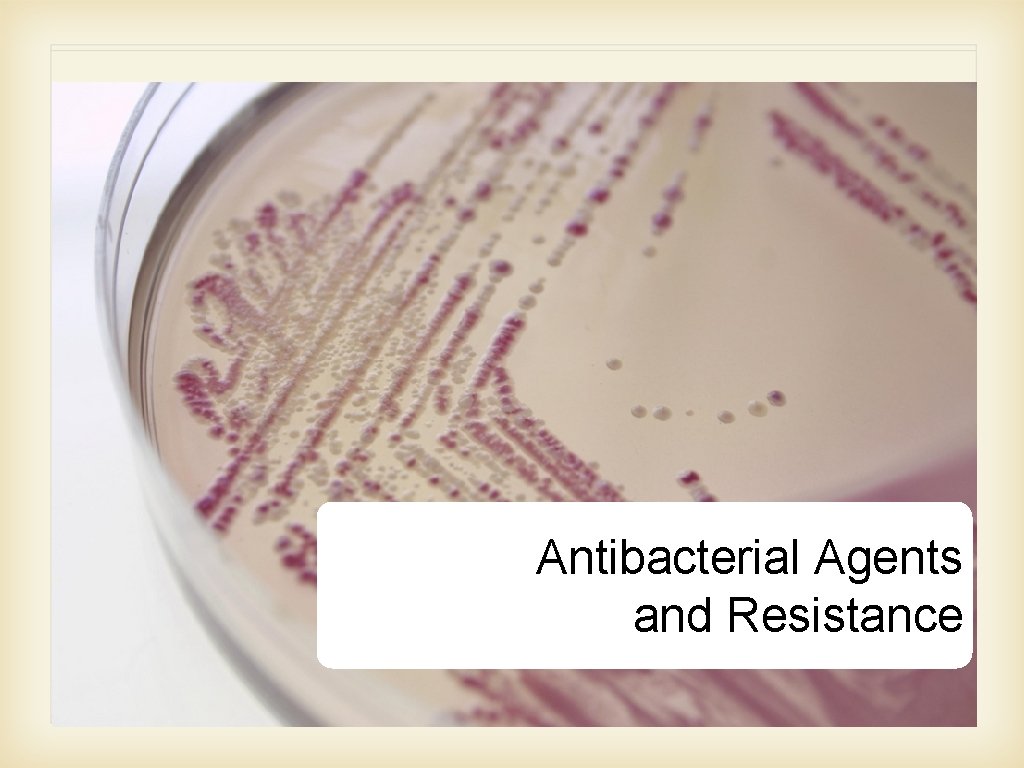
Antibacterial Agents and Resistance
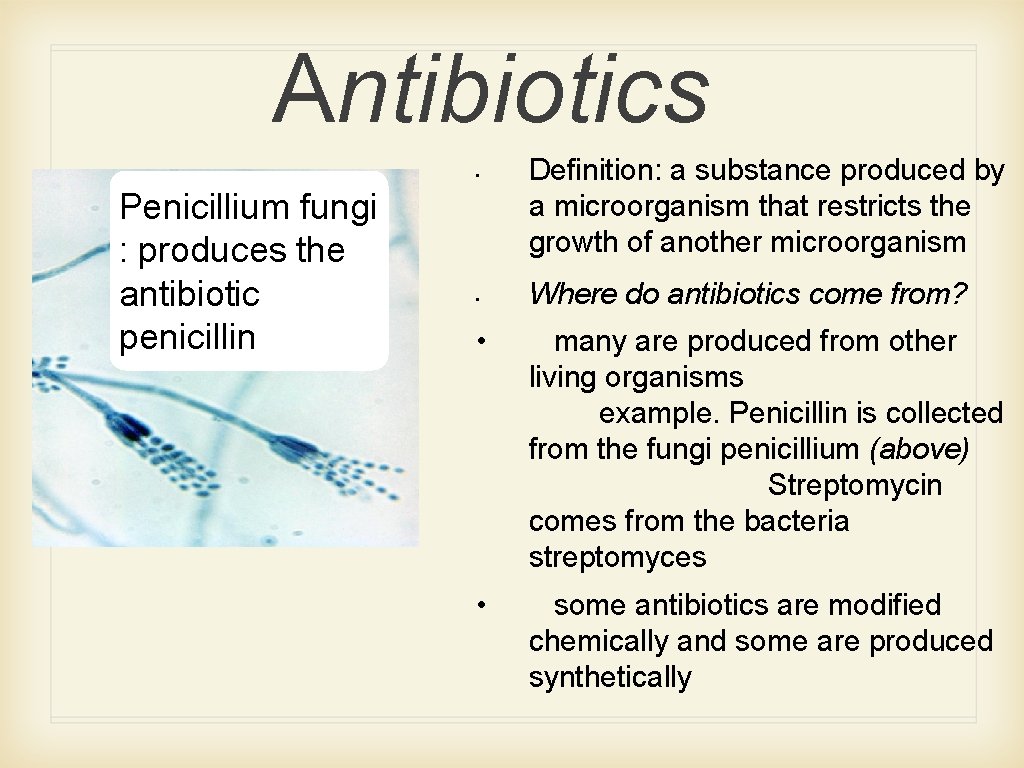
Antibiotics • Penicillium fungi : produces the antibiotic penicillin • Definition: a substance produced by a microorganism that restricts the growth of another microorganism Where do antibiotics come from? • many are produced from other living organisms example. Penicillin is collected from the fungi penicillium (above) Streptomycin comes from the bacteria streptomyces • some antibiotics are modified chemically and some are produced synthetically
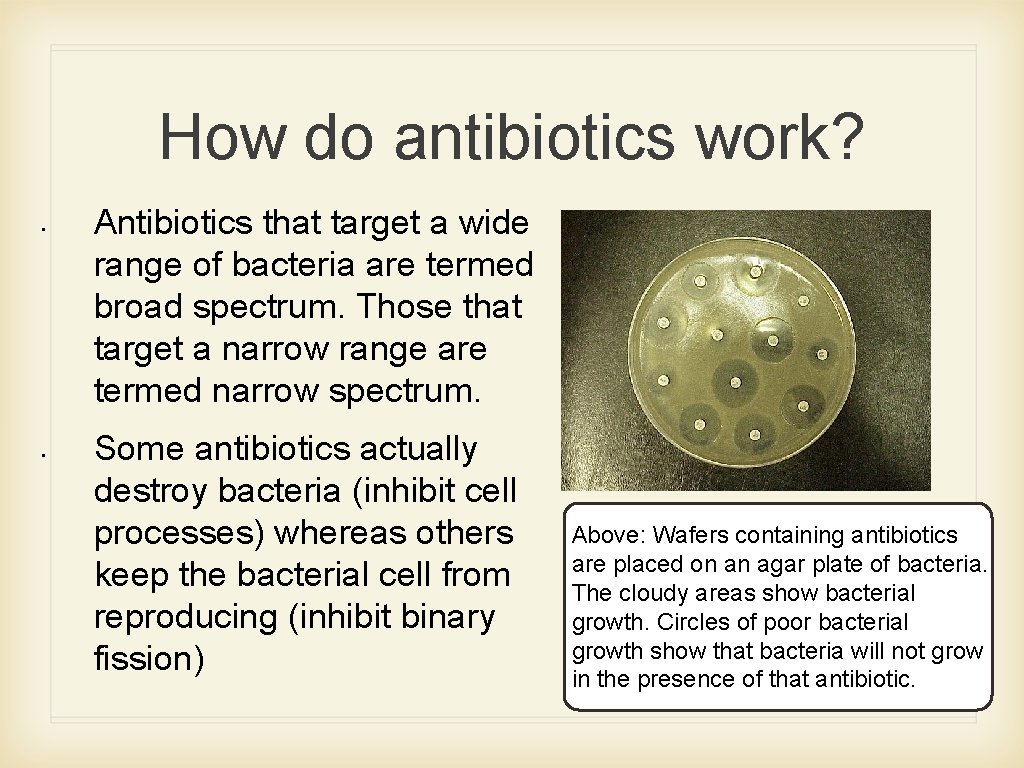
How do antibiotics work? • • Antibiotics that target a wide range of bacteria are termed broad spectrum. Those that target a narrow range are termed narrow spectrum. Some antibiotics actually destroy bacteria (inhibit cell processes) whereas others keep the bacterial cell from reproducing (inhibit binary fission) Above: Wafers containing antibiotics are placed on an agar plate of bacteria. The cloudy areas show bacterial growth. Circles of poor bacterial growth show that bacteria will not grow in the presence of that antibiotic.
- Slides: 29