
Bacteria Protists Fungi Bacteria What are characteristics of
Bacteria, Protists, & Fungi
Bacteria
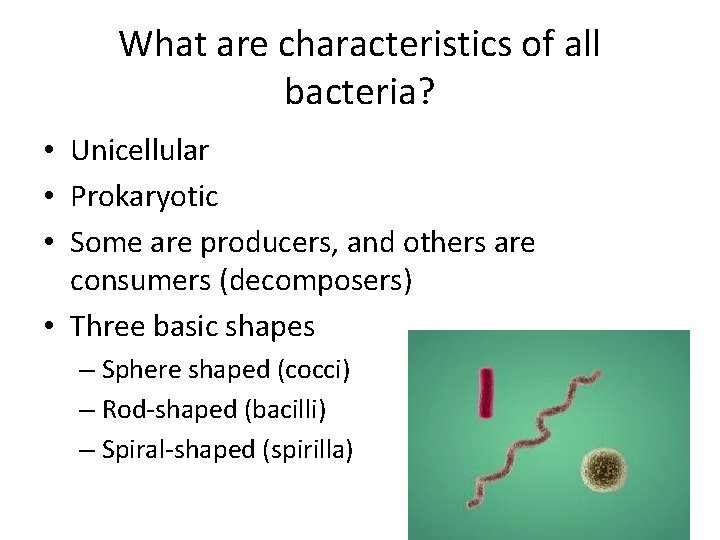
What are characteristics of all bacteria? • Unicellular • Prokaryotic • Some are producers, and others are consumers (decomposers) • Three basic shapes – Sphere shaped (cocci) – Rod-shaped (bacilli) – Spiral-shaped (spirilla)
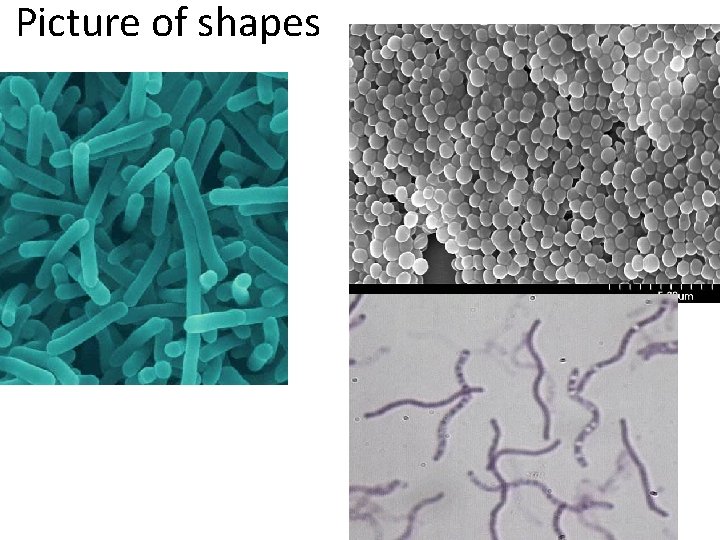
Picture of shapes
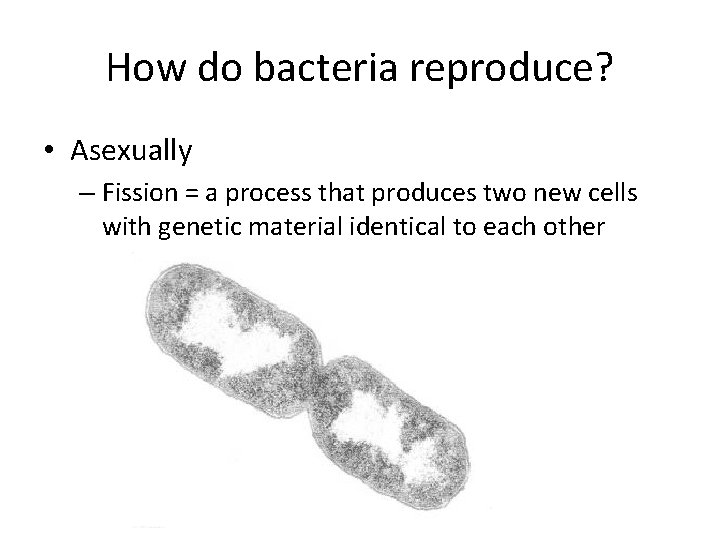
How do bacteria reproduce? • Asexually – Fission = a process that produces two new cells with genetic material identical to each other
What two kingdoms are made up of bacteria? • Archaebacteria – Live in extreme environments – Example: Anaerobe = bacteria adapted to live WITHOUT oxygen • Eubacteria – Live in everyday environments – Example: Aerobe: bacteria that requires oxygen to break down food
Protists
What are protists? • Usually found in wet or moist environments. • Most are unicellular organisms. Few are multicellular. • All are eukaryotic. • Can be divided into plant-like, fungus-like, and animal-like forms.
How are protists classified? • Based on how they obtain energy (autotroph or heterotroph) • If they have or do not have cell walls • If they can move around and how they move
What are animal-like protists? • Also known as protozoans • Cannot make their own food; instead capture other organisms and consume them for food • Do not have cell walls • Have specialized ways to MOVE FROM PLACE TO PLACE
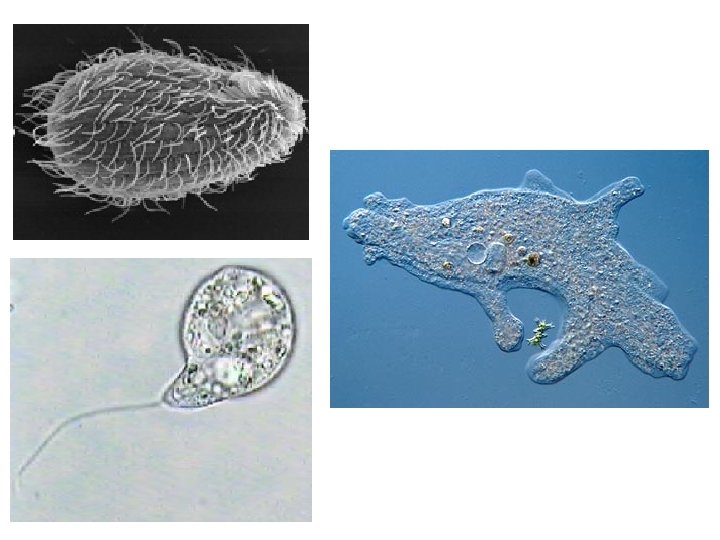
How are protozoans classified? • By the ways they move from place to place – Ciliates: move by cilia (short, threadlike structures that extend from the cell membrane) – Flagellates: move by whipping their long flagella – Pseudopods: “false foot, ” move by temporary extensions of their cytoplasm
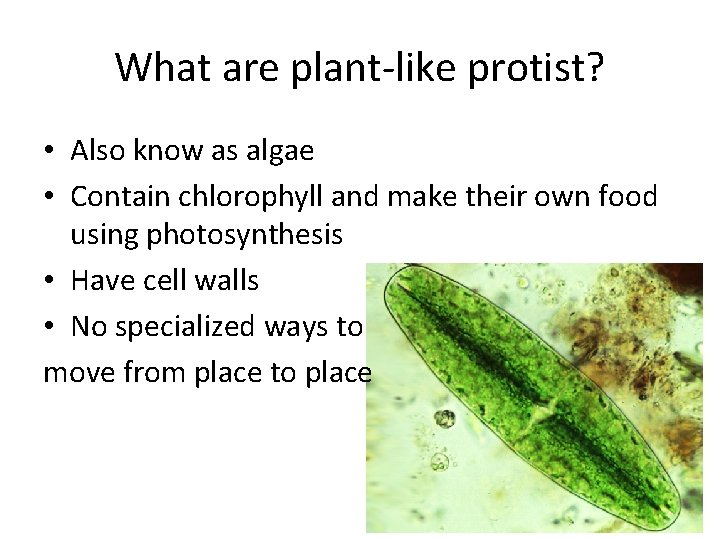
What are plant-like protist? • Also know as algae • Contain chlorophyll and make their own food using photosynthesis • Have cell walls • No specialized ways to move from place to place
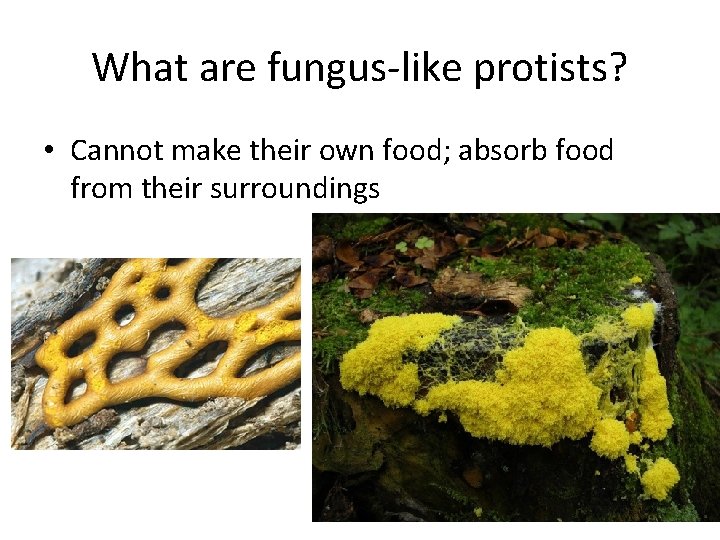
What are fungus-like protists? • Cannot make their own food; absorb food from their surroundings
- Slides: 14