
BACTERIA Prokaryotic cells contain one doublestranded DNA molecule

BACTERIA • Prokaryotic cells -- contain one double-stranded DNA molecule (consists as a tangled ball of yarn- the nucleoid region) • Many bacteria have extra circles of DNA called plasmids, which contain just a few genes.
Bacteria • Can be beneficial • Important in Ecosystem • E. coli and others are critical in biotech industry/ research • Can cause disease – Strep Thoat – Streptococcus – Anthrax – Bacillus anthracis – Legionnaires' Disease– Legionellosis – Lyme disease -- Borrelia
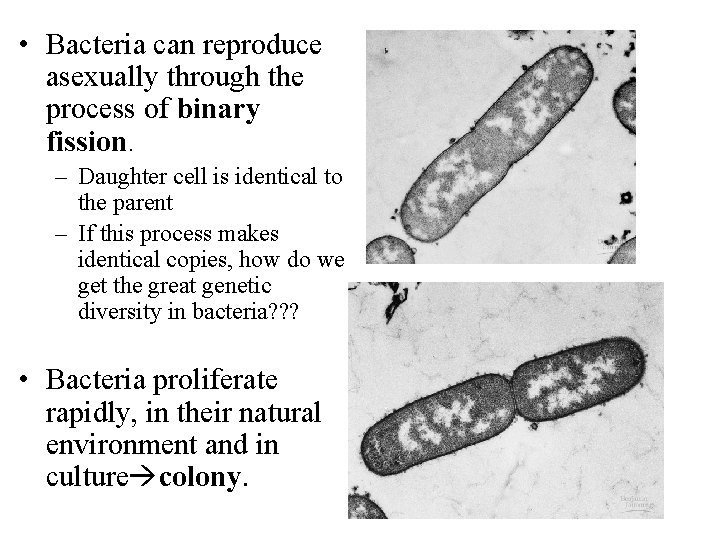
• Bacteria can reproduce asexually through the process of binary fission. – Daughter cell is identical to the parent – If this process makes identical copies, how do we get the great genetic diversity in bacteria? ? ? • Bacteria proliferate rapidly, in their natural environment and in culture colony.
Eliminating Microbes: Terms • Sterilization – destruction or removal (by filtration) of all microorganisms. Should be absolute. • Disinfection – Treatment to make not infectious. – Often destruction of bacteria, fungi and viruses but not spores. • Antisepsis – Destruction or inhibition of micro-organisms in living tissue.
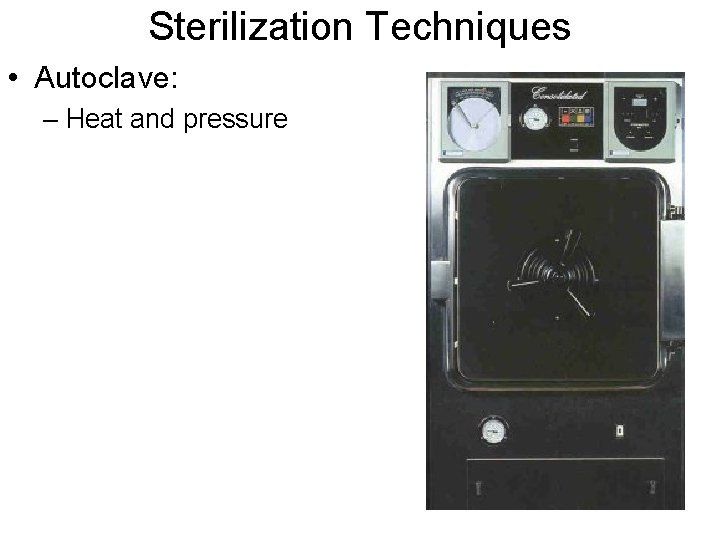
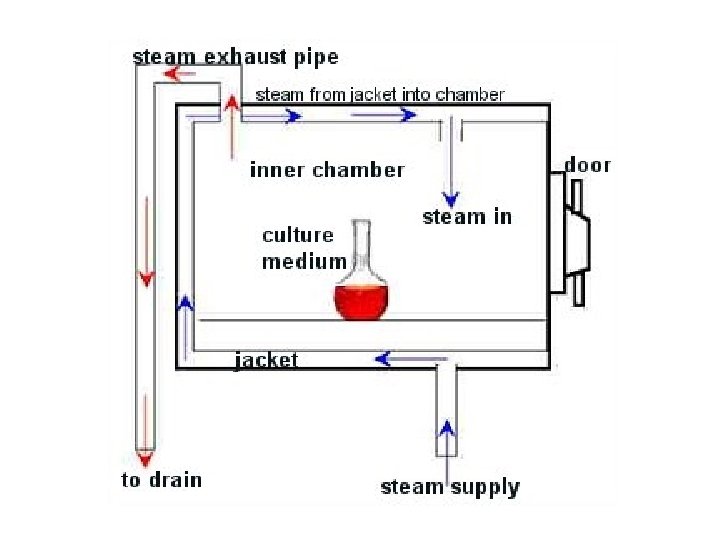
Sterilization Techniques • Autoclave: – Heat and pressure
Aseptic Technique Aseptic techniques must be used to reduce the likelihood of bacterial contamination. 1. Disinfect working areas 2. Minimize access to fomites and air 3. Use flames to kill bacteria as containers are opened.
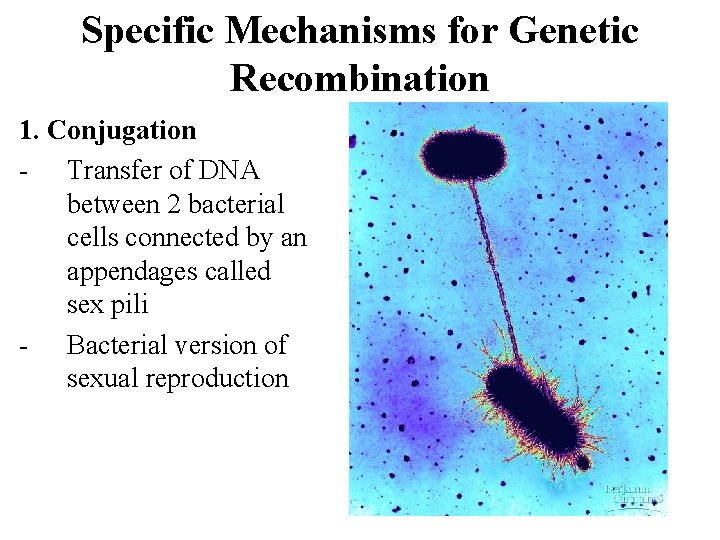
Specific Mechanisms for Genetic Recombination 1. Conjugation - Transfer of DNA between 2 bacterial cells connected by an appendages called sex pili - Bacterial version of sexual reproduction
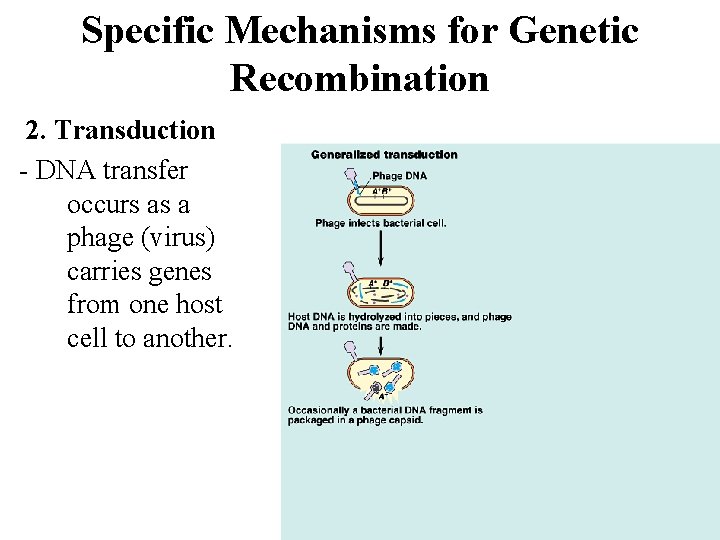
Specific Mechanisms for Genetic Recombination 2. Transduction - DNA transfer occurs as a phage (virus) carries genes from one host cell to another.
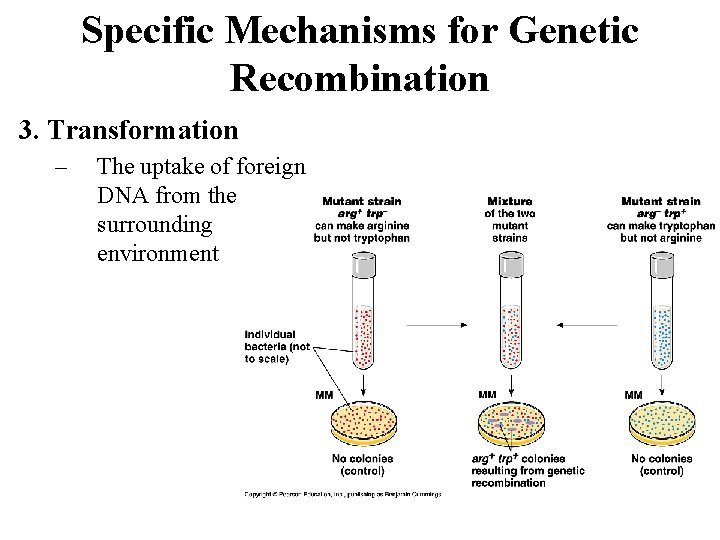
Specific Mechanisms for Genetic Recombination 3. Transformation – The uptake of foreign DNA from the surrounding environment
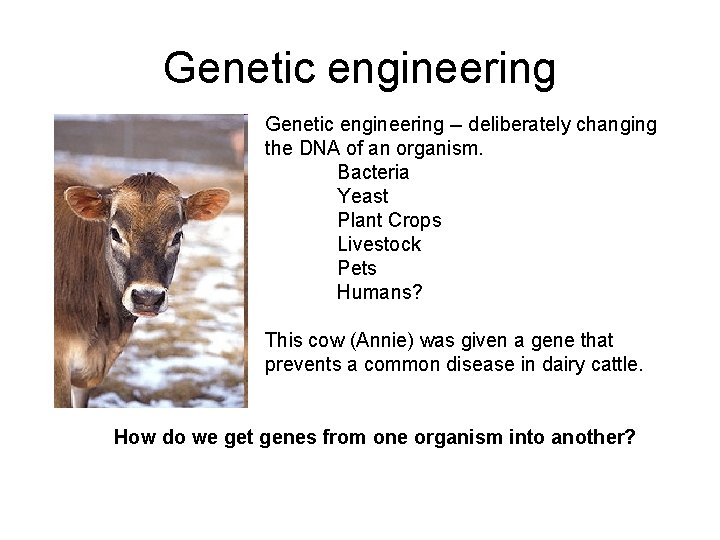
Genetic engineering -- deliberately changing the DNA of an organism. Bacteria Yeast Plant Crops Livestock Pets Humans? This cow (Annie) was given a gene that prevents a common disease in dairy cattle. How do we get genes from one organism into another?
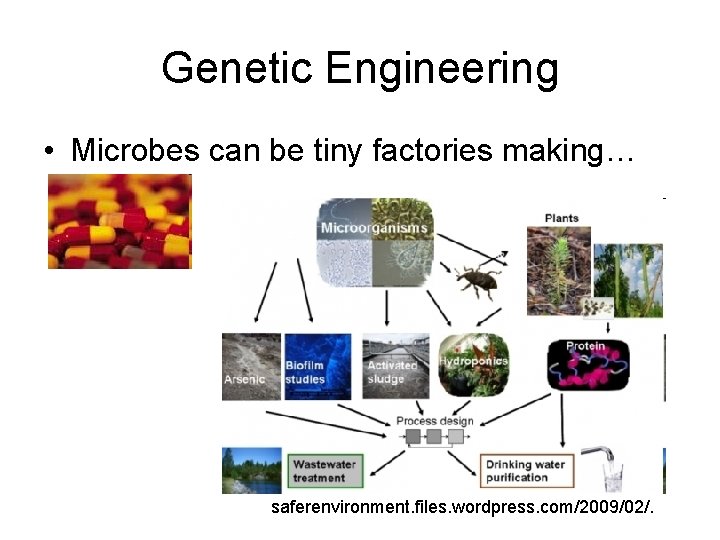
Genetic Engineering • Microbes can be tiny factories making… saferenvironment. files. wordpress. com/2009/02/.
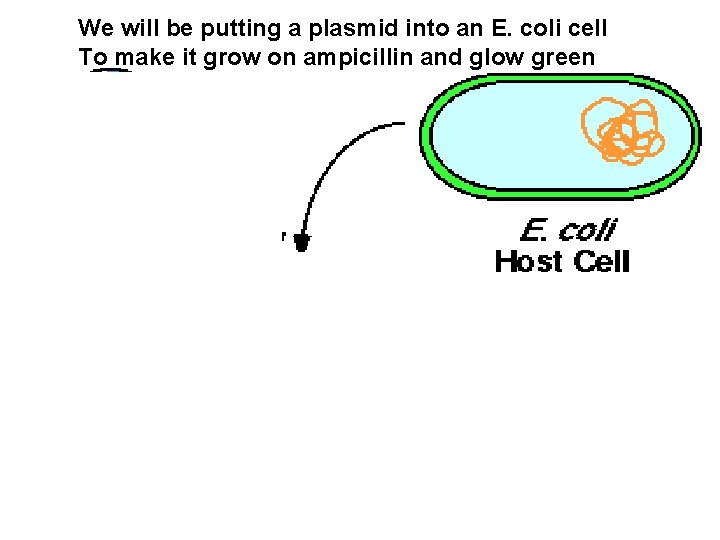
We will be putting a plasmid into an E. coli cell To make it grow on ampicillin and glow green
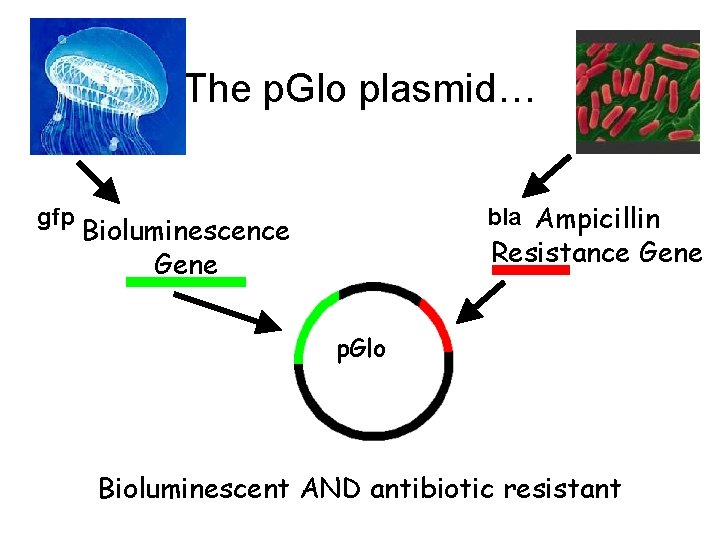
The p. Glo plasmid… gfp bla Ampicillin Bioluminescence Gene Resistance Gene p. Glo Bioluminescent AND antibiotic resistant
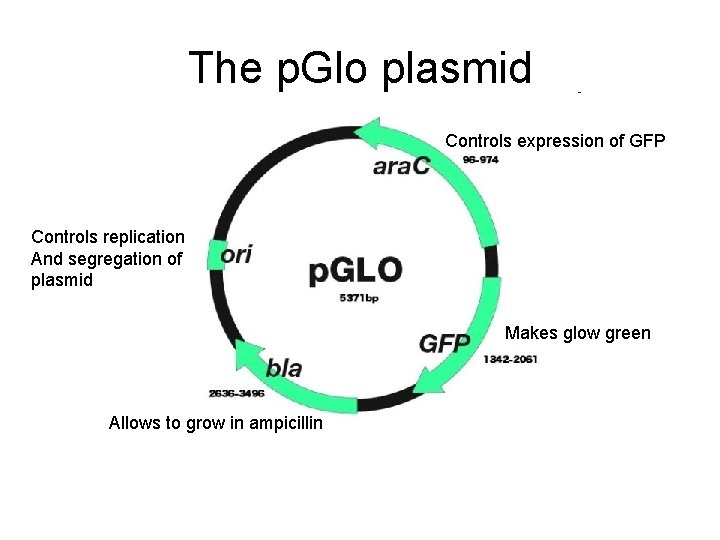
The p. Glo plasmid Controls expression of GFP Controls replication And segregation of plasmid Makes glow green Allows to grow in ampicillin

Antibiotic Resistance Many antibiotics attack bacteria specific processes such as targeting cell wall formation. Some bacteria make proteins that protect them from antibiotics. Genes for antibiotic resistance are typically on plasmids.
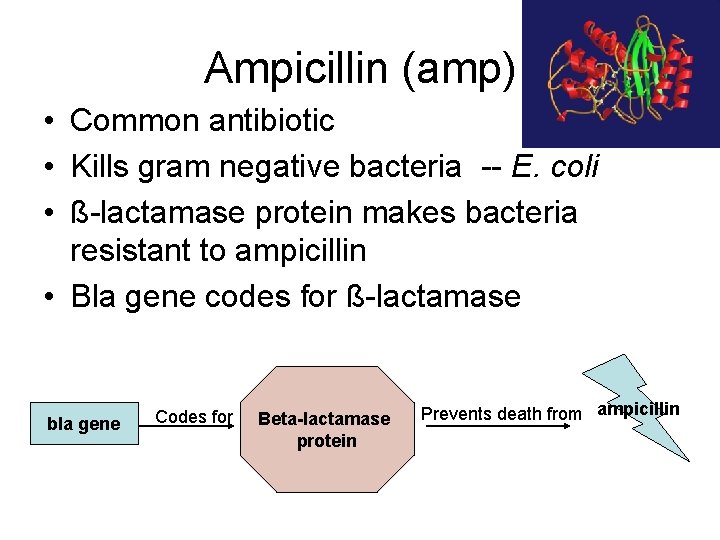
Ampicillin (amp) • Common antibiotic • Kills gram negative bacteria -- E. coli • ß-lactamase protein makes bacteria resistant to ampicillin • Bla gene codes for ß-lactamase bla gene Codes for Beta-lactamase protein Prevents death from ampicillin
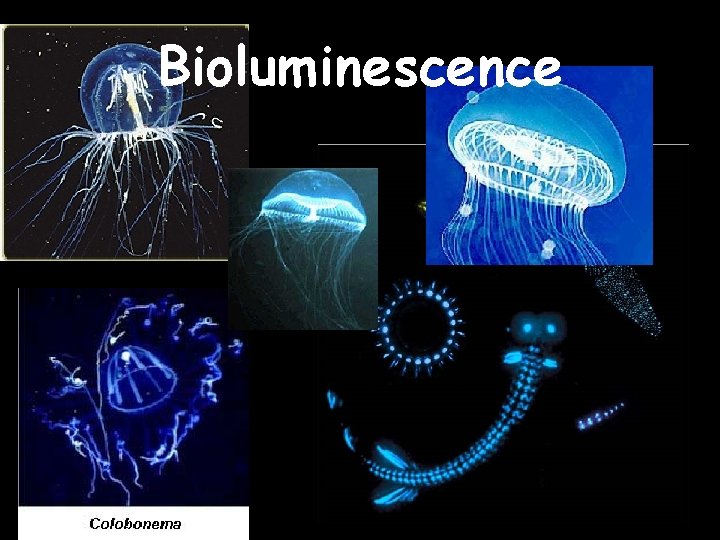
Bioluminescence
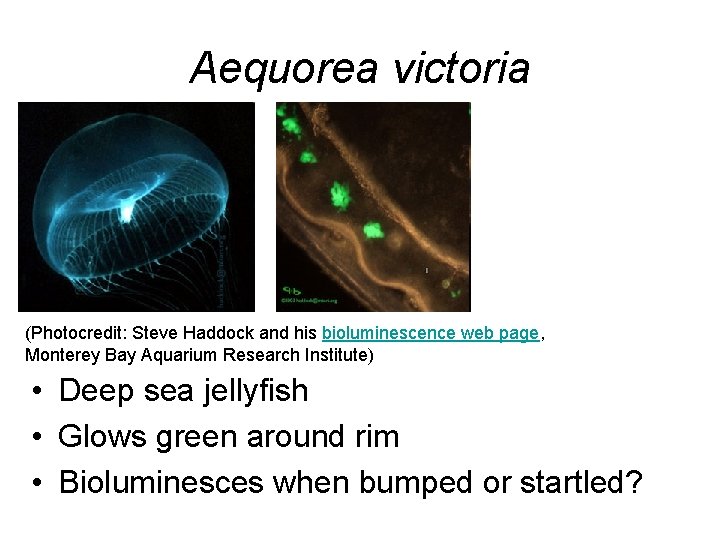
Aequorea victoria (Photocredit: Steve Haddock and his bioluminescence web page, Monterey Bay Aquarium Research Institute) • Deep sea jellyfish • Glows green around rim • Bioluminesces when bumped or startled?
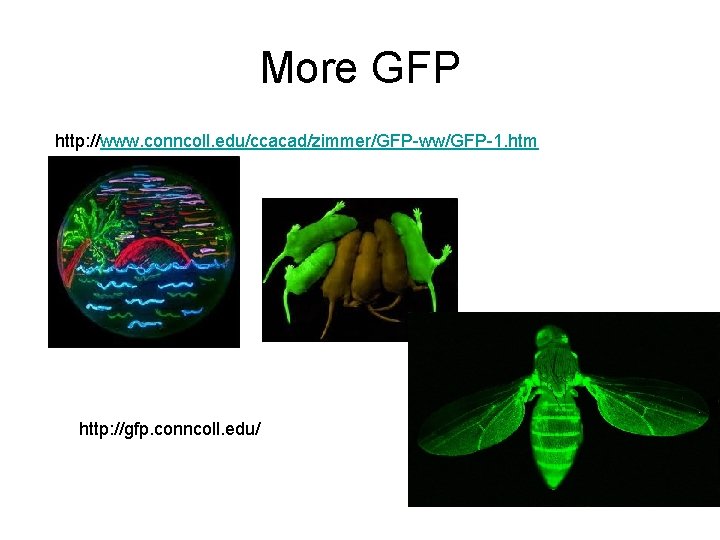
More GFP http: //www. conncoll. edu/ccacad/zimmer/GFP-ww/GFP-1. htm http: //gfp. conncoll. edu/
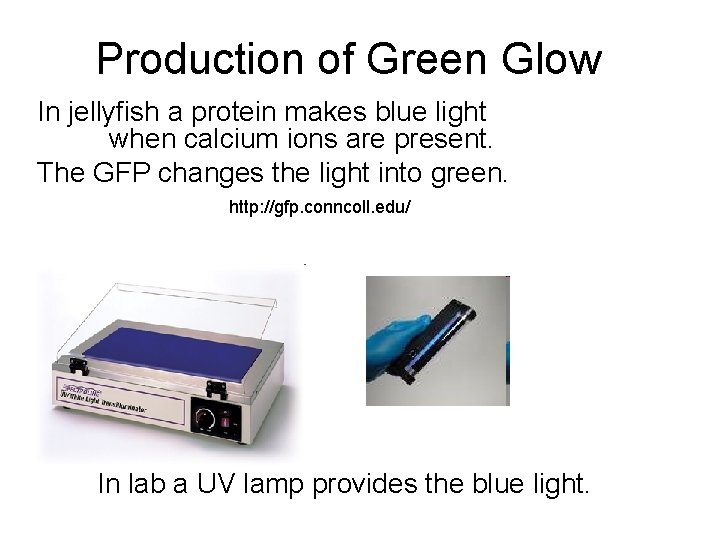
Production of Green Glow In jellyfish a protein makes blue light when calcium ions are present. The GFP changes the light into green. http: //gfp. conncoll. edu/ In lab a UV lamp provides the blue light.
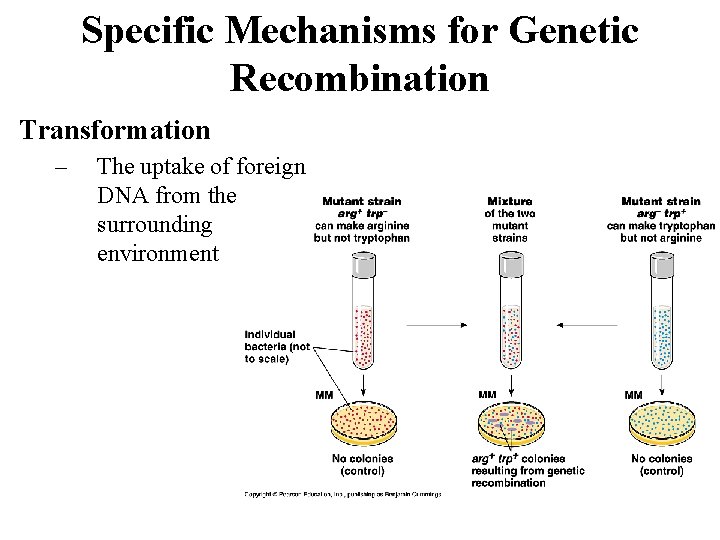
Specific Mechanisms for Genetic Recombination Transformation – The uptake of foreign DNA from the surrounding environment
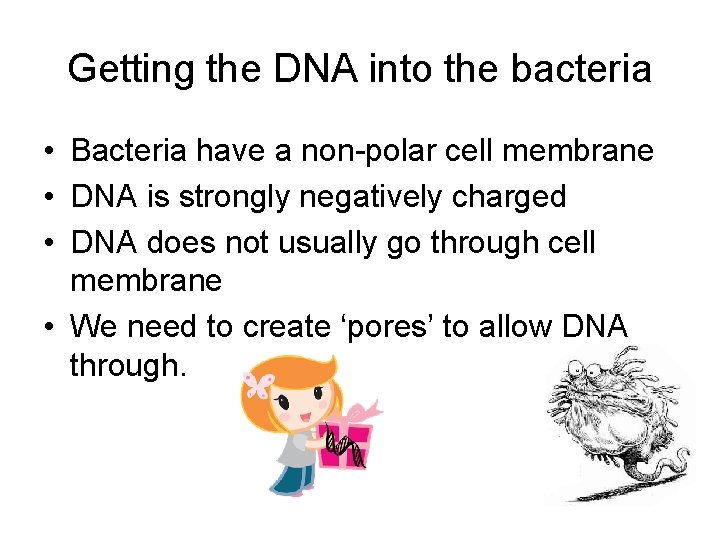
Getting the DNA into the bacteria • Bacteria have a non-polar cell membrane • DNA is strongly negatively charged • DNA does not usually go through cell membrane • We need to create ‘pores’ to allow DNA through.
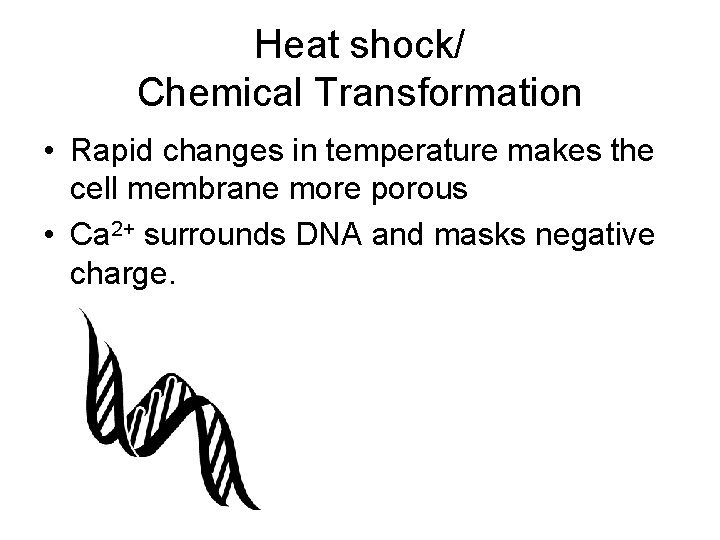
Heat shock/ Chemical Transformation • Rapid changes in temperature makes the cell membrane more porous • Ca 2+ surrounds DNA and masks negative charge.
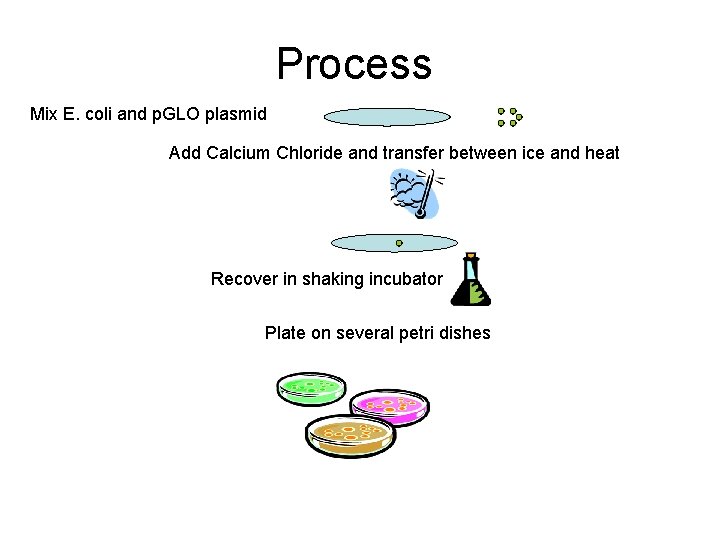
Process Mix E. coli and p. GLO plasmid Add Calcium Chloride and transfer between ice and heat Recover in shaking incubator Plate on several petri dishes
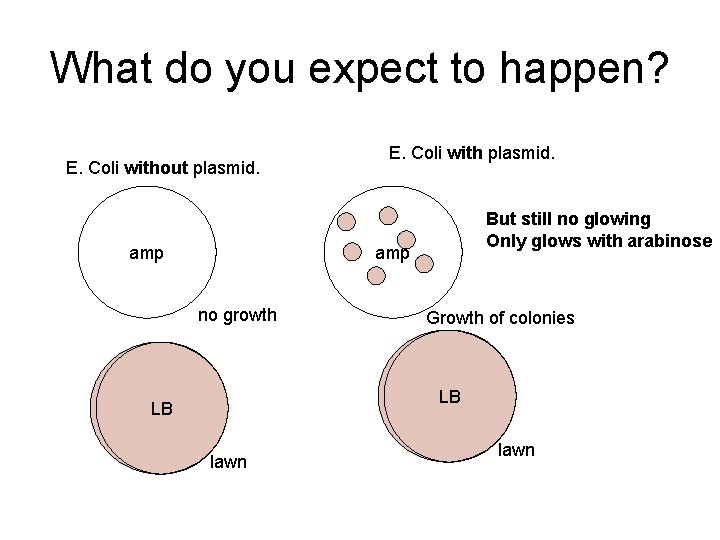
What do you expect to happen? E. Coli without plasmid. amp E. Coli with plasmid. But still no glowing Only glows with arabinose amp no growth Growth of colonies LB LB lawn
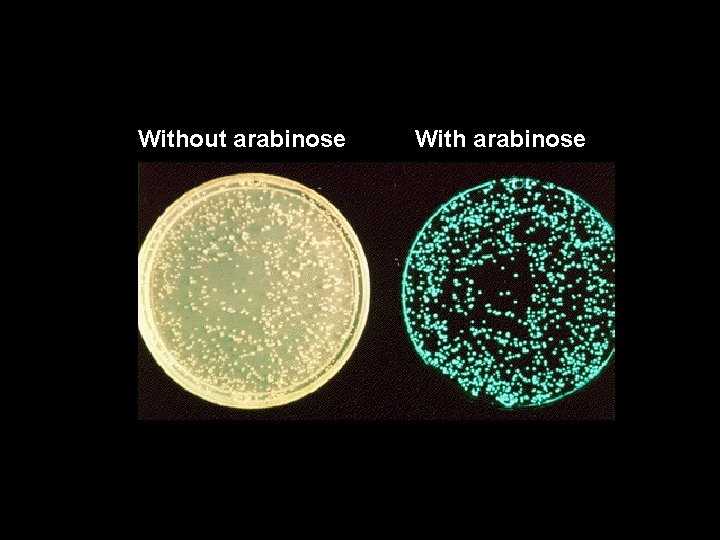
Without arabinose With arabinose
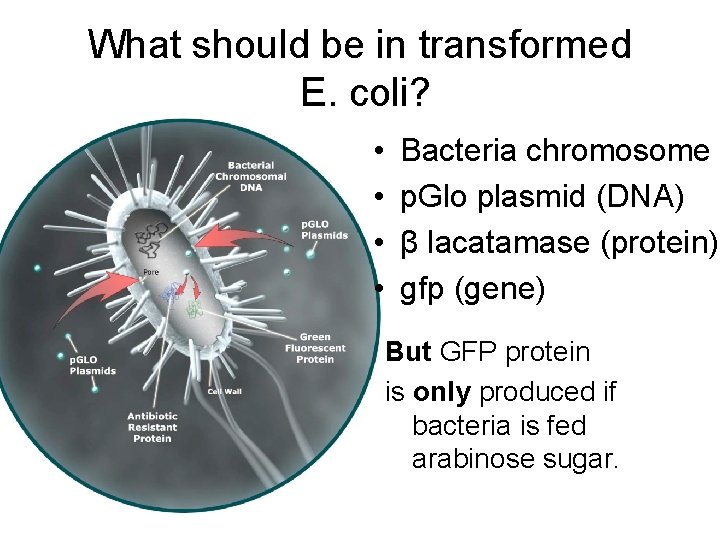
What should be in transformed E. coli? • • Bacteria chromosome p. Glo plasmid (DNA) β lacatamase (protein) gfp (gene) But GFP protein is only produced if bacteria is fed arabinose sugar.
Growing Microbes • Innoculation – Introduction of bacteria into new location – Heat-sterilized loop to spread on the surface of agar. – Liquid broth can be introduced using a sterile pipette • Incubation – Put at fixed temperature – Often with aeration.
- Slides: 30