
Bacteria of extreme environment Extreme halophiles Prokaryotes that
Bacteria of extreme environment
Extreme halophiles • Prokaryotes that inhabit highly saline environments are called extreme halophiles theses organisms require 1. 5 to 4 M (9 -23%) Na. Cl for optimal growth • Extreme halophiles belong to Archaea are collectively called halobacteria. Examples Halobacterium sp. • Cell wall is stabilized by sodium ions. • Cells of Halobacterium pump large amounts of K+ from the environment into the cell to counter the Na+. cell wall is made of glycoprotein - high content of acidic amino acids. cytoplasmic proteins are also highly acidic • Extremely halophilic Archaea are chemo-organotrophs.
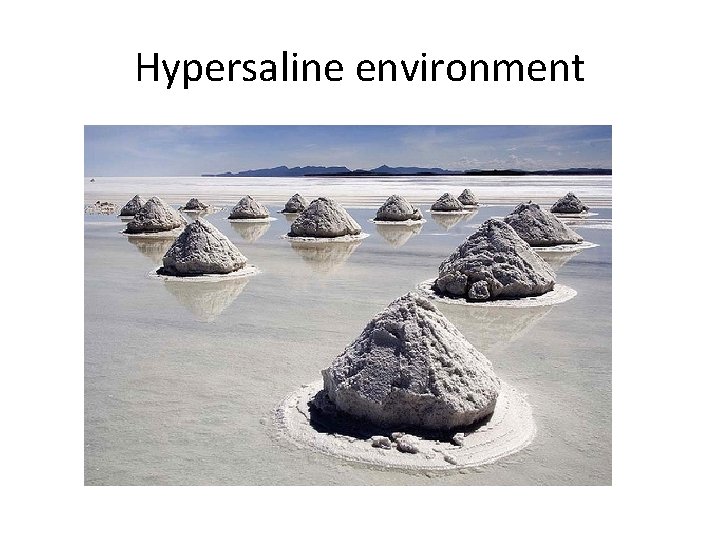
Hypersaline environment
Deep sea bacteria • Organisms that inhabit the deep sea overcome three major environmental extremes. • Low temperatures, high pressure and low nutrient levels. • Barotolerant groups up to 400 atm. pressure and barophilic above 400 atm. • Increased proportion of unsaturated fatty acids in their cytoplasmic membranes; cell wall also possesses specific outer membrane protein called Omp. H to overcome the high pressure conditions.

Hydrothermal bacteria • Hydrothermal vents are thermal springs on ocean floor where hot basalt and magma lie very near the floor • Sulphur – oxidizing chemolithotrophs -Thiobacillus, thiothrix and Beggiatoa are present • Include nitrifying bacteria, hydrogen, iron and manganese oxidizing bacteria live in association with other invertebrate • At great depths, hydrothermal fluid is emitted at temperatures of 270 -380 o. C and bacteria such as Methanopyrus exist in walls of such vents also. • Vents are called black smokers.
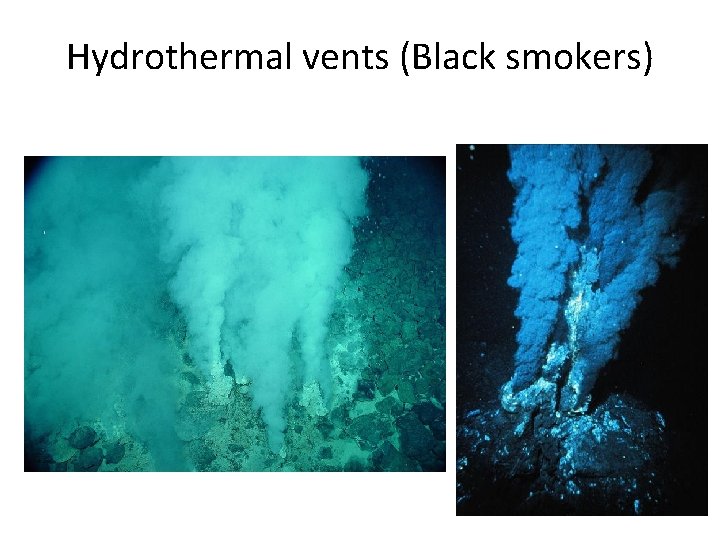
Hydrothermal vents (Black smokers)
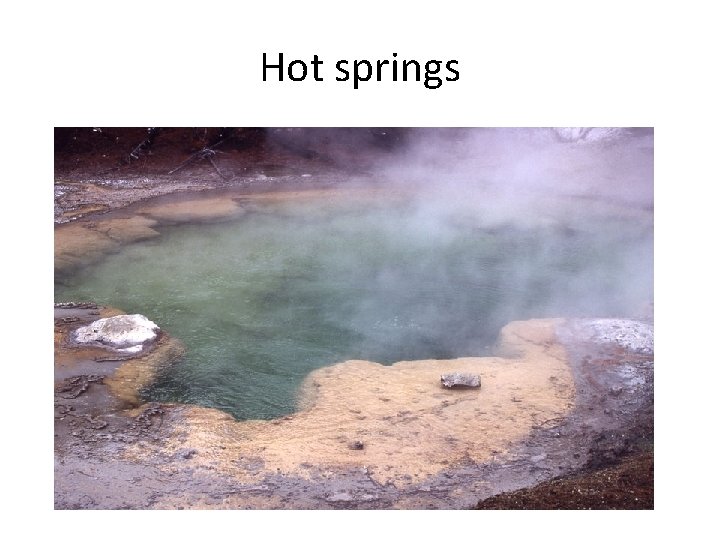
Hot springs
- Slides: 7