
BACTERIA NOTES Cellular Evolution Prokaryotes and Eukaryotes Current
BACTERIA NOTES
Cellular Evolution – Prokaryotes and Eukaryotes • Current evidence indicates that eukaryotes evolved from prokaryotes between 1 and 1. 5 billion years ago • Two theories: 1. Infolding theory 2. Endosymbiotic theory 2
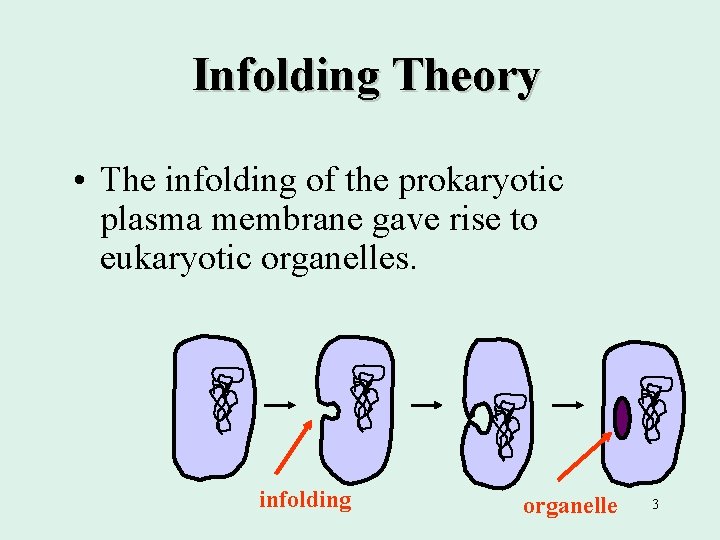
Infolding Theory • The infolding of the prokaryotic plasma membrane gave rise to eukaryotic organelles. infolding organelle 3

Endosymbiotic Theory • Endosymbiosis refers to one species living within another(the host) • Movement of smaller photosynthetic & heterotrophic prokaryotes into larger prokaryotic host cells • Formed cell organelles chloroplast mitochondria 4
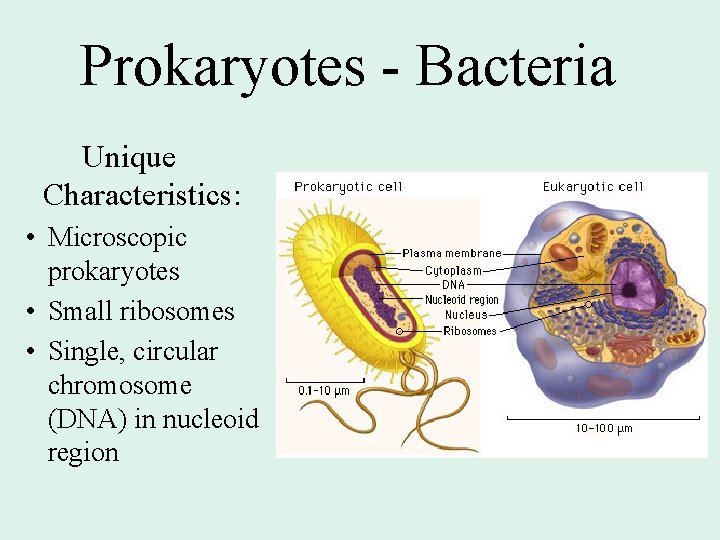
Prokaryotes - Bacteria Unique Characteristics: • Microscopic prokaryotes • Small ribosomes • Single, circular chromosome (DNA) in nucleoid region
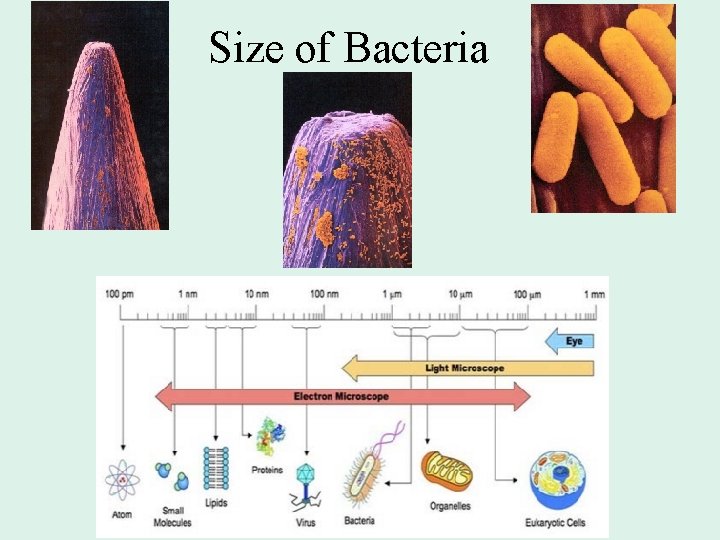
Size of Bacteria
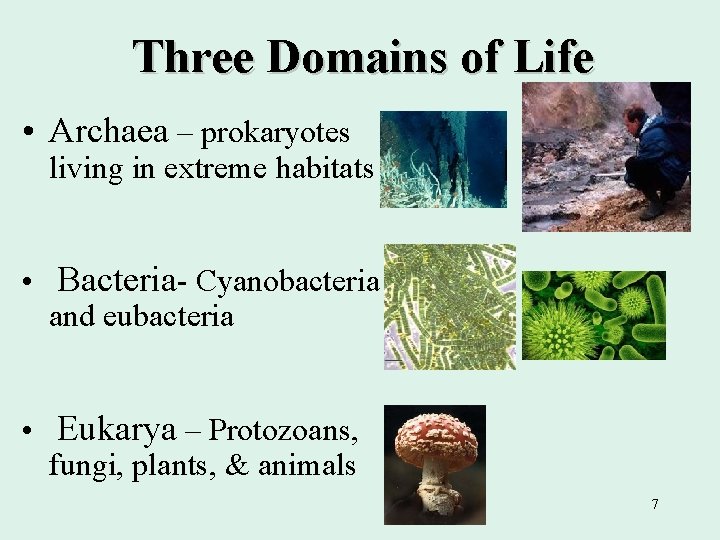
Three Domains of Life • Archaea – prokaryotes living in extreme habitats • Bacteria- Cyanobacteria and eubacteria • Eukarya – Protozoans, fungi, plants, & animals 7
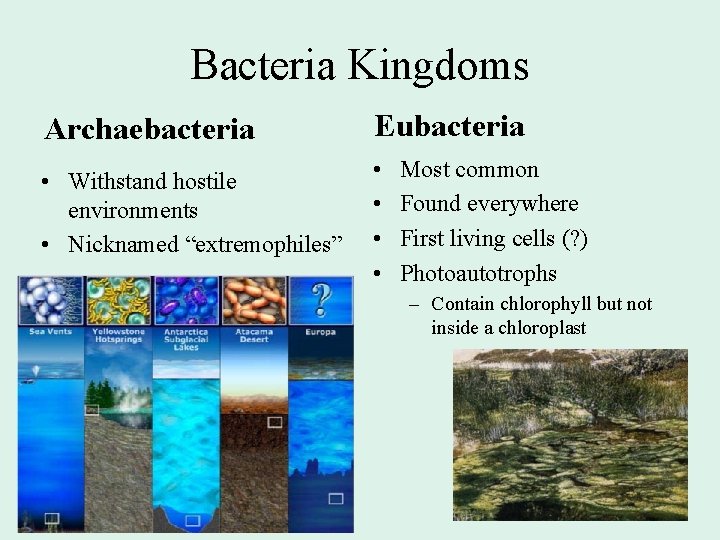
Bacteria Kingdoms Archaebacteria Eubacteria • Withstand hostile environments • Nicknamed “extremophiles” • • Most common Found everywhere First living cells (? ) Photoautotrophs – Contain chlorophyll but not inside a chloroplast
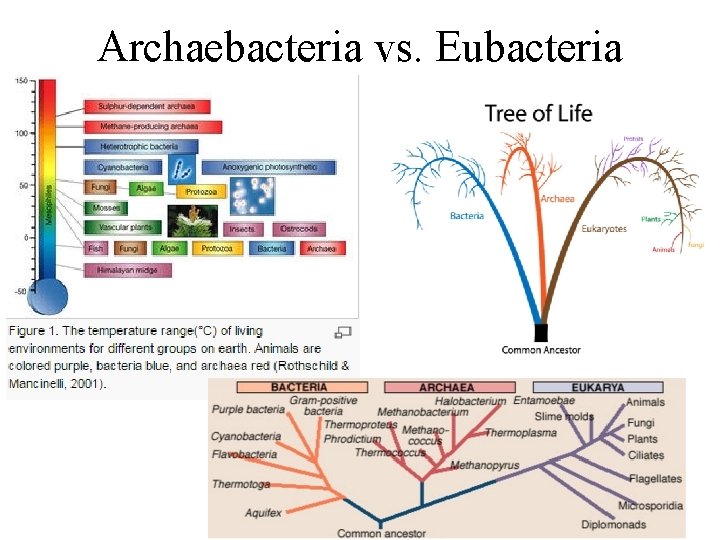
Archaebacteria vs. Eubacteria
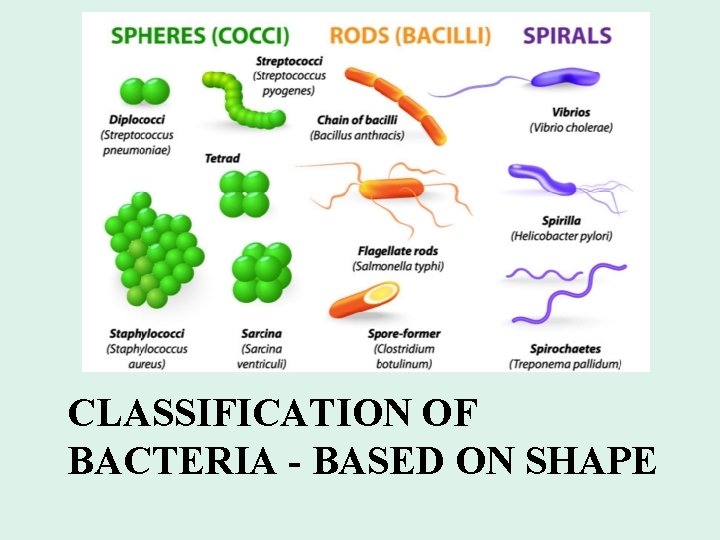
CLASSIFICATION OF BACTERIA - BASED ON SHAPE
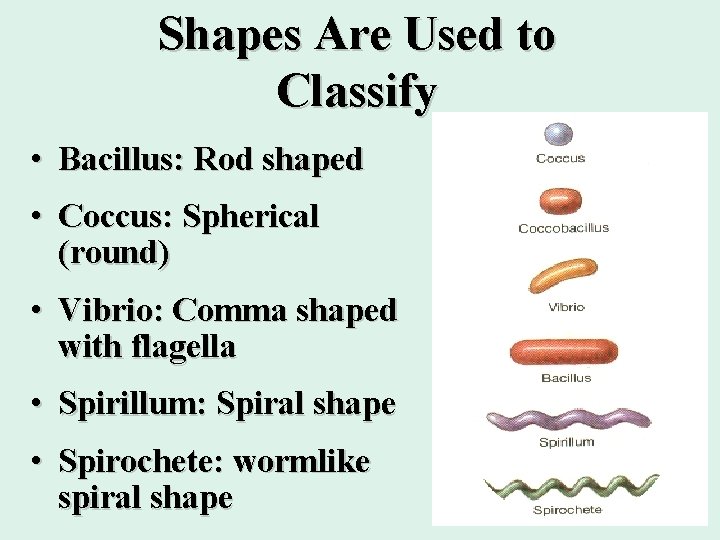
Shapes Are Used to Classify • Bacillus: Rod shaped • Coccus: Spherical (round) • Vibrio: Comma shaped with flagella • Spirillum: Spiral shape • Spirochete: wormlike spiral shape 11
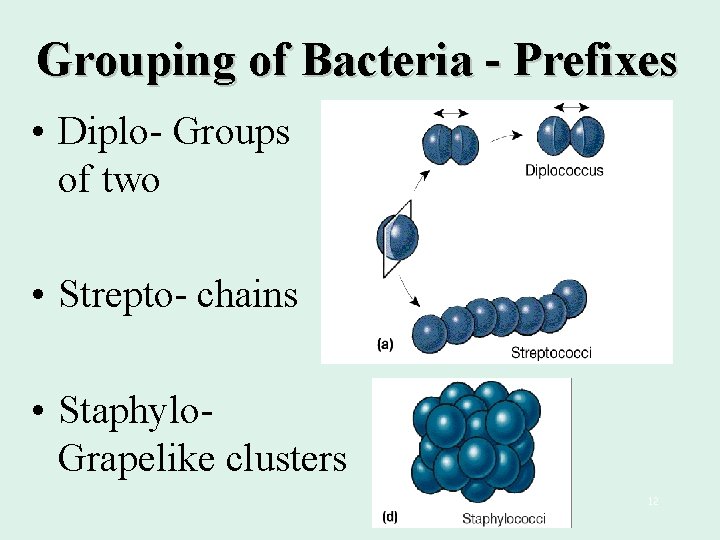
Grouping of Bacteria - Prefixes • Diplo- Groups of two • Strepto- chains • Staphylo. Grapelike clusters 12

Diplococcus 13
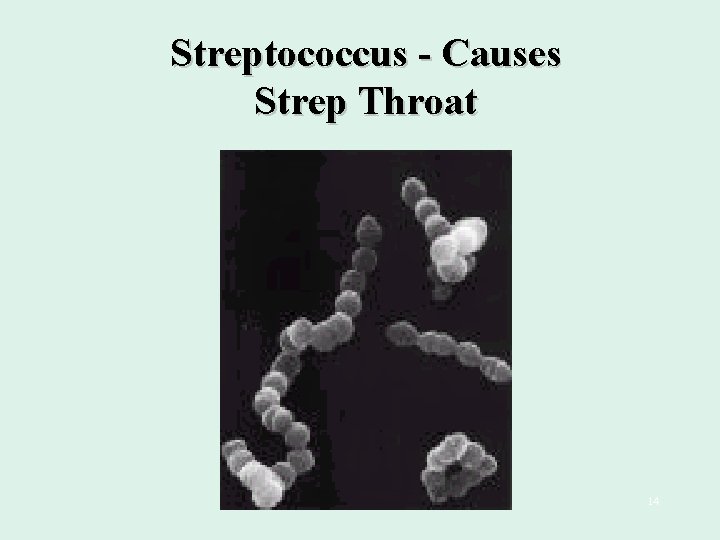
Streptococcus - Causes Strep Throat 14
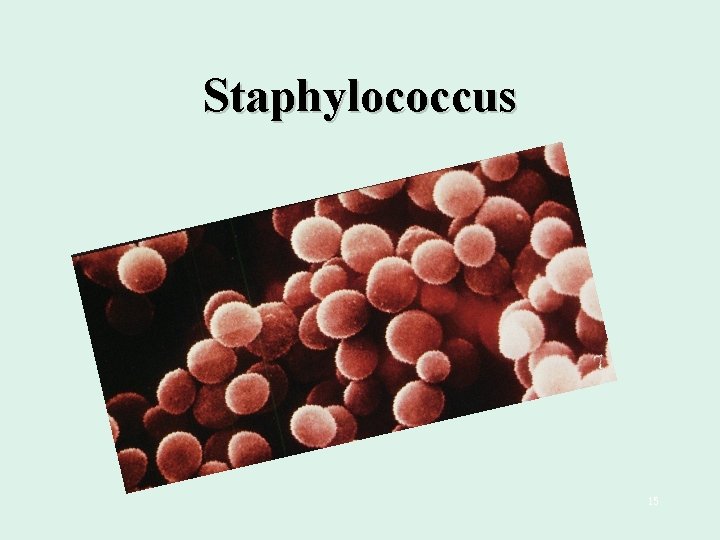
Staphylococcus 15
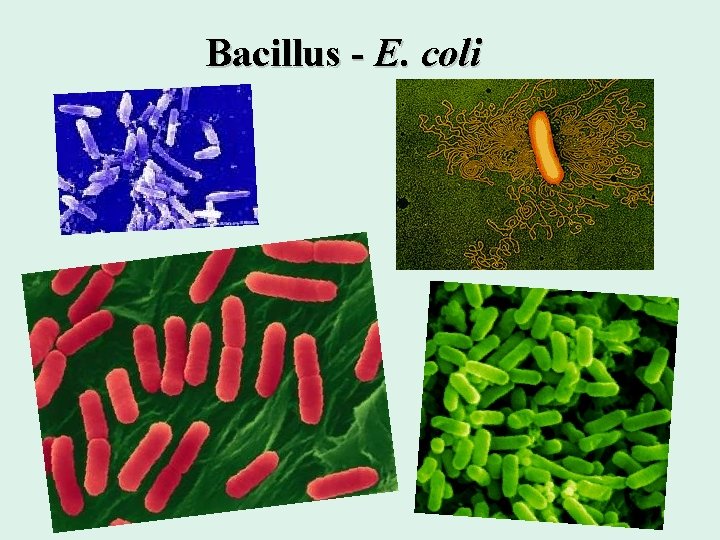
Bacillus - E. coli 16
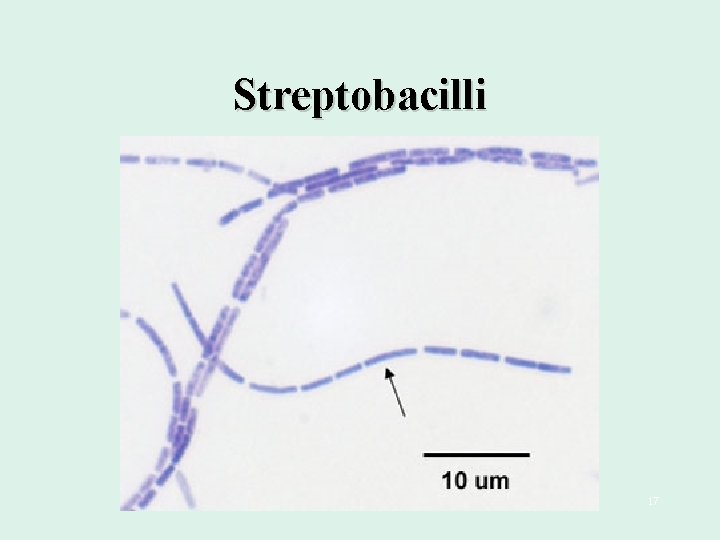
Streptobacilli 17
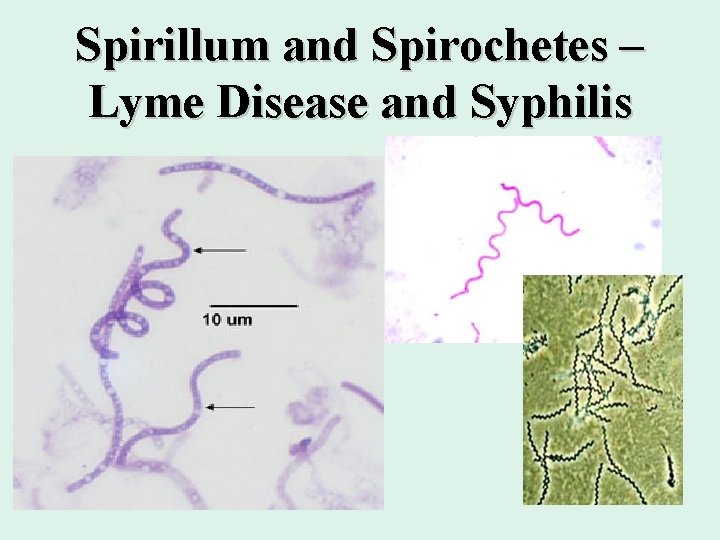
Spirillum and Spirochetes – Lyme Disease and Syphilis 18
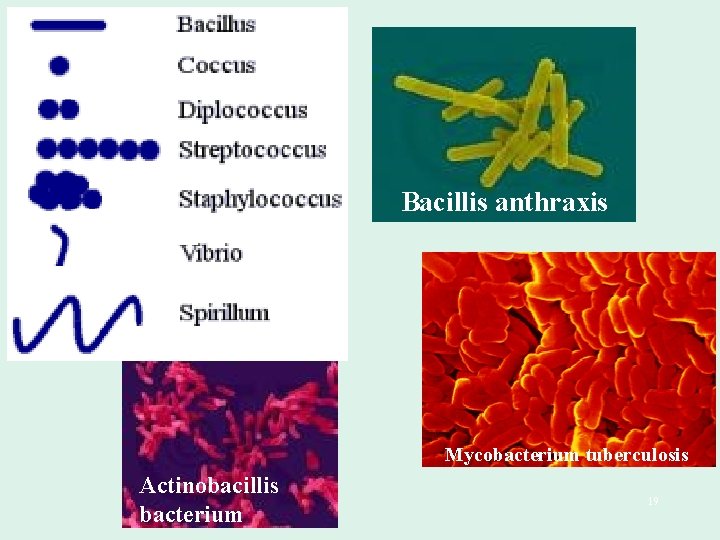
Bacillis anthraxis Mycobacterium tuberculosis Actinobacillis bacterium 19
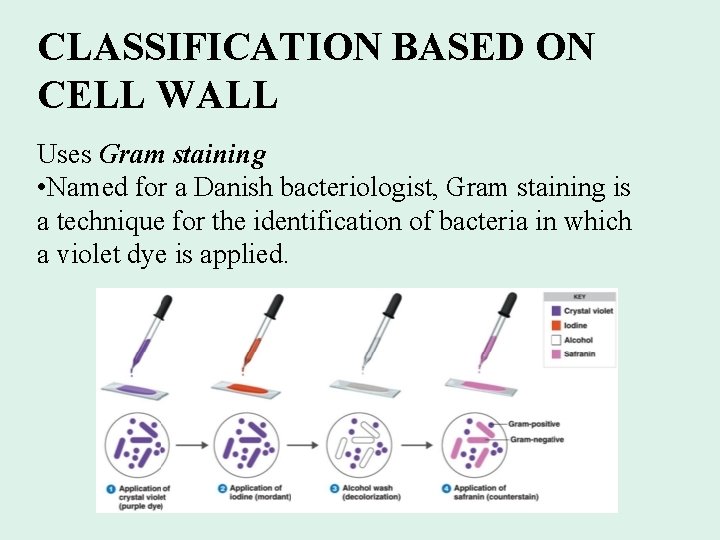
CLASSIFICATION BASED ON CELL WALL Uses Gram staining • Named for a Danish bacteriologist, Gram staining is a technique for the identification of bacteria in which a violet dye is applied.
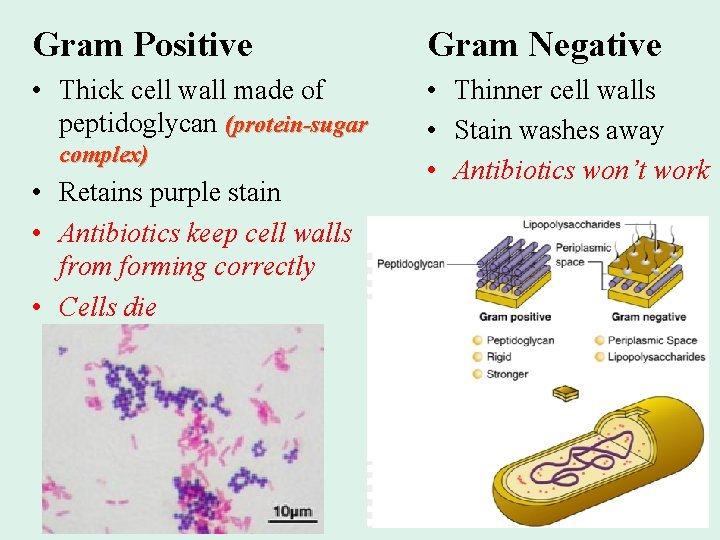
Gram Positive Gram Negative • Thick cell wall made of peptidoglycan (protein-sugar • Thinner cell walls • Stain washes away • Antibiotics won’t work complex) • Retains purple stain • Antibiotics keep cell walls from forming correctly • Cells die
EXAMPLES Gram Positive • • • Gram Negative • Rhizobacteria grow in Lactobacilli (makes yogurt root nodules of legumes & buttermilk) (soybeans, peanuts) Actinomycetes (make • Fix N 2 from air into antibiotics) usable ammonia (NH 3) Clostridium (lockjaw (nitrogen fixation) bacteria) Streptococcus (strep throat) • Rickettsiae -parasitic bacteria carried by ticks Staphylococcus (staph infections) • Cause Lyme disease & Rocky Mountain Spotted Fever 22 22
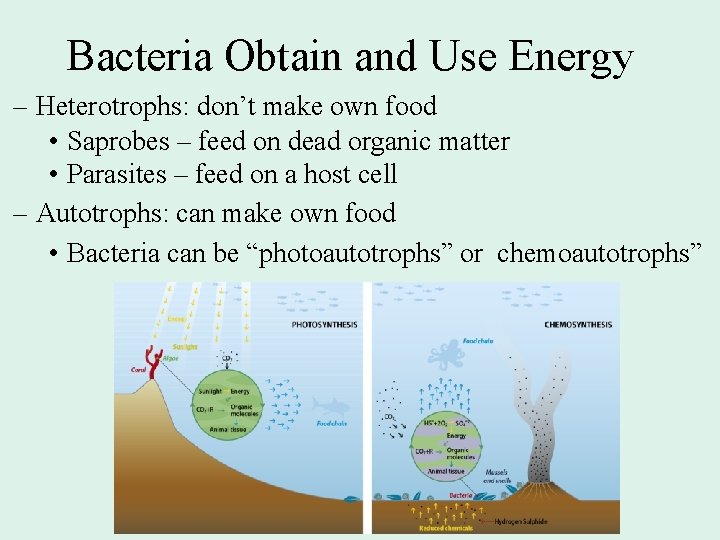
Bacteria Obtain and Use Energy – Heterotrophs: don’t make own food • Saprobes – feed on dead organic matter • Parasites – feed on a host cell – Autotrophs: can make own food • Bacteria can be “photoautotrophs” or chemoautotrophs”
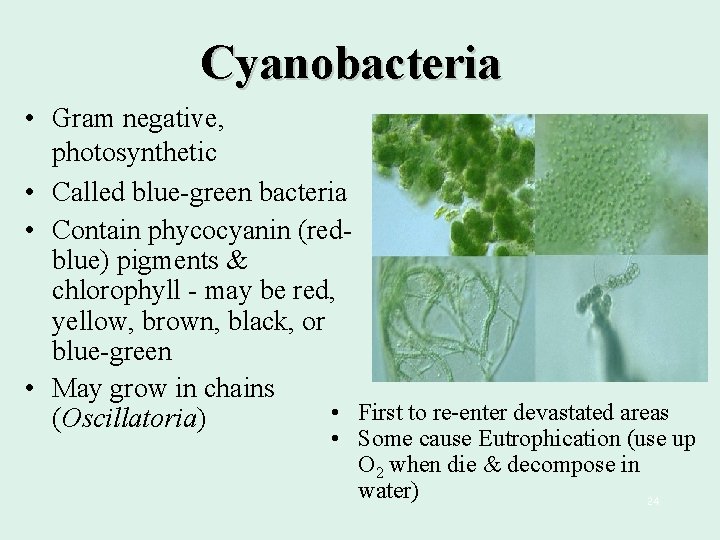
Cyanobacteria • Gram negative, photosynthetic • Called blue-green bacteria • Contain phycocyanin (redblue) pigments & chlorophyll - may be red, yellow, brown, black, or blue-green • May grow in chains • First to re-enter devastated areas (Oscillatoria) • Some cause Eutrophication (use up O 2 when die & decompose in water) 24
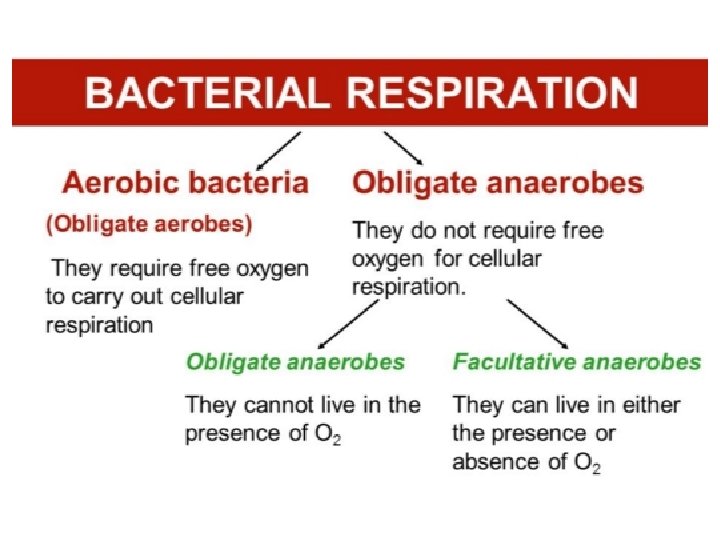
TYPES OF CELLULAR RESPIRATION IN BACTERIA • Obligate Aerobes – require O 2 (tuberculosis bacteria) • Obligate Anaerobes – die if O 2 is present (tetanus) • Facultative Anaerobes – don’t need O 2, but aren’t killed by it (E. coli) Anaerobes = carry out fermentation Aerobes = carry out cellular respiration
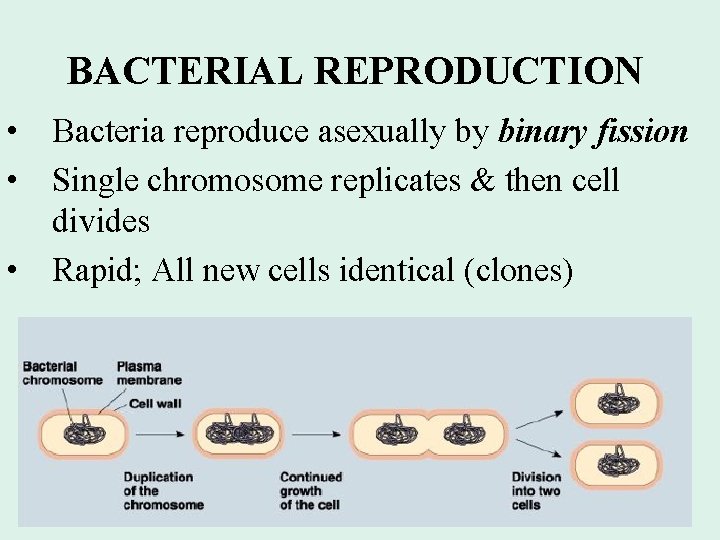
BACTERIAL REPRODUCTION • Bacteria reproduce asexually by binary fission • Single chromosome replicates & then cell divides • Rapid; All new cells identical (clones)
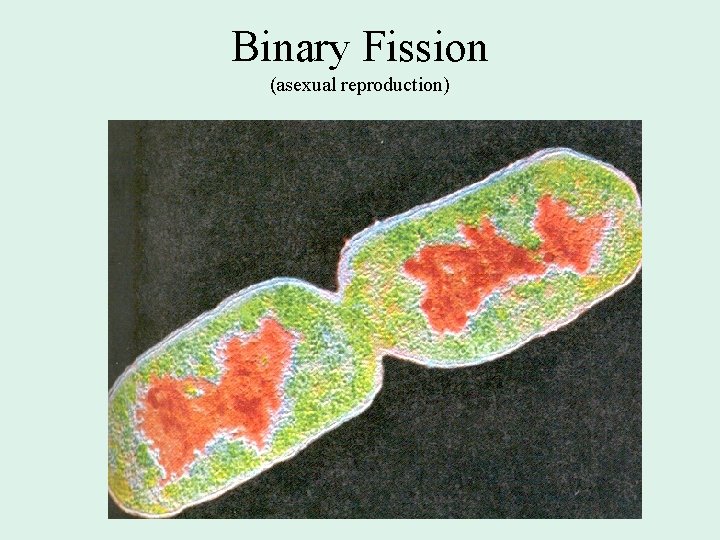
Binary Fission (asexual reproduction)
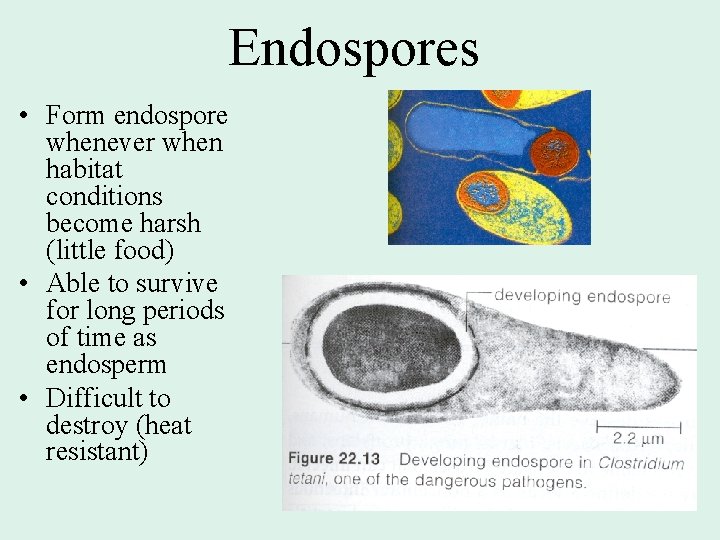
Endospores • Form endospore whenever when habitat conditions become harsh (little food) • Able to survive for long periods of time as endosperm • Difficult to destroy (heat resistant)
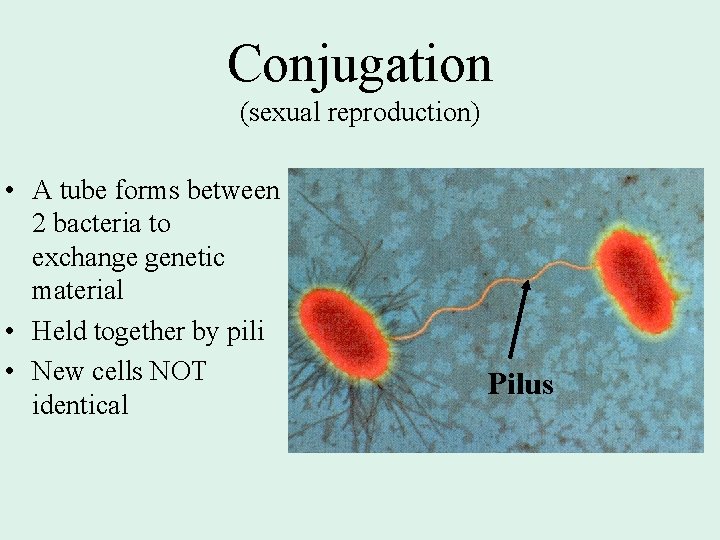
Conjugation (sexual reproduction) • A tube forms between 2 bacteria to exchange genetic material • Held together by pili • New cells NOT identical Pilus
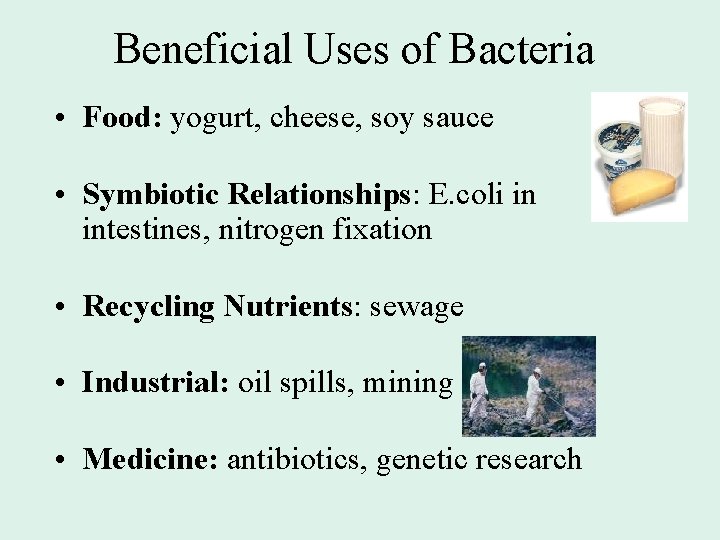
Beneficial Uses of Bacteria • Food: yogurt, cheese, soy sauce • Symbiotic Relationships: E. coli in intestines, nitrogen fixation • Recycling Nutrients: sewage • Industrial: oil spills, mining • Medicine: antibiotics, genetic research
- Slides: 31