
BACTERIA METABOLISM BY JULIA OWEN AND THEO OVERVIEW
BACTERIA METABOLISM BY: JULIA, OWEN AND THEO
OVERVIEW Different cells and how they obtain energy How cells release energy Photosynthes is and Cellular Respiration
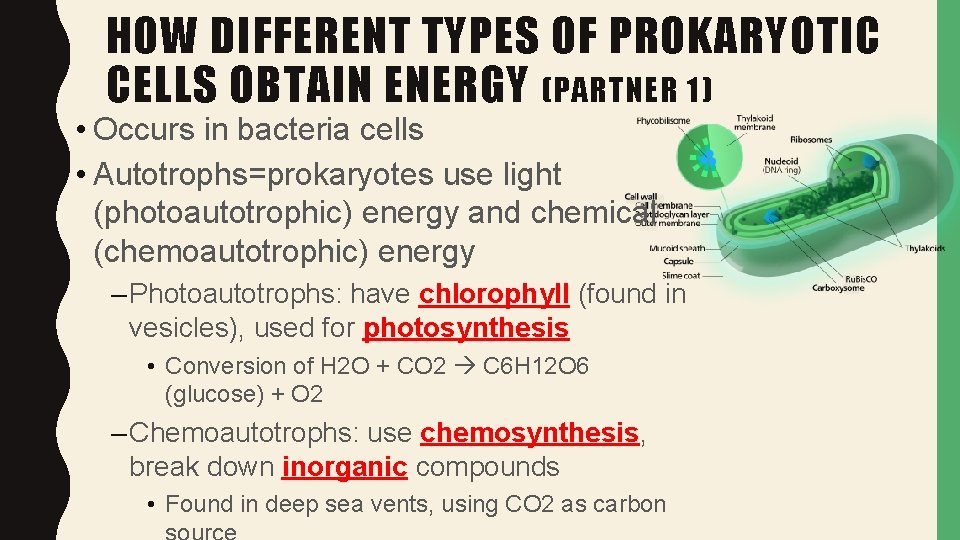
HOW DIFFERENT TYPES OF PROKARYOTIC CELLS OBTAIN ENERGY (PARTNER 1) • Occurs in bacteria cells • Autotrophs=prokaryotes use light (photoautotrophic) energy and chemical (chemoautotrophic) energy – Photoautotrophs: have chlorophyll (found in vesicles), used for photosynthesis • Conversion of H 2 O + CO 2 C 6 H 12 O 6 (glucose) + O 2 – Chemoautotrophs: use chemosynthesis, break down inorganic compounds • Found in deep sea vents, using CO 2 as carbon
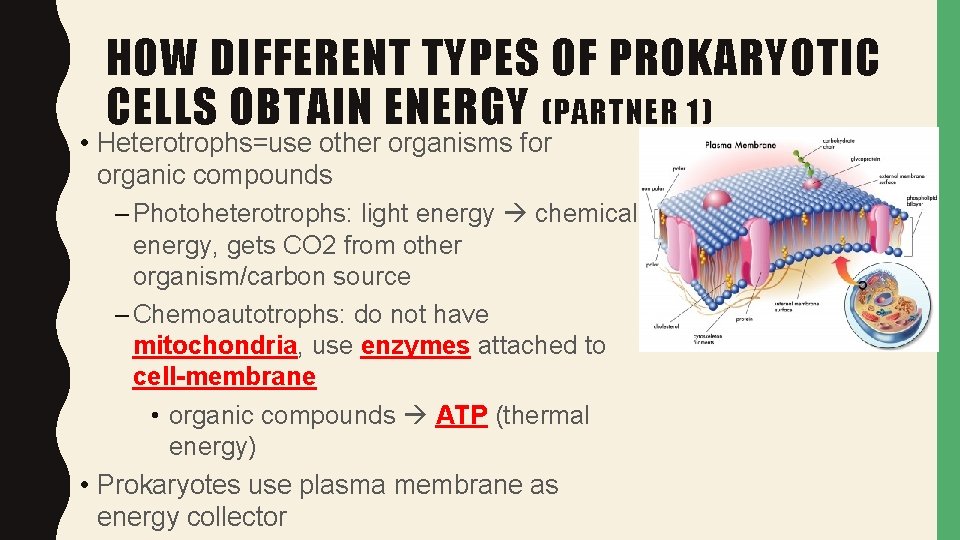
HOW DIFFERENT TYPES OF PROKARYOTIC CELLS OBTAIN ENERGY (PARTNER 1) • Heterotrophs=use other organisms for organic compounds – Photoheterotrophs: light energy chemical energy, gets CO 2 from other organism/carbon source – Chemoautotrophs: do not have mitochondria, use enzymes attached to cell-membrane • organic compounds ATP (thermal energy) • Prokaryotes use plasma membrane as energy collector
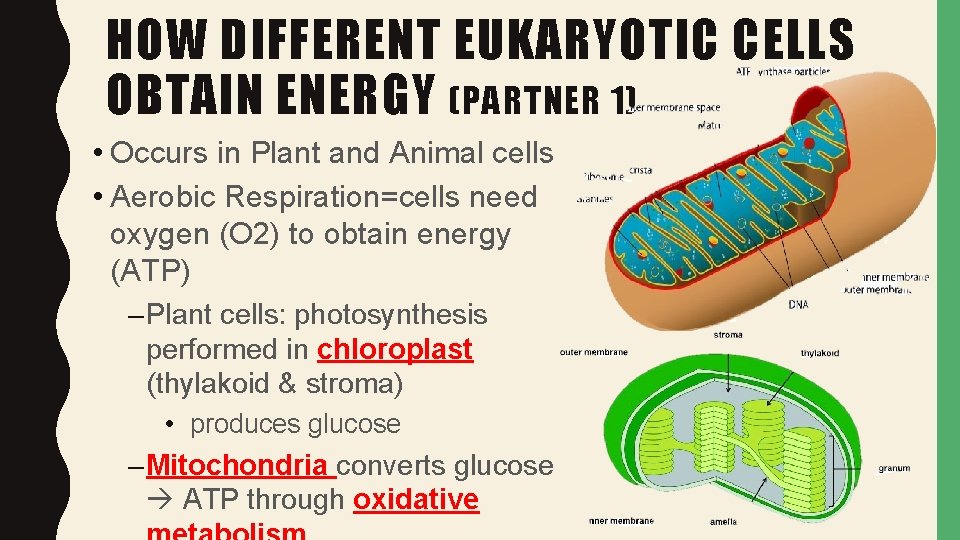
HOW DIFFERENT EUKARYOTIC CELLS OBTAIN ENERGY (PARTNER 1) • Occurs in Plant and Animal cells • Aerobic Respiration=cells need oxygen (O 2) to obtain energy (ATP) – Plant cells: photosynthesis performed in chloroplast (thylakoid & stroma) • produces glucose – Mitochondria converts glucose ATP through oxidative
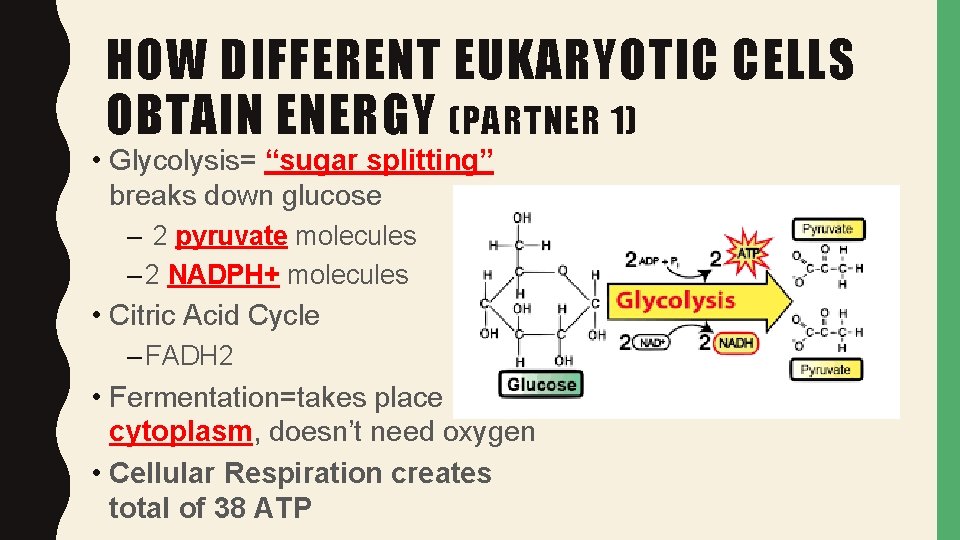
HOW DIFFERENT EUKARYOTIC CELLS OBTAIN ENERGY (PARTNER 1) • Glycolysis= “sugar splitting” breaks down glucose – 2 pyruvate molecules – 2 NADPH+ molecules • Citric Acid Cycle – FADH 2 • Fermentation=takes place in cytoplasm, doesn’t need oxygen • Cellular Respiration creates total of 38 ATP
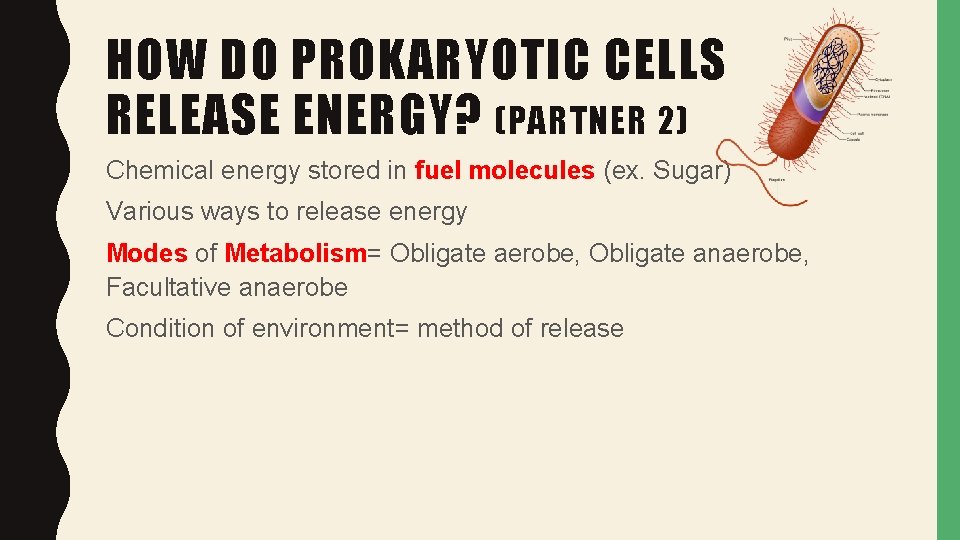
HOW DO PROKARYOTIC CELLS RELEASE ENERGY? (PARTNER 2) Chemical energy stored in fuel molecules (ex. Sugar) Various ways to release energy Modes of Metabolism= Obligate aerobe, Obligate anaerobe, Facultative anaerobe Condition of environment= method of release

MODE OF METABOLISM (PARTNER 2) Require to release prokaryotic energy Obligate Aerobe= requires oxygen to release energy, (ex. Mycobacterium tuberculosis: found in human lungs) Obligate Anaerobe= requires lack of oxygen to release energy, (ex. Clostridium botulinum: improperly sterilized canned food causes food poisoning) Facultative Anaerobe= with or without energy to release (ex. E. coli: sewage (oxygen) and human intestine (oxygen)
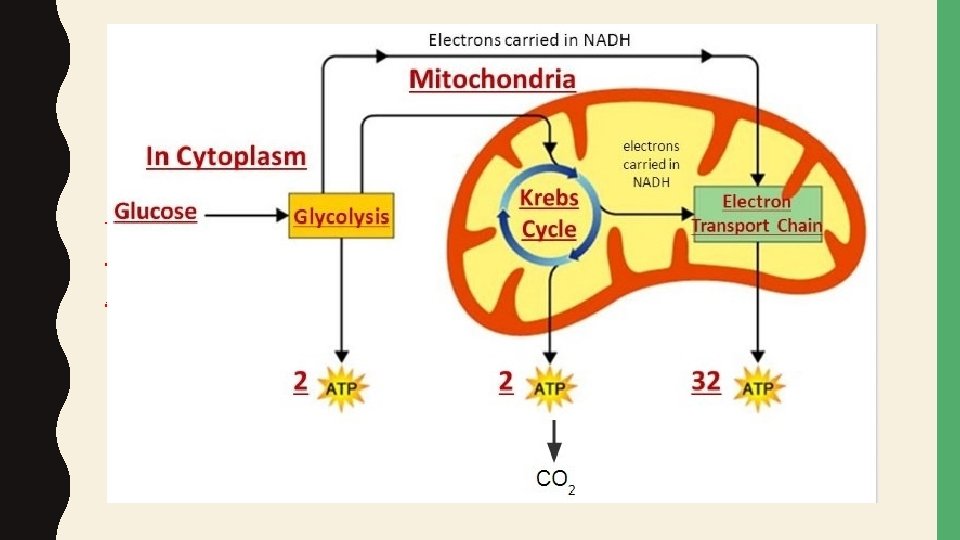
EUKARYOTIC CELLS CONVERT CHEMICAL ENERGY INTO ATP (PARTNER 2) Convert energy from one form to another Mitochondria converts chemical to ATP on eukaryotic cells Cellular Respiration occurs in mitochondria during Krebs Cycle ATP is used as a battery, used all around the cell
RELATION BETWEEN PHOTOSYNTHESIS AND CELLULAR RESPIRATION • Photosynthesis produces glucose used in cellular respiration • Glucose is turned back into carbon dioxide, gets reused in photosynthesis • Without oxygen produced by photosynthesis much less ATP would be produced
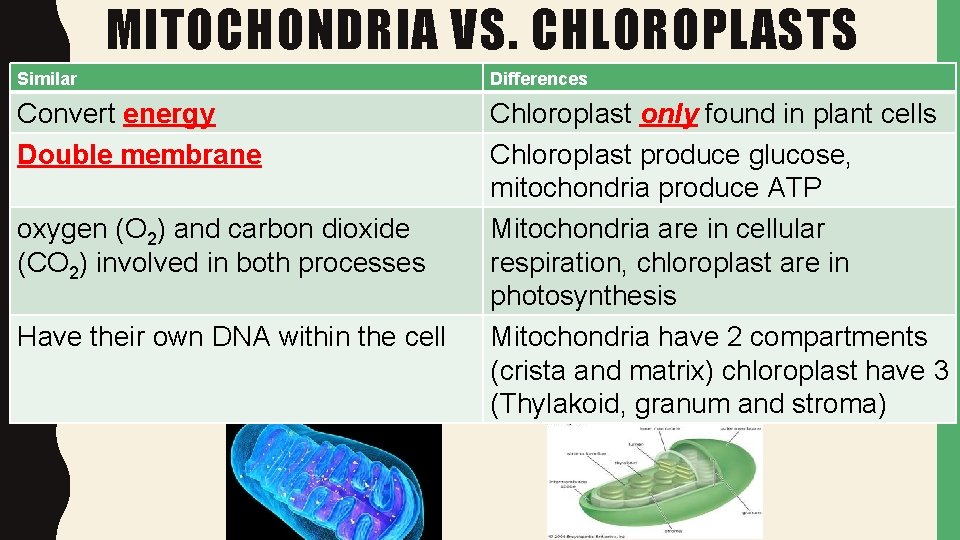
MITOCHONDRIA VS. CHLOROPLASTS Similar Differences Convert energy Double membrane Chloroplast only found in plant cells Chloroplast produce glucose, mitochondria produce ATP Mitochondria are in cellular respiration, chloroplast are in photosynthesis Mitochondria have 2 compartments (crista and matrix) chloroplast have 3 (Thylakoid, granum and stroma) oxygen (O 2) and carbon dioxide (CO 2) involved in both processes Have their own DNA within the cell
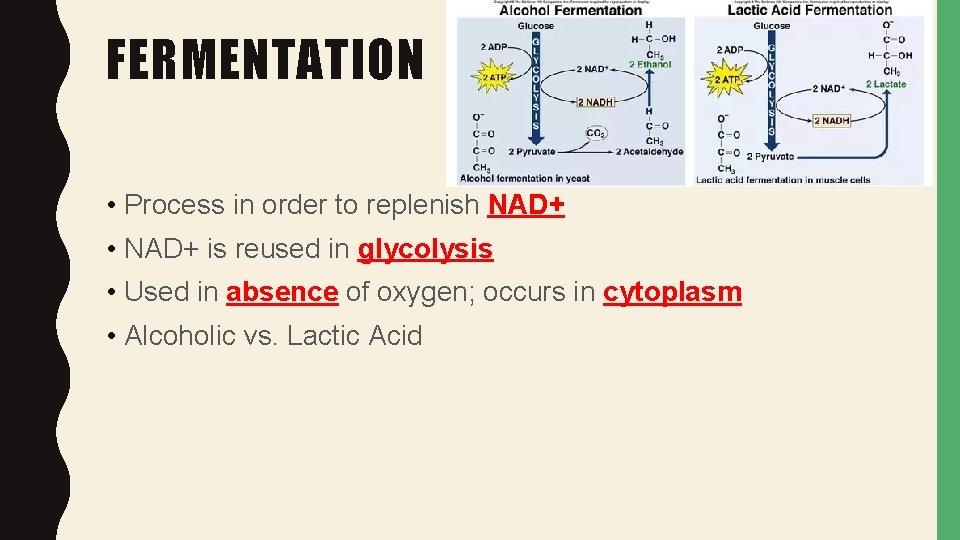
FERMENTATION • Process in order to replenish NAD+ • NAD+ is reused in glycolysis • Used in absence of oxygen; occurs in cytoplasm • Alcoholic vs. Lactic Acid

FERMENTATION (PT. 2) • Alcoholic: plant and bacteria cells • Lactic Acid: animal and bacteria cells • Alcoholic fermentation causes yeast (fungus) to rise • Overworked muscles produce lactic acid (muscle cramps)
PARTNER 1’S ABC’S What type of prokaryote obtains energy through sunlight? A) Chemoautotrophs B) Photoheterotrophs C) Photoautotrophs D) Both B and C
PARTNER 1 ABC’S Eukaryotic cells need to produce what before energy? A) B) C) D) ATP CHO Glucose Oxygen
PARTNER 2 ABC’S What mode of metabolism requires oxygen to release energy? A. B. C. D. Obligate aerobe Isotonic Facultative Anaerobe Obligate Anaerobe
PARTNER 2 ABC’S In what specific location is the cite of cellular respiration? A. B. C. D. Stroma Mitochondria Chloroplast Cytoplasm
PARTNER 3 ABC’S What is a similarity between mitochondria and chloroplasts? A. B. C. D. Have their own DNA Double membrane Produce glucose Both A and B
PARTNER 3 ABC’S Where does fermentation occur? A. B. C. D. Mitochondria Cytoplasm Rough ER Vacuole
OVERVIEW How cells obtain energy How cells release energy Photosynthes is and Cellular Respiration
- Slides: 20