
BACTERIA METABOLISM BY HANNAH BOBROWNICKI HANNAH BOFFAH ERICA
BACTERIA METABOLISM BY: HANNAH BOBROWNICKI, HANNAH BOFFAH, ERICA BECK
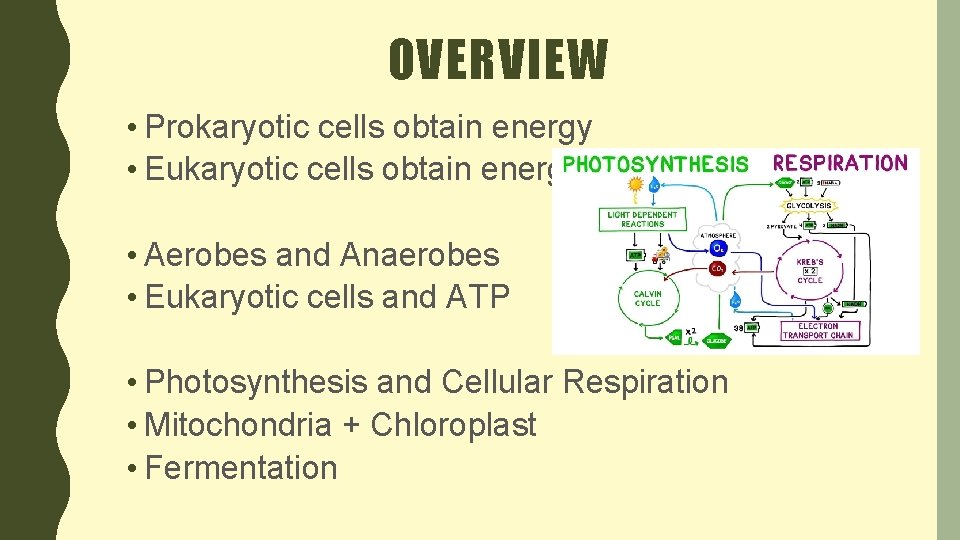
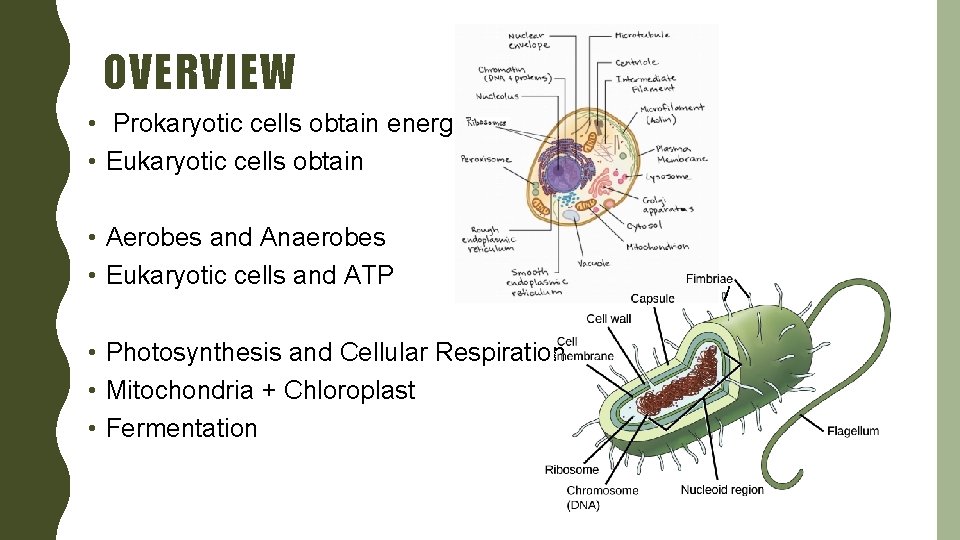
OVERVIEW • Prokaryotic cells obtain energy • Eukaryotic cells obtain energy • Aerobes and Anaerobes • Eukaryotic cells and ATP • Photosynthesis and Cellular Respiration • Mitochondria + Chloroplast • Fermentation
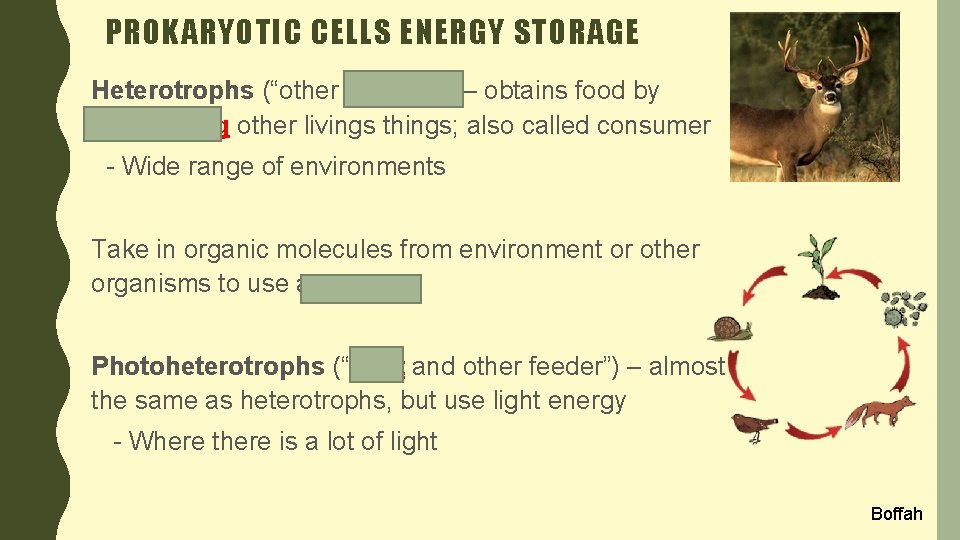
PROKARYOTIC CELLS ENERGY STORAGE Heterotrophs (“other feeders”) – obtains food by consuming other livings things; also called consumer - Wide range of environments Take in organic molecules from environment or other organisms to use as energy Photoheterotrophs (“light and other feeder”) – almost the same as heterotrophs, but use light energy - Where there is a lot of light Boffah
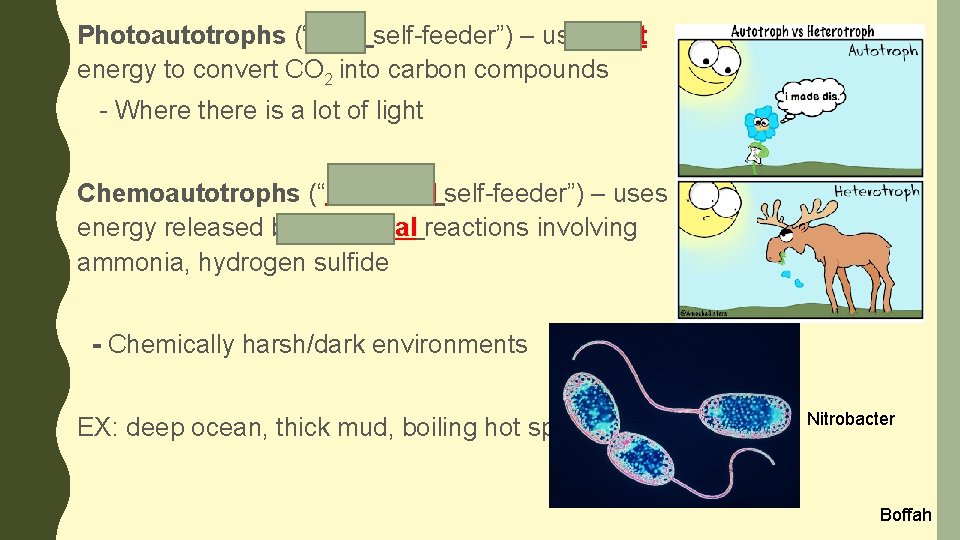
Photoautotrophs (“light self-feeder”) – use light energy to convert CO 2 into carbon compounds - Where there is a lot of light Chemoautotrophs (“chemical self-feeder”) – uses energy released by chemical reactions involving ammonia, hydrogen sulfide - Chemically harsh/dark environments EX: deep ocean, thick mud, boiling hot springs Nitrobacter Boffah
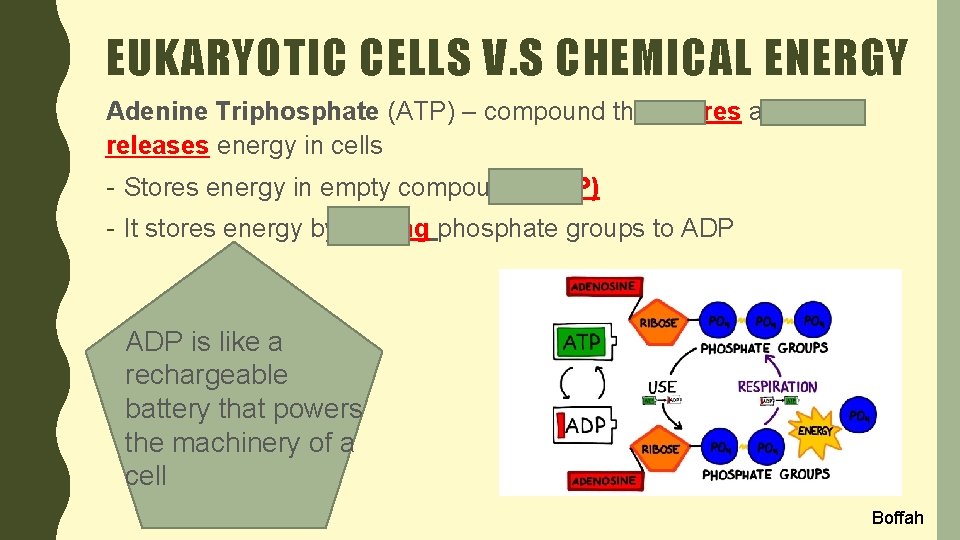
EUKARYOTIC CELLS V. S CHEMICAL ENERGY Adenine Triphosphate (ATP) – compound that stores and releases energy in cells - Stores energy in empty compound (ADP) - It stores energy by adding phosphate groups to ADP is like a rechargeable battery that powers the machinery of a cell Boffah
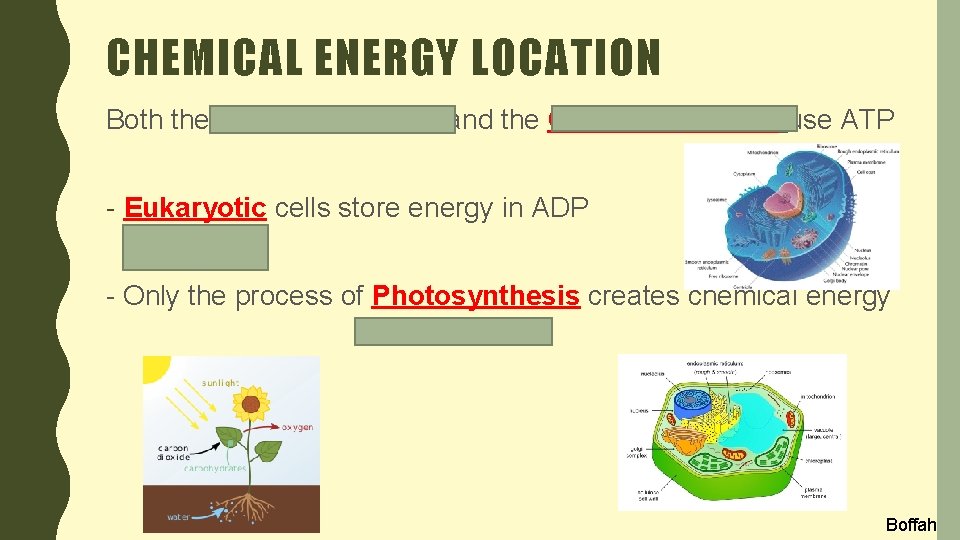
CHEMICAL ENERGY LOCATION Both the MITOCHONDRIA and the CHLOROPLASTS use ATP - Eukaryotic cells store energy in ADP - Only the process of Photosynthesis creates chemical energy Boffah
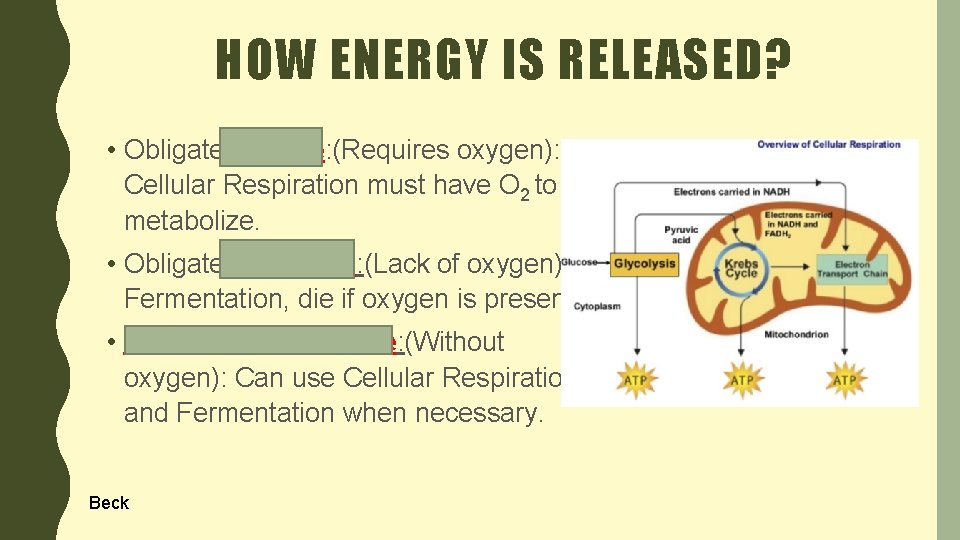
HOW ENERGY IS RELEASED? • Obligate Aerobe: (Requires oxygen): Cellular Respiration must have O 2 to metabolize. • Obligate Anaerobe: (Lack of oxygen): Fermentation, die if oxygen is present. • Facultative Anaerobe: (Without oxygen): Can use Cellular Respiration and Fermentation when necessary. Beck
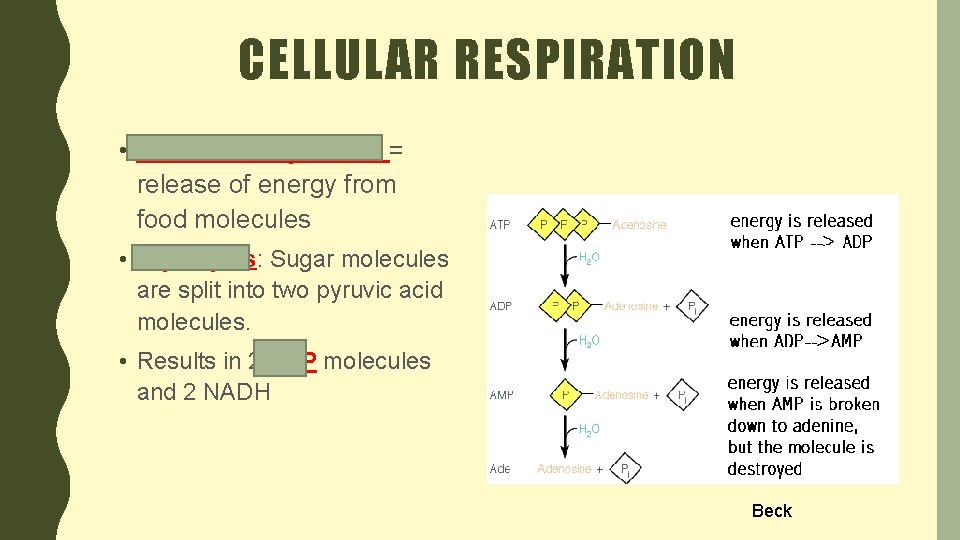
CELLULAR RESPIRATION • Cellular Respiration = release of energy from food molecules • Glycolysis: Sugar molecules are split into two pyruvic acid molecules. • Results in 2 ATP molecules and 2 NADH Beck
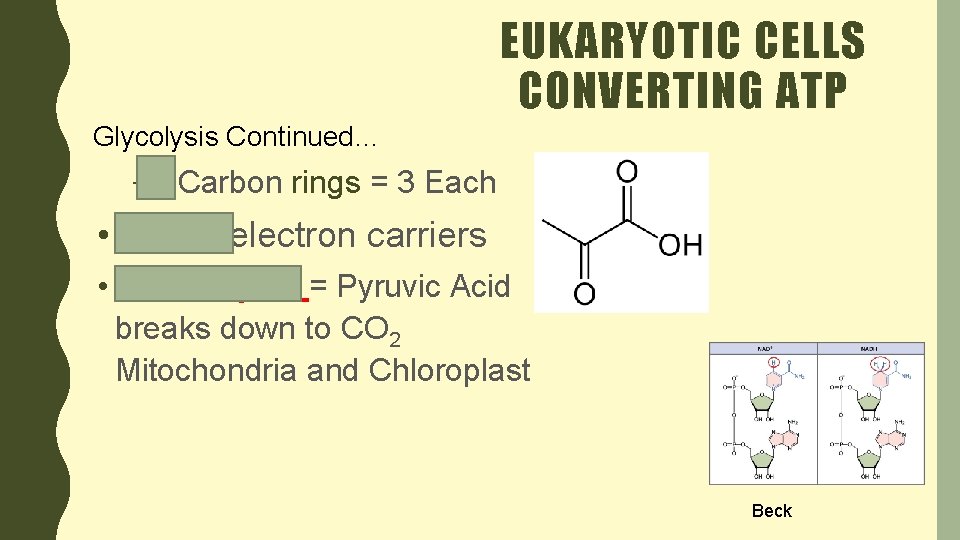
EUKARYOTIC CELLS CONVERTING ATP Glycolysis Continued… – 6 Carbon rings = 3 Each • NADH electron carriers • Krebs Cycle = Pyruvic Acid breaks down to CO 2 Mitochondria and Chloroplast Beck
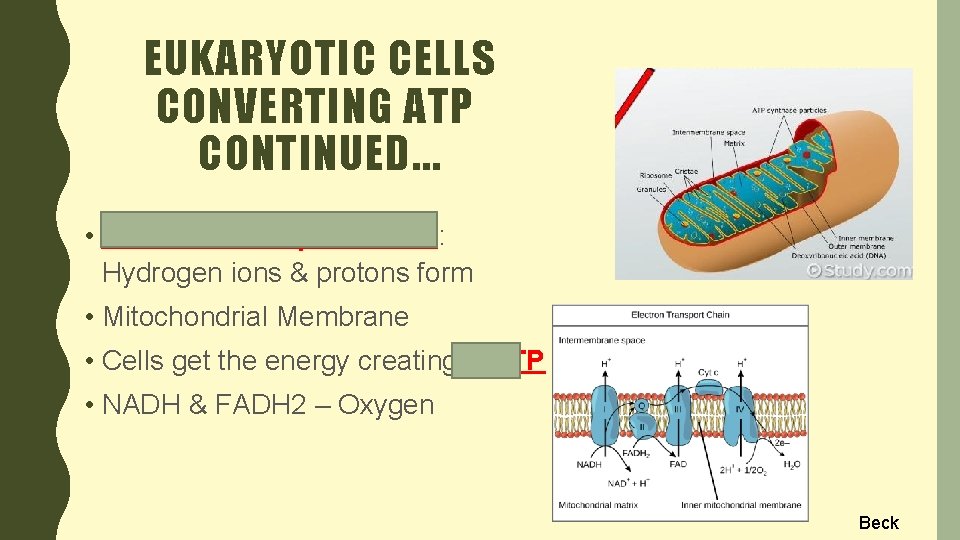
EUKARYOTIC CELLS CONVERTING ATP CONTINUED. . . • Electron Transport Chain: Hydrogen ions & protons form • Mitochondrial Membrane • Cells get the energy creating 3 ATP • NADH & FADH 2 – Oxygen Beck
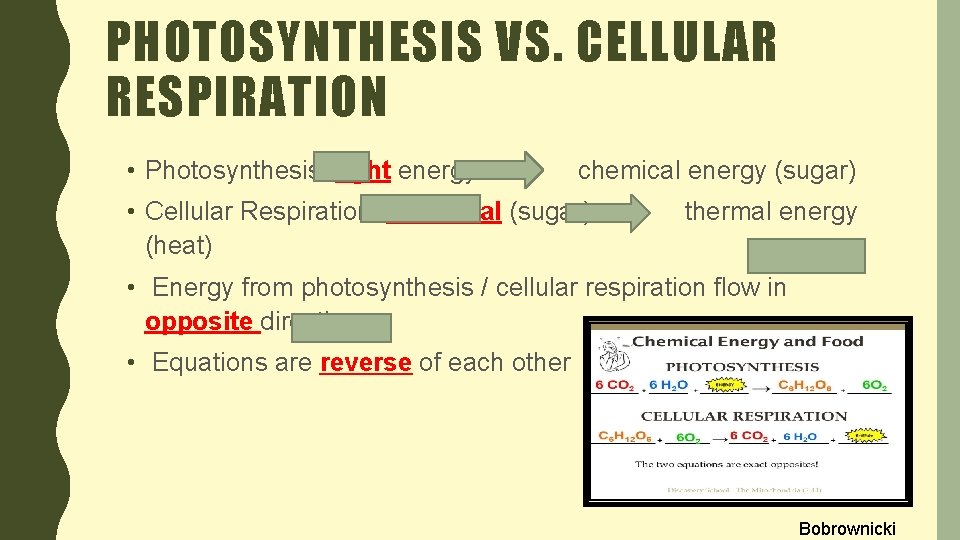
PHOTOSYNTHESIS VS. CELLULAR RESPIRATION • Photosynthesis: light energy chemical energy (sugar) • Cellular Respiration: Chemical (sugar) (heat) thermal energy • Energy from photosynthesis / cellular respiration flow in opposite directions • Equations are reverse of each other Bobrownicki
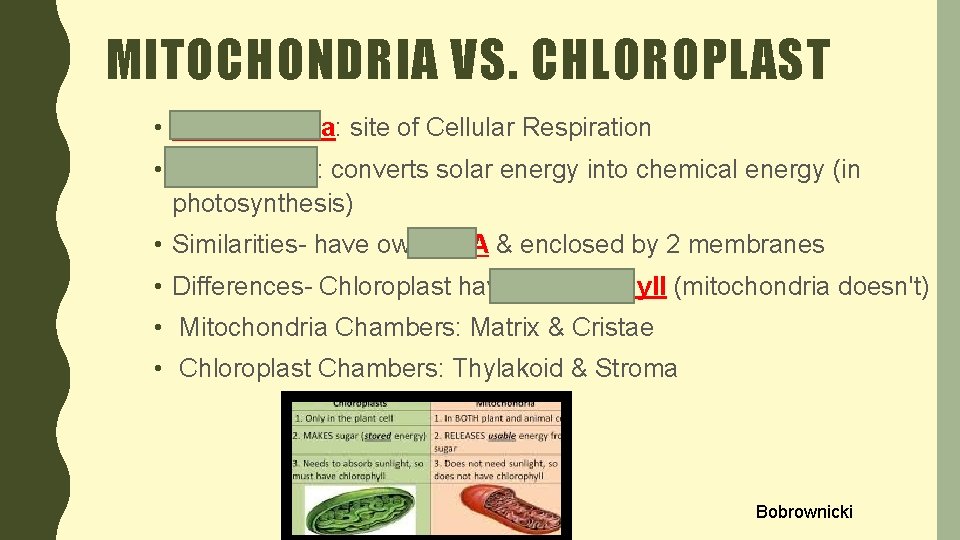
MITOCHONDRIA VS. CHLOROPLAST • Mitochondria: site of Cellular Respiration • Chloroplast: converts solar energy into chemical energy (in photosynthesis) • Similarities- have own DNA & enclosed by 2 membranes • Differences- Chloroplast have Chlorophyll (mitochondria doesn't) • Mitochondria Chambers: Matrix & Cristae • Chloroplast Chambers: Thylakoid & Stroma Bobrownicki
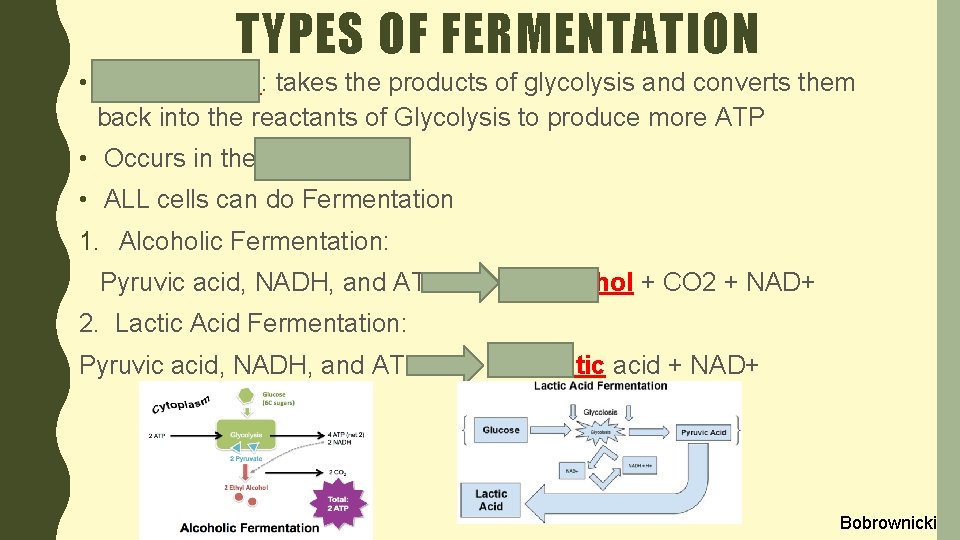
TYPES OF FERMENTATION • Fermentation: takes the products of glycolysis and converts them back into the reactants of Glycolysis to produce more ATP • Occurs in the cytoplasm • ALL cells can do Fermentation 1. Alcoholic Fermentation: Pyruvic acid, NADH, and ATP Alcohol + CO 2 + NAD+ 2. Lactic Acid Fermentation: Pyruvic acid, NADH, and ATP Lactic acid + NAD+ Bobrownicki
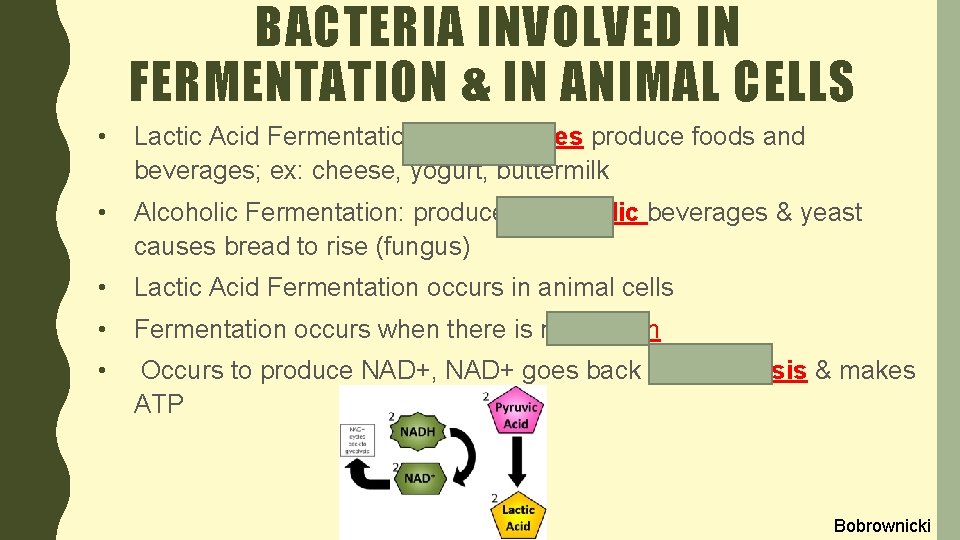
BACTERIA INVOLVED IN FERMENTATION & IN ANIMAL CELLS • Lactic Acid Fermentation: prokaryotes produce foods and beverages; ex: cheese, yogurt, buttermilk • Alcoholic Fermentation: produces alcoholic beverages & yeast causes bread to rise (fungus) • Lactic Acid Fermentation occurs in animal cells • Fermentation occurs when there is no oxygen • Occurs to produce NAD+, NAD+ goes back to Glycolysis & makes ATP Bobrownicki
ABC’S WHICH ORGANISM WILL YOU MOST LIKELY FIND IN THE MOUNTAINS AND IN THE CAVES? A. CHEMOAUTOTROPHS B. PHOTOAUTOTROPHS C. HETEROTROPHS D. PHOTOHETEROTROPHS C Boffah
ABC’S WHICH COMPOUND DOESN’T HAVE ENERGY IN IT? A. MITOCHONDRIA B. ADENOSINE DIPHOSPHATE (ADP) C. CHLOROPLASTS D. ADENOSINE TRIPHOSPHATE (ATP) B Boffah
ABC’S • What are humans? A. Obligate Anaerobes B. Obligate Aerobes C. Facilitated Anaerobes D. None of the above B Beck
ABC’S • How many ATP molecules are created from Glycolysis? A. 7 B. 13 C. 2 D. 0 C Beck
ABC’S Questions 1: What is the site of Cellular Respiration? A) Chloroplast B) Mitochondria C) Nucleus D) Ribosome B Bobrownicki
ABC’S • Questions 2: Where does fermentation take place? A) Chloroplast B) Nucleus C) Rough ER D) Cytoplasm D Bobrownicki
OVERVIEW • Prokaryotic cells obtain energy • Eukaryotic cells obtain • Aerobes and Anaerobes • Eukaryotic cells and ATP • Photosynthesis and Cellular Respiration • Mitochondria + Chloroplast • Fermentation
- Slides: 21