
Bacteria Life Science What type of cell are
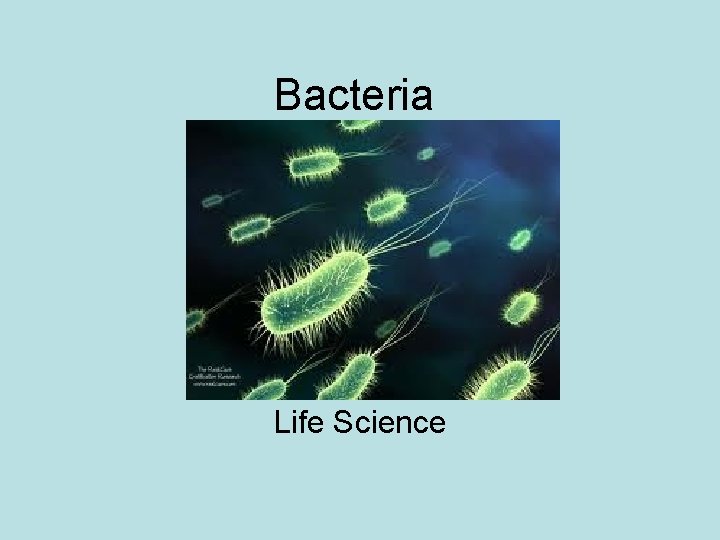
Bacteria Life Science

What type of cell are bacteria? • Prokaryotic – No Nucleus or membrane bound organelles.

What are the two groups of bacteria? • Eubacteria – “Good” or “true” bacteria. – Live Everywhere – Cell wall with peptidoglycan • Archaebacteria – “Old” bacteria – Live in Extreme Environments (hot springs, high salt concentrations, etc) – Cell wall without peptidoglycan

What are the 8 basic parts of a bacteria? • Nuclear Material (DNA) – NO NUCLEUS!!!! • • Cytoplasm Ribosomes Capsule Cell wall – with and without peptidoglycan – Gram positive and gram negative (only Eubacteria) • Cell(plasma) membrane • Pilus • Flagella

What are three basic shapes of bacteria? • Cocci – round shape – Streptococcus • Bacilli – rod shape – Clostridium botulinum • Spirillum – spiral shaped – Spirillum volutans

How bacteria arrange themselves? • Type of arrangement+type of bacteria= how they hangout • Arrangement – Diplo= in pairs – Strepto= in a chain – Staphylo= in clusters – Example: Diplobacillus= rod shaped in pairs – Streptococcus= circular shape in chains – Staphylobaccillus= rod shape clusters

Arrangement • Streptococcus – Chain, round

Arrangement • Streptobacillus – Chains, rod

Arrangement • Dicoccus – Two, round

Arrangement • Staphlococcus – Clusters, round
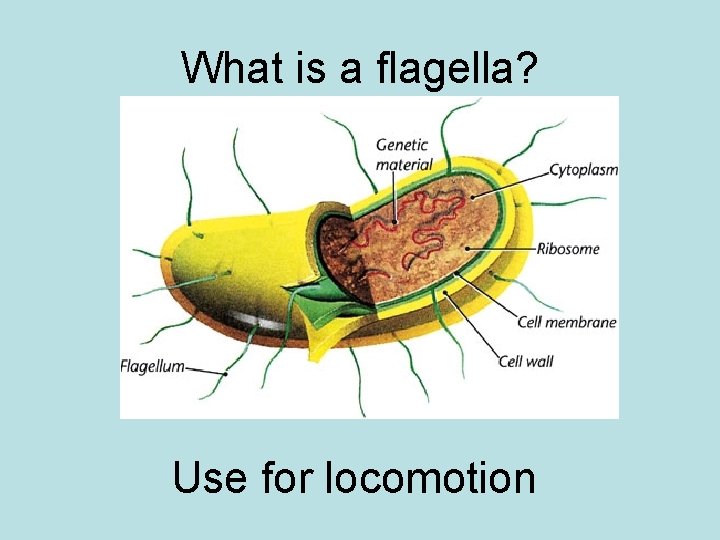
What is a flagella? Use for locomotion
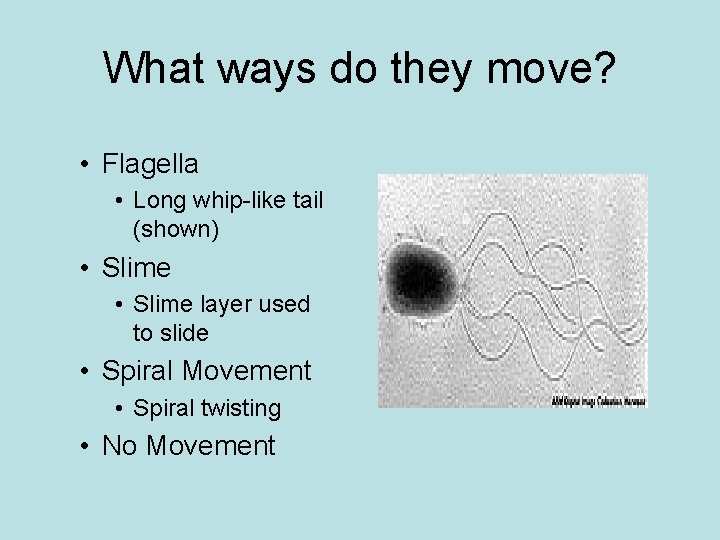
What ways do they move? • Flagella • Long whip-like tail (shown) • Slime layer used to slide • Spiral Movement • Spiral twisting • No Movement

What two ways do bacteria reproduce? • Asexual – Binary Fission • Identical Cells • Sexual (pseudo) – Conjugation then binary fission • New Genetically Different Cells
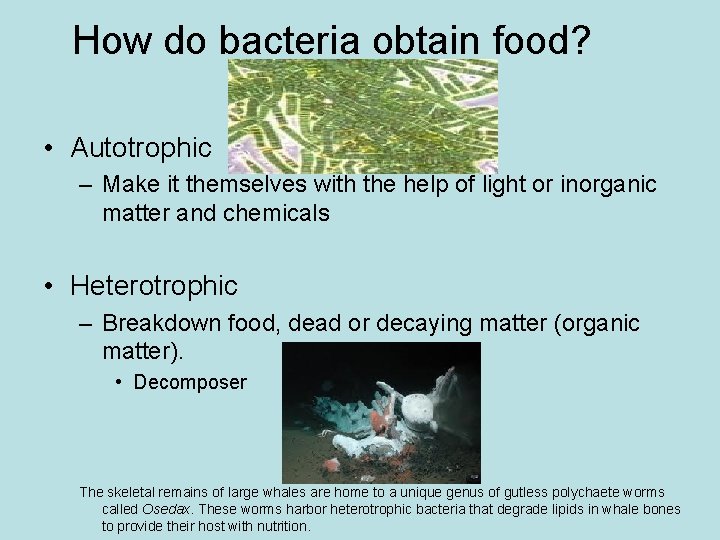
How do bacteria obtain food? • Autotrophic – Make it themselves with the help of light or inorganic matter and chemicals • Heterotrophic – Breakdown food, dead or decaying matter (organic matter). • Decomposer The skeletal remains of large whales are home to a unique genus of gutless polychaete worms called Osedax. These worms harbor heterotrophic bacteria that degrade lipids in whale bones to provide their host with nutrition.
Do bacteria need oxygen? • Yes – Some need oxygen to help break down food. • No – Some cannot use oxygen and it is like poison to them and kills the bacteria.
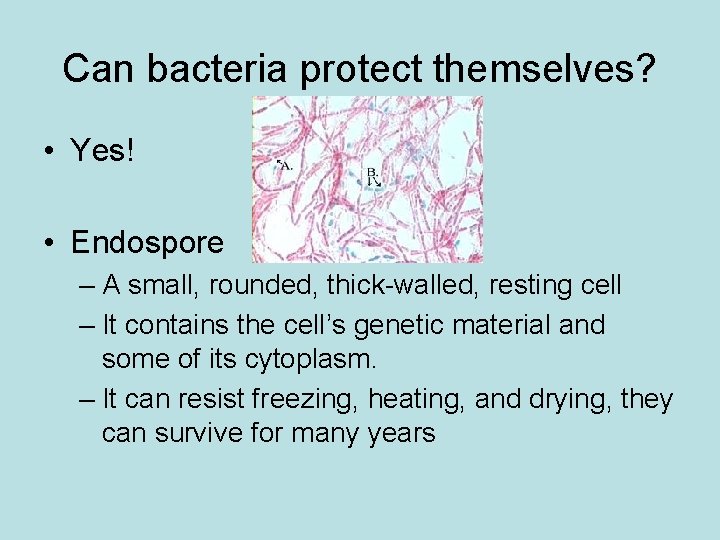
Can bacteria protect themselves? • Yes! • Endospore – A small, rounded, thick-walled, resting cell – It contains the cell’s genetic material and some of its cytoplasm. – It can resist freezing, heating, and drying, they can survive for many years
What good do bacteria do for the planet? • Fuel – Some Archaebacteria produces methane (landfills) • Food – Bacteria assist in making food such as yogurt, pickles, cheese, apple cider. • Recycling – Breaking down dead and decaying matter (decomposer). – Some bacteria are used to clean up oil spills. • Symbiotic Relationships – E. Coli producing Vitamin K in Human Intestines – Cow gut- to break down grass
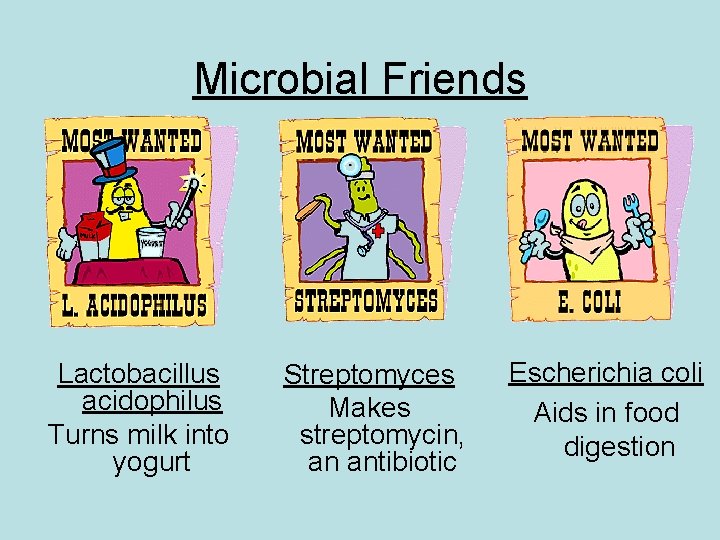
Microbial Friends Lactobacillus acidophilus Turns milk into yogurt Streptomyces Makes streptomycin, an antibiotic Escherichia coli Aids in food digestion
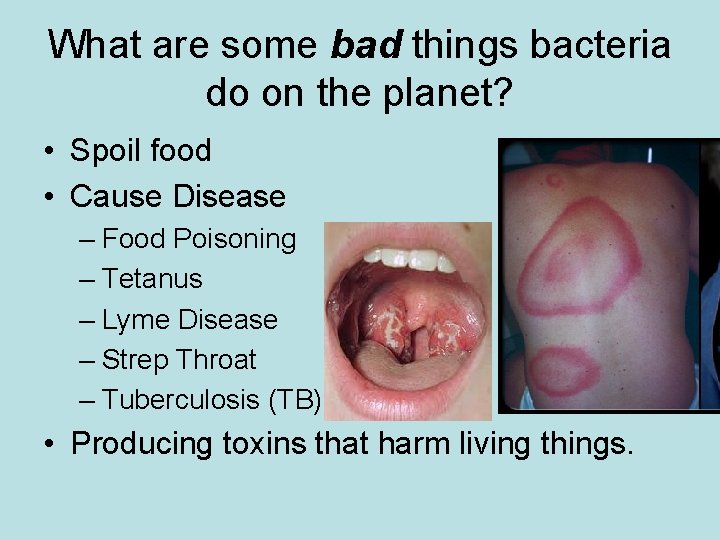
What are some bad things bacteria do on the planet? • Spoil food • Cause Disease – Food Poisoning – Tetanus – Lyme Disease – Strep Throat – Tuberculosis (TB) • Producing toxins that harm living things.
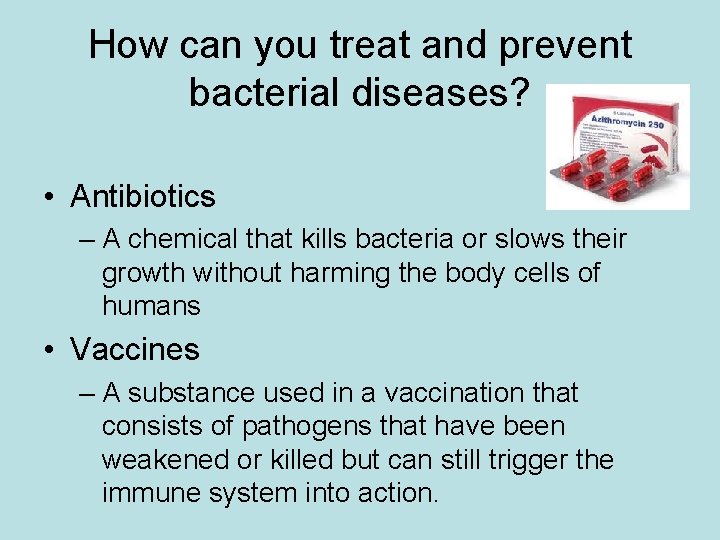
How can you treat and prevent bacterial diseases? • Antibiotics – A chemical that kills bacteria or slows their growth without harming the body cells of humans • Vaccines – A substance used in a vaccination that consists of pathogens that have been weakened or killed but can still trigger the immune system into action.
- Slides: 20