
BACTERIA Kingdom Eubacteria True Bacteria Bacteria are located
BACTERIA
Kingdom Eubacteria (True Bacteria) Bacteria are located everywhere – air, water, land, and living organisms including people. General Characteristics: 1. All are unicellular (one-celled structural level) 2. All are prokaryotic - cells that lack nucleus (no nuclear envelope) (PRO = NO nucleus) 3. All have cell walls – NO cellulose in cell walls 4. Can live in both aerobic (with O 2) and anaerobic (without O 2) environments
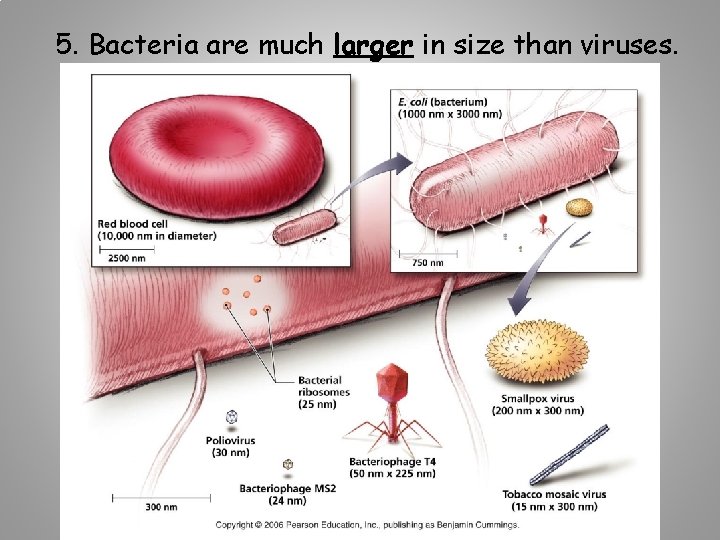
5. Bacteria are much larger in size than viruses.
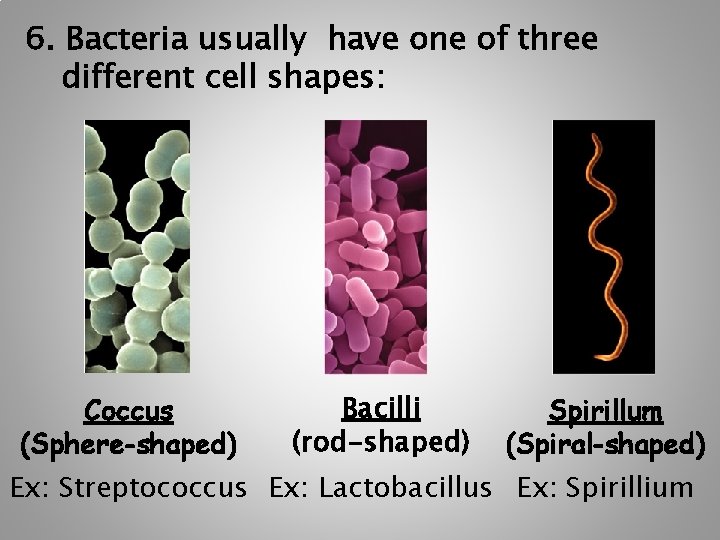
6. Bacteria usually have one of three different cell shapes: Coccus (Sphere-shaped) Bacilli (rod-shaped) Spirillum (Spiral-shaped) Ex: Streptococcus Ex: Lactobacillus Ex: Spirillium
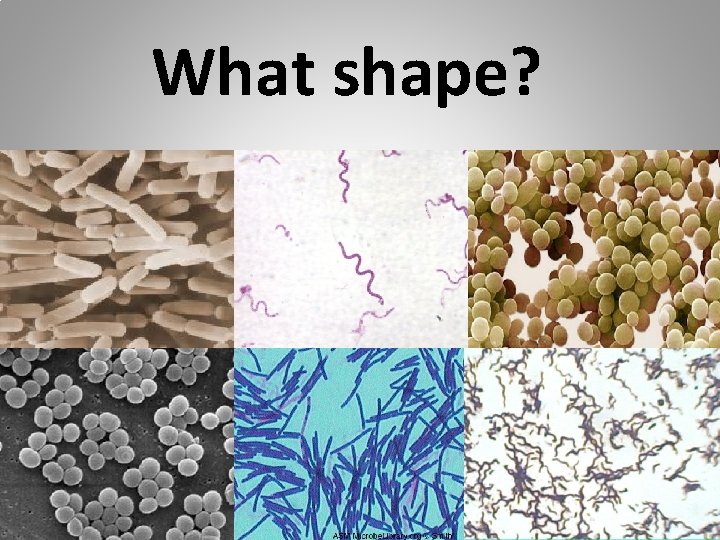
What shape? bacillus spirillum coccus bacillus spirillum
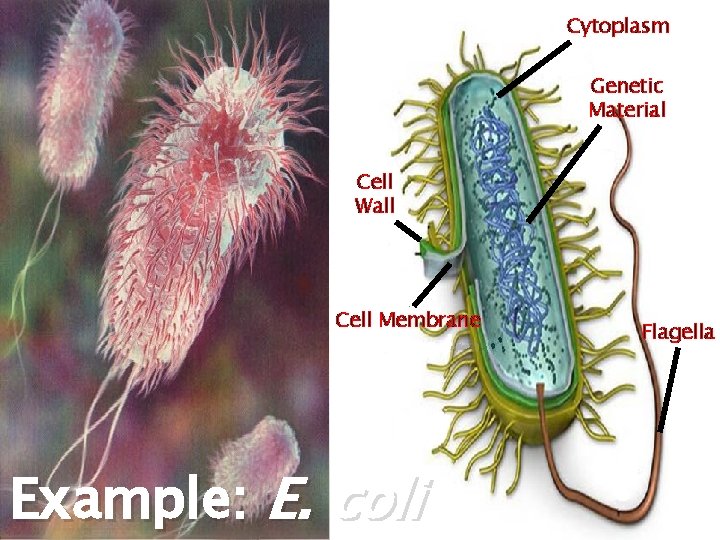
Cytoplasm Genetic Material Cell Wall Cell Membrane Example: E. coli Flagella
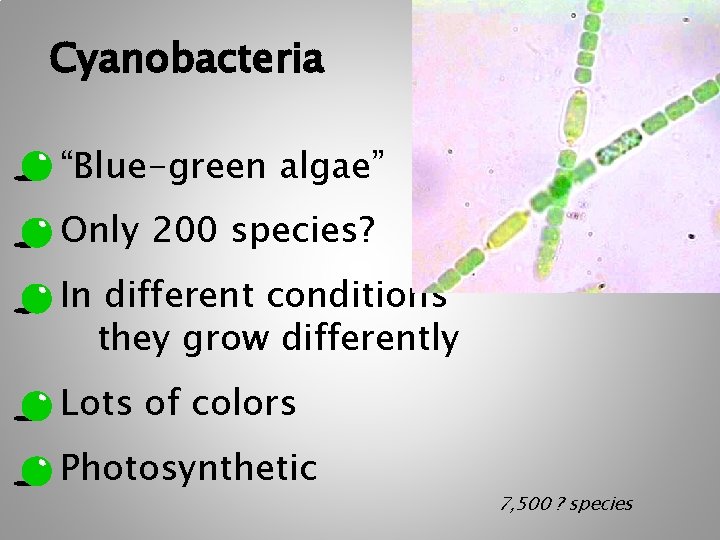
Cyanobacteria “Blue-green algae” Only 200 species? In different conditions they grow differently Lots of colors Photosynthetic 7, 500 ? species
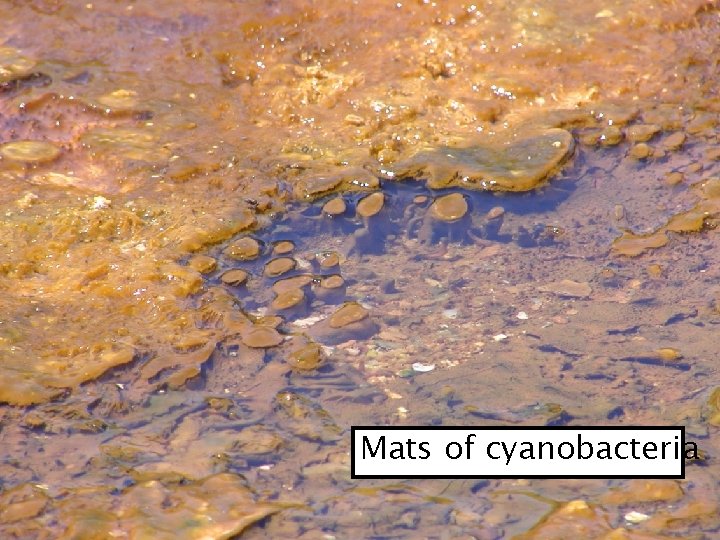
Mats of cyanobacteria

History of Bacteria
Bacteria are the smallest and simplest living organisms which possess cellular structure. They are microscopic. They were discovered by Dutch scientist Anton von Leeuwenhoek in 1676. And then gave the name of bacteria in 1683.
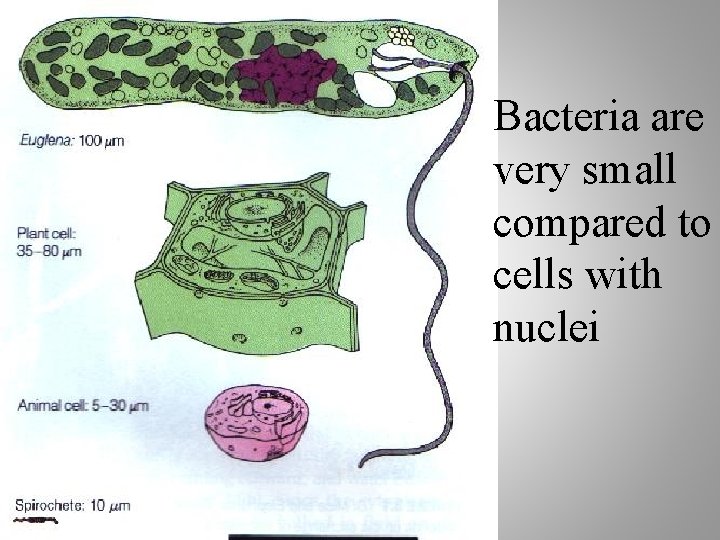
Bacteria are very small compared to cells with nuclei 12
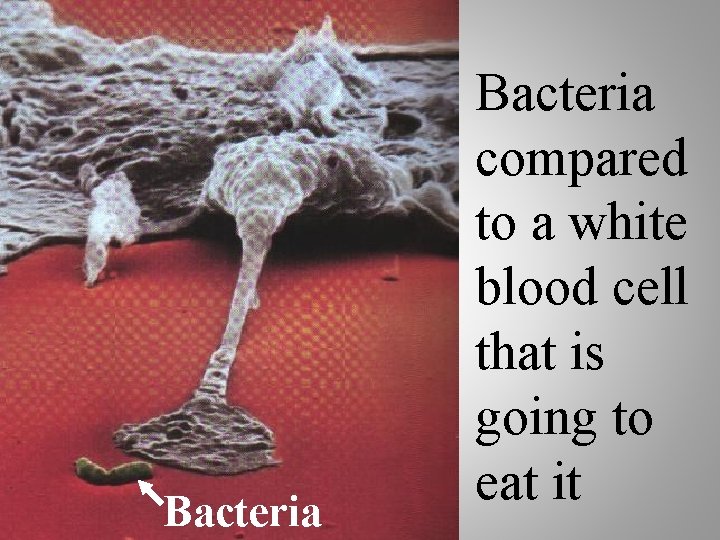
13 Bacteria compared to a white blood cell that is going to eat it
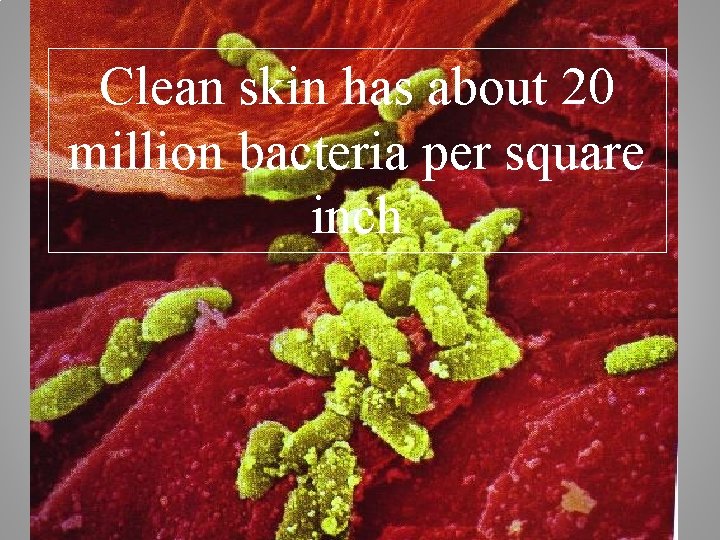
Clean skin has about 20 million bacteria per square inch 14
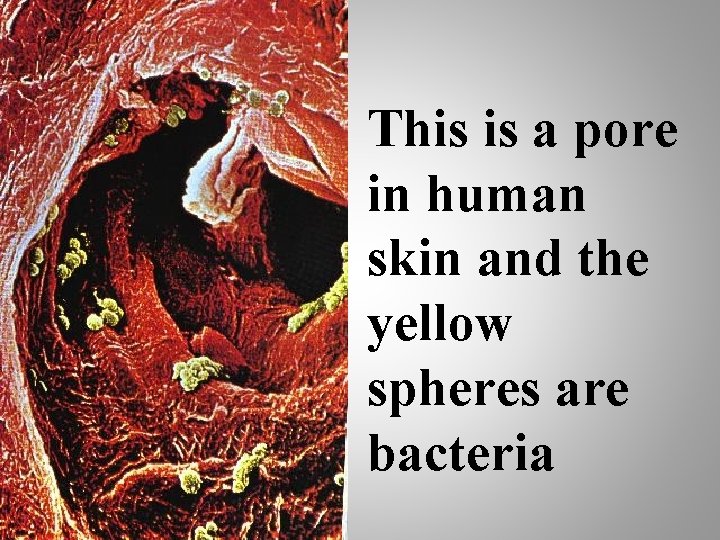
This is a pore in human skin and the yellow spheres are bacteria 15
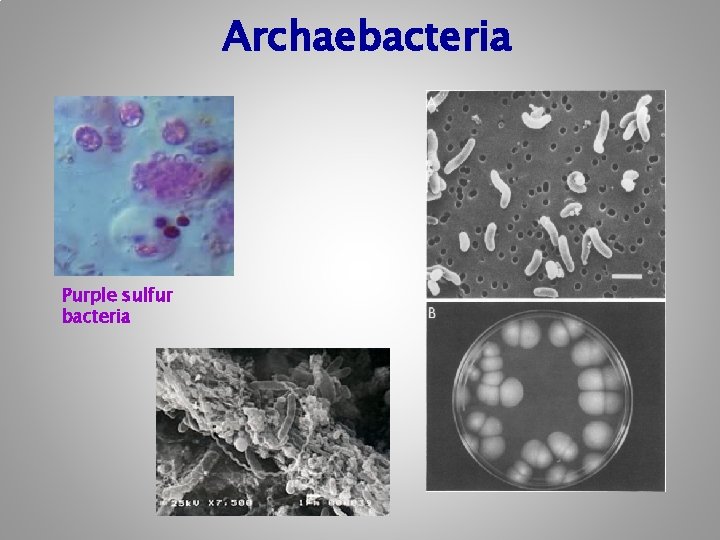
Archaebacteria Purple sulfur bacteria
Bacteria Caused Diseases • Bacteria can cause the following diseases: – – – Tuberculosis Pneumonia Strep throat Staph infections Scarlet fever Syphilis Gonorrhea Chlamydia Boils Tetanus Lyme disease Ear infections transmitted diseases (STD’s) are caused by bacteria. • Gonorrhea • Syphilus • Chlamydia
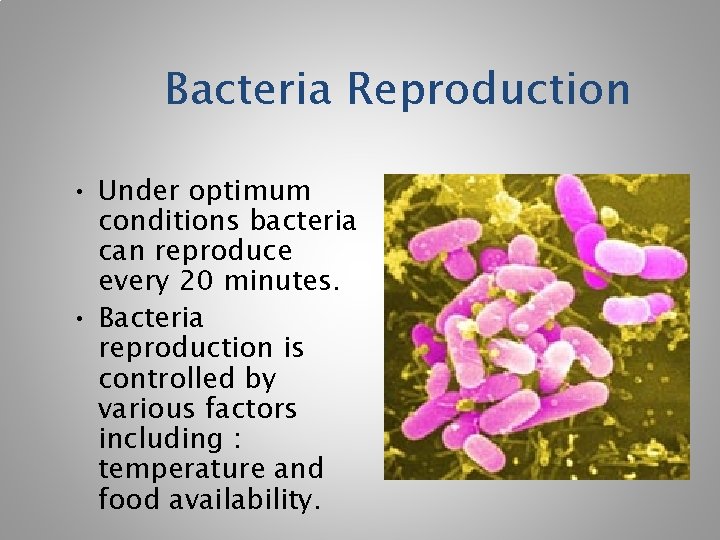
Bacteria Reproduction • Under optimum conditions bacteria can reproduce every 20 minutes. • Bacteria reproduction is controlled by various factors including : temperature and food availability.
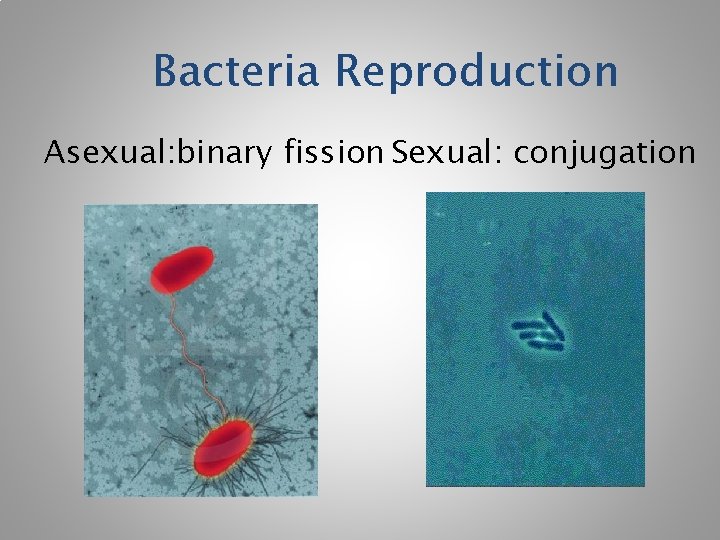
Bacteria Reproduction Asexual: binary fission Sexual: conjugation
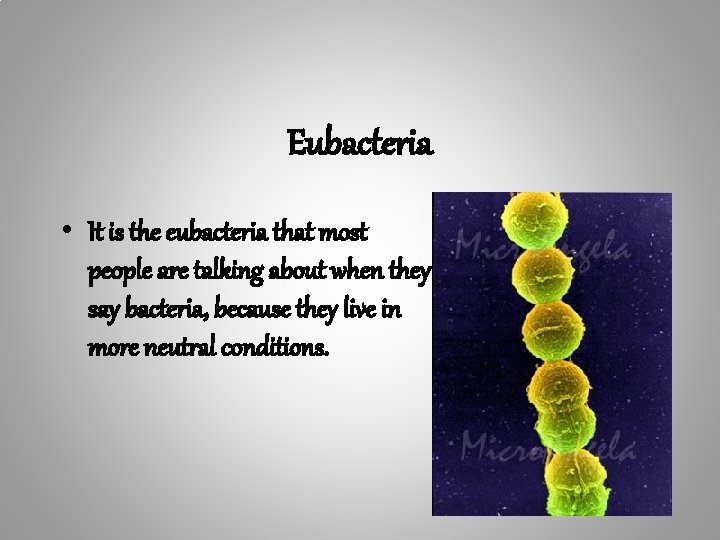
Eubacteria • It is the eubacteria that most people are talking about when they say bacteria, because they live in more neutral conditions.
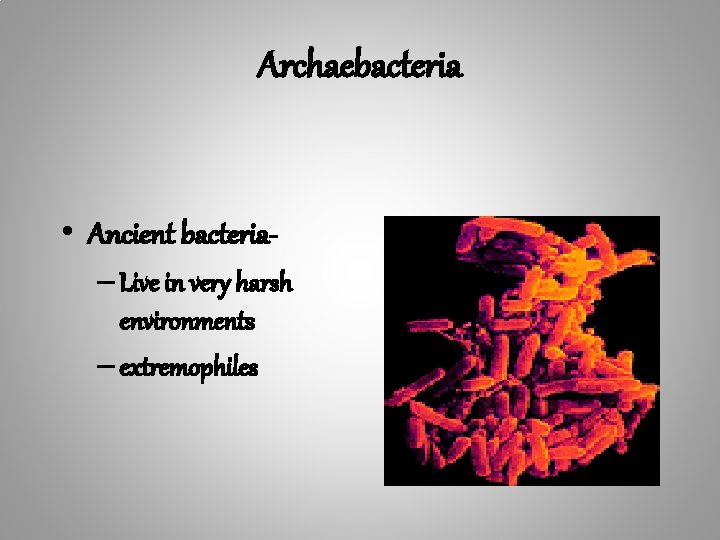
Archaebacteria • Ancient bacteria– Live in very harsh environments – extremophiles
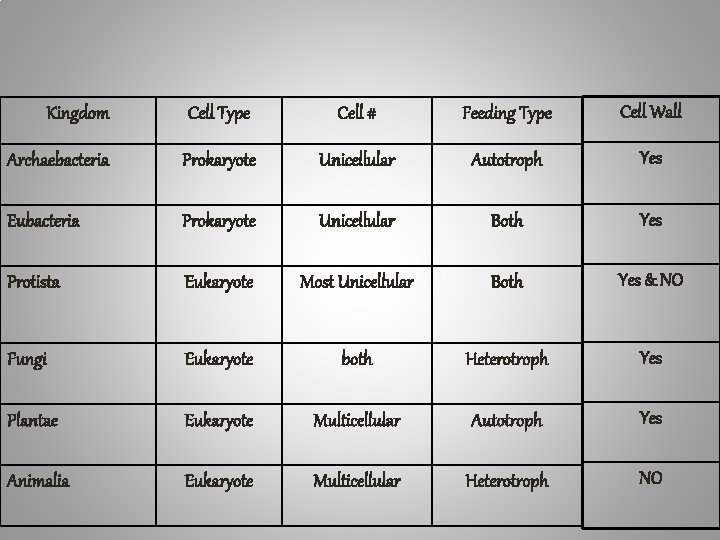
Kingdom Cell Type Cell # Feeding Type Cell Wall Archaebacteria Prokaryote Unicellular Autotroph Yes Eubacteria Prokaryote Unicellular Both Yes Protista Eukaryote Most Unicellular Both Yes & NO Fungi Eukaryote both Heterotroph Yes Plantae Eukaryote Multicellular Autotroph Yes Animalia Eukaryote Multicellular Heterotroph NO
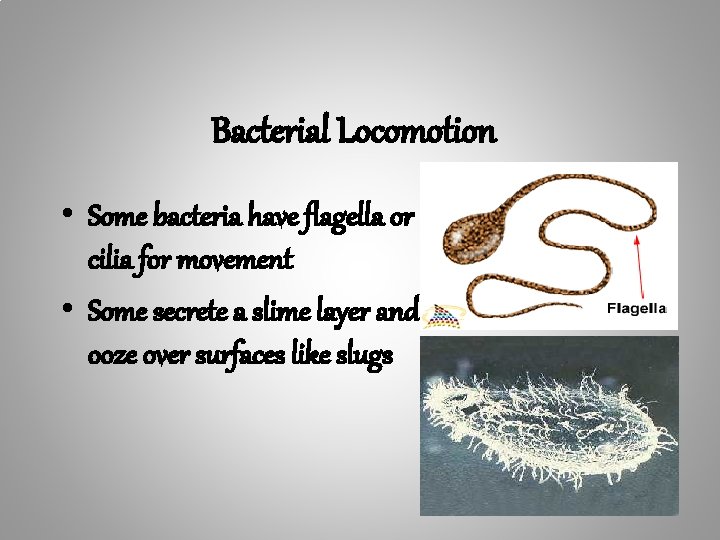
Bacterial Locomotion • Some bacteria have flagella or cilia for movement • Some secrete a slime layer and ooze over surfaces like slugs
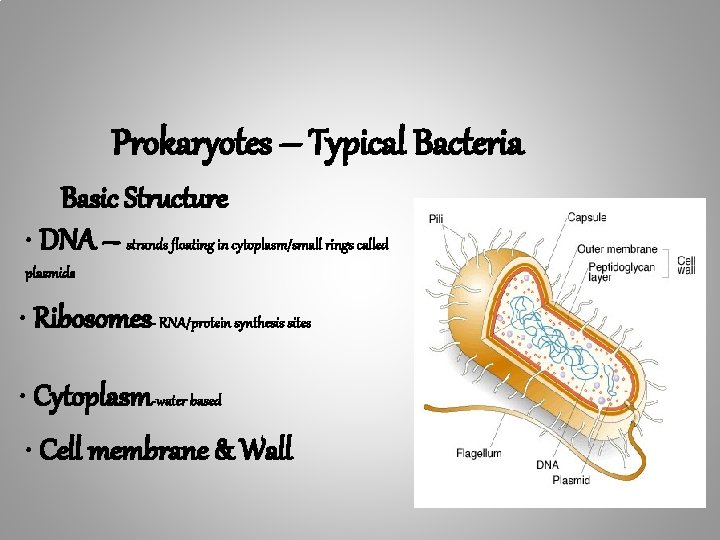
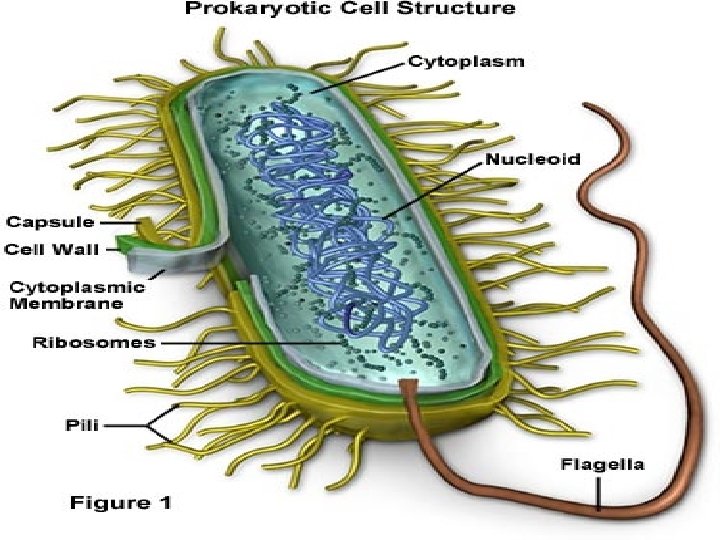
Prokaryotes – Typical Bacteria Basic Structure • DNA – strands floating in cytoplasm/small rings called plasmids • Ribosomes- RNA/protein synthesis sites • Cytoplasm-water based • Cell membrane & Wall
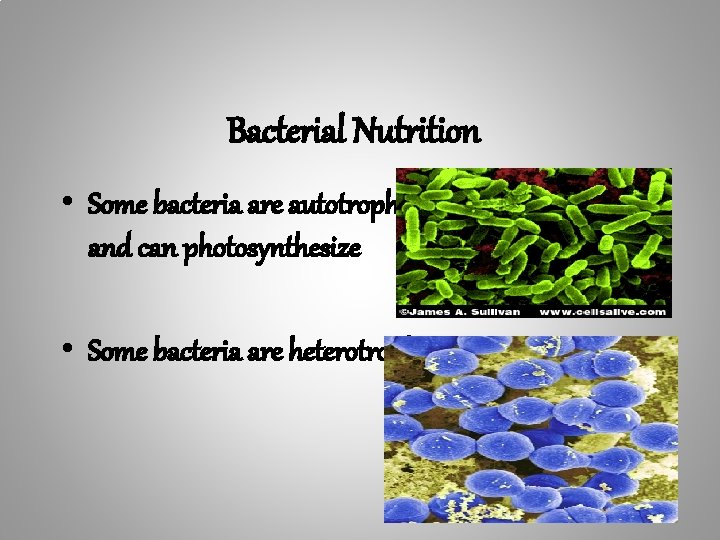
Bacterial Nutrition • Some bacteria are autotrophs and can photosynthesize • Some bacteria are heterotrophs
2. Releases toxins (poisons) which destroy cells of infected organism. 3. Must have access to new hosts to spread.
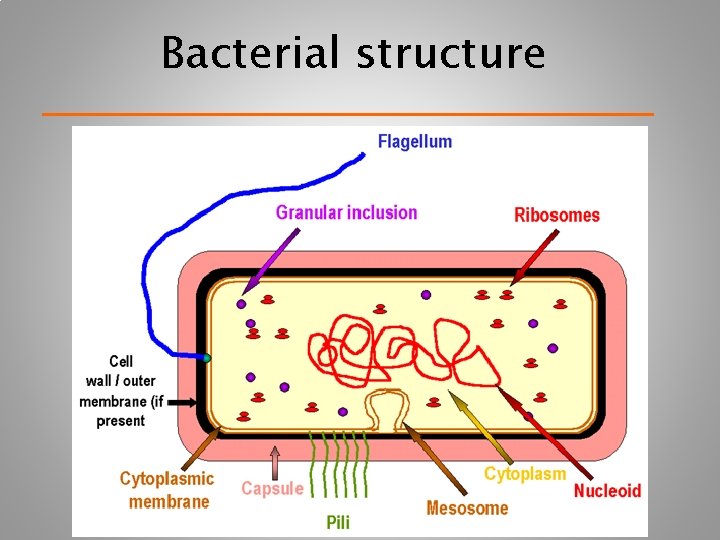
Bacterial structure
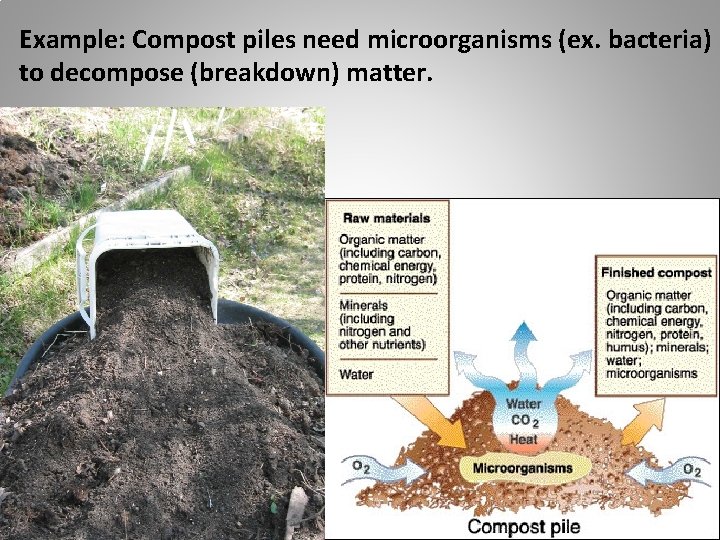
Example: Compost piles need microorganisms (ex. bacteria) to decompose (breakdown) matter.
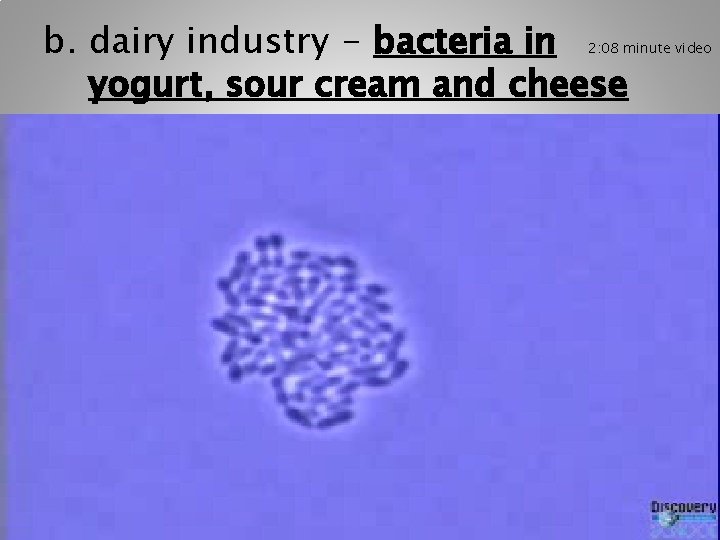
b. dairy industry - bacteria in yogurt, sour cream and cheese 2: 08 minute video
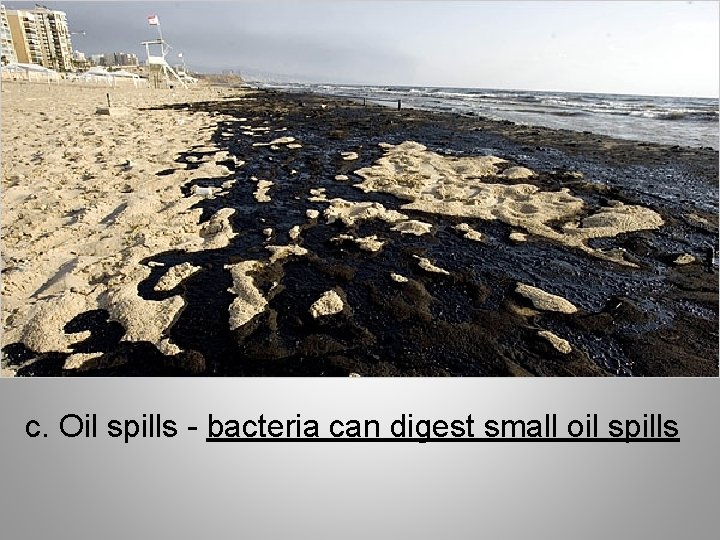
c. Oil spills - bacteria can digest small oil spills
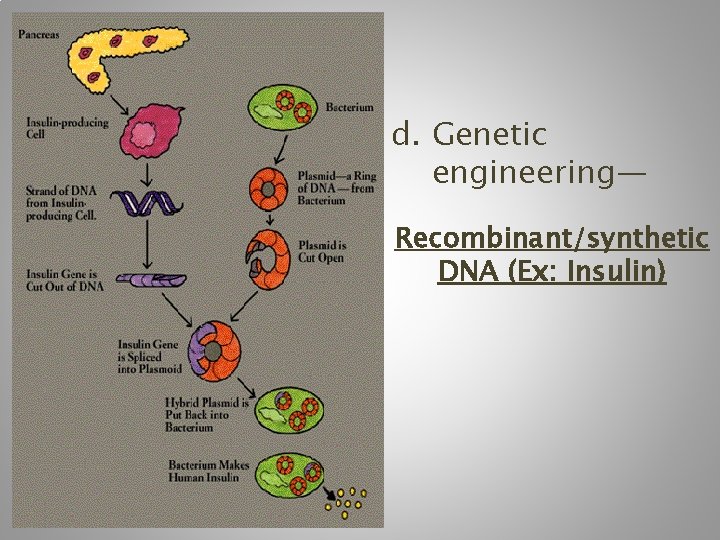
d. Genetic engineering— Recombinant/synthetic DNA (Ex: Insulin)
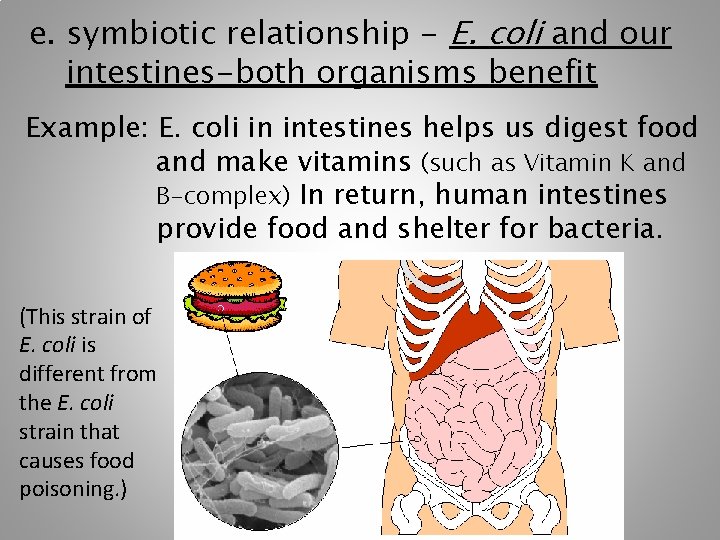
e. symbiotic relationship - E. coli and our intestines-both organisms benefit Example: E. coli in intestines helps us digest food and make vitamins (such as Vitamin K and B-complex) In return, human intestines provide food and shelter for bacteria. (This strain of E. coli is different from the E. coli strain that causes food poisoning. )
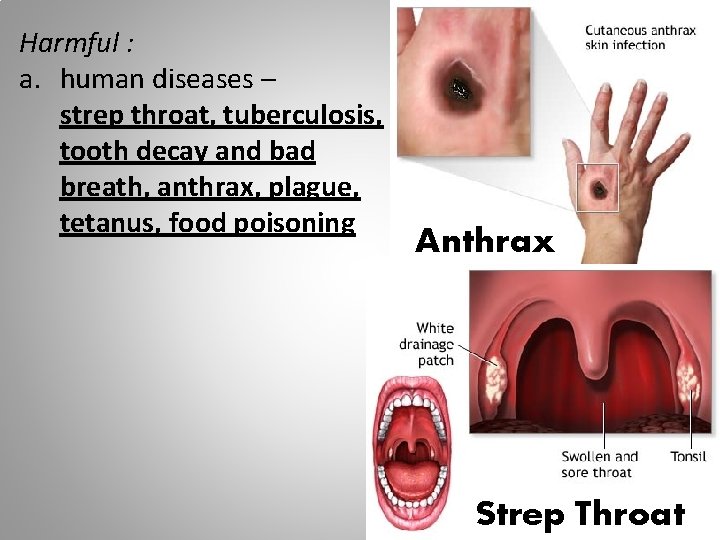
Harmful : a. human diseases – strep throat, tuberculosis, tooth decay and bad breath, anthrax, plague, tetanus, food poisoning Anthrax Strep Throat
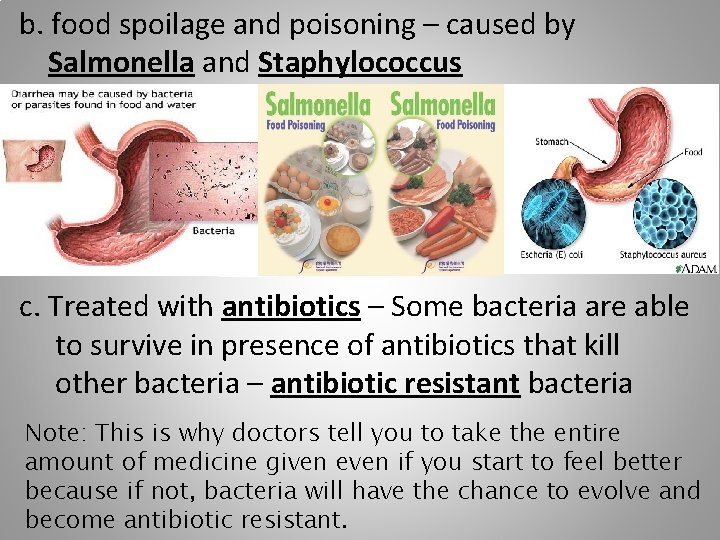
b. food spoilage and poisoning – caused by Salmonella and Staphylococcus c. Treated with antibiotics – Some bacteria are able to survive in presence of antibiotics that kill other bacteria – antibiotic resistant bacteria Note: This is why doctors tell you to take the entire amount of medicine given even if you start to feel better because if not, bacteria will have the chance to evolve and become antibiotic resistant.
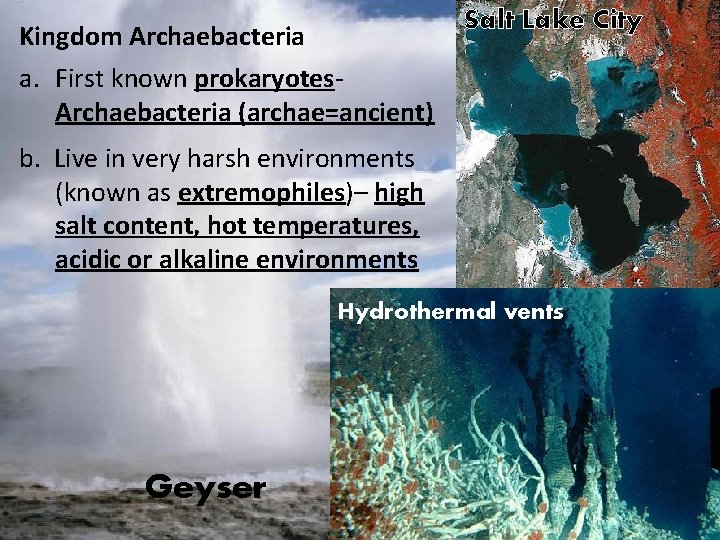
Salt Lake City Kingdom Archaebacteria a. First known prokaryotes. Archaebacteria (archae=ancient) b. Live in very harsh environments (known as extremophiles)– high salt content, hot temperatures, acidic or alkaline environments Hydrothermal vents Geyser
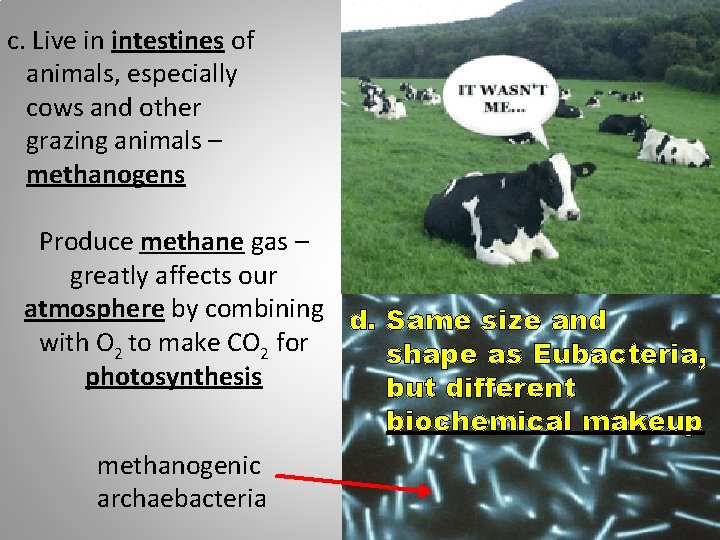
c. Live in intestines of animals, especially cows and other grazing animals – methanogens Produce methane gas – greatly affects our atmosphere by combining d. Same size and with O 2 to make CO 2 for shape as Eubacteria, photosynthesis but different biochemical makeup methanogenic archaebacteria
- Slides: 37