
Bacteria Helpful or Harmful pp 116 119 Helpful
Bacteria: Helpful or Harmful? pp. 116 -119
Helpful Bacteria • Break down organic matter “recyclers” – Saprophytes: break down organic matter (dead animals, plants, etc) into nutrients and molecules that other organisms can use – Important to the biosphere and prevents build-up of matter • Pollution control – Bioremediation: using bacteria to treat polluted sites – Some pollutants (eg. Toxins) are considered food for bacteria – Cleans up water (eg. Oil spills) and soil contamination
Helpful Bacteria • Probiotic Agents – Maintain health and well-being, prevent disease – Usually lactic acid bacteria and bifidobacteria live cultures introduced into food – Yogurts, cheese, and other fermented foods – Helps with digestive system (eg. Diarrhea), urinary tract infections, blood pressure, etc • Industry – Fermenters (eg. Yeast) for alcohol & baking – Nitrogen fixing in soils – Production of dairy products (eg. Cheese, yogurt) – Pest killers, etc – See p. 117 for more!
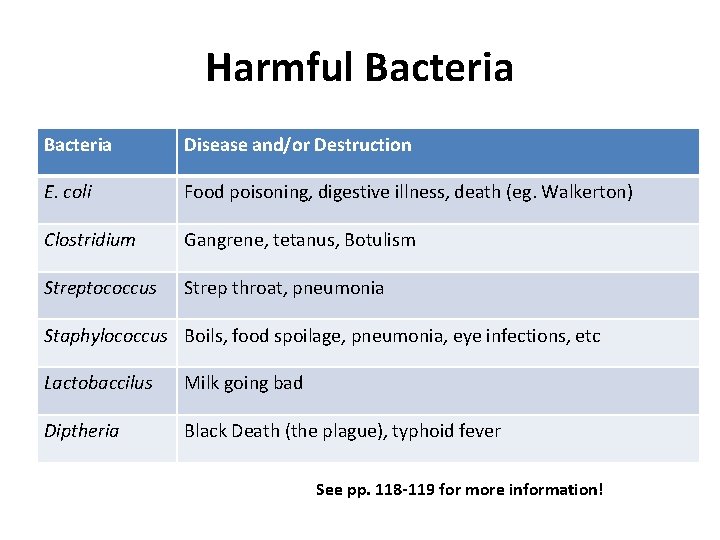
Harmful Bacteria Disease and/or Destruction E. coli Food poisoning, digestive illness, death (eg. Walkerton) Clostridium Gangrene, tetanus, Botulism Streptococcus Strep throat, pneumonia Staphylococcus Boils, food spoilage, pneumonia, eye infections, etc Lactobaccilus Milk going bad Diptheria Black Death (the plague), typhoid fever See pp. 118 -119 for more information!
- Slides: 4