
Bacteria Classification unicellular prokaryotes Bacteria 2 Domains Achaea
Bacteria
Classification unicellular prokaryotes Bacteria 2 Domains • Achaea – Kingdom Archaebacteria (ancient) – found in marshes, swamps, hot sulfur springs, Great Salt Lake, deep ocean vents • Bacteria – Kingdom Eubacteria (true) – found in almost any habitat
Bacteria Classification Kingdom Archaebacteria • cell walls without peptidoglycan (carbohydrate) • autotrophic or heterotrophic • live anaerobically • live in harsh environments (great salt lakes, hot springs) • ex: Methanogens (in digestive tract of animals), Halophiles (salt-loving)
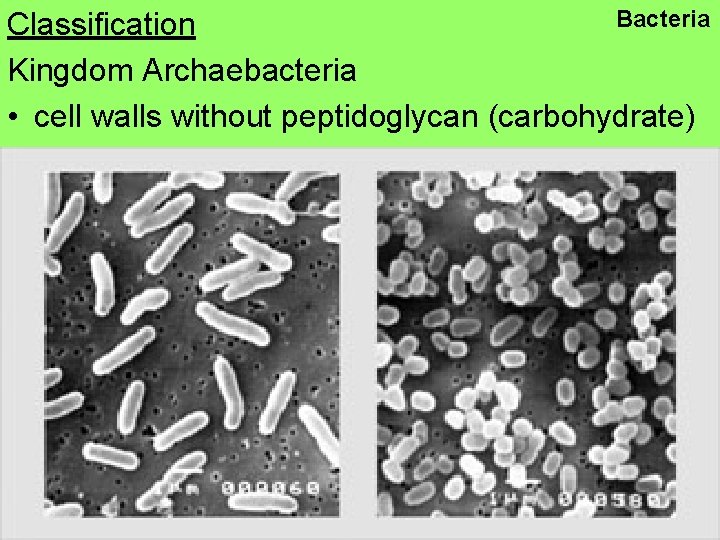
Bacteria Classification Kingdom Archaebacteria • cell walls without peptidoglycan (carbohydrate)
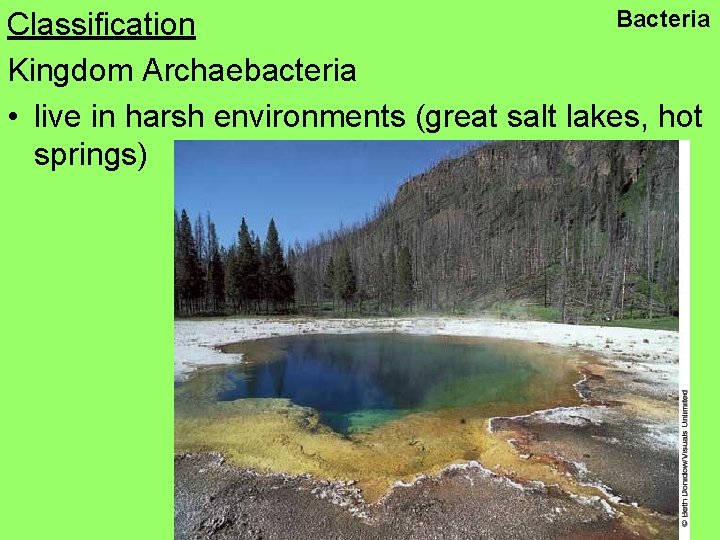
Bacteria Classification Kingdom Archaebacteria • live in harsh environments (great salt lakes, hot springs)
Bacteria Classification Kingdom Eubacteria • cell wall contains peptidoglycan (carbohydrate) • autotrophic or heterotrophic • free living (ponds, streams, on dead organisms) or deadly parasites • ex: streptococcus, Escherichia coli, anabaena
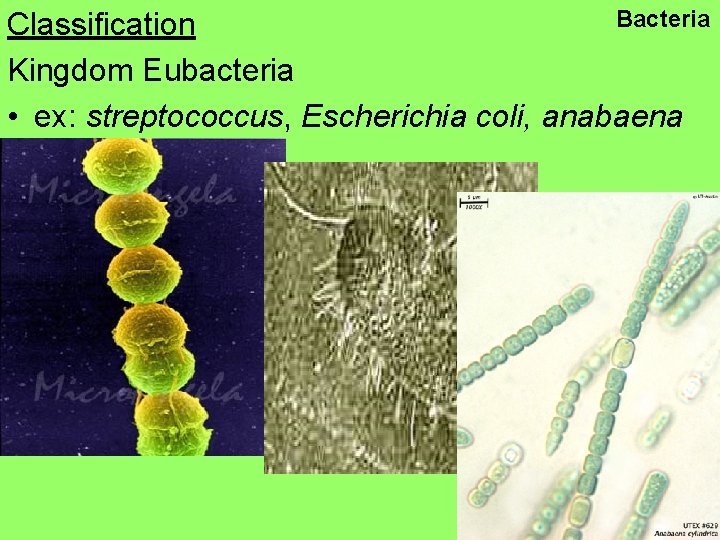
Bacteria Classification Kingdom Eubacteria • ex: streptococcus, Escherichia coli, anabaena
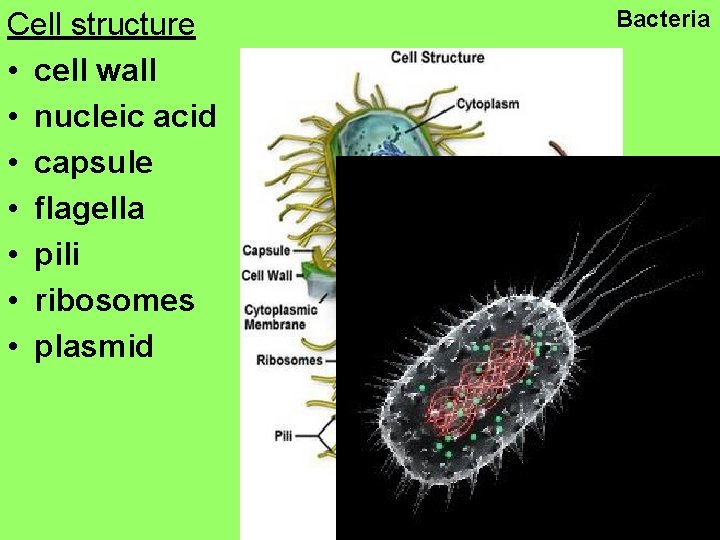
Cell structure • cell wall • nucleic acid • capsule • flagella • pili • ribosomes • plasmid Bacteria
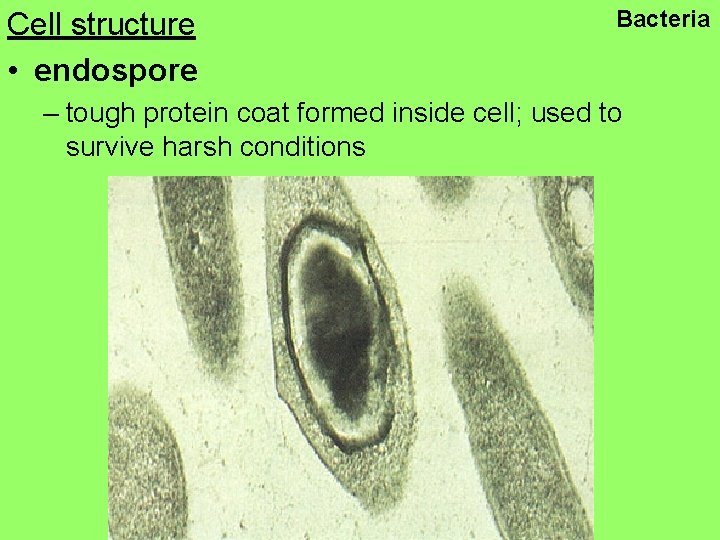
Cell structure • endospore Bacteria – tough protein coat formed inside cell; used to survive harsh conditions
Classifying Bacteria bacteria are classified according to: • shape • arrangement • staining properties Bacteria
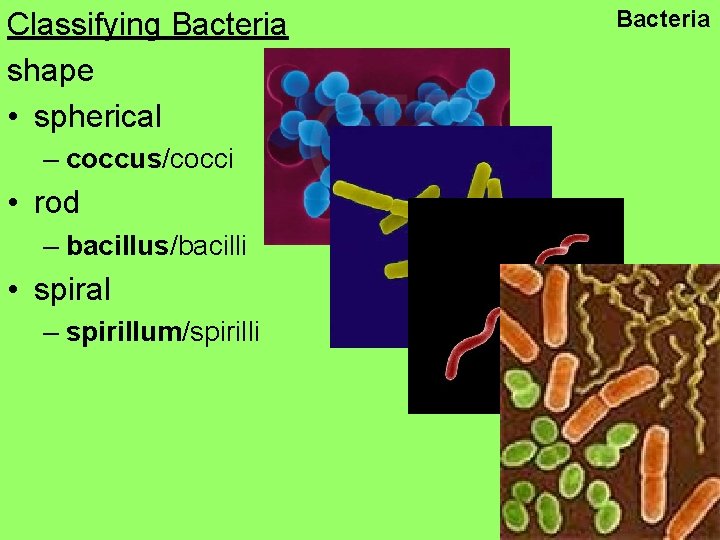
Classifying Bacteria shape • spherical – coccus/cocci • rod – bacillus/bacilli • spiral – spirillum/spirilli Bacteria
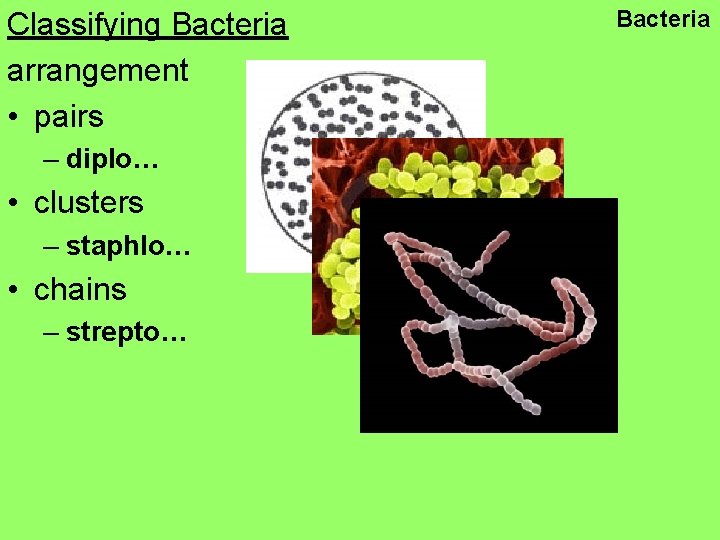
Classifying Bacteria arrangement • pairs – diplo… • clusters – staphlo… • chains – strepto… Bacteria
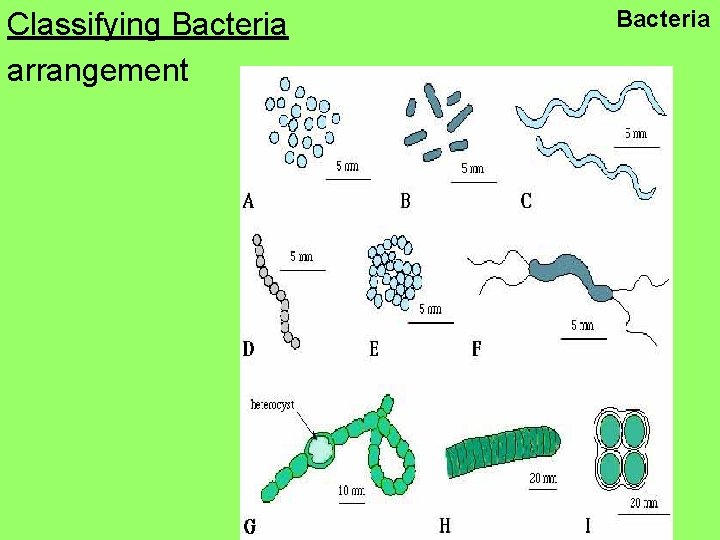
Classifying Bacteria arrangement Bacteria
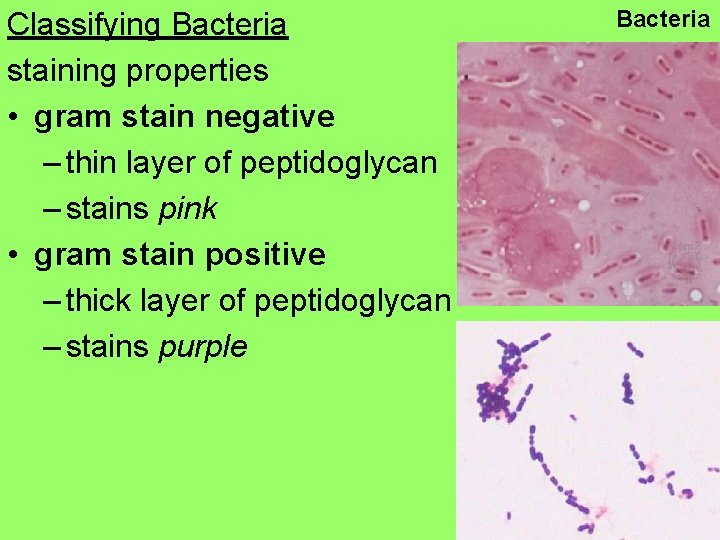
Classifying Bacteria staining properties • gram stain negative – thin layer of peptidoglycan – stains pink • gram stain positive – thick layer of peptidoglycan – stains purple Bacteria
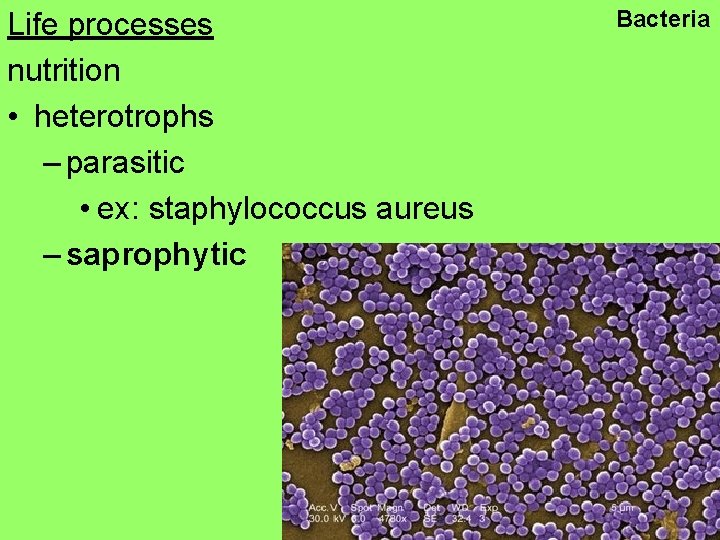
Life processes nutrition • heterotrophs – parasitic • ex: staphylococcus aureus – saprophytic Bacteria
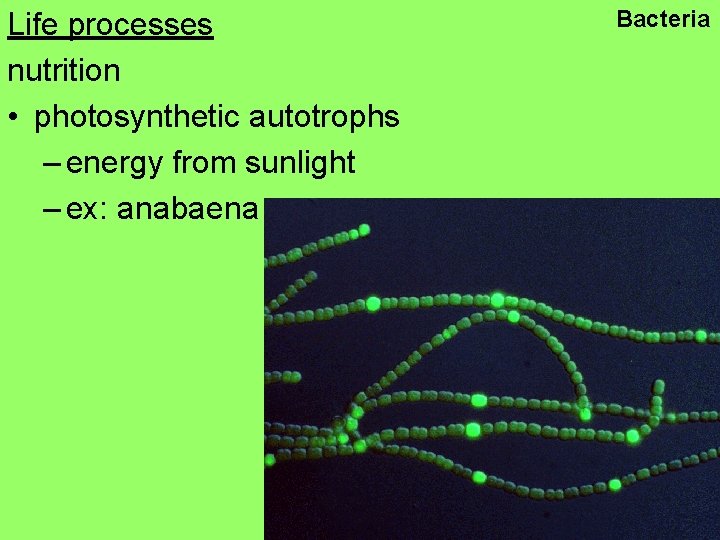
Life processes nutrition • photosynthetic autotrophs – energy from sunlight – ex: anabaena Bacteria
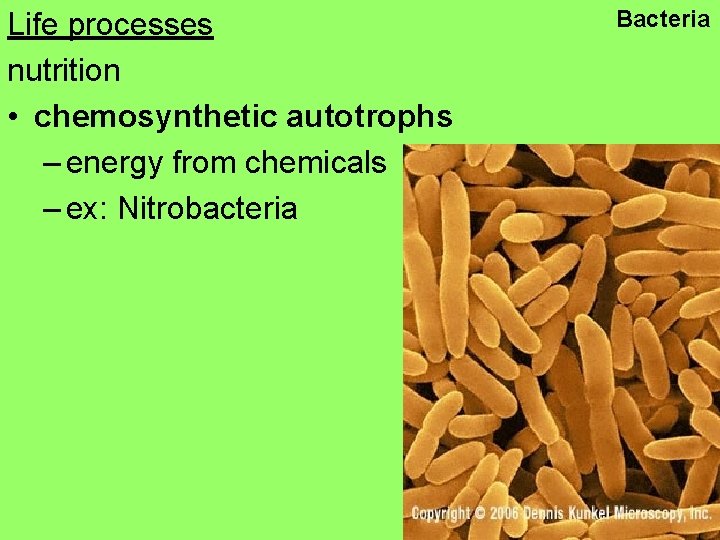
Life processes nutrition • chemosynthetic autotrophs – energy from chemicals – ex: Nitrobacteria Bacteria
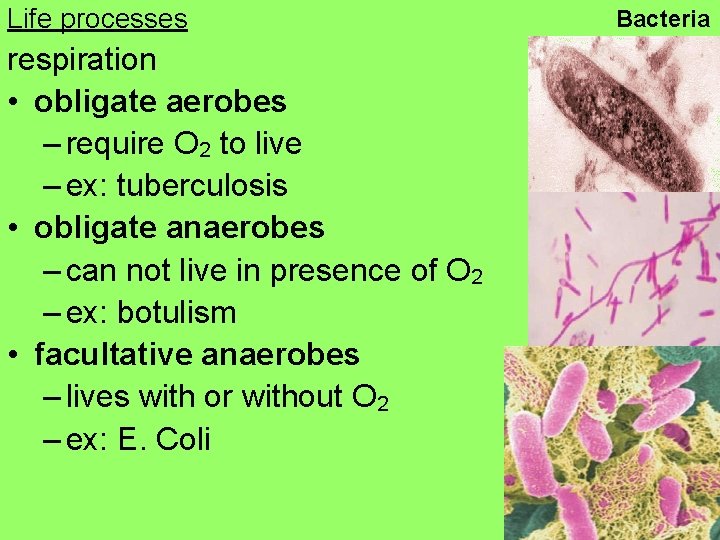
Life processes respiration • obligate aerobes – require O 2 to live – ex: tuberculosis • obligate anaerobes – can not live in presence of O 2 – ex: botulism • facultative anaerobes – lives with or without O 2 – ex: E. Coli Bacteria
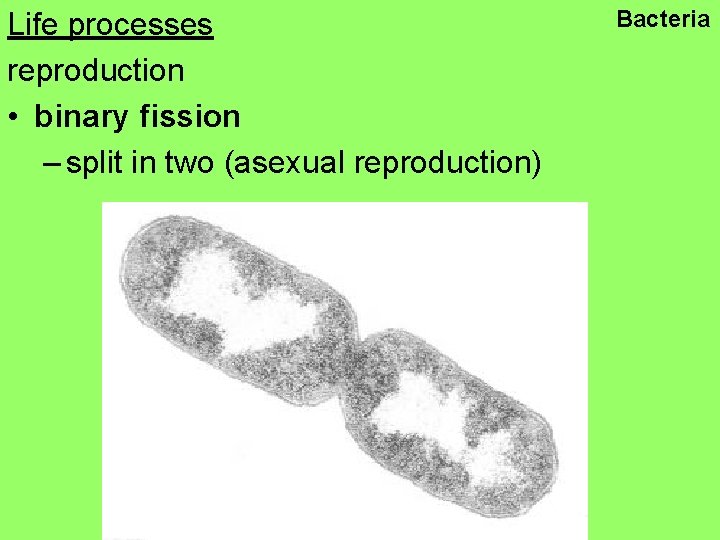
Life processes reproduction • binary fission – split in two (asexual reproduction) Bacteria
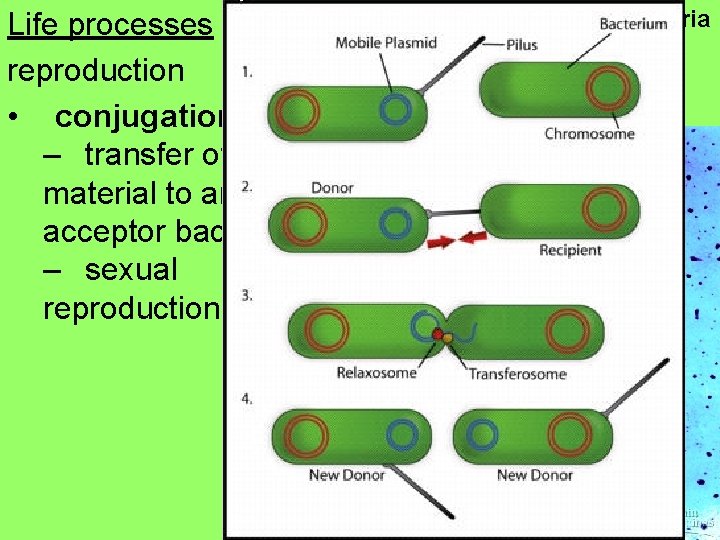
Life processes reproduction • conjugation – transfer of genetic material to an acceptor bacterium – sexual reproduction Bacteria
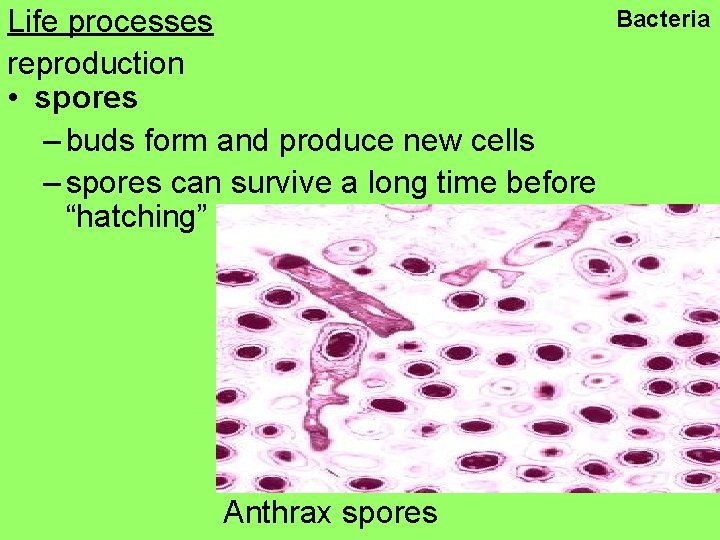
Life processes reproduction • spores – buds form and produce new cells – spores can survive a long time before “hatching” Anthrax spores Bacteria
Bacteria Advantages of bacteria • human intestine • food production– milk, buttermilk, yogurt, sour cream, cheese • ecology – decomposers – nitrogen fixation • producers
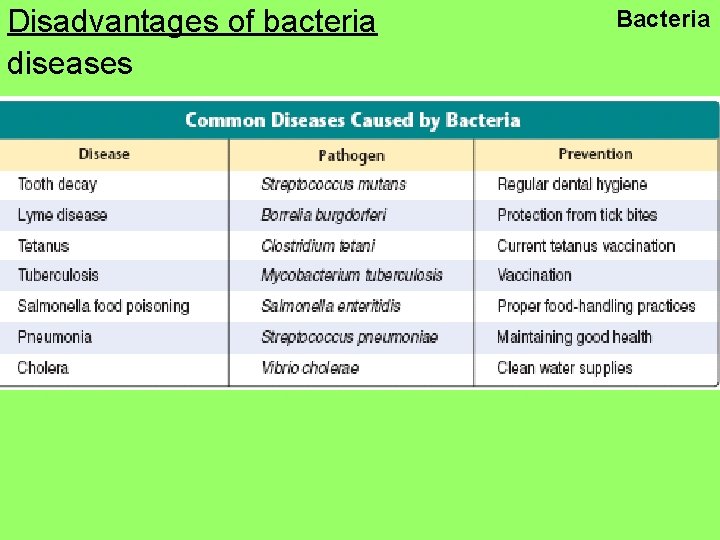
Disadvantages of bacteria diseases Bacteria
Bacteria Disadvantages of bacteria diseases • most bacteria affect host be producing toxins • endotoxin – toxic substance bound to cell wall • exotoxin – secreted substance toxic treatment • antibiotics – medication used to help kill or assist immune system in destruction of bacteria
- Slides: 24