
Bacteria Classification Bacteria Classification All prokaryotes used to
Bacteria Classification
Bacteria Classification All prokaryotes used to be Kingdom Monera But now they are 2 separate Domains - Domain Archaea(archaeabacteria) Oldest living organism on earth – live in extreme/harsh environments - Domain Bacteria(eubacteria) everyday bacteria – live everywhere
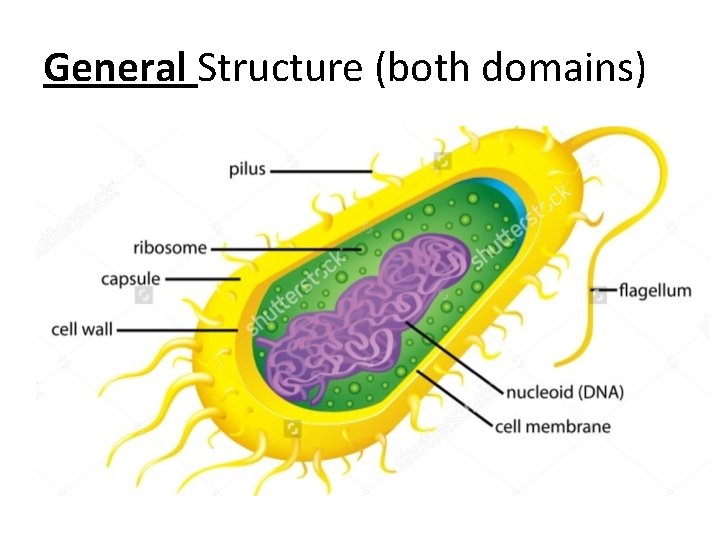
General Structure (both domains)
General Structure (both domains) • DNA – Dictates cell function – Plasmid – circular DNA used specifically for sex • Ribosomes – Make proteins • Cell membrane/cell wall – give structure to the bacterial cell • Capsule – thick gelatin around the cell wall, which hardens when exposed to harsh conditions (heat/drought) – protects the bacteria • Flagella/Pilli – whip like structures used for movement and sex
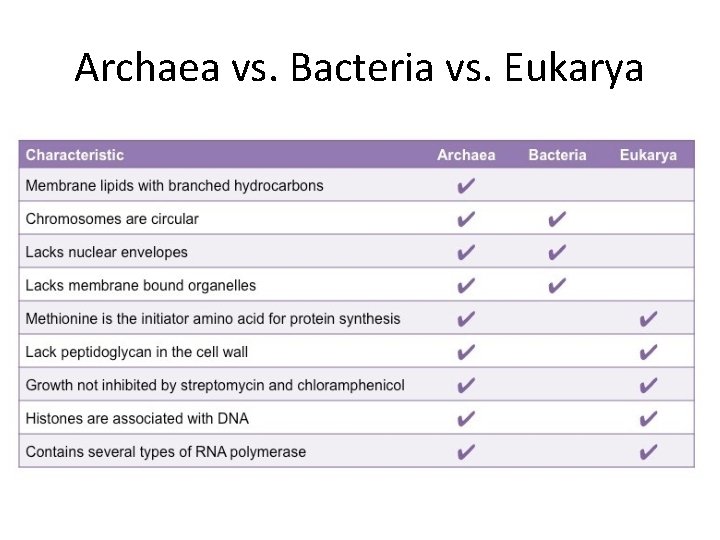
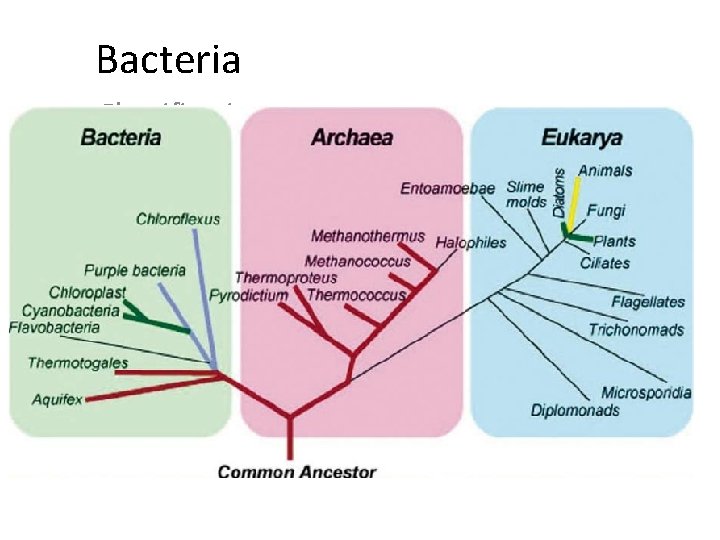
Archaea vs. Bacteria vs. Eukarya
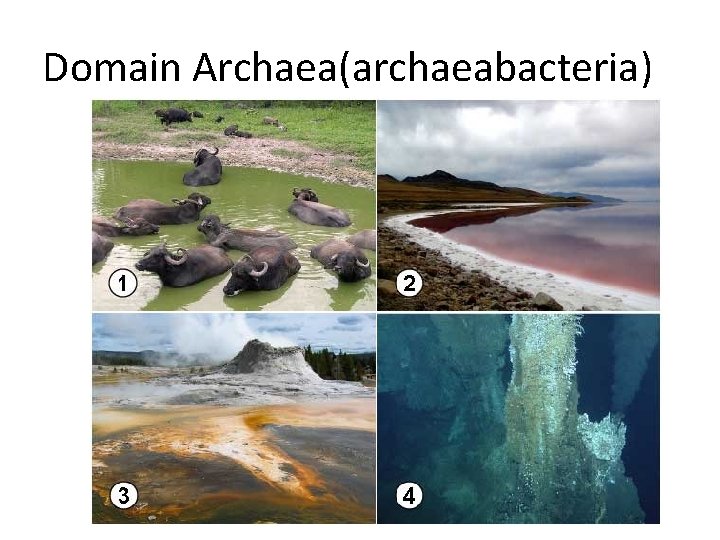
Domain Archaea(archaeabacteria)
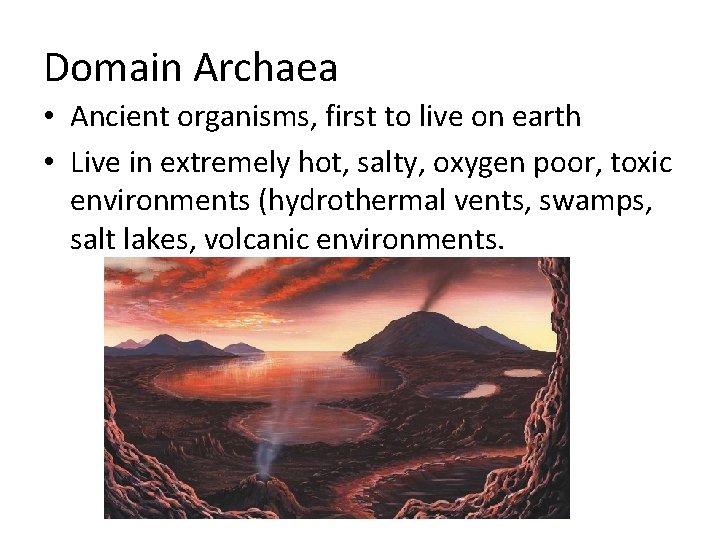
Domain Archaea • Ancient organisms, first to live on earth • Live in extremely hot, salty, oxygen poor, toxic environments (hydrothermal vents, swamps, salt lakes, volcanic environments.
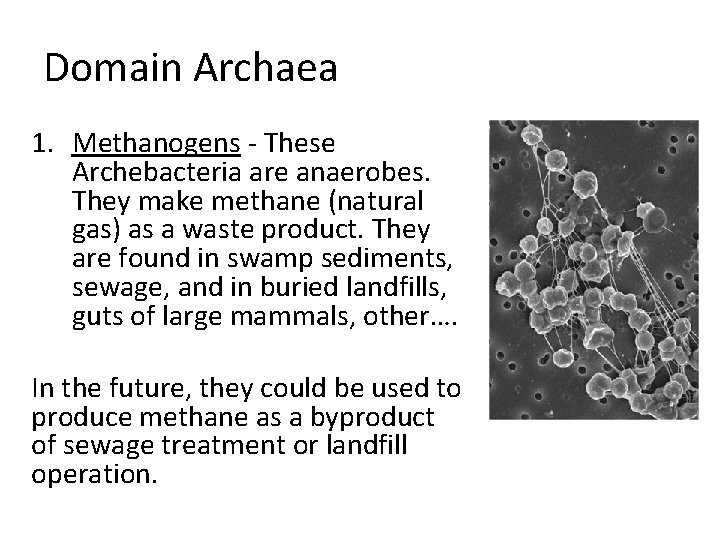
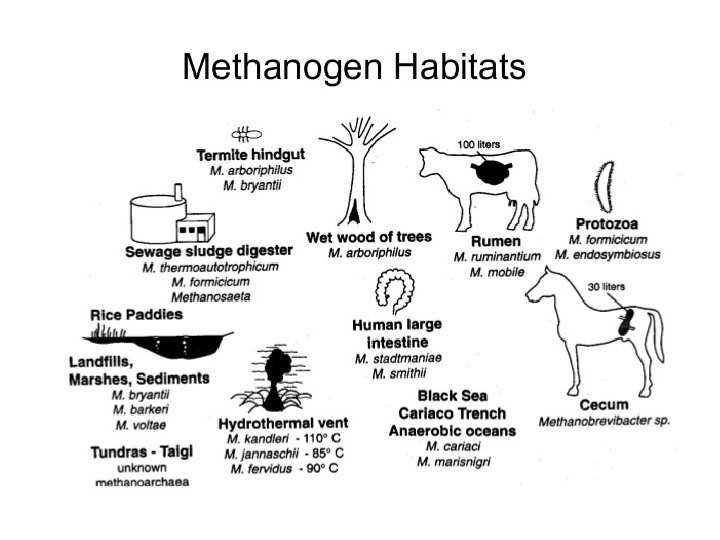
Domain Archaea 1. Methanogens - These Archebacteria are anaerobes. They make methane (natural gas) as a waste product. They are found in swamp sediments, sewage, and in buried landfills, guts of large mammals, other…. In the future, they could be used to produce methane as a byproduct of sewage treatment or landfill operation.
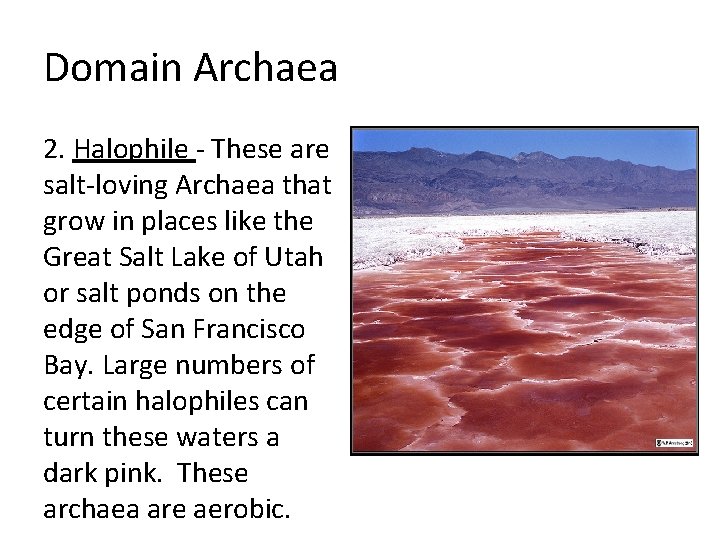
Domain Archaea 2. Halophile - These are salt-loving Archaea that grow in places like the Great Salt Lake of Utah or salt ponds on the edge of San Francisco Bay. Large numbers of certain halophiles can turn these waters a dark pink. These archaea are aerobic.
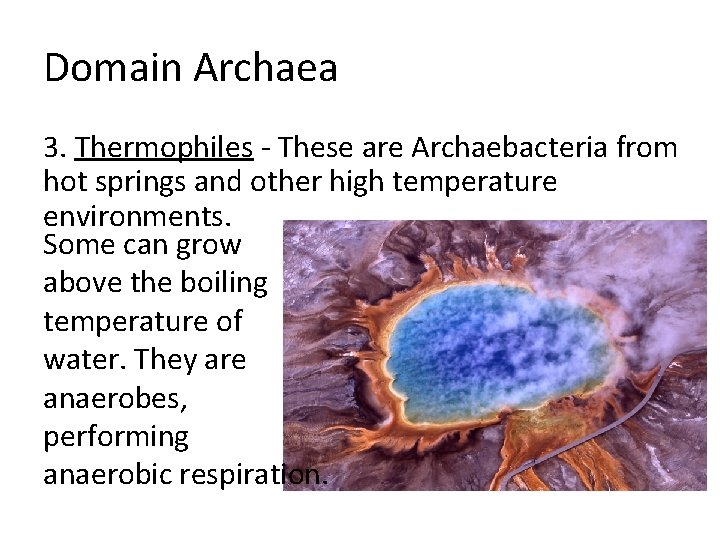
Domain Archaea 3. Thermophiles - These are Archaebacteria from hot springs and other high temperature environments. Some can grow above the boiling temperature of water. They are anaerobes, performing anaerobic respiration.
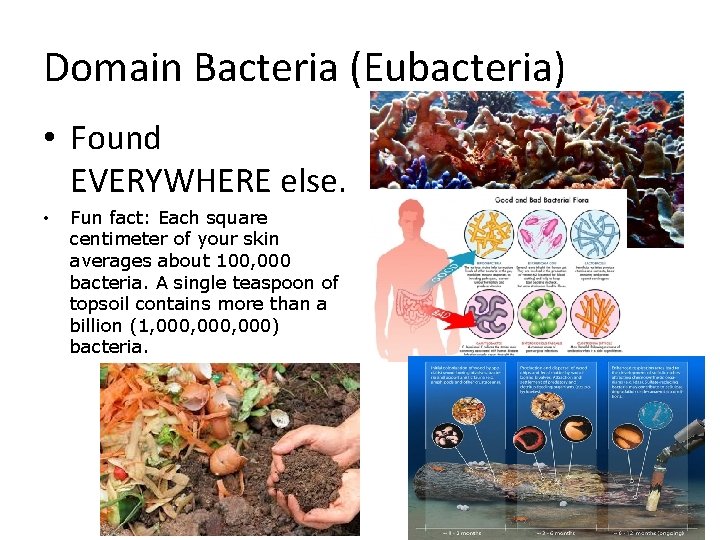
Domain Bacteria (Eubacteria) • Found EVERYWHERE else. • Fun fact: Each square centimeter of your skin averages about 100, 000 bacteria. A single teaspoon of topsoil contains more than a billion (1, 000, 000) bacteria.
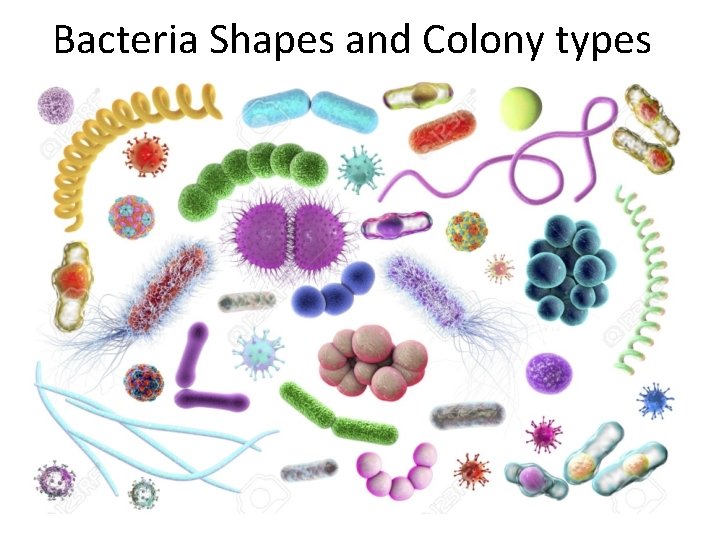
Bacteria Shapes and Colony types
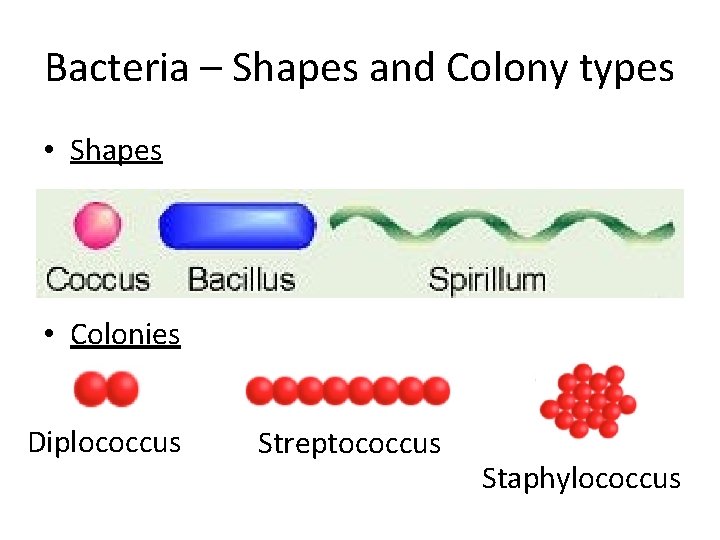
Bacteria – Shapes and Colony types • Shapes • Colonies Diplococcus Streptococcus Staphylococcus
Mode of feeding Autotrophs – Make their own food • Photoautotroph – use light • Chemoautotrophs – use chemicals • Heterotrophs – Can’t make their own food, must eat organic matter from other organisms (these are the good and bacteria we hear about)
Heterotrophs 1. Decomposers – feed on recycled organic material 1. Pathogens – parasitic, disease causing bacteria, feed on live organisms 1. Nitrogen Fixing bacteria – Found on roots of plants. Feed on sugars of plant root while providing nitrogen to plant roots
Sex and Reproduction • Sex – the exchange of DNA to form new genetic material • Reproduction – multiplication of an organism. • In many organisms they happen simultaneously but that’s not true in every case.
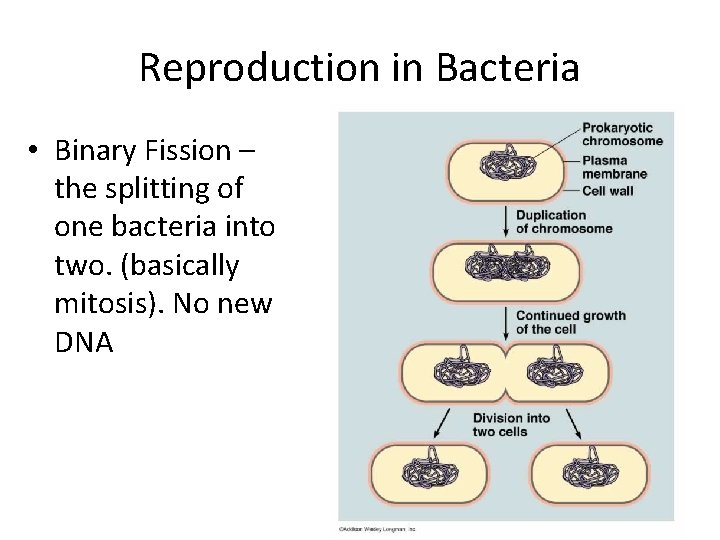
Reproduction in Bacteria • Binary Fission – the splitting of one bacteria into two. (basically mitosis). No new DNA
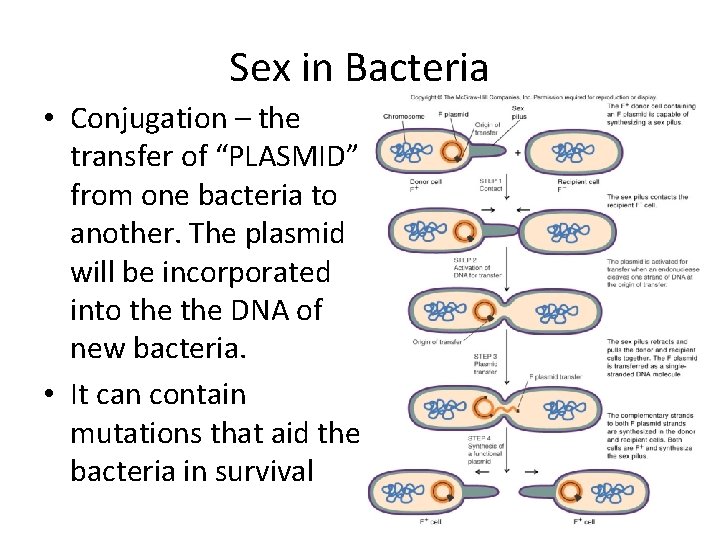
Sex in Bacteria • Conjugation – the transfer of “PLASMID” from one bacteria to another. The plasmid will be incorporated into the DNA of new bacteria. • It can contain mutations that aid the bacteria in survival
• Transformation – When naked DNA from the surrounding is picked up by a bacterial cell and used in its DNA • Transduction – The “accidental” transfer of DNA from one bacteria to another through a virus.
- Slides: 20