
Bacteria Chapter 23 Standards Standard 1 Cells CLE
Bacteria Chapter 23
Standards Standard 1: Cells CLE 3216. 1. 6 Describe the relationship between bacteria, protists, and viruses and their host cells • Prokaryotes • •
Bacteria • • • 1. 2. Prokaryote (no nucleus) Small 2 groups: Archaebacteria Eubacteria
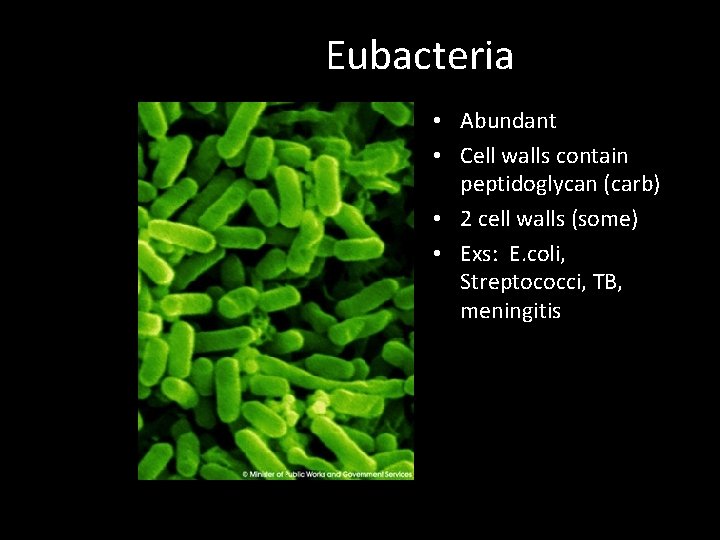
Eubacteria • Abundant • Cell walls contain peptidoglycan (carb) • 2 cell walls (some) • Exs: E. coli, Streptococci, TB, meningitis
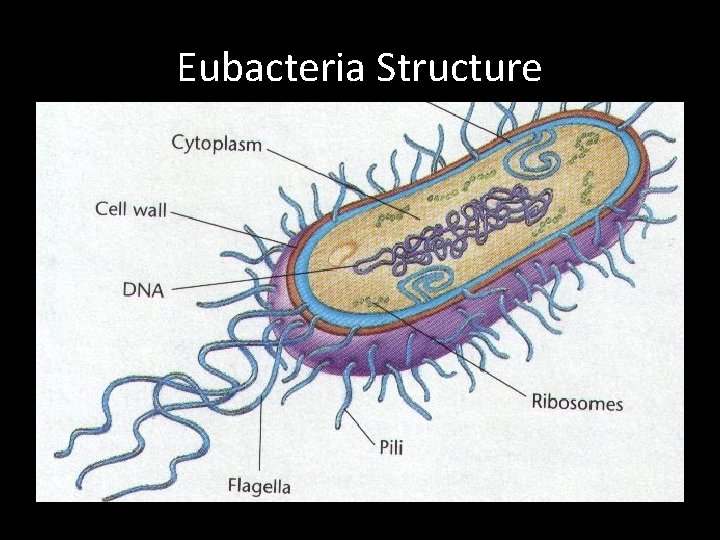
Eubacteria Structure
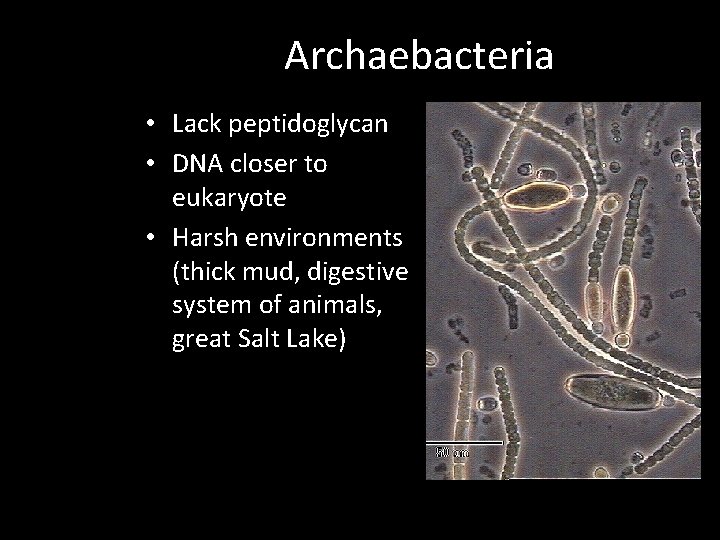
Archaebacteria • Lack peptidoglycan • DNA closer to eukaryote • Harsh environments (thick mud, digestive system of animals, great Salt Lake)
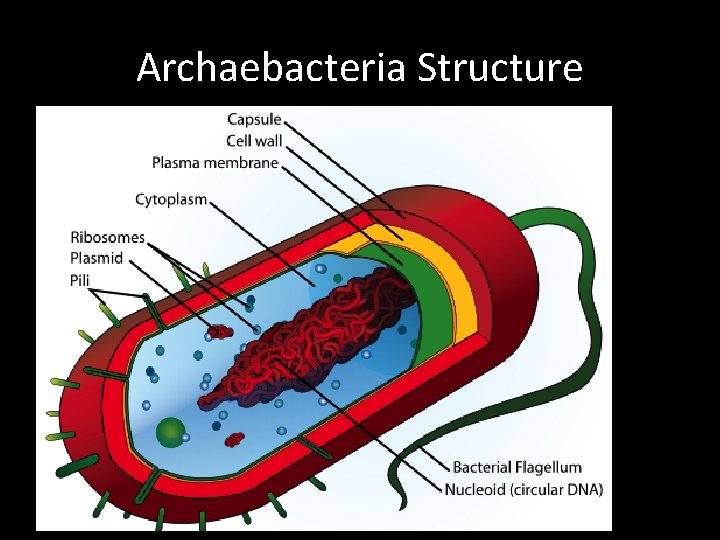
Archaebacteria Structure
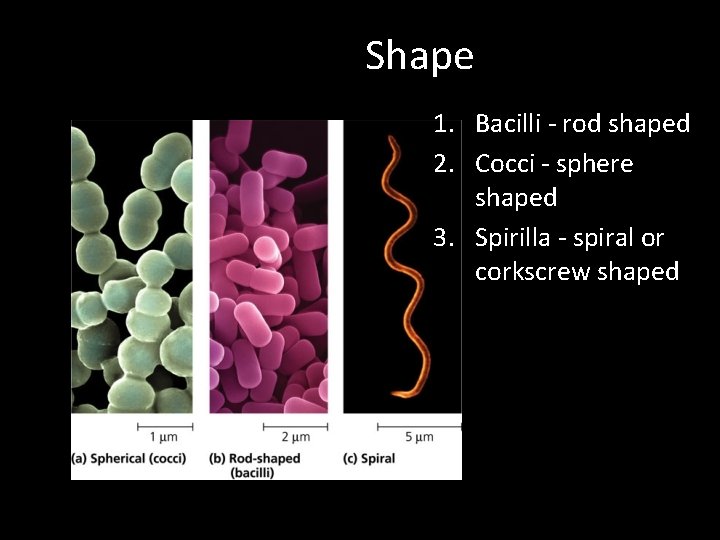
Shape 1. Bacilli - rod shaped 2. Cocci - sphere shaped 3. Spirilla - spiral or corkscrew shaped
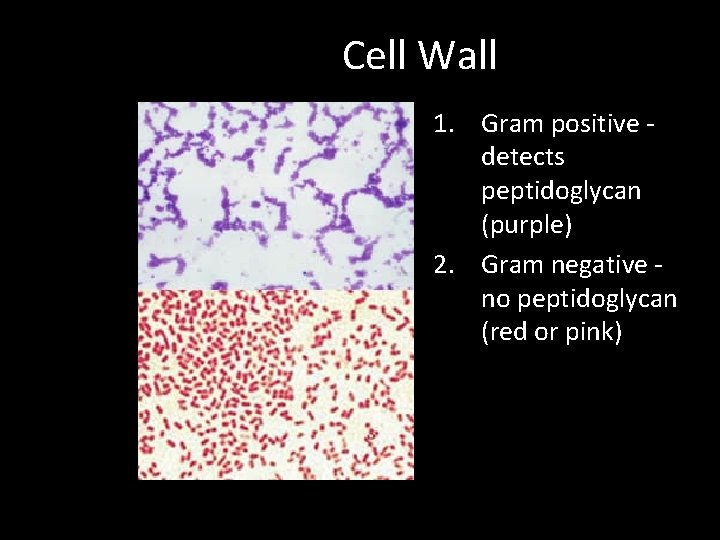
Cell Wall 1. Gram positive - detects peptidoglycan (purple) 2. Gram negative - no peptidoglycan (red or pink)
DNA • A single closed loop of double-stranded DNA attached to one point to cell membrane • Not enclosed in a nucleus • Some have Plasmids - Carry genes that cause disase - Carry genes that provide resistance to atibiotics
Capsules and Pili • Capsule – outer covering that protects the cell from drying out or harsh chemicals • - allows cell to connect to host cells and tissue • Pili – help bacteria to connect to each other and to other surfaces
Endospores • A thick-coated resistant structure • Helps bacteria to survive in harsh conditions for long times • Resistant to high temps, strong chemicals, radiation, drying out, and environmental extremes
Movement • Flagella: • Allows bacteria to move forward, backward, and to rotate and flip
Heterotrophs (eat others) 1. Chemoheterotroph- needs to eat other organisms 2. Photoheterotroph - photosynthetic but also need to eat organisms to get carbon
Habitats • Bacteria live in certain places and habitats based on their biochemical abilities • Bacteria live in different places based on certain conditions • Ex: oxygen or not temperature of environment p. H of environment
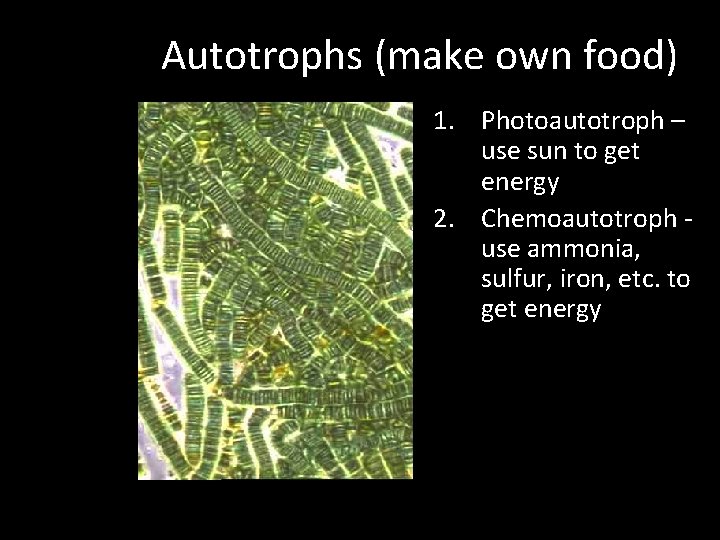
Autotrophs (make own food) 1. Photoautotroph – use sun to get energy 2. Chemoautotroph - use ammonia, sulfur, iron, etc. to get energy
Reproduction • 1. 2. 3. Divide quickly if food and space available Binary fission Conjugation Spore Formation
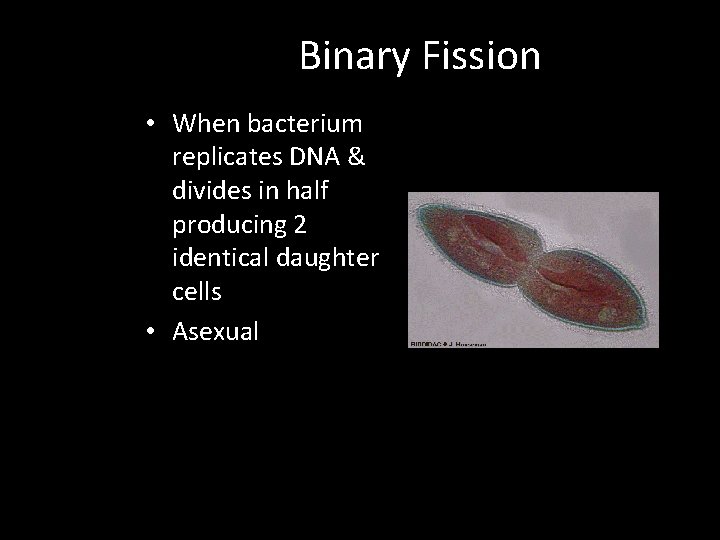
Binary Fission • When bacterium replicates DNA & divides in half producing 2 identical daughter cells • Asexual
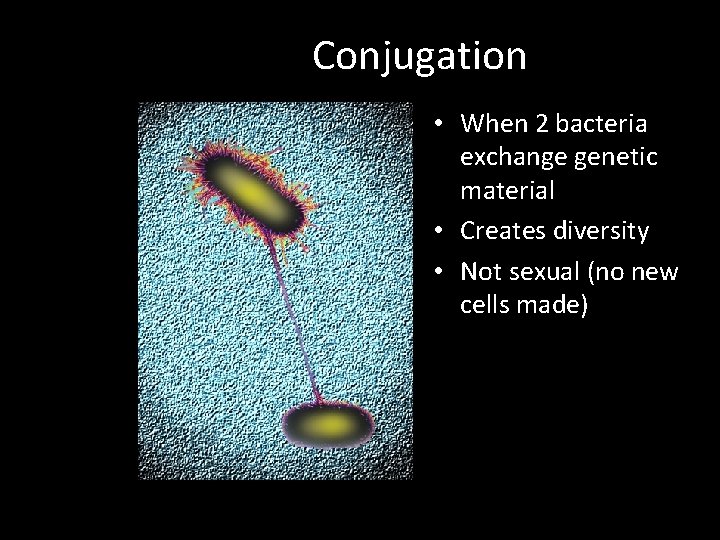
Conjugation • When 2 bacteria exchange genetic material • Creates diversity • Not sexual (no new cells made)
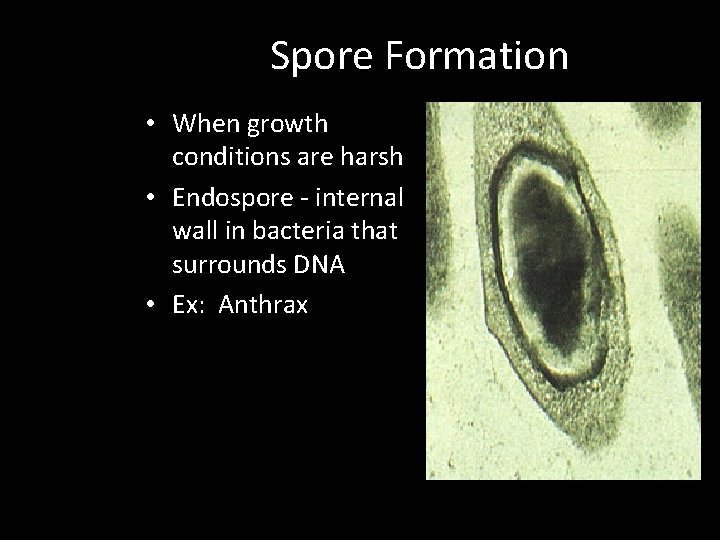
Spore Formation • When growth conditions are harsh • Endospore - internal wall in bacteria that surrounds DNA • Ex: Anthrax
Bacterial Importance • Decomposers • Nitrogen fixers • Human uses - making food & beverages, remove waste from water, synthesize drugs
Bacterial Disease • Any disease causing bacteria = pathogen 1. Bacteria eats cells for food in host – Ex: TB 2. Bacteria release toxins interfering with normal functions (exo and endotoxins) – Ex: strep throat - toxins in blood stream
Disease Prevention 1. Vaccine - weakened or killed pathogen - causes body to produce immunity 2. Antibiotics - block the growth and reproduction of bacteria (penicillin) 3. Sterilization - high temps kill bacteria 4. Disinfectant - chemical soln that kills bacteria 5. Food Storage & Processing - cool temps decrease reproduction - boiling, frying, steaming sterilizes
Common Bacterial Diseases 1. 2. 3. 4. 5. 6. Lyme Disease Tetanus TB Meningitis Strep Throat Ear Infection
- Slides: 24