
Bacteria Bacteria is Small single living organism prokaryote
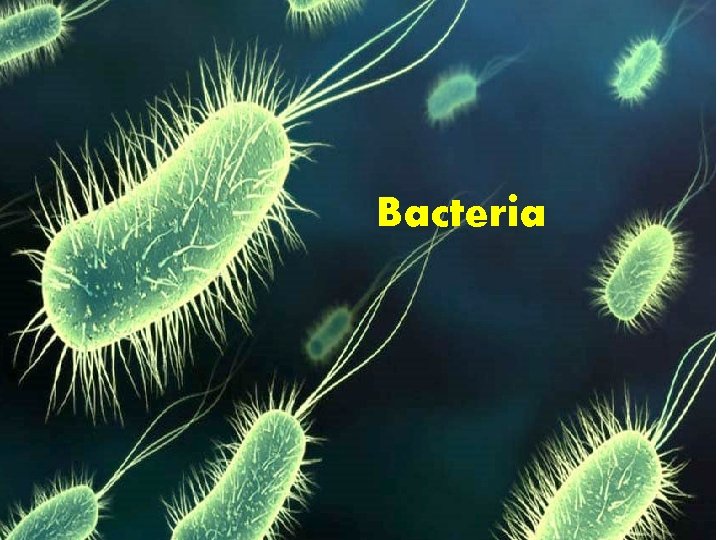
Bacteria
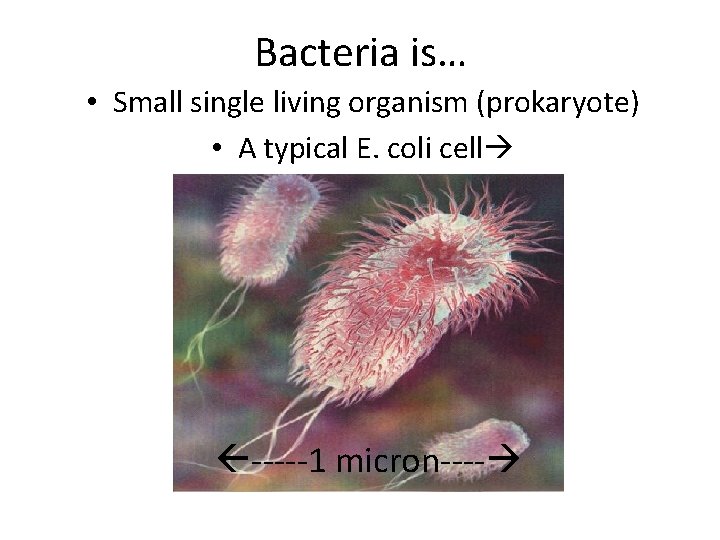
Bacteria is… • Small single living organism (prokaryote) • A typical E. coli cell -----1 micron----

Bacteria Movement • E. coli cells use long, thin structures called flagella to propel themselves.
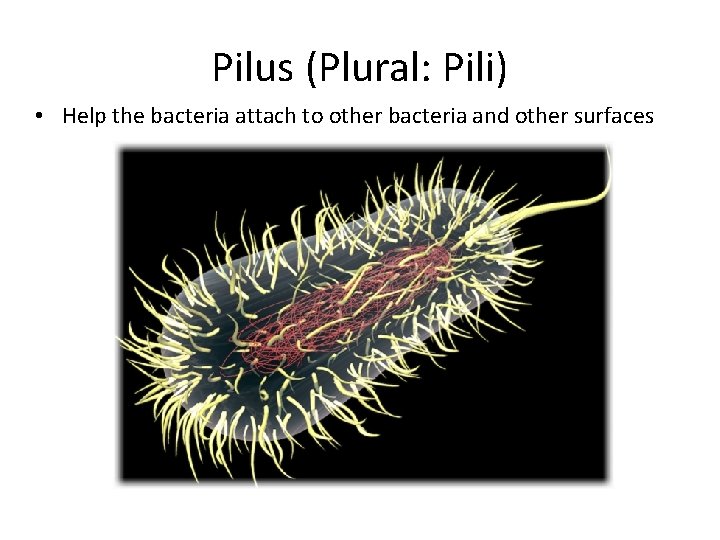
Pilus (Plural: Pili) • Help the bacteria attach to other bacteria and other surfaces

Bacteria Capsule • A sticky coating surrounding disease-causing bacteria to help protect them from destruction by the host’s immune system
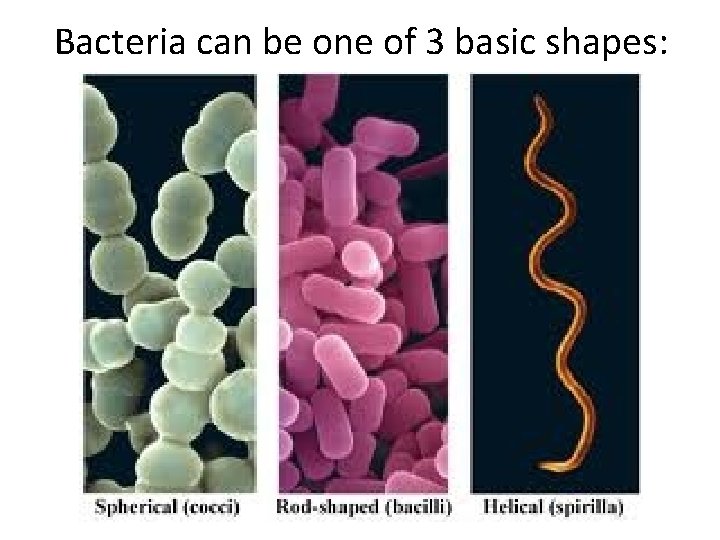
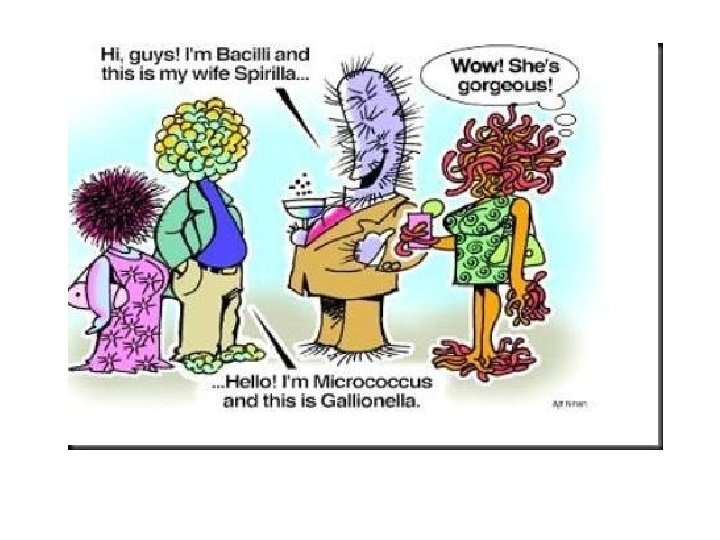
Bacteria can be one of 3 basic shapes:
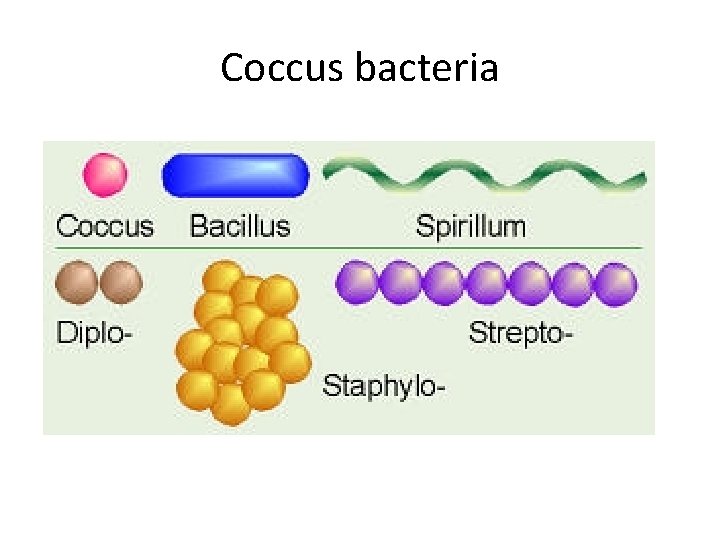
Coccus bacteria
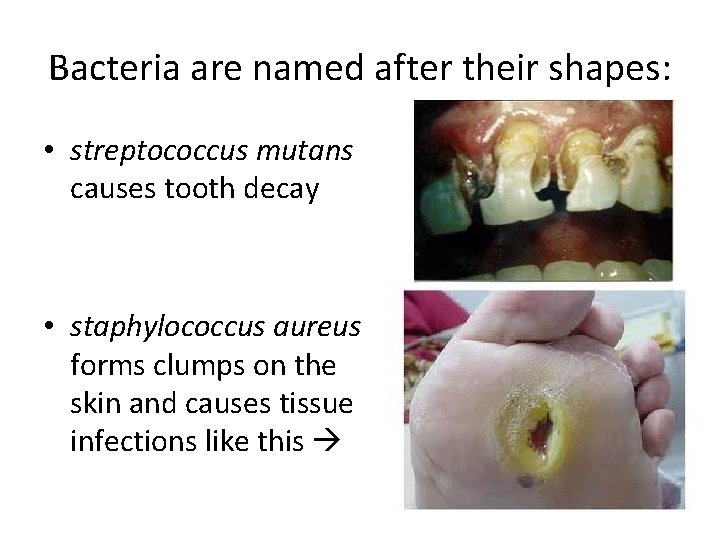
Bacteria are named after their shapes: • streptococcus mutans causes tooth decay • staphylococcus aureus forms clumps on the skin and causes tissue infections like this
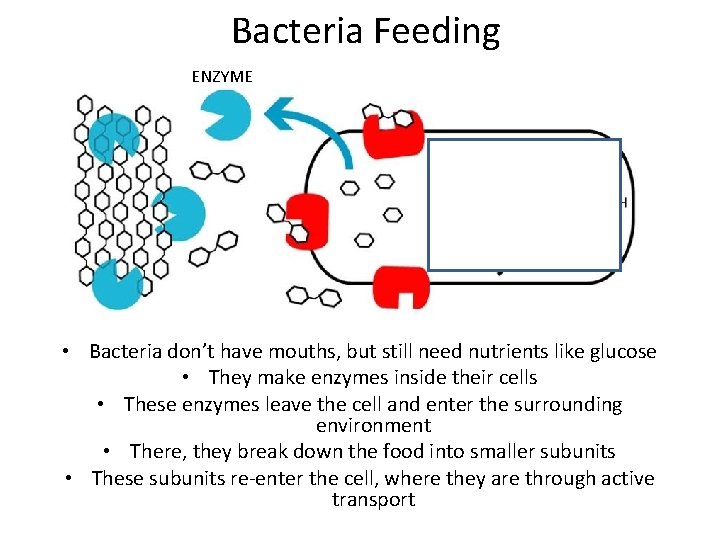
Bacteria Feeding ENZYME • Bacteria don’t have mouths, but still need nutrients like glucose • They make enzymes inside their cells • These enzymes leave the cell and enter the surrounding environment • There, they break down the food into smaller subunits • These subunits re-enter the cell, where they are through active transport
Bacterial Nutrition Autotrophs make the food from inorganic substances. Photosynthetic bacteria convert CO 2 and H 2 O into carbohydrates by using energy from sunlight
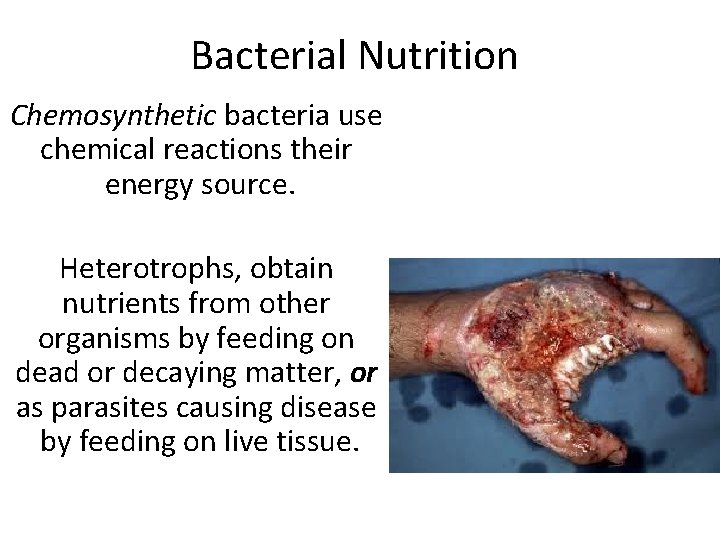
Bacterial Nutrition Chemosynthetic bacteria use chemical reactions their energy source. Heterotrophs, obtain nutrients from other organisms by feeding on dead or decaying matter, or as parasites causing disease by feeding on live tissue.
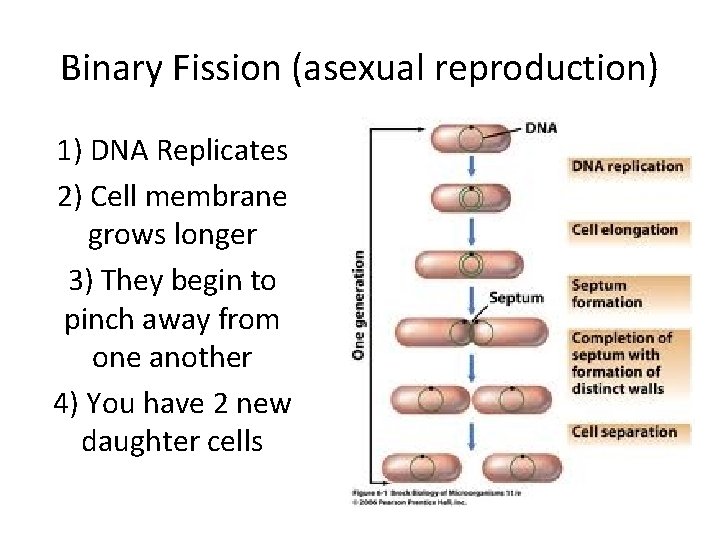
Binary Fission (asexual reproduction) 1) DNA Replicates 2) Cell membrane grows longer 3) They begin to pinch away from one another 4) You have 2 new daughter cells
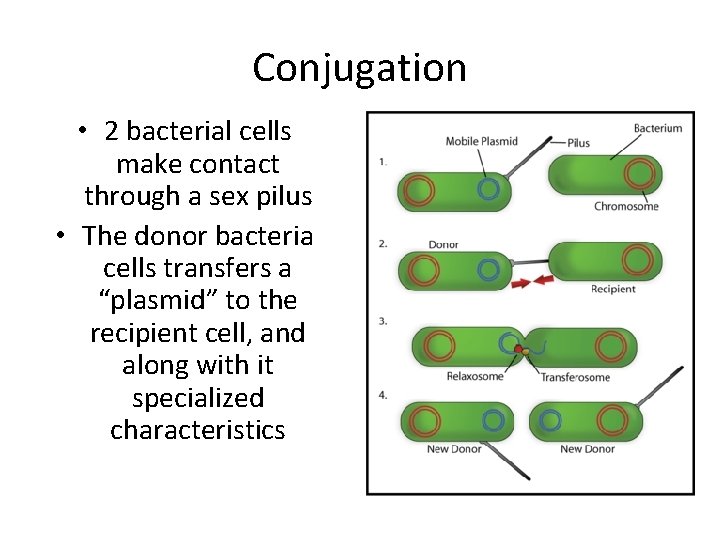
Conjugation • 2 bacterial cells make contact through a sex pilus • The donor bacteria cells transfers a “plasmid” to the recipient cell, and along with it specialized characteristics
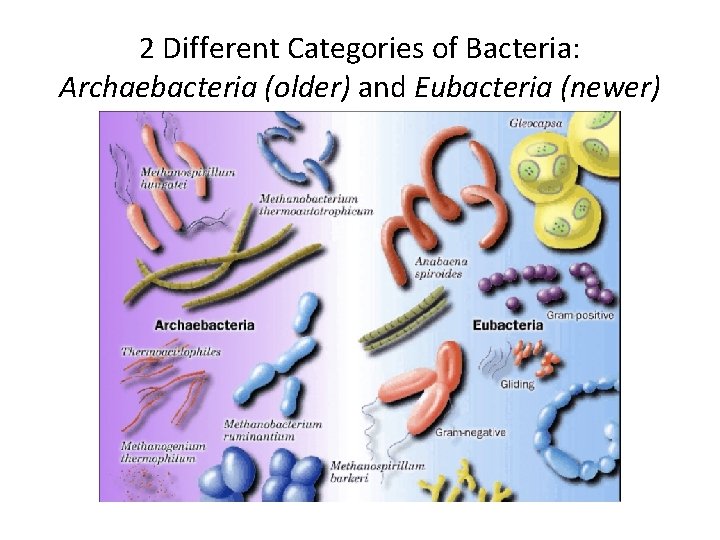
2 Different Categories of Bacteria: Archaebacteria (older) and Eubacteria (newer)
- Slides: 15