
Bacteria and Viruses Spontaneous Generation Throughout history people
Bacteria and Viruses
Spontaneous Generation • Throughout history, people have created explanations for disease • Spontaneous generation – life could arise from nonliving material • Two important scientists • Francesco Redi • Louis Pasteur
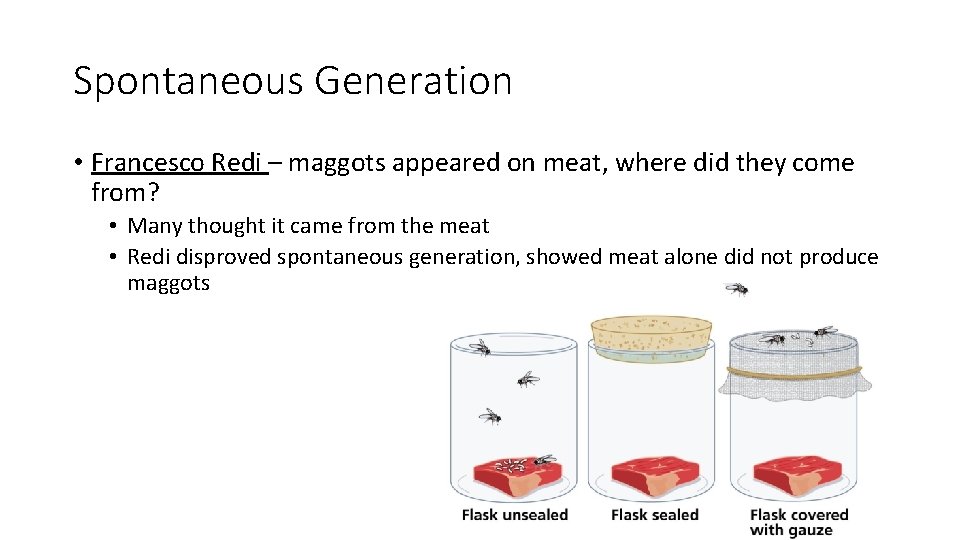
Spontaneous Generation • Francesco Redi – maggots appeared on meat, where did they come from? • Many thought it came from the meat • Redi disproved spontaneous generation, showed meat alone did not produce maggots
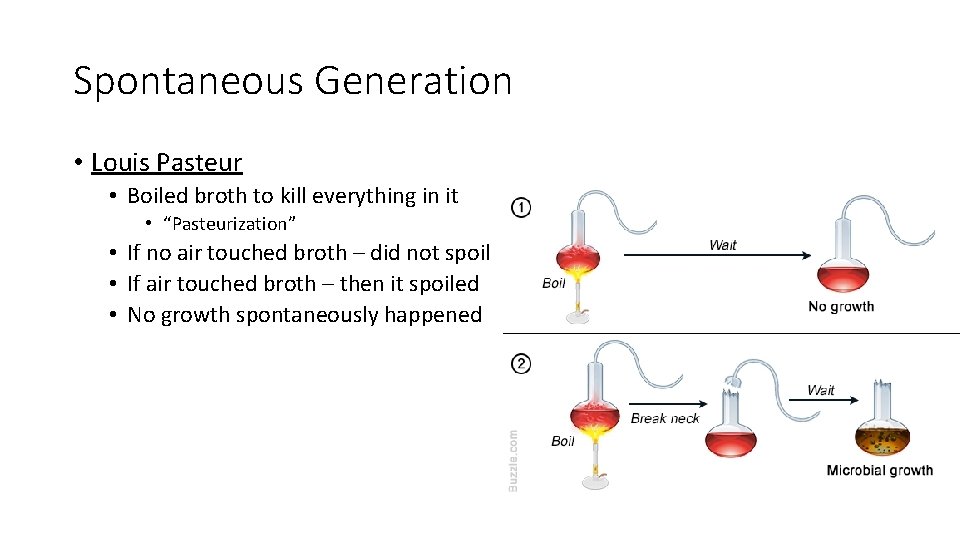
Spontaneous Generation • Louis Pasteur • Boiled broth to kill everything in it • “Pasteurization” • If no air touched broth – did not spoil • If air touched broth – then it spoiled • No growth spontaneously happened
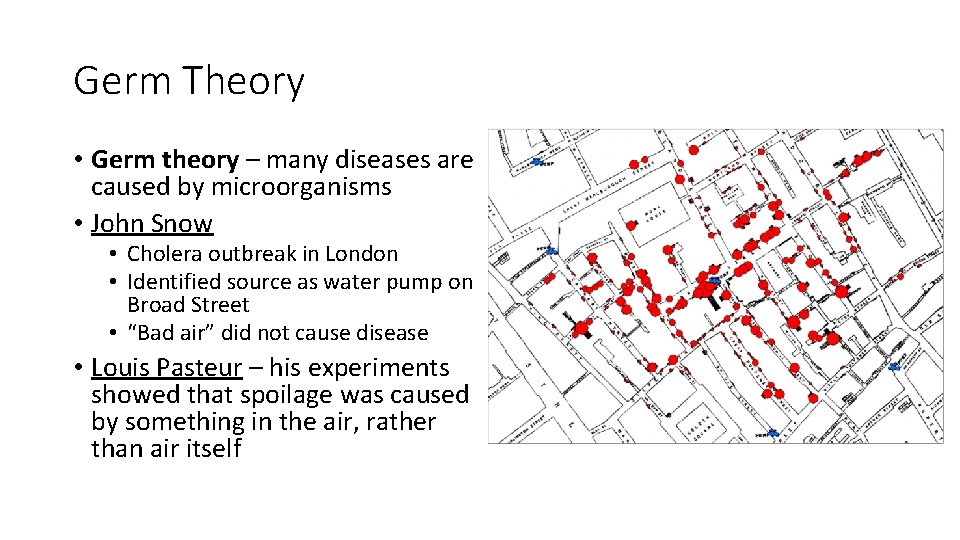
Germ Theory • Germ theory – many diseases are caused by microorganisms • John Snow • Cholera outbreak in London • Identified source as water pump on Broad Street • “Bad air” did not cause disease • Louis Pasteur – his experiments showed that spoilage was caused by something in the air, rather than air itself
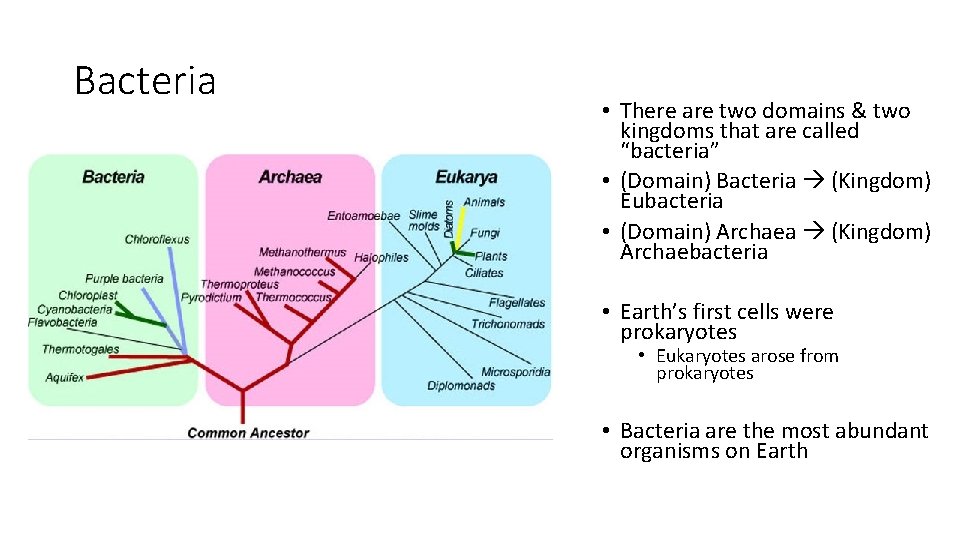
Bacteria • There are two domains & two kingdoms that are called “bacteria” • (Domain) Bacteria (Kingdom) Eubacteria • (Domain) Archaea (Kingdom) Archaebacteria • Earth’s first cells were prokaryotes • Eukaryotes arose from prokaryotes • Bacteria are the most abundant organisms on Earth
1. Domain Bacteria • Kingdom Eubacteria • Found everywhere • Extremely important in biology • Fix nitrogen • Decomposers • Ferment milk into yogurt • Many are pathogens (cause disease) • Examples: • Cyanobacteria (phylum of autotrophic, oxygen-producing bacteria) • E. coli (found in gut, some can cause disease) • Streptococcus (strep throat) • Yersinia pestis (plague/black death)
2. Domain Archaea • Kingdom Archaebacteria • Not really bacteria! • Actually more closely related to eukaryotes than eubacteria • Found in harsh places • Others found in human gut • Difficult to culture, so not as well-understood
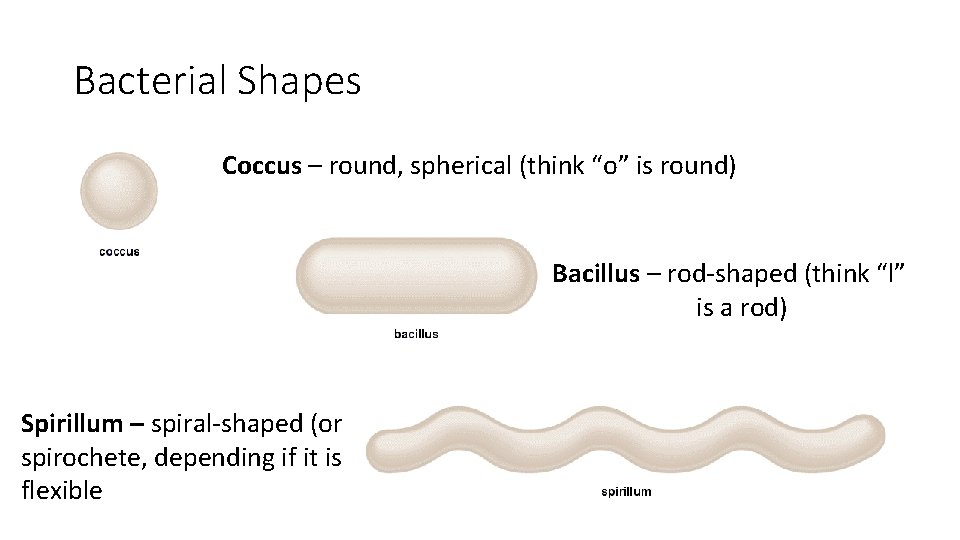
Bacterial Shapes Coccus – round, spherical (think “o” is round) Bacillus – rod-shaped (think “l” is a rod) Spirillum – spiral-shaped (or spirochete, depending if it is flexible
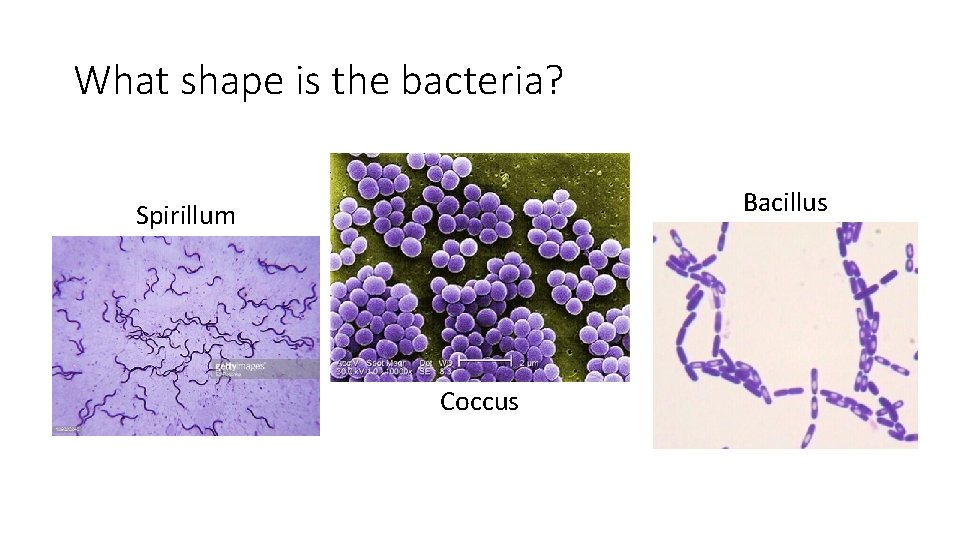
What shape is the bacteria? Bacillus Spirillum Coccus
Treating Bacterial Infections • Pathogens – organisms that cause disease • Antibiotics interrupt normal cell functions • Example: penicillin, tetracycline, neomycin • Antibiotic resistance • Mutant bacteria are not destroyed • Resistant bacteria continue to grow (an example of natural selection!) • Overuse of antibiotics has resulted in infections that are difficult to treat
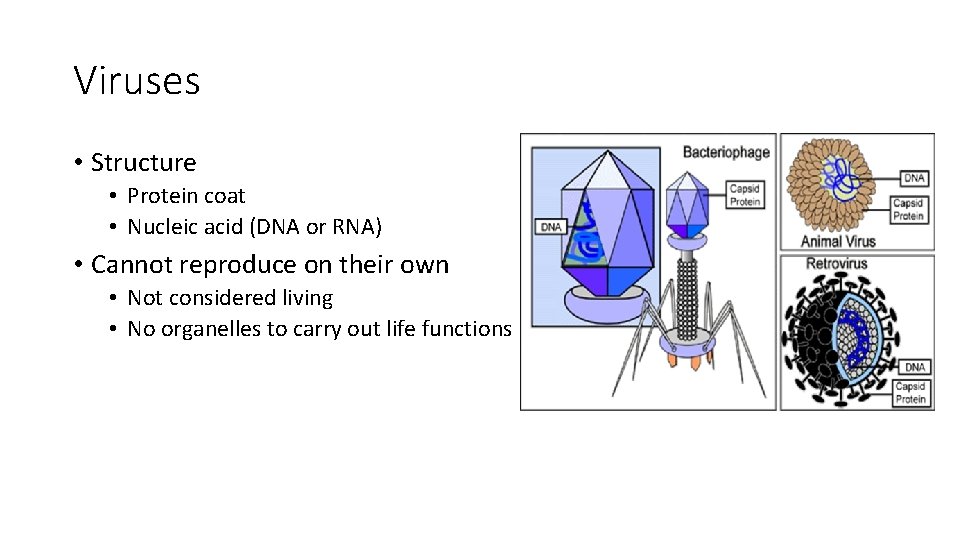
Viruses • Structure • Protein coat • Nucleic acid (DNA or RNA) • Cannot reproduce on their own • Not considered living • No organelles to carry out life functions
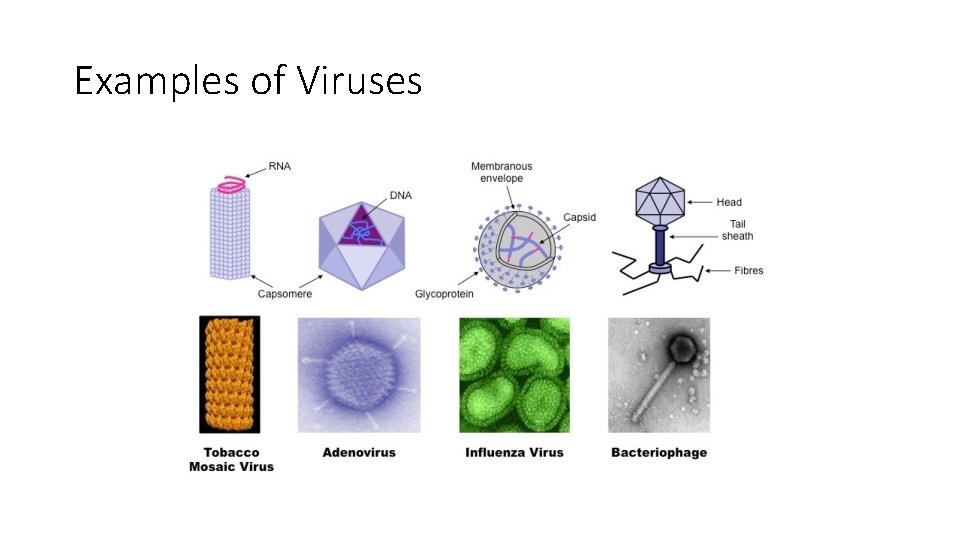
Examples of Viruses
Viral Reproduction • Viruses can reproduce only inside a living host cell • Steps: 1. 2. 3. 4. Virus attaches to cell, inserts genetic material into host cell Viral genetic material takes control of the host cell Virus uses host to produce viruses (new proteins, new DNA/RNA) Newly formed viruses burst from host cell
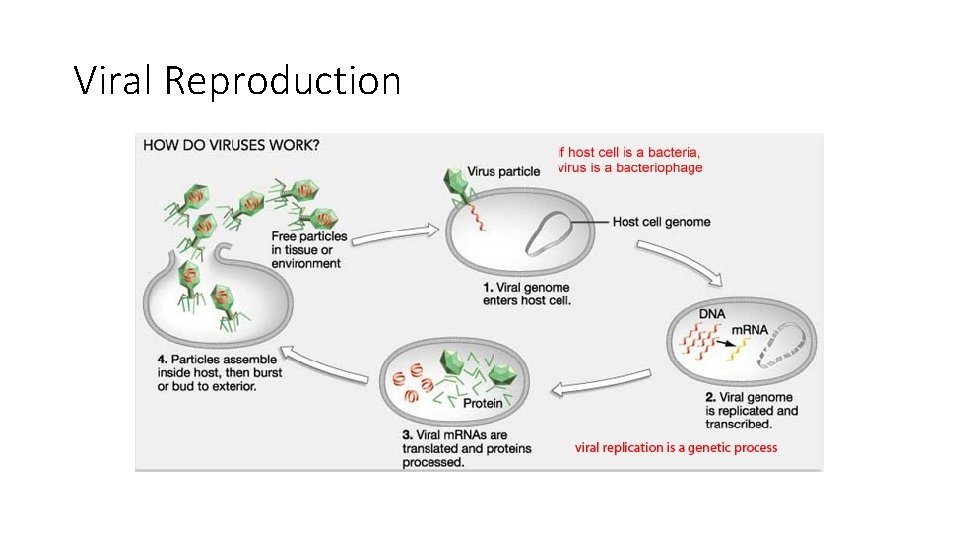
Viral Reproduction
Treating Viral Infections • Vaccinations – prevent or stop spread of disease • Prepares immune system so it can destroy the virus • Antiviral drugs – stop the development of viral replication • CANNOT BE TREATED WITH ANTIBIOTICS • Viruses are not alive!! • Viruses have been linked to some types of cancer (e. g. HPV and cervical cancer)
- Slides: 16