
Backtracking Intrusions Sam King Peter Chen Co Virt
Backtracking Intrusions Sam King Peter Chen Co. Virt Project, University of Michigan
Motivation • Computer break-ins increasing • Computer forensics is important – How did they get in
Current Forensic Methods • Manual inspection of existing logs • System, application logs – Not enough information • Network log – May be encrypted • Disk image – Only shows final state • Machine level logs – No semantic information • No way to separate out legitimate actions
Back. Tracker • Can we help figure out what was exploited? • Track back to exploited application • Record causal dependencies between objects
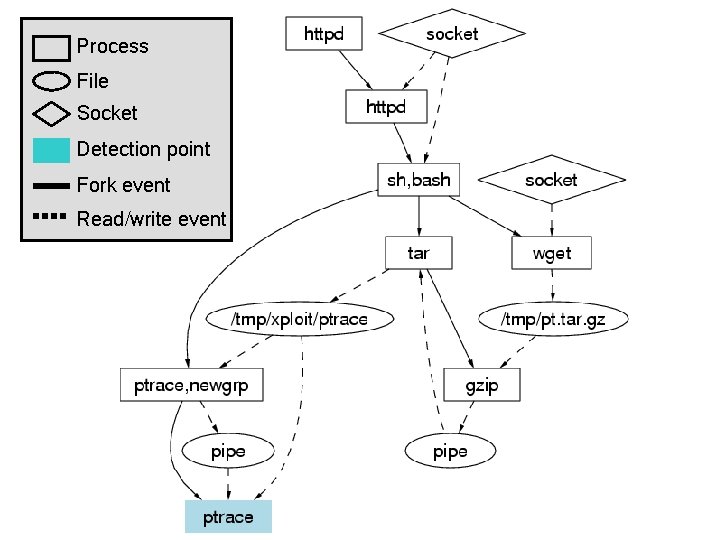
Process File Socket Detection point Fork event Read/write event
Presentation Outline • • Back. Tracker design Evaluation Limitations Conclusions
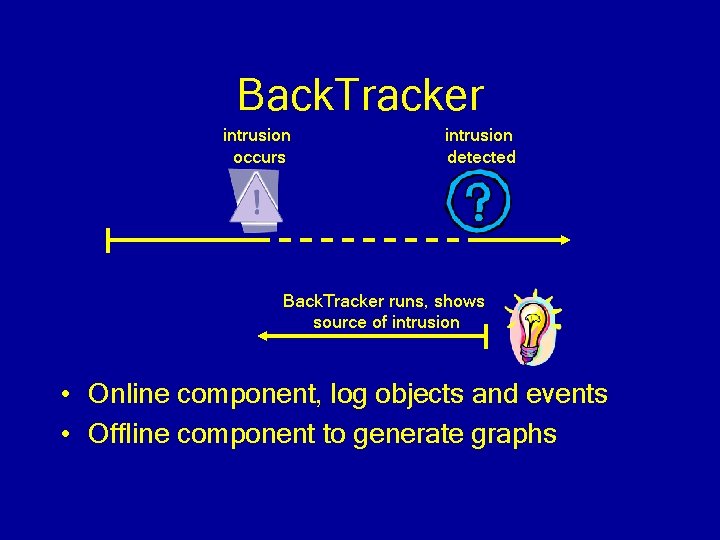
Back. Tracker intrusion occurs intrusion detected Back. Tracker runs, shows source of intrusion • Online component, log objects and events • Offline component to generate graphs
Back. Tracker Objects • Process • Filename
Dependency-Forming Events • Process / Process – fork, clone, vfork • Process / File – read, write, mmap, exec • Process / Filename – open, creat, link, unlink, mkdir, rmdir, stat, chmod, …
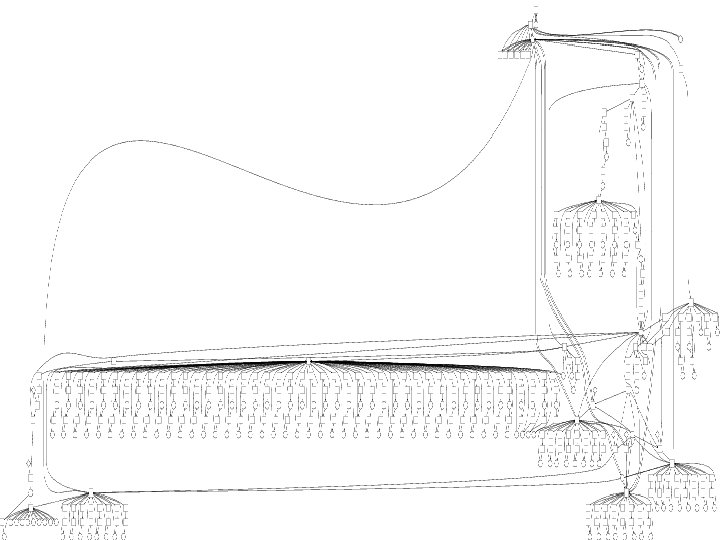
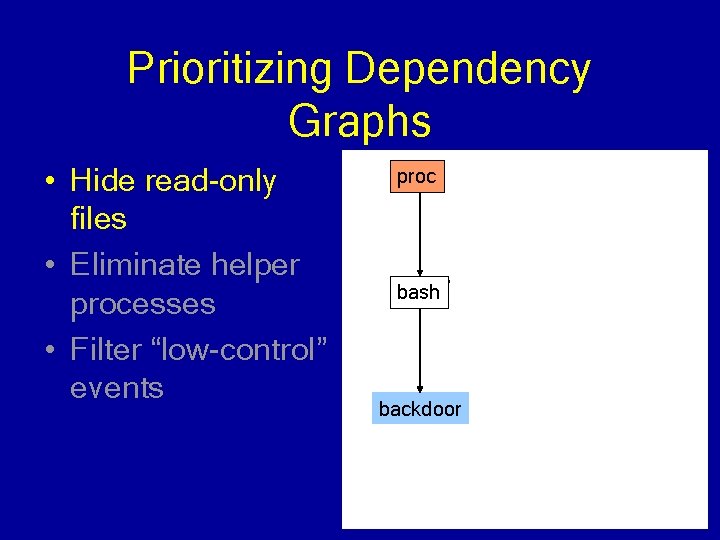
Prioritizing Dependency Graphs • Hide read-only files • Eliminate helper processes • Filter “low-control” events proc /bin/bash backdoor /libc
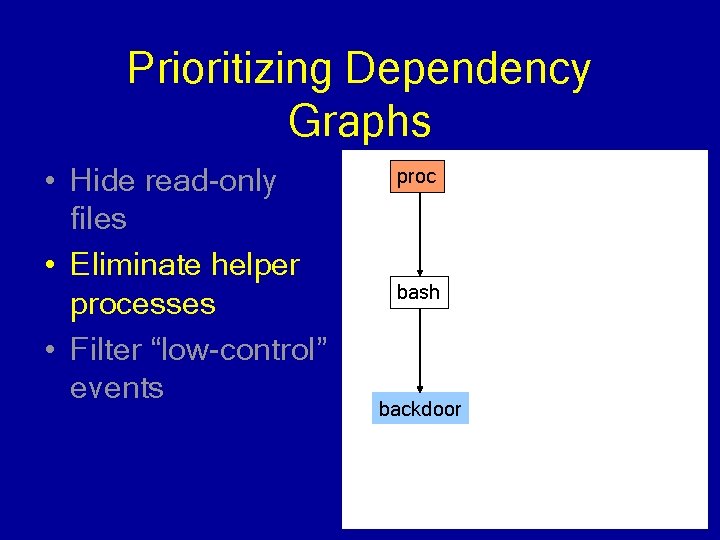
Prioritizing Dependency Graphs • Hide read-only files • Eliminate helper processes • Filter “low-control” events proc id bash pipe backdoor
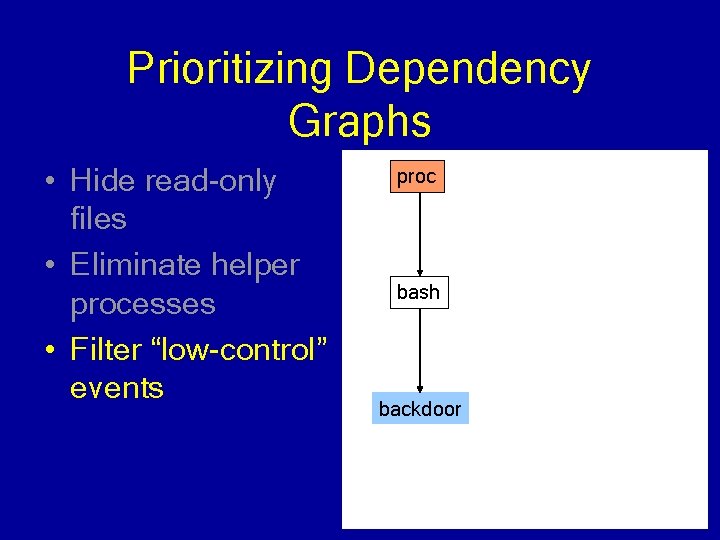
Prioritizing Dependency Graphs • Hide read-only files • Eliminate helper processes • Filter “low-control” events proc login_a utmp bash backdoor login_b
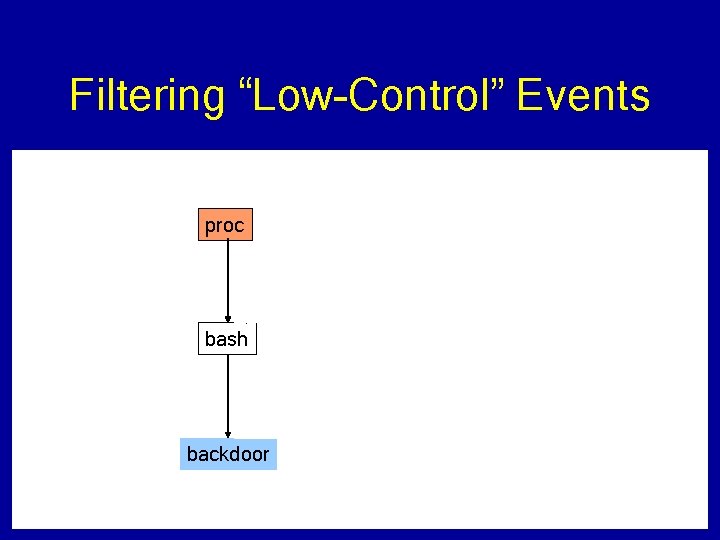
Filtering “Low-Control” Events proc login utmp bash backdoor
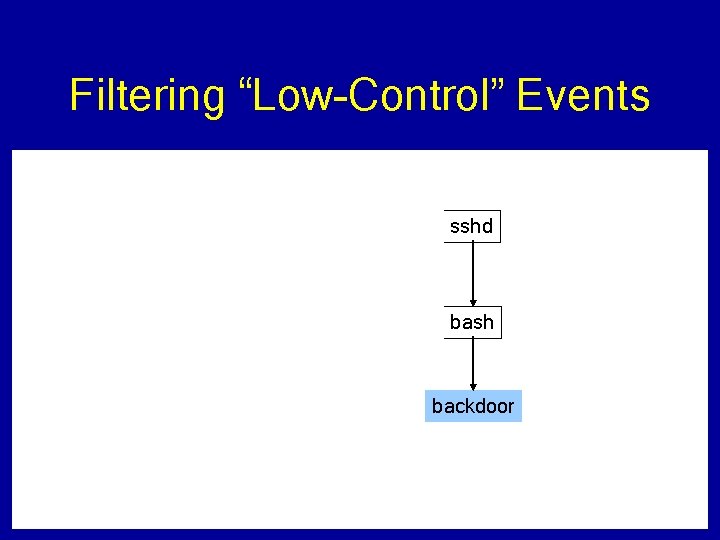
Filtering “Low-Control” Events proc login sshd utmp bash backdoor
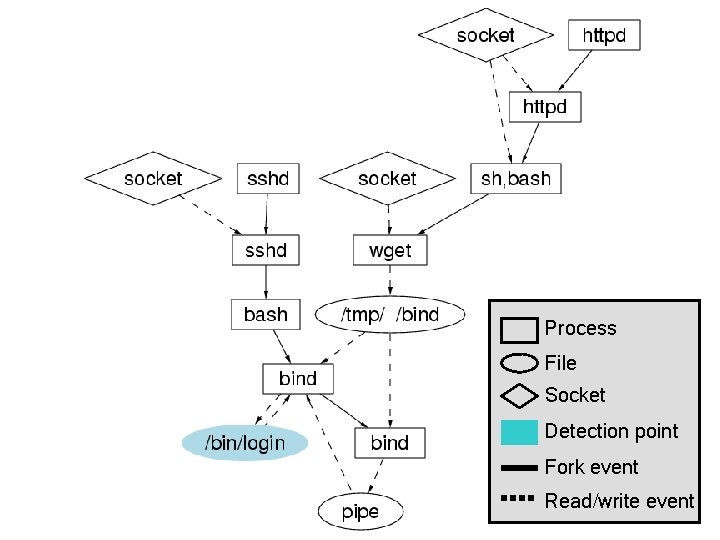
Process File Socket Detection point Fork event Read/write event
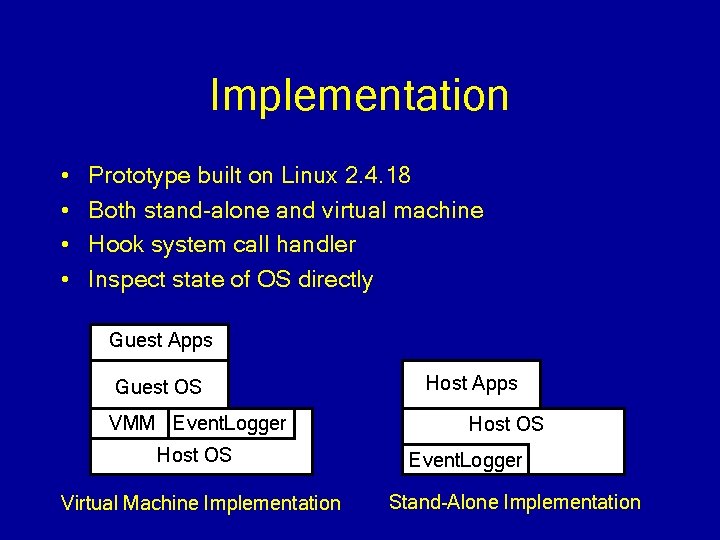
Implementation • • Prototype built on Linux 2. 4. 18 Both stand-alone and virtual machine Hook system call handler Inspect state of OS directly Guest Apps Guest OS VMM Event. Logger Host OS Virtual Machine Implementation Host Apps Host OS Event. Logger Stand-Alone Implementation
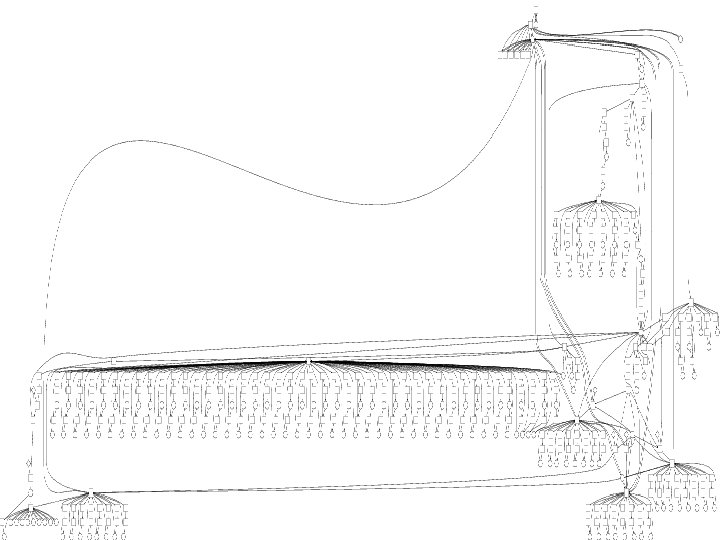
Evaluation • • Determine effectiveness of Backtracker Set up Honeypot virtual machine Intrusion detection using standard tools Attacks evaluated with six default filtering rules
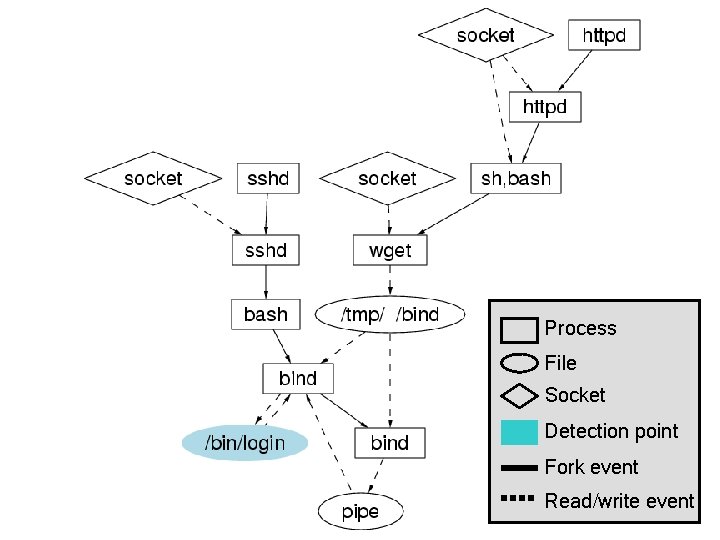
Process File Socket Detection point Fork event Read/write event

Process File Socket Detection point Fork event Read/write event
Back. Tracker Limitations • Layer-below attack • Use “low control” events or filtered objects to carry out attack • Hidden channels • Create large dependency graph – Perform a large number of steps – Implicate innocent processes
Future Work • Department system administrators currently evaluating Back. Tracker • Use different methods of dependency tracking • Forward tracking
Conclusions • Tracking causality through system calls can backtrack intrusions • Dependency tracking – Reduce events and objects by 100 x – Still effective even when same application exploited many times • Filtering – Further reduce events and objects
- Slides: 24