
Backtrack Algorithm for Listing Spanning Trees R C
Backtrack Algorithm for Listing Spanning Trees R. C. Read and R. E. Tarjan (1975) Presented by Levit Vadim
Abstract • Describe and analyze backtrack algorithm for listing all spanning trees • Time requirement: polynomial in |V|, |E| and linear in |T| • Space requirement: linear in |V| and |E| • Where – V number of vertices in graph – E number of edges in graph – T number of all spanning trees
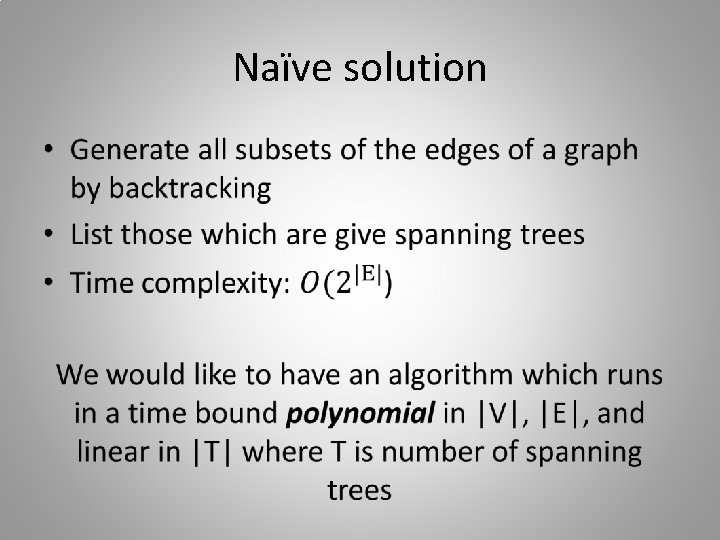
Main difficulty • Total number of all sub-graphs is exponential in |E|, which may be much more than T • We want to visit only sub-graphs that can be extended to a spanning tree • To perform this task we will restrict the search process by avoiding visiting sub-graphs that cannot be extended to those we need • Otherwise, the time in waste might become much more than linear in T
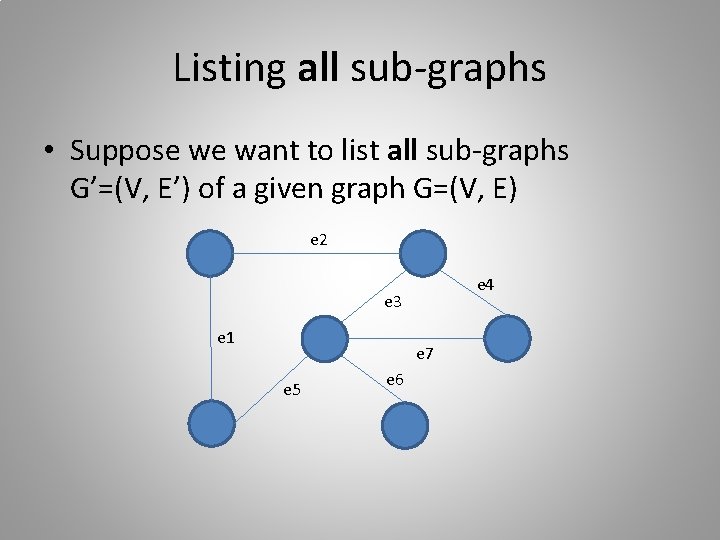
Listing all sub-graphs • Suppose we want to list all sub-graphs G’=(V, E’) of a given graph G=(V, E) e 2 e 4 e 3 e 1 e 7 e 5 e 6
Search technique: Backtracking • Choose some order for elements • When we examine an element, we decide whether to include it into the current solution or not • After we decide whether to include the current element, we continue to the next element recursively
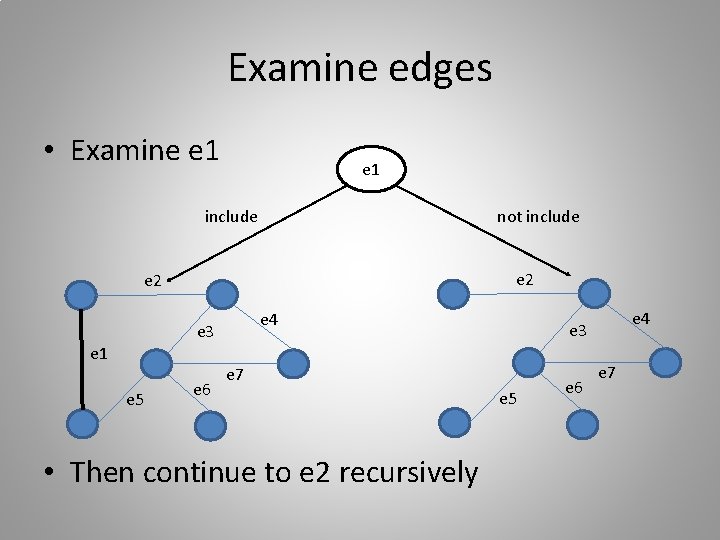
Examine edges • Examine e 1 include not include e 2 e 4 e 3 e 1 e 5 e 6 e 7 • Then continue to e 2 recursively e 4 e 3 e 5 e 6 e 7
Backtracking cont. • When we have made a decision for each element in original set (whether to include it or not), we will list the set we have constructed only if it meets the criteria (in our case spanning tree) • Whenever we have tried both including and excluding an element, we backtrack to the previous element, and change our decision and move forward again, if possible • We can demonstrate the process by a search tree
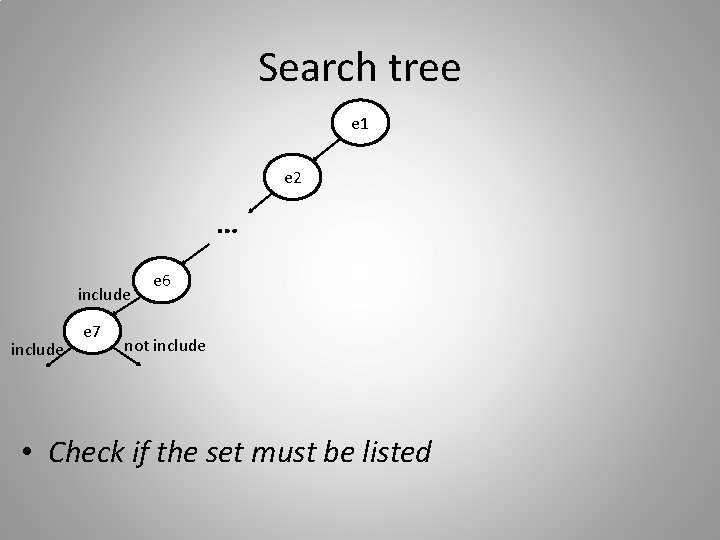
Search tree e 1 e 2 … include e 7 e 6 not include • Check if the set must be listed
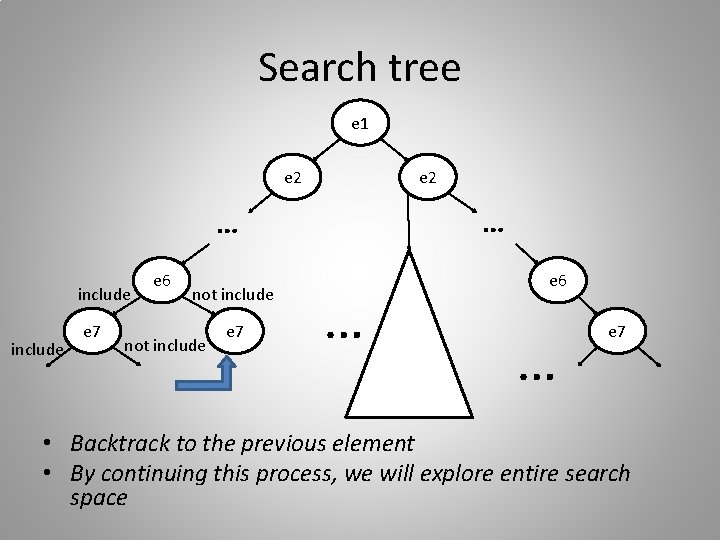
Search tree e 1 e 2 … … include e 7 e 6 not include e 7 … e 6 … e 7 • Backtrack to the previous element • By continuing this process, we will explore entire search space
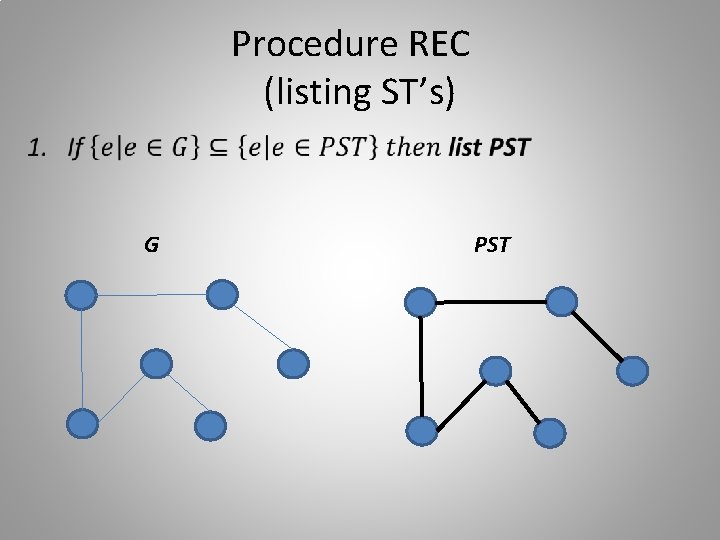
Listing spanning trees • We will use a backtrack algorithm to list all spanning trees • At each stage of process, there is the current sub-graph (PST – partial spanning tree) • Besides, there is the current graph (G), to choose edges from
Naïve solution •
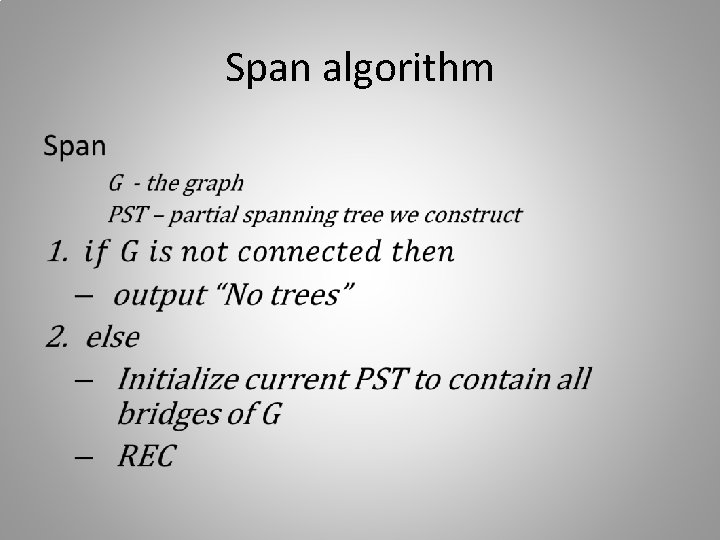
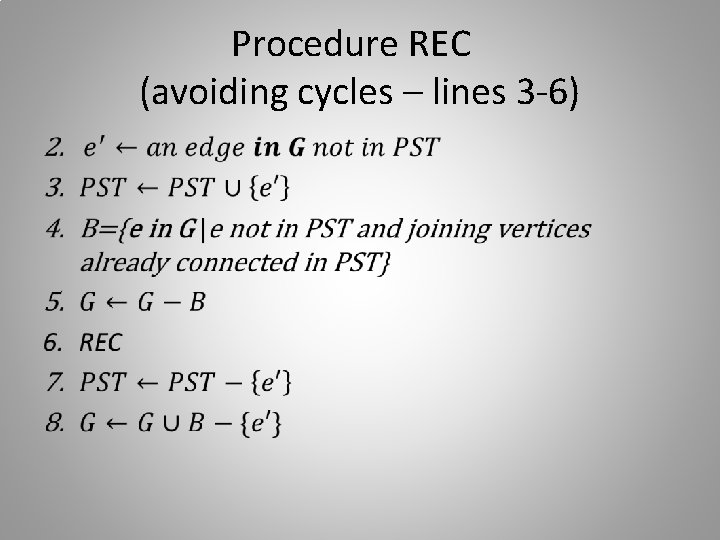
Restricting backtracking (“cutting the search tree”) Main observations: • Any bridge of a graph must be included in all its spanning trees • Any edge which forms a cycle with edges already included in a partial spanning tree must be not included as an additional spanning tree edge
Span algorithm •
Procedure REC (listing ST’s) • G PST
Procedure REC (avoiding cycles – lines 3 -6) •
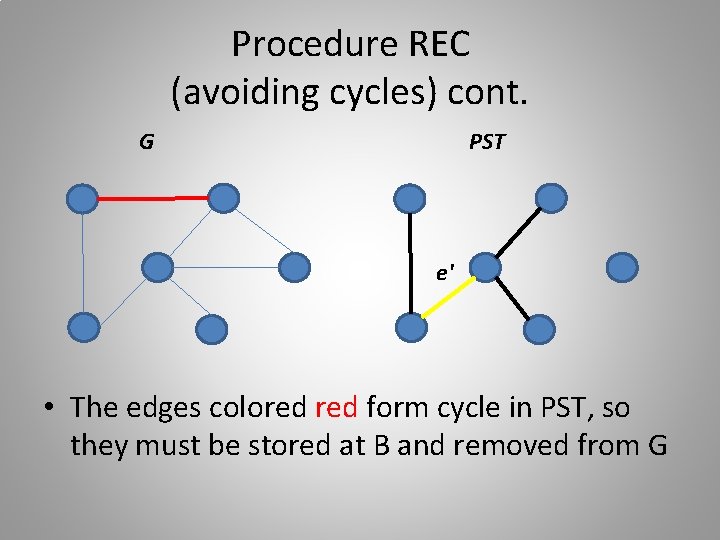
Procedure REC (avoiding cycles) cont. G PST e' • The edges colored form cycle in PST, so they must be stored at B and removed from G
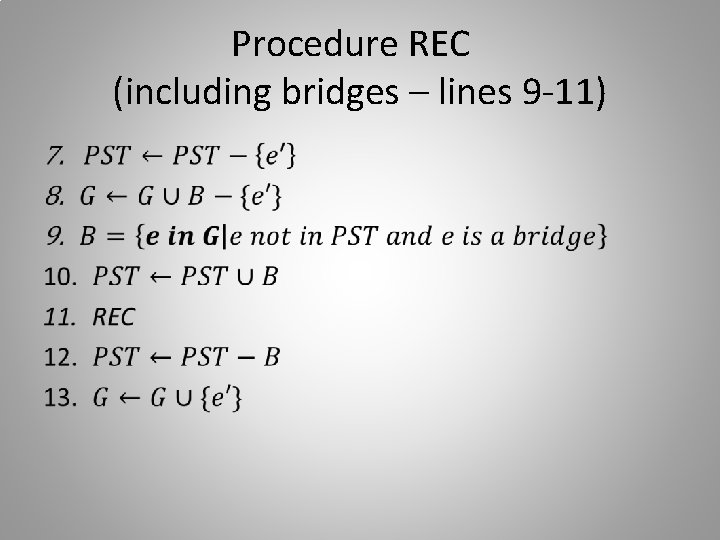
Procedure REC (including bridges – lines 9 -11) •
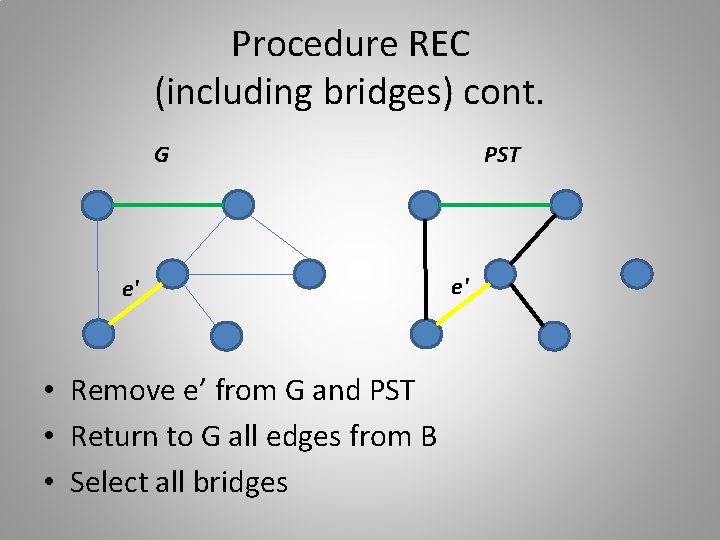
Procedure REC (including bridges) cont. G e' • Remove e’ from G and PST • Return to G all edges from B • Select all bridges PST e'
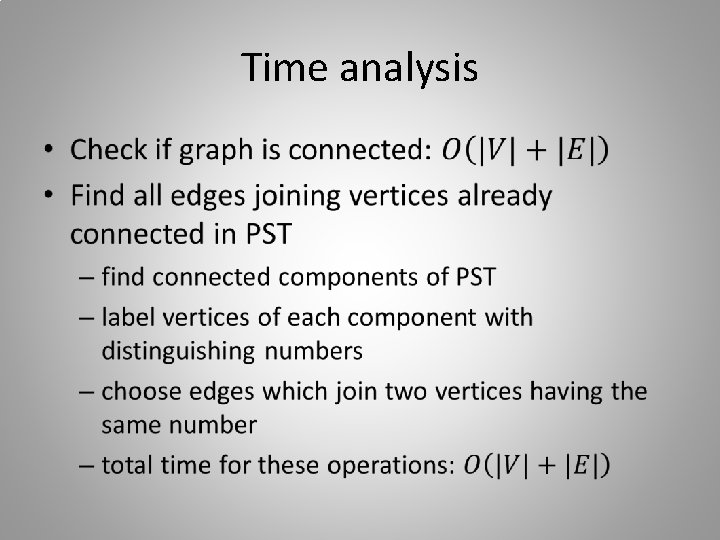
Time analysis •
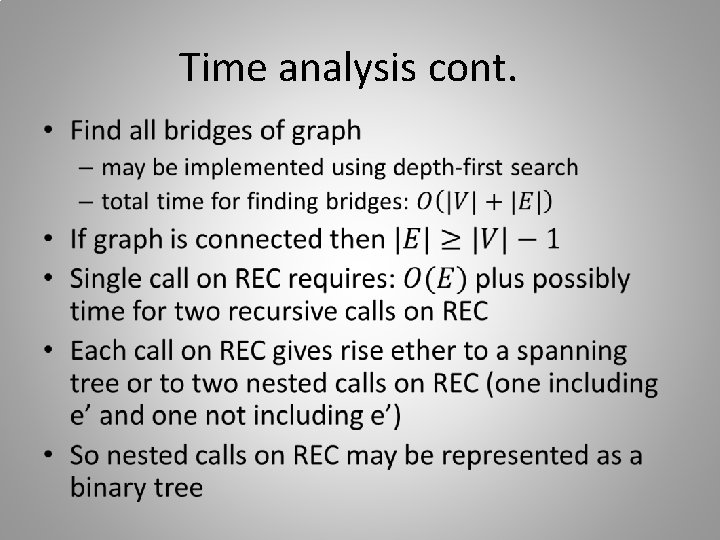
Time analysis cont. •
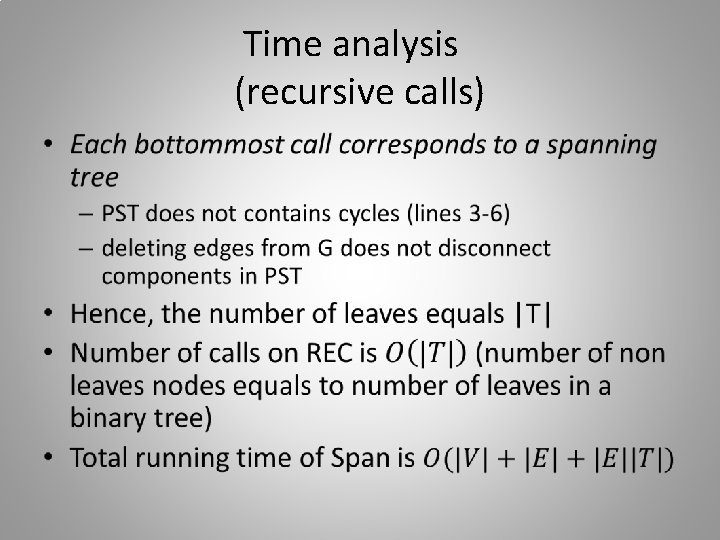
Time analysis (recursive calls) •
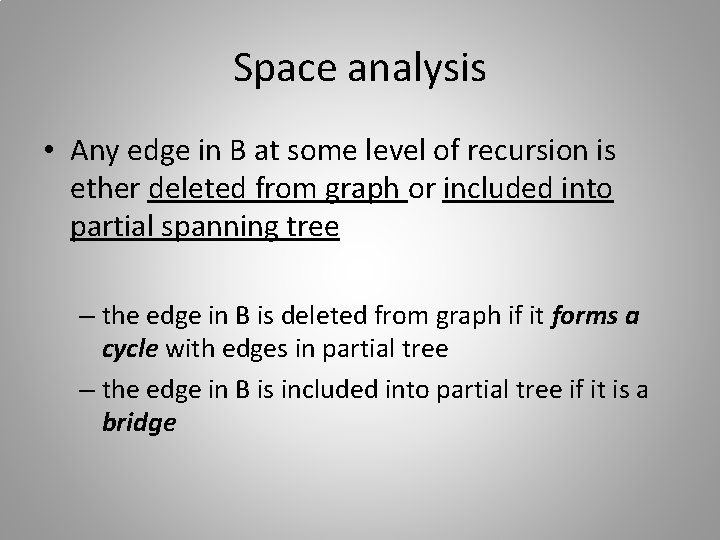
Space analysis • Any edge in B at some level of recursion is ether deleted from graph or included into partial spanning tree – the edge in B is deleted from graph if it forms a cycle with edges in partial tree – the edge in B is included into partial tree if it is a bridge
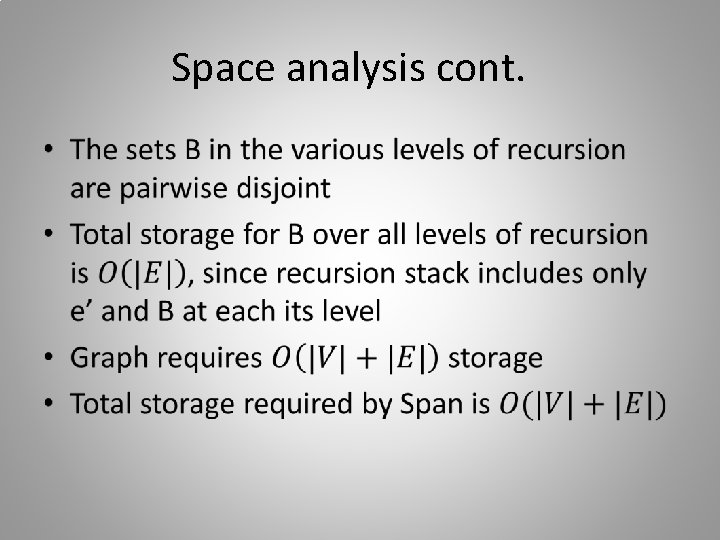
Space analysis cont. •
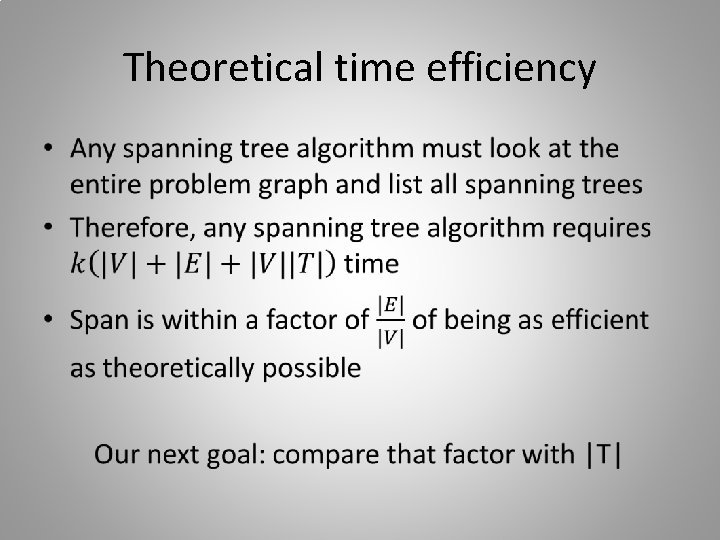
Theoretical time efficiency •
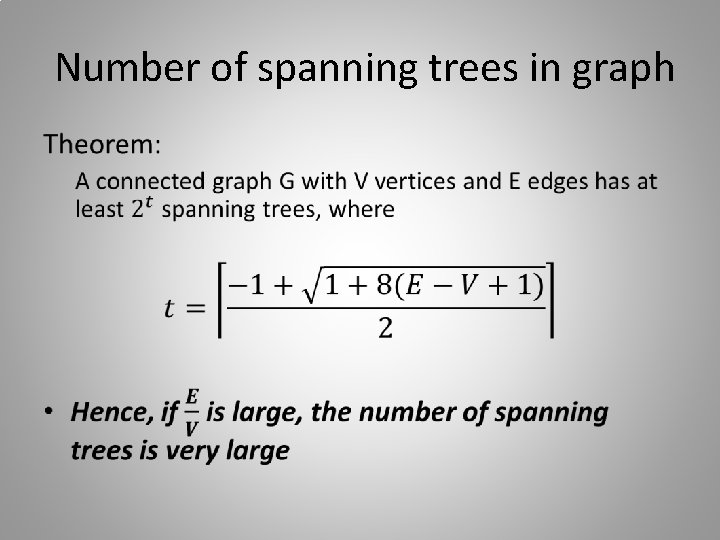
Number of spanning trees in graph •
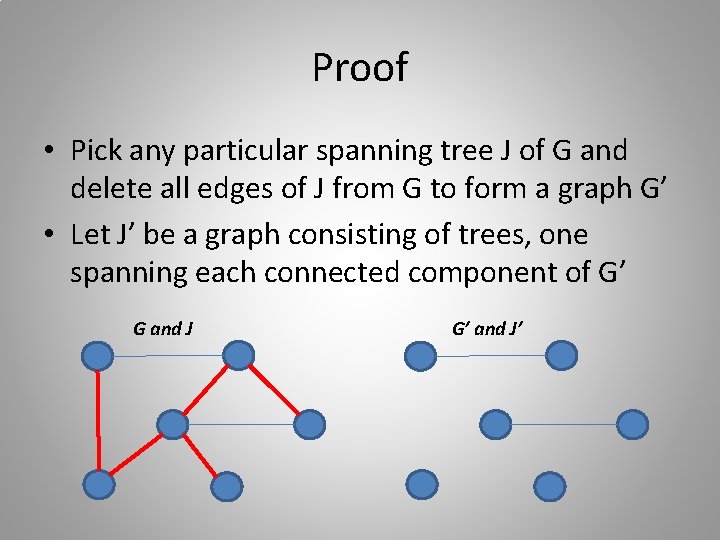
Proof • Pick any particular spanning tree J of G and delete all edges of J from G to form a graph G’ • Let J’ be a graph consisting of trees, one spanning each connected component of G’ G and J G’ and J’
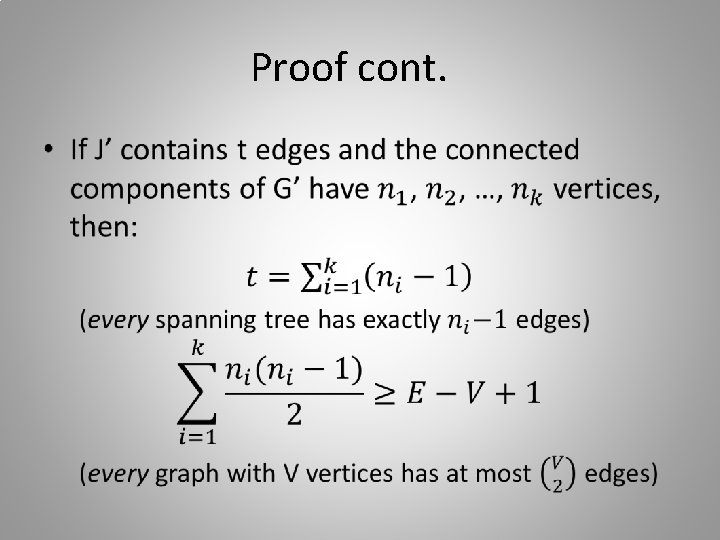
Proof cont. •
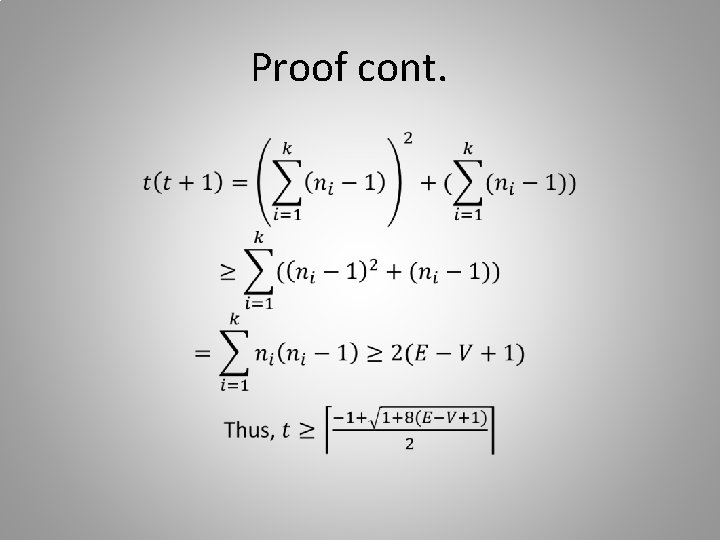
Proof cont. •
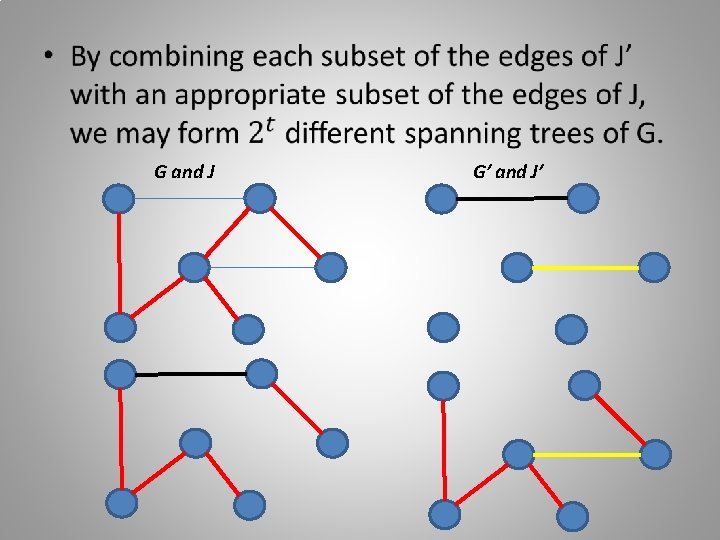
• G and J G’ and J’
- Slides: 29