
Backprop 25 Years Later Biologically Plausible Backprop Randall

Backprop, 25 Years Later: Biologically Plausible Backprop Randall C. O’Reilly University of Colorado Boulder e. Cortex, Inc.
Outline Backpropagation via activation differences: Generalized Recirculation (Gene. Rec) Bottom-up derivation of activation differences from STDP Bidirectional activation dynamics vs. feedforward networks 2
Recirculation (early RBM) 3
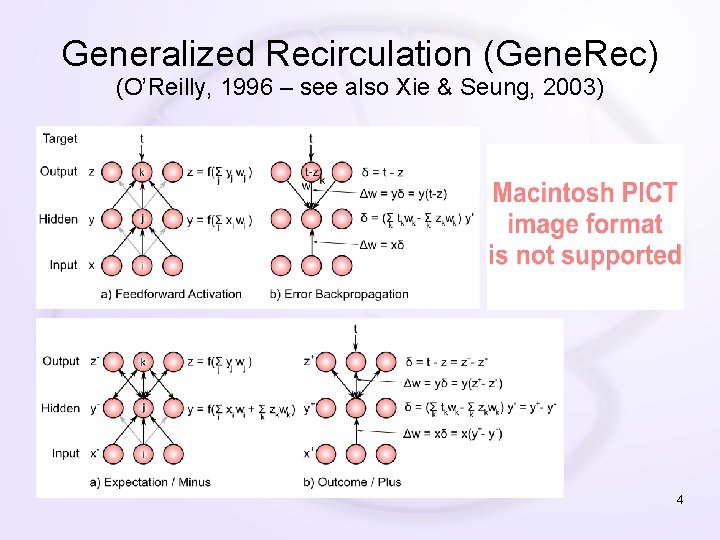
Generalized Recirculation (Gene. Rec) (O’Reilly, 1996 – see also Xie & Seung, 2003) 4

Contrastive Hebbian Learning (CHL) (Movellan, 1990; Hinton 1989 DBM) CHL, DBM: Gene. Rec: Avg Sender: ^ Symmetry = CHL 5
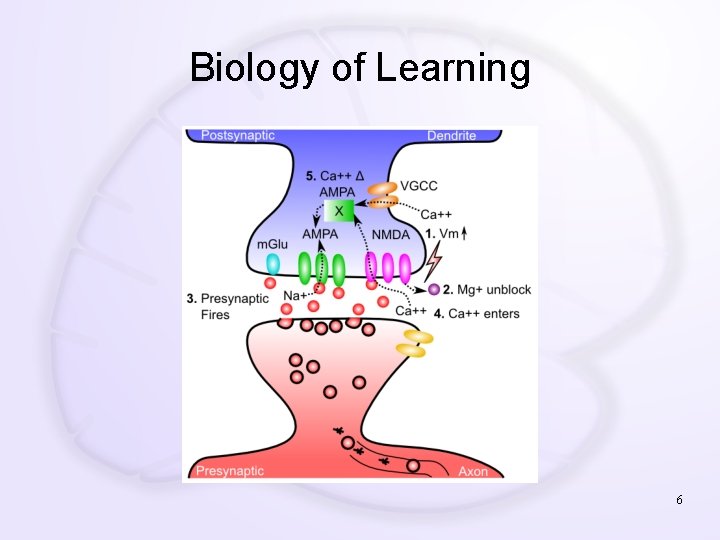
Biology of Learning 6
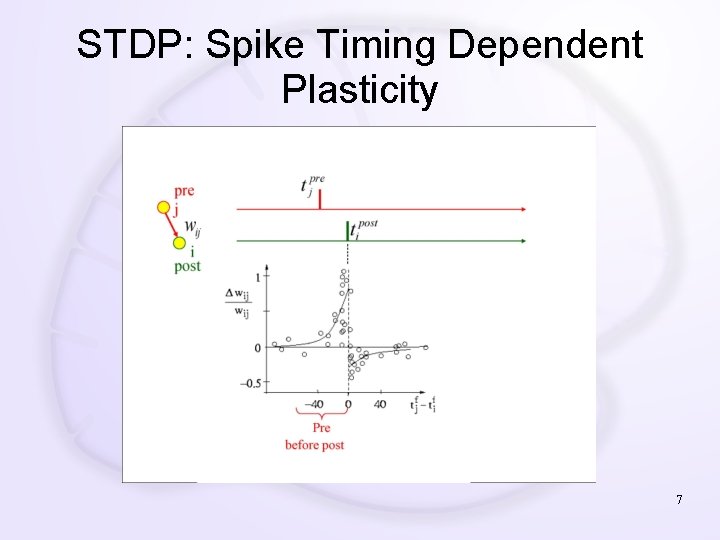
STDP: Spike Timing Dependent Plasticity 7
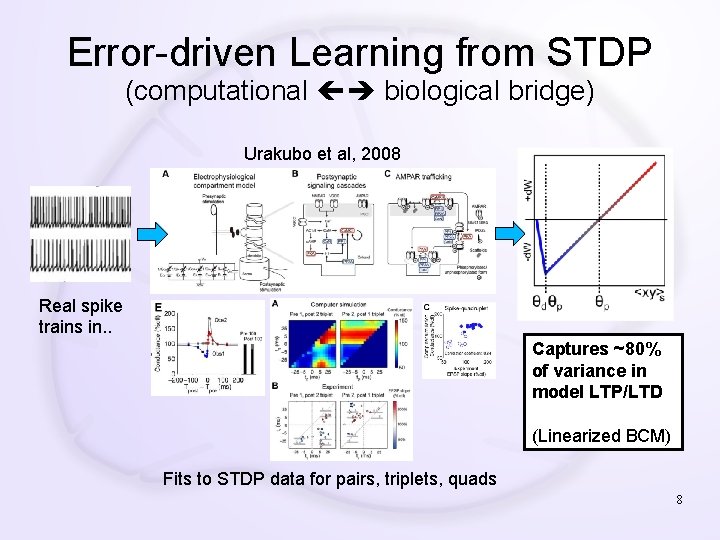
Error-driven Learning from STDP (computational biological bridge) Urakubo et al, 2008 Real spike trains in. . Captures ~80% of variance in model LTP/LTD (Linearized BCM) Fits to STDP data for pairs, triplets, quads 8
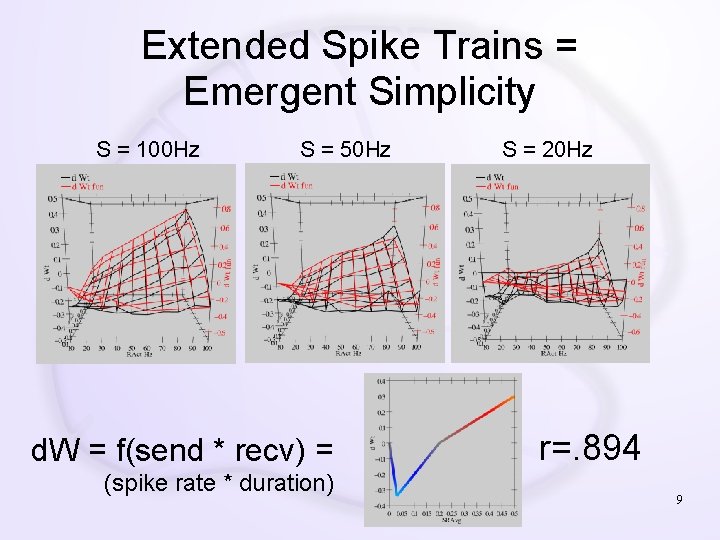
Extended Spike Trains = Emergent Simplicity S = 100 Hz S = 50 Hz d. W = f(send * recv) = (spike rate * duration) S = 20 Hz r=. 894 9
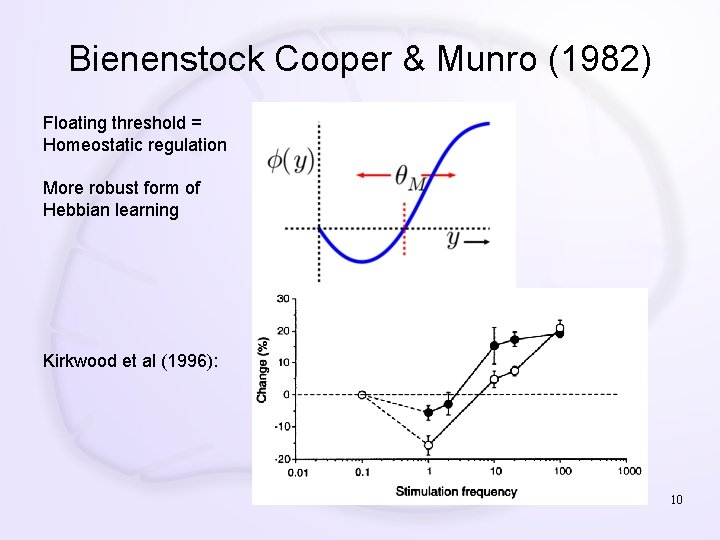
Bienenstock Cooper & Munro (1982) Floating threshold = Homeostatic regulation More robust form of Hebbian learning Kirkwood et al (1996): 10
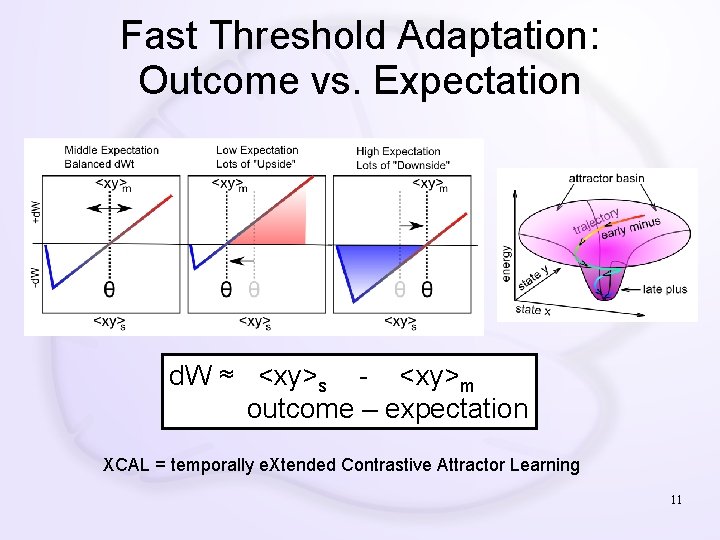
Fast Threshold Adaptation: Outcome vs. Expectation d. W ≈ <xy>s - <xy>m outcome – expectation XCAL = temporally e. Xtended Contrastive Attractor Learning 11
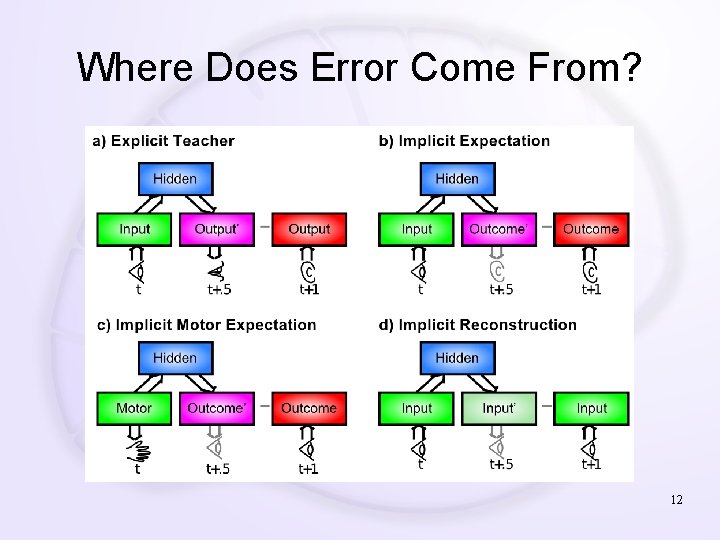
Where Does Error Come From? 12
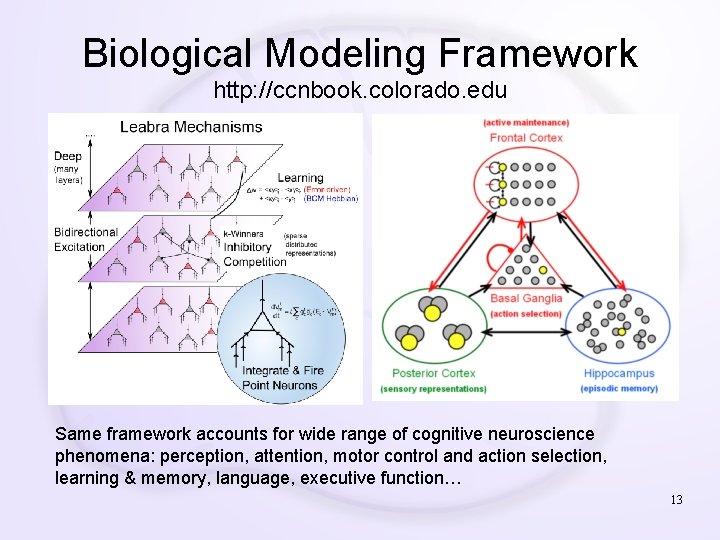
Biological Modeling Framework http: //ccnbook. colorado. edu Same framework accounts for wide range of cognitive neuroscience phenomena: perception, attention, motor control and action selection, learning & memory, language, executive function… 13
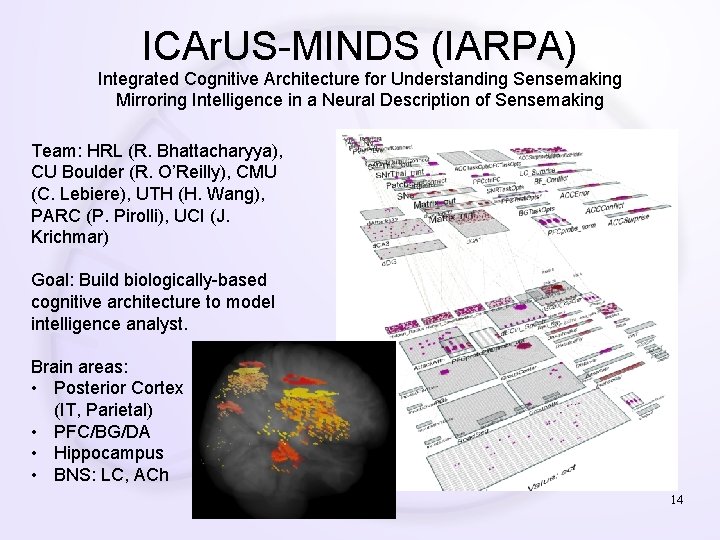
ICAr. US-MINDS (IARPA) Integrated Cognitive Architecture for Understanding Sensemaking Mirroring Intelligence in a Neural Description of Sensemaking Team: HRL (R. Bhattacharyya), CU Boulder (R. O’Reilly), CMU (C. Lebiere), UTH (H. Wang), PARC (P. Pirolli), UCI (J. Krichmar) Goal: Build biologically-based cognitive architecture to model intelligence analyst. Brain areas: • Posterior Cortex (IT, Parietal) • PFC/BG/DA • Hippocampus • BNS: LC, ACh 14
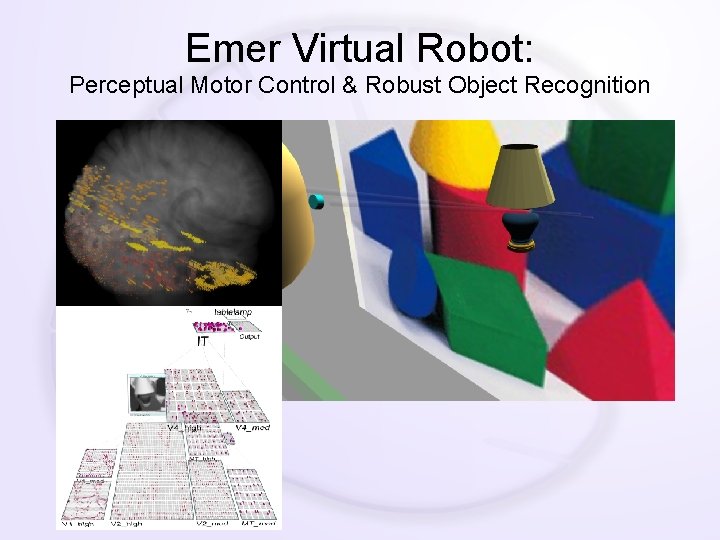
Emer Virtual Robot: Perceptual Motor Control & Robust Object Recognition
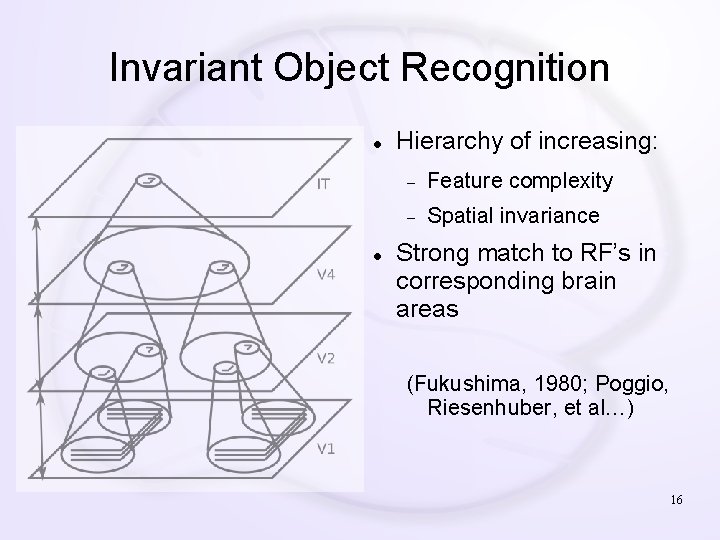
Invariant Object Recognition Hierarchy of increasing: Feature complexity Spatial invariance Strong match to RF’s in corresponding brain areas (Fukushima, 1980; Poggio, Riesenhuber, et al…) 16
3 D Object Recognition Test From Google Sketch. Up Warehouse 100 categories 8+ objects per categ 2 objects left out for testing +/- 20° horiz depth rotation + 180° flip 0 -30° vertical depth rotation 14° 2 D planar rotations 25% scaling 30% planar translations 17
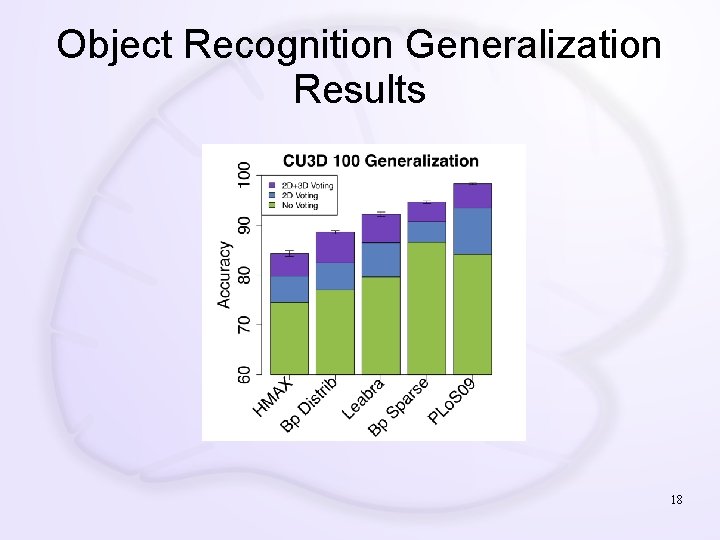
Object Recognition Generalization Results 18
Thanks To CCN Lab Tom Hazy Seth Herd Tren Huang Dave Jilk (e. Cortex) Nick Ketz Trent Kriete Kai Krueger Brian Mingus Jessica Mollick Wolfgang Pauli Sergio Verduzco-Flores Dean Wyatte Funding ONR – Mc. Kenna & Bello i. ARPA – Minnery NSF SLC - TDLC DARPA - BICA AFOSR NIMH P 50 -MH 079485 19
Extras 20
- Slides: 20