
Backhoe Operation and Safety Codes Standards Policies 29
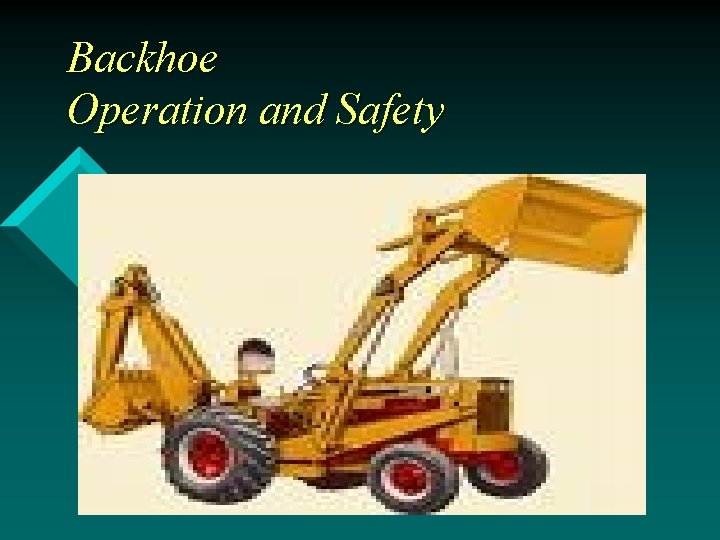
Backhoe Operation and Safety
Codes, Standards, Policies 29 CFR 1926. 602 - Material Handling Equipment 29 CFR 1926. 952 - Mechanical Equipment 29 CFR 1910. 269 - Electric Power Generation, Transmission & Distribution-(p) Mechanical Equipment
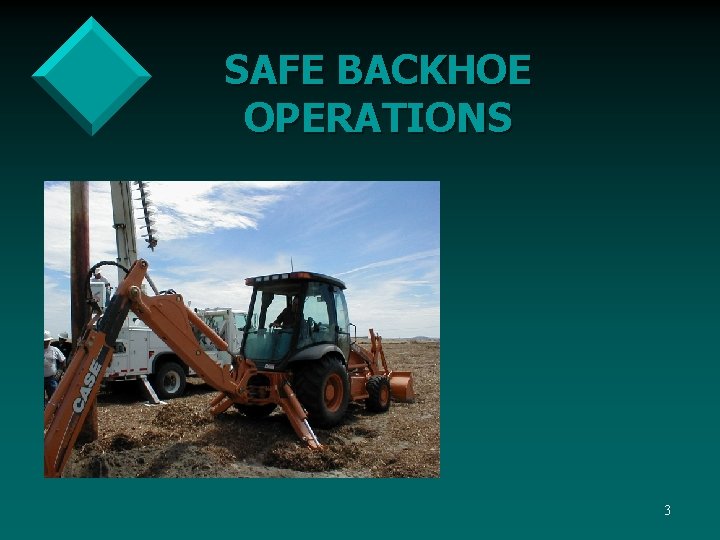
SAFE BACKHOE OPERATIONS 3
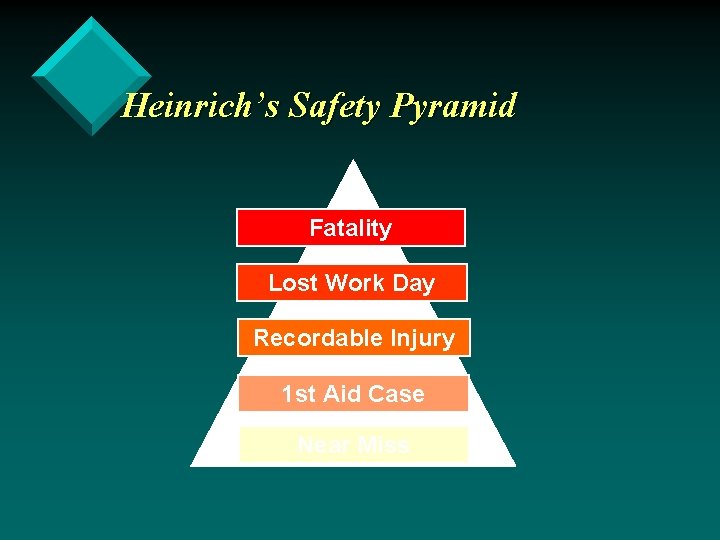
Heinrich’s Safety Pyramid Fatality Lost Work Day Recordable Injury 1 st Aid Case Near Miss
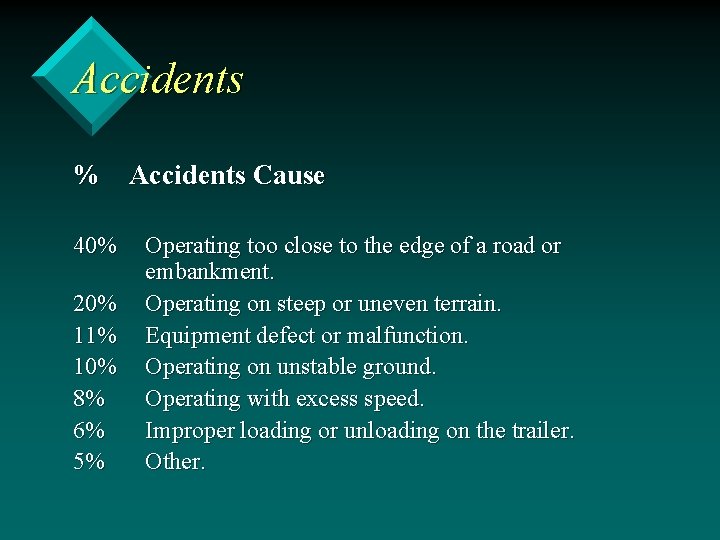
Accidents % Accidents Cause 40% 20% 11% 10% 8% 6% 5% Operating too close to the edge of a road or embankment. Operating on steep or uneven terrain. Equipment defect or malfunction. Operating on unstable ground. Operating with excess speed. Improper loading or unloading on the trailer. Other.

Accident Causes Backhoe injuries are often caused by: • Turning uphill on a steep slope. • Loaded bucket raised too high (especially on uneven ground or while turning). • Poor equipment maintenance. • Inattention of workers around machinery.
Accident Causes (cont. ) • Hitting obstructions while moving (i. e. stump, hole, ditch, etc. ). • Starting backhoe in gear. • Excavating unstable soil or undercutting a bank. • Operating too close to steep banks/excavations. • Improper equipment transport.
PRE-TRIP FOR BACKHOE • Visual checks • Operating control checks • Ensure equipment is greased • When do you do it?
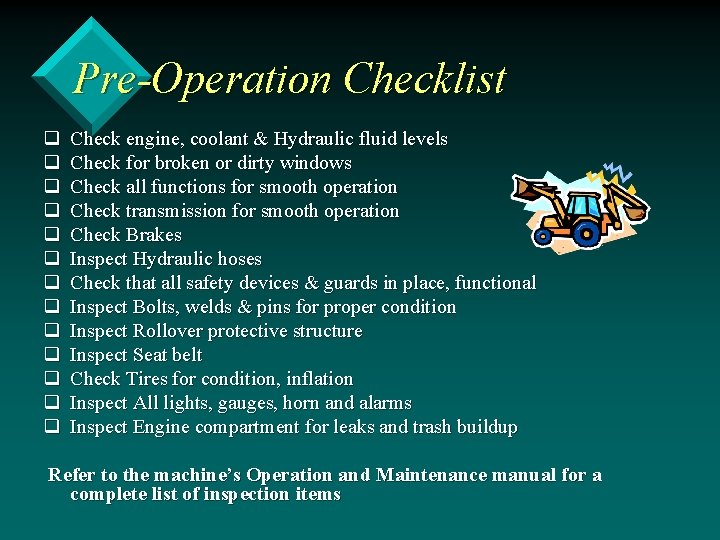
Pre-Operation Checklist q q q q Check engine, coolant & Hydraulic fluid levels Check for broken or dirty windows Check all functions for smooth operation Check transmission for smooth operation Check Brakes Inspect Hydraulic hoses Check that all safety devices & guards in place, functional Inspect Bolts, welds & pins for proper condition Inspect Rollover protective structure Inspect Seat belt Check Tires for condition, inflation Inspect All lights, gauges, horn and alarms Inspect Engine compartment for leaks and trash buildup Refer to the machine’s Operation and Maintenance manual for a complete list of inspection items
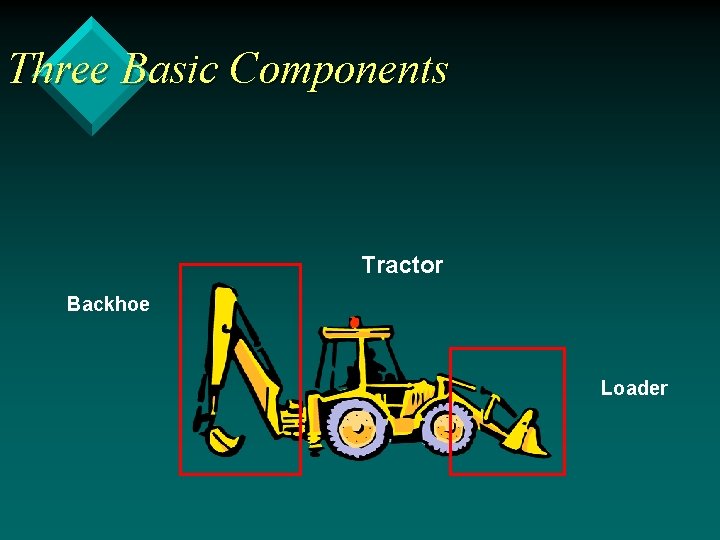
Three Basic Components Tractor Backhoe Loader
Inspect the Tractor Check the following • Engine oil & coolant • Hydraulic fluid level • Glass for dirt, damage • trans. for smooth operation • Brakes • Safety devices • Seat belt • Tires for condition • Lights, gauges, horn • All controls for properation Control linkages and valves can become worn, fouled, or damaged. Investigate any abnormal functions to prevent loss of control
Inspect the Backhoe Check for the following • Damaged stabilizer arms & pads • Bent or damaged hydraulic cylinders • Worn hinge pins & bushings • Damaged & leaking hydraulic lines • Smooth operation thru all functions damaged or loose teeth on bucket • Worn stick extension slide pads • All welds for cracks
Inspect the Loader Check for the following • Damaged lift arms • Bent or damaged hydraulic cylinders • Worn hinge pins & bushings • Damaged & leaking hydraulic lines • Smooth operation thru all functions • Damaged or loose teeth on bucket • Bent or damaged bucket links • All welds for cracks
Operators Manual The operator’s manual is required to be on the machine at all times
Operator Responsibilities • • Operator People around the machine Property The machine
For Safe Operation Ø Never take anything for granted Ø Face the machine when climbing on and off Ø Keep the machine clean Ø Clean mud and grease from shoes Ø Avoid loose clothing and jewelry Ø Wear protective equipment Ø Never operate machine without protective guards Ø Always check height, width and weight restrictions Ø Keep all safety devices in place and in working order Ø Plan ahead Ø Learn beforehand about the work area

Operator Awareness Factors Fatigue & Hunger Weather: Heat, Cold Emotional Level Physical Health Working Conditions Other People
Climbing on and off • When climbing on and off the machine the operator should always: • Face the machine • Use three point of contact method • Two hands and a foot or • Two feet and a hand
Seat Belts • Inspect each day • Must be worn when operating the machine
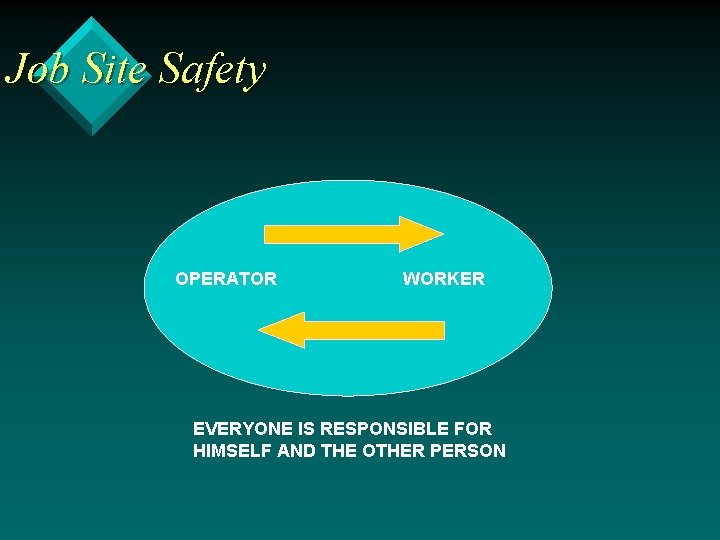
Job Site Safety OPERATOR WORKER EVERYONE IS RESPONSIBLE FOR HIMSELF AND THE OTHER PERSON
Danger Area WARNING Stay Out STAY CLEAR of the Swing Area OF MOVING STABILIZERS AND BUCKET
DANGER AREA Establish eye contact with the operator before entering a danger area Always work Facing the machine
Typical Weights of Components A typical loader/backhoe found on a job site can weigh from 12, 000 to 24, 000 pounds. Size can help or hinder in the operation and potential damage a machine can do. Always follow the manufactures guidelines and use proper equipment for handling these components. Loader Tractor Backhoe 2, 000 to 3, 000 lbs 6, 000 to 12, 000 lbs 4, 000 to 6, 000 lbs
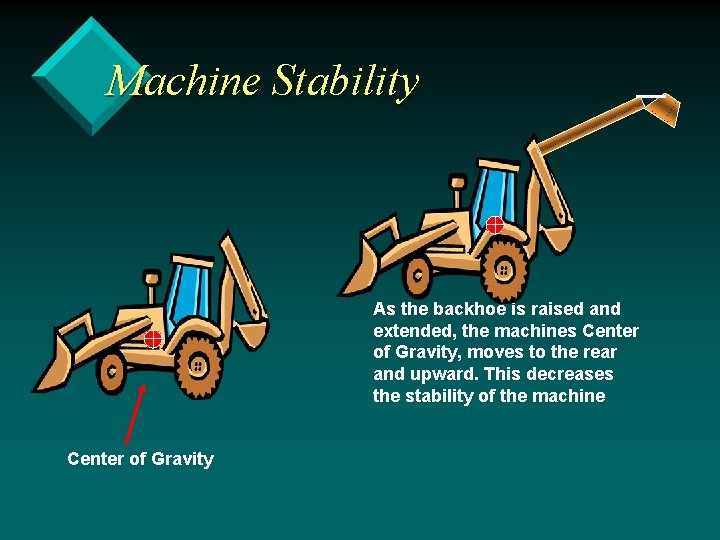
Machine Stability As the backhoe is raised and extended, the machines Center of Gravity, moves to the rear and upward. This decreases the stability of the machine Center of Gravity
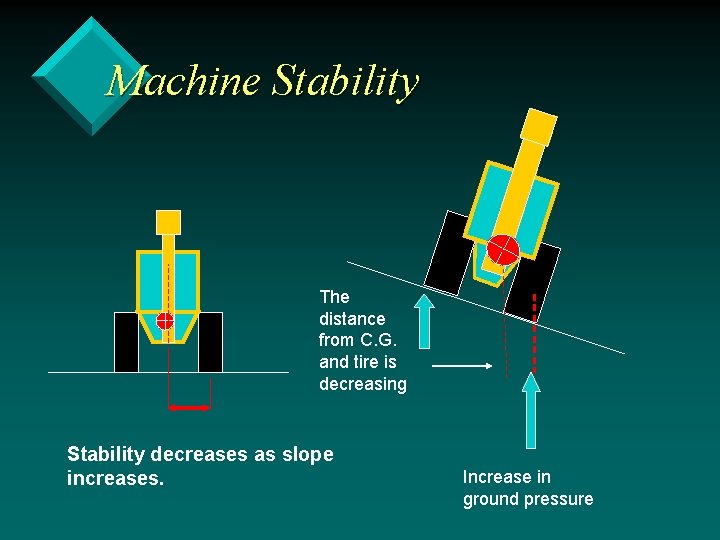
Machine Stability The distance from C. G. and tire is decreasing Stability decreases as slope increases. Increase in ground pressure
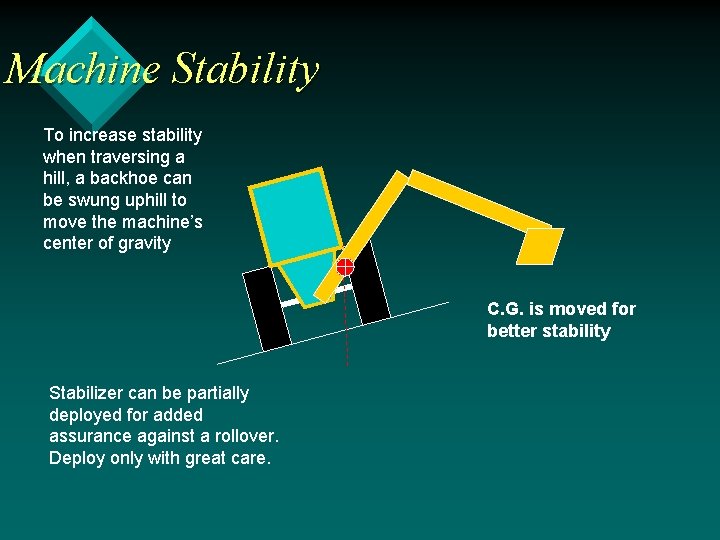
Machine Stability To increase stability when traversing a hill, a backhoe can be swung uphill to move the machine’s center of gravity C. G. is moved for better stability Stabilizer can be partially deployed for added assurance against a rollover. Deploy only with great care.
Machine Stability • Stability decreases as a backhoe is swung to the side • Ground pressure increase’s when swung over the side • Stability decreases as center of gravity moves closer to stabilizer pad
Machine Stability • When leveling the machine on a slope, one stabilizer is lower than the other. • This decreases the down slope stability and when working over the down slope, the machines lifting capacity is decreased
Machine Stability • When working in soft material, a machine’s stability can be compromised by loss of - footing • Traction • Sliding • or sudden changes in the machines motion
Machine Stability • When driving forward, the forward driving torque transfers weight from the front wheels to the rear wheels. • The machine attempts to rotate front upward as it accelerates.
Machine Stability • Center of Gravity moves closer to the rear wheels as the machines angle of climb increases
Machine Stability • The combination of center of gravity moving toward the rear axle, and backward rotation caused by acceleration results in the front end rising off the ground. • A bucket of material moves the center of gravity toward the front, helping to keep the front wheels on the ground.
Machine Stability • When driving backwards, reverse driving torque will transfer weight from rear wheels to front wheels
Machine Stability • Center of Gravity moves further from the rear wheels as the machines angle of decline increases. • This change results in loss of traction on the rear wheels, allowing the machine to slide.
Machine Stability • Descending a slope can result in a loss of braking due to the load transfer to the front of the machine. • Braking can be improved by extending the backhoe out to increase weight on the rear wheels. • Use caution when extending and retract the backhoe to its travel position at the base of the slope.
Machine Stability • When the loader bucket is used to raise front wheels off the ground, traction on the rear wheels increases
Lifting Loads • When lifting a load with a backhoe, refer to the operators manual for specific load ratings at different radii and boom positions
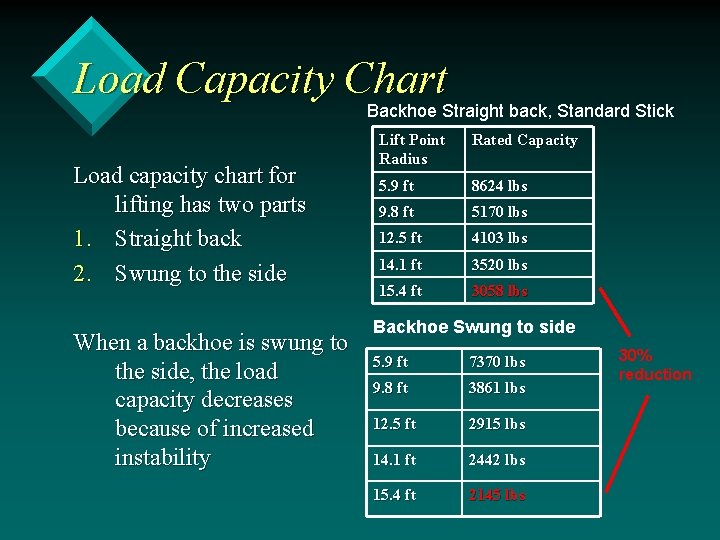
Load Capacity Chart Backhoe Straight back, Standard Stick Load capacity chart for lifting has two parts 1. Straight back 2. Swung to the side When a backhoe is swung to the side, the load capacity decreases because of increased instability Lift Point Radius Rated Capacity 5. 9 ft 8624 lbs 9. 8 ft 5170 lbs 12. 5 ft 4103 lbs 14. 1 ft 3520 lbs 15. 4 ft 3058 lbs Backhoe Swung to side 5. 9 ft 7370 lbs 9. 8 ft 3861 lbs 12. 5 ft 2915 lbs 14. 1 ft 2442 lbs 15. 4 ft 2145 lbs 30% reduction
Attaching the Load • For buckets with lifting eyes locating on the back, use a shackle to attach slings • Because of the sharp edges, chain slings are recommended. • For buckets without lifting eyes • Never make a lift with a chain attached solely to the teeth.
Attaching the Load • To the loader • Attach the sling with a shackle to the eye on the backside of the bucket. • Bring the sling over the top of the bucket. • Use padding to protect the rigging from sharp edges
Controlling Worksite Access Worksites need to have proper barriers and barricades in place to prevent unauthorized personnel and vehicles from entering the work area

Inspect the Site: • Recent excavations & depressions. • Nearby causes of ground vibration that could destabilize excavation walls. • Overhead wires & obstructions.
Inspect the Site (Cont. ) • Barricades & signaling. • Location of spoil pile. • Routing of trucks.
Excavating Hazards • Before excavating, determine the location of all underground utilities and other buried hazards. • Avoid setting stabilizer close to the edge of the trench • Placing the stabilizer pads or traveling too close to trench walls can result in a trench collapse or machine can fall into trench.
Safety Considerations • Ensure reverse alarm works. • Use signal person if rear view is obstructed. • Clear bystanders before operation begins. • Use seatbelt and always operate at a safe speed.
Backhoe Operation An operator must be able to: • Demonstrate techniques using front bucket. • Operate rear bucket in a smooth and safe manner.
PRE-TRIP FOR TOWING VEHICLE • Visual inspection • Trailer hook-up • • Communications between workers Cross chains (Safety chains) Pendal hitch down Glad hands are clean
Transporting the Machine • Loading and unloading the machine should be done by an experienced operator. • Transport vehicle’s wheels should be blocked on both sides to prevent it from moving during the loading process. • Tie-downs need to be attached to the machine so as not to cause damage and prevent the machine from moving in all directions.
Loading Backhoe • Park trailer in a level, unobstructed area. • Set brakes on towing vehicle. • Chock trailer wheels. • Remove ice & snow from ramps & deck. • Lock both backhoe brakes together (for vehicles with individual rear brakes)
Preparing backhoe and trailer/truck for travel Ø Set parking brake Ø Secure backhoe w/ chains & chain binders Ø Use softeners where needed Ø Lower all attachments to trailer deck
Unloading • • Unload on level ground Stow boom/Lift bucket Back slowly Be mindful front bucket may need to be adjusted while backing down ramps • Keep bucket as low as possible
Special Attachments Operating instructions for using special attachments should be kept with the operators manual. i. e. tampers jackhammers
Safe Backhoe Operations There is always a lot more than we have covered. These are some things to consider. Have a Good Day
- Slides: 55