
Background to Atmospheric Pollution Anup Bhatt Main Species
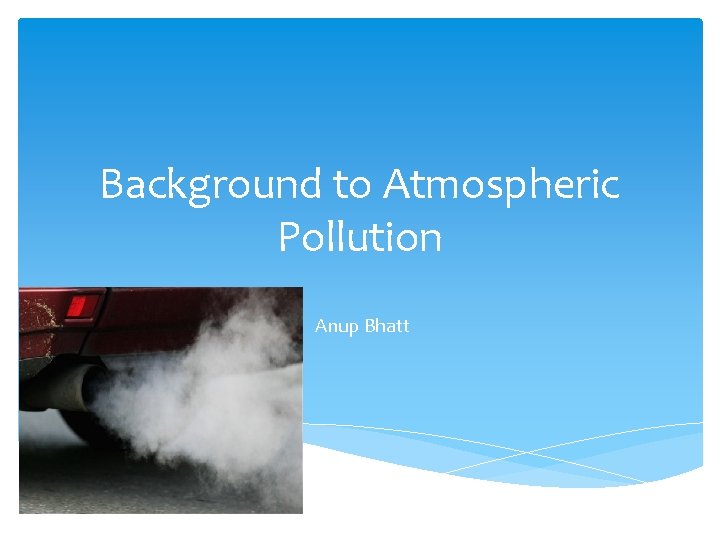
Background to Atmospheric Pollution Anup Bhatt
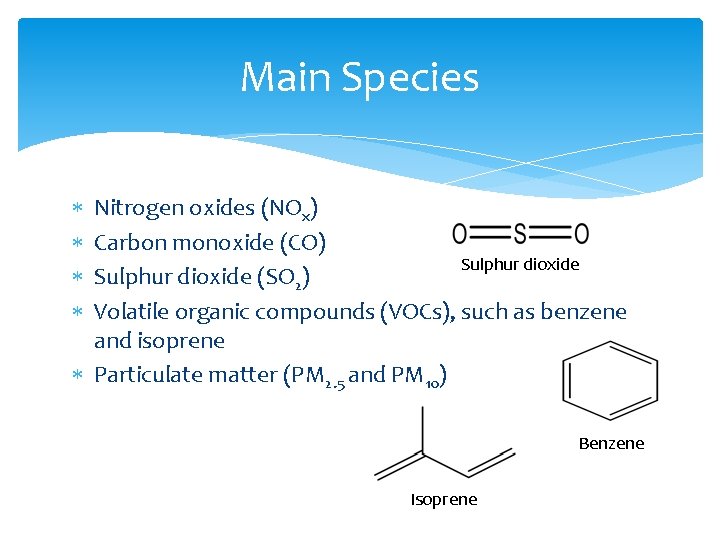
Main Species Nitrogen oxides (NOx) Carbon monoxide (CO) Sulphur dioxide (SO 2) Volatile organic compounds (VOCs), such as benzene and isoprene Particulate matter (PM 2. 5 and PM 10) Benzene Isoprene

Particulate Matter (PM) Particulate matter is collection of small solid or liquid particles suspended in the atmosphere. PM can be separated into two distinct categories, primary and secondary particles. Fine PM consists of particles having a diameter of between 0. 1 and 2. 5 μm and this is designated PM 2. 5. PM 10 denotes all ambient PM having a diameter of 10 μm or less.
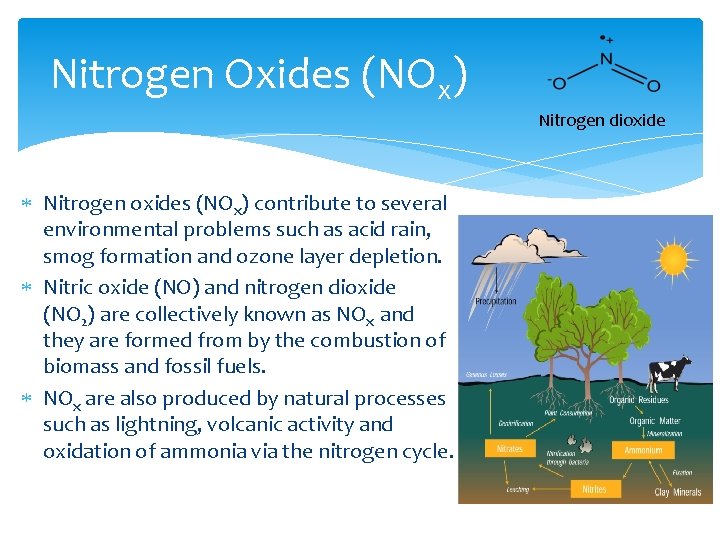
Nitrogen Oxides (NOx) Nitrogen dioxide Nitrogen oxides (NOx) contribute to several environmental problems such as acid rain, smog formation and ozone layer depletion. Nitric oxide (NO) and nitrogen dioxide (NO 2) are collectively known as NOx and they are formed from by the combustion of biomass and fossil fuels. NOx are also produced by natural processes such as lightning, volcanic activity and oxidation of ammonia via the nitrogen cycle.
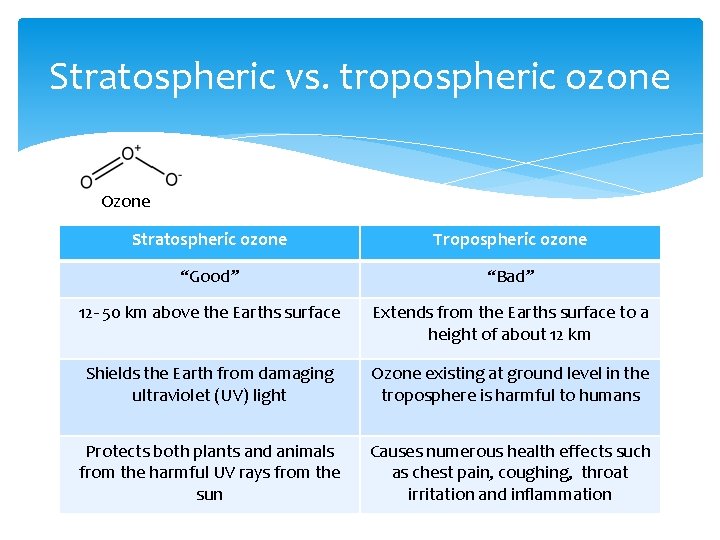
Stratospheric vs. tropospheric ozone Ozone Stratospheric ozone Tropospheric ozone “Good” “Bad” 12 - 50 km above the Earths surface Extends from the Earths surface to a height of about 12 km Shields the Earth from damaging ultraviolet (UV) light Ozone existing at ground level in the troposphere is harmful to humans Protects both plants and animals from the harmful UV rays from the sun Causes numerous health effects such as chest pain, coughing, throat irritation and inflammation
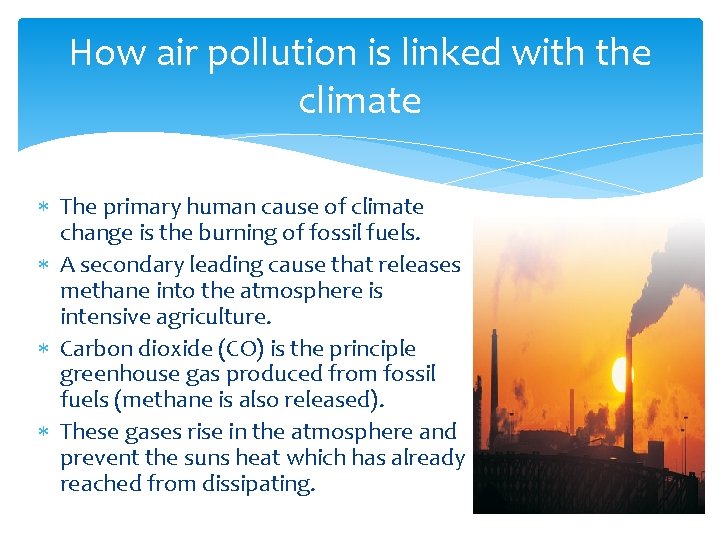
How air pollution is linked with the climate The primary human cause of climate change is the burning of fossil fuels. A secondary leading cause that releases methane into the atmosphere is intensive agriculture. Carbon dioxide (CO) is the principle greenhouse gas produced from fossil fuels (methane is also released). These gases rise in the atmosphere and prevent the suns heat which has already reached from dissipating.

Measurements Jaeyoung Lee
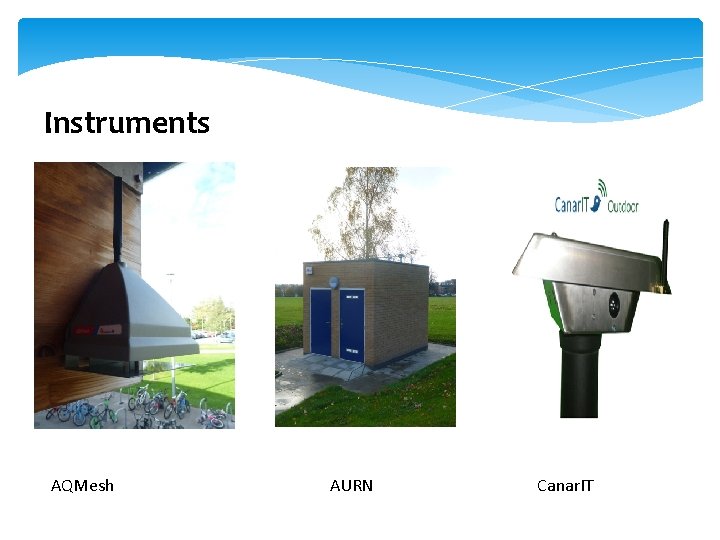
Instruments AQMesh AURN Canar. IT
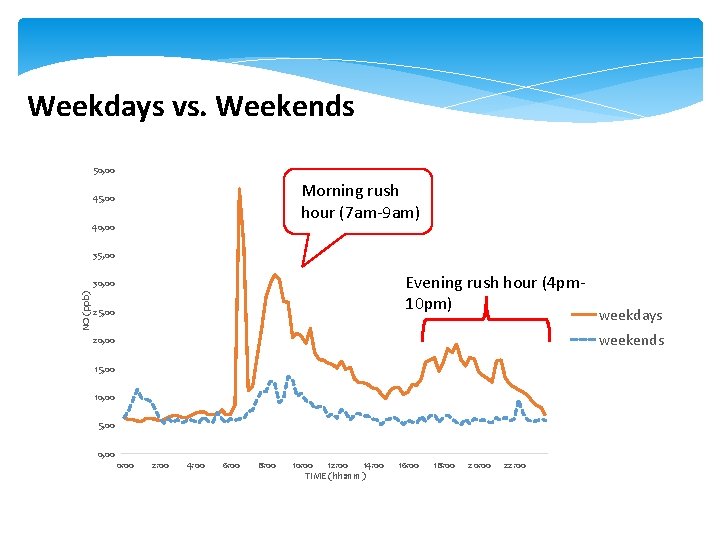
Weekdays vs. Weekends 50, 00 Morning rush hour (7 am-9 am) 45, 00 40, 00 35, 00 Evening rush hour (4 pm 10 pm) NO (ppb) 30, 00 25, 00 weekends 20, 00 15, 00 10, 00 5, 00 0, 00 weekdays 0: 00 2: 00 4: 00 6: 00 8: 00 10: 00 12: 00 14: 00 TIME (hh: mm) 16: 00 18: 00 20: 00 22: 00
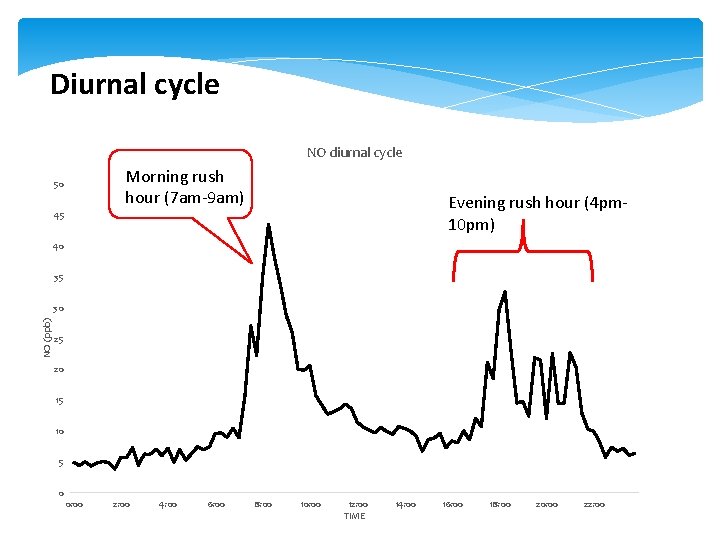
Diurnal cycle NO diurnal cycle Morning rush hour (7 am-9 am) 50 Evening rush hour (4 pm 10 pm) 45 40 35 NO (ppb) 30 25 20 15 10 5 0 0: 00 2: 00 4: 00 6: 00 8: 00 10: 00 12: 00 TIME 14: 00 16: 00 18: 00 20: 00 22: 00
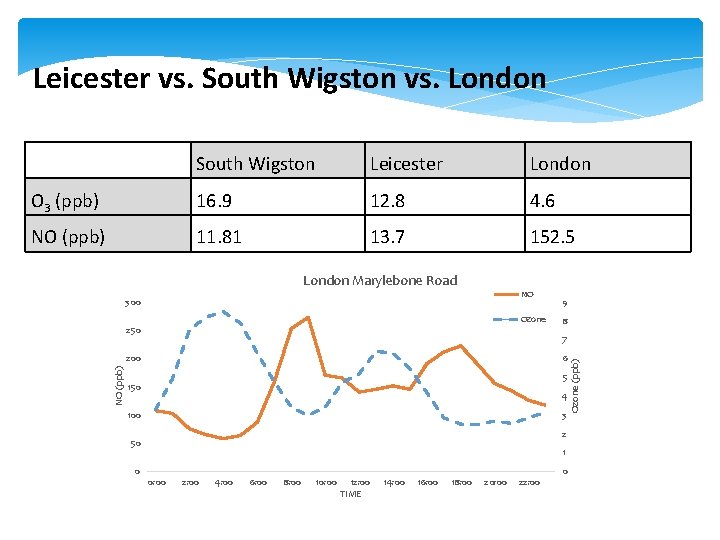
Leicester vs. South Wigston vs. London South Wigston Leicester London O 3 (ppb) 16. 9 12. 8 4. 6 NO (ppb) 11. 81 13. 7 152. 5 London Marylebone Road NO 300 Ozone 250 6 5 150 4 100 3 2 50 1 0: 00 2: 00 4: 00 6: 00 8: 00 10: 00 12: 00 TIME 14: 00 16: 00 18: 00 20: 00 22: 00 0 Ozone (ppb) NO (ppb) 8 7 200 0 9
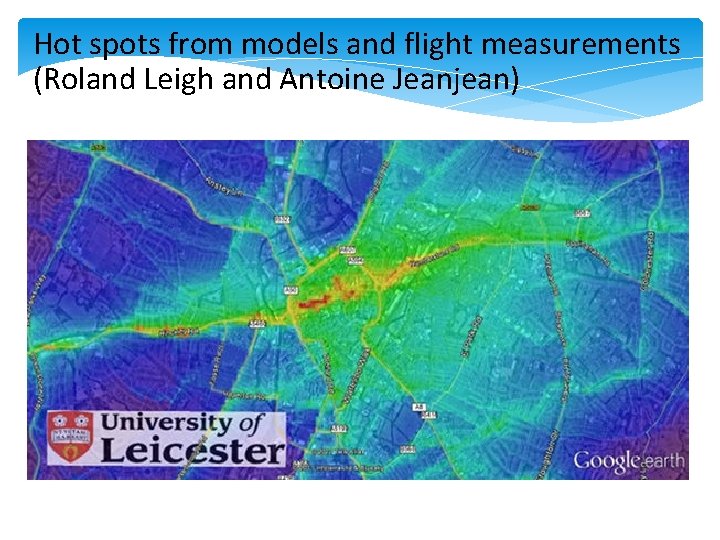
Hot spots from models and flight measurements (Roland Leigh and Antoine Jeanjean)
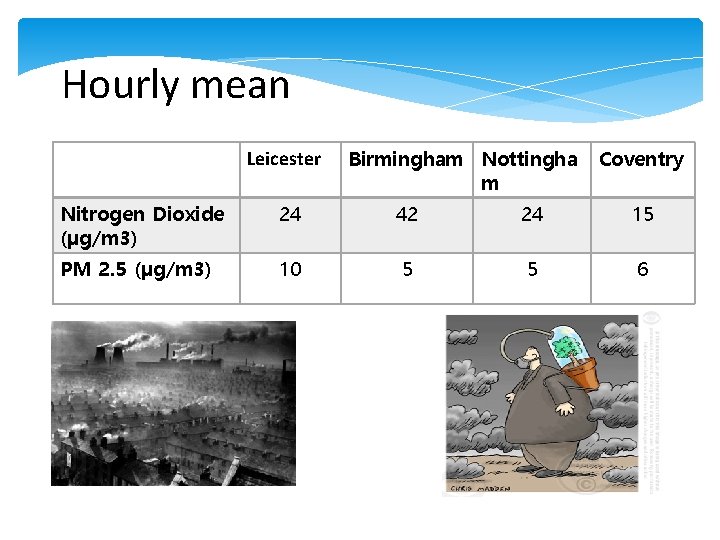
Hourly mean Leicester Birmingham Nottingha m Coventry Nitrogen Dioxide (µg/m 3) 24 42 24 15 PM 2. 5 (µg/m 3) 10 5 5 6
- Slides: 13