
Background Postnatal depression PND is a serious public
Background �Postnatal depression (PND) is a serious public health issue, affecting 7– 13% of women in the year following childbirth. �A range of preventive interventions has been explored to minimise development of PND �Previous systematic reviews provided conflicting reports about the effectiveness of PND preventive interventions.
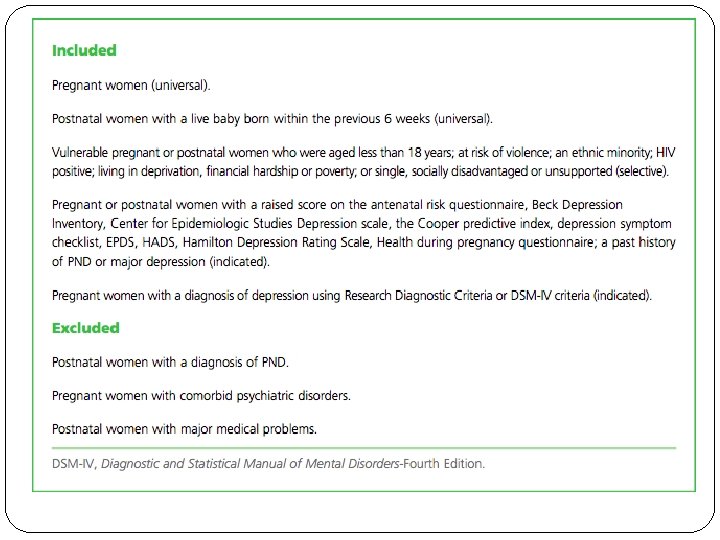
�Preventive approaches relevant to PND are: � universal preventive interventions targeting a population not at increased risk for PND �selective preventive interventions for women perceived to be at risk for PND because of social factors � indicated preventive interventions for women at risk of PND because of history, predisposition or above average scores on psychological measures, but not meeting diagnostic criteria.
�Clinical question to be answered : �What is the clinical effectiveness, cost- effectiveness, acceptability and safety of antenatal and postnatal interventions for pregnant and postnatal women to prevent PND?
�Did the review explicitly address a sensible clinical question? �Clinical question : Not specific. Investigators have looked at all interventions for prevention of PND.
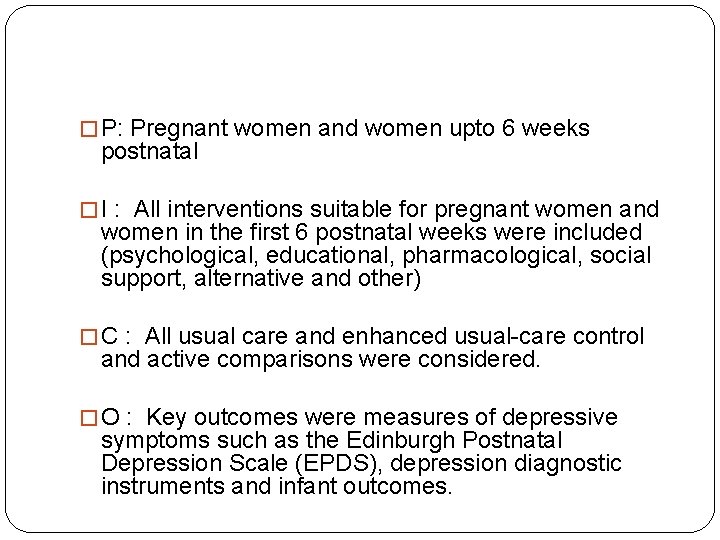
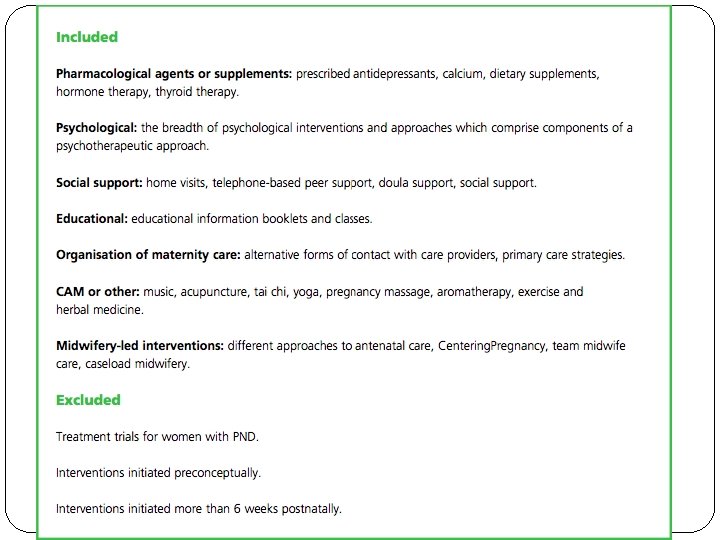
� P: Pregnant women and women upto 6 weeks postnatal � I : All interventions suitable for pregnant women and women in the first 6 postnatal weeks were included (psychological, educational, pharmacological, social support, alternative and other) � C : All usual care and enhanced usual-care control and active comparisons were considered. � O : Key outcomes were measures of depressive symptoms such as the Edinburgh Postnatal Depression Scale (EPDS), depression diagnostic instruments and infant outcomes.
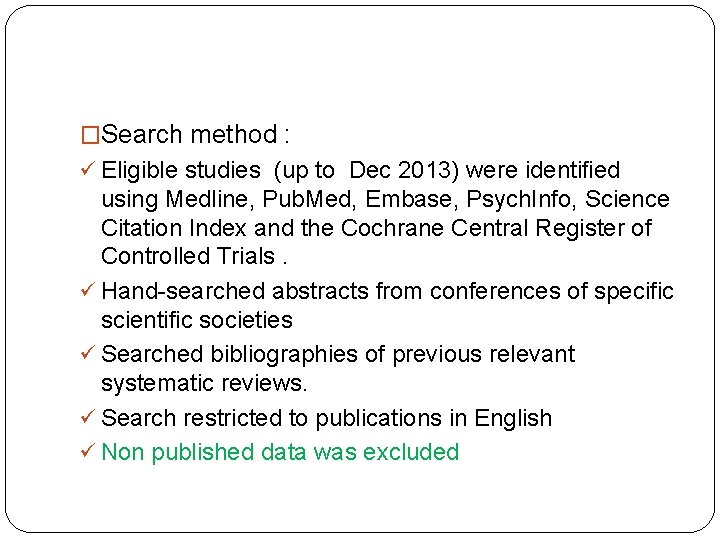
�Search method : ü Eligible studies (up to Dec 2013) were identified using Medline, Pub. Med, Embase, Psych. Info, Science Citation Index and the Cochrane Central Register of Controlled Trials. ü Hand-searched abstracts from conferences of specific scientific societies ü Searched bibliographies of previous relevant systematic reviews. ü Search restricted to publications in English ü Non published data was excluded
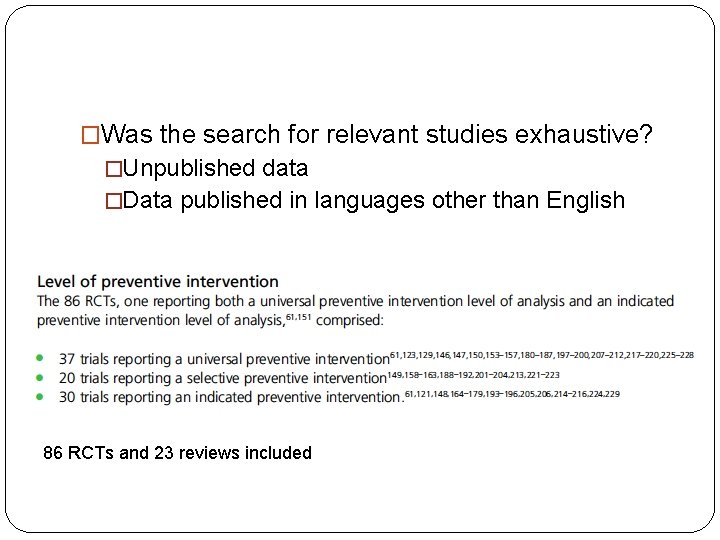
�Was the search for relevant studies exhaustive? �Unpublished data �Data published in languages other than English 86 RCTs and 23 reviews included
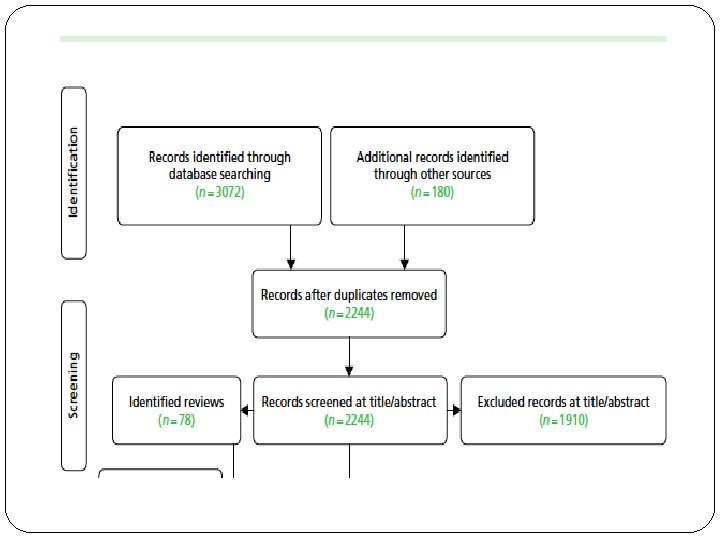
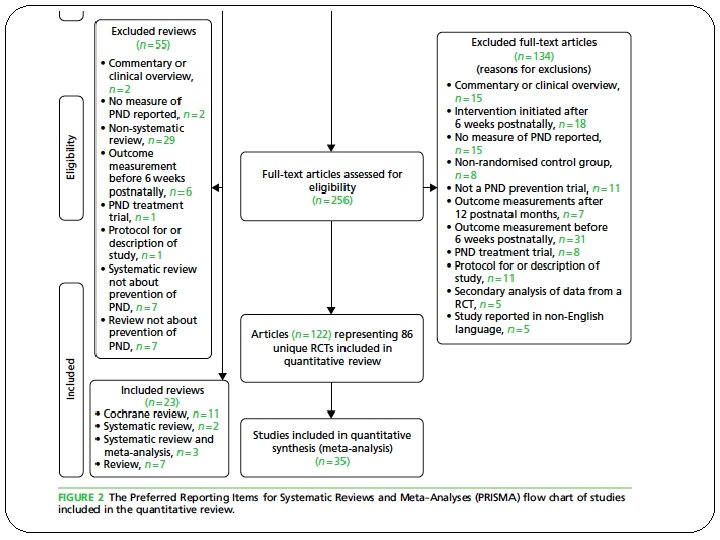
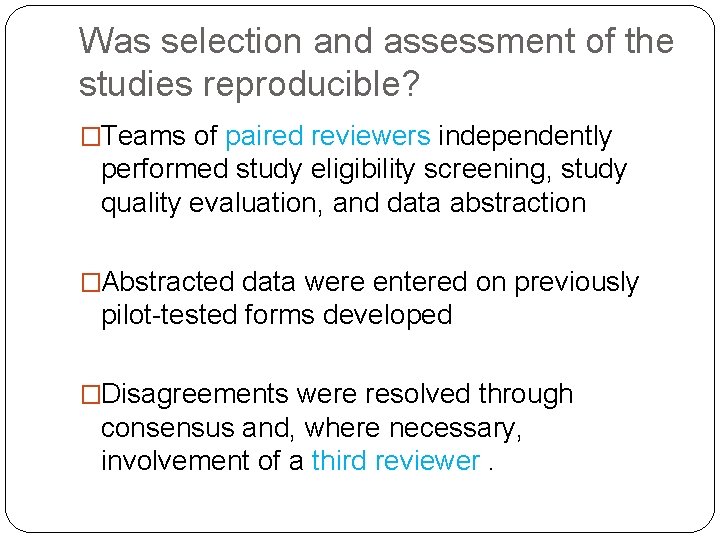
Was selection and assessment of the studies reproducible? �Teams of paired reviewers independently performed study eligibility screening, study quality evaluation, and data abstraction �Abstracted data were entered on previously pilot-tested forms developed �Disagreements were resolved through consensus and, where necessary, involvement of a third reviewer.
Were selection and assessment of studies reproducible? �Yes �More than one reviewer �Third reviewer in case of dispute �Pre planned formats for data extraction
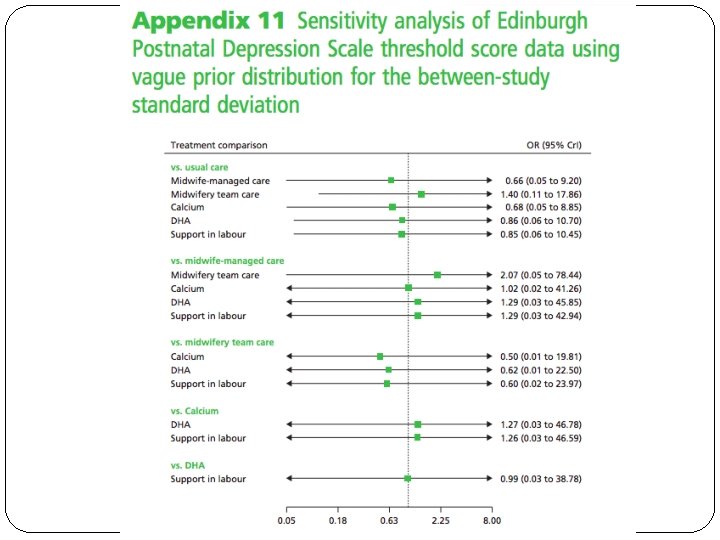
�Did the review address possible explanations of between study differences in results?
�Did the review provide a rating for confidence in effect estimates or provide the information I need to evaluate confidence? �Not mentioned
ASSESMENT OF RISK OF BIAS � Used the Cochrane Collaboration Risk of Bias Tool for RCTs. � The methodological quality of individual studies was appraised by two reviewers independently using an abbreviated version of the Critical Appraisal Skills Programme (CASP) quality assessment tool for qualitative studies and the CERQual (Confidence in the Evidence from Reviews of Qualitative research) approach was used to assess the certainty of the findings. � A RCT was assigned an overall rating of low-to- intermediate risk of bias if the trial was not deemed to be at high risk of bias for any assessed domain of
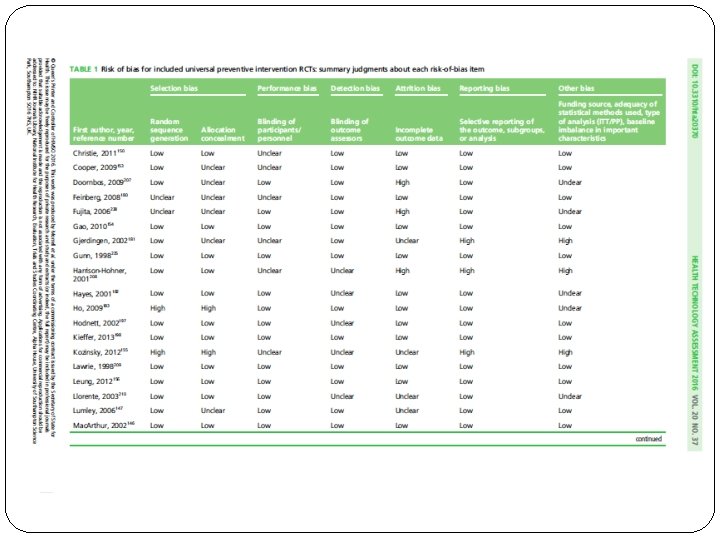
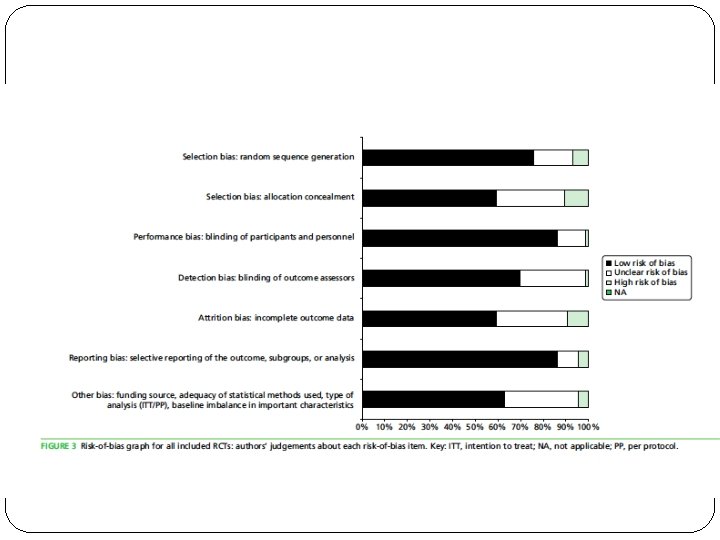
What is the risk of bias across all the studies? �Predominantly low to moderate risk
�Do the systematic review population, intervention, comparison, and outcomes fit the patient at hand ? � Trials are categorized into one of three levels of preventive intervention (universal, selective and indicated) relevant for particular populations of women.
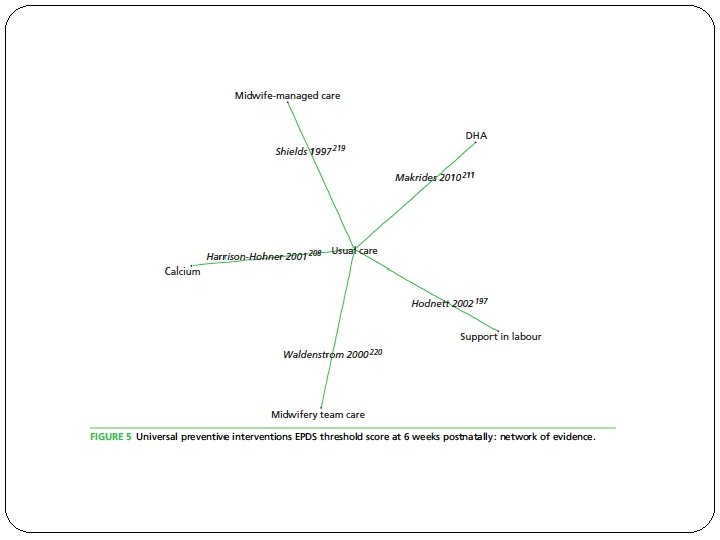
�What are the overall results of the review?
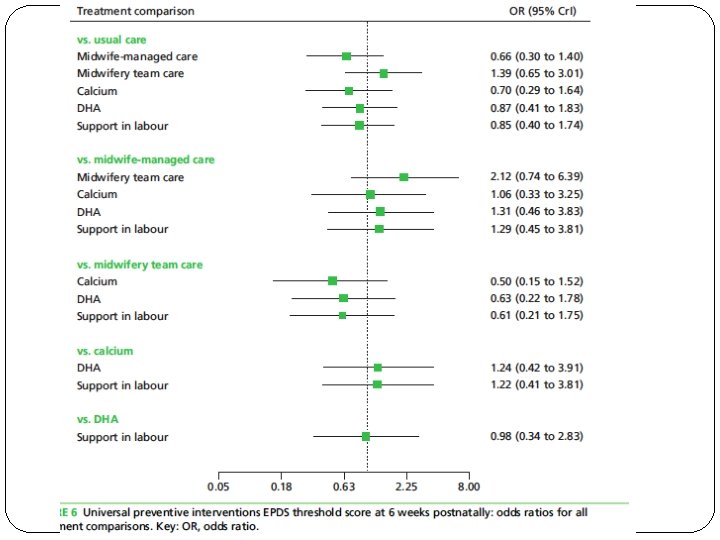
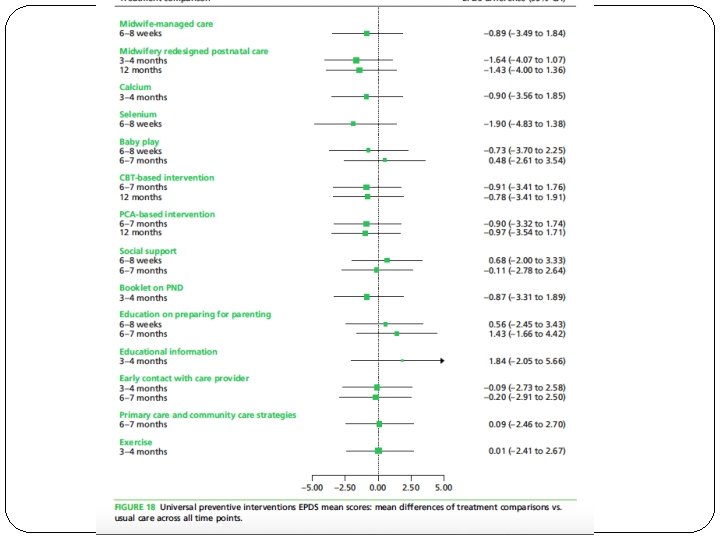
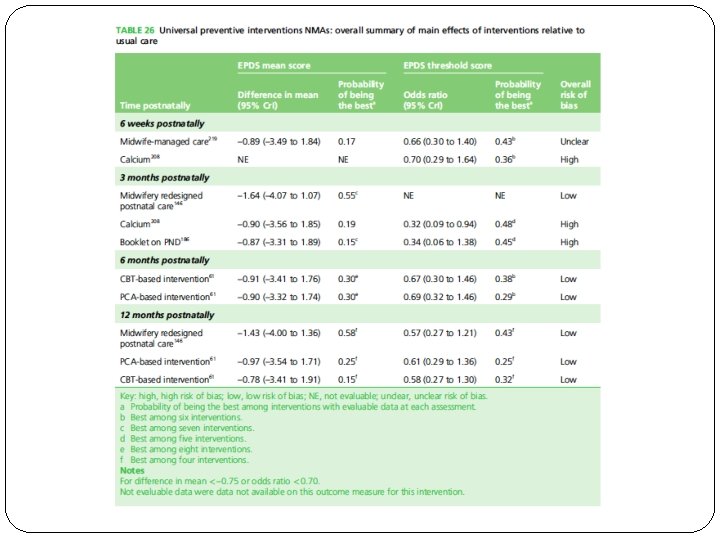
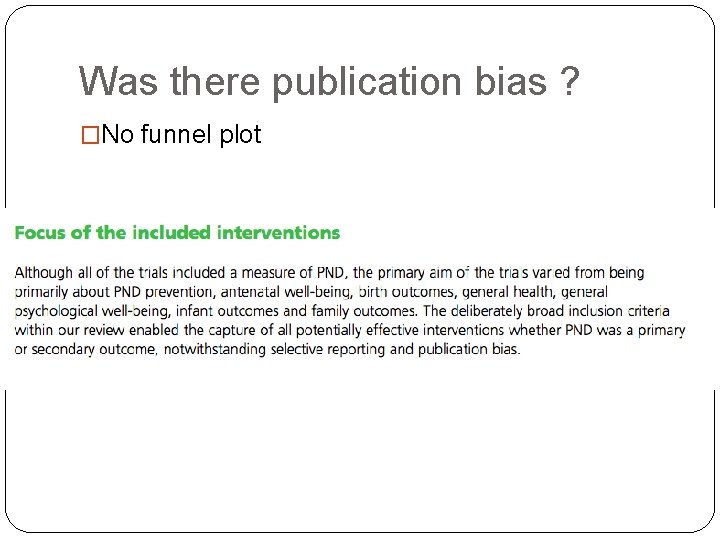
Was there publication bias ? �No funnel plot
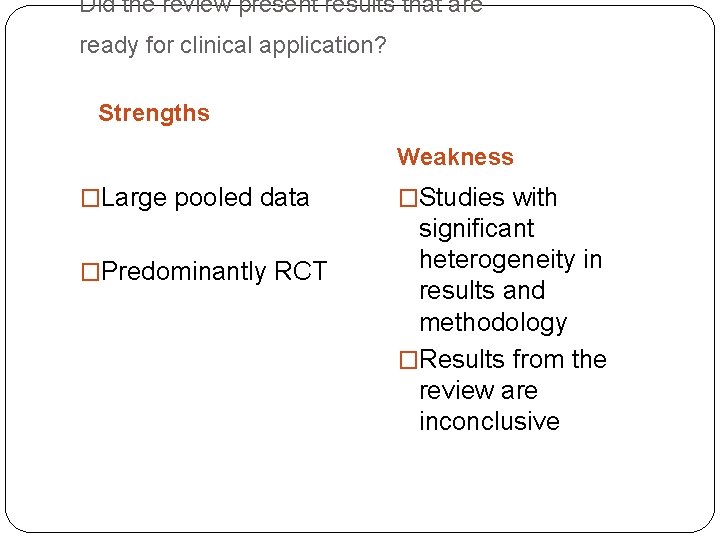
Did the review present results that are ready for clinical application? Strengths Weakness �Large pooled data �Predominantly RCT �Studies with significant heterogeneity in results and methodology �Results from the review are inconclusive
- Slides: 29