
Background Loss of production from dam constructionoperation Habitat
Background • Loss of production from dam construction/operation • Habitat loss, migration barrier, exotic predators/competitors • Beamesderfer et al. 1995, Parsley and Beckman 1994, De. Vore et al. 1995, North et al. 1993 • Increase subsistence fishing opportunities • In kind, out of place mitigation • Measure 10. 4 A. 5 (NPPC 1995) • Put, grow, and take sturgeon fishery • Cultured and/or wild fish transfer
Goal • Quantify and assess critical uncertainties limiting the planning and development of a put, grow, and take white sturgeon fishery in Oxbow and Hells Canyon reservoirs. Mid-Snake sub-basin summary (pg 117)
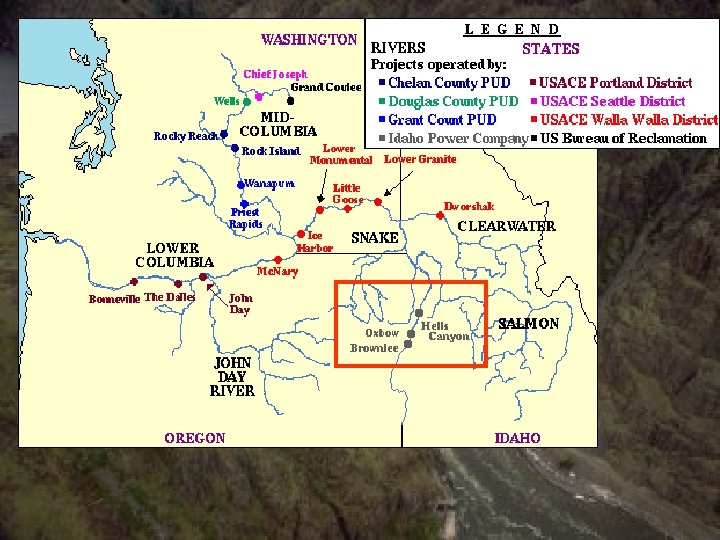
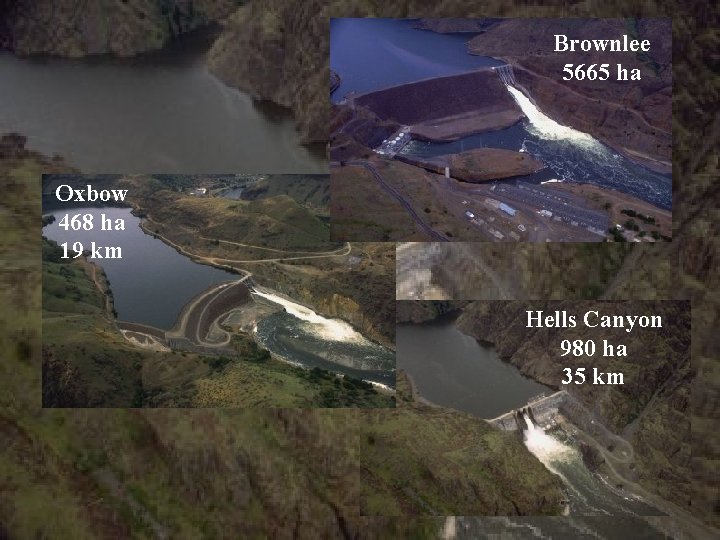
Brownlee 5665 ha Oxbow 468 ha 19 km Hells Canyon 980 ha 35 km
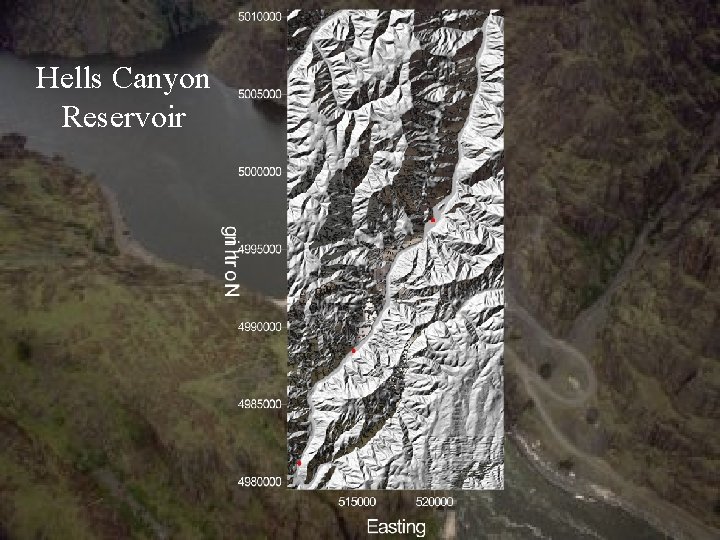
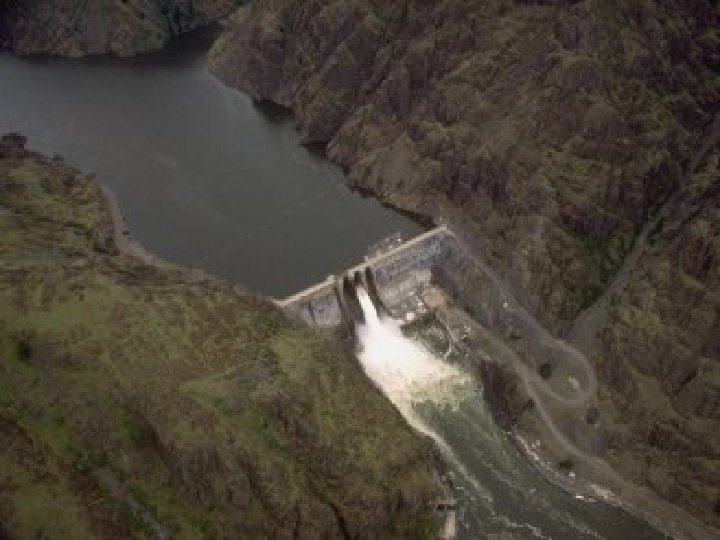
Hells Canyon Reservoir
Collaborative Process • IDFG • Don Anderson • Tim Cochnauer • Nez Perce Tribe • Dave Statler • Nancy Hoefs • Rick Orme • CRITFC • Blaine Parker • Chris Beasely • ODFW • Jeff Zackel • Tome Rien • Ray Beamesderfer • IPC • Jim Chandler • Ken Lapla • U of I Genetics Lab • Paul Anders • ISRP (ISRP 2000 -7)
Feasibility ? • Minimal entrainment of stocked sturgeon thereby achieving and maintaining a harvestable population in the project area. • Sufficient growth and survival (production) to achieve and maintain a harvestable population of sturgeon. • Appropriate long term source to achieve and maintain a harvestable population. • Minimal risk to the down stream sturgeon population.
Experimental Population 750 sturgeon (14 fish / km) – 500 Hells Canyon, 250 Oxbow Reservoir – PIT tag and externally marked Collaborative Process with Co-managers – Appropriate initial source of cultured and/or wild sturgeon
Entrainment • Entrainment – Maintain 50 sonic tags in Hells Canyon, 25 in Oxbow Reservoir (10% of experimental population) – Monitor Hells Canyon forebay and tail race with stationary recording receivers • Entrainment Potential – Mobile surveys in Oxbow/Hells Canyon • Seasonal habitat use, travel time and distance • Entrainment of sturgeon from Oxbow
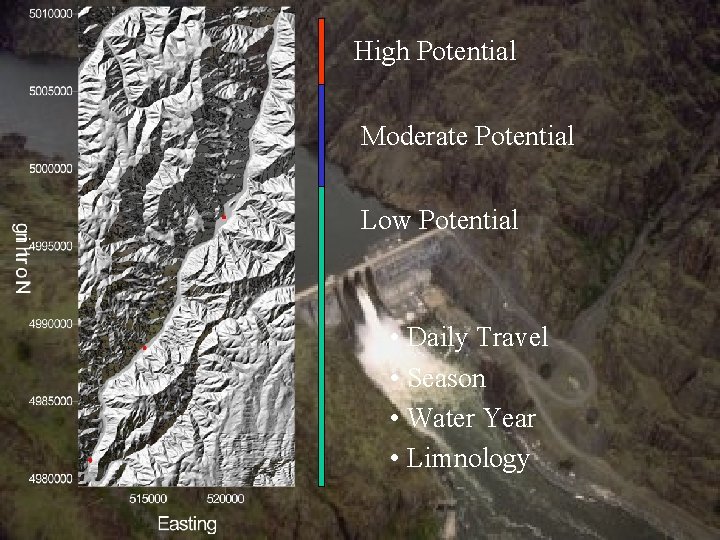
High Potential Moderate Potential Low Potential • Daily Travel • Season • Water Year • Limnology
Production • Bi-annual sampling • Set lines, angling • Stratify effort according to density (tracking data) – Survival • Mark re-capture estimators, CPUE, sonic tags • Intensive mark re-capture in third year – Growth • Quantify individual growth and population biomass
Stock Source • • • Location, type (wild/cultured) Genetic makeup (BPA project 19902200) Long term availability Number and available age classes Potential disease concerns Acquisition and transport costs
Assessing Risk • Entrainment – Parameters • Entrainment, seasonal habitat use, duration and timing of spill, travel time and distance, limnological variables – # stocked vs # down stream • Fishery Potential – Parameters • survival, growth, catch rates, entrainment – Stocking vs Harvest (numbers / biomass) • Genetic Risk – Parameters • Stock source, survival, entrainment, age at maturity, stocking density, Ne of source and wild population – Probability of genetic effect
- Slides: 14