
Background Introduction By Bensen Fan Kristin Gill Maria

Background Introduction By Bensen Fan Kristin Gill Maria Garcia
Part I. Seed Development By Bensen Fan
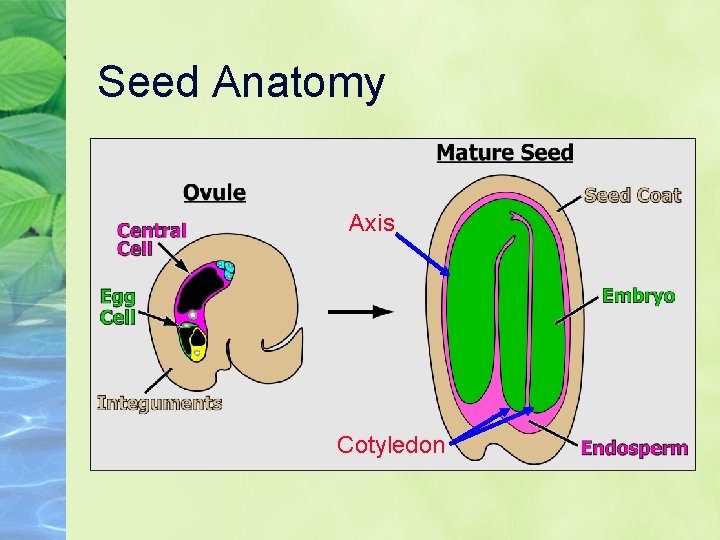
Seed Anatomy Axis Cotyledon
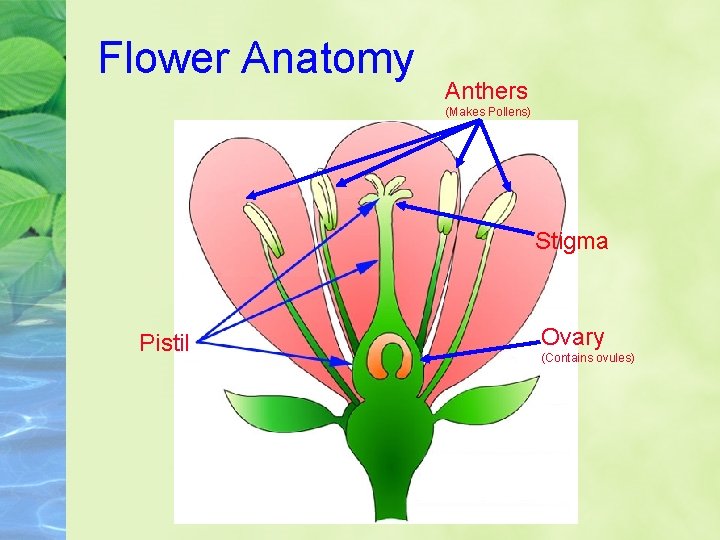
Flower Anatomy Anthers (Makes Pollens) Stigma Pistil Ovary (Contains ovules)
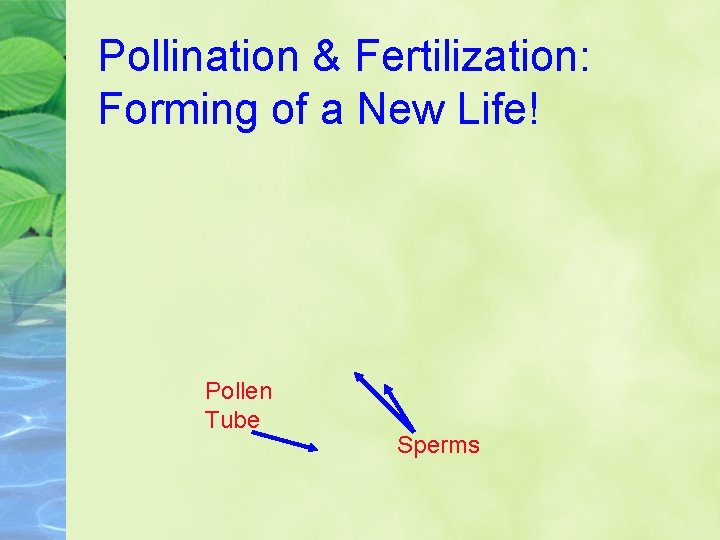
Pollination & Fertilization: Forming of a New Life! Pollen Tube Sperms
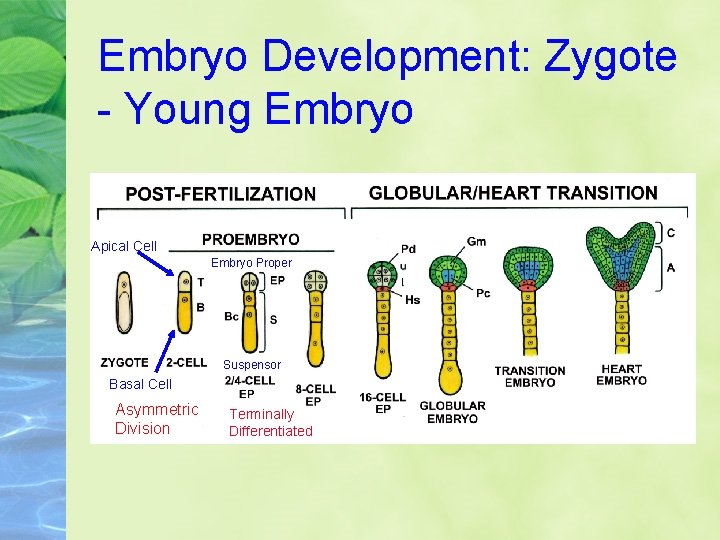
Embryo Development: Zygote - Young Embryo Apical Cell Embryo Proper Suspensor Basal Cell Asymmetric Division Terminally Differentiated
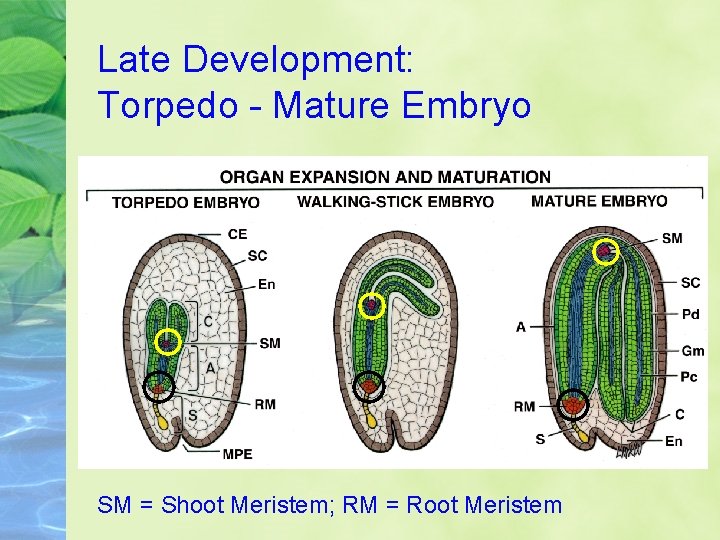
Late Development: Torpedo - Mature Embryo SM = Shoot Meristem; RM = Root Meristem
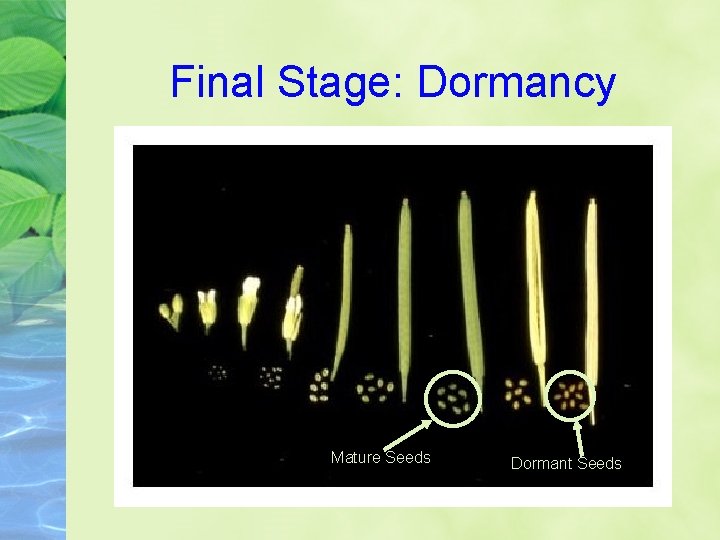
Final Stage: Dormancy Mature Seeds Dormant Seeds
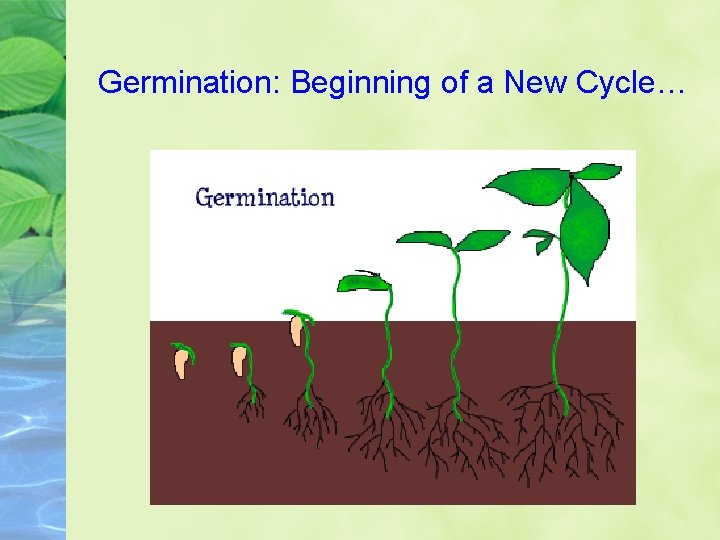
Germination: Beginning of a New Cycle…

Part II. Arabidopsis thaliana Embryo Development By Kristin Grill
What is the life cycle of an Arabidopsis plant?
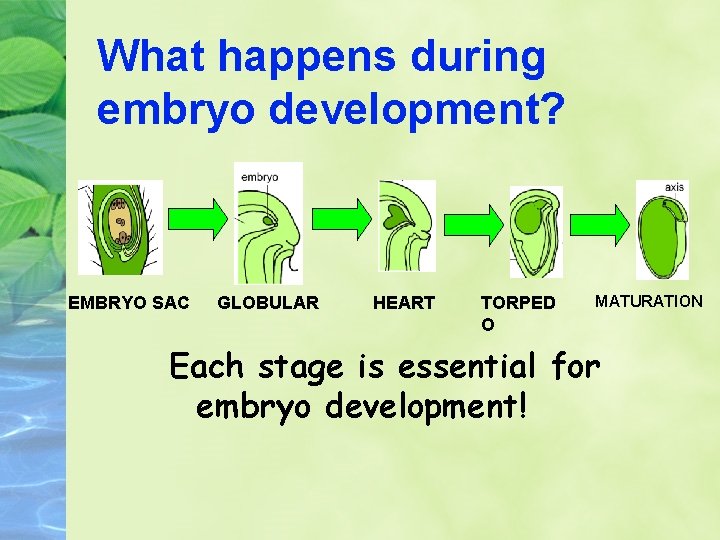
What happens during embryo development? EMBRYO SAC GLOBULAR HEART TORPED O MATURATION Each stage is essential for embryo development!
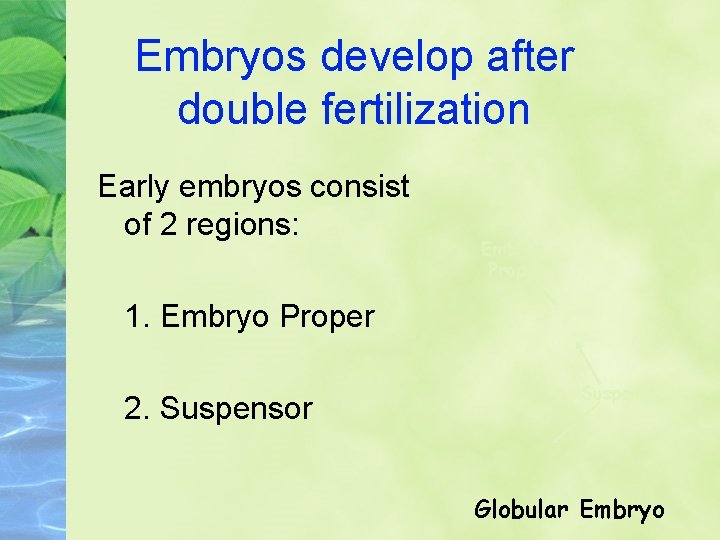
Embryos develop after double fertilization Early embryos consist of 2 regions: Embryo Proper 1. Embryo Proper 2. Suspensor Globular Embryo
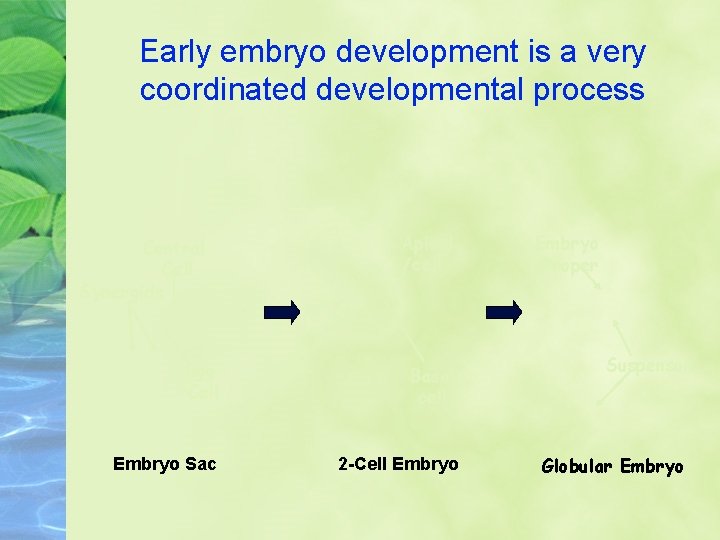
Early embryo development is a very coordinated developmental process Central Cell Synergids Apical cell Egg Cell Basal cell Embryo Sac 2 -Cell Embryo Proper Suspensor Globular Embryo
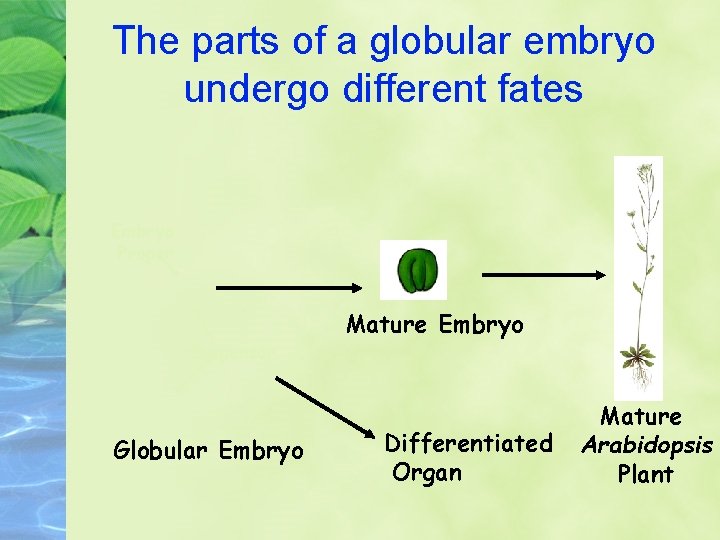
The parts of a globular embryo undergo different fates Embryo Proper Suspensor Globular Embryo Mature Embryo Differentiated Organ Mature Arabidopsis Plant
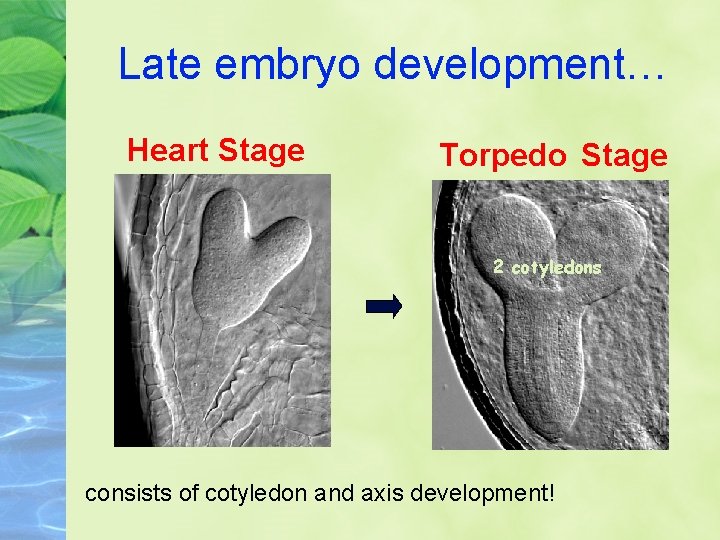
Late embryo development… Heart Stage Torpedo Stage 2 cotyledons consists of cotyledon and axis development!
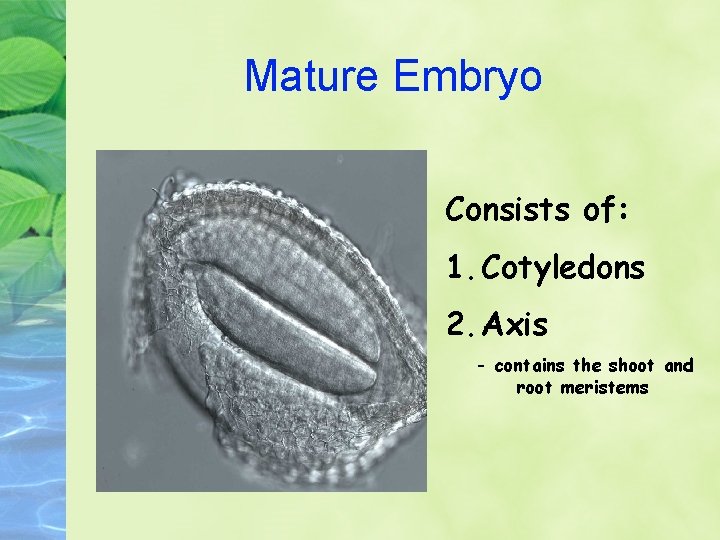
Mature Embryo Consists of: 1. Cotyledons 2. Axis - contains the shoot and root meristems
Part III: Why is Arabidopsis Thaliana a model � plant? By Maria Garcia
Here’s Why Arabidopsis Thaliana is convenient. It has a: Fast generation time Small genome Large mutant collections Large scientific community working on all aspects of plant biology
How fast does it grow? Short non-seasonal generation time Grows all year 4 to 8 weeks from a seed to a mature plant
How small is it? Arabidopsis has a small genome 120 Mb (25, 000 genes - same as humans!) Arabidopsis genome was sequenced in the year 2000
Easy to Manipulate Large mutant collections Chemical Insertional Knock-Out! Easily manipulated Genetically tractable
Everyone is in on it Large scientific community working on all aspects of plant biology Many resources on this plant already Much is already known about this plant
- Slides: 24