
Background Information Hypotheses are educated guesses about what
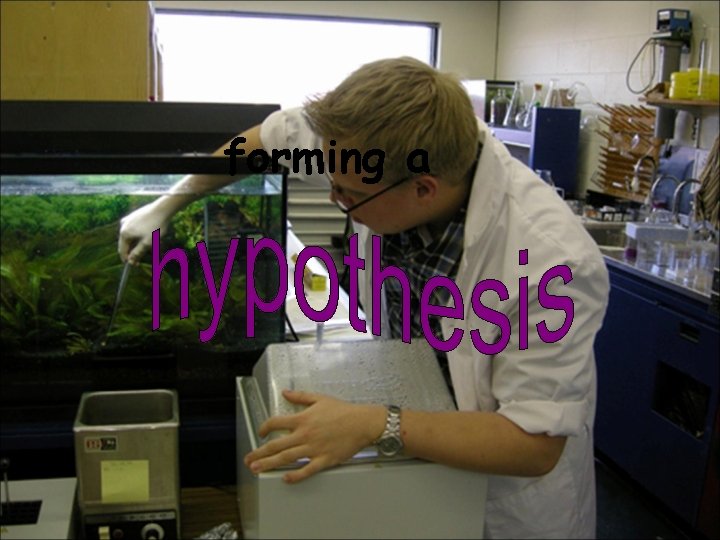
Background Information • Hypotheses are educated guesses about what may happen during an experiment. • Hypotheses can be changed! If data the data does not support your hypothesis, then you have to go back and either change your experimental procedure OR change your hypothesis. • Independent variables are what the experimenter changes during an experiment. For example, in an experiment about the effect of plant fertilizer on plant growth, the independent variable is the plant fertilizer because the experimenter is testing the plant fertilizer. • Dependent variables change as a result of the independent variables. In the example, the dependent variable is the plant growth because it depends on the type of fertilizer used. • Hypotheses are “IF … THEN” statements. “IF I do this, THEN this will happen. ” For example, if you are testing fertilizer’s effect on plant growth, then you would write: IF I use Miracle Grow, then we should see an increase in plant height over a period of 2 weeks.
designing an
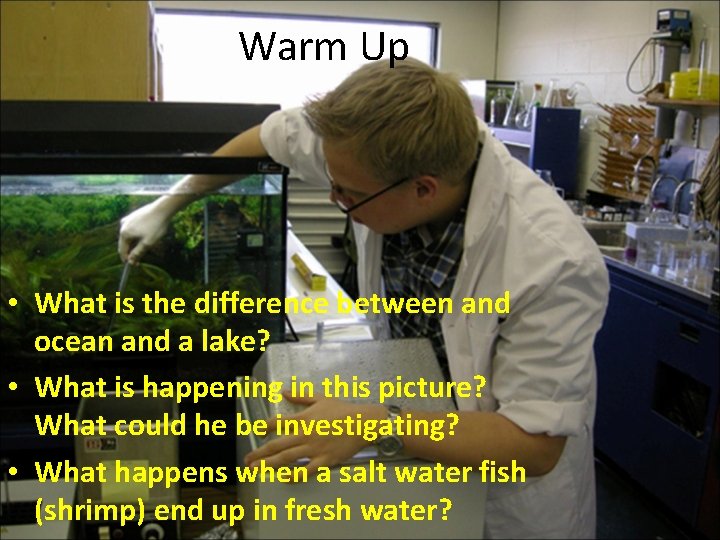
Warm Up • What is the difference between and ocean and a lake? • What is happening in this picture? What could he be investigating? • What happens when a salt water fish (shrimp) end up in fresh water?
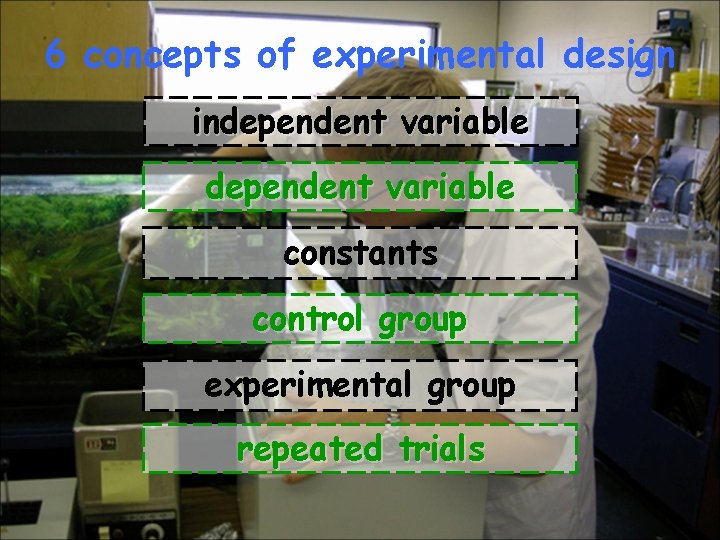
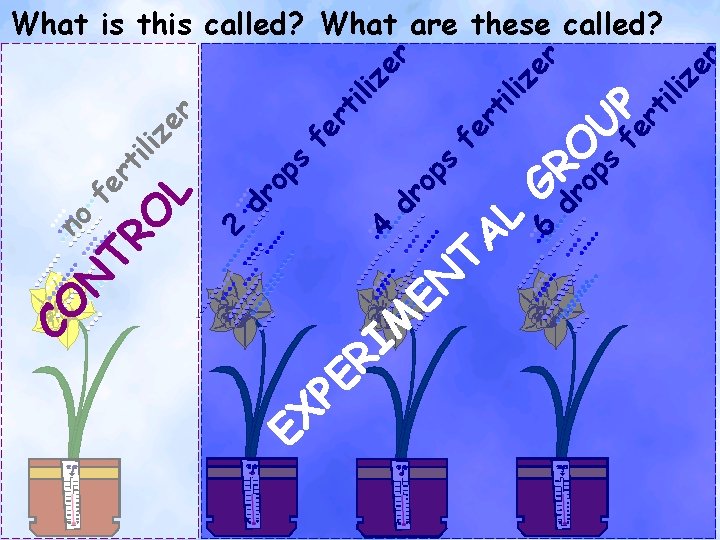
6 concepts of experimental design independent variable constants control group experimental group repeated trials
A variable is something that changes.
THERE IS NO SUCH THING IN THE ENTIRE UNIVERSE AS A CONSTANT VARIABLE. No. Never. Not appropriate. Don’t ever. Don’t even think about it! I mean it.
independent variable the variable that you change on purpose aka input, cause, stimulus, reason, manipulated variable, etc. This is the ‘’if” part of a hypothesis.
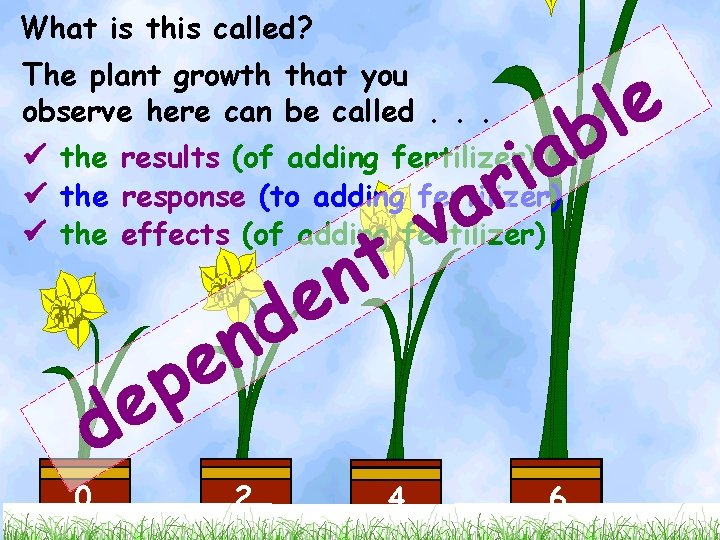
dependent variable the variable that depends on the independent variable aka outcome, effect(s), result(s), responding variable, etc. This is the ‘’then” part of a hypothesis.
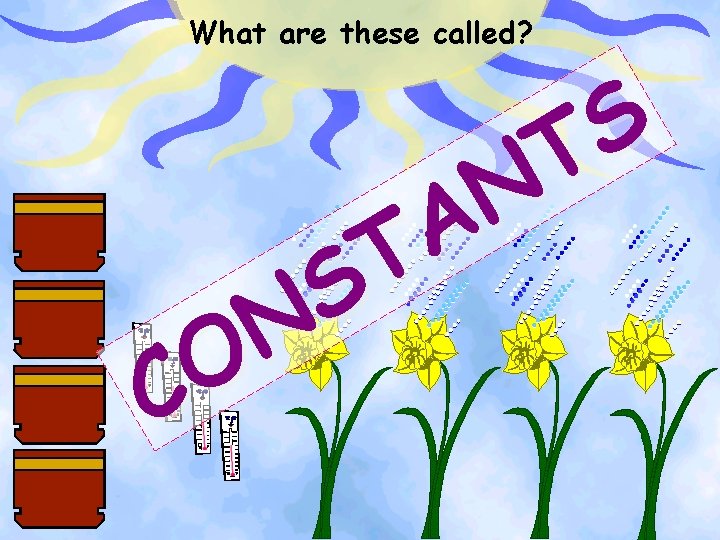
constants all factors which are NOT allowed to change during the experiment
control group the group (standard) to which everything is compared
experimental group the group(s) being tested with the independent variable Each test group has only one factor different from the other test groups: the independent variable.
The IVCDV chart is used to design an experiment.
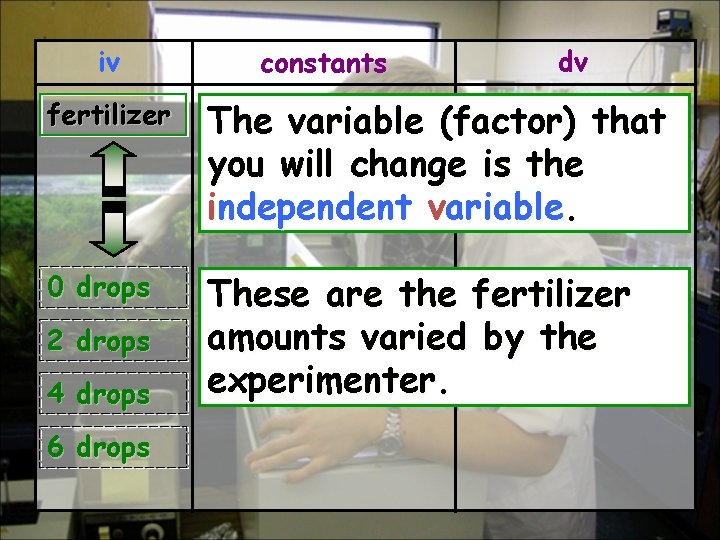
iv constants dv fertilizer The variable (factor) that you will change is the independent variable. 0 drops These are the fertilizer amounts varied by the experimenter. 2 drops 4 drops 6 drops
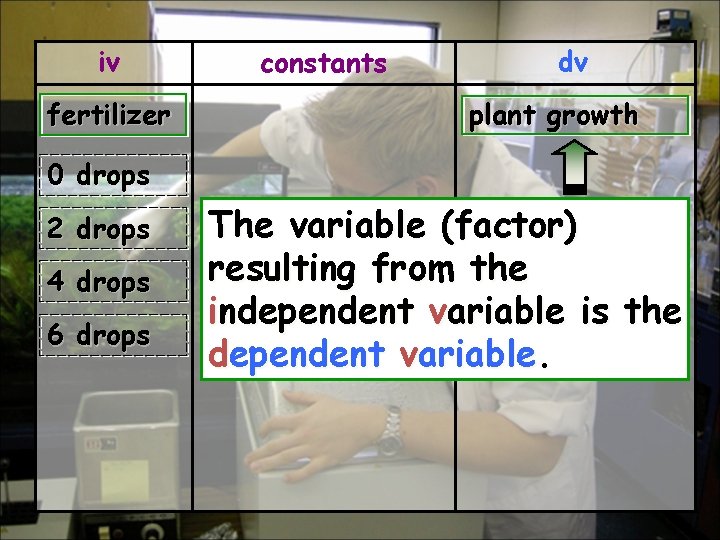
iv fertilizer constants dv plant growth 0 drops 2 drops 4 drops 6 drops The variable (factor) resulting from the independent variable is the dependent variable.
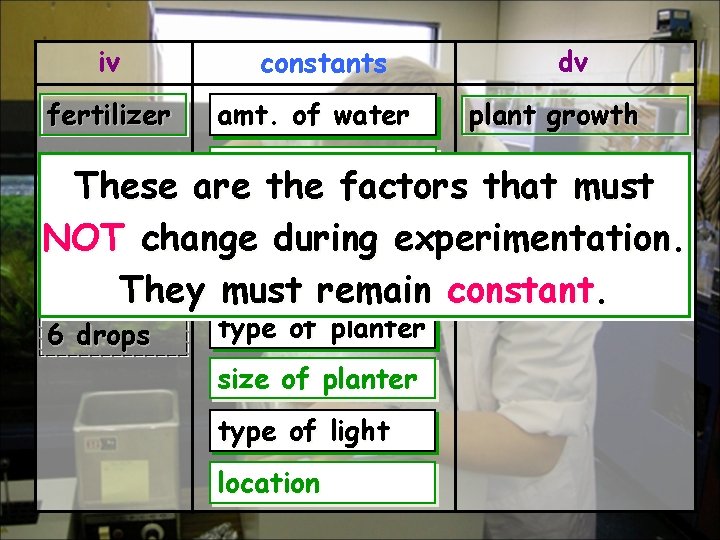
iv constants fertilizer amt. of water 0 drops These type of soil 6 drops type of planter dv plant growth These are the factors that must amt. of soil 2 drops NOT change during experimentation. type of plant 4 drops They must remain constant. size of planter type of light location
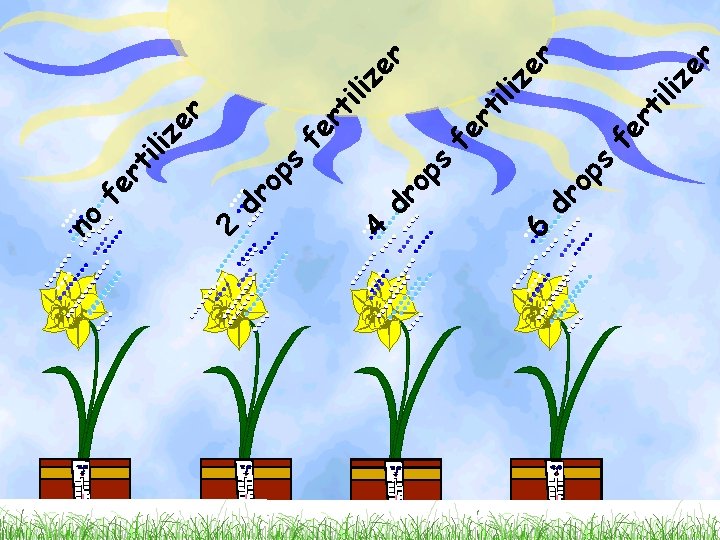
6 4 2 dr op s s rt i fe dr op no ze r ti li fe rt ili er liz
4 2 L X E dr op s N E E P M I R A T dr op s L 6 s rt i fe dr op O no TR CO N ti li fe r ze r fe rt ili er liz U G O R ze r P ti li What is this called? What are these called?
What are these called? S T N A T S N O C
What is this called? e l the results (of adding fertilizer) b a i the response (to adding fertilizer) r a the effects (of adding fertilizer) v t n e d n e p e d The plant growth that you observe here can be called. . . 0 2 4 6
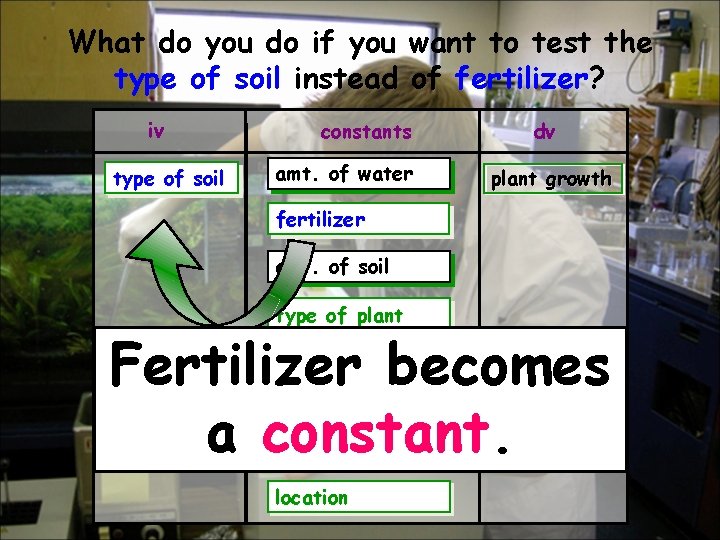
What do you do if you want to test the type of soil instead of fertilizer? iv fertilizer type of soil constants amt. of water dv plant growth type of soil fertilizer amt. of soil type of plant Fertilizer Type ofbecomes soil a constant. becomes the IV. type of planter size of planter type of light location
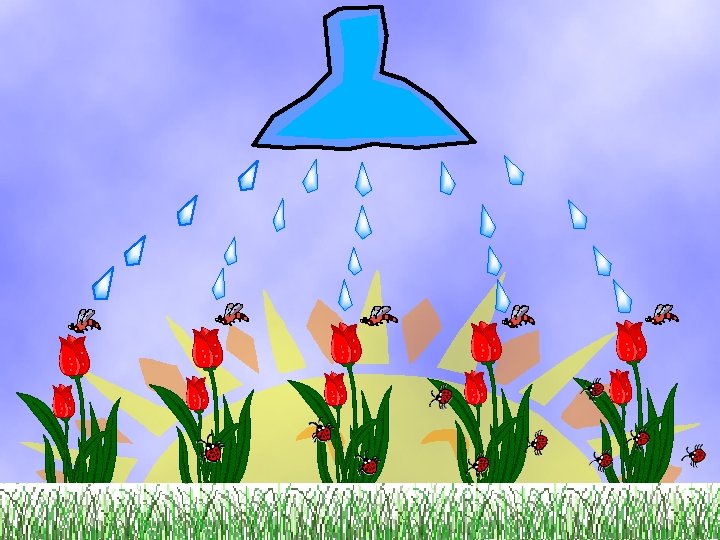
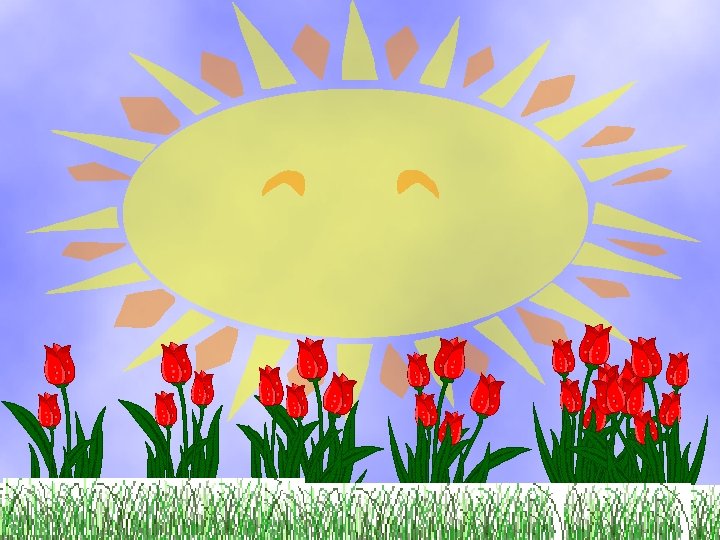
In the following two slides, identify the independent variable constants dependent variable.
Evaluate the experimental design in the next two slides.
forming a
V Chart
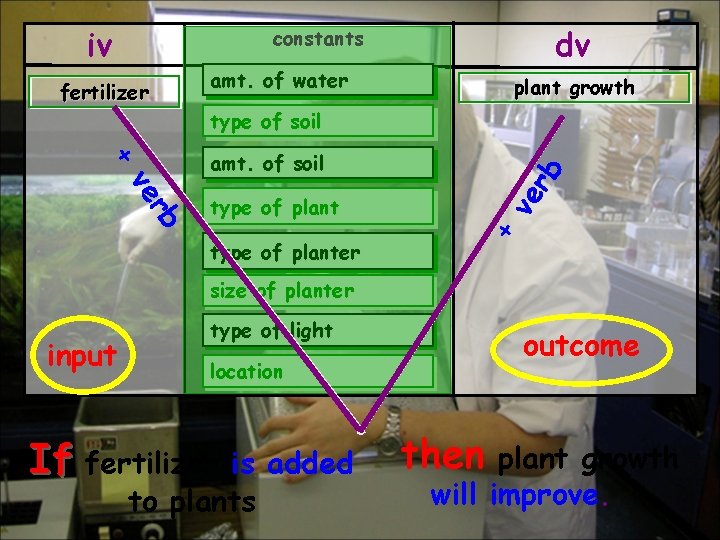
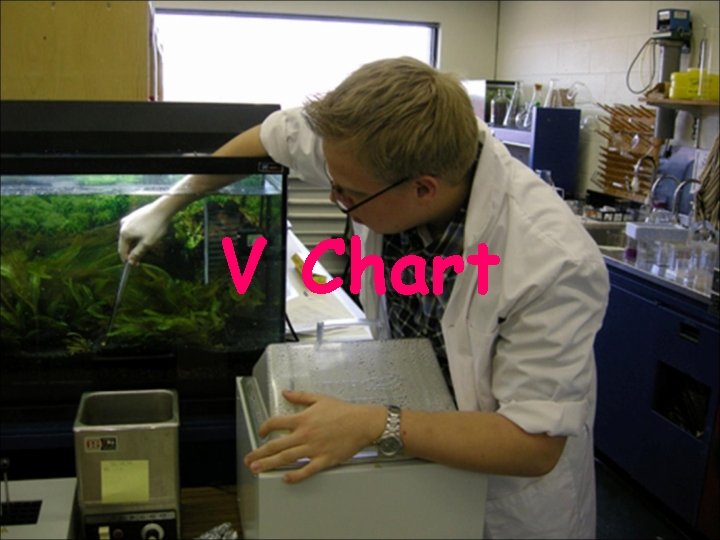
iv dv constants fertilizer amt. of water plant growth type of soil type of planter rb ve type of plant + + amt. of soil size of planter input type of light outcome location If fertilizer is added to plants then plant growth will improve.
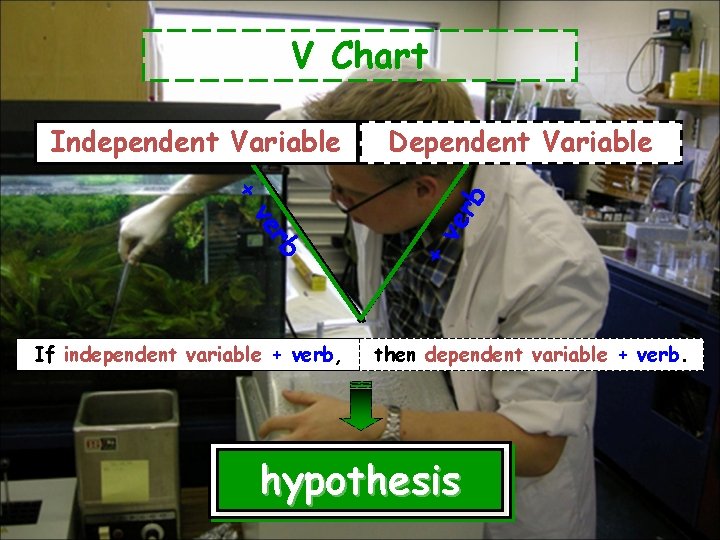
V Chart rb ve ve rb + If independent variable + verb, Dependent Variable + Independent Variable then dependent variable + verb. hypothesis
- Slides: 30