
Background for King Lear King Lear Settingbefore the
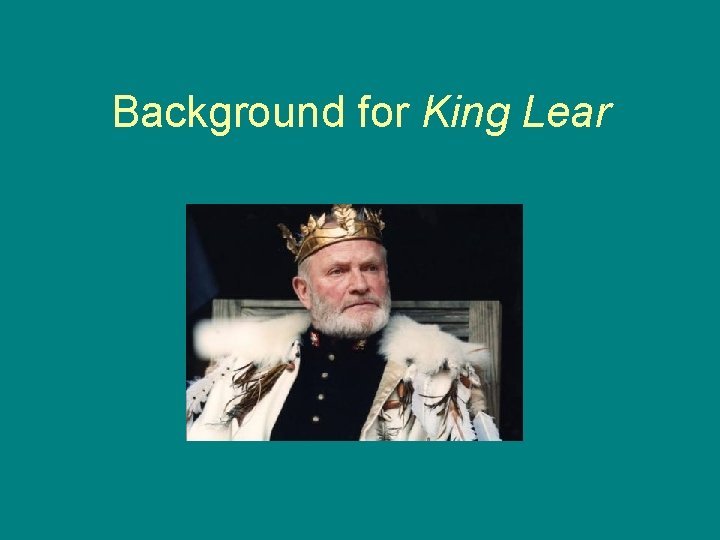
Background for King Lear
King Lear Setting--before the birth of Christ; the real King Lear was a supposedly one of the first monarchs in prehistoric Britain. Situation--Lear had come down to Shakespeare's time as a figure of myth and folklore. The opening situation in the play, an aged ruler who must choose among his three daughters, is right out of Grimm's fairy tales in terms of how familiar any modern audience might find it.
Background for King Lear (cont’d) • The play was written soon after James had been crowned king of England, as well as Scotland, in 1603. • Unity of the kingdom, a central point of the play, was a hot topic of political conversation in these years. • Shakespeare's tragedies often reflect issues that were in the public arena at the time he wrote specific plays.
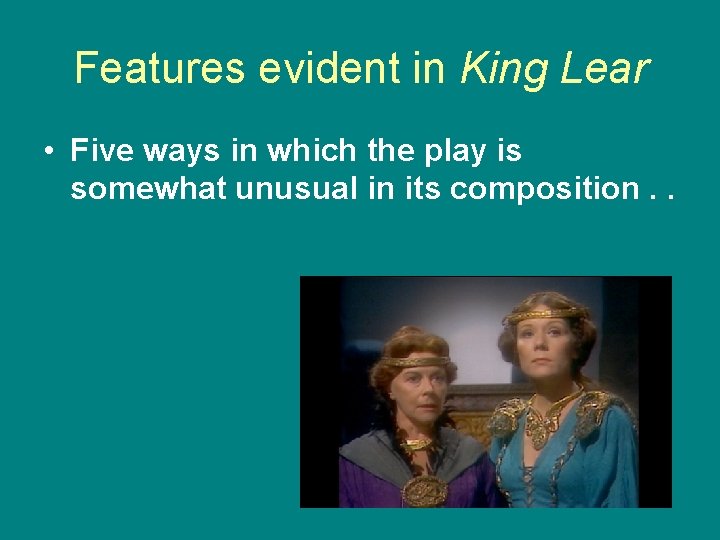
Features evident in King Lear • Five ways in which the play is somewhat unusual in its composition. .
1 -Parallel Story lines— • Lear & daughters (Goneril, Regan and Cordelia) • Gloucester & sons (Edmund and Edgar)
2 -Economy of Narrative • After character development, story unfolds swiftly and SOME plot aspects are minimally described. • Example: an illicit affair or two is strongly hinted at and implied but beyond kissing and innuendo, no actual marital cheating is staged.
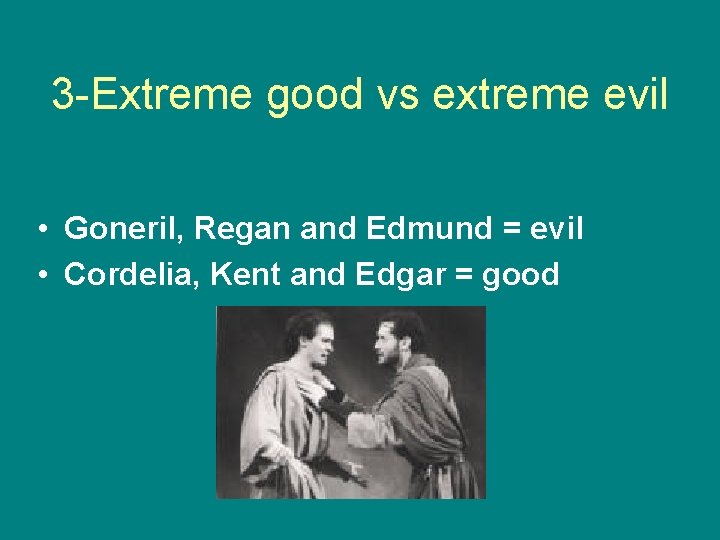
3 -Extreme good vs extreme evil • Goneril, Regan and Edmund = evil • Cordelia, Kent and Edgar = good
4 -Pagan context • Lear and Gloucester both evoke pagan gods whom they believe are controlling events. • This, indeed, ties into character development because it allows them to ignore their own responsibilities for events that occur at times. • Lack of a belief in any divine justice is evident.
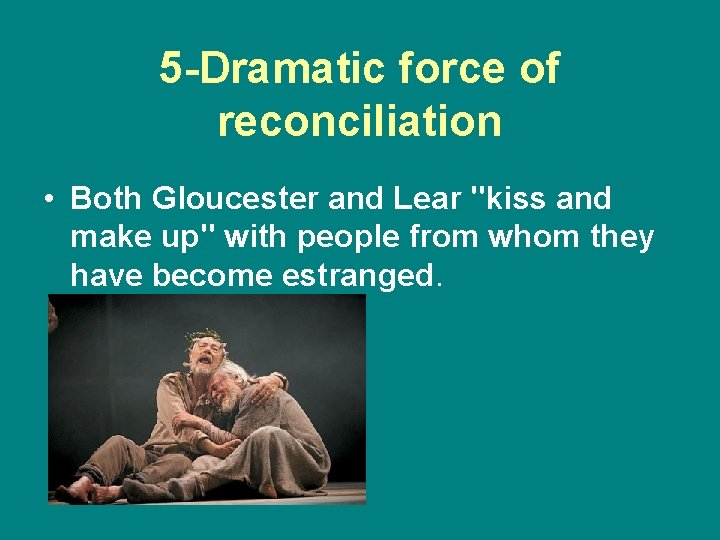
5 -Dramatic force of reconciliation • Both Gloucester and Lear "kiss and make up" with people from whom they have become estranged.
Major Themes in King Lear • Critics have identified at least eight major themes within this play; many are interconnected. You may find even more.
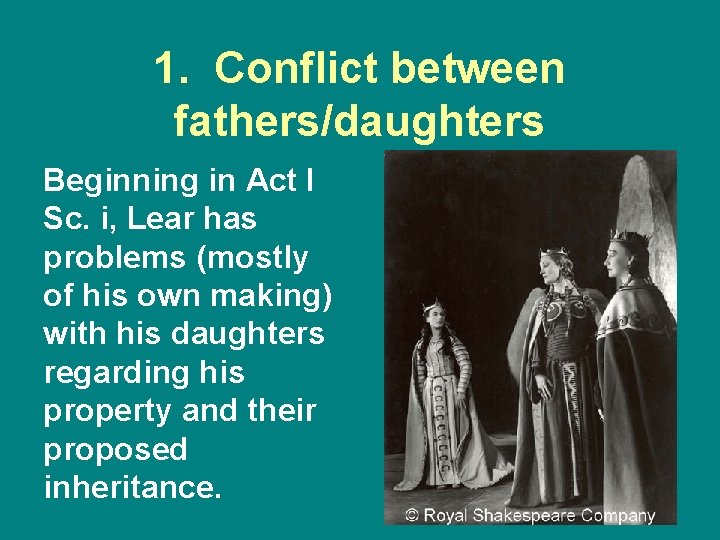
1. Conflict between fathers/daughters Beginning in Act I Sc. i, Lear has problems (mostly of his own making) with his daughters regarding his property and their proposed inheritance.
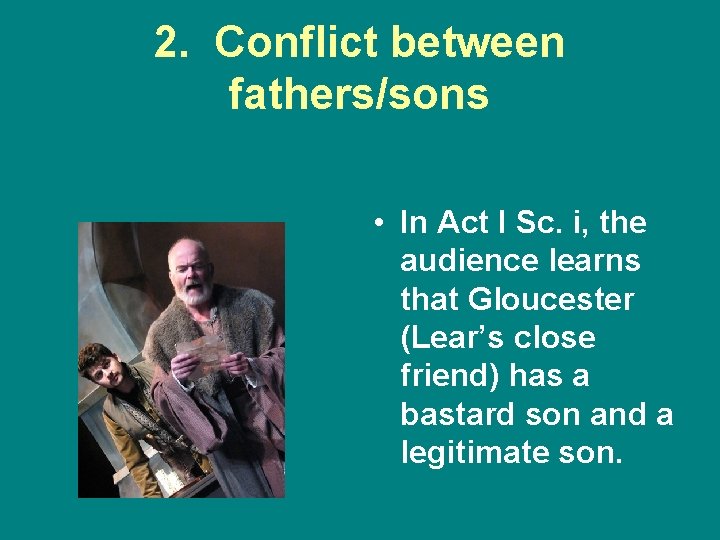
2. Conflict between fathers/sons • In Act I Sc. i, the audience learns that Gloucester (Lear’s close friend) has a bastard son and a legitimate son.
3. Relinquishing power • Lear is old; he wants to retire or relax but he doesn’t want to lose everything in the process and he wants to still have a say in how his kingdom operates. • He also wants creature comforts in his dotage.
4. Differences between loyalty and blind obedience • The Earl of Kent, for example, returns in disguise to serve Lear, in spite of his being banished. • Oswald, Goneril’s servant, on the other hand, obeys every evil order she issues regardless of how wrong it obviously is.
5. True love vs. lust • The King of France pledges his love to Cordelia, in spite of her being disowned by her father. • Cordelia's unconditional love for her father is unselfish, in contrast to that of her sisters. • Edmund, Gloucester’s bastard son, uses lust to get what he wants.
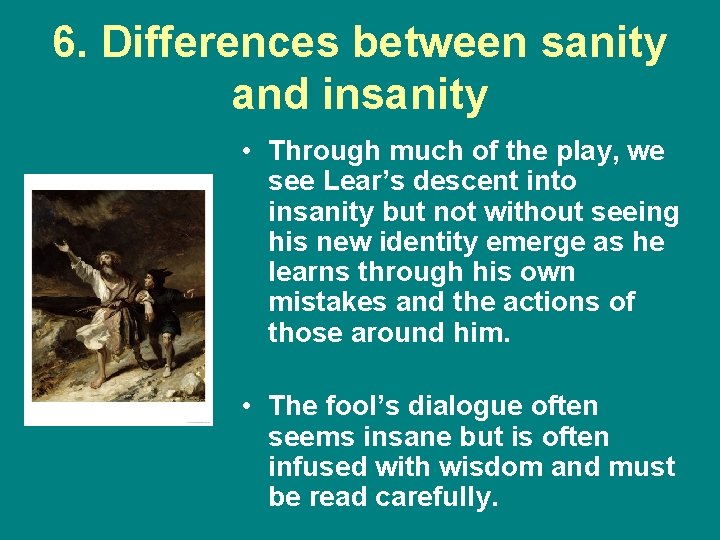
6. Differences between sanity and insanity • Through much of the play, we see Lear’s descent into insanity but not without seeing his new identity emerge as he learns through his own mistakes and the actions of those around him. • The fool’s dialogue often seems insane but is often infused with wisdom and must be read carefully.
7. The function of charity in restoring spiritual health • Helping others seems to help several characters who have plunged into the depths of despair, simply by their acts of mercy and/or kindness to another human being.
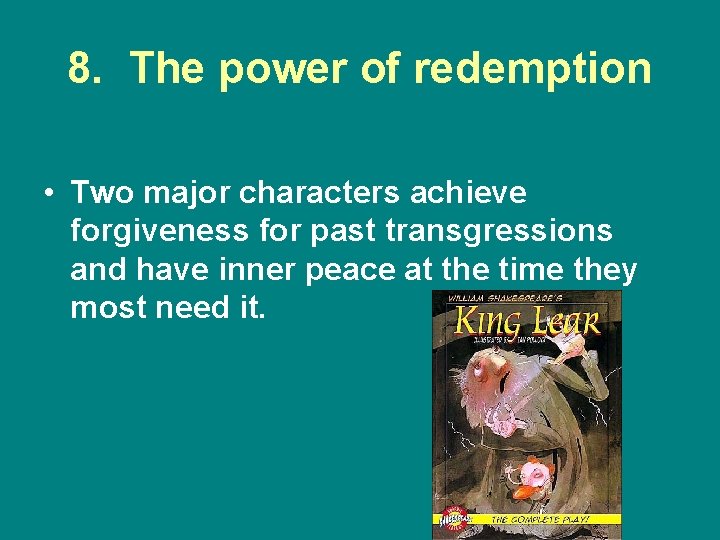
8. The power of redemption • Two major characters achieve forgiveness for past transgressions and have inner peace at the time they most need it.
- Slides: 18